
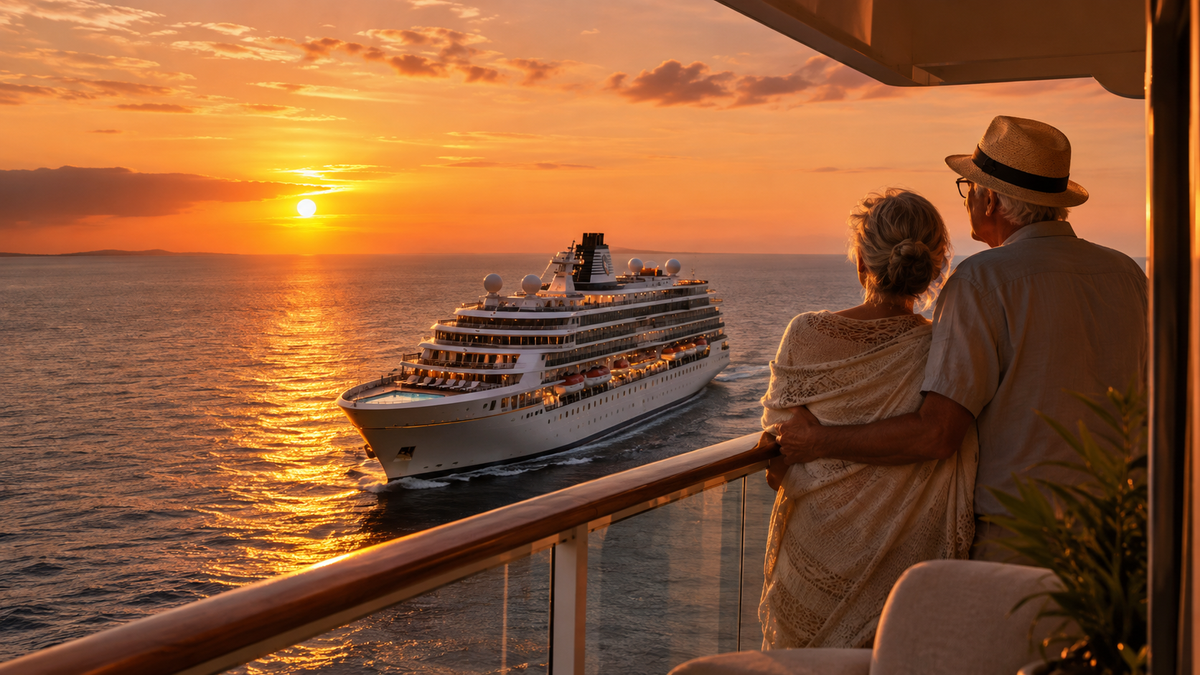
Living at Sea for 90 to 180 Days: The ÆRIA Ocean Living Guide to Consecutive Cruising
What if winter did not mean shovelling the drive, but choosing which port to explore after breakfast? What if your address for three, four, or six months was a balcony cabin, your restaurant was down the corridor, and the view changed almost every morning?
That is the idea behind ÆRIA Ocean Living: living at sea for 90 to 180 days by chaining consecutive cruises together, one sailing after another, planned as a single way of life rather than as a string of separate holidays. It is not a world cruise, although it can feel just as rich. It is a long stay built voyage by voyage, around the ships, regions, and rhythm that suit you.
This guide explains how it works, what it really costs in effort and organisation, who it suits, and how a good chain is built so that the joins never spoil the journey.
What Ocean Living Actually Is
A single cruise rarely lasts 90 to 180 days, apart from world cruises and a handful of very long voyages. Ocean Living reaches that length differently: by booking several cruises back to back and treating them as one continuous stay.
Sometimes the chain stays on the same ship. You remain aboard while other guests disembark, new guests embark, and the ship sets off on its next itinerary. Cruise lines call these back to back sailings, and seasoned guests know the quiet pleasure of turnaround day: the ship empties, the crew resets everything around you, and by evening you are sailing again without ever packing a suitcase.
Sometimes the chain changes ships. You finish one voyage, spend a short stay ashore, then board another ship, perhaps in the same port, perhaps in a nearby city, perhaps on another continent. Done well, this is how a winter can move from the Caribbean to a transatlantic crossing, then into the Mediterranean, and then north towards the fjords as spring arrives, all in one unbroken season of travel.
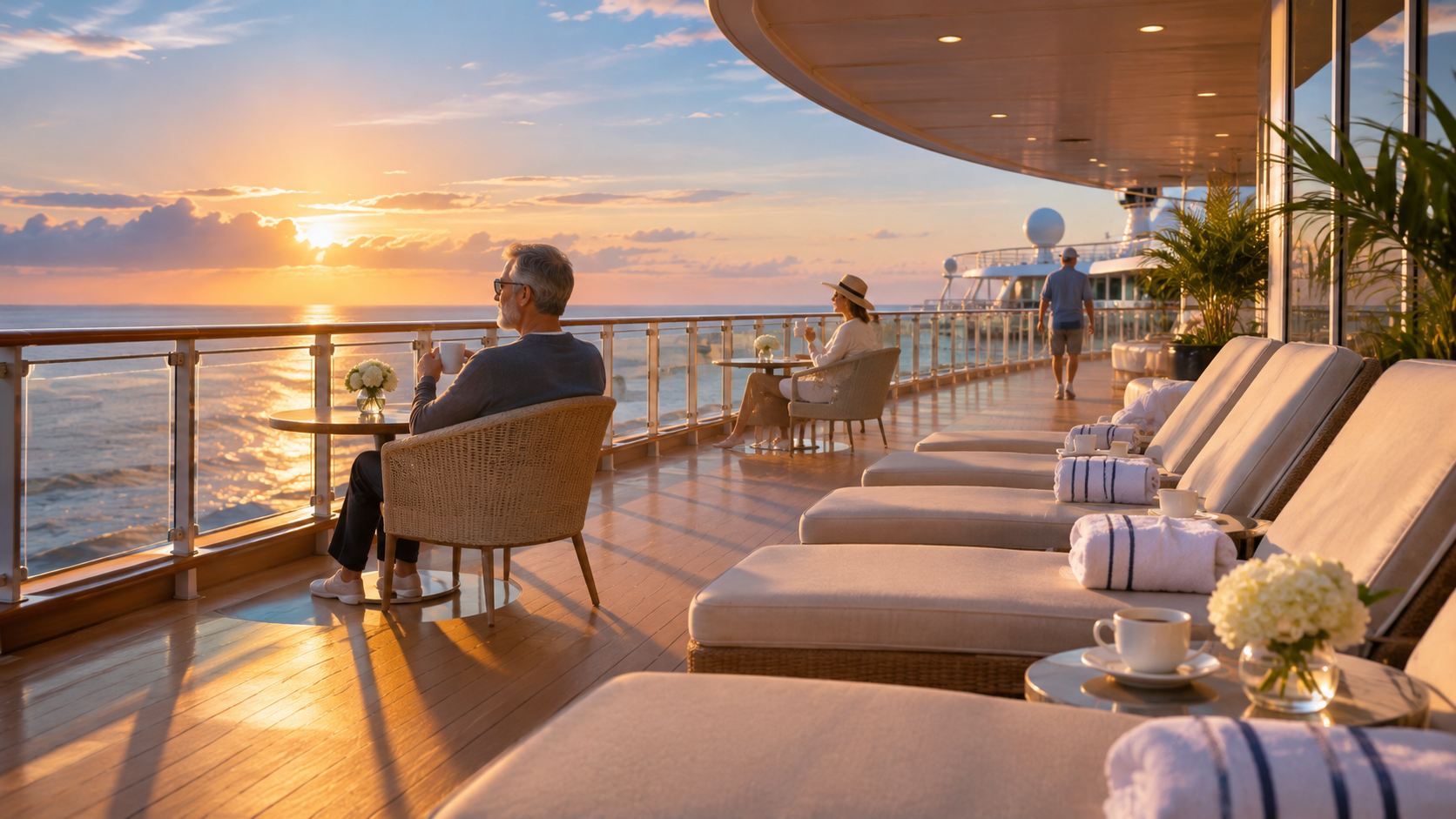
The difference between a pile of bookings and a real Ocean Living plan is the planning in between: the buffers, the transfers, the documents, the budget rhythm, and the honest answer to one simple question. Could you happily live this way, at sea, for months?
Who This Way of Living Suits
Retirees and semi retired travellers are the natural audience. Ocean Living asks for time more than it asks for anything else, and people whose calendars are finally their own are the ones who can give a season to the sea.
Snowbirds who are tired of the same winter. Many Canadians spend three to six months in the same rented condo every year. A long stay at sea offers the same escape from winter, with a different horizon each week, no cooking, no cleaning, and no property to maintain while you are away.
Writers, readers, and slow travellers. Sea days are not empty days. They are reading days, writing days, walking the deck days. Travellers who love the journey itself, not only the ports, tend to thrive on long chains.
Travellers with reduced mobility who plan carefully. A ship is a remarkably manageable home: step free routes on most decks, lifts everywhere, meals nearby, medical facilities onboard, and excursions at several levels of effort. A long stay still needs honest planning around mobility, medication, and insurance, but for many people the ship is easier to live in than a succession of hotels.
Ocean Living suits you less well if you need your own kitchen, if you would miss a pet too much to enjoy the trip, if your health requires frequent specialist appointments ashore, or if two weeks aboard already feels long. There is no shame in any of that. A 30 or 60 day chain is a perfectly good way to test the idea before committing to a full season.
The ÆRIA Ocean Living Approach at a Glance
| Total length | 90 to 180 days at sea, built from consecutive cruises |
| Building blocks | Back to back sailings on one ship, then carefully linked sailings on other ships |
| Nights ashore | No more than two consecutive nights between ships, whenever the schedules allow |
| Buffer rule | A full clear day between ships whenever possible, never a same day dash |
| Cabin priority | Balcony cabins, for light, air, and a private piece of the horizon |
| Preferred lines | Holland America Line, Princess Cruises, and Celebrity Cruises, with occasional MSC Cruises sailings |
| Regions | Chains follow the seasons: Caribbean, transatlantic crossings, Mediterranean, Northern Europe, and beyond |
| Budget method | One total budget for the season, compared by cost per day, everything included |
How a Chain Is Built, Step by Step
Step one: choose the season, not the ship. Start from the months you want to be away and the weather you want to live in. A January start might mean the Caribbean. An April chain might cross the Atlantic and spend spring in Europe. The calendar decides which ships are even possible, because cruise fleets move around the world with the seasons, repositioning from one region to another in spring and autumn. Those repositioning voyages, especially transatlantic crossings, are the natural bridges of a good chain.
Step two: anchor the chain with the longest sailing. Every chain needs a spine: one long voyage, perhaps a grand voyage, an extended Caribbean season on the same ship, or a long repositioning, around which the other sailings are attached. Book the spine first, while the best balcony cabins are still available.
Step three: attach sailings before and after. With the spine fixed, add the voyages that lead into it and out of it. On the same ship, this can be as simple as the sailing immediately before or after yours. On another ship, the test is geography and timing: does the second ship leave from a port you can reach calmly, with time to spare?
Step four: protect every join. This is where amateur chains break. Our rules are simple, and we do not bend them for a fare that looks tempting. No more than two consecutive nights ashore between ships. A full clear day as a buffer between ships whenever the schedules allow, so a delayed arrival, a late transfer, or a tired traveller never turns into a missed embarkation. Transfers, hotels for the nights ashore, and luggage handling are planned as part of the chain, not improvised at the pier.
Step five: check the documents for the whole route. A chain can cross a dozen borders. Passports, visas, and entry requirements have to be checked for the complete itinerary, not voyage by voyage, and your passport should remain valid well beyond the final return date. This is also the moment to arrange travel insurance that genuinely covers a trip of this length, including medical care and repatriation. Many standard policies cap the number of days per trip, so a long stay needs a policy chosen for exactly that.
Which Lines Work Best for Months at Sea
Not every cruise line suits a season long stay. The ship has to work as a home: good libraries and quiet corners, varied dining, lectures and music, laundry services, and a crew culture that gets to know long stay guests by name.
Holland America Line is one of our first choices for Ocean Living. Its mid sized ships, long itineraries, grand voyages, and strong programme of talks, music, and cooking demonstrations suit travellers who are aboard for months, not days. The line has a long tradition of extended voyages and of guests who return to the same ship year after year.
Princess Cruises brings a wide choice of itineraries, comfortable balcony cabins across much of the fleet, and smooth back to back options in regions like the Caribbean, the Mediterranean, and the South Pacific. For chains that mix several regions, that breadth is valuable.
Celebrity Cruises adds a more contemporary feel, with strong dining and modern ships that work well as a comfortable base for weeks at a time, particularly in the Caribbean and Europe.
MSC Cruises can play a useful supporting role in a chain, for example on a well timed Mediterranean or repositioning sailing, where its schedules sometimes connect two parts of a season neatly.
We generally do not build Ocean Living chains on the ultra luxury lines. They are wonderful for a special voyage, but over 90 to 180 days their fares would swallow the budget of most travellers, and the point of Ocean Living is a season that stays financially sustainable. The sweet spot is a premium, full service line where the daily cost stays reasonable and the ship still feels like a pleasure to live in.
Why the Balcony Is Not a Luxury on a Long Stay
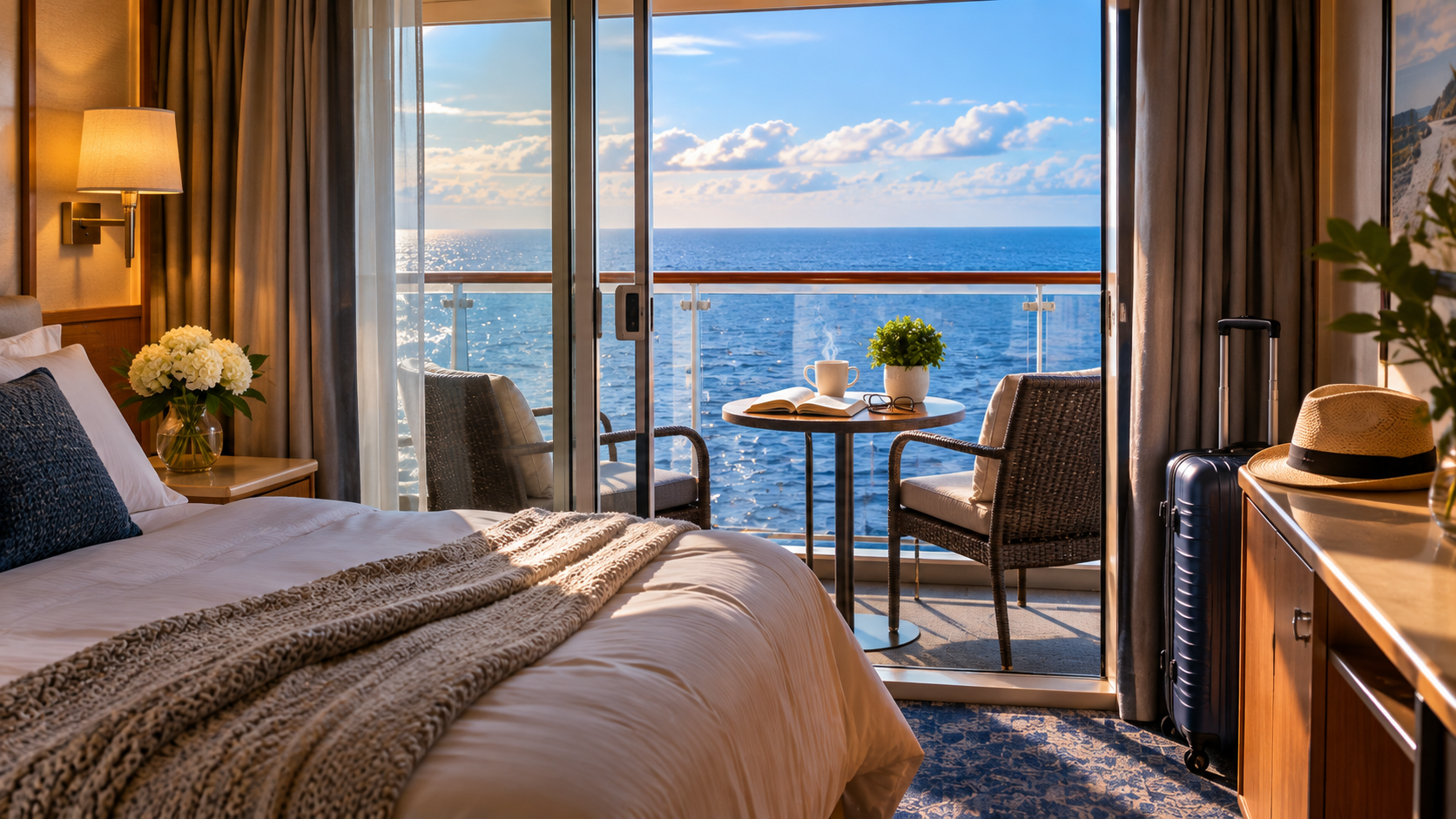
On a seven day cruise, a balcony is a treat. On a 120 day stay, it is part of how you live. Your cabin is not just where you sleep between excursions. It is your home for a season, and homes need light, fresh air, and a place to sit quietly with a coffee while the coast slides past.
That is why ÆRIA Ocean Living treats the balcony as the starting point, not as an upgrade to consider later. An inside cabin that feels cleverly economical in week one can feel very small by week ten. A balcony gives you a private piece of the horizon, a place to read, to watch arrivals and sailaways without the crowd, and to keep a sense of space even on a fully booked ship.
Two practical details matter when the chain stays on one ship. First, try to keep the same cabin across consecutive sailings, so turnaround day means staying put while the ship changes around you. Second, if a cabin change is unavoidable, the crew handles the move on turnaround day, and your cases move with far less effort than any hotel change ashore.
What It Costs, and How to Think About the Money
We will not invent a price here, because there is no honest single price for a season at sea. The total depends on the lines, the regions, the cabin, the season, and how much is included. What we can give you is the method we use with every Ocean Living traveller, because the method is what keeps a long stay affordable.
Compare by cost per day, everything included. Add the fares, port charges, gratuities, Wi Fi, drinks if you want a package, laundry, transfers, hotels between ships, flights, and insurance, then divide by the number of days. Only then can you compare a chain fairly with a winter rental ashore, or with a world cruise.
Put the whole season in one budget. A chain is one project with one envelope. Travellers get into trouble when they book a wonderful spine and then discover the connecting sailings, hotels, and flights were never costed. We cost the complete chain before anything is booked.
Watch the single supplement. Solo travellers can face supplements that change the mathematics of a long stay completely. Some sailings price singles far more fairly than others, and choosing the right departures matters more over 120 days than over seven.
Use loyalty, but do not chase it. Past guest programmes on the major lines reward long stays with useful perks, from laundry to Wi Fi discounts. Over a season those small savings are real. But a loyalty perk should never be the reason to choose a worse itinerary.
Keep a monthly rhythm. Breaking the season budget into a monthly figure, roughly what daily life at home costs, is the comparison most travellers actually understand. For many snowbirds, a carefully built chain lands closer to their normal cost of living, plus travel, than they first expect. The exact figures belong in a personal quote, built from live fares, and that is the work we do together before any booking.
Daily Life Aboard, Month After Month
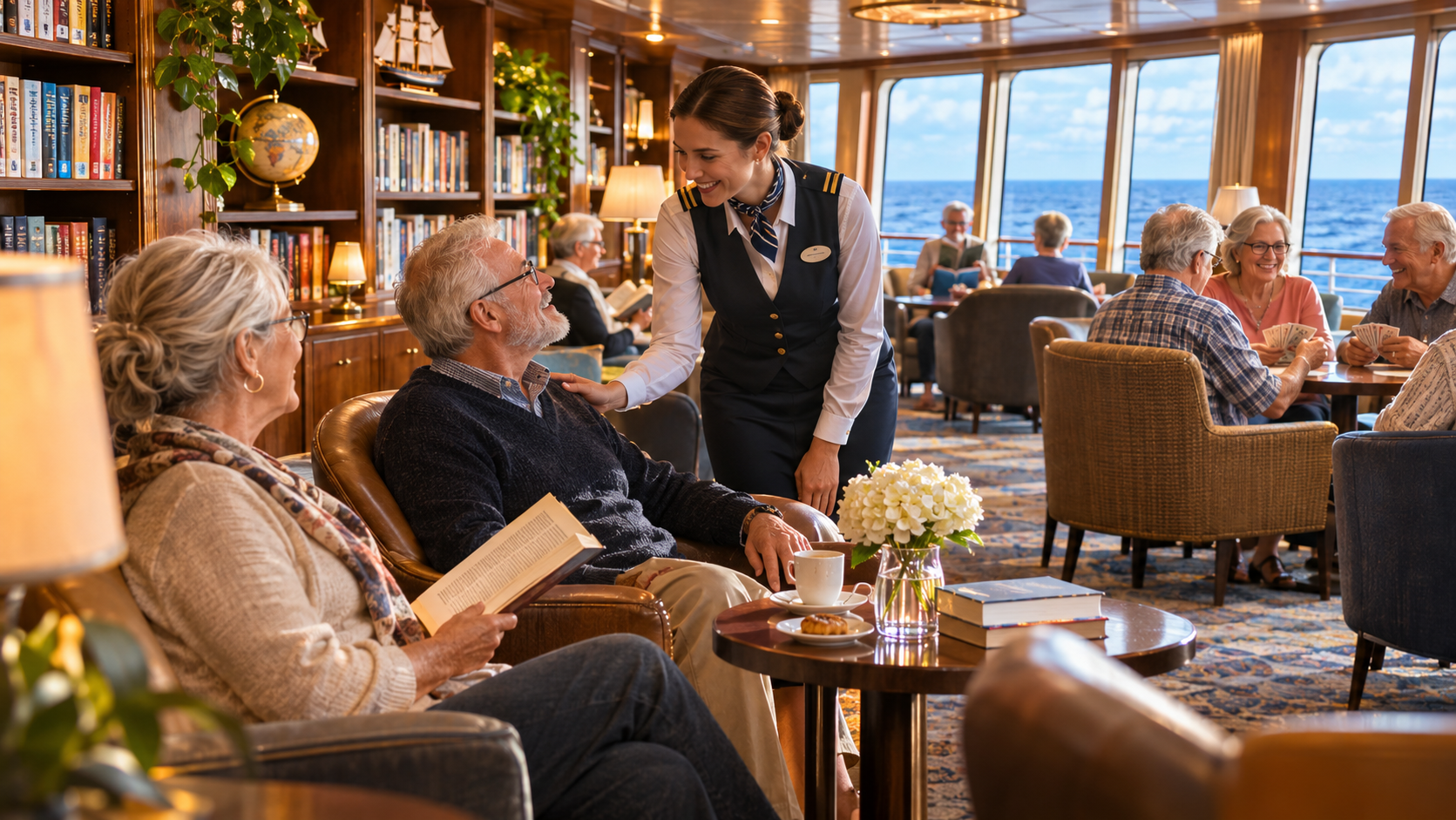
The fear most people voice is simple: will I get bored? In our experience, the opposite problem is more common at first. A ship offers talks, classes, music, films, a gym, a library, deck games, and a new port most days. Long stay guests learn to pace themselves, exactly as they would at home. Not every excursion, not every show, not every dessert.
A few habits make long stays genuinely comfortable:
Build a routine. A regular breakfast spot, a morning walk on deck, a favourite corner for reading. Routine is what turns a ship into a home, and ports and sea days then alternate like weekdays and weekends.
Use the services. Laundry and pressing services exist precisely so you do not need a suitcase per month. Pack for about two weeks, in layers, and let the ship wash the rest. Formal nights on most lines are now optional and few, so a small number of smarter outfits covers a season.
Look after health deliberately. Bring medication in your hand luggage, in quantities arranged in advance with your pharmacist and doctor for the full length of the trip, and keep a simple list of what you take. Know where the medical centre is. Choose insurance that fits a long trip. None of this is complicated, but all of it has to be done before embarkation, not from the middle of the Atlantic.
Stay connected on your terms. Ship Wi Fi is now good enough for messages, email, and video calls with family, which matters over months away. Many long stay guests set a rhythm, a weekly family call, photos from each port, and then put the phone away and go back to the sea.
Let the crew become familiar faces. On a long stay, the crew stops being staff and becomes your neighbourhood. That familiarity, being greeted by name in the dining room of a ship thousands of miles from home, is the part travellers talk about most when they return.
The Home Side: What a Season Away Requires Ashore
Living at sea for months means someone or something looks after life at home. The checklist is unglamorous and essential: arrange for the house to be visited and checked regularly, which many home insurance policies require during a long absence; redirect or pause the mail; prepay or automate the bills; winterise what needs winterising; and tell your insurer, your bank, and your mobile provider that you will be away for a season.
Pets deserve an honest sentence. Dogs and cats cannot come aboard conventional cruise ships, so a season at sea means a trusted person or a good boarding arrangement at home, planned with the same care as the chain itself. Many travellers build their first chain at 90 days partly for this reason: long enough to live the experience, short enough for the arrangements at home to stay simple.
Finally, keep one folder, paper or digital, with the whole chain in order: every booking, every transfer, every hotel night ashore, insurance documents, and emergency contacts. When a chain runs for months, that folder is the difference between relaxing and rummaging.
Three Shapes of a Season
| Season shape | How it is built | Who it suits |
|---|---|---|
| 90 days | One long anchor sailing, plus one or two sailings before or after, often a single region and a crossing | First time long stay travellers, snowbirds testing the idea |
| 120 days | An anchor voyage, a transatlantic bridge, and a second region, with short hotel stays at the joins | Travellers who want two seasons in one: for example the Caribbean, then Europe |
| 180 days | A full season chain across several regions, following the fleets as they reposition, with the buffer rules applied at every join | Retirees ready to make the sea their home for half the year |
The ÆRIA Recommendation
Ocean Living is not about collecting ports. It is about giving yourself a season of life that is simpler, warmer, and more interesting than the winter you would have spent at home, in a home that moves.
Our recommendation is to start with the honest version: a first chain of about 90 days, a balcony cabin, a full day of buffer at every change of ship, and a complete budget costed before anything is booked. If the season proves what we think it will, the 180 day version plans itself the following year, and you will already know which ship feels like home.
At ÆRIA Voyages and ÆRIA Expeditions, this is the work we are building ÆRIA Ocean Living to do: chaining real sailings, on real dates, with the joins protected and the numbers shown plainly, so that a season at sea is a plan you can trust, not a daydream.
Ready to plan your season at sea?
Talk to a long stay cruise specialist today!
Yvan Junior Blanchette
Travel and Cruise Specialist
ÆRIA Voyages | ÆRIA Expeditions
☎️ 1 888 460-3388 or 450-820-9720
✉️ yvanblanchette@aeriavoyages.com
🌐 aeriavoyages.com

Member discussion: