

Costa Cruises: What it is, How it works, and What to expect
Cruise guide · Updated 2026 · Mainstream · Italian · European market focus · Carnival Corporation · LNG flagship ships · Mediterranean depth
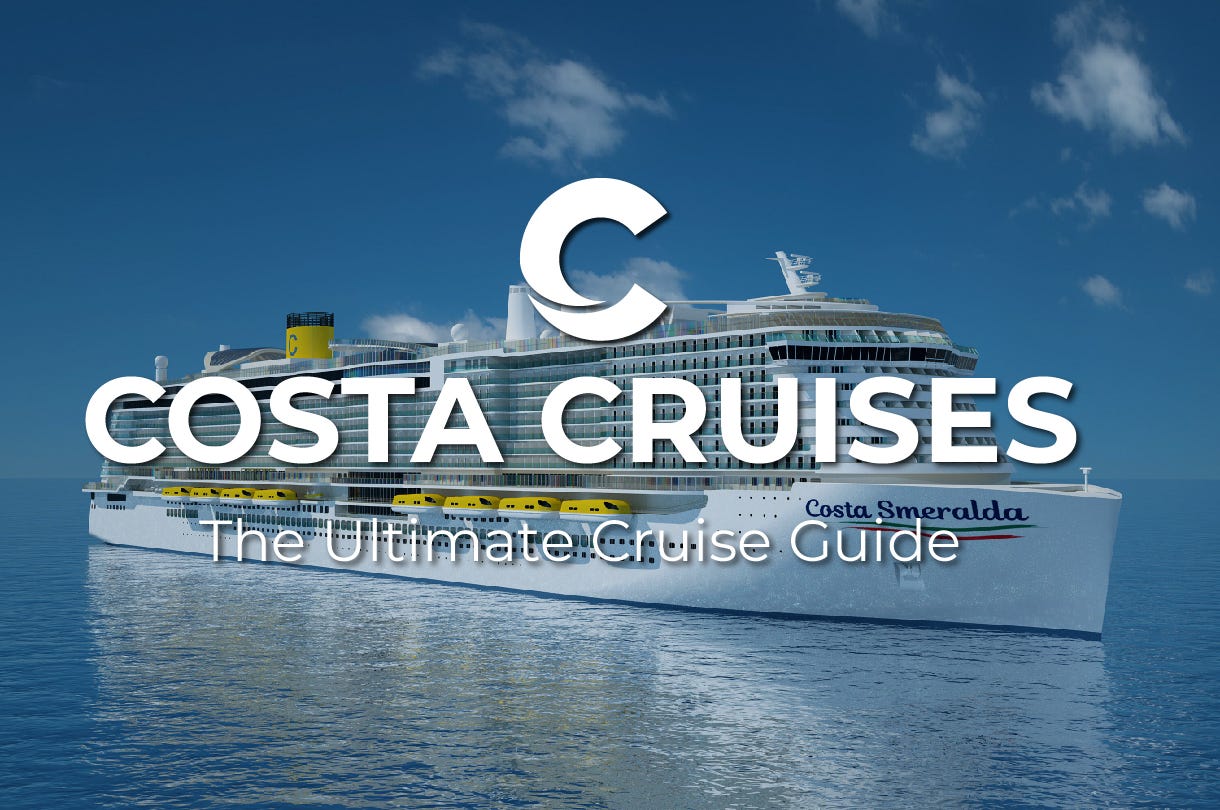
Costa Cruises is the oldest and most Italian of the major cruise lines. Founded in Genoa in 1854 as a shipping and trade business, it began passenger services in 1948 and has operated Mediterranean cruises continuously since the 1950s.
It is a wholly owned subsidiary of Carnival Corporation and the company’s primary vehicle for the European, particularly Italian, French, and Spanish, market. No other mainstream cruise line has the same depth of Mediterranean identity: the language aboard is primarily Italian, the cuisine is shaped by Italian regional tradition, the dining structure retains the formal seating assignment that Freestyle Cruising has made almost extinct elsewhere, and the itinerary programme exists to show its largely European guest base the Mediterranean and the world through an Italian sensibility.
This guide covers Costa’s history from 1854 through its acquisition by Carnival, the Costa Concordia disaster of 2012 and the fleet transformation that followed, the ships active in 2026, what is and is not included, the beverage package structure, the Italian dining and atmosphere, the Sea Destinations programme, and how Costa compares to the mainstream competition for the English-speaking traveller considering a European cruise.
A brief history of Costa Cruises
The company that would become Costa Cruises was founded in Genoa in 1854 by Giacomo Costa as a trading business dealing in fabrics and olive oil between Genoa and Sardinia. The first ships carried cargo and bore the names of family members. In 1924 Giacomo Costa passed the business to his three sons, and in 1948 the company launched its first passenger voyage: a sailing aboard the Anna C between Genoa and South America. These early voyages were ocean liner services in the classical sense, connecting Italy with the Italian emigrant communities of Argentina and Brazil.
Purpose-built cruise ships arrived in 1964. By 1980, the company, then operating under the name Linea C, had twelve ships and the world’s largest passenger fleet. In 1986, Linea C became Costa Cruises, with leisure cruising as its defined core business. The line built its identity around Italian hospitality, Mediterranean itinerary depth, and the formal dinner culture of the great liner tradition.
In 1997, Costa was acquired jointly by Carnival Corporation and the UK tour operator Airtours. Carnival purchased Airtours’ stake in 2000, making Costa a wholly owned Carnival Corporation subsidiary. Under Carnival ownership, a new building programme began: Costa Atlantica, delivered in 2000, was the largest ship ever built by a European company at the time, and the first Costa ship to feature balconies.
On January 13, 2012, Costa Concordia, then the largest ship in the fleet at 114,137 gross tons, ran aground off the coast of Isola del Giglio in the Tyrrhenian Sea after its captain deviated from the standard course for an unauthorised close maritime pass of the island. The ship struck a rock, tearing a 53-metre gash in the hull. Thirty-two people died. Captain Francesco Schettino was convicted of manslaughter and abandoning ship. The disaster resulted in the most expensive and complex maritime salvage operation in history, the complete scrapping of the ship by 2017, and profound and lasting changes to safety procedures, bridge protocols, and muster drill requirements across the entire cruise industry.
The Costa Concordia disaster triggered a sustained contraction of the fleet. Multiple ships were sold, transferred to Carnival’s other brands, or retired. Costa Venezia and Costa Firenze were transferred to Carnival Cruise Line under the “Carnival Fun Italian Style” programme. Costa Luminosa was transferred to Carnival Cruise Line as Carnival Luminosa. Costa Fortuna was sold to Margaritaville at Sea and will leave the Costa fleet in September 2026. The result is a leaner, newer fleet centred on two world-class flagship ships.
The fleet in 2026
Costa operates approximately eight ships in 2026, a significantly reduced fleet compared to its pre-Concordia peak. The fleet spans two eras of design, with the most important distinction being between the two LNG flagship ships and the older mid-generation vessels.
Costa Smeralda and Costa Toscana: the flagship generation
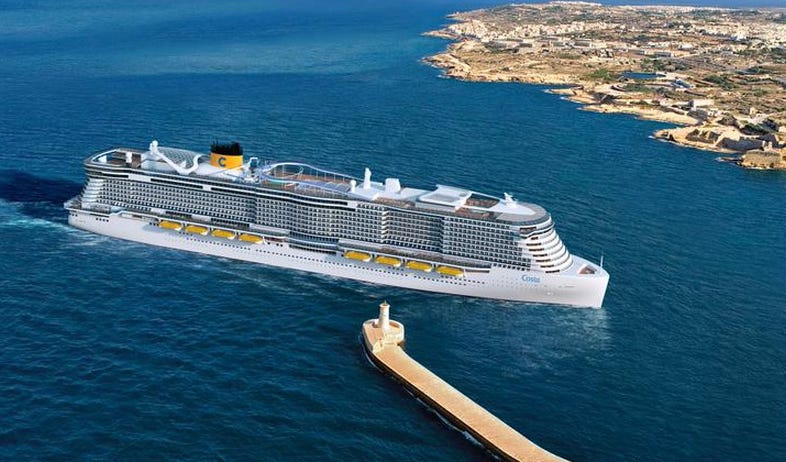
Costa Smeralda (2019) and Costa Toscana (2021) are the largest ships in the Costa fleet and, at the time of their introduction, the first cruise ships in the world fully powered by liquefied natural gas. Both were built at Meyer Turku in Finland under a Carnival Corporation order that also produced AIDA’s AIDAnova and AIDAcosma, P&O’s Iona and Arvia, and Carnival’s Mardi Gras, Celebration, and Jubilee, making the Excellence/Helios class one of the most widely deployed ship designs across the Carnival fleet.
At 183,000 gross tons each, carrying approximately 6,554 guests at double occupancy in over 2,600 cabins, they are among the ten largest cruise ships in the world. Both are Italian-flagged and represent Costa’s most deliberate effort to position the brand in the contemporary megaship era while retaining the Italian identity that defines the company.
Costa Smeralda sails primarily from Savona and Genoa on Western Mediterranean itineraries. Costa Toscana, designated the flagship, operates from Genoa on a consistent weekly departure pattern to Western Mediterranean ports including Marseille, Barcelona, Cagliari, Naples, and Rome (Civitavecchia).
The two ships feature the Archipelago, a signature fine dining venue created in partnership with Michelin-starred chefs Hélène Darroze and Ángel León, as well as a pizzeria, teppanyaki, sushi, and standard Italian main dining rooms. The onboard design emphasises Italian contemporary aesthetics, with significant art and design installations specific to each ship’s regional Italian theme: Smeralda (Sardinia), Toscana (Tuscany).
The mid-generation fleet
The remainder of the Costa fleet in 2026 consists of ships built between 2007 and 2012, including Costa Serena, Costa Pacifica, Costa Favolosa, Costa Fascinosa, Costa Diadema, and Costa Deliziosa. These are Concordia-class and related designs at approximately 92,000 to 132,000 gross tons, carrying 3,000 to 3,700 guests each. They are older, smaller, and less feature-dense than the LNG flagships but serve a specific purpose: they operate itineraries in Southern Europe, the Caribbean, South America, the Arabian Gulf, and the Indian Ocean that the megaships cannot serve due to port size constraints or seasonal repositioning requirements.
Costa Fortuna, a 102,587-gross-ton ship built in 2003, departs the fleet in September 2026 following its sale to Margaritaville at Sea.
Costa fleet at a glance (2026)
Costa Smeralda: 183,000 GT, approximately 6,554 guests, LNG, 2019, Savona/Western Mediterranean
Costa Toscana: 183,000 GT, approximately 6,554 guests, LNG, 2021, Genoa/Western Mediterranean flagship
Costa Serena, Pacifica, Favolosa, Fascinosa: Concordia class, approximately 114,000 GT, 3,780 guests each, 2007 to 2012
Costa Diadema: approximately 132,500 GT, 3,700 guests, 2014
Costa Deliziosa: approximately 92,700 GT, 2,828 guests, 2010
Costa Fortuna: leaving fleet September 2026
What is and is not included
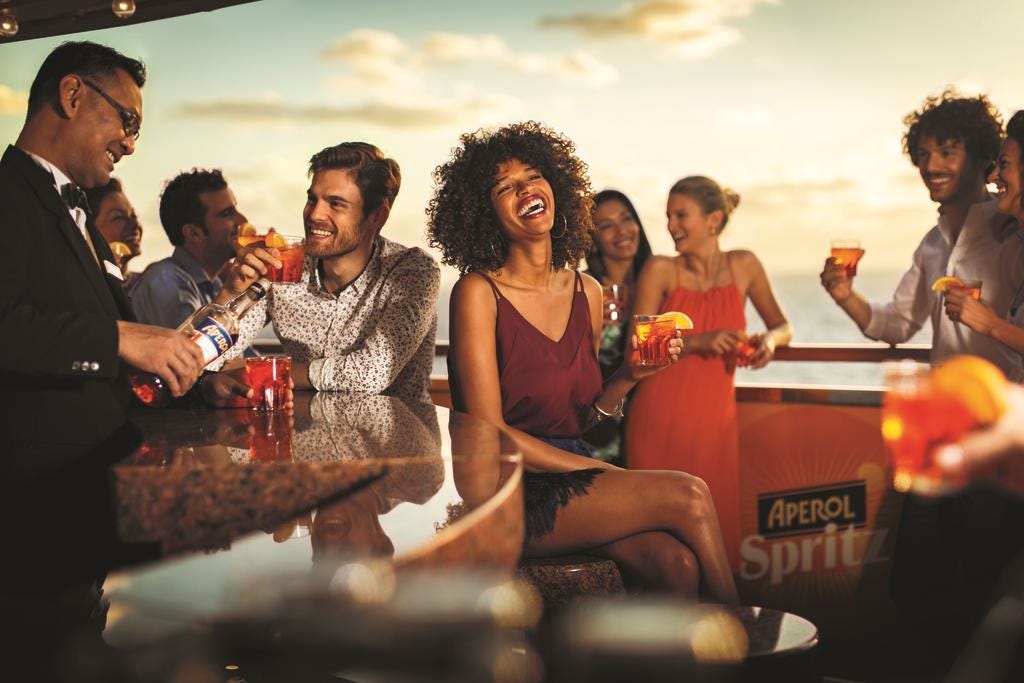
Costa is not a fully all-inclusive cruise line at the base fare level, though beverage packages are available that can make the experience meaningfully more inclusive.
Included in every Costa fare:
Accommodation in the booked stateroom
All meals in the main dining room at the assigned seating time, and the buffet throughout the day
Entertainment including theatre shows, live music, and most onboard activities
Use of pools, sports deck, fitness facilities, and standard recreation
Youth programmes: Mini Club, Junior Club, Young Club, and Teen Club for different age groups
Port taxes and fees
Not included in the standard fare (significant additional costs):
All alcoholic beverages, sodas, and specialty coffees: charged separately unless a beverage package is purchased
Wi-Fi: sold separately as a package
Gratuities: charged per person per day, typically 12 to 15 euros depending on itinerary region, applied automatically to the onboard account
Specialty dining at the Archipelago and other premium restaurants
Shore excursions
Spa treatments
The beverage package structure
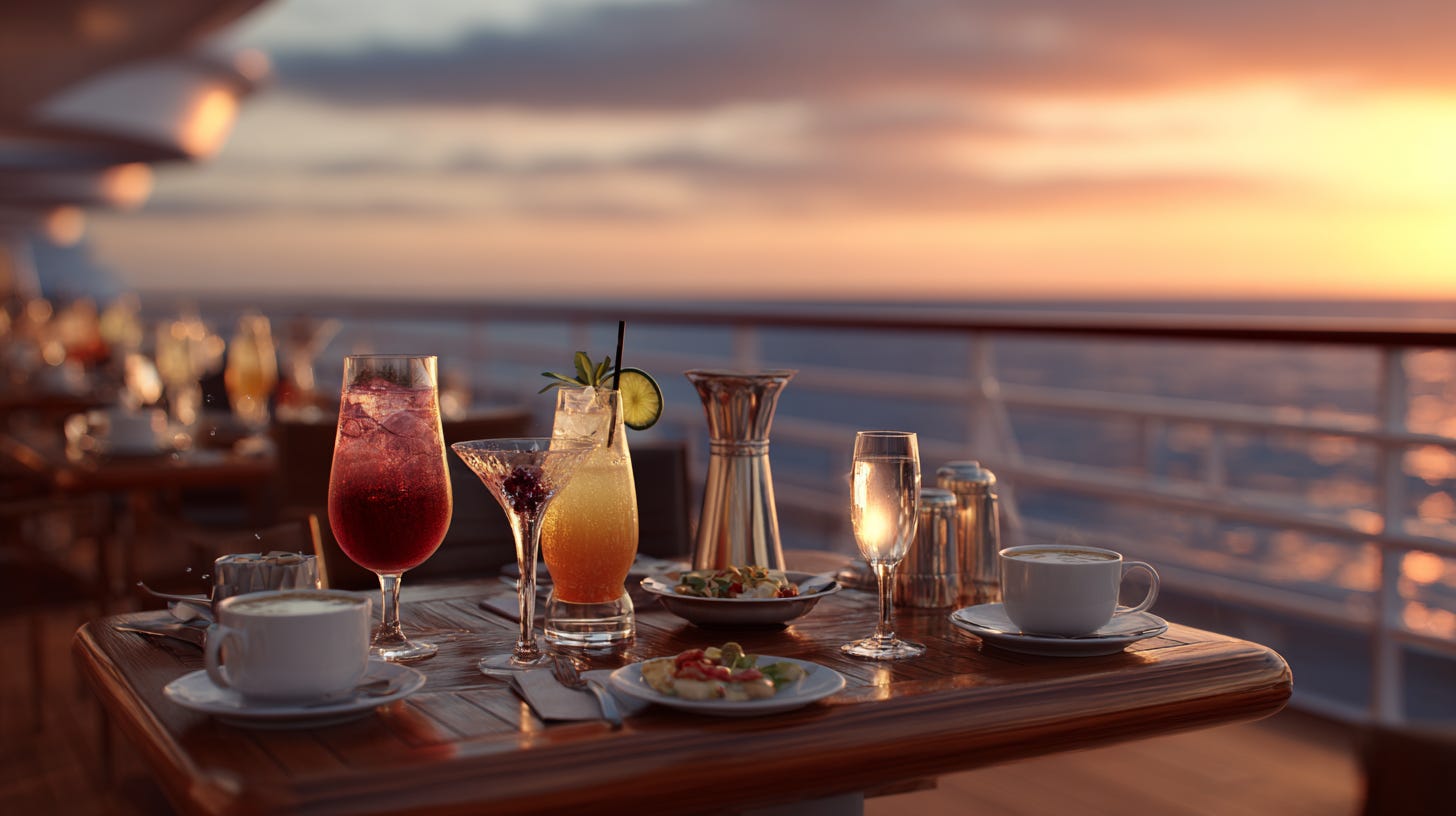
Costa offers several beverage packages that can be purchased in advance or onboard:
My Drinks covers a wide selection of alcoholic beverages, wines, beers, soft drinks, and coffees across the ship’s bars and restaurants during specified hours. It represents the standard all-inclusive beverage option for most guests.
My Drinks Plus expands the selection to include premium and molecular cocktails, premium beer brands, and additional spirit categories. It is included in the All Inclusive Suite and Super All Inclusive Suite fare categories for suite guests.
The All Inclusive fare tier, available for booking, bundles the My Drinks package with gratuities into a single per-day rate, simplifying the onboard accounting for guests who want to know their total cost before boarding. When properly compared against the à la carte cost of beverages plus daily gratuities, the All Inclusive fare frequently represents genuine value for guests who drink regularly throughout the day.
The standard fare covers accommodations, meals, and entertainment. Guests who want to include beverages and gratuities must either purchase the All Inclusive fare tier or add the My Drinks package and pay gratuities separately.
The Italian atmosphere: what it means in practice
Costa’s Italian identity is not a design theme. It is the operational reality of a ship built for a predominantly Italian-speaking guest base, and it is the most important thing for an English-speaking guest to understand before booking.
On most Costa itineraries, the majority of passengers are Italian. Menus, show announcements, daily programmes, and entertainment are presented in Italian first, followed by other European languages including English, French, German, and Spanish. Every Costa ship has an English-speaking representative available to assist non-Italian guests, and the front desk staff communicate in multiple languages. The Captain’s announcements are typically made in four or five languages. But the ambient social culture of the ship, the conversations at neighbouring tables in the main dining room, the entertainers at the pool bar, and the rhythm of onboard life are Italian. Guests who embrace this as part of the attraction of a Costa sailing, rather than treating it as an inconvenience, consistently have the best experiences.
The dining structure reinforces the Italian character. Rather than the Freestyle model that has become standard across American-owned mainstream lines, Costa retains fixed seating in the main dining room: guests are assigned to either the early or late seating and a specific table, returning to the same table each evening for the duration of the voyage. This produces a social dynamic that many European guests consider a feature: the table becomes a social unit, companions become familiar over the course of the cruise, and the relationship between guests and their assigned waiters develops over multiple dinners. Guests who prefer to eat alone on their own schedule will find this structure less comfortable.
The food in the main dining room is Italian in orientation, with rotating daily menus that incorporate regional Italian dishes and reflect the ports on the current itinerary through the Sea Destinations programme. Dinners are multi-course: antipasto, primo, secondo, contorno, and dessert are all standard offerings, and the pacing reflects Italian dinner culture rather than the faster turnover common on American mainstream ships. Bruno Barbieri, a Michelin-starred Italian chef and television personality, creates destination menus aligned to specific port calls.
Formal evenings are retained on Costa ships. On designated gala nights, suits or tuxedos for men and cocktail or evening dress for women are the expectation in the main dining room and most bars. The Italian guests, as a general observation, dress accordingly. English-speaking guests who are unused to formal evening expectations on a mainstream ship should be aware that Costa’s formal night culture is genuine rather than honorary.
The Sea Destinations programme
Launched in 2024, Sea Destinations is Costa’s structured approach to connecting the onboard experience to the ports visited on each itinerary. It operates through destination-specific menu offerings in the main dining room, curated by Michelin-starred chefs to reflect the cuisine of upcoming port cities; onboard cultural programming, lectures, and tastings related to the destination; and specially designed shore excursions built around the local food, wine, and artisan culture rather than general sightseeing.
The programme reflects a deliberate brand repositioning after the post-Concordia fleet reduction: with fewer ships and a more focused fleet, Costa has invested in making the connection between the ship and the destination more textured and less generic. A sailing to Naples is not merely a port call: the evening before, the main dining room will serve dishes from the Campania region. The morning of the port call, a morning briefing introduces the history and culture of the city. The shore excursion option in Naples includes a food-market visit and a hands-on cooking experience rather than only a bus tour.
How Costa compares to other mainstream lines
Costa Cruises
Best for: The deepest Italian cruise identity of any mainstream line, formal dining culture with fixed seatings and genuine multi-course Italian menus, the most authentic European atmosphere for guests whose primary comparison point is European holidaying rather than American resort cruising, the Sea Destinations culinary and cultural programme, and two world-class LNG flagship ships sailing the Western Mediterranean year-round. The lowest price point in the Carnival Corporation mainstream portfolio for European sailings, making Costa attractive on value for guests who want a Mediterranean cruise without the premium of MSC’s comparable flagship ships.
MSC Cruises
Best for: A broader range of ships and itineraries, the MSC Yacht Club all-inclusive ship-within-a-ship experience, flexible dining options through the Aurea experience tier, and a slightly more cosmopolitan (less specifically Italian) passenger mix. The MSC World Class ships at 215,863 gross tons exceed Costa Smeralda and Toscana in size and feature density.
Norwegian Cruise Line
Best for: Freestyle Cruising with no fixed dining times or dress codes, the widest solo studio cabin programme in the mainstream market, The Haven ship-within-a-ship, and Pride of America for Hawaii. An American product for guests who prefer flexibility over the structured Italian dining culture of Costa.
Royal Caribbean International
Best for: The largest ships in the world and the most activity-dense onboard experience in mainstream cruising. A more American product orientation. Far less Italian in character or Mediterranean programme depth.
Carnival Cruise Line
Best for: The most accessible price points in the Carnival group, a younger and more high-energy social atmosphere, and a product explicitly designed for the North American market. Carnival Fun Italian Style ships (Costa Venezia and Costa Firenze, now sailing as Carnival ships from US ports) offer a diluted version of the Costa aesthetic for American guests who want a hint of Italian design without the language and cultural immersion of a full Costa sailing.
Who Costa is best suited for
Costa works best for a specific profile of traveller, and the language and dining culture do more filtering than any feature comparison.
European travellers, particularly those from Italy, France, Spain, Germany, and Switzerland, for whom Costa’s Italian-first atmosphere and formal dinner culture represent a familiar and desirable holiday format.
English-speaking guests who actively want immersion in an Italian environment and see the predominantly Italian passenger base as an attraction rather than an obstacle. These are guests who choose Costa for the same reason they might choose to stay in an Italian family-run hotel rather than an international chain.
Guests who value the formal dinner structure: fixed seating, assigned tables, multi-course Italian menus, and the social continuity of seeing the same table companions each evening.
Mediterranean specialists who want the widest port-call programme in the region at an accessible price, including port combinations that larger and more expensive lines do not offer.
Guests travelling from European departure ports — Genoa, Savona, Marseille, Barcelona, Civitavecchia — who want to board without a transatlantic flight and sail to ports within driving or train distance of where they are already.
Costa is less suited to guests who want Freestyle dining flexibility and no fixed meal times, those who want English as the primary ambient language of the ship, guests whose primary interest is the most feature-dense onboard entertainment experience, or solo travellers seeking the studio cabin and reduced single supplement model that NCL pioneered.
Frequently asked questions
Is Costa Cruises all-inclusive?
Not at the standard base fare level. The standard fare covers accommodation, main dining room meals, the buffet, entertainment, and pool access. Alcoholic beverages, sodas, specialty coffees, Wi-Fi, gratuities, specialty dining, and shore excursions are charged separately. The All Inclusive fare tier bundles the My Drinks beverage package and gratuities into the fare, creating a genuinely all-inclusive food, beverage, and service experience without further daily charges beyond optional extras.
Is Costa primarily an Italian cruise line? Will I be comfortable as an English speaker?
Costa was founded in Genoa and its primary market remains Italian and European. On most itineraries, the majority of passengers are Italian and the ambient atmosphere is Italian in language, dining pace, and social culture. Every ship has an English-speaking guest representative, multi-language announcements, and English-language menus and programmes. Guests who embrace the Italian atmosphere tend to love Costa; those who expected an English-first environment sometimes do not. It is the most honest and important thing to know before booking.
What happened to Costa Concordia and how has the fleet changed since?
Costa Concordia ran aground off Isola del Giglio on January 13, 2012, killing 32 people after the captain deviated from the standard course for an unauthorised close pass of the island. The disaster was the largest peacetime maritime salvage operation in history and resulted in the ship’s total loss and the captain’s criminal conviction. In the years following, Costa significantly reduced its fleet through sales, transfers to Carnival’s other brands, and retirements. Three ships transferred to Carnival Cruise Line (Venezia, Firenze, Luminosa). Costa Fortuna was sold to Margaritaville at Sea and leaves the fleet in September 2026. The result is a leaner fleet of approximately eight ships centred on the two LNG flagships.
What are Costa Toscana and Costa Smeralda, and why do they matter?
Costa Toscana and Costa Smeralda are the two newest and largest ships in the Costa fleet, each at 183,000 gross tons carrying approximately 6,554 guests. They are LNG-powered, among the first cruise ships in the world to run entirely on liquefied natural gas, and share a Carnival Corporation hull design also used for P&O Iona and Arvia, and Carnival’s Mardi Gras and Celebration. They are the operational flagships of the modern Costa brand and represent the line’s best current product: Italian design identity, the Archipelago fine dining venue with Michelin-starred chef partnerships, and the Sea Destinations cultural programming at full scale.
What is the Sea Destinations programme?
Sea Destinations is Costa’s structured connection between onboard life and the ports on each itinerary, launched in 2024. It delivers destination-specific menus in the main dining room curated by Michelin-starred chefs, onboard cultural lectures and tastings related to upcoming ports, and specially designed shore excursions focused on food, wine, and local artisan culture. The programme is most developed on the LNG flagship ships and represents Costa’s clearest differentiation from the generic port-call format of other mainstream lines.
Does Costa have formal nights?
Yes. Costa retains formal gala evenings on most sailings, on which suits or tuxedos for men and cocktail or evening dress for women are the expectation in the main dining room and most bars. The predominantly Italian and European passenger base tends to embrace this tradition genuinely, and the atmosphere on gala evenings reflects that. English-speaking guests who are comfortable with formal attire typically enjoy the experience. Guests who find formal evening requirements inconvenient should consider this before booking.
Plan your next Costa Cruise with ÆRIA Voyages
Every Costa voyage is different depending on the ship, the itinerary, and whether the goal is the LNG flagship experience or a port-intensive Mediterranean programme on one of the mid-generation ships. I help clients navigate those choices: from selecting Costa Toscana for a flagship Western Mediterranean experience to understanding whether Costa or MSC better serves a client’s priorities on a specific sailing, to advising English-speaking travellers on what to expect from an Italian-first ship culture.
If you are curious about pricing, current availability, or whether Costa Cruises is the right fit for your travel vision, I would be glad to talk it through.
Yvan Junior Blanchette
Travel & Cruise Specialist
ÆRIA Voyages📩 yvanblanchette@aeriavoyages.com
📞 1-888-460-3388
🌐 aeriavoyages.com