

The Ultimade Guide to G Adventures: What It Is, How It Works, and What to Expect
Updated 2026 · Small-group adventure travel · Canadian-founded · 1,000+ itineraries · 100 countries · All 7 continents
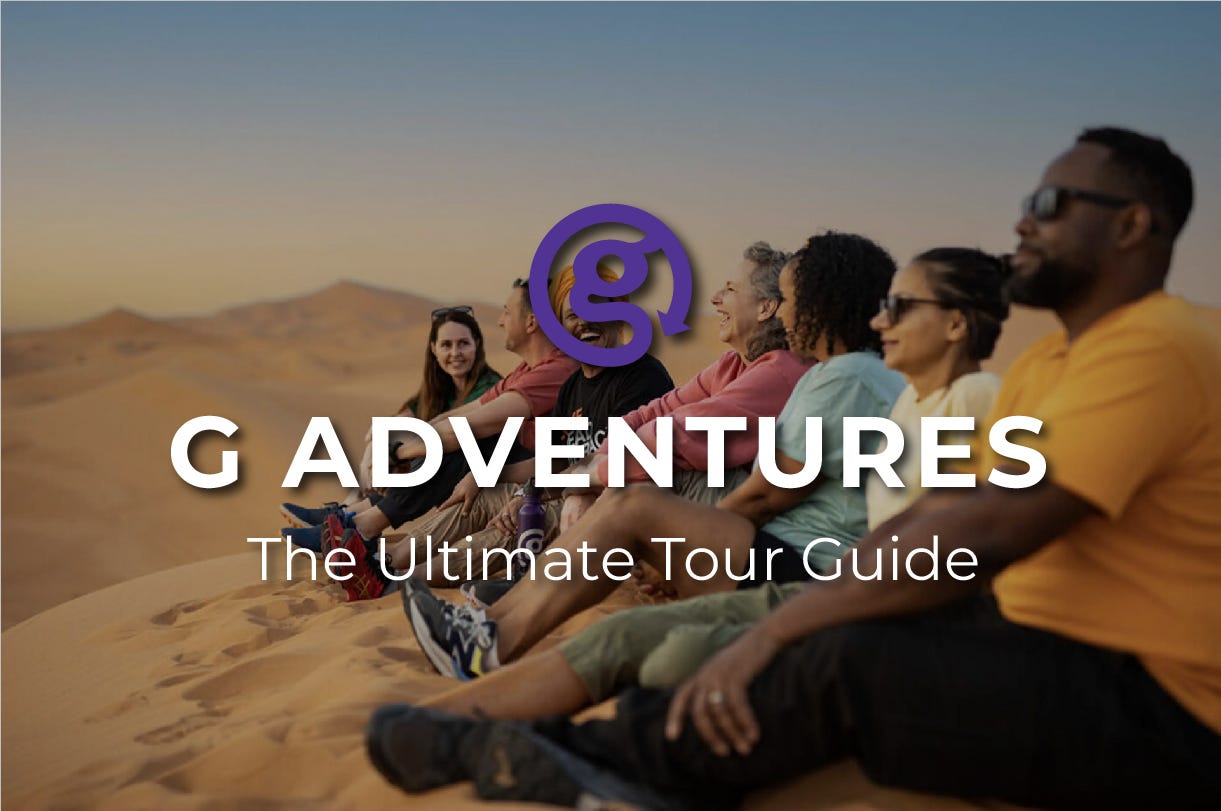
G Adventures is not a tour operator that happened to develop a social conscience. It was built around one from the beginning. When Bruce Poon Tip co-founded the company in Toronto in 1990, maxing out two credit cards to fund the first trips because no bank would lend him money, his founding conviction was specific: that travel done correctly could connect global cultures and distribute wealth more equitably than almost any other human activity.
Thirty-five years later, G Adventures operates more than 1,000 itineraries across 100 countries on all seven continents, is the most successful adventure travel company in the world, has been named an Officer of the Order of Canada by its founder, and has introduced more new travel formats in the past three years than in the previous decade combined. Geluxe. Solo-ish. Roamies. National Geographic Signature with G Adventures. Each is a different answer to the same question: what does meaningful small-group travel look like for a different kind of traveller?
This guide covers G Adventures’ founding story and the Planeterra Foundation, the Chief Experience Officer model, every travel style in the 2026 portfolio with what distinguishes each one, what is and is not included, the Ripple Score, the G for Good philosophy, the National Geographic partnerships at two distinct levels, how G Adventures compares to competitors, and who each travel style is best suited for.
Table of Content
🎧 LISTEN TO THE BEYOND THE HORIZON PODCAST

A brief history of G Adventures
Bruce Poon Tip was born in Port of Spain, Trinidad, to a Chinese father and a Chinese-Venezuelan mother, and moved to Calgary, Alberta at age six. He studied tourism and worked at the Toronto office of Australian tour operator Worldwide Adventures, where he met Anita Voth, his eventual co-founder. In 1990, the two co-founded G.A.P Adventures, with the letters standing for Great Adventure People and for bridging the gap between backpacking and organised group travel. Unable to secure bank financing, Poon Tip funded the first departures on two maxed-out credit cards.
The first trip G Adventures ever offered was a homestay with an Amazonian tribesman named Delfin and his family in Ecuador. It is still in the catalogue today. That continuity is not incidental: the founding partnership, a traveller paying a local family for direct accommodation, is the purest expression of what G Adventures calls community tourism, and it has never stopped being the model’s core.
The company grew at 40 percent annually through the 1990s and 2000s, including through the 2008 global recession, during which Poon Tip turned down a 100-million-dollar offer to sell the company. In 2003, he founded the Planeterra Foundation, a non-profit partner organisation whose mandate is to channel tourism supply chain spending into sustainable social enterprises in underserved communities. In 2013, Poon Tip published Looptail: How One Company Changed the World by Reinventing Business, which debuted at number one on the Globe and Mail hardcover non-fiction list and was the first business book to carry a foreword by the Dalai Lama.
The company rebranded from GAP Adventures to G Adventures in 2011 to avoid confusion with Gap Inc., the clothing retailer. In 2015, it launched the National Geographic Journeys partnership. In 2024 and 2025, it introduced three of its most successful new products in company history: Geluxe, Solo-ish, and National Geographic Signature with G Adventures, each exceeding sales projections.
G Adventures is headquartered in Toronto, Ontario, with 28 offices worldwide. It operates on all seven continents, including Antarctica via its expedition ship programme, and has 100,000 or more travellers per year. In October 2025, the company launched a new expedition ship with an estimated 30 percent lower carbon footprint per person per day than its predecessor.
Bruce Poon Tip was appointed an Officer of the Order of Canada, becoming the first person in the travel industry to receive this honour in 34 years.
The Chief Experience Officer: the model’s defining role
Every G Adventures tour is led by a CEO, a title that within G Adventures does not stand for Chief Executive Officer but for Chief Experience Officer. These are locally based guides who live in the destination, speak its languages, know its off-the-beaten-track possibilities, and have a working relationship with the Planeterra community projects that appear in their itinerary region.
The distinction matters because the CEO is not a guide hired per departure from a pool. G Adventures recruits, trains, and retains CEOs as full employees, with ongoing professional development, benefits, and a career pathway within the company. The practical effect is that a CEO in Morocco has spent years building relationships with the artisan families, guesthouse owners, and community enterprises that make the local experience distinctive. This is not something that can be replicated by rotating contract guides.
CEOs set the social tone of each departure as much as they manage the logistics. G Adventures groups tend toward a particular kind of atmosphere: curious, open, collaborative, self-sufficient enough to appreciate free time without hand-holding, and engaged enough to sit through a community project visit with genuine interest rather than obligation.
The travel styles: a complete portfolio guide
G Adventures does not operate a single product. It operates twelve distinct travel styles in 2026, each with a specific profile, a specific type of accommodation, a specific pace, and a specific type of traveller in mind. Choosing the right travel style matters as much as choosing the destination.
Classic
Classic is where G Adventures started, and it remains the largest part of the catalogue. Classic tours combine the iconic highlights of a destination with authentic local experiences, community project visits, and the structure and spontaneity that define the G Adventures approach. Accommodation is standard service level hotels, guesthouses, jungle lodges, and occasionally homestays, always locally owned where possible. Group size averages 10, with a maximum of 16.
Classic is the best starting point for a first G Adventures trip: it covers more ground per dollar than any other style, offers the widest destination range, and provides enough structure to feel secure without enough rigidity to feel managed.
National Geographic Journeys with G Adventures
The National Geographic Journeys partnership, launched in 2015, produces approximately 80 itineraries combining G Adventures’ community tourism expertise with National Geographic’s storytelling and photography legacy. Every National Geographic Journeys departure includes a Storyteller, a locally based expert who engages travellers in the National Geographic tradition of observation, documentation, and meaning-making in the field. Accommodation is upgraded compared to Classic, with a focus on boutique and character properties. Group size is capped at 12.
National Geographic Journeys are designed for travellers who want the small-group adventure model with a higher accommodation standard and a more explicitly educational and narrative framework. They are the most family-friendly of the G Adventures styles when booked through the National Geographic Family Journeys sub-programme, which adds age-appropriate activity variants and family-focused CEOs.
National Geographic Signature with G Adventures
Launched in late 2025, National Geographic Signature represents the company’s entry into genuine luxury small-group travel, and is the most significant product development in G Adventures’ 35-year history. Signature bookings opened in January 2026 for departures beginning in 2027, with an initial lineup of 29 itineraries across South Africa, Vietnam, Japan, Peru, Jordan, and other destinations.
What distinguishes Signature from Journeys is the accommodation and inclusions tier: Signature operates at the level of boutique luxury hotels and private lodges, with a level of service and physical standard comparable to what the ultra-luxury market offers. The G Adventures community tourism component is built into every Signature itinerary as a structural element rather than an optional excursion, which is what G Adventures offered National Geographic as its differentiator: the ability to bring genuine community impact to a product that the National Geographic brand opens to a new, more luxury-oriented audience.
Signature is the product for travellers who want the most meaningful small-group travel available at a luxury accommodation standard, booked through a travel advisor rather than directly.
Geluxe
Geluxe, launched in 2024 and described by Bruce Poon Tip as the most successful product launch in the company’s 35-year history, is G Adventures’ premium active adventure style. It was built around a specific and observed market shift: a generation of active adults aged 50 and above who have remained physically capable well beyond what previous generations expected, who want the adventure and community of small-group travel, but who also want a genuinely comfortable hotel at the end of the day.
Geluxe itineraries are slower-paced than Classic, with more time in each location and a carefully selected accommodation programme built around boutique, locally owned properties with serious wow-factor. An OMG Stay, a handpicked standout property, appears on every Geluxe tour. Meals are elevated, with more included dining and a focus on local gourmet experiences. Activity level is active but not strenuous, typically including hiking, cycling, kayaking, or cultural immersion at a pace that rewards engagement over endurance. Group size is capped at 12.
Geluxe is for travellers who have left the backpacker mentality behind but who have not abandoned the desire for genuine adventure, local connection, and the social energy of a small group of like-minded people.
Solo-ish
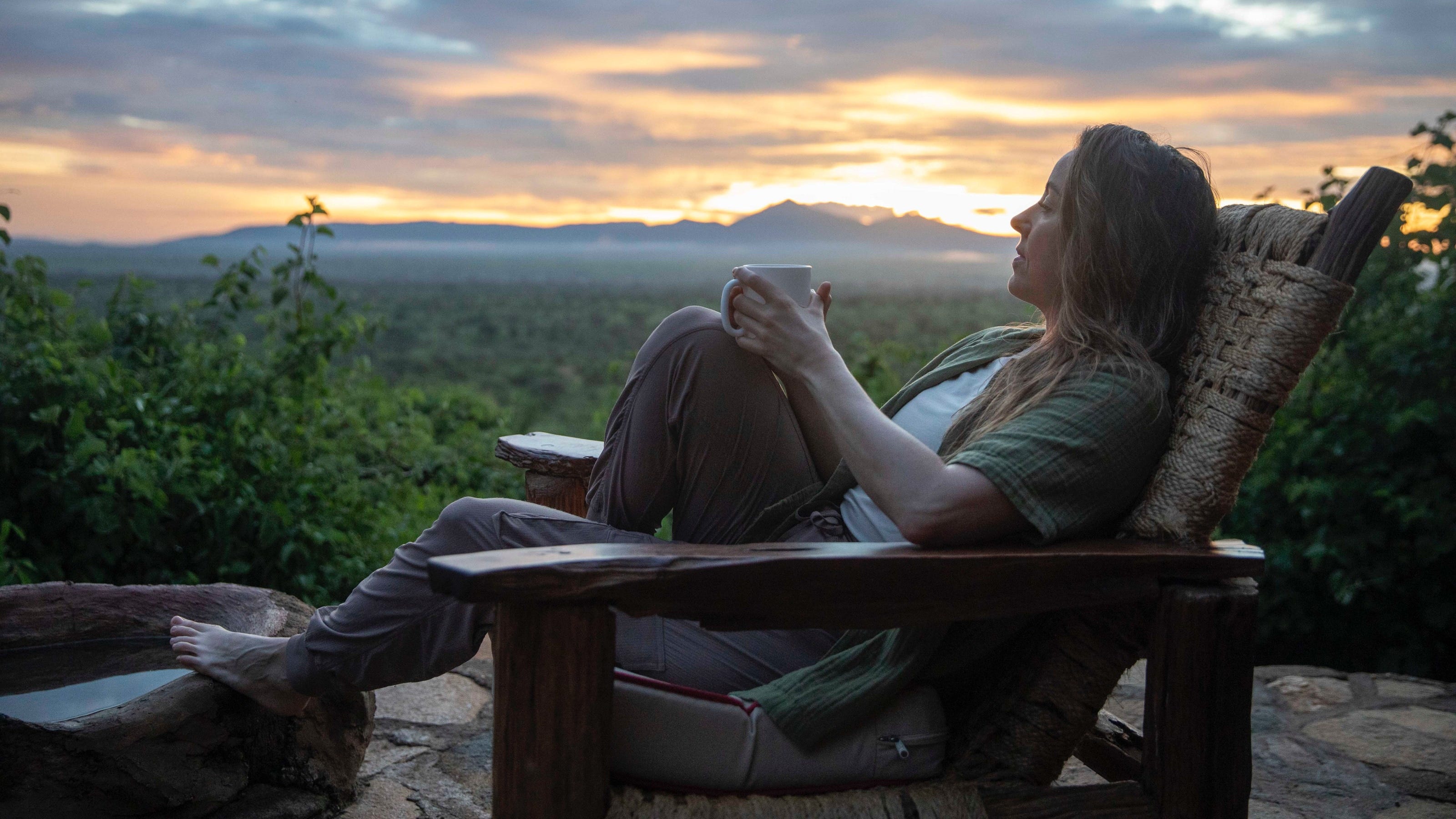
Solo-ish launched in late 2024 and was the most successful product launch the year after Geluxe, which is to say that G Adventures produced back-to-back record-breaking launches. Solo-ish tours are designed exclusively for solo travellers aged 18 and above, with itineraries built from the ground up around the specific social dynamics and practical needs of people travelling alone.
Every Solo-ish departure is led by a female CEO, a deliberate design decision that reflects both the demographic reality that solo travel skews significantly female and the company’s broader commitment to creating employment opportunities for women in tourism. Group size is capped at 12. Itineraries build in structured group bonding early in the trip, dedicated free time for independent exploration, and a social atmosphere that produces genuine connections rather than the awkward politeness of a mixed group where solo travellers are a minority.
Bruce Poon Tip observed that a significant portion of Solo-ish bookings are coming from men in committed relationships whose partners are not interested in adventure travel. Solo-ish has provided a route for that traveller that did not previously exist at this level of intentional design.
35 Solo-ish itineraries are currently available, with destinations including Ecuador and the Galápagos, Japan, Uzbekistan, Cambodia, and more added monthly.
18 to Thirtysomethings
18 to Thirtysomethings tours are age-restricted to travellers between 18 and 39 years old and designed for a faster pace, a more social atmosphere, and a lower price point than Classic. Accommodation leans toward locally owned guesthouses and smaller hotels rather than boutique properties. Group size reaches up to 16. These tours are best for younger travellers who want the structure and logistical ease of a group tour without the cost of Classic, and who want to travel with people in the same life stage.
Roamies by Hostelworld and G Adventures
A partnership between G Adventures and Hostelworld, Roamies targets the 18 to 35 social backpacker demographic. Accommodation is hostel-based. Group size is larger, typically up to 24. The social experience is the primary product: Roamies are explicitly designed for people who want to build a community of fellow travellers as much as they want to visit a destination. Price point is the most accessible in the G Adventures portfolio.
Active
Active tours are built around physical engagement: hiking, trekking, cycling, white-water rafting, kayaking, and camping are the primary activities rather than cultural visits. Standard accommodation ranges from mountain lodges to camping, depending on the itinerary. These tours suit travellers whose primary goal is a physical challenge in an extraordinary landscape, with the community and support of a small group.
Local Living
Local Living tours are week-long immersions in a single area or neighbourhood, with longer stays in fewer places and a much deeper engagement with local daily life than a Classic tour provides. The format is designed for travellers who want to understand what it feels like to live somewhere rather than visit it. Language classes, cooking with local families, working in community gardens, and participating in local events are typical activities. Group size is small. Accommodation is often with local host families or in community-run guesthouses.
Family Journeys by G Adventures and National Geographic
Family tours operate on Classic and National Geographic Journeys itineraries adapted for families with children aged six and above. Activity variants for younger participants, family-focused CEOs, and itinerary design that balances adult cultural interest with child-accessible engagement are the defining features. National Geographic Family Journeys added 14 new itineraries for 2026, including the Egypt Family Journey: Ancient Pyramids and the Mighty Nile, and Day of the Dead in San Miguel de Allende.
Marine
Marine tours use small sailing vessels and expedition ships rather than land transport, providing access to coastlines, island chains, and remote marine environments unreachable by any other means. The Galápagos Islands programme is G Adventures’ most recognised marine product: small-ship expeditions with certified naturalist guides, snorkelling with sea lions and sharks, and wildlife encounters that the archipelago’s strict visitor management programme makes the closest to a truly private experience that the destination allows at a non-ultra-luxury price point. Greece island hopping, the Adriatic coast of Croatia, and Antarctic expedition crossings also fall within the Marine style.
Wellness
Wellness tours combine travel with yoga, meditation, spa experiences, and healthy cuisine, built around destinations whose natural environment and cultural traditions align with the wellness philosophy. Bali, India, and Costa Rica are among the primary Wellness destinations. Accommodation is at boutique wellness retreats and locally owned properties.
What is and is not included
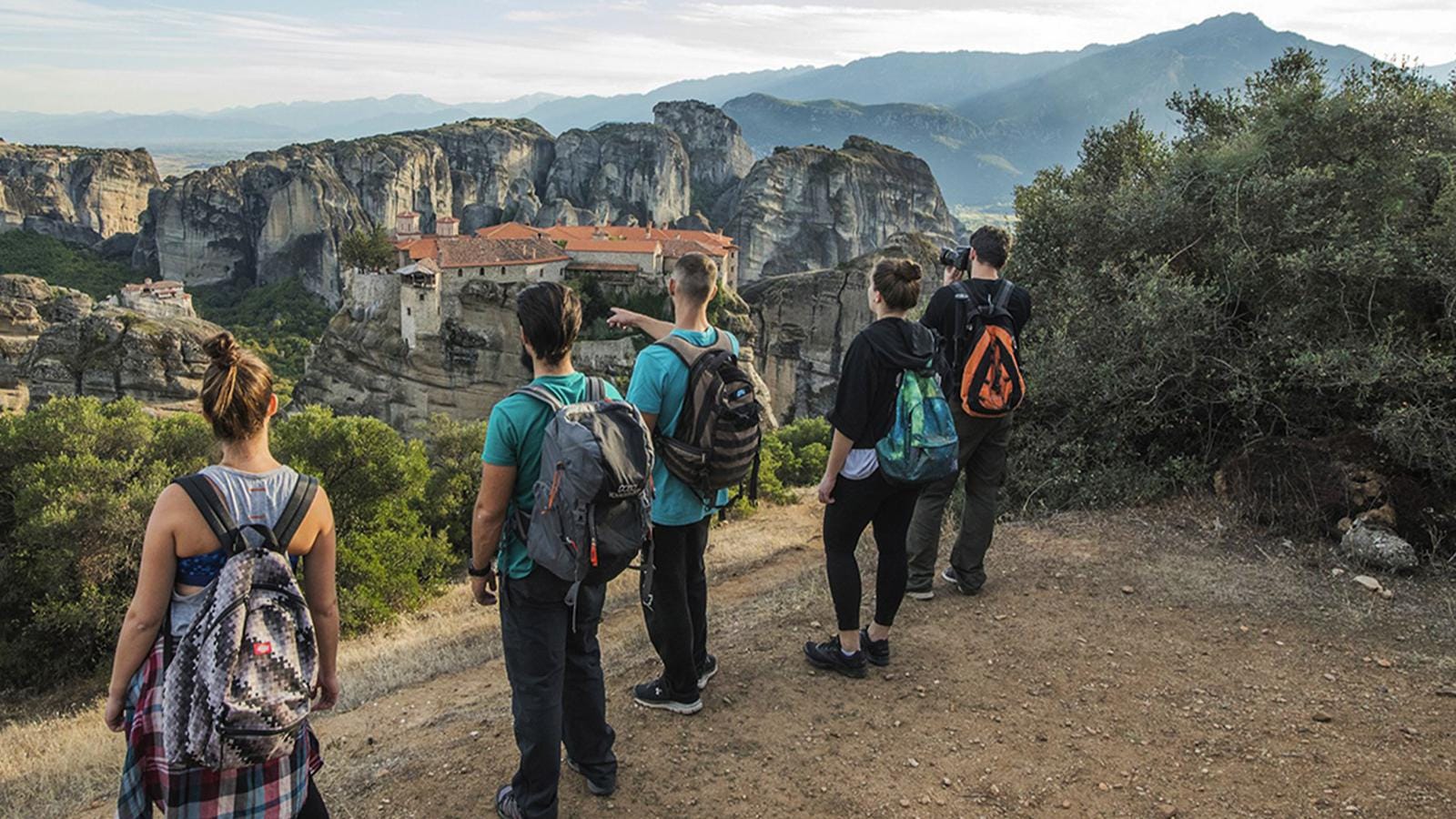
G Adventures does not operate a fully all-inclusive model. The fare covers a specific and clearly defined set of services, and understanding what is and is not included is essential for accurate budgeting.
Included on all G Adventures tours:
All accommodation for the duration of the tour
Ground transportation throughout the itinerary
All activities and entrance fees specifically listed as included in the itinerary
The services of the CEO throughout the tour
A selection of included meals, which varies by itinerary and travel style. Classic tours typically include a proportion of breakfasts and some group meals; Geluxe includes more meals at a higher standard; Roamies includes fewer. The specific meal inclusions are listed on each tour page.
Not included:
International and domestic flights to and from the start and end cities of the tour
Travel insurance, which G Adventures strongly recommends and offers through a partner
Meals not listed as included in the itinerary, which on most tours is the majority of lunches and many dinners, giving travellers flexibility to choose their own restaurants
Optional activities beyond those listed as included
Visas and passport fees
Personal spending money, gratuities
The meal model is worth understanding clearly. G Adventures deliberately includes fewer meals than an all-inclusive operator because it considers the freedom to eat independently to be part of the travel experience. The CEO will recommend restaurants, point out the best street food, and take the group for specific meals when there is a cultural or community tourism reason to do so. But most evenings are free for travellers to explore independently.
G for Good: the community tourism philosophy
G for Good is G Adventures’ company-wide framework for responsible and impactful travel. It covers four areas: animal welfare guidelines that prohibit any activity involving elephant riding, performing animals, or any captive wildlife interaction that does not serve a genuine conservation purpose; child welfare standards that govern how tours interact with vulnerable youth and prevent any activities that could support the orphanage tourism model; climate action through the Trees for Days programme, which plants a tree in a threatened forest for every day a traveller spends on a G Adventures tour; and the Planeterra Foundation, which supports more than 100 community social enterprise projects globally.
The Ripple Score is G Adventures’ most transparent responsible tourism tool: a metric published on every tour page that shows what percentage of money spent on that tour stays in the local economy through locally owned accommodation, locally hired guides, locally sourced food, and Planeterra project visits. The higher the Ripple Score, the more of the tour’s economic activity benefits the communities visited. It is an industry first and provides a meaningful basis for comparison that was previously impossible in small-group travel.
Planeterra is the mechanism through which community tourism becomes structural. Rather than donating money to development projects, Planeterra builds sustainable tourism social enterprises that can generate their own income: women’s weaving cooperatives in Cusco that supply authentic textiles and receive a fair portion of traveller spending; a vocational training restaurant in Phnom Penh where marginalised youth learn hospitality skills; female-run taxi services in Delhi and Jaipur that receive airport pickup bookings from G Adventures tours, generating income and employment simultaneously. 90 percent of G Adventures travellers visit a Planeterra project on their tour.
The National Geographic partnerships explained
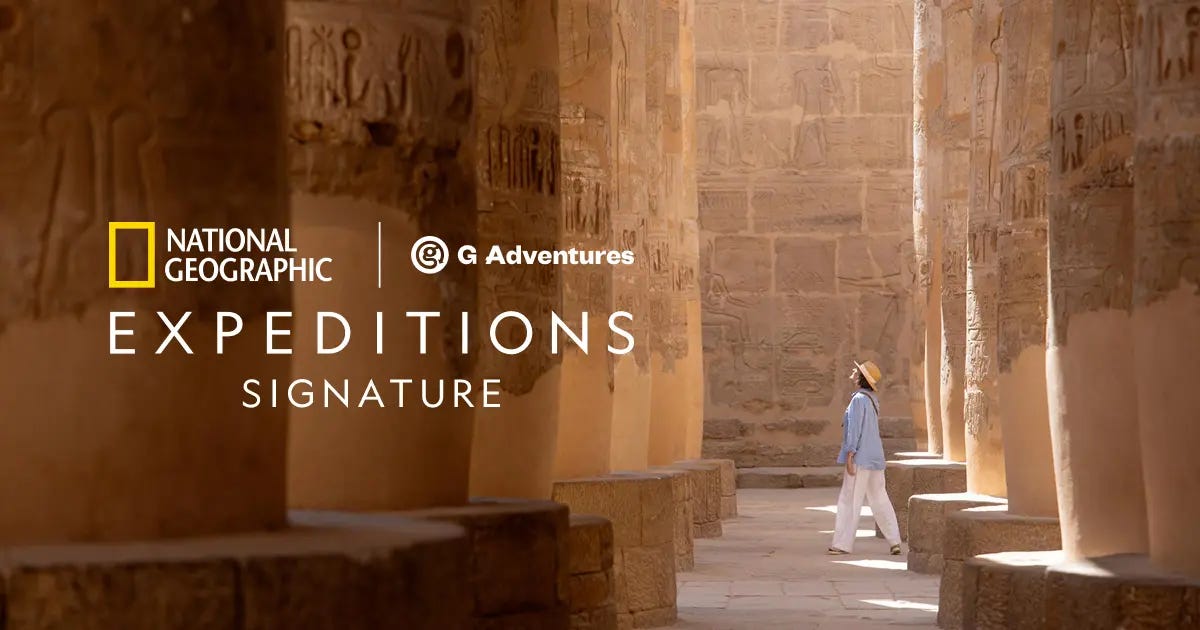
G Adventures operates two distinct National Geographic partnerships that are often confused.
National Geographic Journeys with G Adventures, launched in 2015, is the original and longer-running programme: approximately 80 tours at a mid-premium price point with upgraded accommodation, a Storyteller on every departure, and a shared commitment to destination storytelling and community tourism. It includes a Family Journeys sub-programme.
National Geographic Signature with G Adventures, launched in late 2025 and open for booking from January 2026 for 2027 departures, is a genuinely luxury product: boutique luxury accommodation, a much higher inclusions standard, and a price tier comparable to other luxury small-group operators. 29 initial itineraries across South Africa, Vietnam, Japan, Peru, and Jordan. G Adventures’ role in Signature is to contribute the community tourism layer that National Geographic’s existing tour programme did not have. Signature should be booked through a travel advisor.
How G Adventures compares to the competition
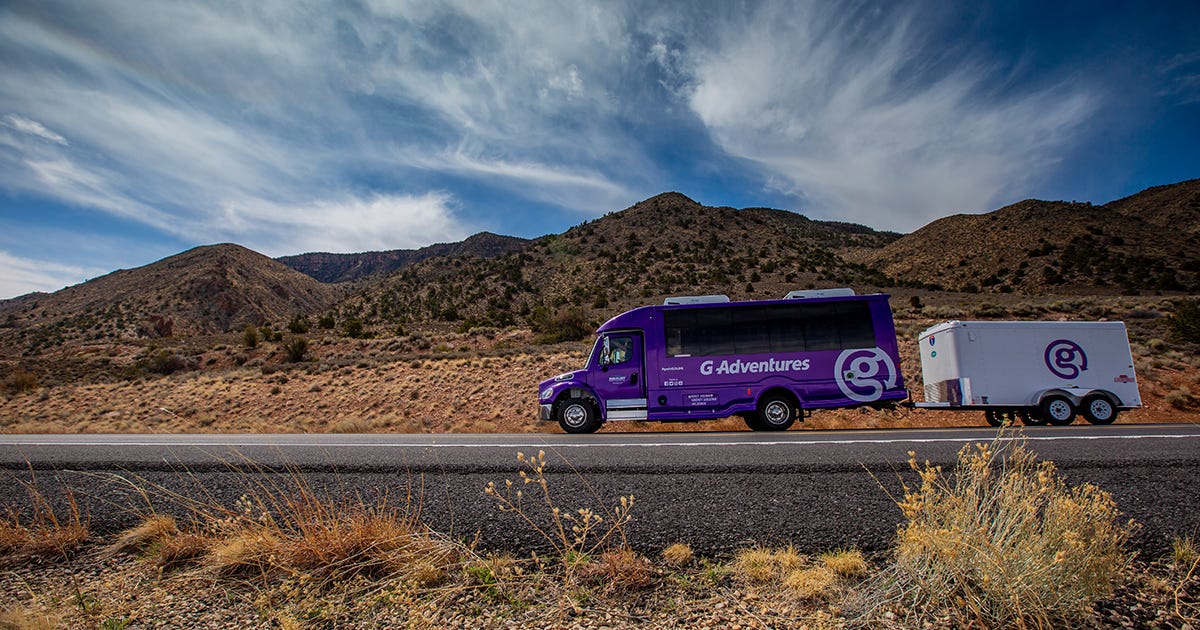
G Adventures
Best for: The widest small-group adventure travel portfolio in the market with over 1,000 itineraries across 100 countries, the most structurally integrated community tourism model with the Ripple Score and Planeterra as transparent and measurable components, the Solo-ish style for solo travellers who want a purpose-built solo experience rather than a standard tour with solo supplement, Geluxe for active adults who want adventure with genuine comfort, and the National Geographic Signature product for travellers who want luxury small-group travel with community impact built in. Canadian-founded and headquartered in Toronto.
Intrepid Travel
Best for: The most direct competitor to G Adventures at a comparable price and philosophy level. Intrepid is Australian-owned, operates smaller maximum group sizes (12 versus G Adventures’ 16 on Classic), has a strong carbon-offset programme, and has a slightly stronger position in women-only tours. The two companies are more similar than different in values and product quality; the choice between them often comes down to specific itinerary availability.
Contiki
Best for: The 18 to 35 age-restricted market, larger groups, and a more party-social atmosphere than G Adventures’ 18 to Thirtysomethings product. Primarily European itineraries. Less community tourism orientation.
Trafalgar / Insight Vacations
Best for: A more traditionally structured escorted tour experience with higher included meal counts and a more managed itinerary. Higher price point than G Adventures Classic for broadly comparable destinations. Less flexibility and less community immersion.
Exodus Travels
Best for: A comparable active adventure product to G Adventures Active at a similar price point, with particularly strong walking and cycling tour programmes in Europe and the Himalayas.
Aurora Expeditions
Best for: Small-ship polar expedition travel with X-Bow vessels capped at 130 guests and the most physically ambitious activity programme in polar expedition cruising, including ice camping and mountaineering. A different category entirely from G Adventures: ocean expedition rather than land-based group tour.
Who G Adventures is best suited for
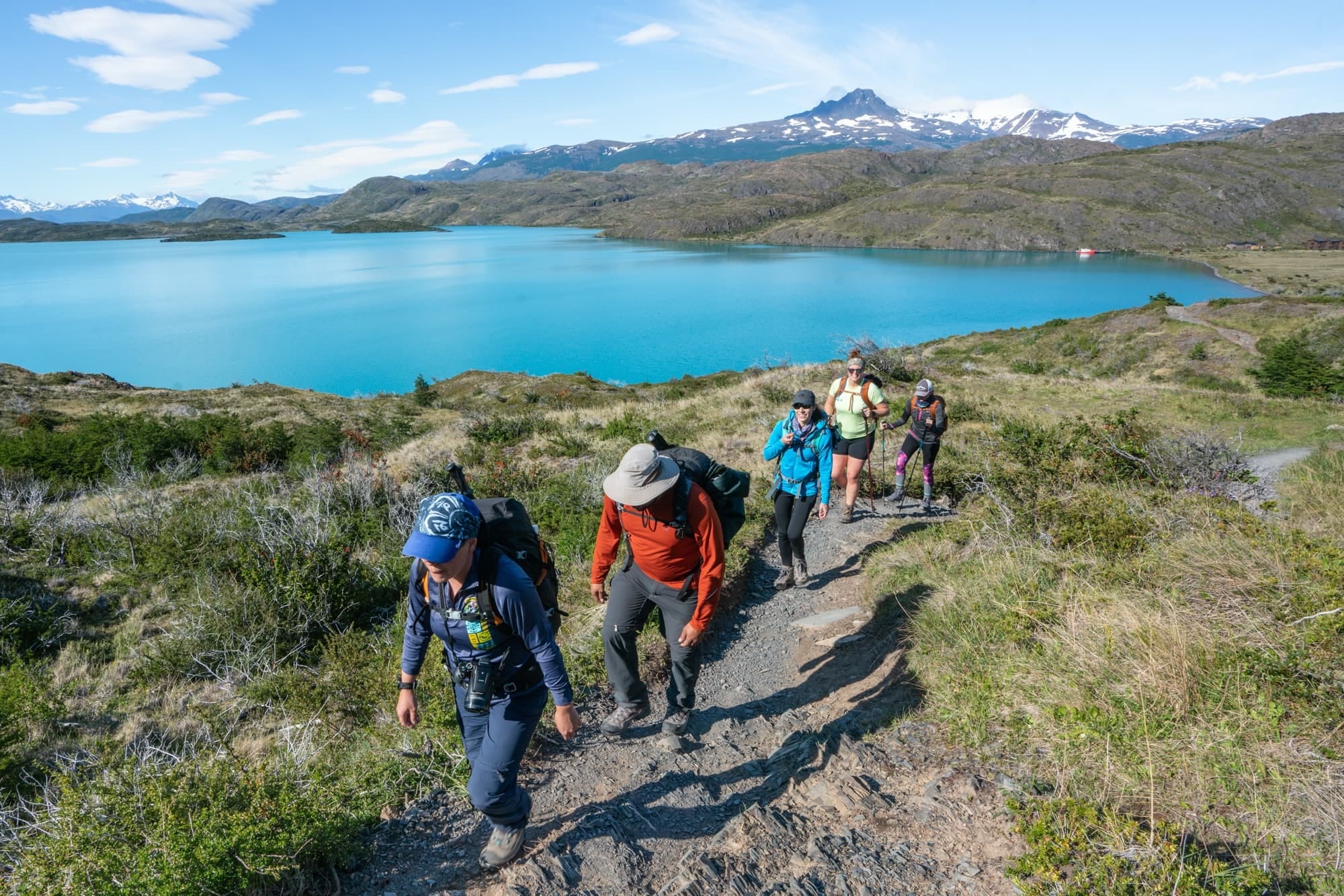
G Adventures works best for a clearly defined profile of traveller, and the travel style system does most of the filtering automatically.
Travellers who want the logistical ease and social energy of a group without the script of a traditional coach tour. The average G Adventures departure has 10 people moving through a destination with a local guide who knows it deeply, free time built into every day, and enough structure to prevent the paralysis of complete independence.
Solo travellers at every life stage. G Adventures is one of the best companies in the market for solo travel: the Solo-ish style provides a purpose-built solo experience, the Classic tours carry a large proportion of solo bookings and the social dynamic works naturally, and the no-single-supplement policy on many departures removes the most common financial barrier to solo group travel.
Travellers for whom the impact of their trip spending matters and who want a transparent way to evaluate it. The Ripple Score gives G Adventures guests a tool that no comparable competitor offers.
Active adults in their 40s, 50s, and 60s who want adventure and community at a genuine comfort standard. Geluxe was built specifically for this demographic and has exceeded every expectation the company had for it.
First-time international travellers who want the confidence of a group without the passivity of a bus tour. The CEO model and the small group size produce an experience that feels much more like travelling with a knowledgeable local friend than being managed through a pre-set programme.
G Adventures is less suited to travellers who want a fully all-inclusive model where every meal, drink, and activity is pre-paid, those whose priority is the most luxurious accommodation standard available (National Geographic Signature is moving in this direction, but for now the Classic and Journeys products are mid-range in accommodation terms), or those who prefer completely independent travel and find any group dynamic uncomfortable.
Frequently asked questions
What is the average group size on a G Adventures tour?
The average is 10 travellers. The maximum varies by travel style: 16 for Classic and 18 to Thirtysomethings, 12 for National Geographic Journeys, Geluxe, and Solo-ish, 24 for Roamies. These are small groups by any standard in the group tour market, and the difference between 10 and 40 people is the difference between eating at a local family restaurant and queuing at a tourist-facing cafeteria.
What is a Chief Experience Officer?
A CEO at G Adventures is the locally based guide who leads each tour. The term was chosen deliberately to reflect that the CEO’s job is not to manage a programme but to create an experience. CEOs are full employees of G Adventures rather than contracted guides per departure, and they are recruited from and live in the destination they guide. This means they know the destination not as a script but as a community they inhabit.
What is the Ripple Score?
The Ripple Score is a transparency metric published on every G Adventures tour page that shows what percentage of money spent on that specific tour stays in the local economy through locally owned accommodation, locally hired staff, locally sourced food, and Planeterra project visits. It was the first metric of this kind in the industry and allows travellers to compare tours on their local economic impact as a factor alongside price and itinerary.
What is Planeterra?
Planeterra is G Adventures’ non-profit partner, founded by Bruce Poon Tip in 2003. Rather than donating travel revenue to charitable projects, Planeterra builds sustainable tourism social enterprises in underserved communities, designed to generate their own ongoing income and employment. More than 100 Planeterra projects exist globally, and 90 percent of G Adventures travellers visit at least one on their tour.
What is Geluxe and who is it for?
Geluxe is G Adventures’ premium active travel style, introduced in 2024 and the most successful product launch in the company’s 35-year history. It combines adventurous, active itineraries with boutique locally owned accommodation, elevated dining, more included meals than Classic, and a slower pace designed for travellers who want genuine adventure and genuine comfort simultaneously. It is particularly suited to active adults in their 40s, 50s, and 60s and was built around the observation that this generation is staying active longer than any previous cohort at the same age.
What is the difference between National Geographic Journeys and National Geographic Signature?
National Geographic Journeys, launched in 2015, is a mid-premium product with upgraded accommodation over Classic, a Storyteller on every departure, and approximately 80 itineraries. National Geographic Signature, launched in late 2025 for 2027 departures, is a genuine luxury product with boutique luxury accommodation, a much higher inclusions standard, and itineraries built to the level of what the luxury small-group travel market offers. Both partnerships include G Adventures’ community tourism component as a structural element.
Plan your G Adventure with ÆRIA Voyages
G Adventures covers more ground and more traveller profiles than almost any other single operator in the adventure travel market. I help clients navigate those choices: from matching the right travel style to the right destination and life stage, to advising on whether Classic, Geluxe, or National Geographic Journeys best fits a specific trip, to understanding how G Adventures compares to Intrepid or to independent travel for a specific itinerary. For any client considering a land-based adventure trip, G Adventures is almost always worth a conversation.
If you are curious about pricing, availability, or which G Adventures style and itinerary is the right fit for your travel vision, I would be glad to talk it through.
Yvan Junior Blanchette
Travel & Cruise Specialist
ÆRIA Voyages📩 yvanblanchette@aeriavoyages.com
📞 1-888-460-3388
🌐 aeriavoyages.com