

The Ultimate HIROSHIMA Travel Guide: what to know, where to go, and how to make the most of your visit
Destination guide · Updated 2026 · Japan · First-time visitors · In-depth travel
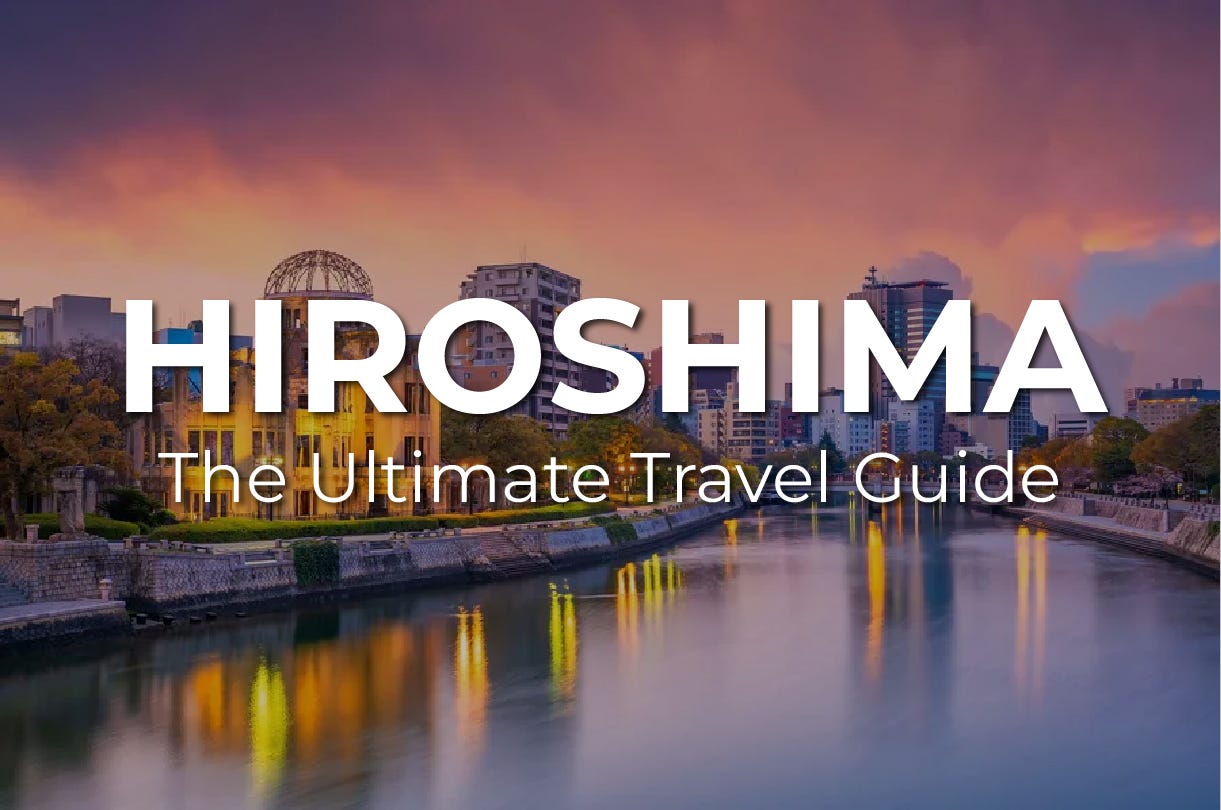
Hiroshima is one of the most misread destinations in Japan. Visitors expect something heavy and arrive to find something extraordinary: a city of genuine warmth, world-class food, remarkable natural beauty, and a message of peace that stays with you long after you leave.
This guide covers the neighborhoods worth knowing, the experiences that define the city, the practical details you need before you go, and how to plan the right amount of time for the kind of trip you want.
Table of Content
🎙️ LISTEN TO THE BEYOND THE HORIZON PODCAST

Why Hiroshima is worth visiting
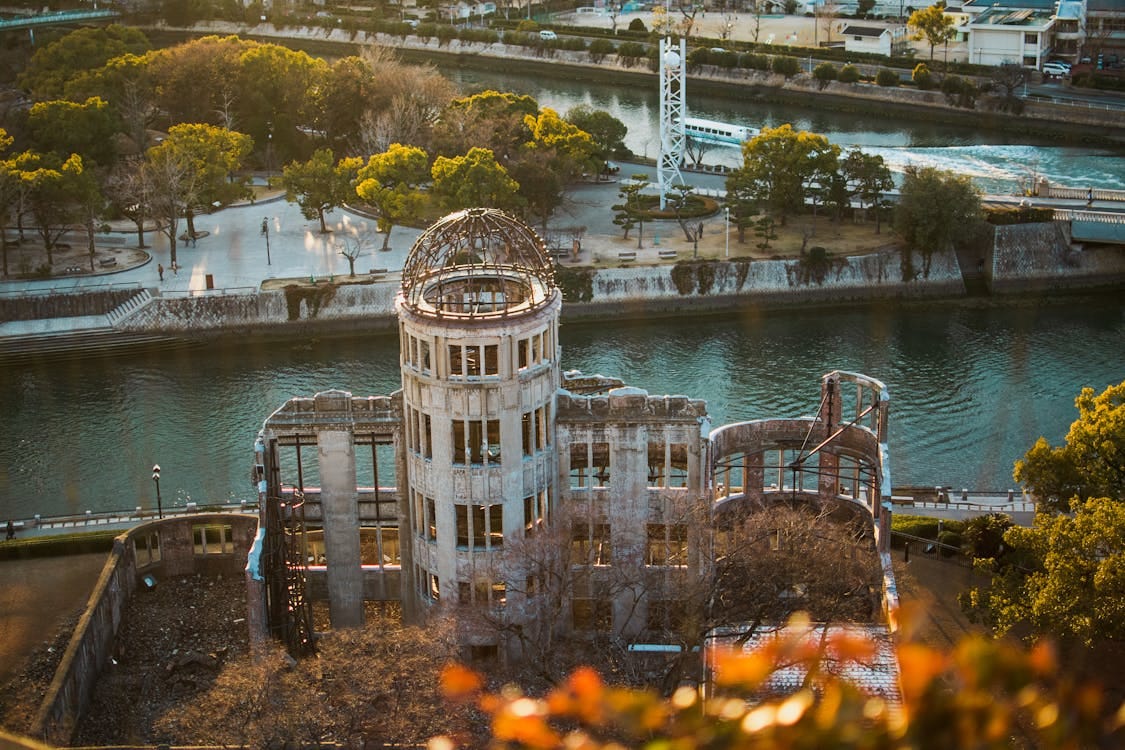
Hiroshima is not a destination you visit out of obligation. It is one you visit because no other place in Japan, or in the world, offers what it does.
The city carries one of the most significant histories of the twentieth century, and it holds that history with a dignity that manages to be moving without being oppressive. The Peace Memorial Park and Museum are among the most thoughtfully designed memorial spaces anywhere. But Hiroshima is not defined by them. The city rebuilt itself with an energy and intention that is still visible in the way it feels to walk its streets: forward-looking, unhurried, genuinely alive.
Beyond the history, Hiroshima offers a different kind of Japan. It is quieter than Osaka, less formalized than Kyoto, and far less visited than either. The food culture is exceptional, with a style of okonomiyaki distinct from anywhere else in the country. And just a short ferry ride away, the island of Miyajima is one of the most visually striking places in all of Japan.
For travelers who have already seen the classic circuit and want something with more depth, Hiroshima is the answer.
The neighborhoods and areas you should know
The Peace Memorial Park and Museum
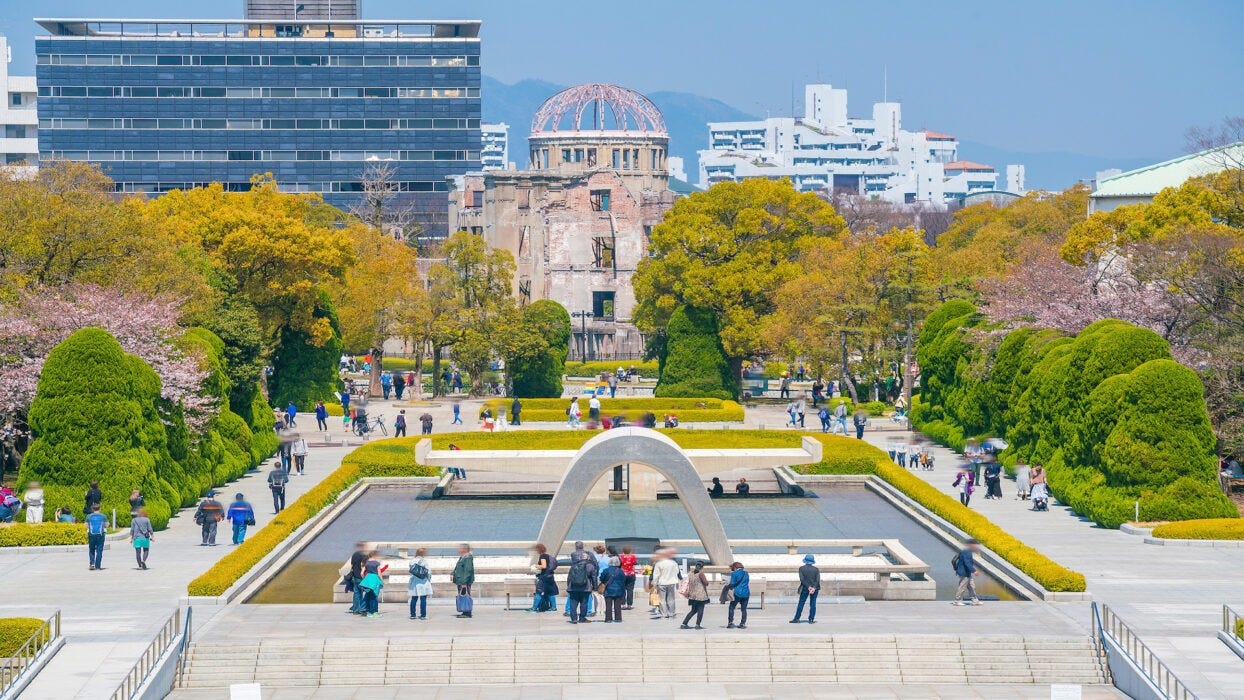
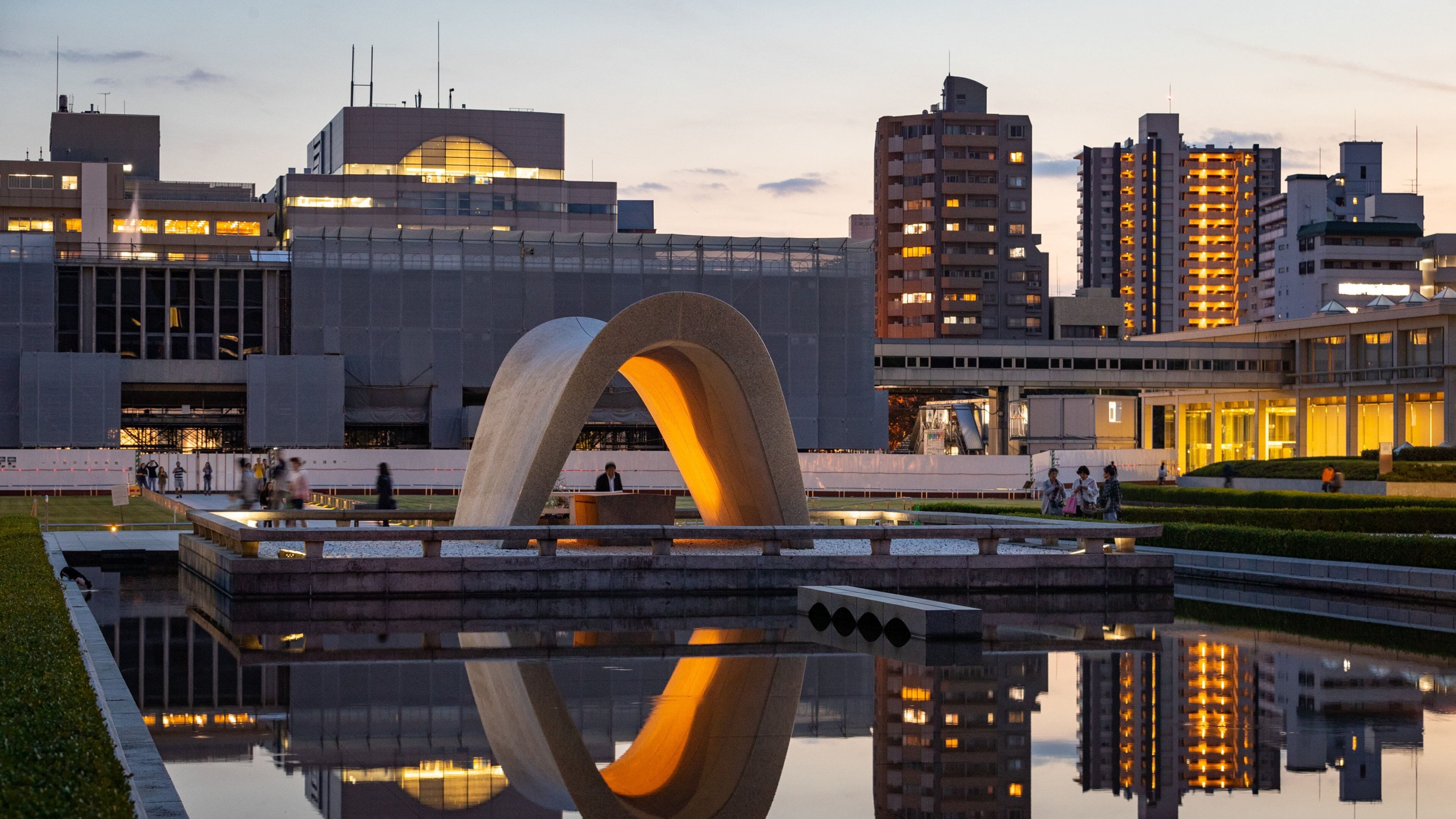
The Peace Memorial Park sits at the heart of Hiroshima's identity, occupying the area closest to the hypocenter of the 1945 atomic bombing. It is not a neighborhood in the conventional sense, but it is the area that shapes how you understand everything else in the city.
The park is designed around contemplation and movement. The A-Bomb Dome, the skeletal remains of the former Prefectural Industrial Promotion Hall preserved exactly as it stood after the blast, is the most immediately striking sight. The Peace Memorial Museum, which traces the events of August 6, 1945, through personal artifacts, survivor testimony, and historical documentation, is one of the most affecting museum experiences in Asia. Plan two to three hours and go early in the morning before the crowds arrive.
Naka-ku (Central Hiroshima)
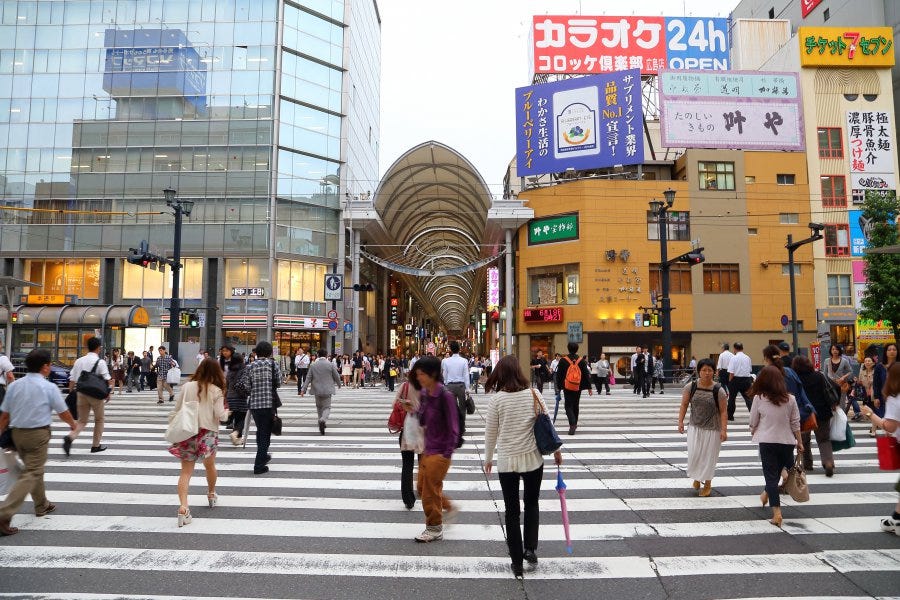
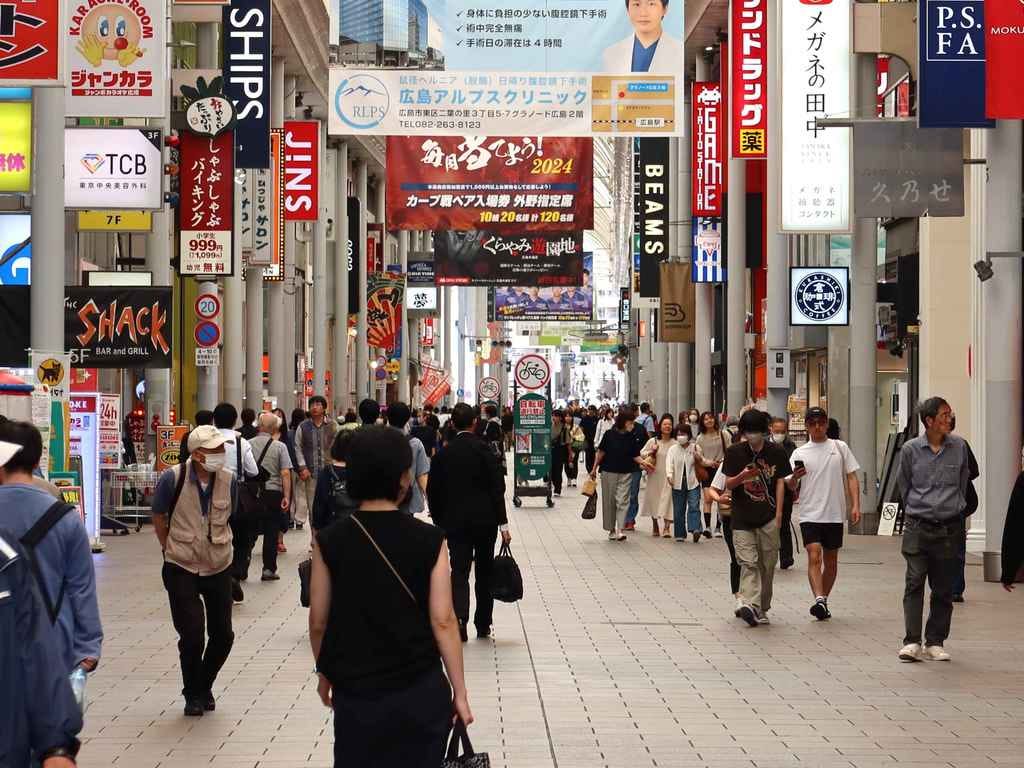
The city's main commercial and dining district runs along the Hondori covered shopping arcade and the streets around it. This is where daily life in Hiroshima plays out: covered markets, independent restaurants, department stores, and the kind of unhurried energy that reminds you this is a real city, not a preserved monument.
The area around Parco and the Hondori arcade rewards slow walking. The local okonomiyaki restaurants are concentrated here and in the streets nearby. Eating one, properly, built in layers on a hot iron griddle by a cook who has been making them for decades, is one of the defining food experiences of western Japan.
Ujina and the Waterfront
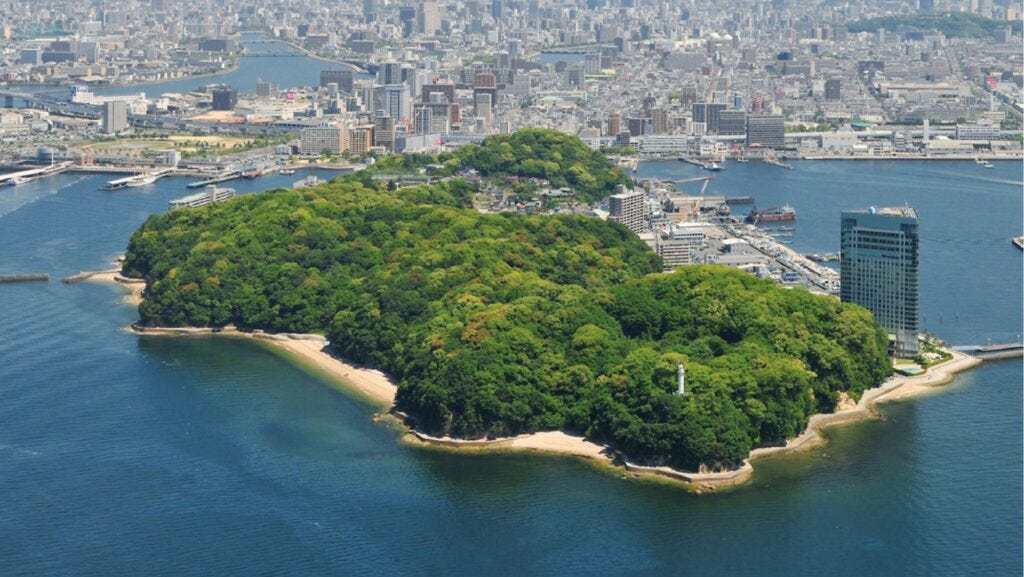
The port district of Ujina is where ferries depart for Miyajima and the islands of the Seto Inland Sea. It is not a tourist destination in itself, but the waterfront walk and the view back toward the city as you board the ferry is worth a moment. The Seto Inland Sea, visible from the port, is among the most beautiful bodies of water in Japan.
Eba and the River Districts
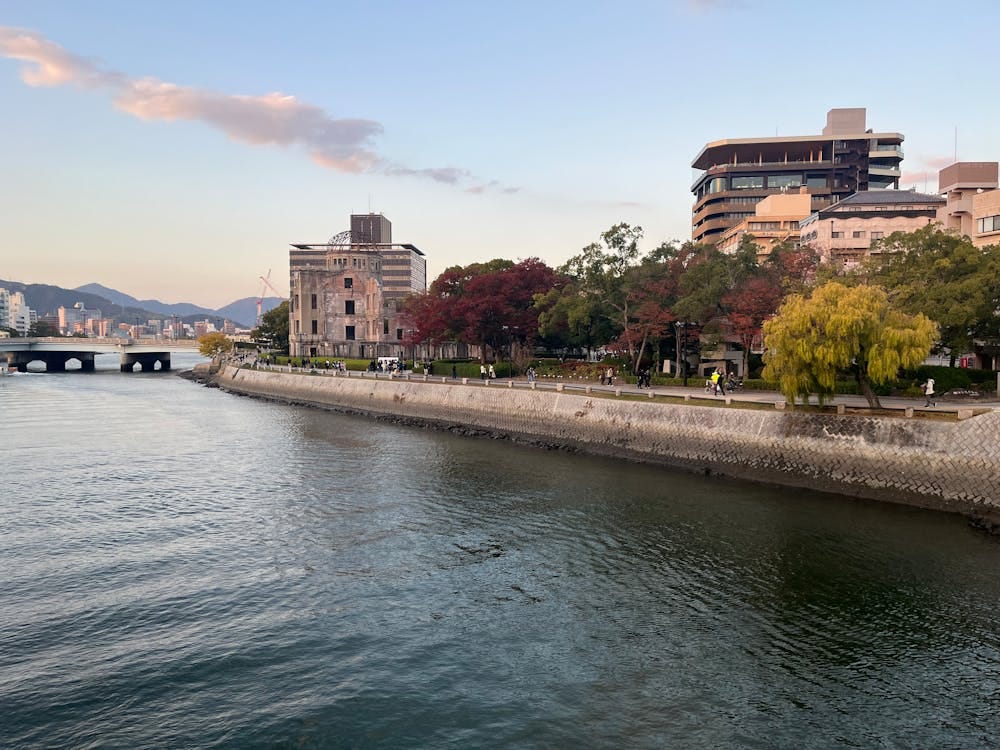
Hiroshima is built across six rivers that branch out from the Ota River into a delta before reaching the sea. The riverside areas, particularly the paths along the Motoyasu and Kyobashi rivers, offer some of the most pleasant walking in the city. In the evening, the light on the water and the bridges takes on a quality that is particular to this city and worth taking slowly.
Miyajima: the essential day trip
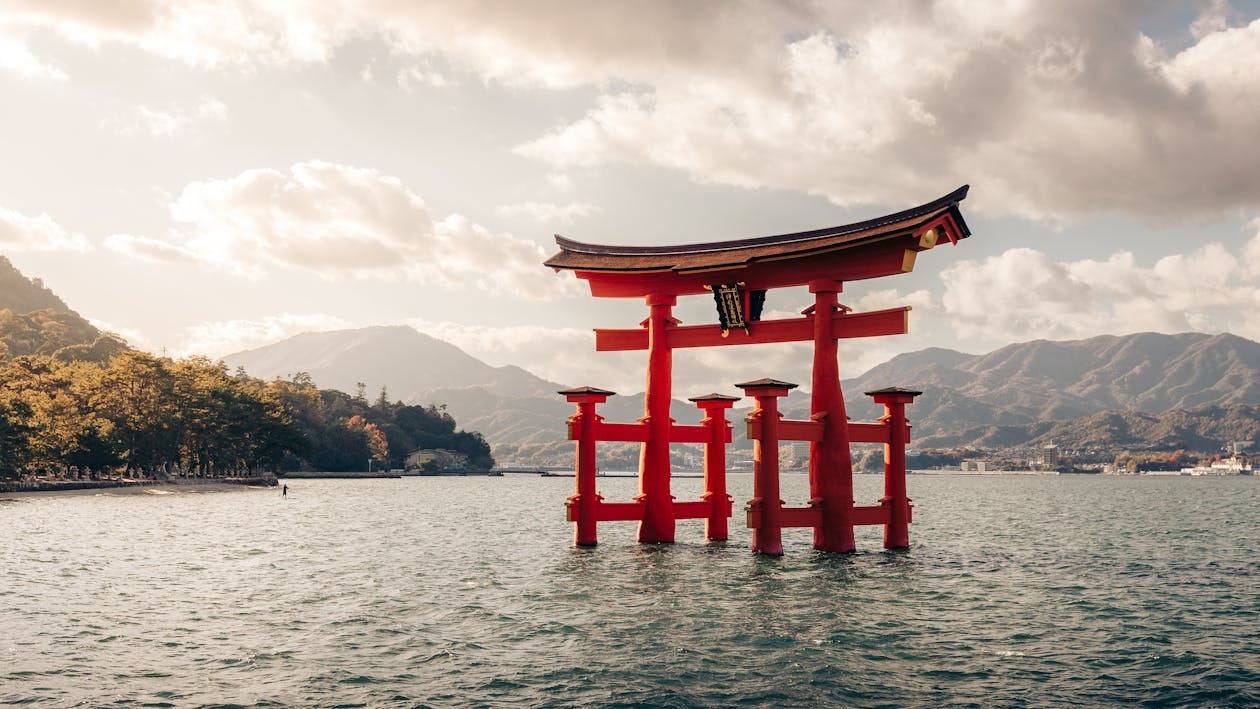
No visit to Hiroshima is complete without a day on Miyajima, the small island in Hiroshima Bay that is home to the Itsukushima Shrine and its famous torii gate standing in the sea.
The torii, which appears to float at high tide, is one of the most reproduced images in Japanese photography. In person, it is more striking than any photograph suggests. The shrine itself, built on stilts over the tidal flats, dates back to the sixth century in its original form and belongs to the UNESCO World Heritage List.
Beyond the torii and the shrine, Miyajima offers hiking trails that climb through forested hills to the summit of Mount Misen, where views over the Seto Inland Sea extend to dozens of islands. The island also has a significant deer population, fully habituated to visitors, that wander the paths and approaches to the shrine without concern.
The ferry crossing from Hiroshima takes approximately 25 minutes. Most visitors combine the shrine and the lower trails into a half day, which leaves time to return to the city for dinner. A full day allows for the hike to Mount Misen.
The single practical note: arrive on the island before 9am if possible. By mid-morning, particularly on weekends and national holidays, the path between the ferry terminal and the shrine becomes crowded. The early morning light on the torii, with the tidal water around it, is worth setting an alarm for.
Experiences that define a visit to Hiroshima
The Peace Memorial Museum
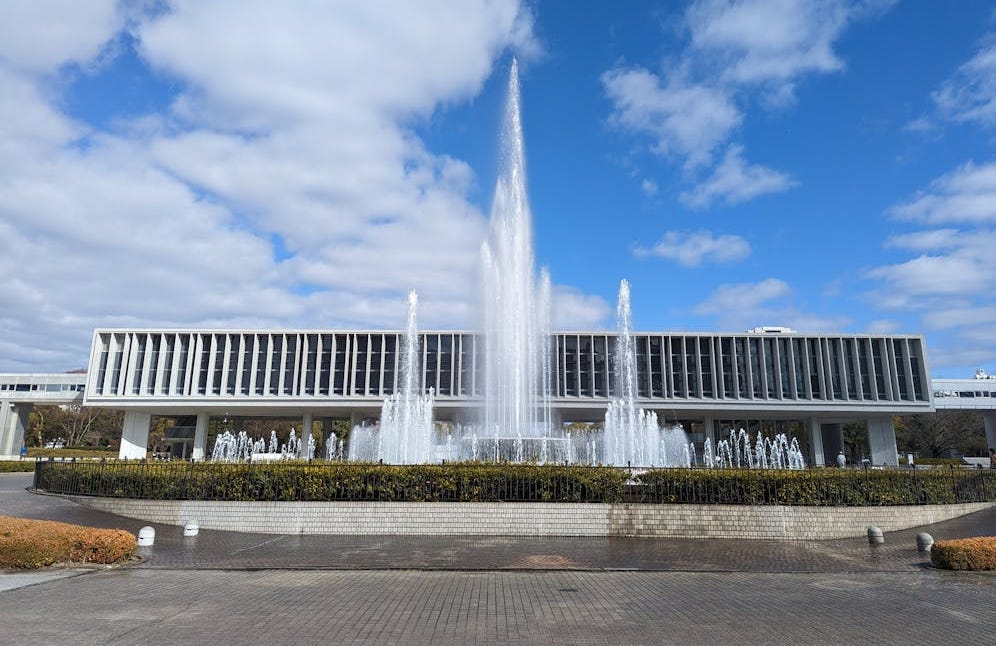
The museum does not attempt to overwhelm. It presents what happened on August 6, 1945, and in the weeks and years that followed, through a precise and carefully curated sequence of objects, stories, and testimonies. Personal belongings. Photographs. Written accounts from survivors. The effect is cumulative rather than immediate.
It is one of the few museums in the world that feels genuinely important, not because of its architecture or its collection size, but because of what it asks of the person walking through it. Allow more time than you think you need. Most visitors emerge having stayed longer than planned.
Okonomiyaki in Hiroshima
Hiroshima's version of okonomiyaki is built differently from Osaka's. Rather than mixing the ingredients together, the Hiroshima style layers them: batter, cabbage, bean sprouts, pork, noodles, egg, and sauce, each added in sequence on the griddle. The result is a dish with more texture, more substance, and a character entirely its own.
The best places to eat it are in Okonomimura, a multi-floor building near Hondori that houses dozens of individual okonomiyaki restaurants, each with a counter and a griddle. Choose a counter, sit down, and watch your meal being built. It is an informal and deeply satisfying experience that represents western Japan's food culture at its most honest.
The Seto Inland Sea
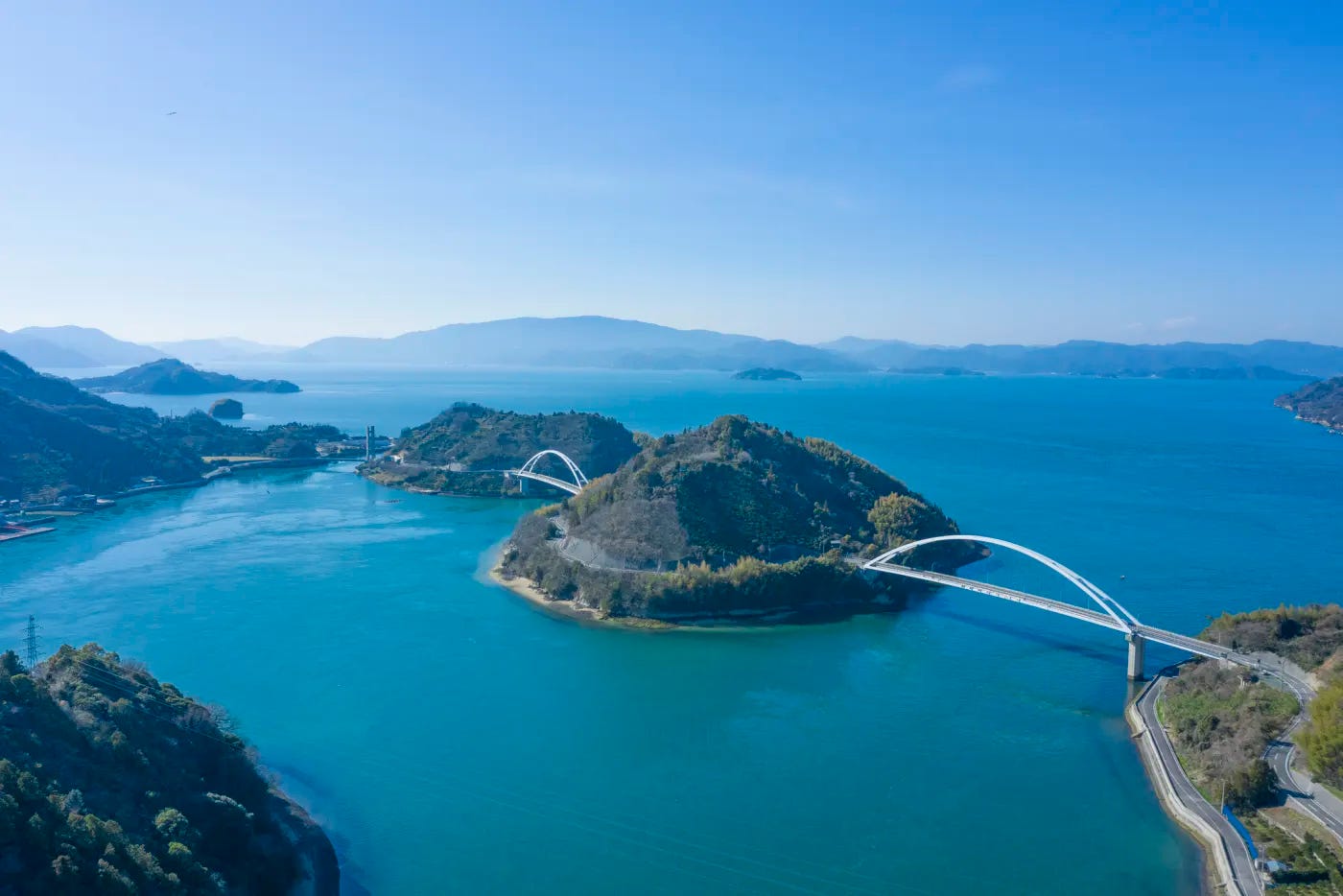
Hiroshima sits on the edge of the Seto Inland Sea, one of the most beautiful maritime landscapes in Japan. The view from Miyajima's higher trails across the water to the islands beyond is worth the climb alone. For travelers with more time, day trips by ferry to the nearby islands of Ōmishima (home to one of Japan's oldest shrines) or Ōkunoshima (known for its large wild rabbit population) offer a completely different dimension to the Hiroshima region.
Walking the riverside at night
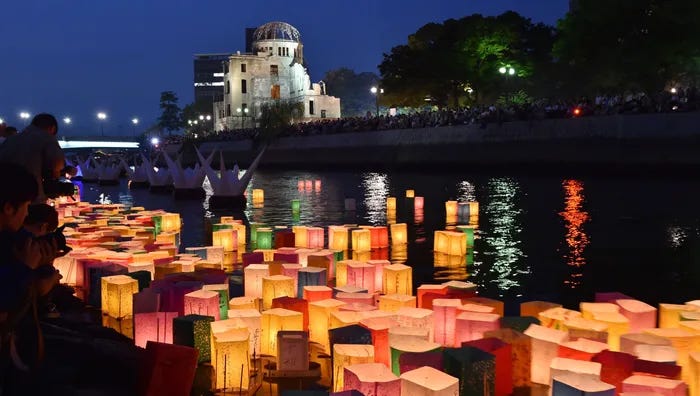
The Motoyasu River, which borders the Peace Memorial Park, takes on a different quality after dark. Paper lanterns are floated on the river each August 6th in memorial, but on any evening, the reflection of the A-Bomb Dome in the water, lit and still, is one of the quieter and more powerful moments the city offers. It requires no planning. Just an evening walk.
When to visit Hiroshima
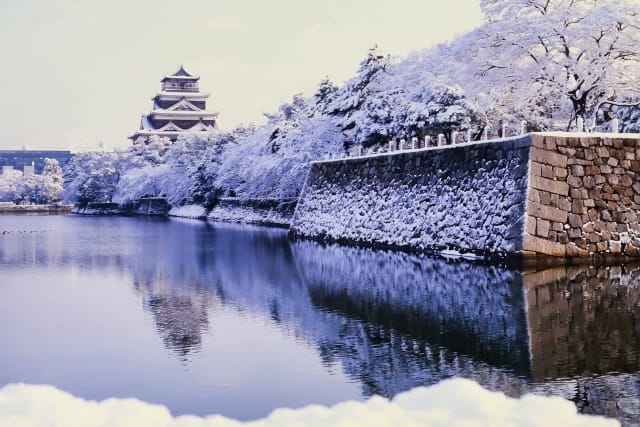
Hiroshima is a year-round destination, with meaningful differences between seasons.
🌸 Spring
Cherry blossom season brings extraordinary beauty to the Peace Memorial Park, where the trees along the riverbanks bloom in late March to early April. It is also the busiest period. Book accommodation well in advance.
☀️ Summer
August 6th, the anniversary of the atomic bombing, draws visitors from across Japan and the world for the Peace Memorial Ceremony. The ceremony itself is quiet and deeply moving. The city is significantly busier in the days around this date.
🍂 Autumn
The most favorable season for most visitors. Cooler temperatures, autumn foliage along the riverbanks and on Miyajima's wooded hills, and manageable crowd levels. October and November are ideal.
❄️ Winter
Quieter and cold, but rarely extreme. Miyajima in winter, with the torii gate against a pale sky and few visitors, has a stillness that is worth seeking out.
How many days to spend in Hiroshima
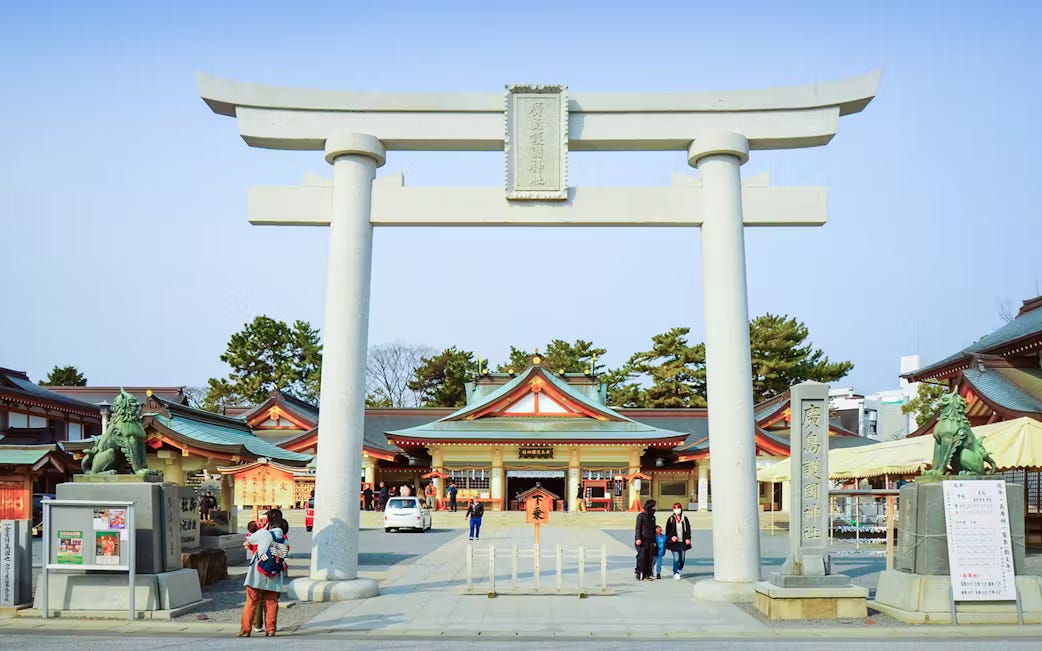
Two full days is the practical minimum: one for the Peace Memorial Park, Museum, and the city center, and one for Miyajima. This is a workable itinerary but a tight one.
Three days allows you to take both at a more considered pace, add time along the river districts, and explore the food culture properly. For travelers incorporating Hiroshima into a broader Japan itinerary, three nights is the right allocation.
Hiroshima is not a city that exhausts you with things to do. It is a city that asks you to slow down, pay attention, and let what you are seeing land. That requires time.
Practical information for visitors
Hiroshima essentials
Currency: Japanese yen (JPY). Cards are widely accepted in hotels and larger restaurants, but carry cash for smaller establishments and market stalls.
Language: Japanese. English signage is available at major attractions and on the tram system. Translation apps handle most day-to-day situations well.
Getting around: Hiroshima has an efficient tram network that connects the central city, the Peace Memorial Park, and the ferry terminals. It is easy to use and covers most visitor destinations.
To Miyajima: Ferries depart from Hiroshima Port (Ujina) and from Miyajimaguchi, the closest JR station to the island. The JR ferry from Miyajimaguchi is covered by the Japan Rail Pass.
Internet: A Japan eSIM is recommended. Coverage is reliable throughout the city and on Miyajima.
Safety: Hiroshima is a safe, well-organized city. Standard precautions apply, but the city presents very little risk for travelers.
Tipping: Not practiced in Japan. As in all Japanese cities, tipping is not expected and not necessary.
How Hiroshima fits into a broader Japan itinerary
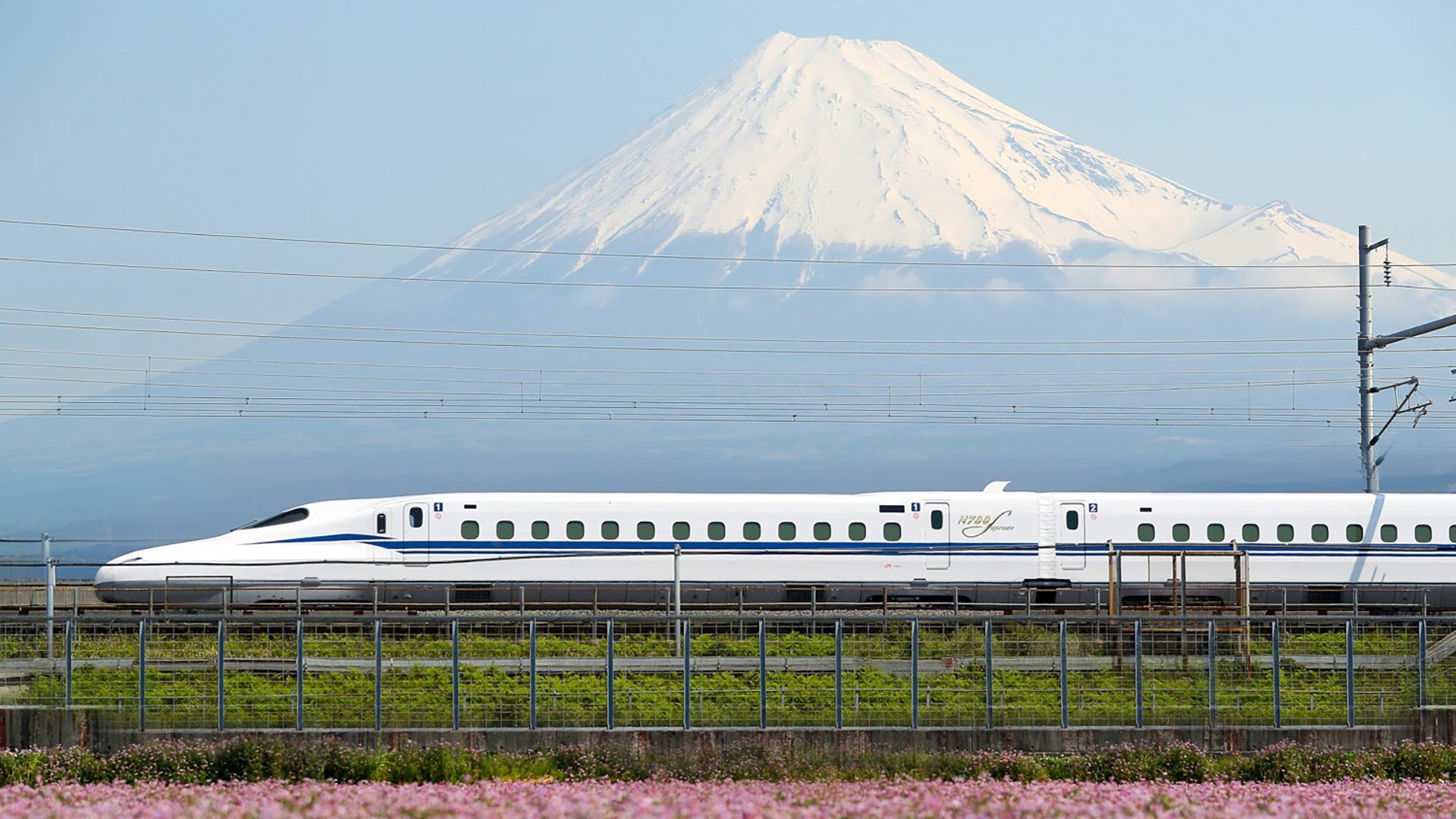
Hiroshima connects naturally with the rest of western Japan via the Shinkansen. From Kyoto, the journey takes approximately 50 minutes. From Osaka, just under an hour. From Tokyo, just over four hours.
Most visitors include Hiroshima as part of a circuit that moves between Tokyo, Kyoto, Osaka, and one or two additional destinations. Adding Hiroshima to that circuit adds relatively little transit time and changes the tone of an entire trip, introducing a dimension of weight and meaning that the classic tourist route alone does not provide.
For travelers with two weeks or more in Japan, a stop in Hiroshima followed by a Shinkansen connection to Kyoto or Osaka makes for one of the most satisfying day-to-day transitions in the country: the contemplative depth of Hiroshima giving way to the refined elegance of Kyoto, or the exuberant food culture of Osaka.
Frequently asked questions
Is Hiroshima worth visiting beyond the Peace Memorial?
Yes. The Peace Memorial Park and Museum are significant, but Hiroshima is also a city with exceptional food, beautiful river landscapes, and one of the most visually striking day trips in Japan. Miyajima is accessible in under half an hour. Many visitors arrive expecting a solemn experience and leave surprised by how much the city gave them.
How long do you need in Hiroshima?
Two full days covers the essentials. Three days allows for a more considered pace, proper time at the museum, a full day on Miyajima, and time to experience the city's food culture and evening atmosphere.
Can you visit Hiroshima and Miyajima in one day?
Technically yes, if arriving early and departing late. In practice, a single day leaves very little time to do either well. If you only have one day, prioritize Miyajima in the morning and the Peace Memorial area in the afternoon, but two days is strongly preferable.
What is Hiroshima okonomiyaki and how is it different from Osaka's?
Hiroshima okonomiyaki is built in layers on a griddle: batter, cabbage, pork, noodles, and egg, rather than mixed together as in Osaka. The result is a more substantial dish with a different texture and character. Okonomimura, a building near the city center housing dozens of okonomiyaki restaurants, is the best place to experience it.
Is August 6th a good time to visit Hiroshima?
The Peace Memorial Ceremony on August 6th is a moving and historically significant event. The city is busier than usual in the surrounding days. If attending the ceremony matters to you, plan well ahead for accommodation. If you prefer a quieter visit, autumn is the better season.
How do you get from Kyoto or Osaka to Hiroshima?
By Shinkansen: approximately 50 minutes from Kyoto, under one hour from Osaka, and four hours from Tokyo. The Shinkansen stops at Hiroshima Station, which is well connected to the tram network and the city center.
Plan your Hiroshima trip with ÆRIA Voyages
Every traveler's ideal Japan itinerary looks different depending on the time available, the destinations that matter most, and the kind of experience you are hoping to have. I help clients build trips that go beyond the standard circuit, whether that means a ryokan stay in the Japanese Alps, a curated Kyoto experience, or a cruise extension through the Seto Inland Sea region.
If you are planning a trip to Japan and want to talk through the options, I would be glad to help.
Yvan Junior Blanchette
Travel Advisor & Cruise Specialist
ÆRIA Voyages📩 yvanblanchette@aeriavoyages.com
📞 1-888-460-3388
🌐 aeriavoyages.com