

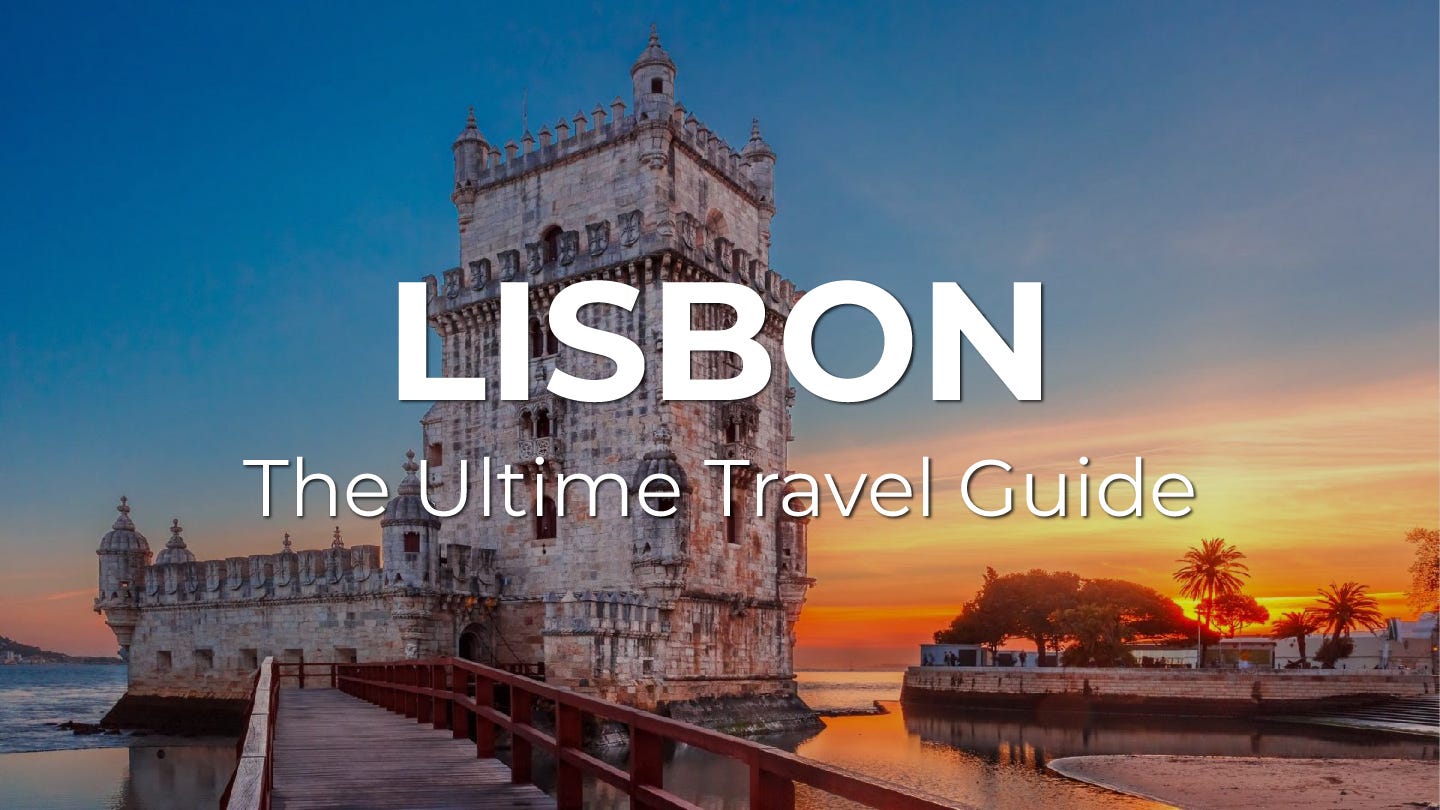
In this episode, we explore Lisbon, one of the most beautiful and most human-scaled capitals in Europe. A city of hills, trams, azulejo tiles, and fado music that sits at the far western edge of the continent looking out over the Atlantic.
A city where the light is softer than anywhere else in southern Europe, where the food is extraordinary and still underpriced by the standards of comparable cities, and where a melancholic beauty called saudade runs through the architecture, the music, and the particular way Lisboetas relate to their own remarkable history.
We cover everything you need to know before planning a visit, including:
What makes Lisbon immediately feel different from other European capitals, from its seven hills and the miradouros that crown them with the finest viewpoints in any European city, to its position as the capital of a small country that once controlled the largest empire in the world, and the particular quality of light that Turner came to paint and that still stops visitors in the late afternoon on the banks of the Tejo
The neighborhoods worth knowing: Alfama as the oldest and most atmospheric neighborhood in the city, a Moorish labyrinth of narrow streets descending to the river where fado was born and where the castle of São Jorge looks over everything, Mouraria for the most genuinely multicultural and musically alive corner of Lisbon, Baixa and Chiado for the elegant downtown grid rebuilt after the earthquake of 1755 and the finest shopping and cafe streets in the city, Bairro Alto for the nightlife that spills onto the streets from 11pm onward, Príncipe Real for the most refined and design-conscious neighborhood in contemporary Lisbon, and Belém for the monuments of the Age of Discovery including the Jerónimos Monastery and the Tower of Belém set against the wide estuary of the Tejo
The Jerónimos Monastery in Belém as the most extraordinary example of Manueline architecture in Portugal, a style unique to the country that fuses Gothic structure with maritime ornamentation in a way that exists nowhere else in the world, and the nearby Monument to the Discoveries and Tower of Belém as the most complete expression of what the Age of Discovery meant to Portugal’s sense of itself
The Museu Nacional do Azulejo as one of the most distinctive and genuinely surprising museum experiences in Europe, tracing the history of the painted ceramic tile tradition that covers the facades, interiors, and railway stations of Portugal, and why understanding azulejos changes how you read the entire city
The São Jorge Castle and the view it gives over Lisbon, the Alfama rooftops, and the Tejo estuary stretching toward the sea, why visiting in the early morning before the tour groups arrive transforms the experience, and the streets of the Alfama immediately below the castle walls as the best walking in the city
Fado and why it matters: the history of fado as a music born in the Alfama’s taverns in the early 19th century, what saudade means as a concept and why it is not simply translatable as nostalgia, the difference between a tourist fado restaurant and a genuine casa de fado, and why an evening of live fado in a small venue in the Alfama or Mouraria is one of the most emotionally affecting experiences any European city offers
The food culture that defines the city: pastéis de nata from the original Pastéis de Belém as the most important single thing to eat in Portugal, bacalhau and the claim that there are 365 ways to prepare salt cod, petiscos as the Portuguese answer to tapas eaten standing at a marble counter, fresh Atlantic seafood including grilled sardines in June and July, the wine culture of the Douro and Alentejo regions and why Portuguese wine remains one of the best values in the world, and the ginjinha cherry liqueur drunk from a chocolate cup in the Rossio
The tram culture and the miradouros: Tram 28 as the most scenic urban transport experience in Europe despite its tourist density and the pickpocket risk it carries, the elevadores that connect the lower city to the upper neighborhoods, and the six great miradouros including Portas do Sol, Santa Luzia, and the Miradouro da Graça where locals outnumber tourists and the view is better than any of the famous ones
LX Factory as the most creative and atmospheric weekend market in Lisbon, a 19th-century industrial complex on the riverfront below the 25 de Abril Bridge transformed into studios, restaurants, bookshops, and a Sunday market that reflects the best of contemporary Lisbon culture
Day trips from Lisbon to Sintra as one of the most fantastical landscapes in Europe, where romantic palaces and Moorish castles emerge from forested hillsides above the Atlantic, the fishing village and beach culture of Cascais and Estoril along the Estoril Coast, the walled medieval town of Óbidos, the pilgrimage city of Fátima for those interested in the history of 20th-century Catholicism, and the Arrábida Natural Park for the finest beaches within reach of the capital
When to visit: why March through May and September through October are the ideal windows, what the Lisbon summer actually delivers (warm, dry, and increasingly crowded but with long evenings and the sardine festival of Santo António in June as one of the great street celebrations in Europe), why Lisbon in winter is mild, inexpensive, and deeply atmospheric, and how the city has changed since becoming one of the most talked-about destinations in Europe over the past decade
How Lisbon fits into a broader Portugal or Iberian itinerary: the connections by train and bus to Porto three hours north for a completely different and equally rewarding Portuguese city, to the Alentejo wine country and the medieval towns of Évora and Monsaraz, to the Algarve coast in the south, and across the border to Seville by train for a natural extension into Andalusia
Whether you are visiting Portugal for the first time or returning to go deeper into a city that has been changing rapidly while somehow retaining everything that made it worth visiting in the first place, this episode makes the case for why Lisbon is one of the most complete and most genuinely moving travel experiences in Europe.
Resources mentioned in this episode Full article:
Available on the ÆRIA Voyages Blog.
✈️ Find the best flights to Lisbon
🛜 Stay connected while away with a travel eSim
Plan your itinerary in Portugal As a travel advisor, I’m here to turn your ideas into a journey that truly reflects who you are. Don’t hesitate to reach out, I’d be delighted to guide you every step of the way.
📩 yvanblanchette@aeriavoyages.com
📞 1-888-460-3388
Subscribe to Beyond the Horizon for new episodes on cruise lines, destination guides, and travel tips from ÆRIA Voyages.


