

The Ultimate MOUNT FUJI and HAKONE Travel Guide: what to know and how to experience Japan's most iconic landscape
Destination guide · Updated 2026 · Japan · Nature travel · Day trip and overnight from Tokyo
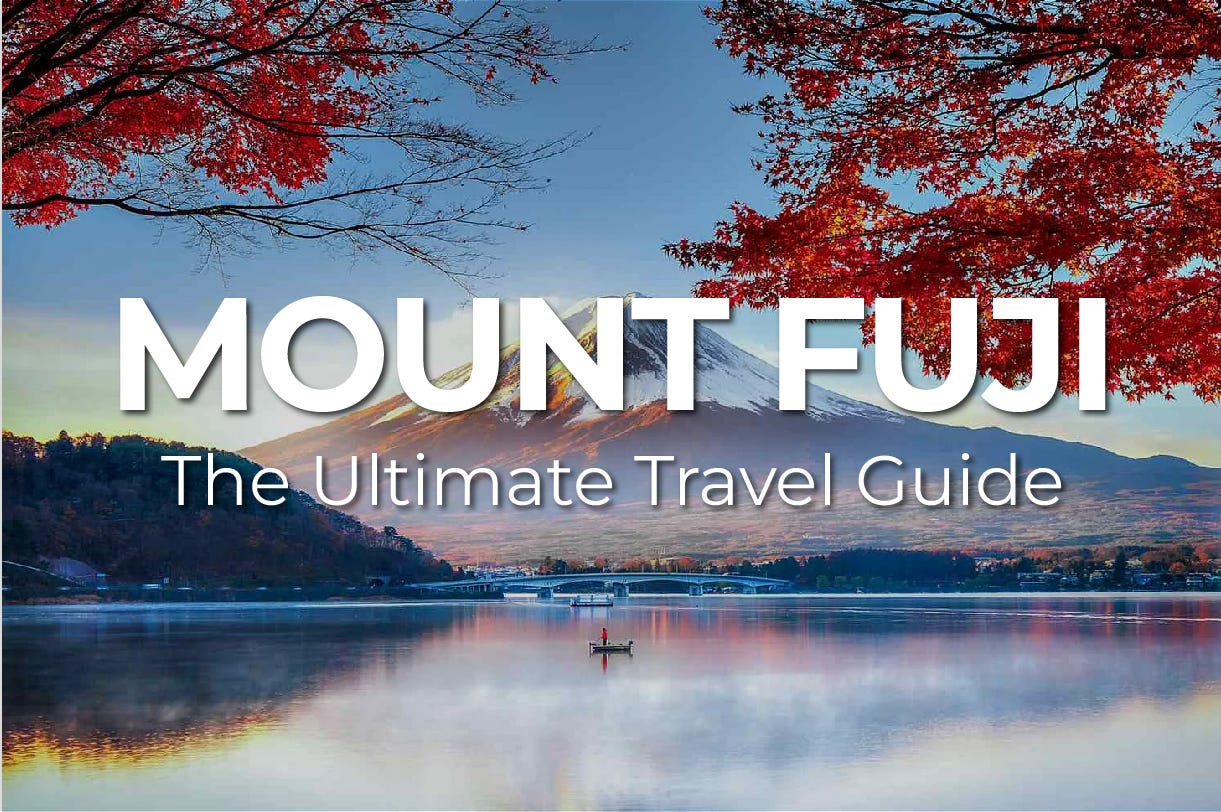
Mount Fuji and Hakone offer something that Tokyo, Kyoto, and Osaka cannot: stillness. This guide covers what to expect from both destinations, the experiences that define the region, how to approach a ryokan stay with onsen, the best time to visit, and how to fit it into a broader Japan itinerary.
Table of Content
🎙️LISTEN TO THE BEYOND THE HORIZON PODCAST

Why Mount Fuji and Hakone belong on any Japan itinerary
Japan’s cities are extraordinary. But after several days of urban intensity, whether in Tokyo or Kyoto or Osaka, the Fuji-Hakone region offers a genuinely different register. The landscape takes over. The pace drops. The air changes. There is a reason this area has drawn travelers, artists, and pilgrims for centuries, and it has nothing to do with a checklist of attractions.
Mount Fuji is the most recognized natural landmark in Japan and one of the most iconic in the world. Perfectly symmetrical, frequently wreathed in cloud, and visible from a remarkable distance on clear days, it carries a weight and presence that photographs do not fully convey. You do not need to climb it to understand why it matters. Simply seeing it, whether from the shore of Lake Kawaguchi at dawn or from the deck of a boat on Lake Ashi, is a genuinely affecting experience.
Hakone, the mountain resort region that sits between Tokyo and Fuji, adds a second dimension. Hot springs, volcanic valleys, forested mountains, and traditional ryokan inns make it one of the most complete nature escapes accessible from a major Japanese city. The two destinations complement each other naturally and are best experienced together rather than separately.
If you are just starting to plan your trip, I recommend beginning with my complete guide to East Asia, which will help you understand the different destinations across the region.

Mount Fuji: what to know before you go
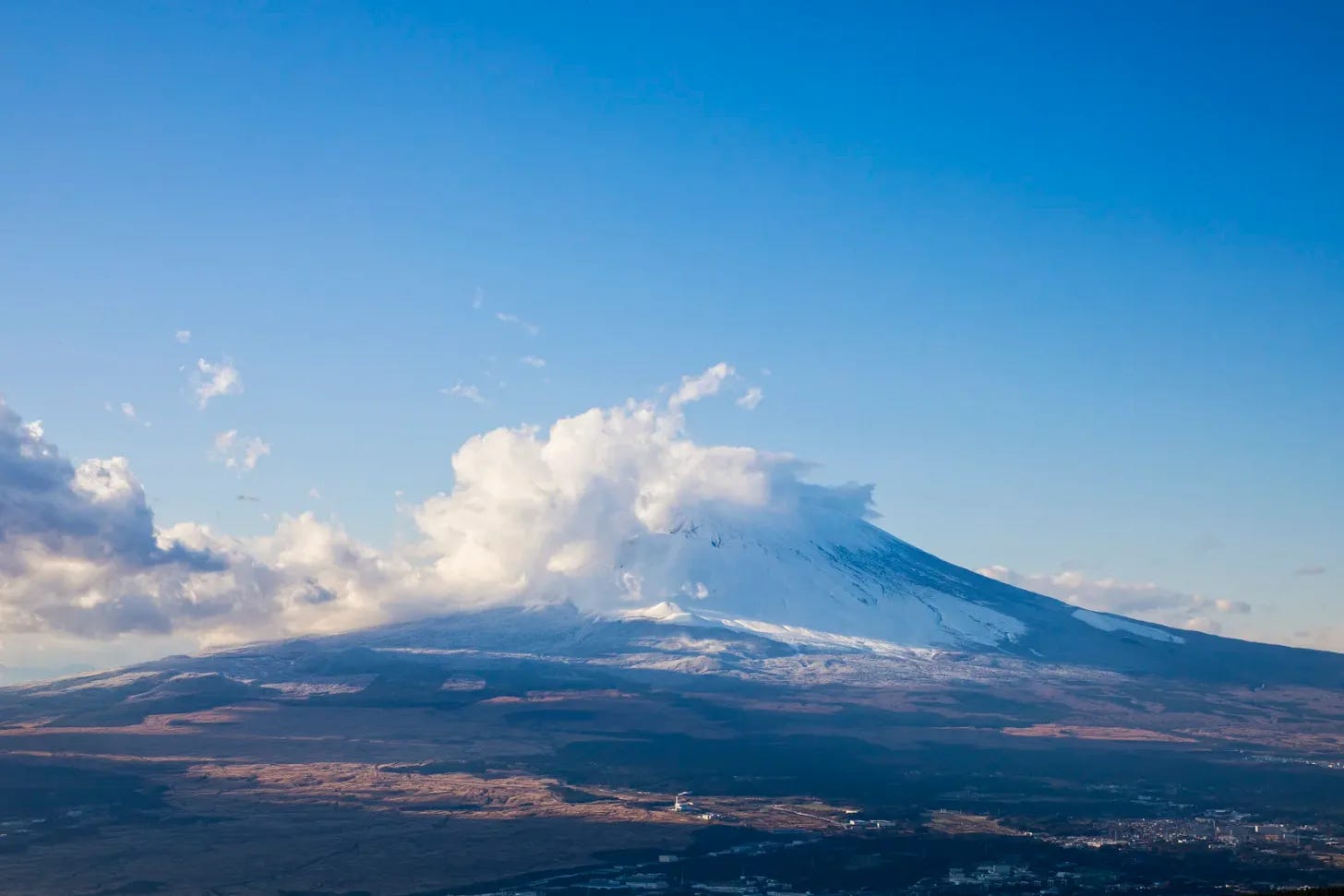
Mount Fuji stands at 3,776 meters and is Japan’s highest peak. It is an active stratovolcano, most recently erupting in 1707, and retains a sacred status in Japanese culture that predates tourism by many centuries. The mountain is the subject of countless works of art, most famously Hokusai’s Thirty-Six Views of Mount Fuji, and remains one of the most photographed subjects in the world.
For most visitors, the experience of Mount Fuji is visual rather than physical. The mountain is best seen from a distance, and the surrounding Fuji Five Lakes region, particularly Lake Kawaguchi, offers the most accessible and consistently rewarding views. Early morning, before cloud cover builds, gives the best chances of a clear sighting. The reflection of Fuji on a still lake surface at sunrise is one of the more quietly spectacular things Japan has to offer.
Climbing Mount Fuji
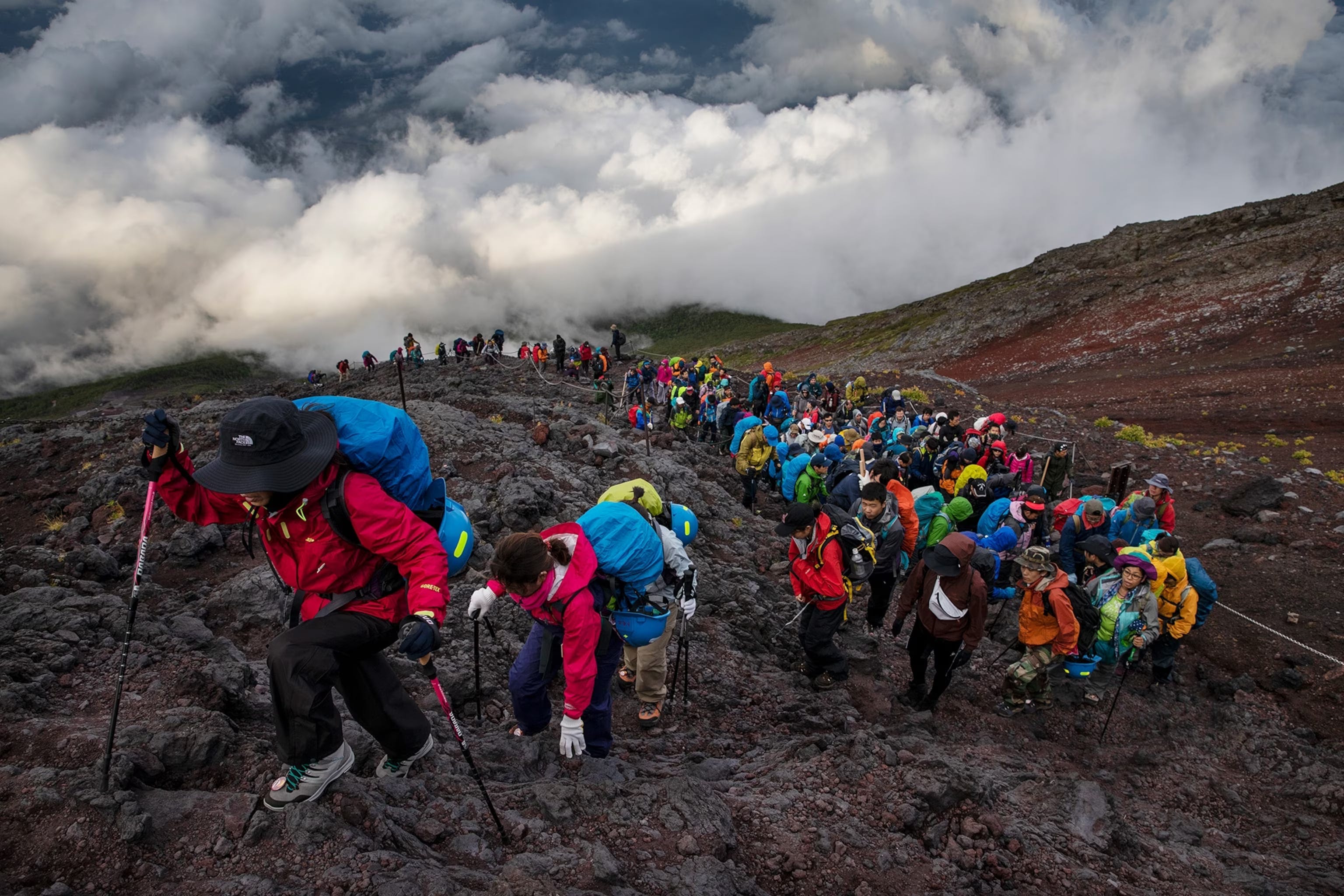
The official climbing season runs from early July to early September. During this window, trails are open, mountain huts are staffed, and conditions are considered safe for experienced hikers without technical equipment. The most popular route, the Yoshida Trail from the Fuji Subaru Line Fifth Station, takes approximately five to seven hours to ascend and three to five hours to descend.
Climbing Fuji is a significant physical undertaking and should not be underestimated. Altitude sickness is common above 3,000 meters. Weather changes rapidly and without warning. The experience of reaching the summit crater at dawn, watching the sunrise from above the clouds, is genuinely memorable. But it requires preparation, appropriate clothing, and realistic expectations about the conditions.
For travelers who are not planning to climb, the Fifth Station itself, accessible by bus from Tokyo and from the Hakone area, sits at approximately 2,300 meters and offers dramatic mountain scenery without the full ascent. It is a worthwhile stop even for non-climbers.
Hakone: the region and what it offers
Hakone is a mountain resort region in Kanagawa Prefecture, approximately 90 minutes from Tokyo by the Romancecar express train from Shinjuku. It sits within the Fuji-Hakone-Izu National Park and encompasses a compact area that is remarkably varied: volcanic valleys, forested mountain trails, a large lake with Fuji views, outdoor sculpture parks, and dozens of traditional ryokan inns built around natural hot springs.
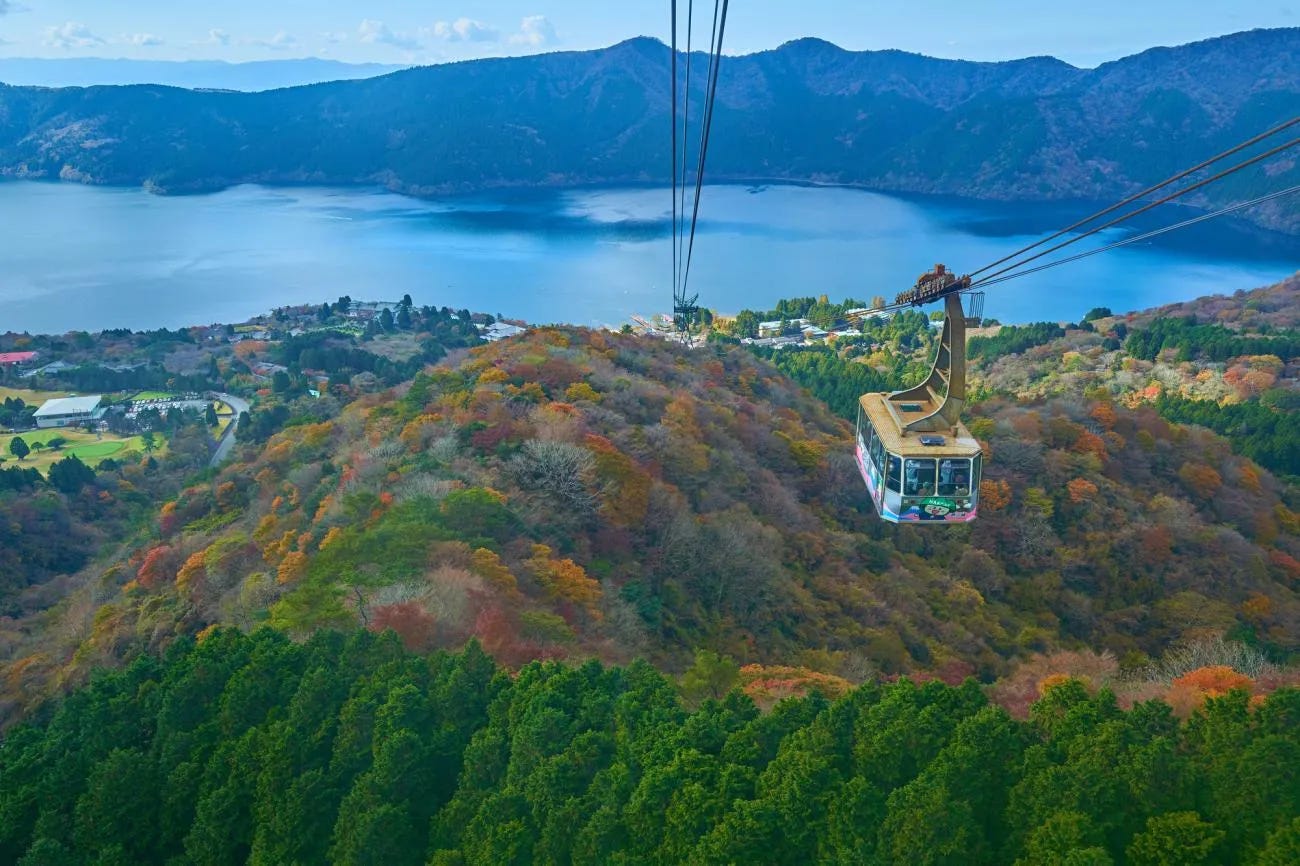
The Hakone Free Pass, available from Odakyu Railway, covers most of the region’s transport options including the Romancecar train, local buses, the Hakone Ropeway, the Hakone Tozan mountain railway, and the sightseeing boat on Lake Ashi. It is the most practical and cost-effective way to move around the region and is strongly recommended for independent travelers.
Lake Ashi
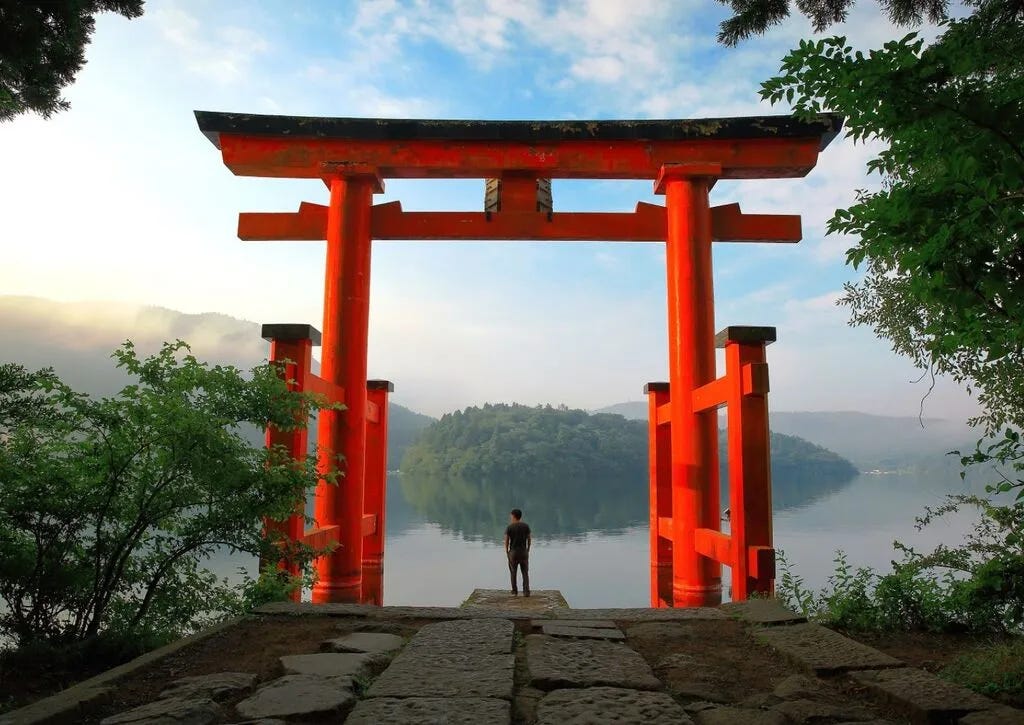
Lake Ashi, known in Japanese as Ashinoko, is the centerpiece of the Hakone region. The lake was formed in the caldera of an ancient volcanic eruption and sits at an elevation of around 720 meters. On clear days, Mount Fuji rises above the hills to the northwest, creating one of the most recognizable views in Japan. The floating torii gate of Hakone Shrine, partially submerged at the lake’s edge, adds a particularly atmospheric element to the shoreline.
Sightseeing boats cross the lake between Moto-Hakone and Togendai, passing the torii gate and offering the best vantage points for Fuji views from the water. The crossing takes around 30 minutes and is included in the Hakone Free Pass. Early morning crossings, before cloud cover develops, give the best visibility.
Owakudani
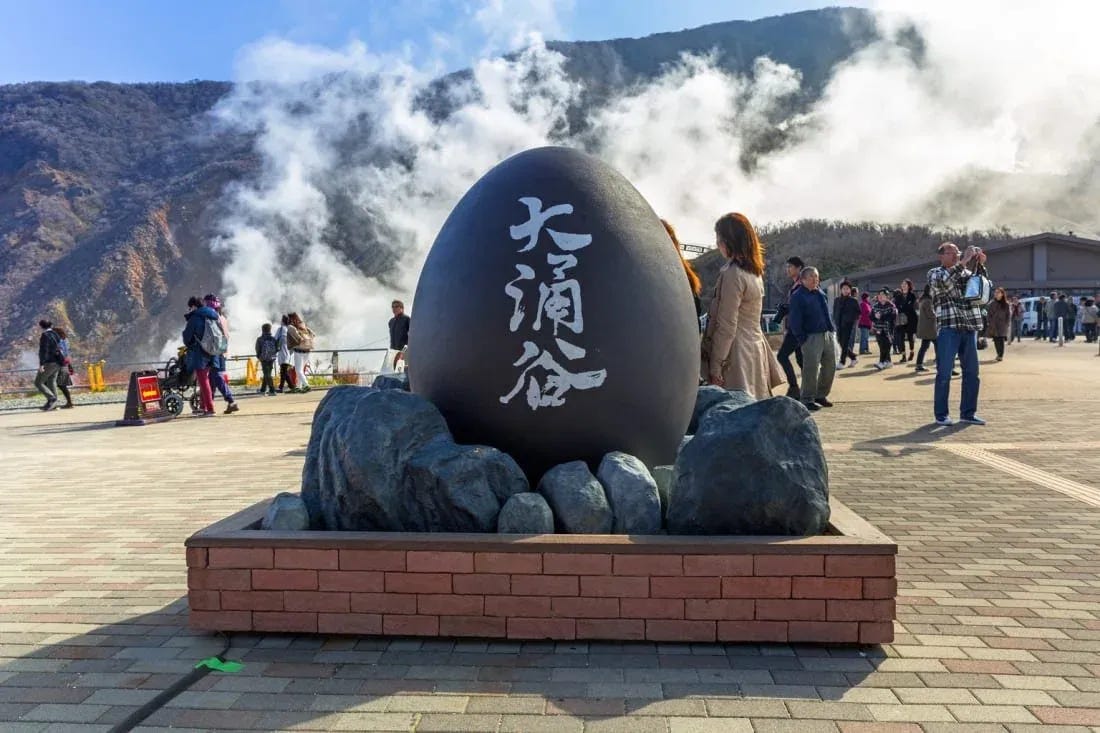
Owakudani is an active volcanic area on the rim of the old Hakone caldera, accessible by ropeway from Sounzan. Sulfur vents release steam constantly from the ground, and the landscape has an otherworldly, primordial quality that contrasts sharply with the forested scenery elsewhere in the region. The black eggs cooked in the volcanic hot springs, known as kuro-tamago, are a local specialty. Local legend holds that eating one extends your life by seven years.
The ropeway journey to and over Owakudani, continuing down to Lake Ashi at Togendai, offers some of the best aerial views of the Fuji-Hakone landscape and is one of the most enjoyable single experiences in the region. Note that access to Owakudani is occasionally restricted during periods of elevated volcanic activity.
The Hakone Open Air Museum
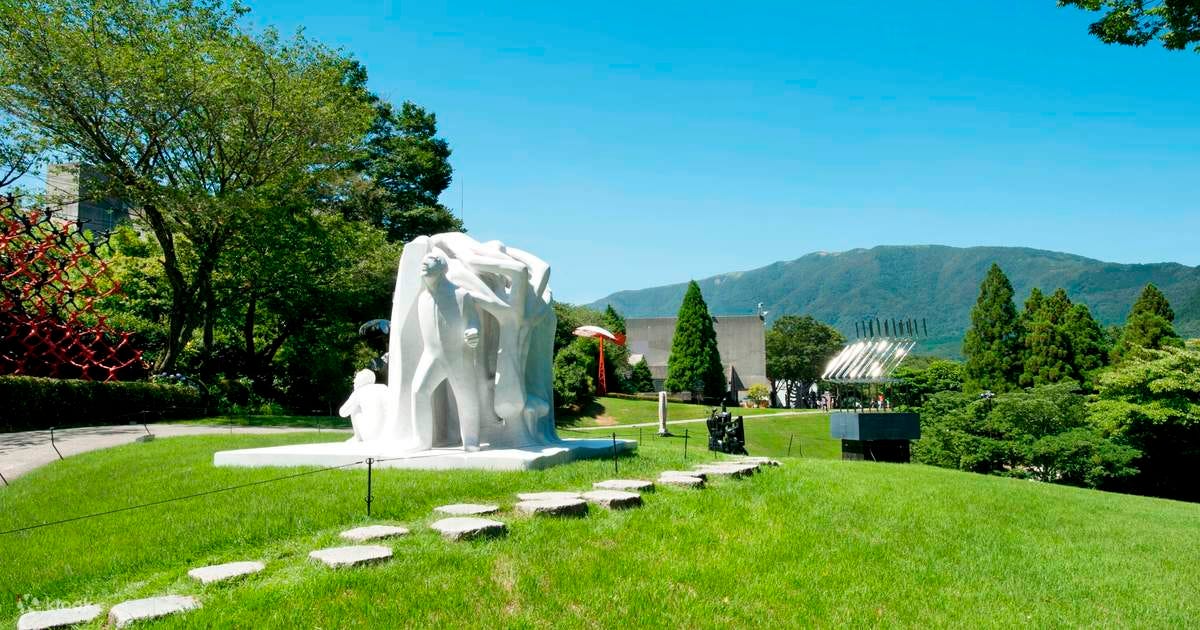
The Hakone Open Air Museum is one of Japan’s finest outdoor sculpture collections and one of the most underrated attractions in the region. Set across five acres of landscaped hillside with mountain views, the museum displays works by Picasso, Rodin, Henry Moore, and a wide range of international and Japanese sculptors. The Picasso Pavilion alone contains over 300 works. Entry is included in some versions of the Hakone Free Pass. It rewards a slower visit and works particularly well as a counterpoint to a morning of natural scenery.
Staying in a ryokan with onsen in Hakone
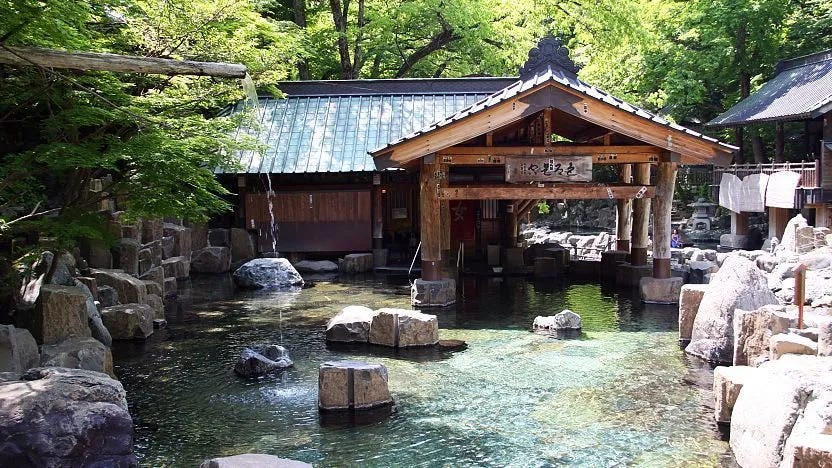
A ryokan stay in Hakone is one of the most complete travel experiences available in Japan. The region has one of the highest concentrations of quality ryokan in the country, many of them built directly above natural hot spring sources. A traditional kaiseki dinner served in your room, a yukata cotton robe, tatami floors, and access to both indoor and outdoor onsen baths are the standard elements of the experience.
The outdoor onsen bath, or rotenburo, is the defining sensory experience of Hakone. Soaking in a natural hot spring with forested mountains visible in every direction, particularly in the early morning or after dark, is the kind of experience that is difficult to fully describe and equally difficult to forget. Many ryokan have private onsen baths bookable by the room, which is worth considering for those who prefer privacy over the communal baths.
Hakone ryokan range from accessible mid-range properties to some of the finest traditional accommodations in Japan. Booking well in advance is essential during peak seasons, particularly cherry blossom season and autumn foliage, when the region is extremely popular with both domestic and international travelers.
When to visit Mount Fuji and Hakone
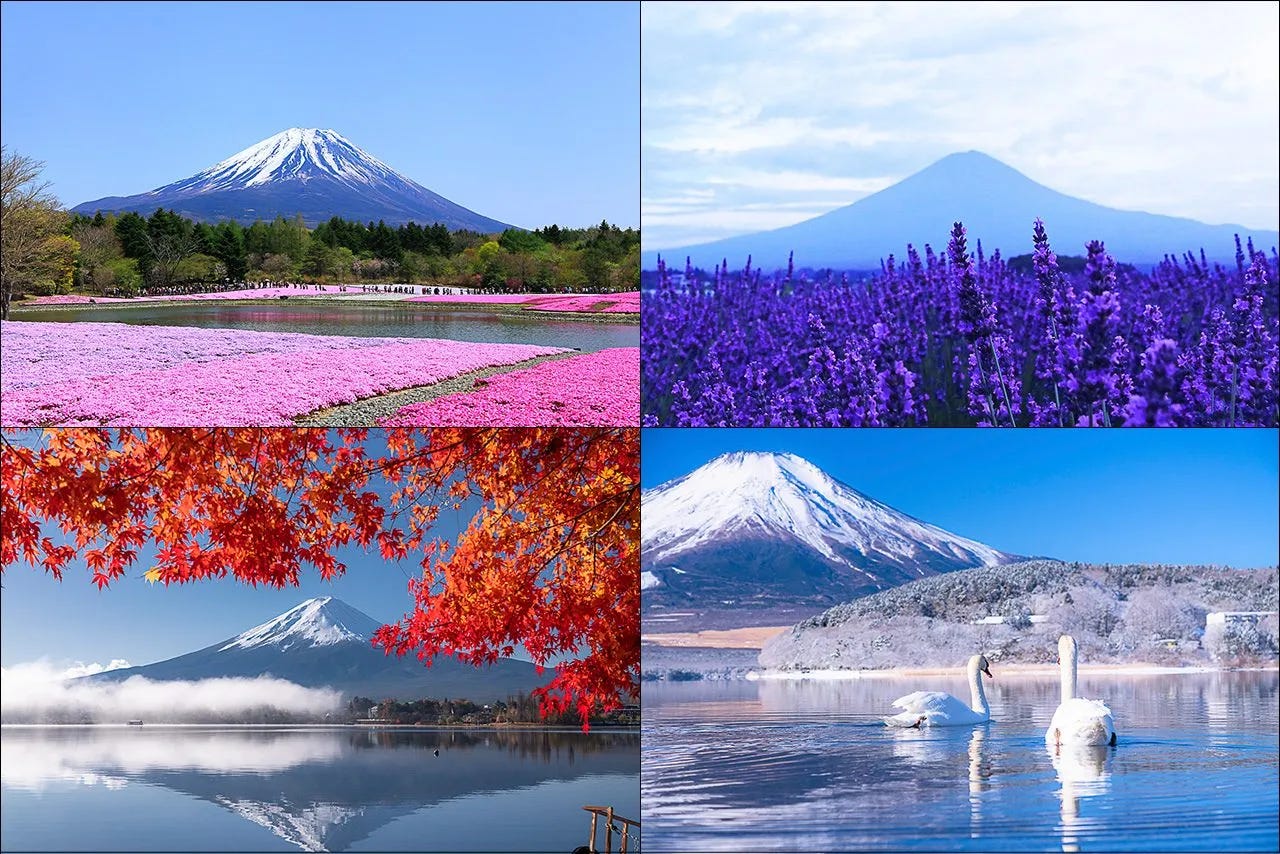
🌸 Spring
Cherry blossoms with Fuji as a backdrop from late March through April. Extremely popular. Book ryokan months in advance.
☀️ Summer
Fuji climbing season runs July through early September. Lush greenery in Hakone. Humidity can be high in the valleys.
🍂 Autumn
Spectacular foliage from October through November. Crisp air and excellent visibility for Fuji views. Very popular season.
❄️ Winter
The clearest and most consistent Fuji views of the year. Fewer crowds. Onsen baths feel especially rewarding in the cold.
One important point: clear visibility of Mount Fuji is never guaranteed regardless of season. Cloud cover, particularly in summer, can obscure the mountain entirely for days at a time. Winter offers the most reliably clear skies and the strongest chances of an unobstructed view, which is one of the most underappreciated reasons to visit the region in the colder months.
How many days to spend
One to two days works well as an extension from Tokyo, covering the main highlights of Hakone and at least one attempt at a Fuji view. Two to three days allows for a ryokan stay, a more relaxed pace through the region, a visit to Owakudani and the Open Air Museum, and time to move between the Fuji Five Lakes area and Hakone rather than choosing between them.
The region is close enough to Tokyo for a day trip, but a ryokan overnight transforms the experience significantly. The evening kaiseki dinner, the morning onsen, and the quality of light at dawn over the mountains are not things that a day visit can replicate. If budget and time allow, at least one night in the region is strongly recommended.
A suggested 2-day itinerary
Day 1
Travel from Tokyo by Romancecar to Hakone-Yumoto. Take the mountain railway and ropeway up through Owakudani to Togendai. Afternoon boat crossing of Lake Ashi toward Moto-Hakone. Check in to ryokan for kaiseki dinner and onsen.
Day 2
Early morning onsen and Fuji views from the ryokan or lakeside. Hakone Open Air Museum in the late morning. Afternoon at Lake Kawaguchi in the Fuji Five Lakes area for the classic Fuji reflection view, then return to Tokyo or continue to Kyoto by Shinkansen via Mishima.
How Fuji and Hakone fit into a broader Japan itinerary
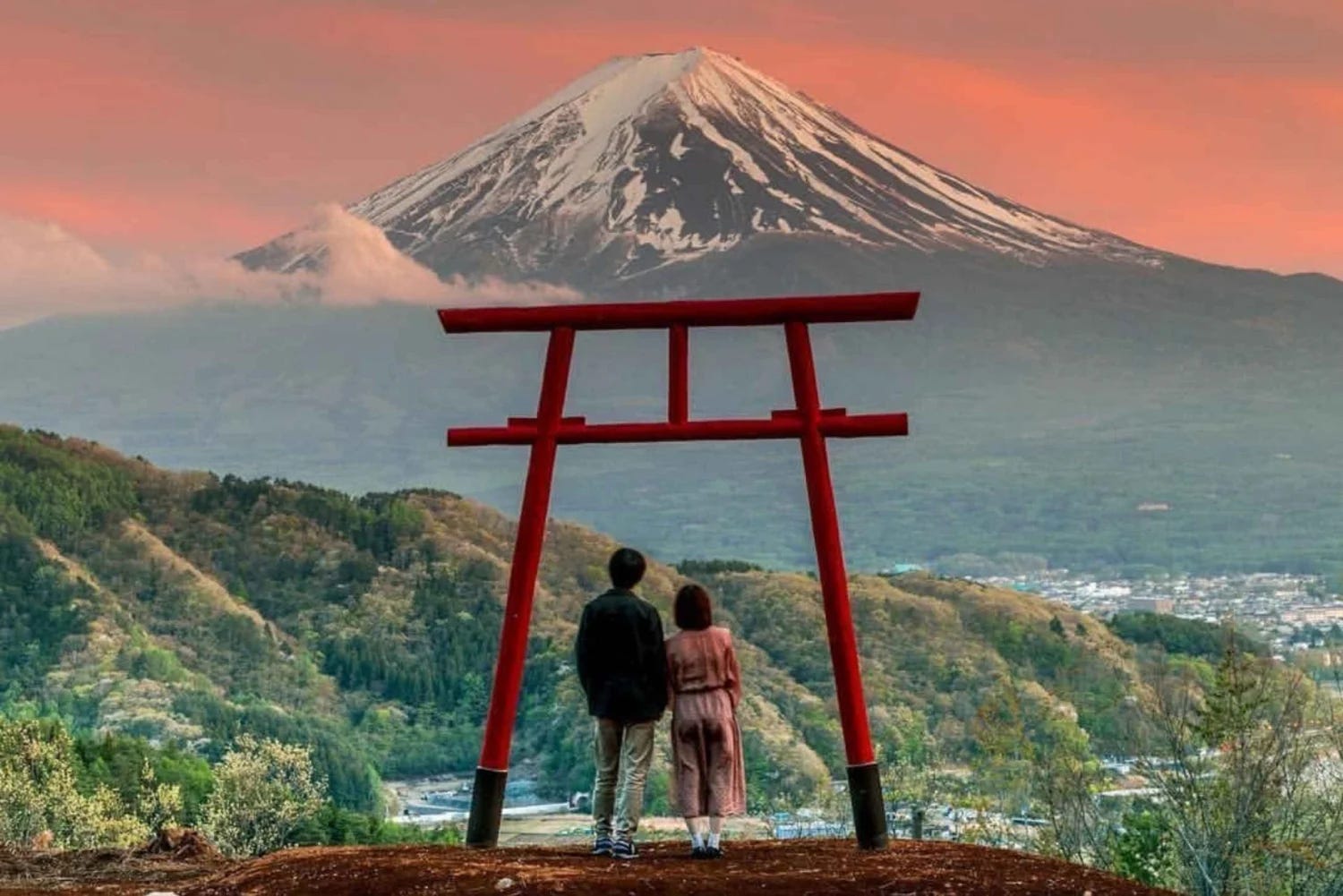
The Fuji-Hakone region sits geographically between Tokyo and the Kansai cities of Kyoto and Osaka, which makes it a natural stopping point rather than a detour. Travelers moving from Tokyo to Kyoto by Shinkansen can stop in the Hakone area for one or two nights before continuing west, with minimal logistical complexity.
The region pairs particularly well with a Japan itinerary that has already spent time in urban environments. After Tokyo and before Kyoto, a night or two in Hakone provides the kind of contrast and decompression that makes the overall trip feel more balanced. It is also one of the most effective ways to give an itinerary a nature component without requiring a significant detour from the main travel corridor.
Practical information for visitors
Mount Fuji and Hakone essentials
Getting there: Romancecar express from Shinjuku to Hakone-Yumoto, approximately 90 minutes. Fuji Five Lakes accessible by highway bus from Shinjuku, approximately 2 hours.
Getting around: Hakone Free Pass covers most local transport including mountain railway, ropeway, bus, and Lake Ashi boat. Strongly recommended.
Currency: Japanese yen. Carry cash for smaller ryokan, local shops, and mountain facilities.
Fuji climbing season: early July to early September only. Outside this window, upper trails are closed.
Visibility: Fuji is clearest in winter and on cold clear mornings year-round. Cloud cover can obscure the mountain entirely, especially in summer.
Ryokan booking: essential to book well in advance during cherry blossom season (late March to April) and autumn foliage (October to November).
Onsen etiquette: tattoos are not permitted in many communal onsen. Private baths are an alternative for travelers with tattoos.
Frequently asked questions
Is Hakone worth visiting on a Japan trip?
Yes, particularly for travelers who want a nature experience and a ryokan stay as part of their Japan itinerary. The combination of hot springs, mountain scenery, Fuji views, and traditional accommodation makes it one of the most complete escapes from the urban intensity of Tokyo or Kyoto.
Can you see Mount Fuji from Hakone?
Yes, on clear days. Lake Ashi and several points in the Hakone region offer views of Fuji, though visibility depends on weather and cloud cover. Winter offers the most reliably clear conditions. Fuji can be completely hidden on overcast or humid days regardless of season.
How far is Hakone from Tokyo?
Approximately 90 minutes by the Romancecar express train from Shinjuku Station. The journey is comfortable and scenic and requires no Shinkansen pass.
Is it worth climbing Mount Fuji?
For fit and prepared hikers, yes. The summit experience at dawn is genuinely memorable. However, the climb is demanding, altitude sickness is common, and weather conditions can be harsh even in summer. It requires proper preparation, appropriate clothing, and realistic expectations. Many visitors find that viewing Fuji from the lakes below is equally meaningful and far less physically taxing.
What is a ryokan and should I stay in one in Hakone?
A ryokan is a traditional Japanese inn, typically featuring tatami-matted rooms, futon bedding, a multi-course kaiseki dinner served in your room, and access to natural hot spring baths. Hakone is one of the best places in Japan to experience a ryokan stay. Even a single night makes a significant difference to how the region feels and is one of the most recommended experiences on any Japan itinerary.
What is the best time of year to visit Hakone?
Autumn foliage from October through November and cherry blossom season in late March and April are the most popular and visually spectacular. Winter offers the clearest Fuji views and fewer crowds. All seasons have something to offer, but spring and autumn require advance booking for ryokan accommodation.
Plan your Japan trip with ÆRIA Voyages
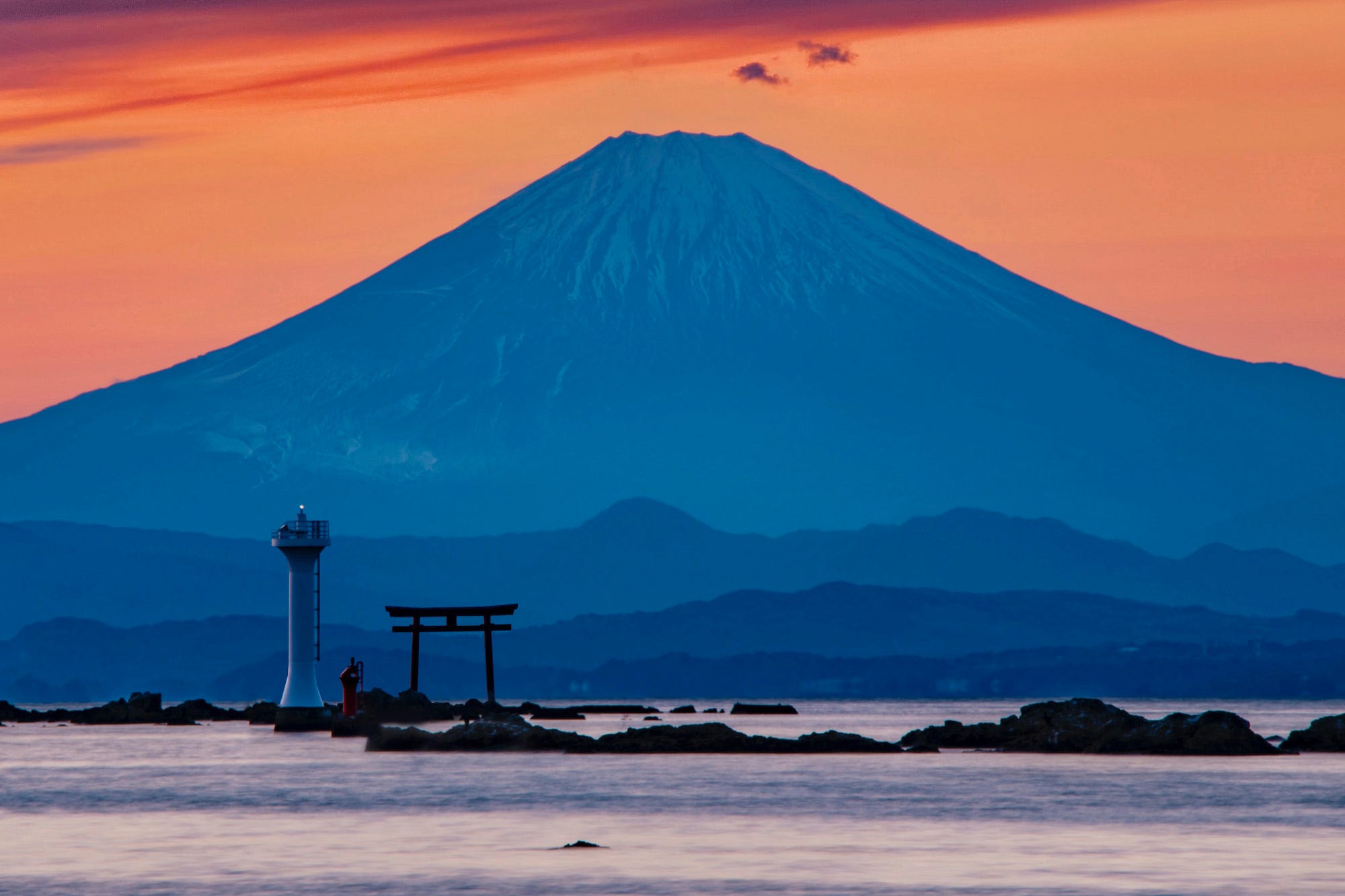
Every traveler’s ideal Japan itinerary looks different depending on the time available, the balance between cities and nature, and the kind of experiences that matter most. I help clients build trips that include the right mix of urban energy and natural stillness, whether that means a ryokan stay in Hakone, a multi-city circuit through Tokyo, Kyoto, and Osaka, or an extension into the Japanese Alps or a cruise through the region.
If you are planning a trip to Japan and want to talk through the options, I would be glad to help.
Yvan Junior Blanchette
Travel Advisor & Cruise Specialist
ÆRIA Voyages📩 yvanblanchette@aeriavoyages.com
📞 1-888-460-3388
🌐 aeriavoyages.com