

The Ultimate OSAKA Travel Guide: what to know, where to eat, and how to experience Japan's most human city
Destination guide · Updated 2026 · Japan · Food travel · First-time and returning visitors
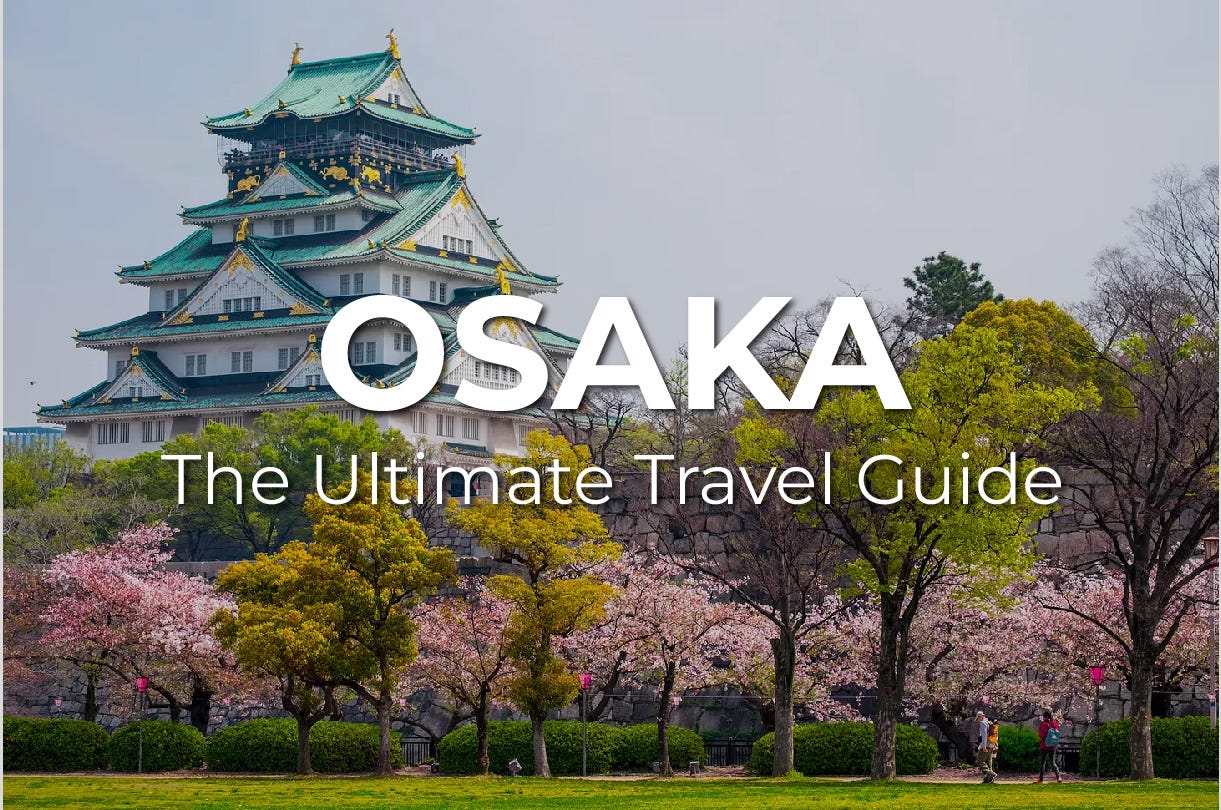
Osaka is consistently underestimated by travelers who treat it as a day trip from Kyoto or a footnote after Tokyo. It deserves more than that.
This guide covers the neighborhoods that define the city, the food culture that sets it apart from anywhere else in Japan, the practical details you need before you go, and how Osaka fits into a broader Japan itinerary.
Table of Content
🎙️ LISTEN TO THE BEYOND THE HORIZON PODCAST

Why Osaka stands apart from the rest of Japan
Osaka has a reputation among Japanese people themselves, and it is a telling one. The city is known for being warmer, louder, funnier, and more direct than Tokyo. Interactions with strangers are more spontaneous. The humor is more visible. The food culture is taken more seriously, and discussed more openly, than almost anywhere else in the country.
The phrase most commonly used to describe Osaka’s relationship with food is kuidaore, which roughly translates to “eat until you drop.” It is not just a saying. It reflects a genuine civic identity built around the pleasure of eating well, eating often, and not taking any of it too seriously. Osaka is often called the kitchen of Japan, and after a few hours in the city, the reason becomes obvious.
For travelers moving through Japan on a multi-city itinerary, Osaka tends to be where the experience loosens up. Tokyo impresses. Kyoto moves you. Osaka makes you feel at home. That shift in register is part of what makes it such a valuable addition to any Japan trip.
If you are just starting to plan your trip, I recommend beginning with my complete guide to East Asia, which will help you understand the different destinations across the region.

The neighborhoods worth knowing in Osaka
Osaka is more compact than Tokyo, which makes it genuinely pleasant to explore on foot. The neighborhoods are distinct enough to feel like different cities but close enough to move between easily.
Dotonbori
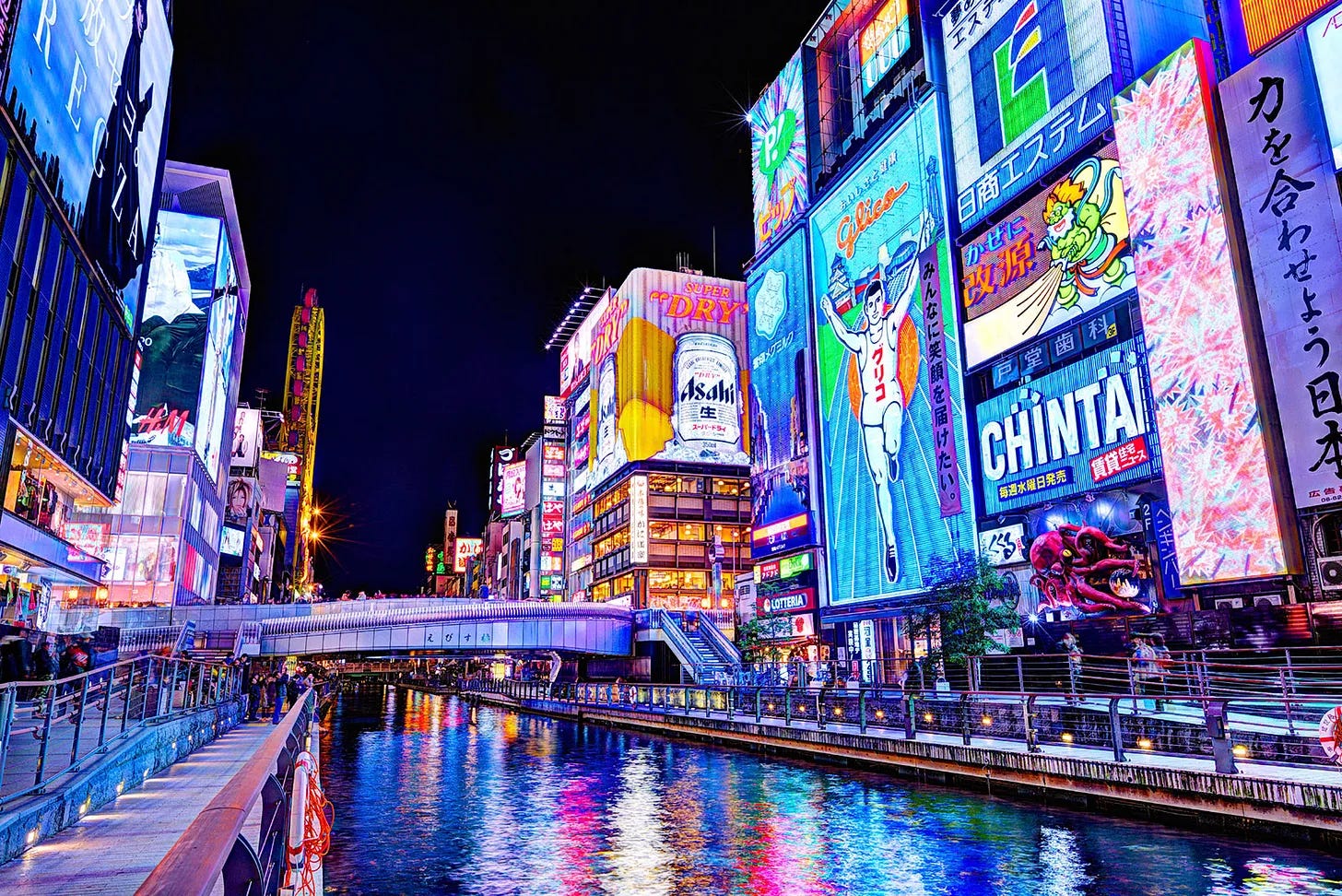
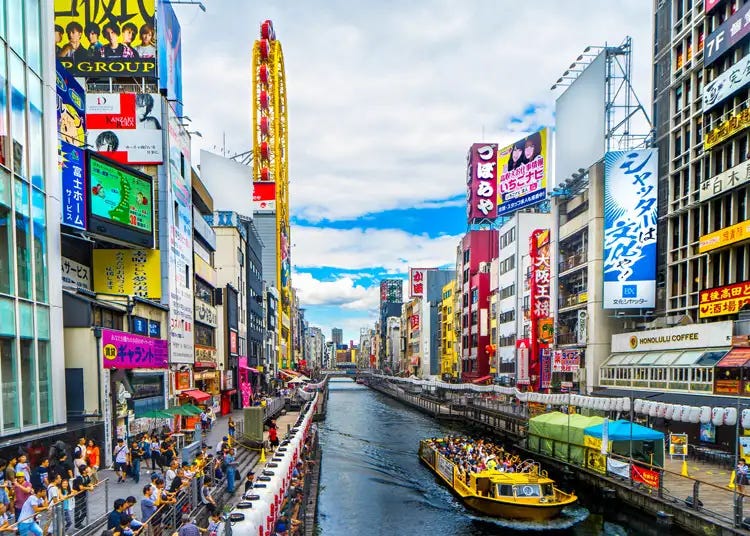
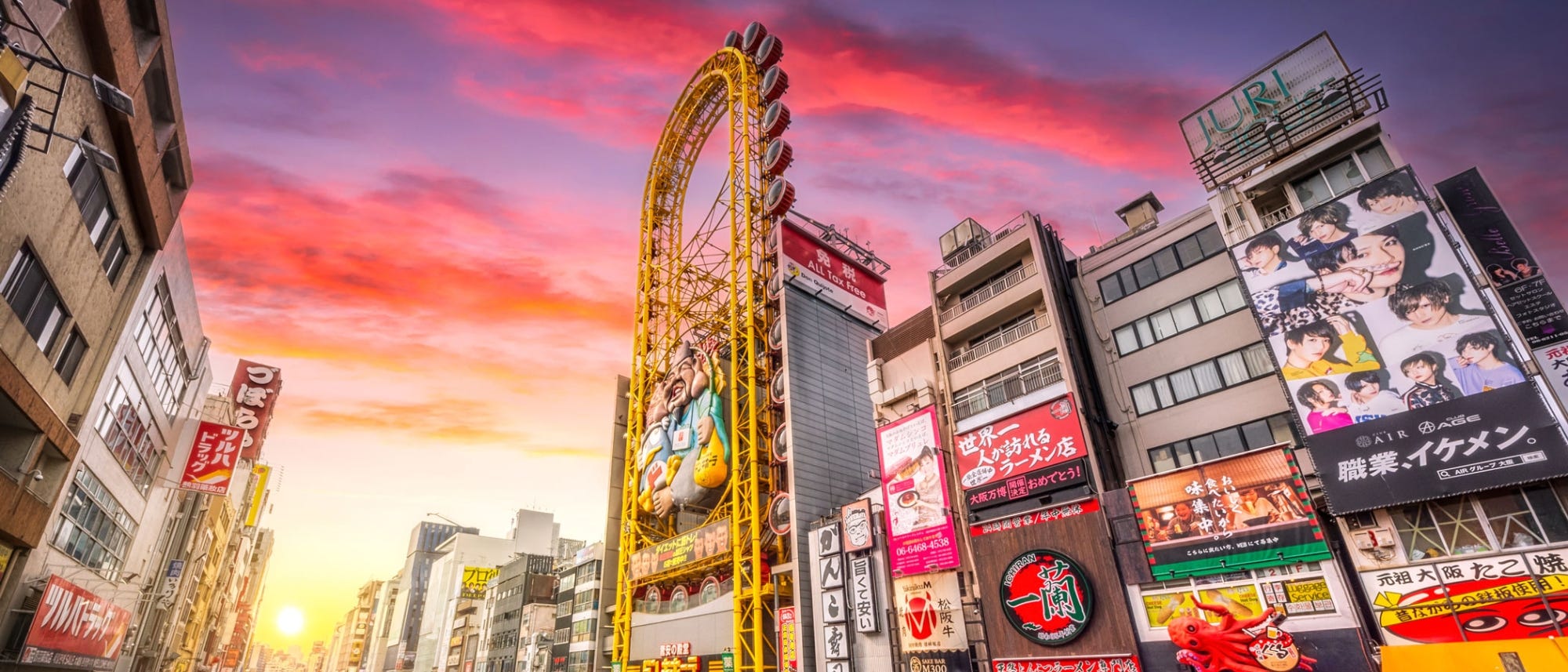
Dotonbori is the image most people have of Osaka before they arrive: neon signs reflected in the canal, giant mechanical crabs and running men attached to restaurant facades, crowds moving in every direction at once. It is loud, cheerful, and completely unsubtle, and that is precisely the point. Dotonbori is Osaka presenting itself without apology. The canal walk is best done in the evening when the lights come on and the energy peaks. The food here, from takoyaki stands to ramen shops to long-established kushikatsu restaurants, is genuinely excellent despite the tourist density.
Namba
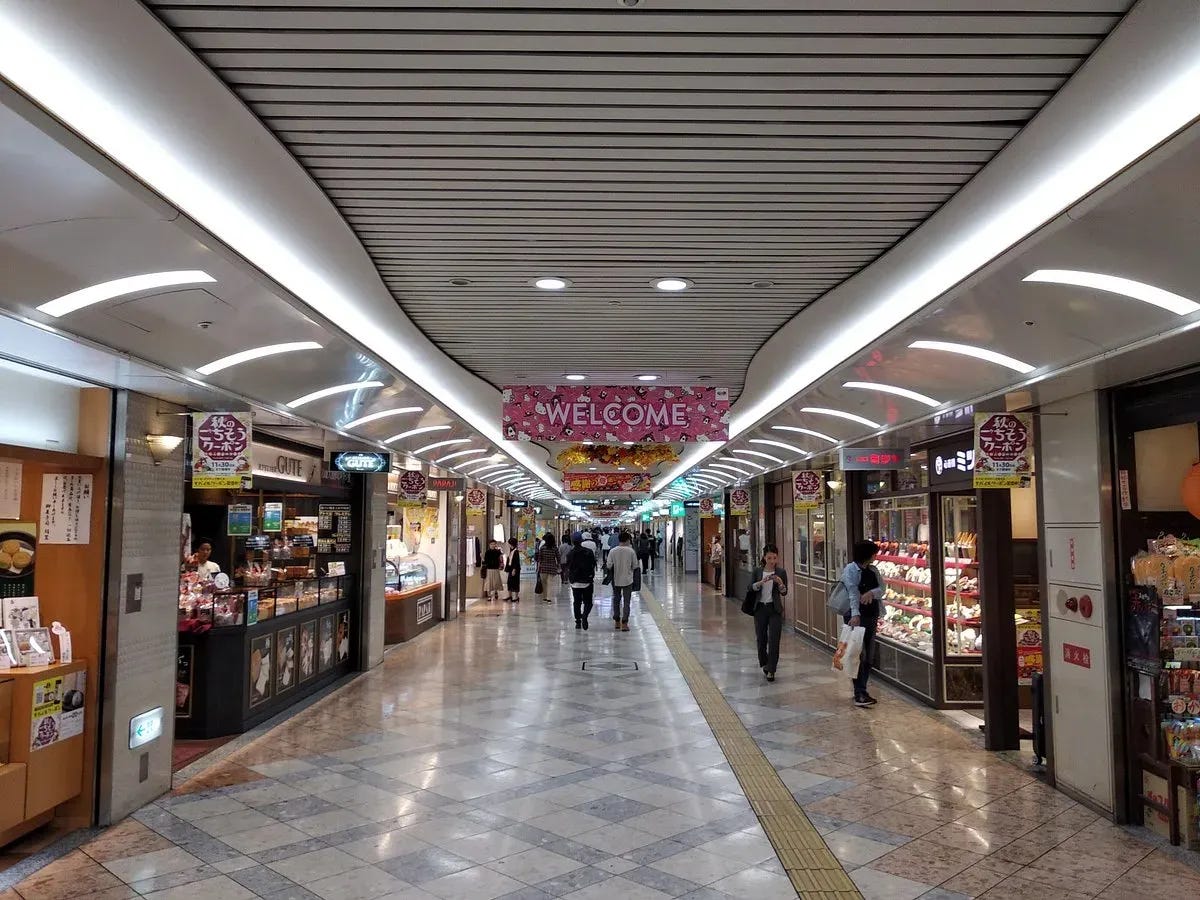
Namba sits adjacent to Dotonbori and functions as the commercial and transit heart of the city. The covered shopping arcades of Shinsaibashi and Namba are among the longest in Japan, running for several kilometers and containing everything from international brands to small local shops that have been operating for decades. Kuromon Market, sometimes called Osaka’s kitchen, is a covered market where local vendors sell fresh fish, produce, and prepared foods and is well worth a morning visit.
Shinsekai
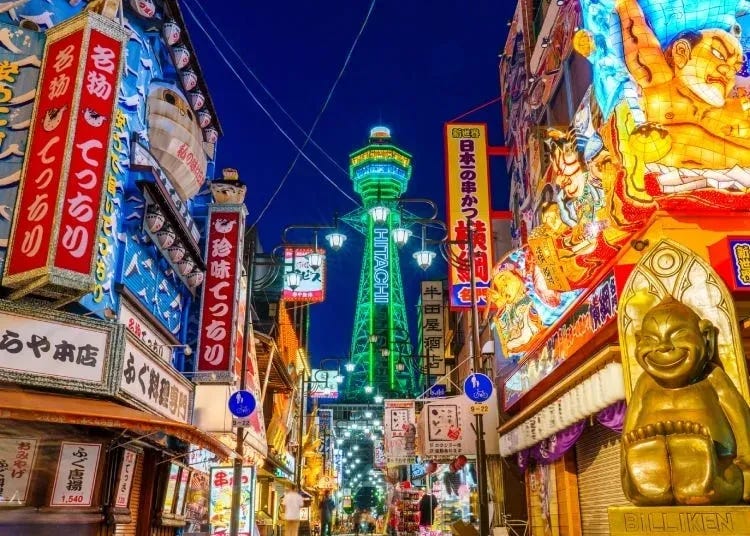
Shinsekai is one of the most atmospheric neighborhoods in Osaka and one of the least visited by international travelers, which is part of what makes it worth going. Built in the early twentieth century and modeled partly on Paris and partly on Coney Island, the area has retained a retro, working-class character that the rest of the city has mostly moved on from. Tsutenkaku Tower, the neighborhood’s central landmark, dates from 1956 and offers views across the city. The restaurants here specialize in kushikatsu, breaded and deep-fried skewers of meat, vegetables, and seafood, which is the dish most associated with Osaka’s food identity.
Nakazakicho
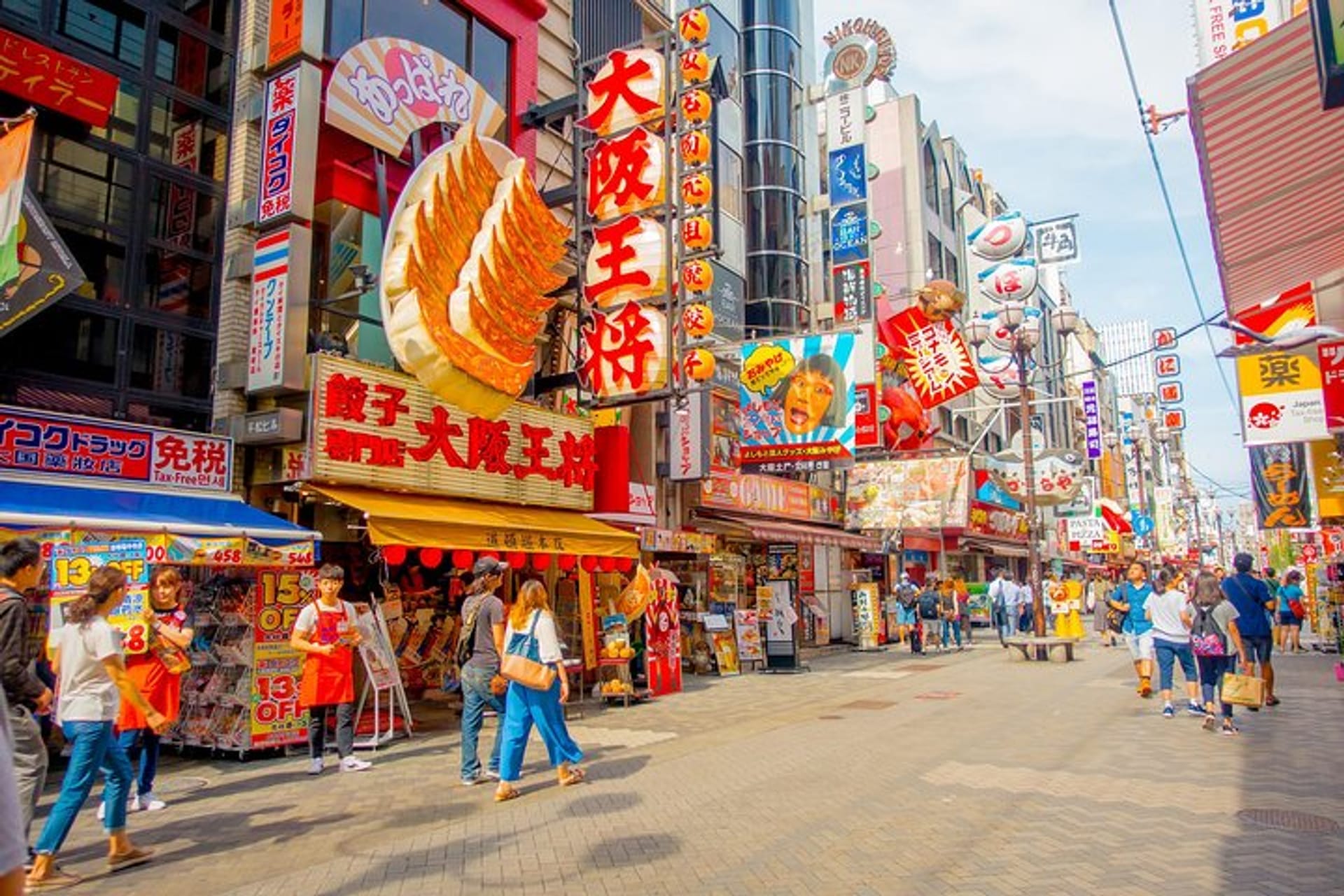
Nakazakicho is Osaka’s most quietly interesting neighborhood and is largely unknown to first-time visitors. A short walk from the main tourist circuit, it is a preserved pocket of prewar wooden townhouses that have been converted into independent cafes, vintage clothing shops, small galleries, and bookstores. The pace here is slow and the atmosphere is entirely local. It is the kind of neighborhood you stumble into and end up spending two hours in without planning to.
Osaka Castle and Honmachi
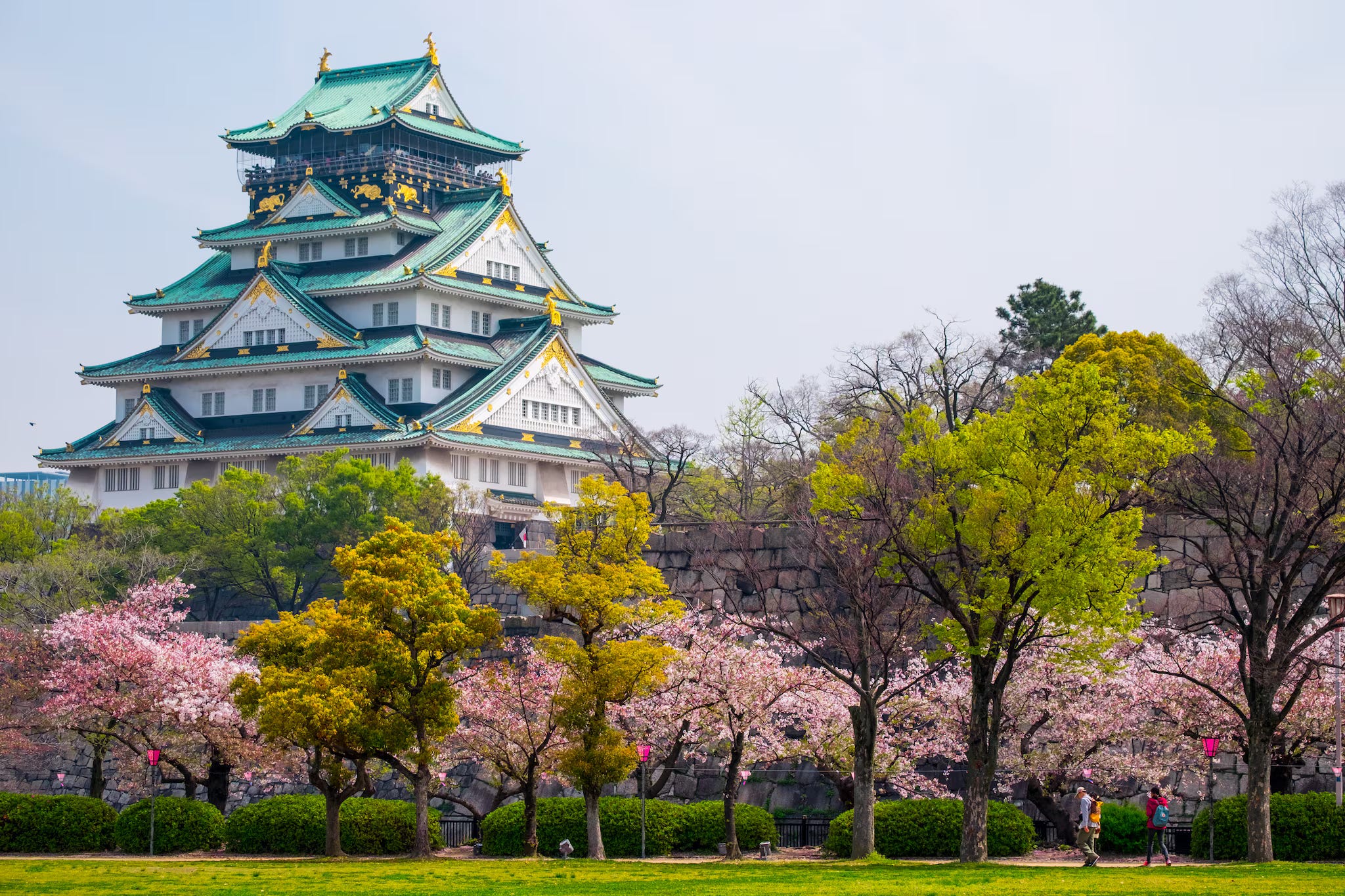
Osaka Castle is one of the most recognizable landmarks in Japan and sits at the center of a large park that is one of the best places in the city during cherry blossom season. The castle itself was rebuilt in the twentieth century and contains a museum tracing Osaka’s history. The surrounding Honmachi district is the city’s business center during the week and noticeably quieter on weekends, offering a different perspective on the city away from the tourist concentration of Namba and Dotonbori.
What to eat in Osaka
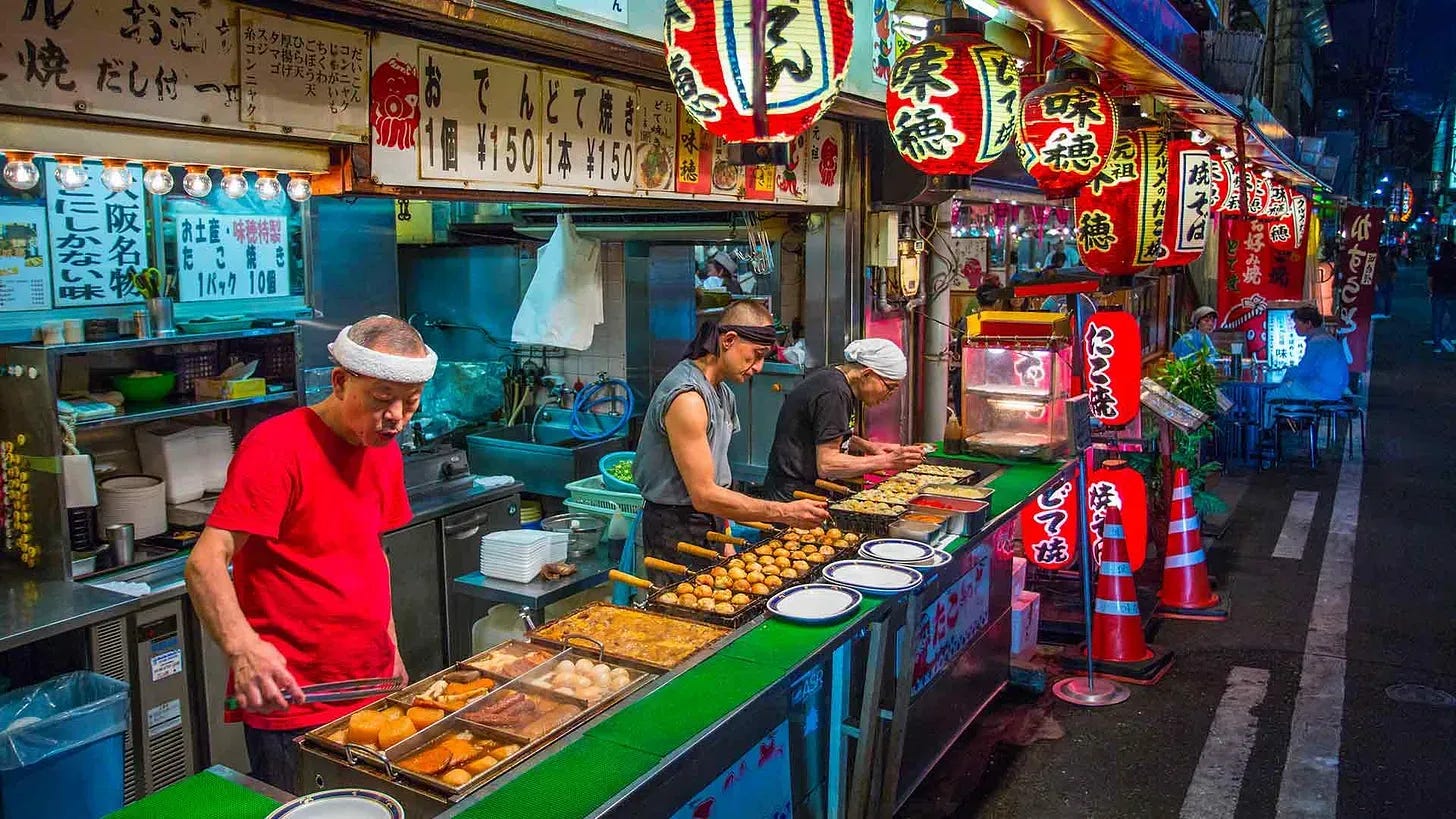
Food is not a chapter in an Osaka trip. It is the itinerary. The city’s food culture is deep, opinionated, and genuinely accessible at every price point. A few dishes are essential.
Takoyaki: octopus-filled wheat batter balls, cooked in a special pan, topped with bonito flakes, sauce, and mayonnaise. The snack most associated with Osaka street food.
Okonomiyaki: a savory pancake made with cabbage, egg, and a range of fillings, cooked on a griddle. Osaka-style differs meaningfully from Hiroshima-style and locals will tell you which is better.
Kushikatsu: breaded and deep-fried skewers of meat, seafood, and vegetables, eaten with a shared dipping sauce. The rule in every Shinsekai restaurant is that you do not double-dip, and it is enforced seriously.
Ramen and udon: Osaka has a strong udon culture, with thicker, softer noodles in a lighter broth than you find in Tokyo or Fukuoka.
Beyond specific dishes, the most valuable thing to do in Osaka is simply to eat without a plan. Walk into a place that looks busy, sit at the counter if there is one, and order whatever the person next to you is having. It almost always works out.
Experiences that define a visit to Osaka
Dotonbori at night
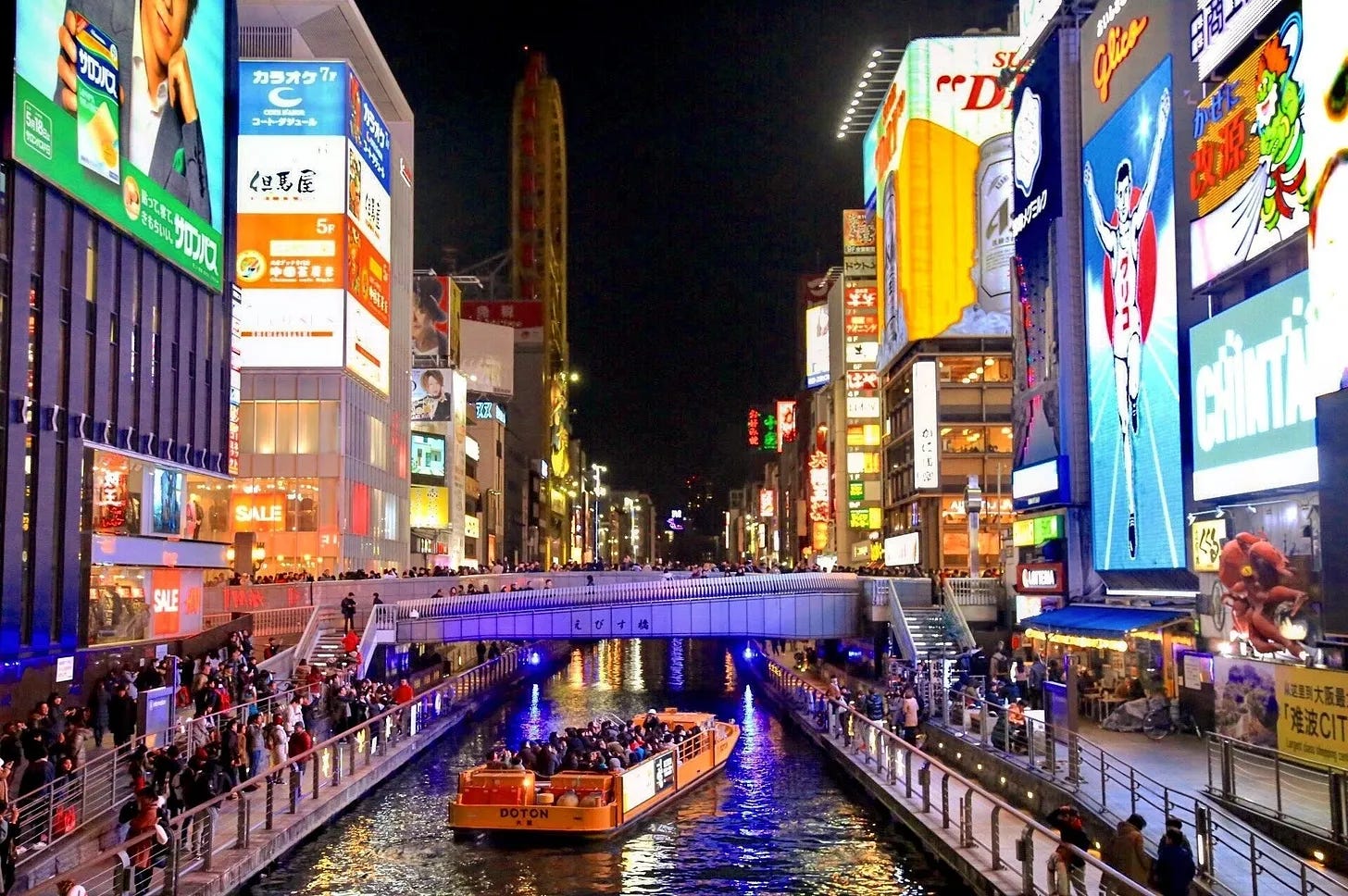
The neighborhood is worth visiting during the day, but it becomes a different place after dark. The neon reflections on the canal, the sound of vendors calling out, the crowds of people moving between restaurants: the evening version of Dotonbori is one of the most visually energetic experiences in Japan and worth spending proper time in rather than passing through.
A morning at Kuromon Market
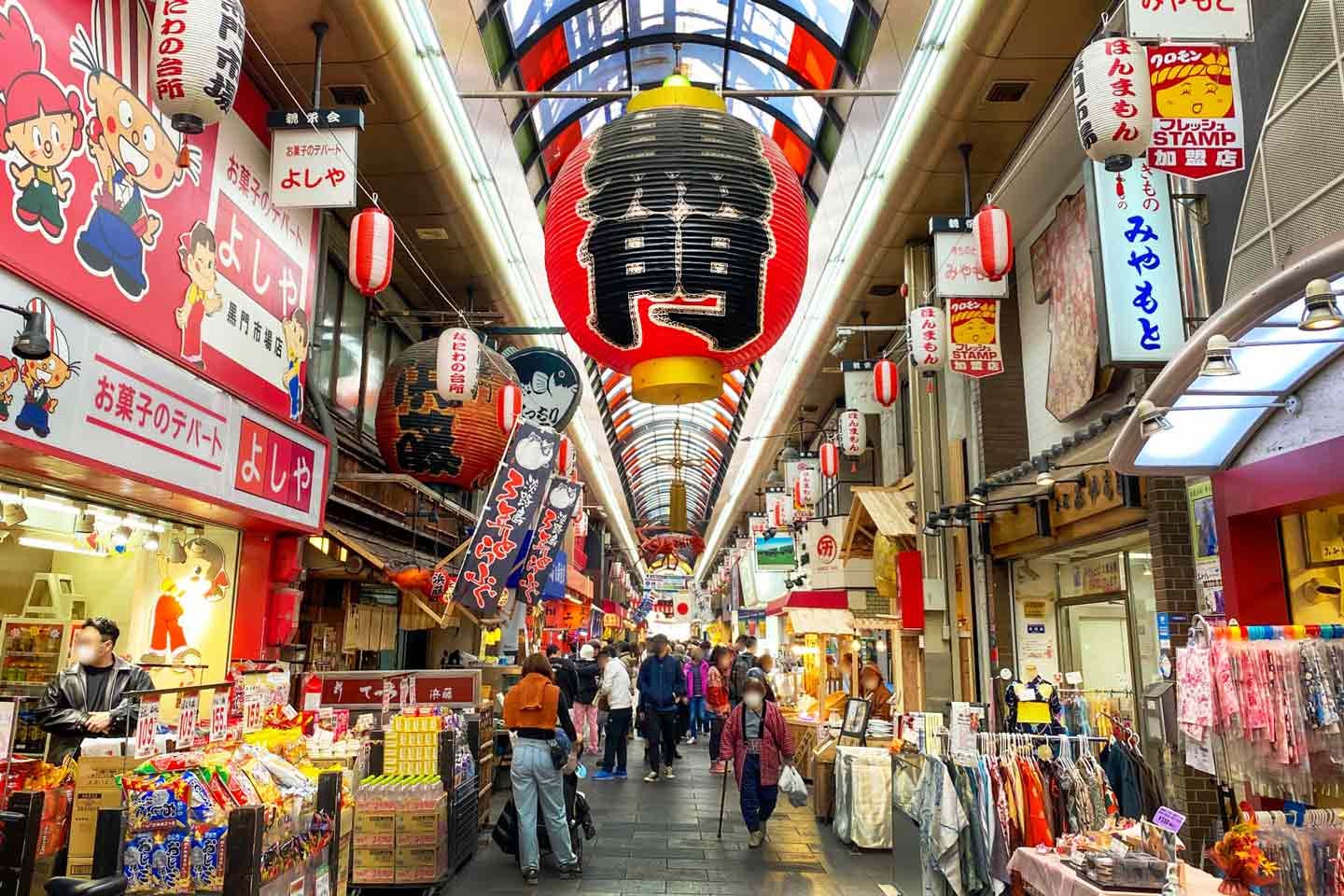
Kuromon Ichiba is a covered market that has operated in Namba for over a century. Arriving in the morning, when vendors are setting up and local chefs are doing their shopping, gives a completely different experience from the midday tourist rush. Fresh seafood, grilled skewers, tamagoyaki, and local produce are all available to eat as you walk. It is one of the best single hours you can spend in Osaka.
Day trips from Osaka
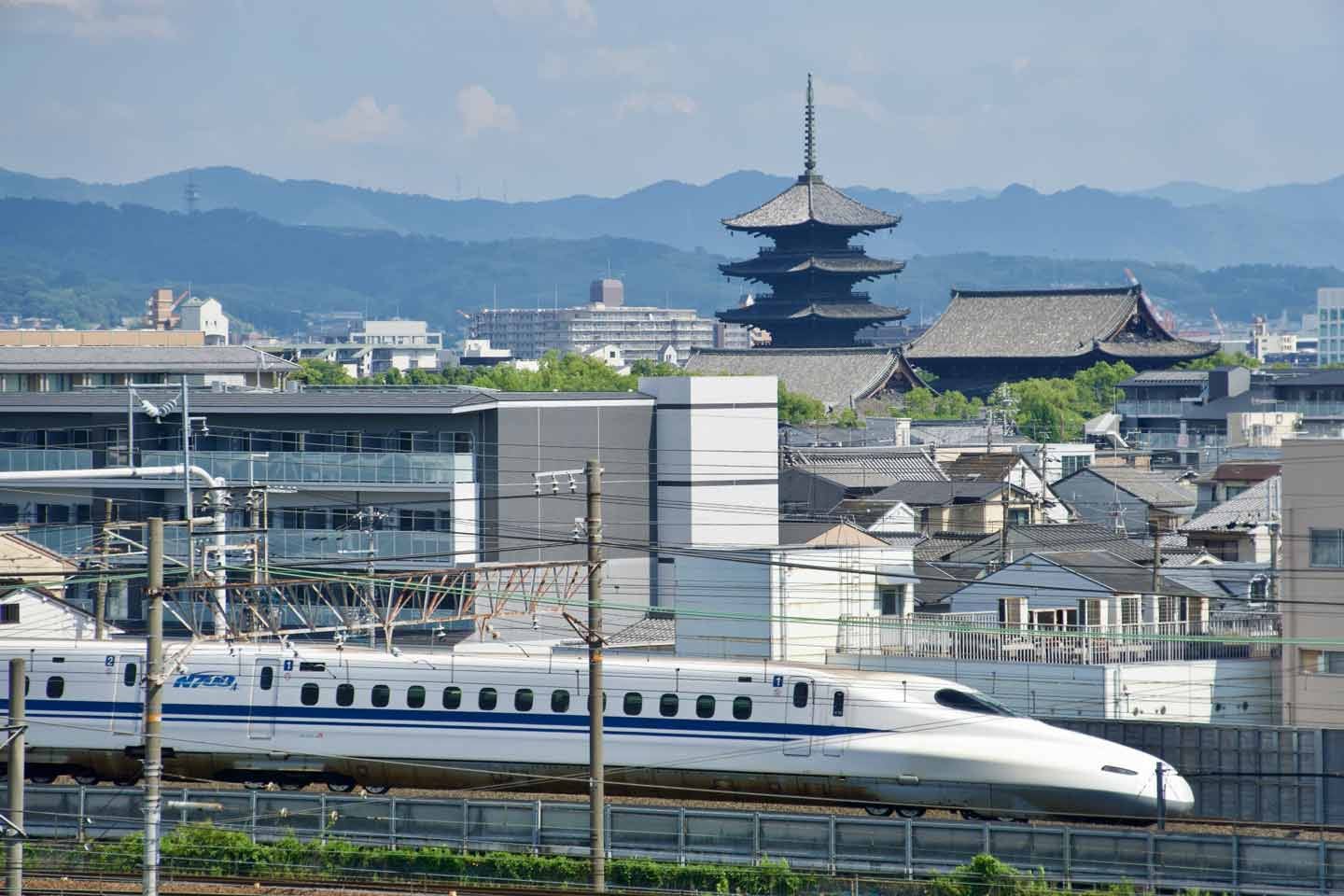
Osaka’s location makes it one of the best bases in Japan for day trips. Kyoto is 15 minutes by Shinkansen or about 30 minutes by local train. Nara, with its famous free-roaming deer and significant temple complex, is 45 minutes away. Kobe, known for its beef, its harbor, and its historic foreign settlement district, is 20 minutes by express train. All three work comfortably as day trips from an Osaka base, which is why many experienced travelers to Japan choose to stay in Osaka rather than Kyoto when visiting the Kansai region.
When to visit Osaka
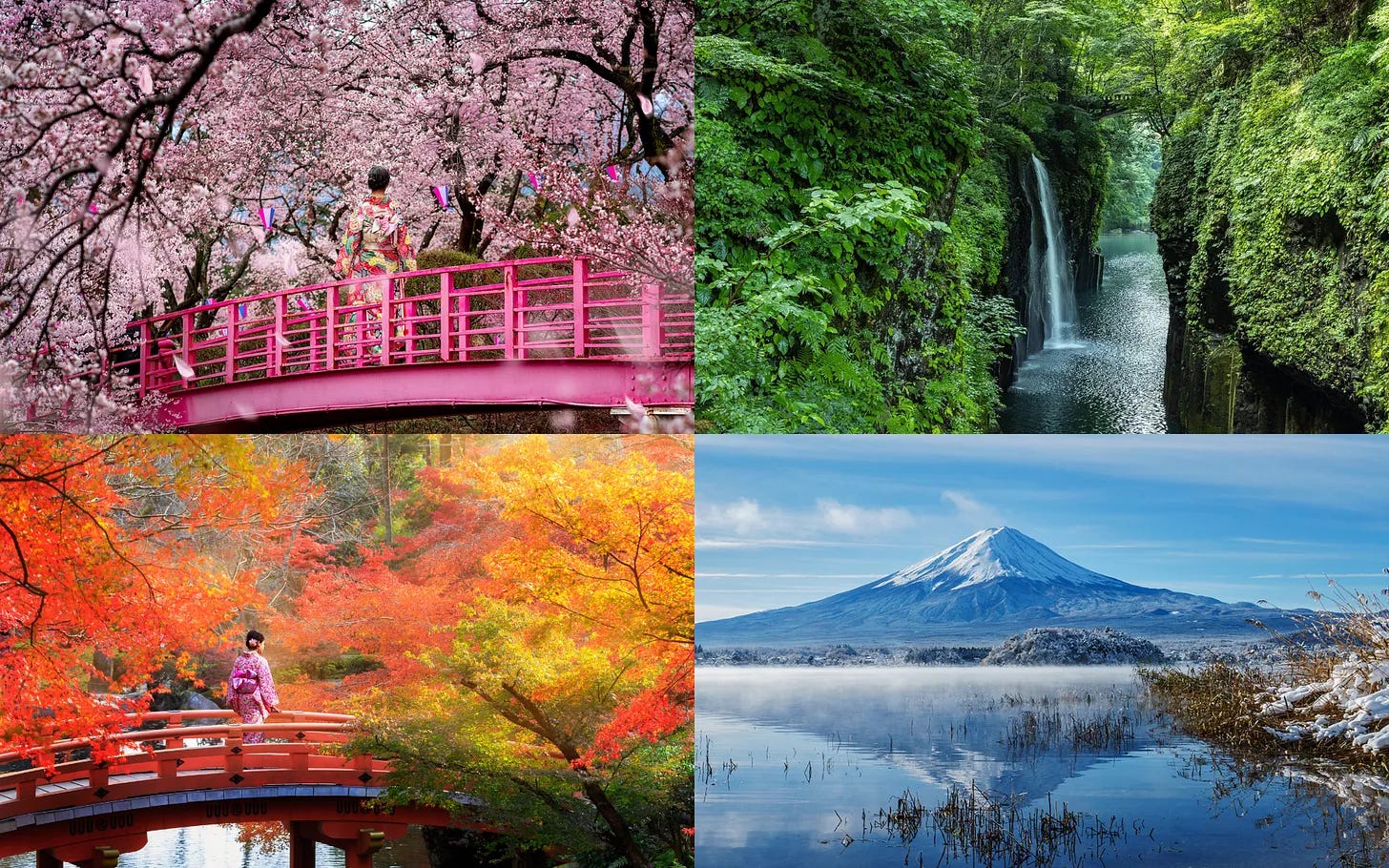
🌸 Spring
Cherry blossoms in late March and early April. Osaka Castle park is one of the best viewing spots in the region. Very busy.
☀️ Summer
Hot and humid. The Tenjin Matsuri festival in late July is one of Japan’s three great festivals and worth planning around.
🍂 Autumn
Pleasant temperatures and autumn foliage from October through November. One of the most comfortable times to visit.
❄️ Winter
Fewer tourists and lower prices. Mild compared to northern Japan. A good time to eat your way through the city without crowds.
How many days to spend in Osaka
Two to three days is enough to cover Dotonbori, Namba, Shinsekai, and Osaka Castle, with time for at least one proper food-focused evening. Three to four days allows for a more relaxed pace, a morning at Kuromon Market, time in Nakazakicho, and at least one day trip to Kyoto, Nara, or Kobe.
Many travelers shortchange Osaka by treating it as a half-day stop between Kyoto and Tokyo. That is enough to see Dotonbori and eat takoyaki, but not enough to understand what makes the city different. Two full nights is the minimum that does it justice.
A suggested 2-day Osaka itinerary
Day 1
Morning at Kuromon Market, then Namba and the Shinsaibashi shopping arcade in the afternoon. Evening in Dotonbori: walk the canal, eat takoyaki, have dinner at a kushikatsu restaurant in a side street away from the main drag.
Day 2
Osaka Castle and the surrounding park in the morning, then Shinsekai for lunch and Tsutenkaku Tower. Afternoon in Nakazakicho for coffee and wandering. Evening back in Namba or a short trip to Kyoto for dinner and the evening atmosphere.
Practical information for visitors
Osaka essentials
Currency: Japanese yen (JPY). Cash is important in Osaka, particularly for street food and smaller restaurants.
Language: Japanese. English is less prevalent than in Tokyo but sufficient at major tourist sites and transit hubs.
Getting around: the Osaka Metro covers the city well. An IC card (Suica or Pasmo, or the local ICOCA card) works across all lines. The city is also very walkable between Namba, Dotonbori, and Shinsaibashi.
Internet: a Japan eSIM or pocket Wi-Fi device is recommended. Coverage is reliable throughout the city.
Tipping: not practiced in Japan. Do not tip in restaurants or for any services.
Safety: Osaka is very safe. Standard awareness applies but the city presents minimal risk for travelers.
How Osaka fits into a Japan itinerary
The classic Japan itinerary combines Tokyo with Kyoto and Osaka, and for good reason. The three cities complement each other in a way that covers the full range of what Japan offers: Tokyo for contemporary urban life, Kyoto for historical and cultural depth, and Osaka for warmth, food, and a more relaxed version of Japanese city life.
A two-week itinerary that spends five to six days in Tokyo, two to three in Kyoto, and two to three in Osaka, with possible extensions to Nara, Hiroshima, or a ryokan stay in between, covers the country thoroughly without feeling rushed. Osaka works well as either the starting or ending point of that circuit, given its excellent international airport connections.
Frequently asked questions
Is Osaka worth visiting on a Japan trip?
Yes, and it is consistently underrated. Osaka offers a genuinely different experience from Tokyo and Kyoto, with a warmer atmosphere, exceptional food culture, and a more relaxed pace. Most travelers who spend time there wish they had allocated more of it.
How many days do you need in Osaka?
Two to three days covers the essentials well. Three to four days is better if you want a relaxed pace and time for at least one day trip to Kyoto, Nara, or Kobe.
What is Osaka best known for?
Food, above all else. Osaka has a deep and proud food culture built around dishes like takoyaki, okonomiyaki, and kushikatsu. It is also known for its warmer, more direct social atmosphere compared to other Japanese cities.
Is Osaka better than Kyoto?
They serve different purposes and are best experienced together rather than compared. Kyoto is unmatched for temples, traditional culture, and historical atmosphere. Osaka is warmer, more energetic, and better for food. Most travelers benefit from spending time in both.
Can you visit Kyoto as a day trip from Osaka?
Yes. Kyoto is 15 minutes from Osaka by Shinkansen and about 30 minutes by local train. Many travelers choose to base themselves in Osaka and visit Kyoto as a day trip, which works well and often means lower accommodation costs.
What is the best area to stay in Osaka?
Namba and Shinsaibashi put you closest to the main food and entertainment areas and are the most convenient bases for first-time visitors. Honmachi is quieter and more business-oriented, better suited to travelers who prefer a calmer base.
Plan your Osaka trip with AERIA Voyages
Every traveler’s ideal Japan itinerary looks different depending on the time available, the balance between cities, and the kind of experiences that matter most. I help clients design trips that go beyond the standard circuit, whether that means combining Tokyo, Kyoto, and Osaka into a seamless two-week journey, adding a ryokan stay, or extending the trip with a cruise through the region.
If you are planning a trip to Japan and want to talk through the options, I would be glad to help.
Yvan Junior Blanchette
Travel Advisor & Cruise Specialist
ÆRIA Voyages📩 yvanblanchette@aeriavoyages.com
📞 1-888-460-3388
🌐 aeriavoyages.com