

The Ultimate QUARK EXPEDITIONS Cruise Guide: what it is, how it works, and what to expect
Expedition cruise guide · Updated 2026 · Polar expeditions · Antarctica · Arctic · Small ship
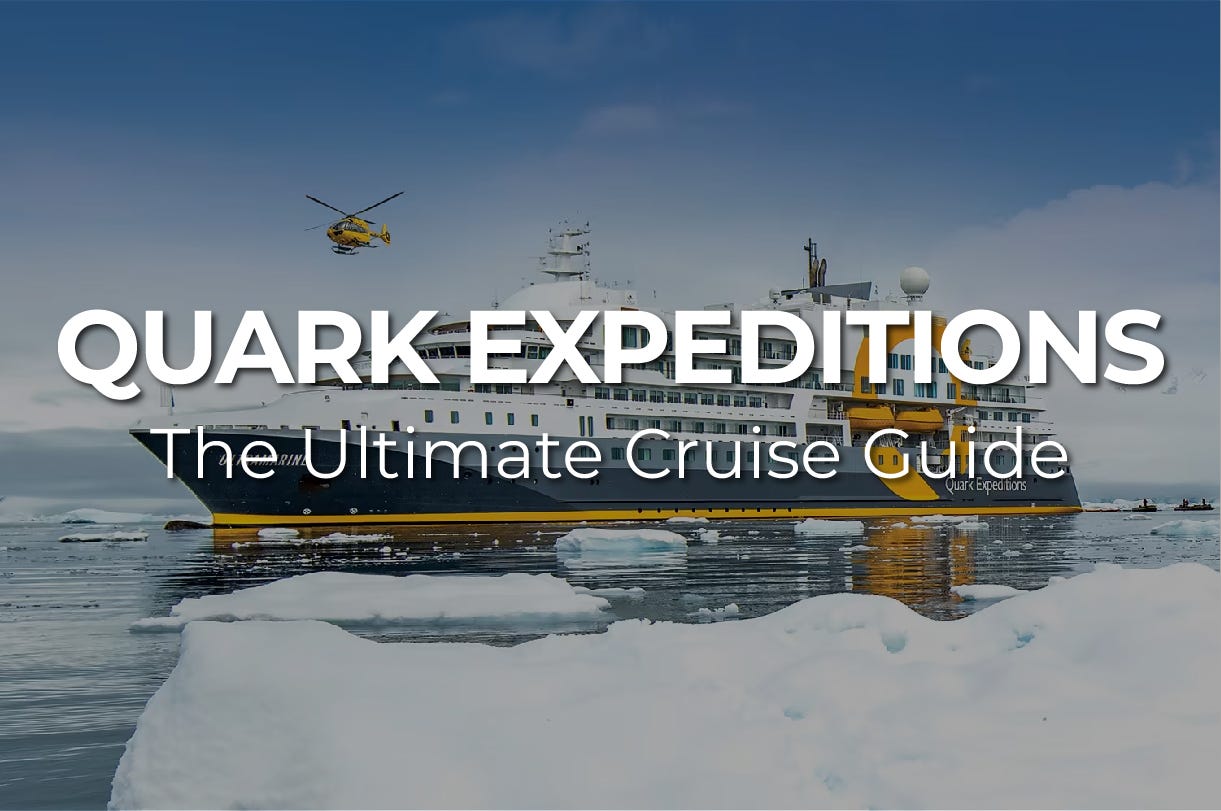
Quark Expeditions is the longest-established and most decorated specialist in polar expedition cruising, with over three decades of firsts in Antarctica and the Arctic. This guide covers everything you need to know about the company, its fleet, its destinations, what a voyage actually involves day to day, and how it compares to other expedition operators in 2026.
This Quark Expeditions guide covers the company's history, its record of polar firsts, the three-ship flagship fleet, what a polar expedition actually involves day to day, the Antarctica and Arctic destinations and itineraries, the helicopter programme on Ultramarine, optional activities from kayaking to overnight camping, the Tundra to Table cultural programme, the Polar Promise sustainability strategy, and how Quark compares honestly to its closest competitors in the polar expedition market.
Table of Content
🎙️ LISTEN TO THE BEYOND THE HORIZON PODCAST

What is Quark Expeditions?
Quark Expeditions was founded in 1991 by Mike McDowell and Lars Wikander, who took the first group of commercial travelers to the North Pole aboard a nuclear-powered icebreaker. That founding voyage set the tone for everything that followed: a company built around pushing the boundaries of where paying guests could actually go, in the world’s most remote and challenging environments.
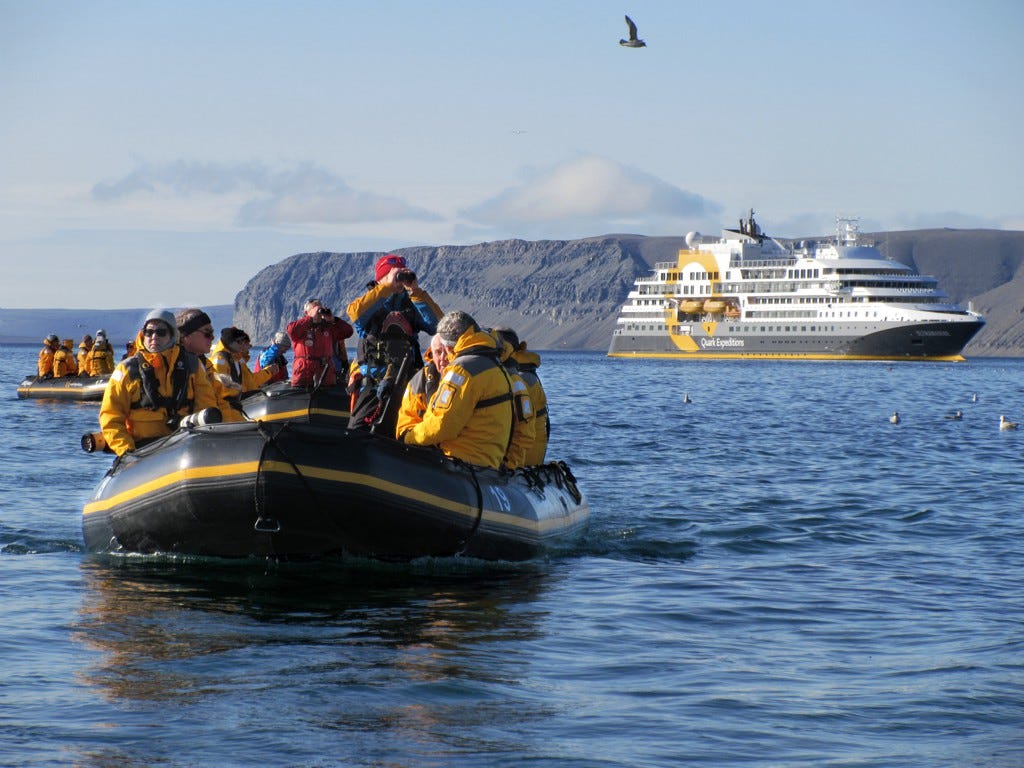
Today, Quark Expeditions is headquartered in Seattle, Washington, and operates as a subsidiary of Travelopia, the UK-based travel group. It runs seasonal itineraries in both polar regions: Antarctica from November through March, and the Arctic from May through September. The company operates the most diverse fleet of purpose-built expedition ships in the polar segment and claims the largest expedition team of any polar operator, which directly affects how frequently and how quickly guests can get off the ship for shore landings and activities.
The company has accumulated an extraordinary record of industry firsts and sustained award recognition, including being named Best Expedition Cruise Line by Virtuoso in both 2023 and 2024, and winning Cruise Critic’s Best in Adventure award for three consecutive years from 2022 through 2024.
A record of polar firsts
1991 First commercial passengers taken to the North Pole. First-ever passenger transit of the Northeast Passage.
1993 First guests to retrace the voyage of Shackleton’s ship Endurance.
1996 First-ever circumnavigation of Antarctica with commercial passengers.
1999 First passenger circumnavigation of the Arctic Ocean.
2008 Maiden voyage to the North Pole on the nuclear icebreaker 50 Years of Victory, then the most powerful icebreaker on the planet.
2022 First guests to take to the polar skies in Ultramarine’s twin helicopters. First Tundra to Table Inuit culinary experience with local chefs in Greenland.
2025 Announcement of World Voyager as the newest addition to the fleet.
The Quark Expeditions fleet
Quark operates one of the most diverse fleets in polar expedition cruising, with ships ranging from intimate vessels carrying under 100 guests to larger purpose-built expedition ships carrying up to 199. Each is ice-strengthened and purpose-designed for polar operations. The flagship experience is built around three primary vessels.
Ultramarine
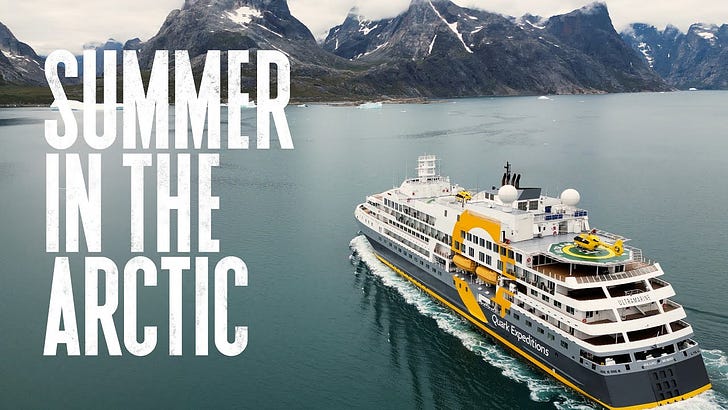
Ultramarine is Quark’s flagship and the most technologically advanced ship in the polar expedition sector. Delivered in 2021 and built at the Brodosplit shipyard in Croatia, it carries 199 guests and is the only expedition ship in the world equipped with two twin-engine Airbus H145 helicopters operating from two dedicated helidecks. This capability is transformative: it opens access to landing sites, glacier faces, and coastal terrain that are simply unreachable by Zodiac, and it allows more guests to experience aerial perspectives of the polar landscape than any other ship in the industry.
Beyond the helicopters, Ultramarine features an internal Zodiac hangar that deploys 20 Zodiacs and allows guests to be on the water in approximately half the time of other expedition vessels. The ship offers 103 suites across 11 cabin categories, the majority with step-out balconies, plus a wraparound outdoor deck, panoramic lounge and bar, lecture theatre, spa, sauna, and fitness centre. The sustainability features exceed all current industry standards.
Ocean Explorer
Ocean Explorer is a 138-passenger vessel that joined the Quark fleet in 2024 and represents a different design philosophy from Ultramarine. Its defining feature is the ULSTEIN X-BOW, an inverted bow design that cuts through waves rather than crashing over them, producing a notably smoother and more comfortable passage in rough polar waters including the Drake Passage. The bow also forms a dramatic two-story glass-fronted library at the forward end of the ship, giving guests unobstructed ocean views from a uniquely light-filled interior space.
Almost all cabins on Ocean Explorer feature private verandas. The ship carries 15 Zodiacs, two outdoor Jacuzzis, a gym, sauna, and multiple lounges. Its Rolls-Royce engines are among the most fuel-efficient in the expedition sector, and the MAGS gasification system converts waste into energy, eliminating the need for waste transportation from polar regions.
World Explorer
World Explorer is a 176-passenger all-balcony luxury expedition ship offering six tiers of suite accommodation, making it the most refined accommodation option in the Quark fleet. Every cabin has a private balcony, which is genuinely unusual in the expedition sector. The ship combines the operational capabilities of a purpose-built polar vessel with a level of suite finish closer to what you would find on an ultra-luxury ocean cruise line. It is particularly well suited to travelers who want the full expedition experience without compromising on accommodation quality.
Quark Expeditions fleet at a glance
Ultramarine: 199 guests, two twin-engine helicopters, 20 Zodiacs, flagship vessel
Ocean Explorer: 138 guests, ULSTEIN X-BOW design, almost all cabins with veranda
World Explorer: 176 guests, all-balcony luxury expedition ship, six suite tiers
Additional vessels: Ocean Adventurer, Ocean Nova, and chartered icebreakers for specialist itineraries
All ships: purpose-built or ice-strengthened for polar operations, equipped with Zodiacs
What a Quark expedition actually involves
Understanding what daily life looks like on a Quark voyage is essential before booking, because it is genuinely different from any other kind of travel experience. The structure of each day is shaped by weather, ice conditions, and wildlife sightings rather than a fixed schedule. That unpredictability is not a limitation: it is the defining characteristic of genuine expedition travel, and it is what separates a Quark voyage from a conventional cruise that happens to visit unusual destinations.
Getting off the ship
The central metric by which Quark measures its performance is how frequently and how quickly it can get guests off the ship for shore activities. The company is explicit about this priority. Guests are divided into colour-coded groups and called to the ready rooms in rotation to change into expedition gear and board Zodiacs. On Ultramarine, the internal Zodiac hangar and water-level embarkation means this process is faster than on any other ship in the sector. On a typical day in Antarctica or the Arctic, guests might complete two Zodiac landings, one longer and one shorter, plus a Zodiac cruise through ice or along a glacier face.
The expedition team

Quark’s expedition team is the largest in polar travel and is consistently cited in guest reviews as one of the strongest aspects of the experience. The team includes expedition leaders, naturalists, ornithologists, glaciologists, marine biologists, historians, and photographers, all of whom contribute both to the daily landing programme and to the onboard lecture and enrichment schedule. Evening recap sessions and next-day briefings run in the main theatre and give each day a coherent narrative structure. The quality and passion of the expedition team is what transforms a wildlife sighting or a glacier landing from a visual experience into one with genuine scientific and historical context.
Off-ship activities
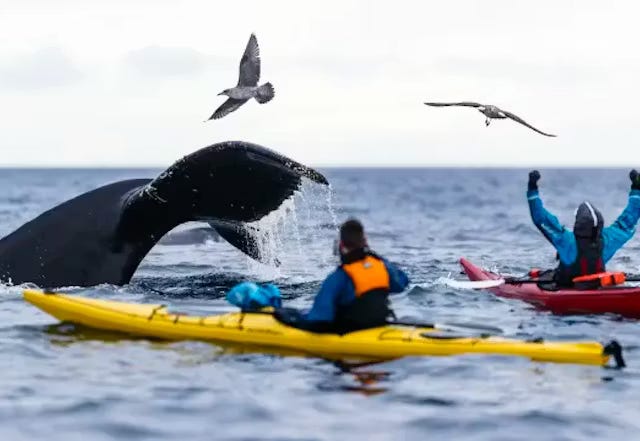
Beyond the standard Zodiac programme, Quark offers an extensive range of optional activities depending on the ship and itinerary. On Ultramarine, helicopter flights to remote landing sites, glacier surfaces, and aerial viewpoints are the most distinctive offering in the industry. On all ships, optional activities can include sea kayaking through ice-filled bays, paddleboarding, camping overnight on Antarctic or Arctic terrain, snowshoeing, and hiking. The polar plunge, a brief voluntary immersion in polar waters, is a near-universal rite of passage on every voyage.
Activities are divided between those included in the voyage fare and those available at additional cost. Helicopter experiences on Ultramarine, for example, are typically charged separately. The Quark website and booking documentation are clear about which activities fall into each category for each specific itinerary.
Onboard life
Meals are prepared by professional chefs with an emphasis on freshness and variety. Breakfast and lunch are typically buffet style, with dinner served as a more formal a la carte experience in the main dining room. House wines, beers, and spirits are included at the bar during dinner and in the evenings on most itineraries. Premium brands are available at additional cost. The atmosphere onboard is social and communal: with groups of 100 to 200 guests, fellow travelers become familiar quickly, and the shared intensity of the expedition experience creates a particular kind of camaraderie that is difficult to replicate elsewhere.
Where Quark Expeditions goes
Antarctica
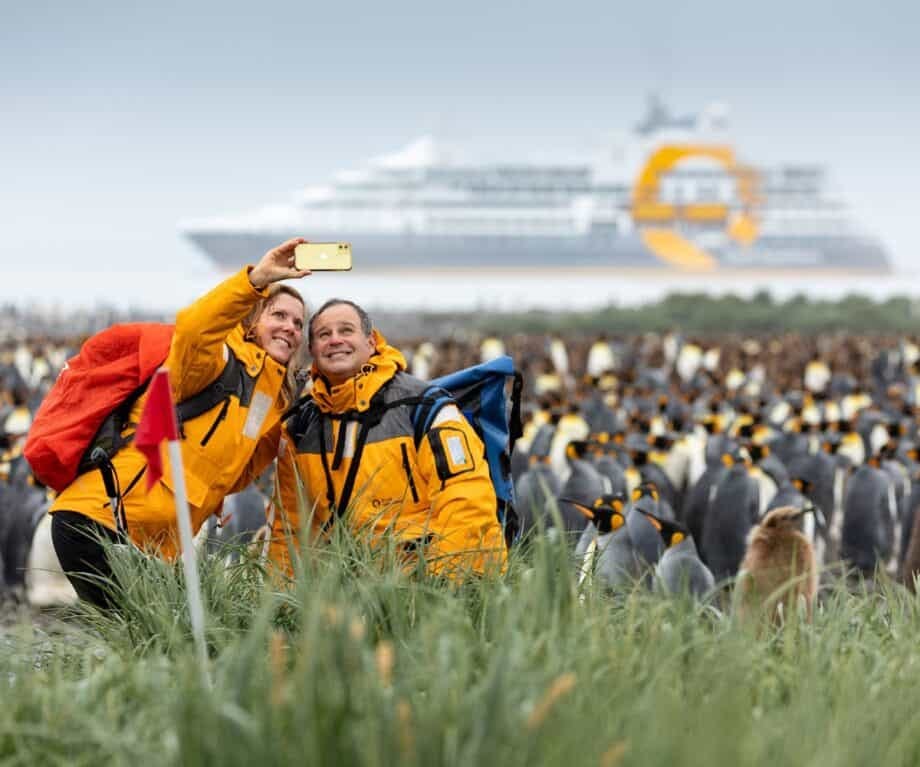
The Antarctic season runs from November through March, with departures from Ushuaia, Argentina across the Drake Passage. The Antarctic Peninsula is the most visited region, offering the classic combination of penguin rookeries, humpback whale encounters, glacier calving, and dramatic mountain scenery accessible within approximately two days of sailing from Ushuaia. Beyond the Peninsula, Quark offers itineraries to the Falkland Islands and South Georgia, one of the most wildlife-rich places on earth with enormous colonies of king penguins, elephant seals, and albatross. The Emperor Penguin Quest to Snow Hill Island, accessible only in certain ice conditions and only by helicopter from Ultramarine, is one of the rarest wildlife experiences available to any traveler anywhere in the world.
The Antarctic Express itineraries combine flying one way across the Drake Passage with sailing the other, saving two days of ocean crossing and allowing more time on the continent itself. These fly-cruise options have become increasingly popular for travelers with limited time or those who want to minimize the Drake Passage experience.
The Arctic
The Arctic season runs from May through September, with itineraries covering Svalbard and Spitsbergen in Norway, Greenland, Canada’s High Arctic including the Northwest Passage, and Iceland. Each destination has a distinct character: Svalbard is the most accessible introduction to Arctic wildlife, with polar bears, walrus, and Arctic fox. Greenland offers a combination of dramatic fjord landscapes, iceberg fields, and cultural encounters with Inuit communities. The Northwest Passage is one of the most historically significant routes in exploration history, following in the wake of expeditions that cost many lives before it was first successfully transited.
The Tundra to Table programme, developed with Igapall and featuring Inuit chefs sharing Greenlandic cuisine and culture onboard, is one of the most thoughtful and genuinely immersive cultural experiences in the polar expedition sector.
Sustainability and the Polar Promise
Quark Expeditions announced its Polar Promise sustainability strategy in 2019, making it one of the first polar operators to formalize a comprehensive environmental commitment. The company is an active member of both the International Association of Antarctica Tour Operators (IAATO) and the Association of Arctic Expedition Cruise Operators (AECO), participating in the committees that set the standards governing responsible polar tourism across the industry.
The fleet’s newer vessels incorporate significant sustainability technology: Ocean Explorer’s MAGS gasification system converts waste into energy, Ultramarine’s H145 helicopters are the most fuel-efficient in their category, and both ships are designed to minimize underwater noise pollution. Quark also supports polar conservation through guest-funded onboard auctions benefiting organizations including the Blue Marine Foundation and Penguin Watch.
How Quark Expeditions compares to other polar operators
Quark Expeditions
Best for: Access and adventure range
Largest expedition team, most diverse fleet, only operator with twin helicopters on Ultramarine. Unmatched record of polar firsts since 1991.
Silversea Expeditions
Best for: Ultra-luxury comfort
Higher onboard luxury standard. Butler service, all-suite fleet. Smaller expedition team. Better suited to travelers for whom comfort equals adventure.
Seabourn Expedition
Best for: Luxury plus science
Polar Class 6 ships, custom submarines, strong naturalist team. More luxury-oriented than Quark but less adventure-focused in off-ship programming.
Hurtigruten
Best for: Norway and accessibility
Strong in Norwegian fjords and Svalbard. Larger ships and more mainstream feel than Quark. Less specialized expedition team.
The most honest way to frame the comparison: Quark is for travelers who want to prioritize the expedition itself, the access, the activities, the wildlife encounters, and the expertise of the team, over the level of onboard luxury. For travelers who want both expedition access and ultra-luxury accommodation, Silversea or Seabourn may be a better fit, at a significantly higher price point.
Who Quark Expeditions is best suited for

Travelers for whom reaching truly remote polar destinations is the primary objective
Adventure-oriented guests who want to maximize time off the ship in kayaks, Zodiacs, and on helicopter flights
Wildlife enthusiasts looking for guided encounters with penguins, polar bears, whales, and seabirds in their natural habitat
History and science-minded travelers who will engage deeply with the expedition team’s lectures and expertise
Those considering their first expedition cruise who want the most established and decorated polar specialist
Quark is less suited to travelers whose primary focus is onboard luxury, those who prefer a fixed itinerary and structured schedule, or those who find the physical demands of Zodiac landings and active shore excursions unappealing. The polar environment is inherently unpredictable, and embracing that uncertainty is a prerequisite for getting the most from a Quark voyage.
Frequently asked questions
What is Quark Expeditions?
Quark Expeditions is a polar expedition cruise company founded in 1991 and headquartered in Seattle, Washington. It specializes exclusively in small-ship expeditions to Antarctica and the Arctic, operating the most diverse fleet of purpose-built polar vessels in the industry and claiming the largest expedition team of any polar operator.
Is Quark Expeditions all-inclusive?
Most Quark voyages include accommodation, all meals, and house beverages including wine, beer, and spirits during dinner and at the bar. Gratuities, Zodiac excursions, and standard shore landings are typically included. Optional activities such as helicopter flights, sea kayaking, and camping are generally available at additional cost. The specific inclusion structure varies by itinerary and should be confirmed at the time of booking.
What is special about Ultramarine?
Ultramarine is the only expedition ship in the world equipped with two twin-engine helicopters operating from two dedicated helidecks. This allows access to landing sites and aerial experiences that are impossible to reach by Zodiac, and it enables more guests to experience helicopter-supported activities simultaneously than on any other vessel. The ship also deploys 20 Zodiacs from an internal hangar, allowing for faster and more frequent shore landings than competing ships.
How rough is the Drake Passage on a Quark voyage?
The Drake Passage is one of the most challenging stretches of ocean in the world, and conditions vary significantly between crossings. Some passengers experience minimal discomfort; others find it difficult. Quark ships are purpose-built for these conditions and their crews are highly experienced. The Antarctic Express fly-cruise option avoids the Drake crossing entirely on one or both legs, which is worth considering for travelers who are concerned about seasickness.
When is the best time to visit Antarctica with Quark?
The Antarctic season runs from November through March. November and December offer pristine snow conditions and penguin courtship and nesting. January and February are peak summer, with the most wildlife activity including penguin chick rearing and whale feeding. March offers calmer seas and the beginning of autumn light. Each period has genuine merit and the right time depends on what wildlife and conditions matter most to you.
How does Quark compare to Silversea for expedition cruising?
Quark prioritizes expedition access, off-ship activity range, and the expertise of its team above onboard luxury. Silversea Expeditions offers a higher standard of accommodation, butler service, and all-suite comfort, but with a smaller expedition team and less diverse activity programme. Quark is the stronger choice for travelers who want to maximize their time and experience in the polar environment. Silversea is better suited to those for whom comfort and service quality are as important as the destination itself.
🔍 Not sure where to start with Expedition Cruises?
Read my article here to decide which Expedition Cruise line bests suits your needs:
Plan your Cruise Vacation with AERIA Voyages
Every traveler’s ideal polar expedition looks different depending on the destination, the ship, the level of adventure activity, and what you are hoping to take away from one of the most remote experiences on earth. I help clients navigate those questions, from choosing between Antarctica and the Arctic to selecting the right ship and itinerary for their fitness level, travel style, and budget.
If you are curious about Quark Expeditions, current availability, or whether a polar expedition is the right next step in your travel journey, I would be glad to talk it through.
Yvan Junior Blanchette
Travel Advisor & Cruise Specialist
ÆRIA Voyages📩 yvanblanchette@aeriavoyages.com
📞 1-888-460-3388
🌐 aeriavoyages.com