

The Ultimate CAPE TOWN Travel Guide: What to know, where to go, and how to make the most of your visit
Updated 2026 | South Africa | First-time visitors | In-depth travel
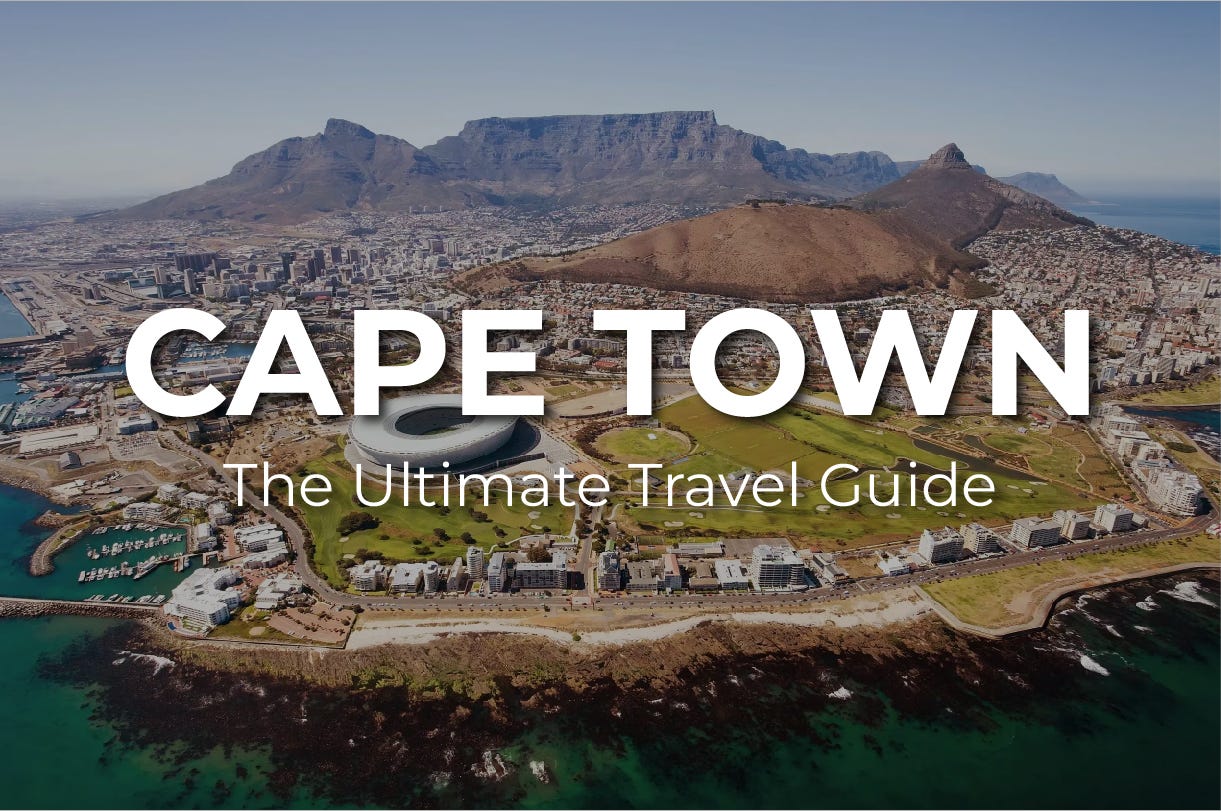
Cape Town is one of the most visually extraordinary cities on earth. Hemmed between a flat-topped mountain and two oceans, lit by a clarity of light that painters have tried to capture for centuries, it is a place where the landscape is so insistent that it becomes the organizing fact of every day. Where you eat, where you hike, where you watch the sunset, all of it decided by the mountain and the sea.
But Cape Town is also a city of profound human complexity: shaped by the violence of colonial history and apartheid, and now by the extraordinary creativity of a society rebuilding itself. Its food scene, wine culture, art spaces, and nightlife reflect a city at a particular moment of confidence, proud of what it has always been and genuinely excited about what it is becoming.
This guide covers the neighborhoods worth knowing, the experiences that define the city, the practical details you need before you go, and how to plan the right amount of time for the kind of trip you want.
Table of Contents
🎧 LISTEN TO THE BEYOND THE HORIZON PODCAST

Why Cape Town is worth visiting
Few cities in the world offer a setting as dramatically beautiful as Cape Town. Table Mountain, 2,000 feet of flat-topped sandstone presiding over the city, is not merely a backdrop but an ever-present companion, visible from almost every street and shifting in character with every change of light and weather. To the west, the Atlantic Ocean. To the east, False Bay. Below, a city of extraordinary texture.
Cape Town has been continuously inhabited for thousands of years by the Khoikhoi and San peoples, and later became the site of the first permanent European settlement in sub-Saharan Africa when the Dutch East India Company established a provisioning station here in 1652. The centuries that followed were shaped by slavery, colonial expansion, and the full machinery of racial oppression that culminated in apartheid, a history that is honestly confronted in the city’s museums and memorials and cannot be separated from a genuine understanding of the place.
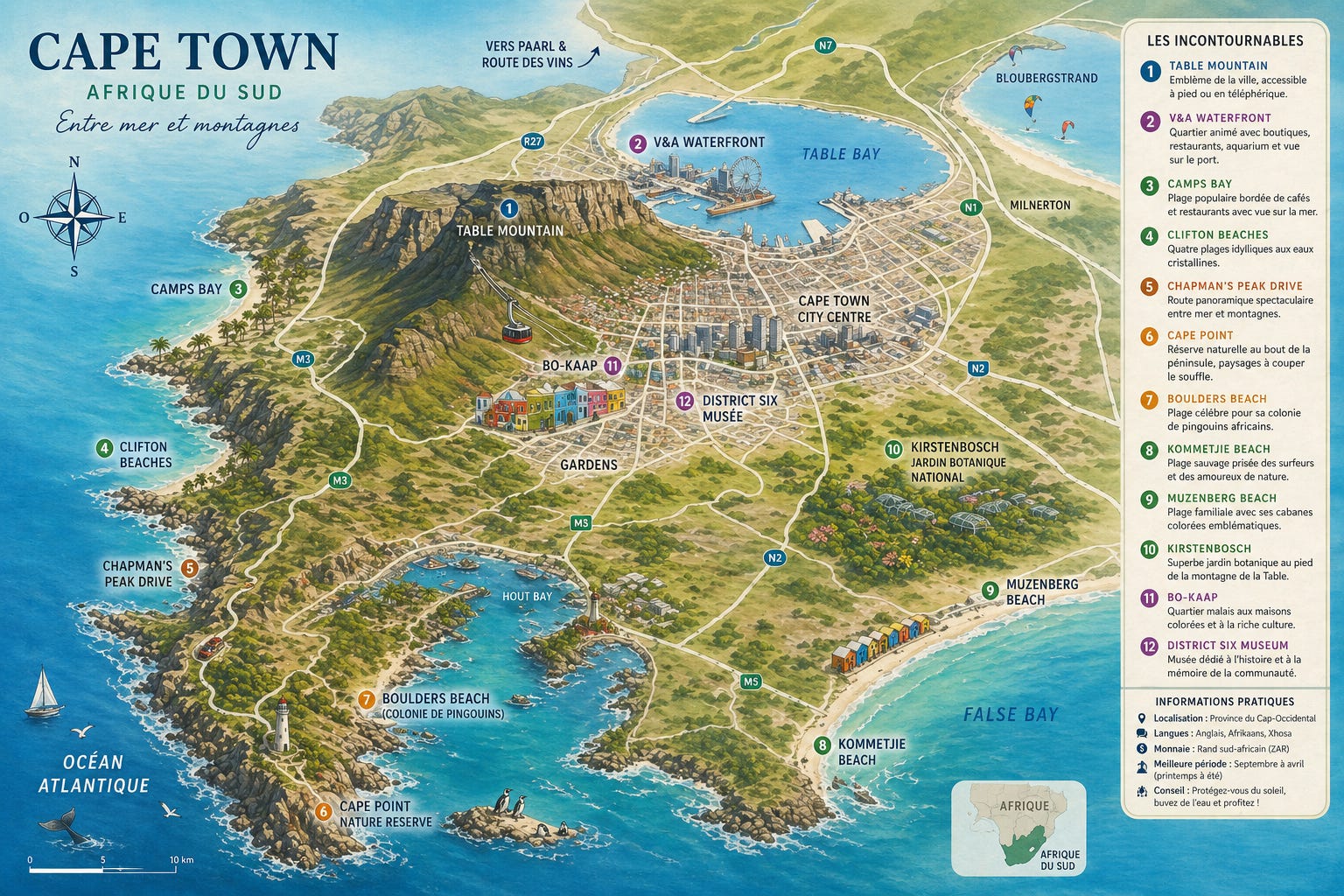
What Cape Town offers today is the product of all of that history: an extraordinarily diverse population with a food culture, music scene, and creative energy unlike anywhere else on the continent. The Cape Winelands, beginning less than an hour from the city center, produce some of the finest wines in the southern hemisphere. The Boulders Beach colony of African penguins is one of the most joyful wildlife encounters on earth. And the Cape Peninsula, the thin finger of land that stretches south from the city toward Cape Point, is simply one of the most beautiful drives in the world.
For travelers visiting South Africa for the first time, Cape Town is the natural starting point and, for most, the most memorable destination in the country.
The neighborhoods you should know
Cape Town is spread across a wide geography, but its most interesting neighborhoods are clustered in a relatively compact arc from the City Bowl down through the Atlantic Seaboard to the Southern Suburbs.
The City Bowl and Bo-Kaap
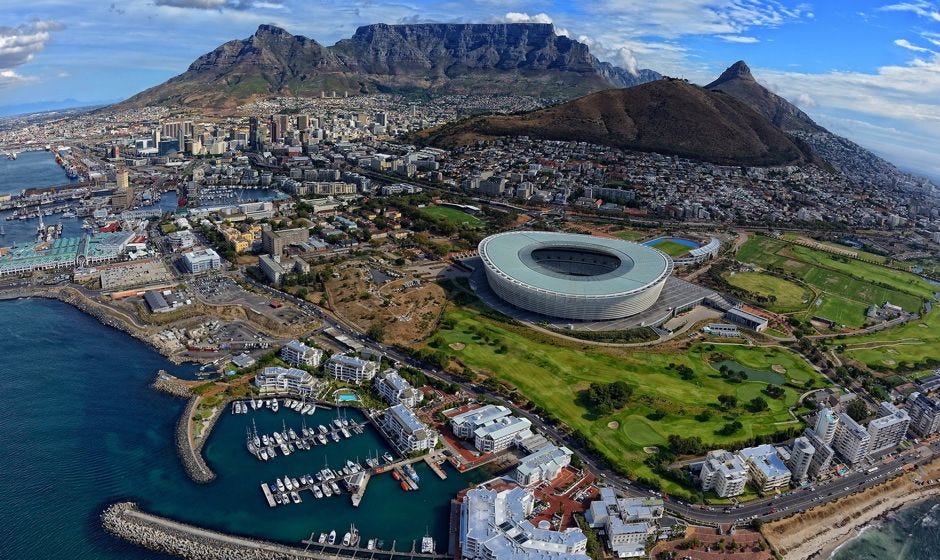
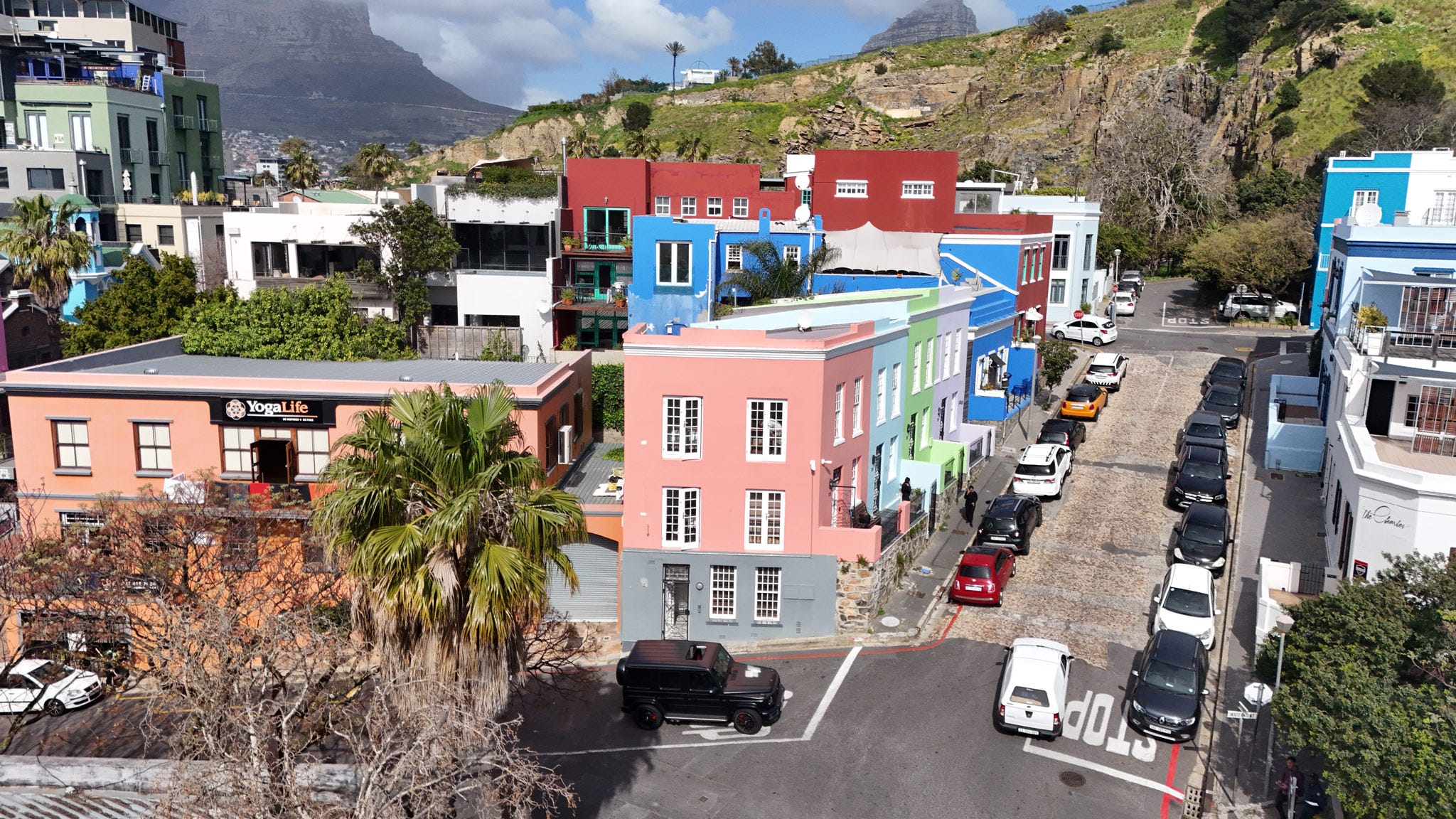
The original heart of Cape Town, curled beneath the north face of Table Mountain. The CBD has transformed significantly in recent years, with Long Street remaining the spine of the city’s nightlife and the surrounding streets filling with galleries, independent restaurants, and creative studios. The Bo-Kaap, the hillside neighborhood of brilliantly painted houses whose residents are descended from the enslaved people brought by the Dutch from Malaysia, India, and East Africa, is one of the most photographed spots in South Africa and far more than that: a living community with a distinct cuisine, Muslim faith tradition, and an identity entirely its own.
De Waterkant and the V&A Waterfront
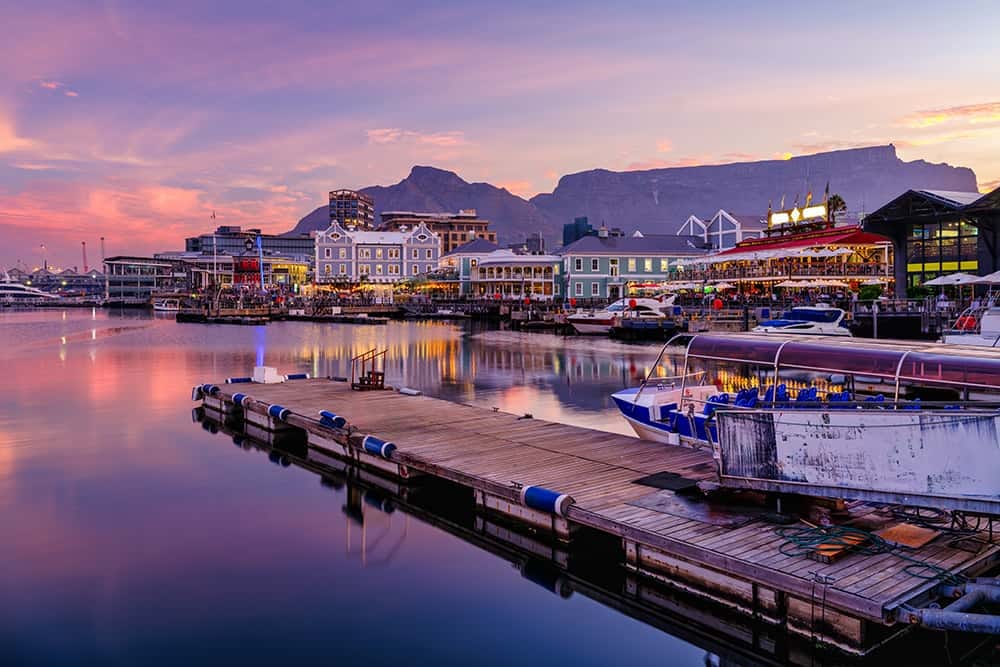
De Waterkant, just west of the CBD, is a restored Victorian neighborhood of cobbled lanes and colorful Cape Dutch cottages. The Victoria and Alfred Waterfront, a working harbour reimagined as a leisure precinct, is the most visited destination in South Africa, with restaurants, museums, luxury hotels, and the ferry terminal for Robben Island all clustered around the historic docks. It is tourist-heavy but genuinely beautiful, particularly at dusk when Table Mountain catches the last light and the harbour fills with color. The Zeitz Museum of Contemporary Art Africa (MOCAA), housed in a converted grain silo at the water’s edge, is one of the most architecturally extraordinary buildings on the continent.
Gardens and Oranjezicht
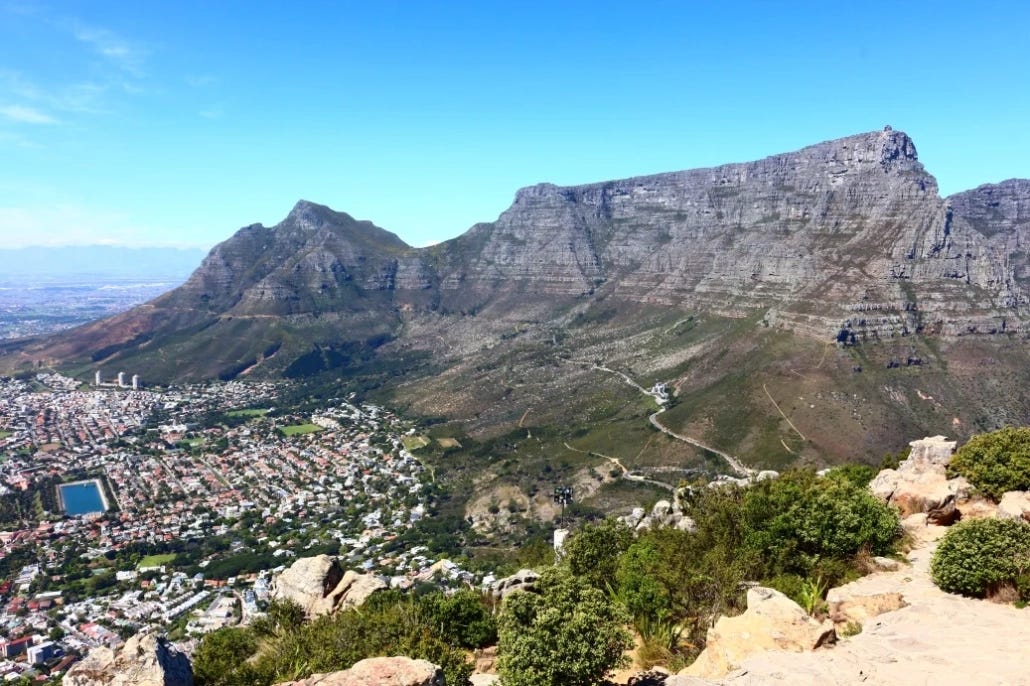
The residential neighborhood immediately above the City Bowl, beneath the lower slopes of Table Mountain, where many of Cape Town’s galleries, independent restaurants, and the South African National Gallery are concentrated. Oranjezicht is where Cape Town’s creative and professional residents actually live: tree-lined streets, Victorian houses, and a Saturday morning culture anchored by the Oranjezicht City Farm Market. The most convenient base for first-time visitors who want to be close to everything.
Woodstock and Salt River
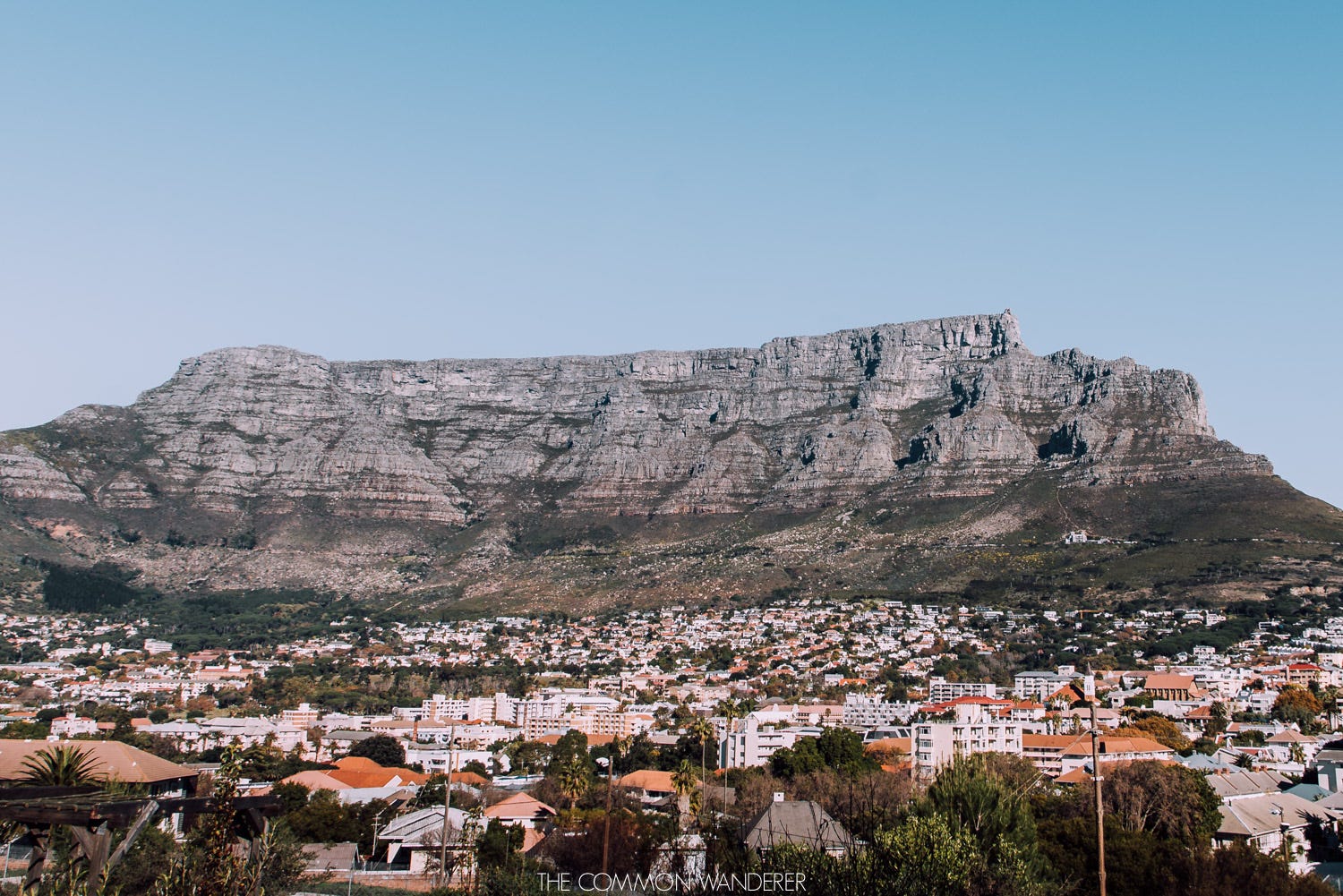
The inner-city suburb that has become Cape Town’s most interesting creative district over the past decade. The Old Biscuit Mill anchors the neighborhood, surrounded by design studios, street art, coffee roasters, and an art gallery scene that punches far above its weight. Salt River, immediately adjacent, has attracted a wave of chefs, artists, and entrepreneurs. Together they form the engine of Cape Town’s contemporary creative culture, and the Neighbourgoods Market here on Saturday mornings is among the finest food markets in Africa.
Atlantic Seaboard: Sea Point to Camps Bay
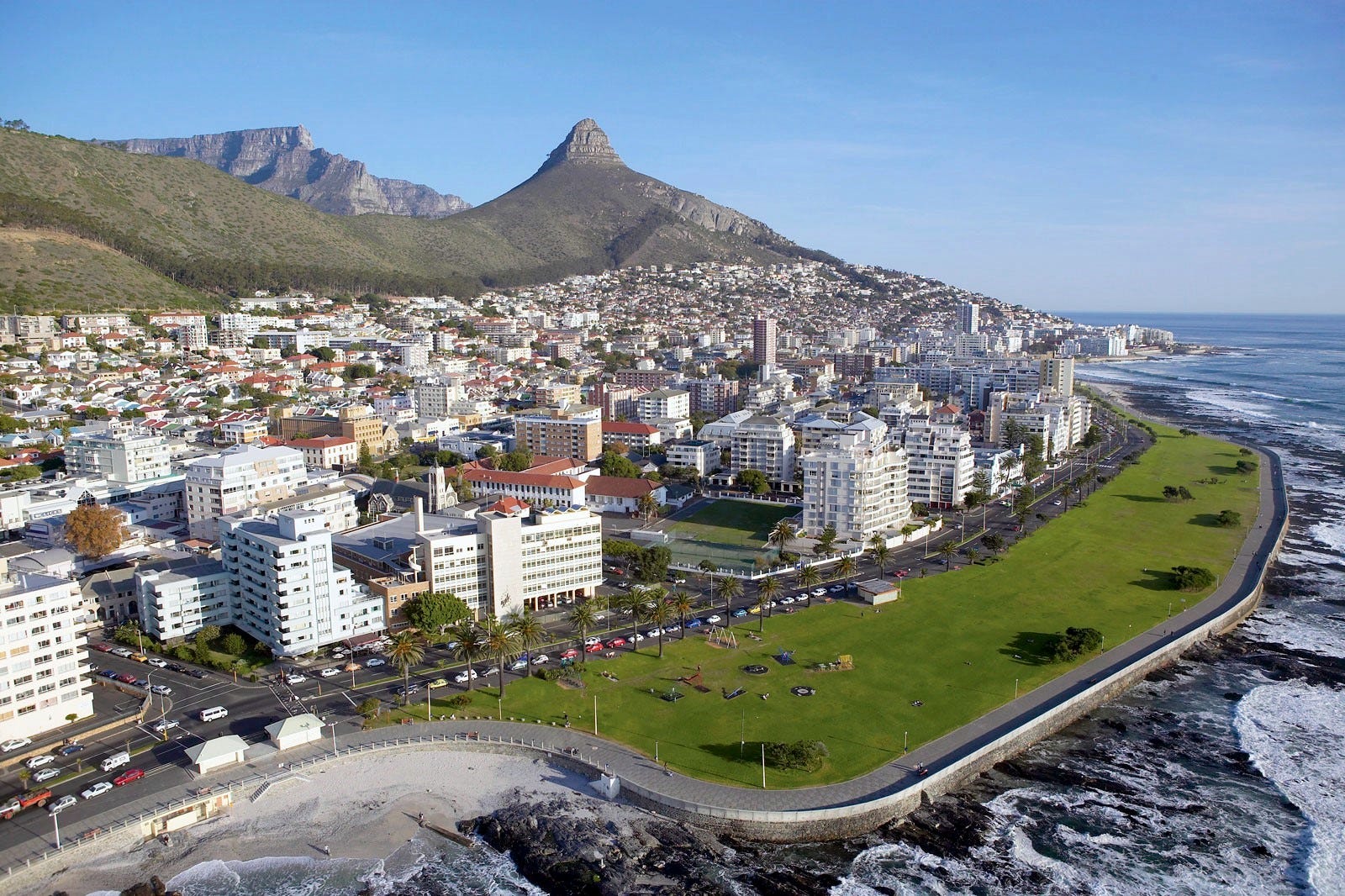
The string of suburbs along the Atlantic coast west of Signal Hill, from the densely populated Sea Point promenade down through the glamorous coves of Clifton and the wide white beach at Camps Bay. The Atlantic is startlingly cold, fed by the Benguela Current from Antarctica, but the promenade culture, the beach restaurants, and the sunsets behind the Twelve Apostles mountains are magnificent. Sea Point is the most genuinely local of these neighborhoods: diverse, walkable, and the finest place in Cape Town for a long morning run or an evening stroll.
Constantia and the Southern Suburbs
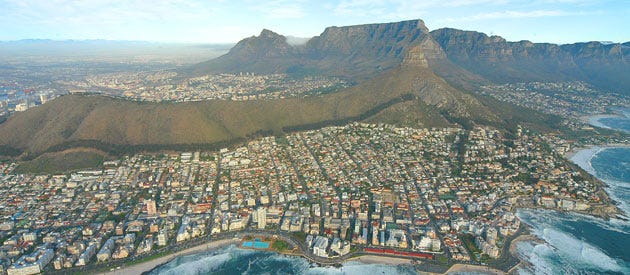
The leafy suburbs stretching south from the city center beneath the eastern flanks of Table Mountain, home to the Constantia wine estates, the oldest wine-producing area in the southern hemisphere, with origins in the 17th century. Kirstenbosch National Botanical Garden, on the slopes of Table Mountain above Newlands, is one of the great botanical gardens of the world and among the finest places in Cape Town for a long morning walk followed by a picnic.
Activities not to miss
Cape Town’s most memorable experiences span from the political weight of Robben Island to the entirely sensory pleasure of watching the sun drop into the Atlantic from Clifton’s boulders. These are the experiences that define the city.
Table Mountain
The defining experience of any Cape Town visit. The cable car, operating from the Lower Cable Station near the city center, rises in twelve minutes to the flat summit plateau, where the views extend from the Cape Peninsula to the Hottentots Holland mountains and across both oceans simultaneously. The summit walks pass through fynbos, the uniquely diverse shrubland of the Cape Floristic Region found nowhere else on earth, which contains more plant species per square kilometer than any comparable area in the world.
Book the cable car in advance and go early: clouds can settle on the summit by mid-morning, sometimes closing it for days. Alternatively, hike Platteklip Gorge (two hours, guided or self-guided) for one of the most rewarding urban hikes in the world.
Robben Island
The island three miles off the V&A Waterfront where Nelson Mandela was imprisoned for 18 of his 27 years, and where the apartheid government held political prisoners from the 1960s until 1991. A UNESCO World Heritage Site and the most significant historical site in South Africa, visited by ferry from the Waterfront. The guided tour is led by former political prisoners whose personal testimony gives the experience an emotional weight that no museum can replicate.
Book well in advance: sailings sell out regularly, and the island is sometimes inaccessible due to weather. The 40-minute crossing also gives the finest view of Cape Town’s skyline from the sea.
The Cape Peninsula Drive
The full circuit of the Cape Peninsula, taking in Chapman’s Peak Drive, Cape Point, Boulders Beach, and Simon’s Town, is one of the great scenic drives in the world and should not be missed. Chapman’s Peak, carved into the cliffs above the Atlantic between Hout Bay and Noordhoek, offers views across open ocean that are simply vertiginous. Cape Point, the southwestern extremity of the African continent, has walking trails, a lighthouse, and a particular quality of wind-scoured wildness unlike anything in an ordinary city trip.
Boulders Beach, in the fishing village of Simon’s Town, is home to a colony of 3,000 African penguins who live among the granite boulders and treat human visitors with complete indifference. This is one of the most joyful wildlife encounters accessible from any city on earth. Allow a full day and go by car.
Kirstenbosch National Botanical Garden
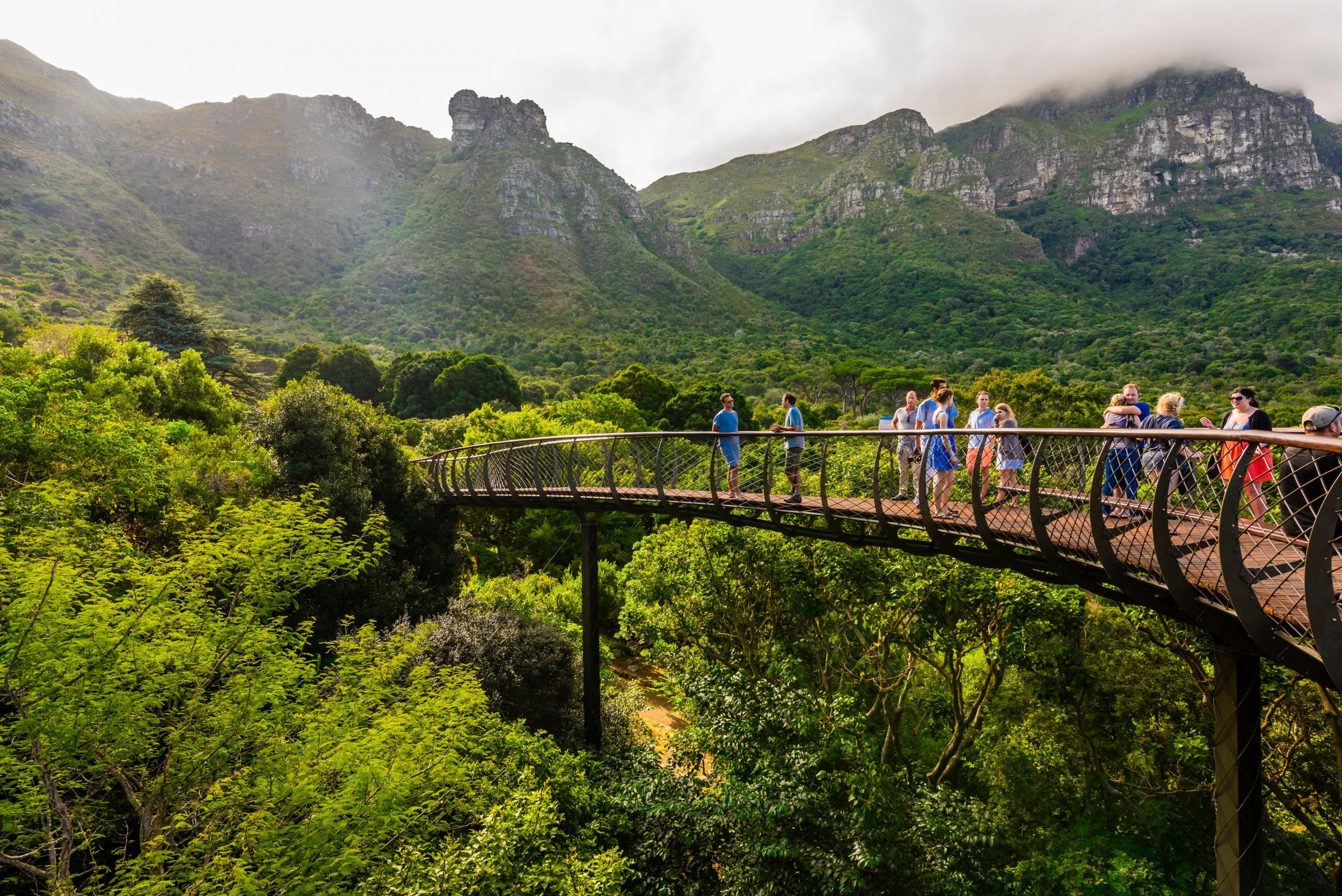
Established in 1913 on the eastern slopes of Table Mountain, Kirstenbosch is one of the seven Great Botanic Gardens of the world. Its 528 hectares contain an extraordinary collection of indigenous South African plants, including the Cape’s fynbos flora and the Boomslang canopy walkway, a curved suspended bridge through the forest canopy. The Sunday evening summer concerts (November through April) on the lawn, with Table Mountain as backdrop, are among the finest outdoor experiences Cape Town offers.
The Zeitz MOCAA
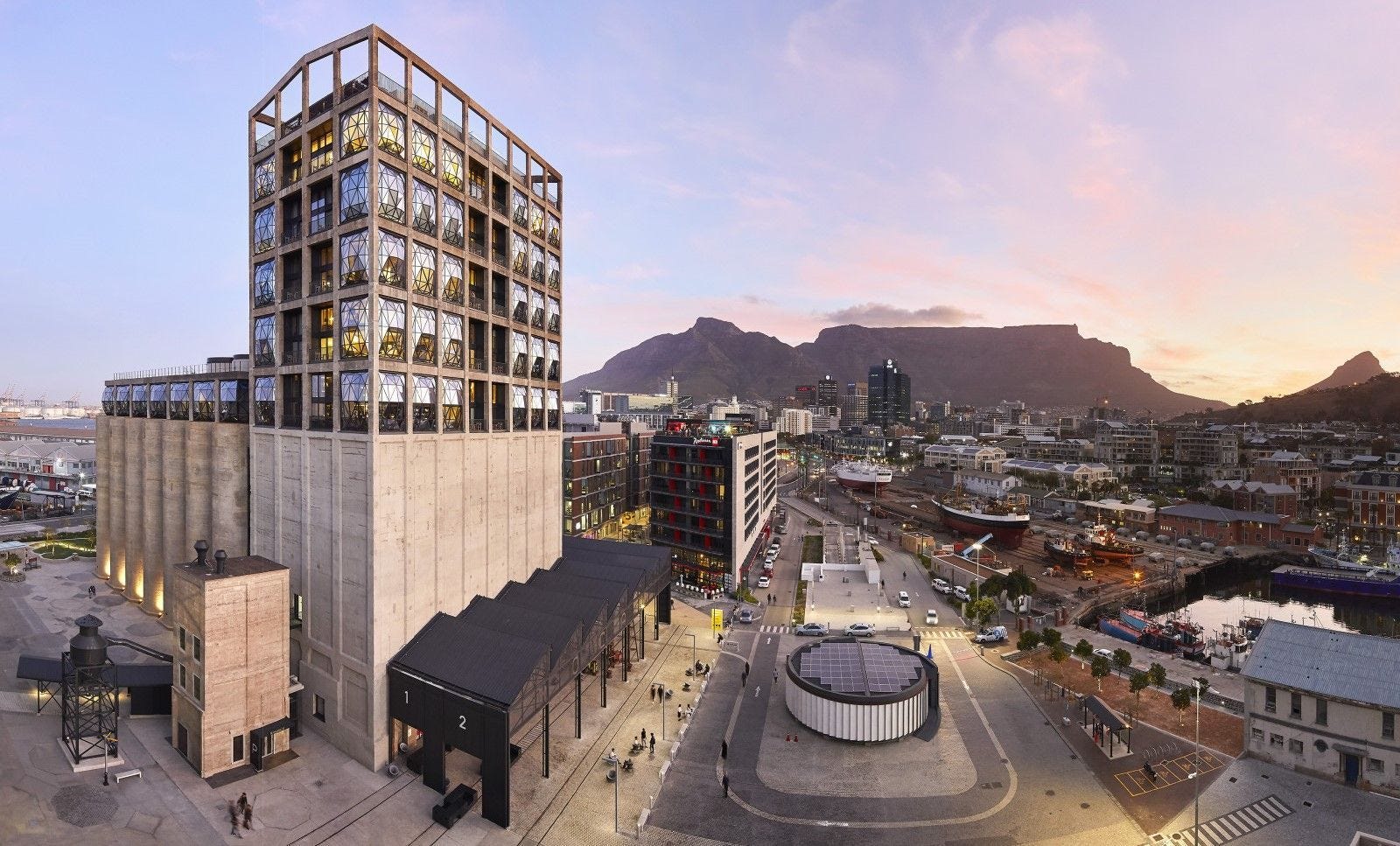
The Zeitz Museum of Contemporary Art Africa, opened in 2017 in a converted grain silo at the V&A Waterfront, is the largest museum of contemporary African art in the world. The building, designed by Thomas Heatherwick, who carved the galleries from 42 concrete grain tubes, is as extraordinary as the collection within it. Nine floors of galleries present work by artists from across the African continent and its diaspora. No other museum in Cape Town approaches its ambition or its importance.
Bo-Kaap and Cape Malay Culture
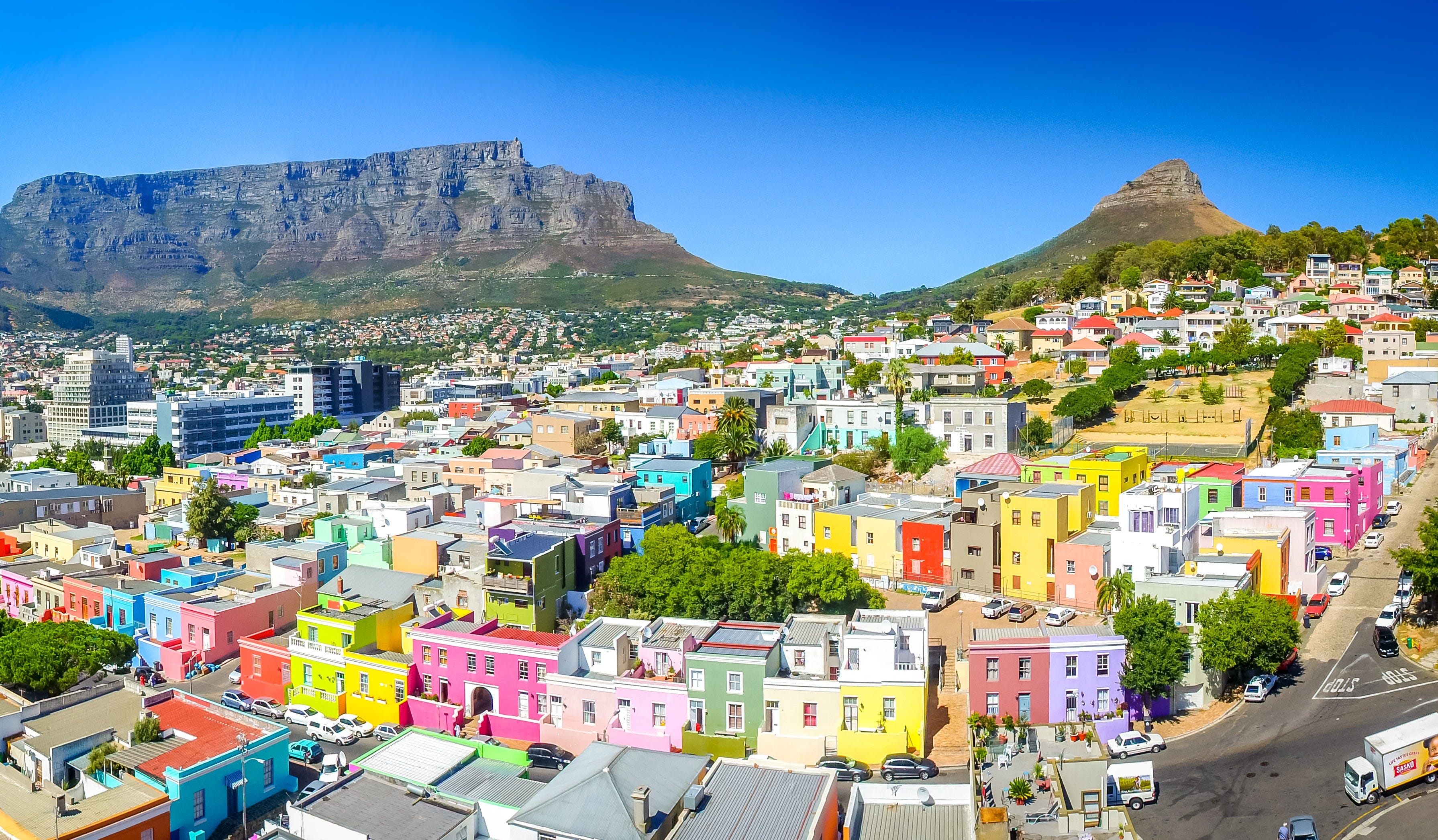
The steeply pitched streets of the Bo-Kaap, with houses painted in cobalt, chartreuse, salmon, and rose, represent one of the most distinctive urban landscapes in Africa. But the Bo-Kaap is far more than a photograph: it is the home of Cape Town’s Muslim community, whose ancestors were brought here as slaves from Malaysia, Indonesia, India, and East Africa by the Dutch East India Company in the 17th and 18th centuries. The Bo-Kaap Museum traces this history; and the Cape Malay cuisine, from bobotie and bredie to koesisters and spiced Cape curries, is one of South Africa’s great culinary traditions. A cooking class in the Bo-Kaap is among the finest cultural experiences in the city.
Constantia Wine Estates
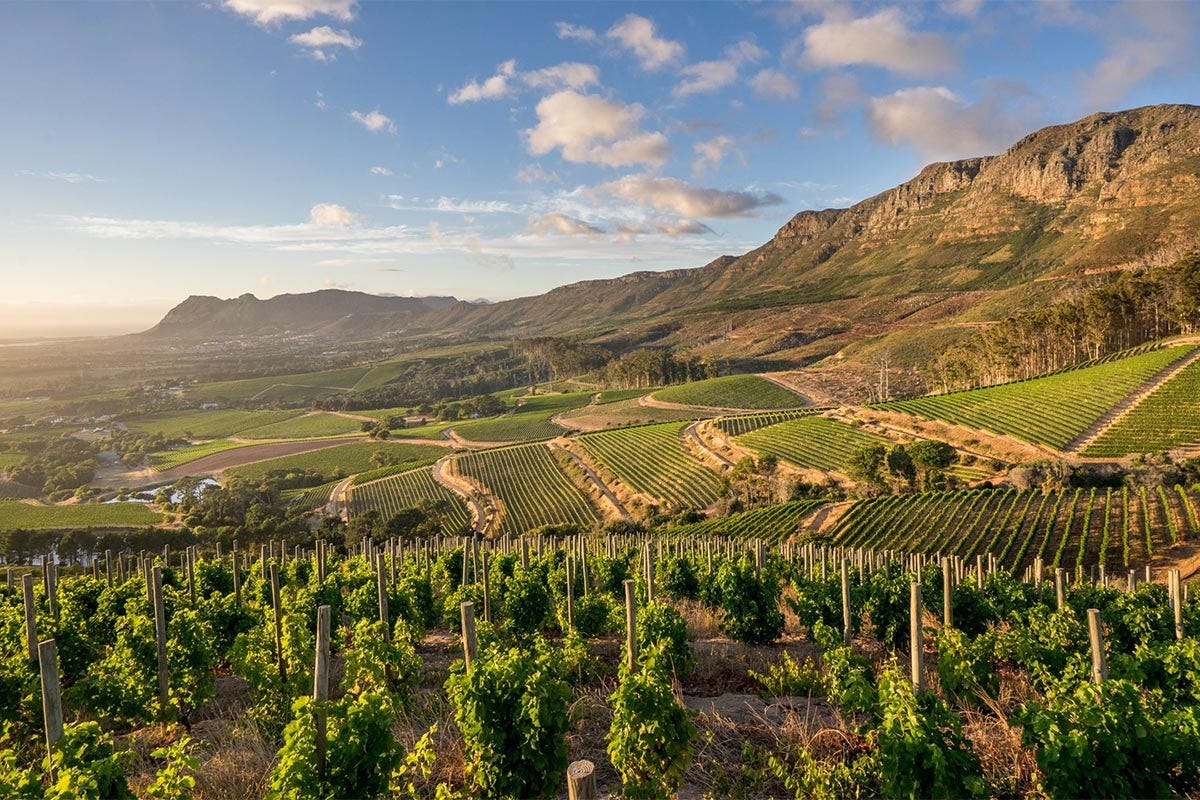
The Constantia Valley, fifteen minutes from the city center, contains South Africa’s oldest wine estates and some of its finest. Groot Constantia, established in 1685 and the oldest wine-producing estate in the country, produces excellent Sauvignon Blanc and Muscat from vines planted on the southern slopes of Table Mountain. The famous Vin de Constance, a natural sweet wine from Klein Constantia that was reportedly the favorite of Napoleon Bonaparte in exile on St. Helena, is one of the great wines of the world. An afternoon in Constantia, tasting wines in the shadow of the mountain and eating lunch on a vine-shaded terrace, is a quintessential Cape Town pleasure.
Day trips from Cape Town
Cape Town’s position at the southwestern tip of Africa places it within reach of some of the most extraordinary landscapes in the southern hemisphere.
The Cape Winelands: Stellenbosch and Franschhoek
The Winelands begin about an hour from the city through mountain passes and are among the most beautiful wine-producing landscapes in the world. Stellenbosch, a university town of white-gabled Cape Dutch architecture on the banks of the Eerste River, is the most complete wine destination and most easily visited. Franschhoek, settled by French Huguenot refugees in the late 17th century, is the gastronomic capital of South Africa: a single main street lined with some of the finest restaurants on the continent, surrounded by estates producing world-class wines and olive oils. Both deserve at least a full day; Franschhoek specifically rewards an overnight stay.
Hermanus and Whale Watching
Between June and November, Southern Right Whales enter Walker Bay near Hermanus to calve and nurse their young, coming close enough to shore that they can be watched from the cliff paths above the town. Hermanus is recognized as one of the best land-based whale watching destinations in the world. The drive along the R44 coastal road between Gordon’s Bay and Hermanus is itself one of the most beautiful in the Cape. About 1.5 hours from Cape Town.
The West Coast and Langebaan
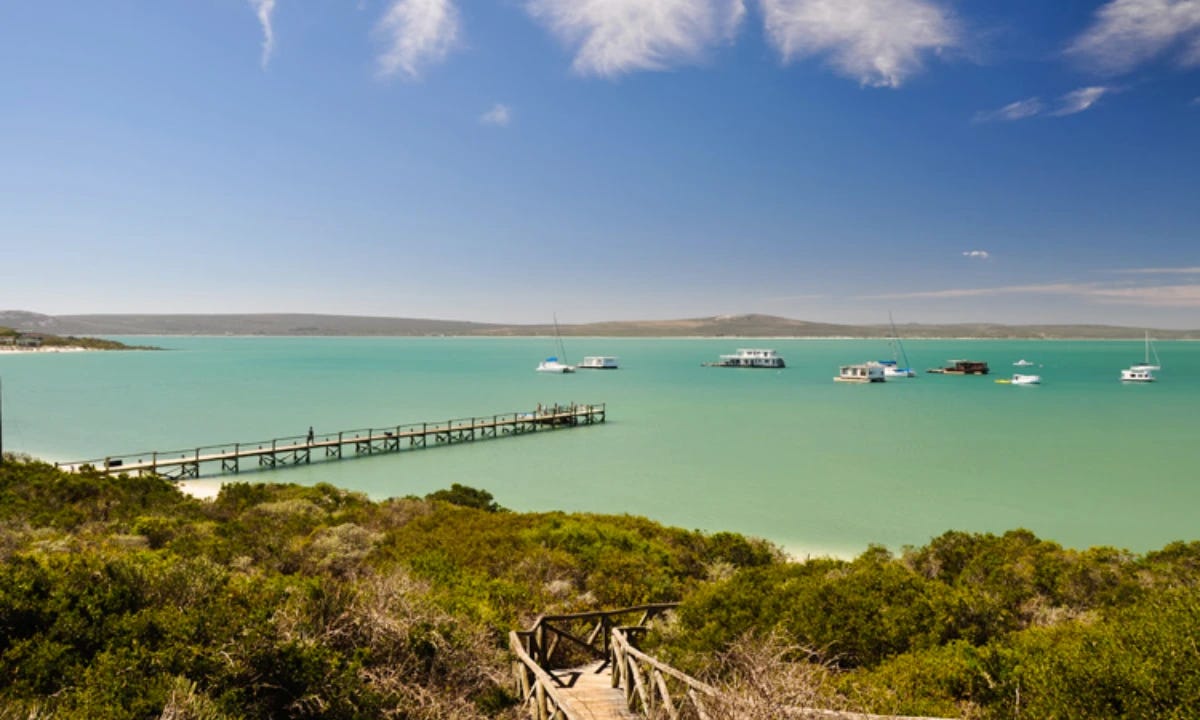
In August and September, the West Coast National Park north of Cape Town hosts one of the natural world’s great spectacles: millions of wild flowers, including Namaqualand daisies, vygies, and Cape annuals, transforming the dry scrubland into a carpet of color that stretches to the horizon. Langebaan Lagoon, within the park, is one of the most beautiful bodies of water in South Africa year-round. About 1.5 hours from Cape Town.
The Garden Route
The coastal highway east of Cape Town, passing through Mossel Bay, George, Knysna, and Plettenberg Bay, traverses forest, lagoon, and mountain scenery that is among the most varied in South Africa. Best driven over two or three days rather than rushed as a single day trip. The Garden Route rewards those who stop for the forest trails in Tsitsikamma, the oysters at Knysna, and the wild Robberg Peninsula at Plettenberg Bay.
When to visit Cape Town
Cape Town has a Mediterranean climate: hot, dry summers and mild, wet winters. Unlike most African destinations, the timing question involves choosing between beach weather and wine-country weather rather than between wet and dry seasons.
🌞 Summer
November to February. Peak season: hot, dry, and occasionally windy (the legendary Cape Doctor southeaster). Long days, the beaches at their finest, and the Kirstenbosch summer concerts in full swing. The most expensive and busiest time to visit, but also the most reliably beautiful.
🍂 Autumn
March to May. The finest season to visit Cape Town. The summer heat softens, the wind drops, and the wine harvest arrives in March and April. Fewer crowds, lower prices, and the Winelands at their most beautiful, copper-gold vines glowing against the mountain backdrop. The recommendation for most travelers.
🌧️ Winter
June to August. Wet and cool, but Cape Town in winter has its own appeal: dramatic skies, the whales off Hermanus, and the emptied-out beaches and mountains that belong to those who make the effort. Hotel rates drop significantly. Not the visit for beaches; very much the visit for the Winelands, the museums, and the moody light.
🌸 Spring
September to October. The fynbos blooms, the West Coast wildflowers are extraordinary, and the weather begins its transition back to summer warmth. Clear skies, warm enough for the peninsula drive, and the city beginning to fill with energy before the peak season crowds arrive.
How many days to spend in Cape Town
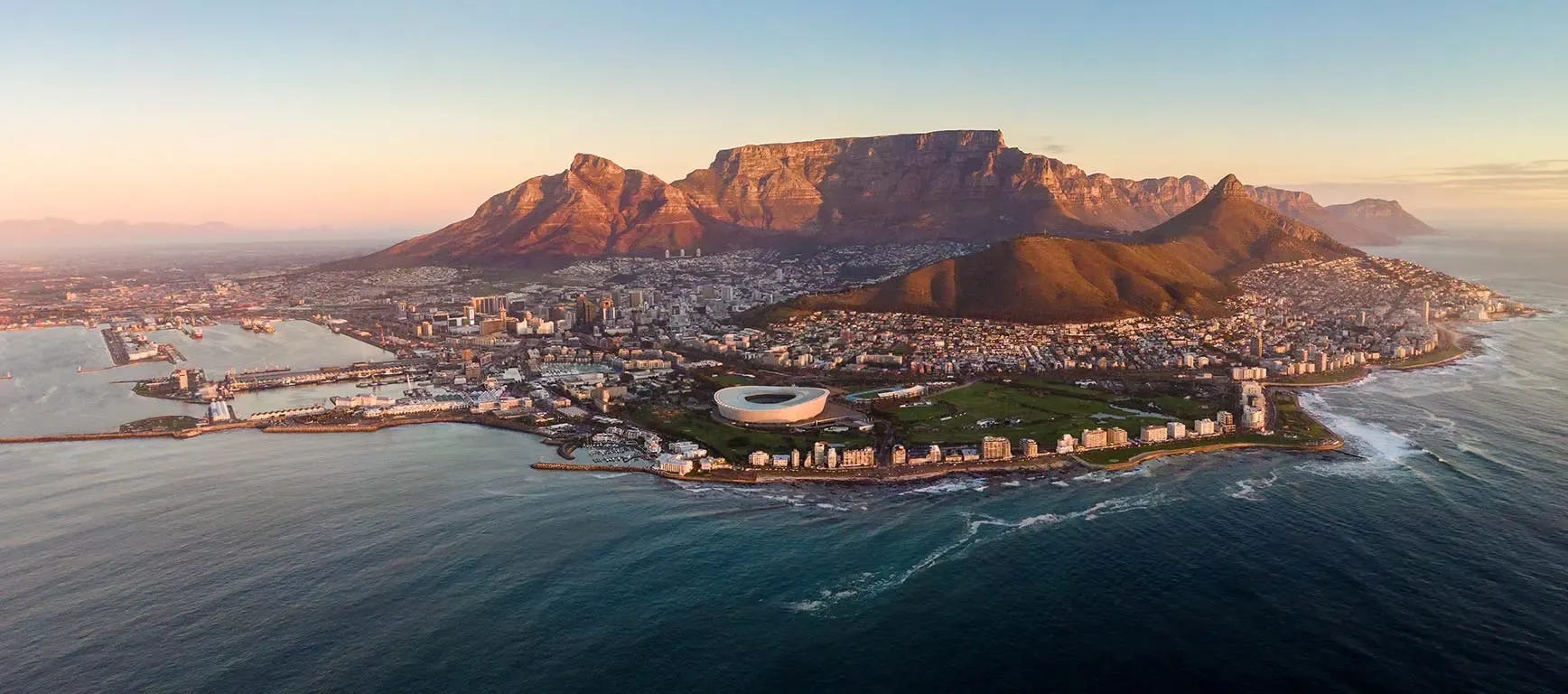
Three days covers Table Mountain, Robben Island, the Cape Peninsula drive with Boulders Beach and Cape Point, and an evening in the Bo-Kaap or Woodstock at a comfortable pace. Four to five days adds Kirstenbosch, the Zeitz MOCAA, and a half-day in the Constantia wine estates. A week allows for a full two-day excursion into the Winelands and a day in Hermanus.
Cape Town is a city that rewards slow travel. Its pleasures, from the light changing on the mountain to a long lunch in Franschhoek, an evening at Kirstenbosch, or an afternoon along the Sea Point promenade, are not to be rushed. Build in time for nothing in particular, and the city will fill it generously.
Suggested 3-day itinerary
Day 1
Table Mountain cable car: depart early to beat the cloud. Walk the summit plateau (allow 90 minutes). Return by cable car or hike Platteklip Gorge down to the city.
Bo-Kaap in the afternoon: walk the painted streets, visit the museum, explore De Waterkant. Coffee at a neighbourhood cafe.
Signal Hill for the sunset. Dinner in Gardens or Woodstock, in the Neighbourgoods area if a Saturday market is running.
Day 2
Depart early by car for the Cape Peninsula. Chapman’s Peak Drive: stop at the lookout above Hout Bay. Continue south to Cape Point. Walk to the lighthouse and the viewpoints at the continent’s tip.
Boulders Beach for the penguins. Lunch in Simon’s Town at the harbour. Return via the False Bay coast: Kalk Bay (galleries and bookshops), Muizenberg (the coloured beach huts).
Sunset from Clifton 4th Beach. Dinner on the Atlantic Seaboard: Camps Bay for the spectacle, Sea Point for the authenticity.
Day 3
Robben Island ferry from the V&A Waterfront (departs 09:00; book weeks ahead). The tour takes three to four hours including the crossing.
Zeitz MOCAA in the converted grain silo at the Waterfront: allow two hours minimum. Coffee on the harbour.
Kirstenbosch for the final light on the mountain (if November–April and a Sunday evening, stay for the concert). Or: Constantia wine tasting at Klein Constantia or Groot Constantia.
Long Street or the CBD for the final night. Dinner at one of Cape Town’s finest restaurants: book ahead.
Where to eat
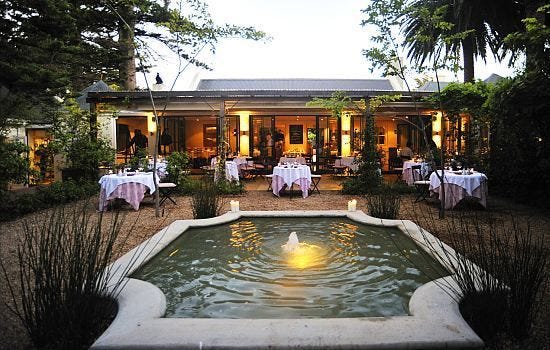
Cape Town’s food scene has evolved into one of the most exciting in the world, not merely in Africa. The combination of extraordinary local ingredients, from line fish from the Atlantic and Karoo lamb to Boland wines, Cape vegetables, and the Indian Ocean spice tradition of Cape Malay cooking, with a generation of internationally trained chefs has produced something genuinely remarkable. These recommendations span different budgets and styles.
The Test Kitchen, Modern South African, Tasting Menu.
Luke Dale-Roberts’ restaurant in the Old Biscuit Mill has led South Africa’s restaurant scene for over a decade, winning the country’s highest accolades consistently. The tasting menu explores South African ingredients through a global lens with extraordinary technical skill. Book months ahead: one of the hardest reservations in Africa.
La Colombe, French-South African, Fine Dining.
Set on the Silvermist Wine Estate above Constantia Nek, with views across the valley and the finest French-influenced tasting menu in the Cape. The wine list draws on the Constantia estates and the Winelands with exceptional depth. Book well ahead.
Biesmiellah, Cape Malay, Bo-Kaap.
The most authentic Cape Malay restaurant in the Bo-Kaap, in continuous operation for decades. Bobotie, denningvleis, and the spiced lamb dishes of the Cape at their most genuine. A neighbourhood institution with no pretension and exceptional value. No booking required.
Harbour House (Kalk Bay), Seafood, Atmospheric.
On the working fishing harbour at Kalk Bay, with direct views of the boats and the False Bay mountains. The finest line fish and seafood on the Cape Peninsula, at its best on a weekday lunch when the fishing boats are in. No menu item more than a few hours from the sea.
Neighbourgoods Market, Food Market, Saturday mornings only.
The finest food market in South Africa, in the Old Biscuit Mill in Woodstock every Saturday morning. An extraordinary range of Cape producers, artisan breads, wines, coffees, and street food from dozens of vendors. The social centre of Cape Town’s creative class. Arrive by 10am.
Tjing Tjing, Rooftop, Japanese-influenced, Views.
A Japanese-influenced rooftop bar and restaurant in the CBD with panoramic views of Table Mountain and the city. The most atmospheric sunset perch in the city center.
The Pot Luck Club, Small Plates, Woodstock. Luke Dale-Roberts’ more accessible sibling to The Test Kitchen, also in the Old Biscuit Mill. Inventive sharing plates in a converted industrial space that buzzes on weekend evenings. A better option for groups than the Test Kitchen.
Where to stay
The best area for first-time visitors is the City Bowl or Gardens, within walking distance of the lower cable car station and the main historical neighbourhoods, with easy access to the Waterfront and the Atlantic Seaboard. For those prioritizing beach access, Sea Point or Camps Bay offer the finest coastal options.
Silo Hotel, Luxury
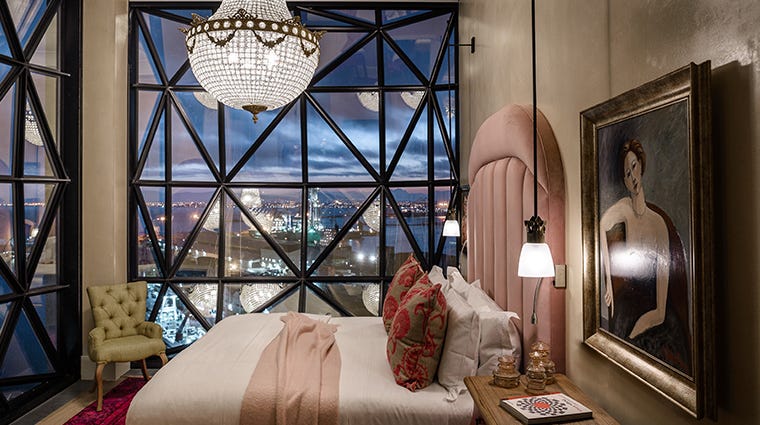
Six floors of extraordinary luxury in the converted grain elevator above the Zeitz MOCAA at the V&A Waterfront. The finest hotel in Cape Town by most measures, with views of Table Mountain, the harbour, and the ocean from all rooms. The rooftop pool is among the most photographed in Africa.
Belmond Mount Nelson Hotel, Luxury
The grand pink colonial hotel that has anchored Cape Town’s social life since 1899. Set in nine acres of garden beneath Table Mountain, with a legendary afternoon tea, two pools, and the most historic address in the city. A Cape Town institution in the truest sense.
Cape Cadogan Boutique, Mid-range
A beautifully restored Victorian townhouse in upper Gardens, with an intimate scale, a swimming pool in the garden, and the quiet character of a private home. One of the finest boutique hotels in the city for those who want a residential feel over corporate luxury.
The Twelve Apostles, Luxury, Atlantic Seaboard.
Set between the Twelve Apostles mountain range and the Atlantic Ocean, between Camps Bay and Llandudno. Cape Town’s most dramatic hotel setting, with a sense of seclusion unusual for a property so close to the city. Better for those with a rental car.
The Backpack Budget Cape Town’s most celebrated hostel, in the City Bowl, with a strong commitment to responsible tourism. Private rooms and dormitories, a garden bar, and the finest breakfast in the budget category. A genuine community hub rather than a transit stop.
Practical information
Currency: South African Rand (ZAR). Cards are accepted at most restaurants, hotels, and larger shops. Cash is useful for smaller vendors, parking attendants, and tips. Use ATMs inside shopping centres or bank branches for security.
Language: South Africa has 11 official languages. In Cape Town, English is spoken universally in tourist contexts. Afrikaans is widely spoken; Xhosa is the home language of many residents.
Getting around: A rental car is strongly recommended for anything beyond the City Bowl and Waterfront. The MyCiti bus connects the centre with Sea Point and Camps Bay adequately. Uber operates throughout the city and is the safest option for evening travel. Do not hail metered taxis on the street; book them in advance.
Safety: Cape Town requires more situational awareness than most European cities. Stay alert in the CBD after dark; use Uber rather than walking to your accommodation at night; do not display expensive cameras or phones in crowded areas. The main tourist areas are generally safe by day. Ask your hotel for current advice on specific streets.
Electricity: South Africa uses Type M plugs (three large round pins) at 230V. Bring an adapter. South Africa operates a system of rolling power outages (load shedding) that can affect several hours of the day; most hotels and restaurants have generators. Check the schedule before time-sensitive activities.
Load shedding: This is a current reality of South African life. The national power utility schedules outages that rotate through neighborhoods in blocks. Apps like EskomSePush give real-time schedules. Most tourist infrastructure is generator-backed, but it is worth knowing what to expect.
Internet: A local SIM from Vodacom or eSim is inexpensive and provides excellent data coverage across Cape Town and the Winelands. Wi-Fi is available in hotels, cafes, and at the Waterfront.
Tipping: 10–15% at restaurants is expected and important: service workers depend on it. Tip parking attendants 5–10 ZAR; tip petrol station attendants who clean your windscreen or check your tyres. Tipping is a meaningful economic act in South Africa.
Visas: Citizens of most Western countries (USA, Canada, UK, EU, Australia) do not require a visa for South Africa for stays up to 90 days. Confirm current requirements before travel.
Health: No vaccinations are required for Cape Town specifically, though general travel vaccinations are advisable. The Western Cape is malaria-free; if extending your trip to Kruger or KwaZulu-Natal, malaria prophylaxis is strongly recommended.
How Cape Town fits into a broader South Africa trip
Most travelers combine Cape Town with at least one other South African destination, and the combinations are among the finest multi-destination trips available anywhere in the world.
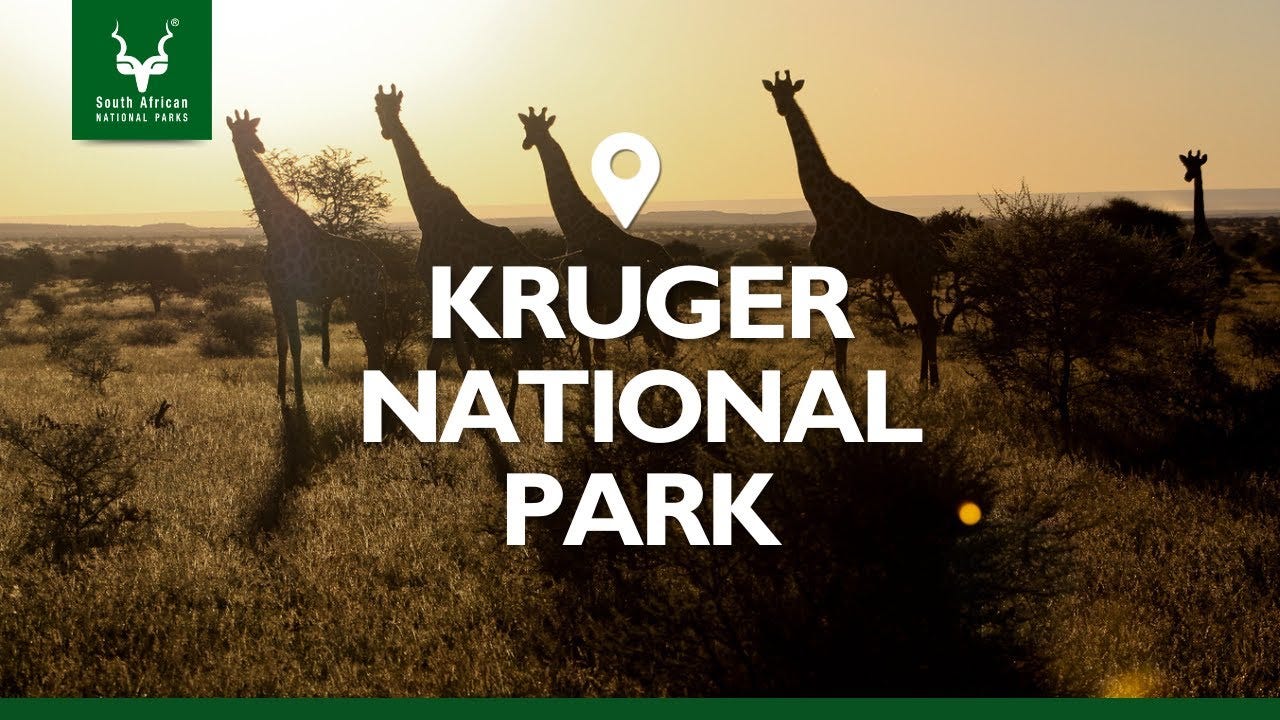
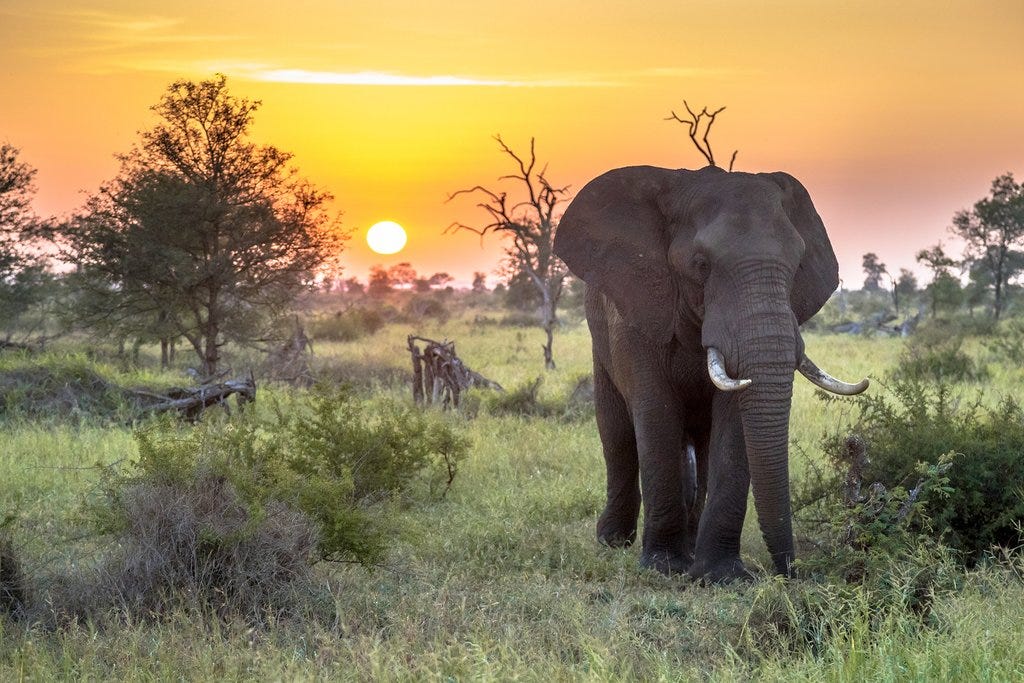
The most natural pairing is a safari: Kruger National Park, the private game reserves of Sabi Sands, or the malaria-free reserves of the Eastern Cape can be combined with Cape Town in a single trip of ten days to two weeks. The contrast between the wildlife experience on the highveld or bushveld and the urban sophistication of Cape Town is entirely complementary.
The Garden Route, which begins less than three hours east of Cape Town, provides a natural bridge between the city and the Eastern Cape, passing through Knysna, the Tsitsikamma forest, and the elephant country around Addo before reaching Port Elizabeth (now Gqeberha). For travelers with two to three weeks, a Cape Town–Garden Route–Eastern Cape safari circuit is one of the great journeys available in the southern hemisphere.
Franschhoek and the Winelands, for those who want to stay close to the Cape, can easily extend a Cape Town visit by two or three days and constitute a distinct and extraordinary destination in their own right.
Frequently asked questions
Is Cape Town safe for tourists?
Cape Town requires more awareness than most European cities, but millions of visitors have entirely safe and transformative experiences here every year. The main tourist areas, including the Waterfront, Bo-Kaap, Woodstock, Sea Point, the Atlantic Seaboard, and Constantia, are generally safe by day. Use Uber after dark, avoid displaying valuables in crowded areas, and follow your hotel’s specific advice about neighbourhood conditions. The rewards of visiting far outweigh the precautions required.
Do I need a rental car in Cape Town?
For the City Bowl, the Waterfront, Bo-Kaap, and Sea Point, no: Uber and the MyCiti bus are adequate. For Table Mountain (lower cable station is walkable), also no. But for the Cape Peninsula drive, Kirstenbosch, Constantia, and any day trip to the Winelands, a rental car transforms the experience entirely. Most visitors find a car essential for at least half their trip.
What is fynbos?
Fynbos (Afrikaans for “fine bush”) is the unique shrubland vegetation of the Cape Floristic Region, one of only six such regions on earth and the smallest and most biodiverse. The Cape Peninsula alone contains more plant species than the entire British Isles. It is the dominant vegetation on Table Mountain’s summit and the surrounding mountains, and its flowering in spring is one of the natural world’s quieter wonders.
What is bobotie?
Bobotie is the national dish of South Africa and one of the defining preparations of Cape Malay cuisine: a spiced minced meat dish, baked with an egg custard topping, flavored with dried fruit, curry, and a blend of aromatics brought to the Cape by enslaved people from Southeast Asia and India. It is simultaneously familiar and unlike anything else. The best version in the city is at Biesmiellah in the Bo-Kaap.
When is the best time to see whales?
Southern Right Whales are typically present in Walker Bay near Hermanus between June and November, with peak numbers in August and September. They can occasionally be spotted from the Cape Peninsula’s False Bay shore, particularly at Fish Hoek and Simon’s Town, during the same period. The whale crier of Hermanus, who walks the cliff paths with a kelp horn alerting visitors to sightings, is one of the more charming institutions in South African tourism.
Do I need to book Robben Island in advance?
Yes, strongly. Robben Island ferries sell out days and sometimes weeks ahead, particularly in summer. It is one of the few attractions in Cape Town where arriving without a reservation means not going at all. Book as soon as your travel dates are confirmed. The sailings are also weather-dependent, as the crossing can be cancelled in heavy seas, so build flexibility into your schedule.
What is load shedding and will it affect my trip?
Load shedding is South Africa’s system of scheduled rolling blackouts, used by the national power utility to manage electricity supply shortfalls. It is a current reality of South African life.
In Cape Town, most hotels, restaurants, and tourist infrastructure have generators and are largely unaffected. The main impact for visitors is occasional traffic light outages (treat them as four-way stops) and the need to have phone battery backup for navigation. Download the EskomSePush app, which gives real-time schedules by neighborhood.
Plan your trip to Cape Town with ÆRIA Voyages

Every traveler’s ideal Cape Town itinerary looks different depending on the time available, the history that resonates most, and whether Cape Town is the destination or the starting point for a broader South African adventure.
I help clients build trips that go beyond the standard circuit: a private Cape Peninsula drive with a marine biologist, a curated Winelands tasting itinerary across Stellenbosch and Franschhoek, a self-drive Garden Route circuit beginning and ending in Cape Town, or a combined safari and Cape Town itinerary that covers the full range of what South Africa offers.
If you are planning a trip to Cape Town and want to talk through the options, I would be glad to help.
Yvan Junior Blanchette
Travel & Cruise Specialist
ÆRIA Voyages📩 yvanblanchette@aeriavoyages.com
📞 1-888-460-3388
🌐 aeriavoyages.com