

The Ultimate Edinburgh Travel Guide: What to know, where to go, and how to make the most of your visit
Updated 2026 | Scotland | First-time visitors | In-depth travel

Edinburgh doesn’t reveal itself in an hour. It’s a city built in layers: medieval and neoclassical, black granite and shifting sky, whisky and haggis, festival and winter quiet. It has one of the best-preserved old towns in Europe, a fortress perched on an extinct volcano, and a quality of light in the late afternoon on the Royal Mile that exists nowhere else in the English-speaking world.
And underneath all of it, a quiet national pride and a culture that belongs entirely to Scotland.
This guide covers the neighbourhoods worth knowing, the experiences that define the city, the practical details to have before you leave, and how to plan the right number of days for the kind of trip you want to take.
Table of Contents
Why Edinburgh is worth it
The neighbourhoods to know
Things you should not miss
Day trips from Edinburgh
When to visit Edinburgh
How many days to spend in Edinburgh
Edinburgh and Harry Potter: what Rowling really borrowed from the city
Things you probably didn’t know about Edinburgh
Suggested 3-day itinerary
Where to eat
Where to stay
Practical information
How Edinburgh fits into a trip to Scotland
Frequently asked questions
Plan your trip with ÆRIA Voyages
🎧 LISTEN TO THE BEYOND THE HORIZON PODCAST

Why Edinburgh is worth it
Edinburgh is one of Europe’s most remarkable capitals for a simple reason: its history and geography conspired to produce an extraordinarily beautiful city. The medieval Old Town and the Georgian New Town, both UNESCO World Heritage Sites, coexist separated by a single garden. One has a castle on a volcano. The other has rows of neoclassical townhouses whose elegance rivals Bath or Paris.
For travellers discovering the British Isles for the first time, Edinburgh is the revelation. Smaller and more navigable than London, compact enough to explore on foot, and with a cultural density (museums, galleries, distilleries, architecture) that fully justifies a stay of several days. For those who return, each visit uncovers new layers: a pub you hadn’t noticed, a view from Calton Hill at golden hour, the Scotch Whisky Experience on a rainy afternoon.
In August, the International Festival and the Fringe turn the city into the world’s largest live performance venue. In December, the Christmas markets and Hogmanay celebrations create an atmosphere no other European city can match. But Edinburgh, even outside its festivals, is one of the best destinations in the United Kingdom, all year round.
The neighbourhoods to know
Edinburgh is a human-scaled city. Its main neighbourhoods can all be reached on foot, and understanding their logic makes planning a stay considerably easier.
The Old Town
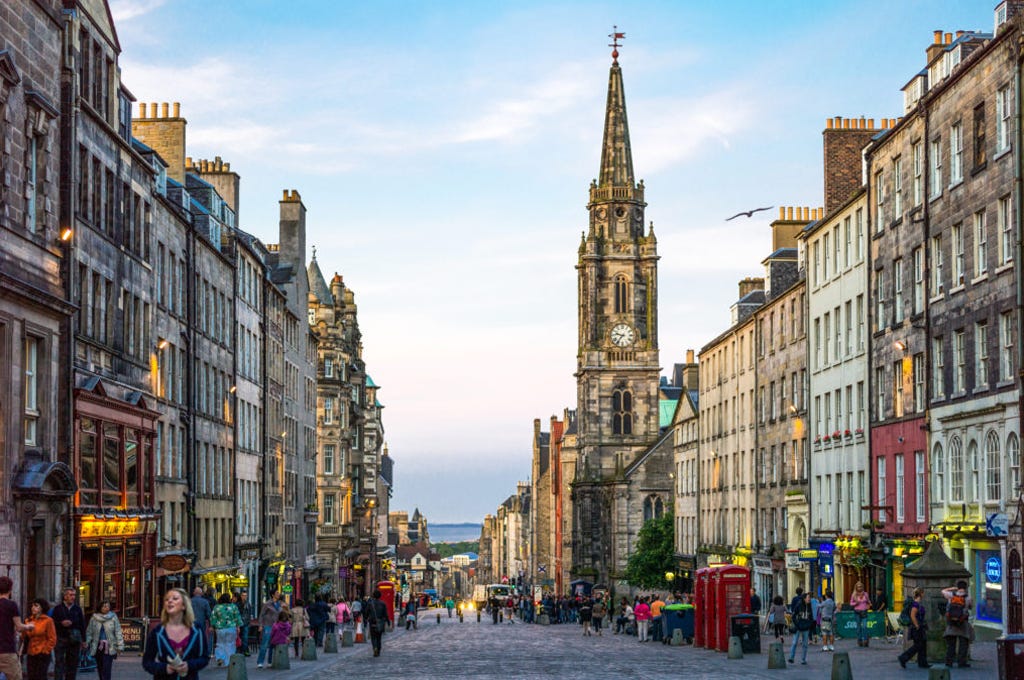
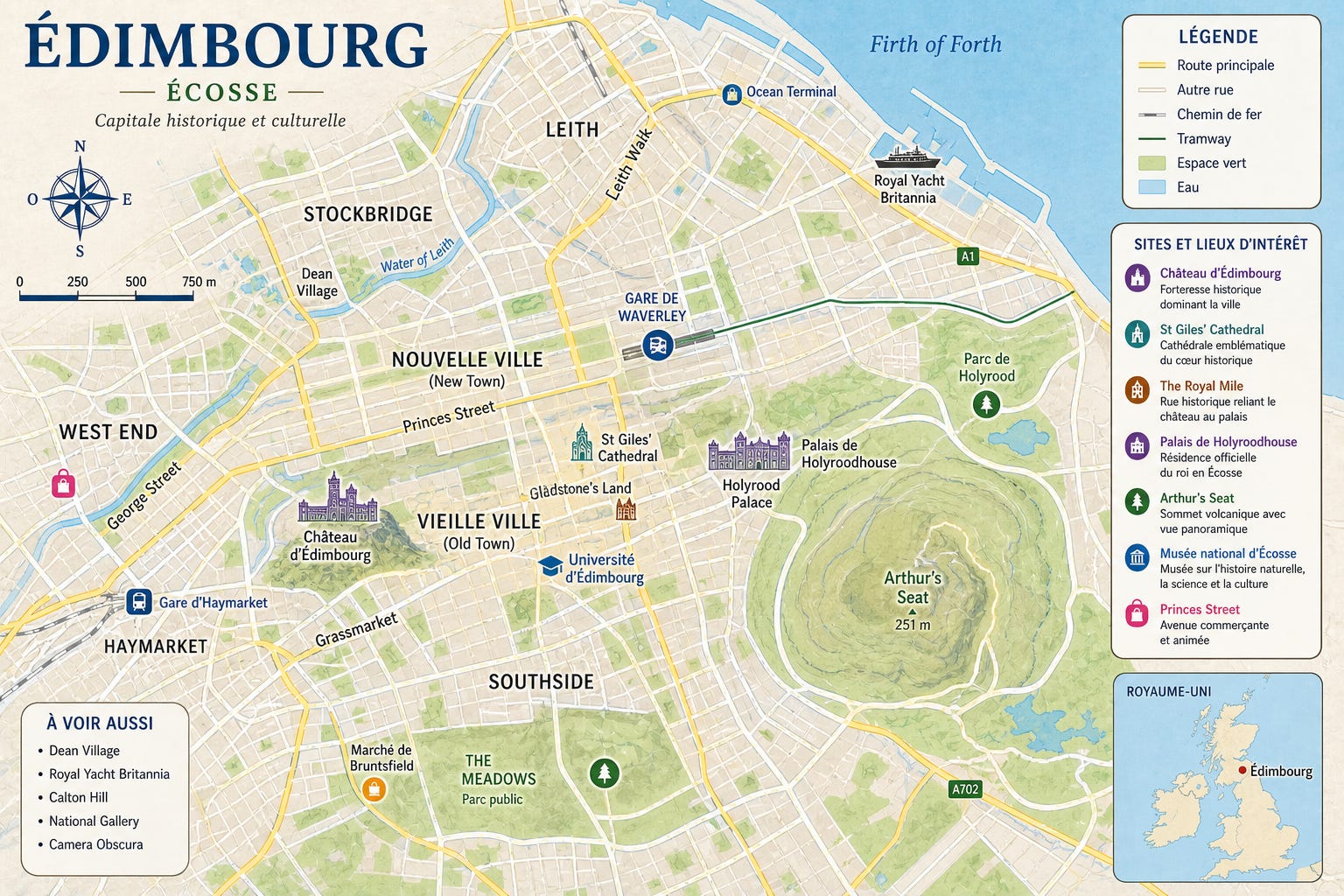
The historical heart of the city, built around the Royal Mile: the kilometre-long royal street that runs from the Castle down to the Palace of Holyroodhouse. On either side open medieval alleyways called closes: Gladstone’s Land, White Horse Close, Mary King’s Close (underground). The Old Town carries the whole of medieval Scotland in its stones, its courtyards, and its pubs that have survived several centuries. This is where the city shows itself most directly.
The New Town
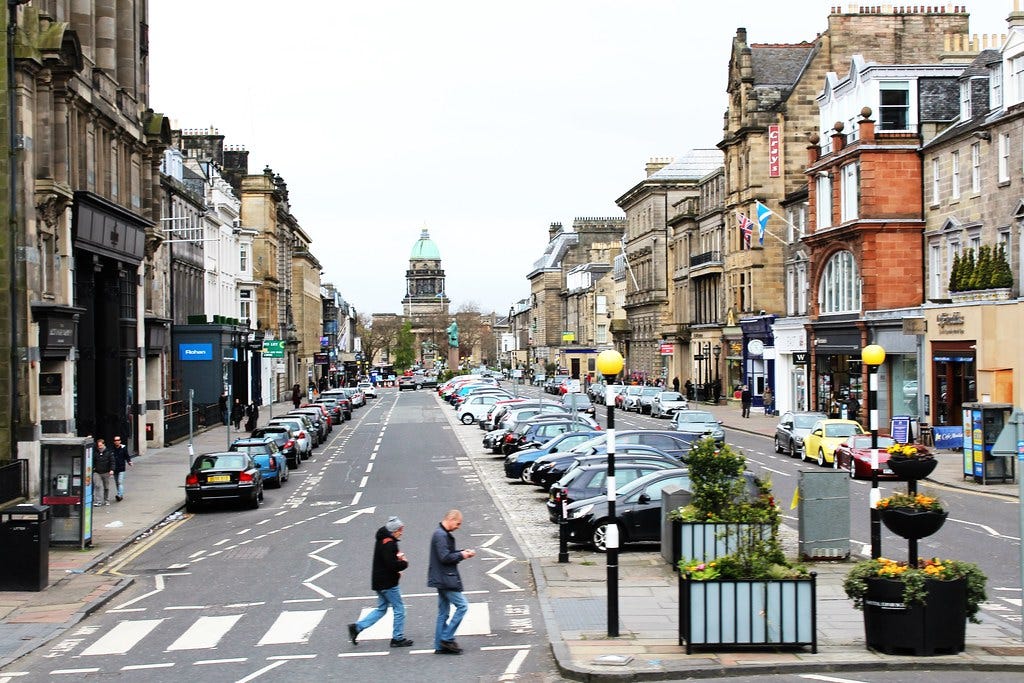
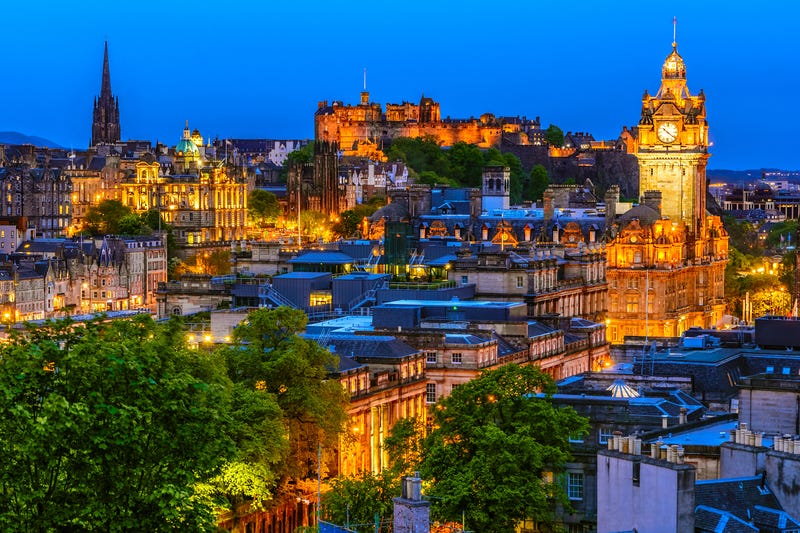
Built from 1767 onwards to relieve the overcrowded Old Town, the New Town is a masterpiece of neoclassical urban planning: straight streets, grey sandstone facades, private gardens at the centre of the squares. George Street, Thistle Street and Rose Street concentrate the best independent shops, restaurants and bars in the city. Princes Street, facing the gardens of the same name, offers one of the most striking views in Europe: the castle cuts against the sky above the gardens.
Grassmarket and Cowgate
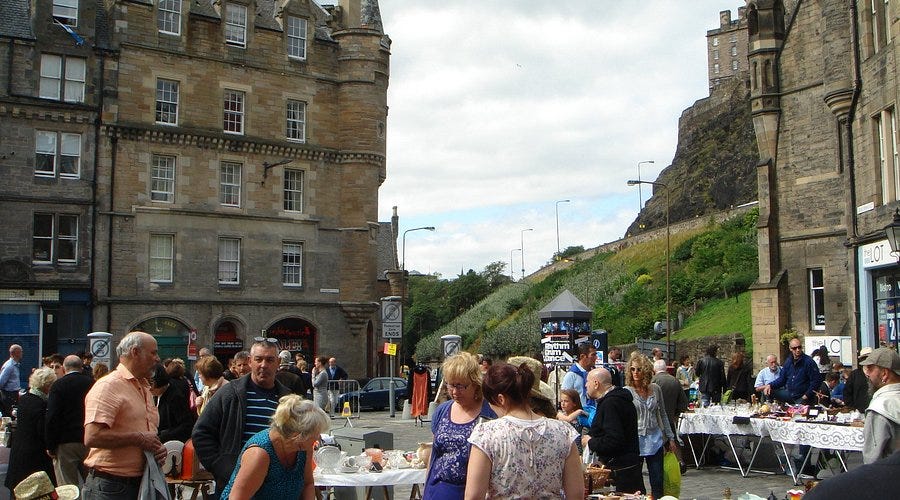
Nestled at the foot of the castle, this former marketplace (and public execution site) is now one of the liveliest areas of the Old Town. Whisky shops, characterful pubs, restaurants of every cuisine, and the view of the castle looming above it all. The Cowgate, the parallel street below, is darker and rougher: the heart of the student nightlife.
Leith
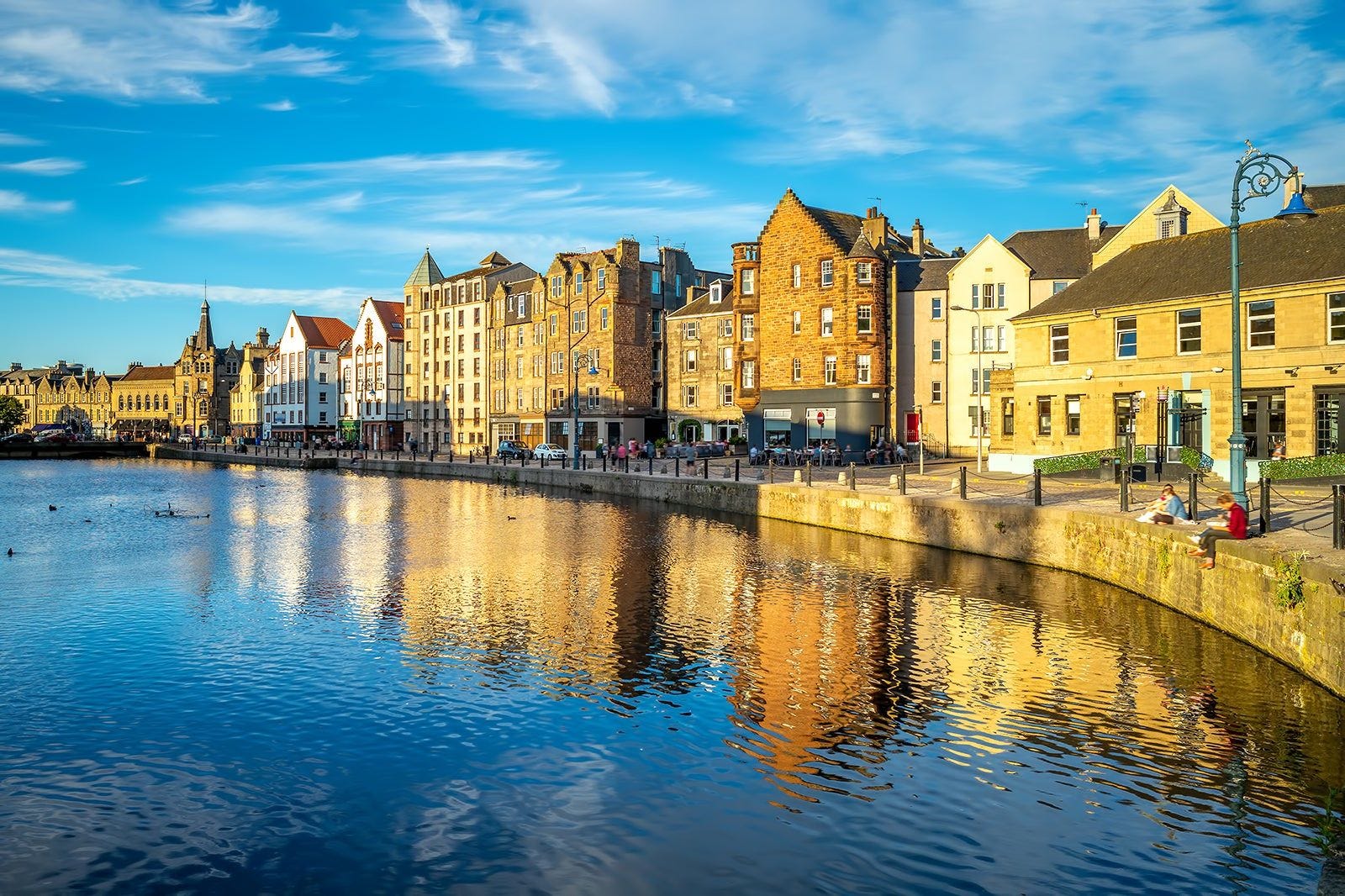
Edinburgh’s former port, administratively separate from the city until 1920, has undergone the most spectacular transformation in Scotland over the past twenty years. Along Leith Walk and the dockside, converted warehouses now house the city’s most inventive restaurants, its most serious wine bars, and a creative scene that draws a crowd far from the Old Town. The Shore, the banks of the Water of Leith, is the finest walk in the city on a good day. The Royal Yacht Britannia is moored here.
Stockbridge
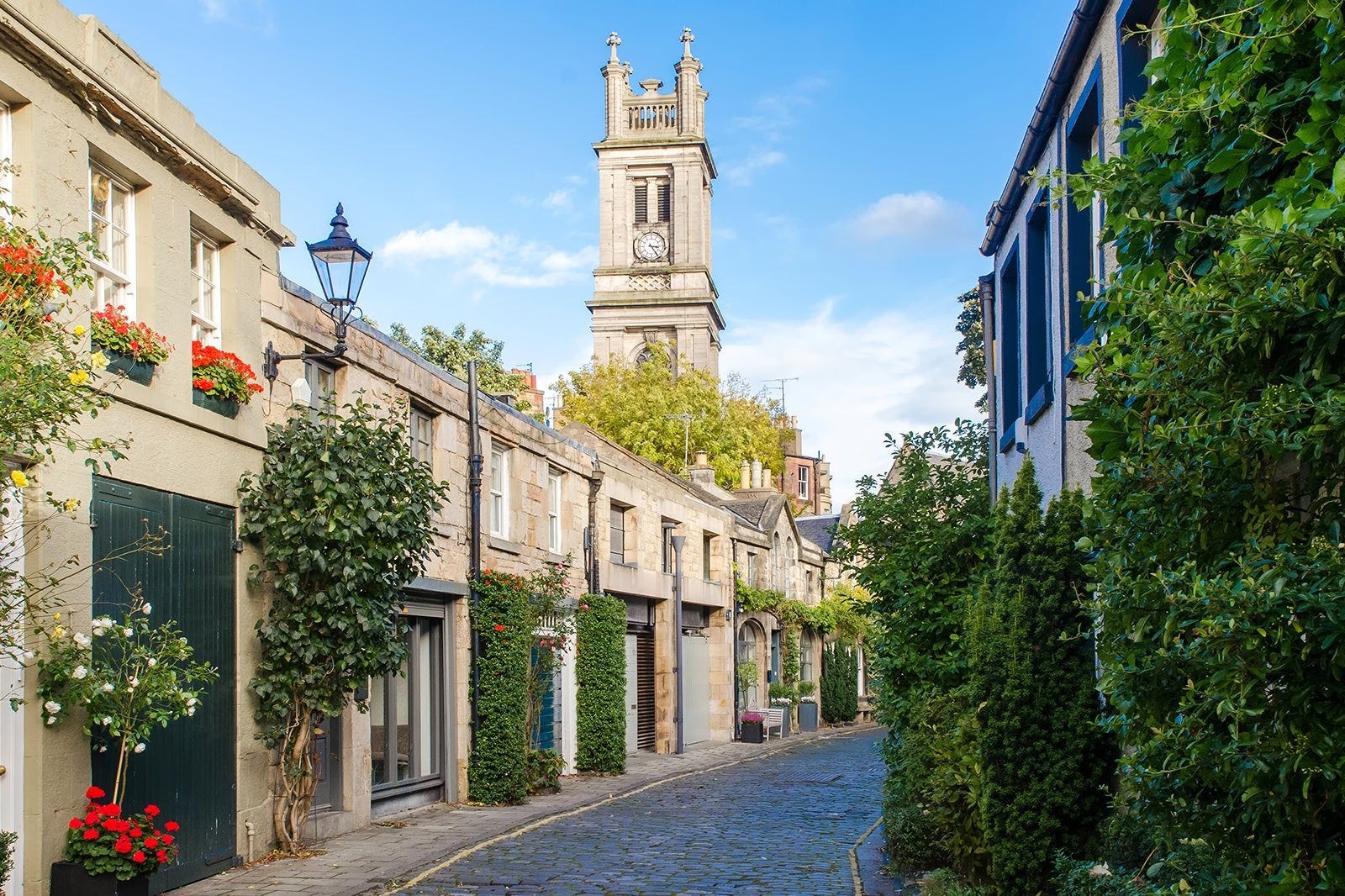
A village within the city: independent shops, a Sunday market by the river, cafes that resemble nothing else in Edinburgh, and quiet streets that give the impression of having left the capital. Stockbridge is where Edinburgh residents do their Saturday morning shopping, and one of the most pleasant places to wander in the whole city.
Southside and Marchmont
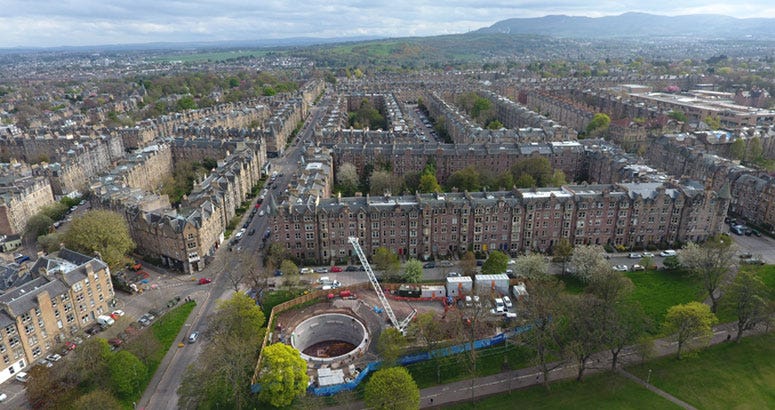
The university neighbourhood, with its Victorian residential streets, literary cafes and proximity to the Meadows, the large public park that separates the Old Town from the residential suburbs. Less touristy, more sincere, and excellent for understanding the city’s daily life.
Things you should not miss
Edinburgh packs more remarkable experiences per square kilometre than almost any other city of its size. These essentials cover the full range of what the city has to offer.
Edinburgh Castle
The most visited monument in Scotland, and one of the most impressive in the United Kingdom. Built on a volcanic plug 340 million years old, the castle has served as a royal residence, military fortress and prison over the centuries. The Honours of Scotland, the Scottish crown jewels and the oldest in the British Isles, are on display in the Crown Room. St Margaret’s Chapel, built in the 12th century, is the oldest surviving structure in Edinburgh. The One O’Clock Gun has been fired every day since 1861 except Sundays, and echoes across the city. Book in advance, especially in summer.
The Palace of Holyroodhouse
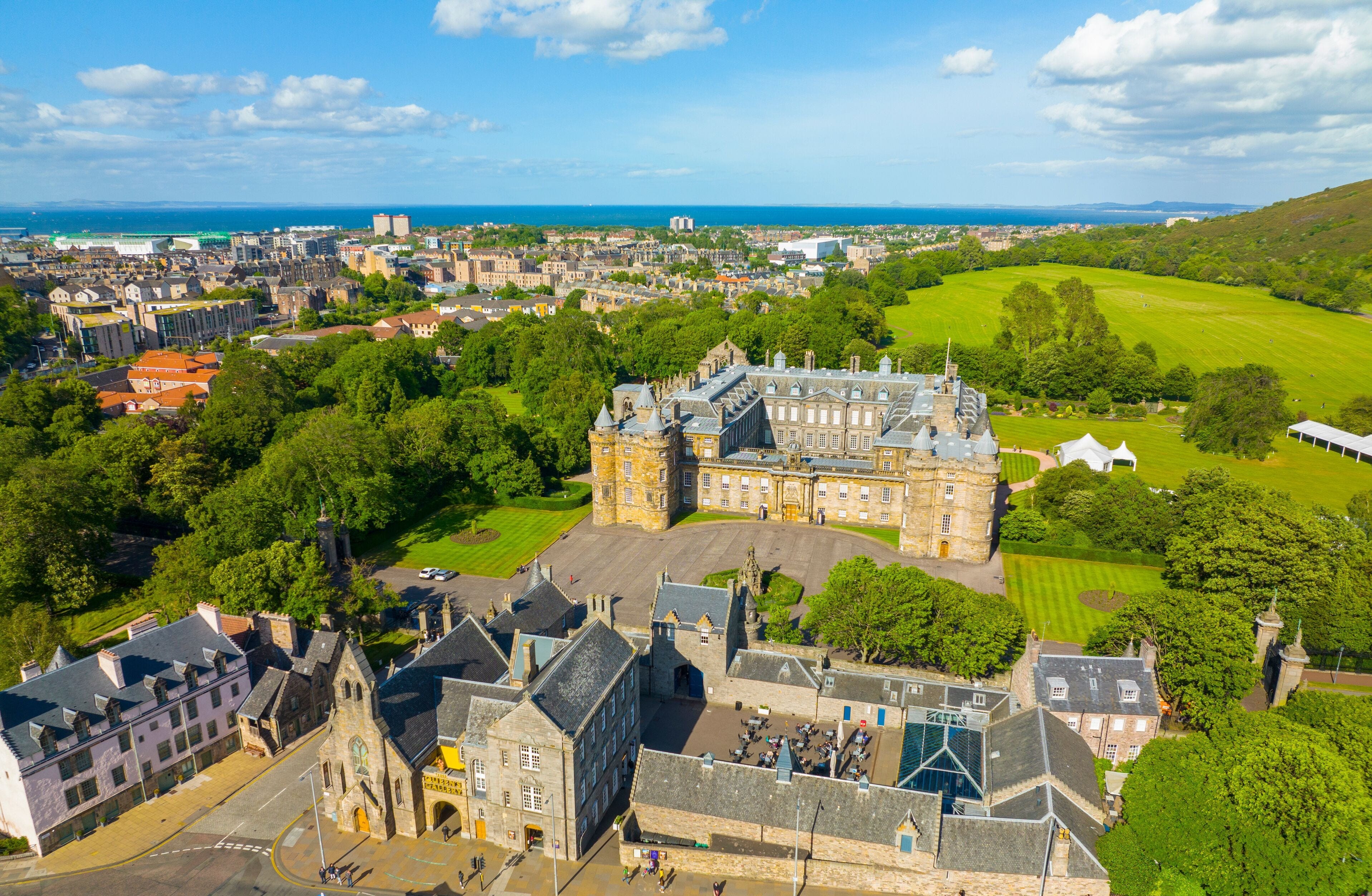
At the opposite end of the Royal Mile, the official residence of the British sovereign in Scotland, where Charles III stays during his annual visits. The Palace is open to the public outside royal visits. The Great Gallery, the historic apartments where Mary Queen of Scots lived through crucial years of her reign, and the ruined Holyrood Abbey in the grounds make this one of the richest visits in Scotland. Holyrood Park, immediately behind, is a 260-hectare nature park in the heart of the city, with Arthur’s Seat as its highest point.
Arthur’s Seat
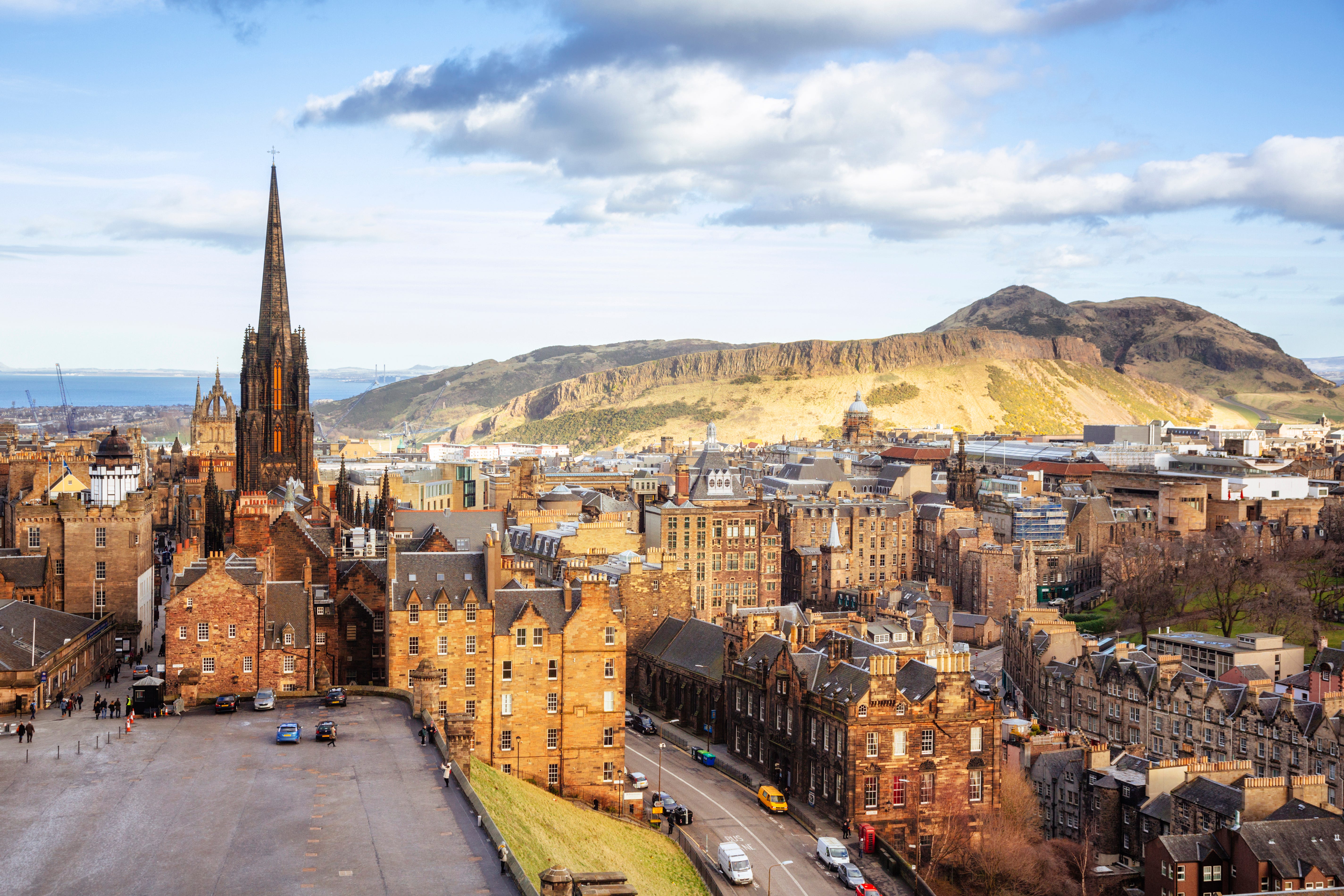
The climb to the summit of Arthur’s Seat, the main crater of this extinct volcano rising 251 metres above Edinburgh, is one of the most exceptional urban walks in Europe. On a clear day, the view stretches to the Firth of Forth and across the whole city. The climb takes between 45 minutes and an hour from Holyrood Park. Go early in the morning to avoid the crowds and catch the raking light across the city’s rooftops.
The National Museum of Scotland
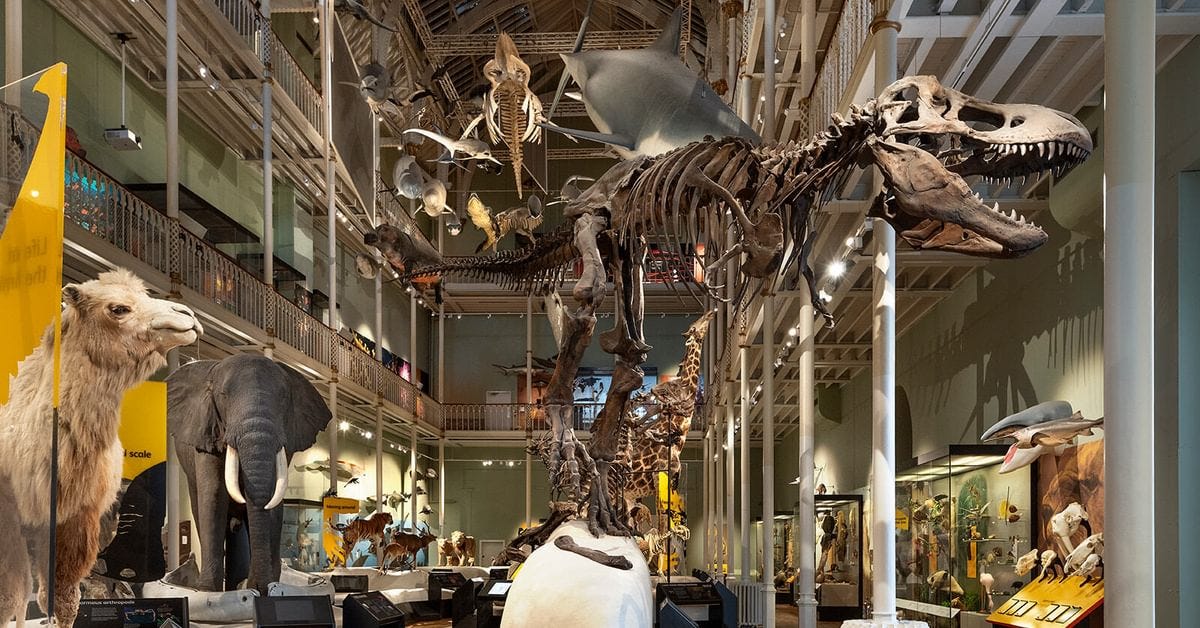
The national museum, entirely free, is one of the best in the United Kingdom: natural history, Scottish history from prehistoric origins, science, technology and decorative arts all coexist in a magnificent building that combines a Victorian edifice with a spectacular contemporary extension. Dolly the sheep, the first cloned mammal in history, is on display. The gallery devoted to medieval and modern Scottish history is one of the most intelligent and moving in Europe. Allow at minimum three hours.
The Scottish National Gallery
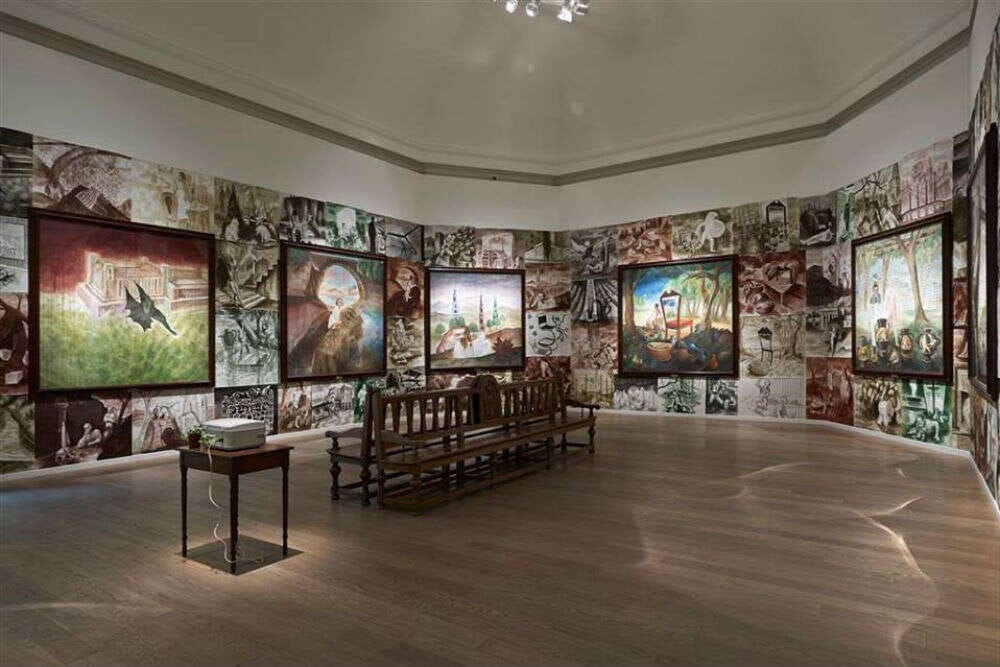
The national fine art collection, free and housed in a neoclassical building on The Mound between Princes Street Gardens, holds one of the finest permanent collections in the United Kingdom: Van Gogh, Rembrandt, Titian, Turner, Velázquez, and above all the Scottish masters, Ramsay, Raeburn and Wilkie. Combined with the Scottish National Portrait Gallery in the New Town (also free), it makes for a full day of first-rate painting without spending a penny.
The Scotch Whisky Experience
The most complete and best-designed introduction to Scotch whisky available without leaving the city. The guided tour covers the five production regions and the distillation process, and ends with a commented tasting. The vault holds one of the largest private bottle collections in the world, with more than 3,500 references. Essential before heading to the Highlands or the island distilleries.
The Royal Yacht Britannia
The former royal yacht, moored in Leith since 1997, is open to the public as a guided tour with audio guide. The royal apartments, officers’ mess, engine room and state rooms are preserved exactly as Queen Elizabeth II left them. One of the most moving visits in Scotland, and a perfect excuse to have lunch at one of the excellent restaurants in Leith harbour afterwards.
An evening in a traditional Scottish pub
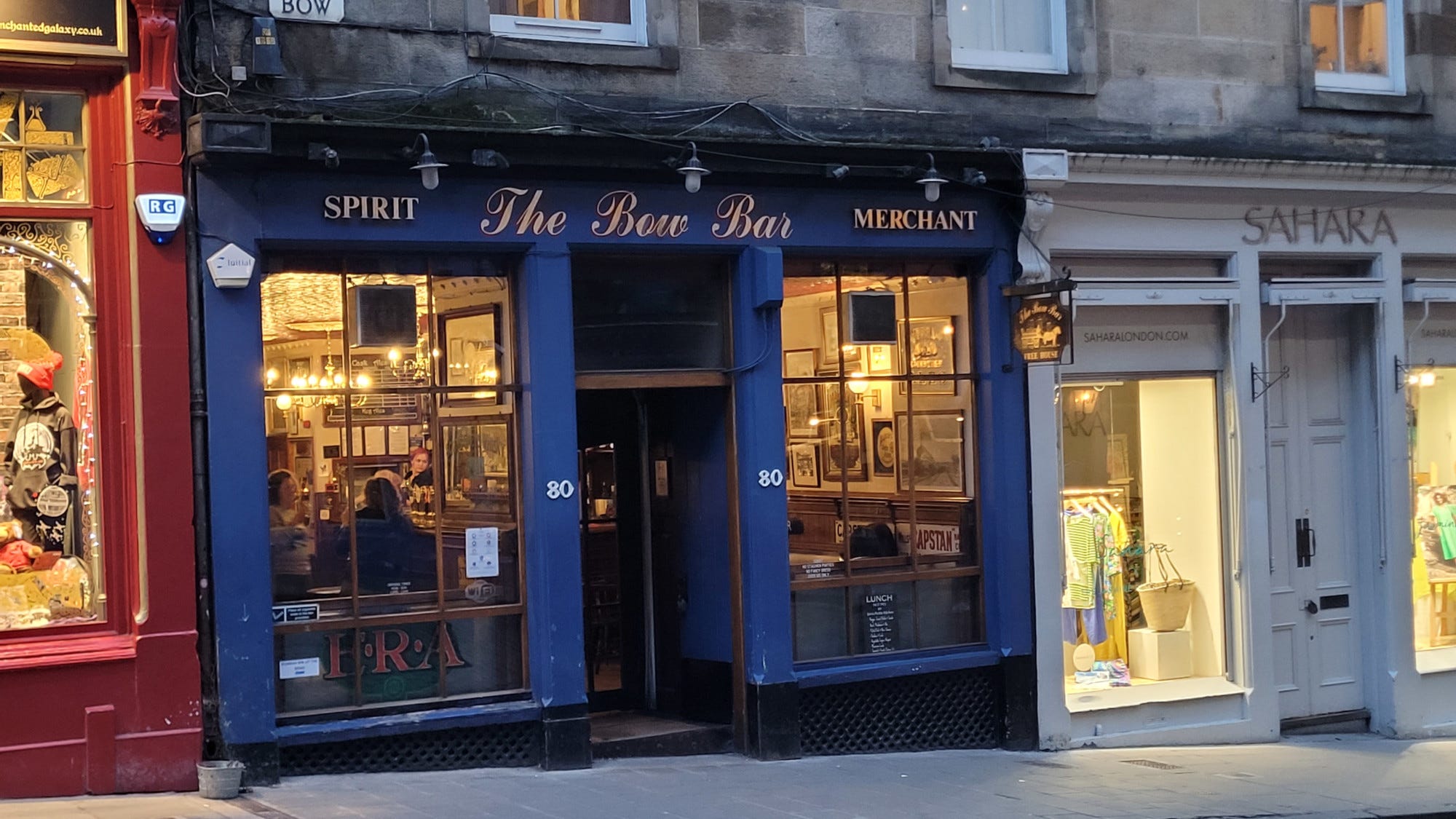
Scottish pub culture is different from its English counterpart: louder, less formal, with a tradition of folk music (trad sessions) on weekends that can be extraordinary. The Bow Bar in the Old Town pours one of the best selections of single malts in Edinburgh. The Café Royal in the New Town is the best-preserved Victorian pub in the city, with its stained glass and painted tile panels. No evening in Edinburgh is complete without at least one pub.
Day trips from Edinburgh
Scotland is extraordinarily accessible from Edinburgh. The Highlands, castles, distilleries and most spectacular landscapes of the British Isles are less than two hours away.
The Highlands and Loch Ness
The most spectacular day available from any city in the United Kingdom. The Highlands offer landscapes of moorland, lochs and mountains with no equivalent in Western Europe. Loch Ness, Glen Coe (one of the most striking glacial valleys in Scotland) and the castles that line the route make for a full day from Edinburgh.
Stirling and Loch Lomond

An hour from Edinburgh, Stirling concentrates more Scottish history per square kilometre than almost anywhere else: Stirling Castle, rivalling Edinburgh Castle in historical importance, the Wallace Monument dedicated to William Wallace, and the battlefield of Bannockburn, where Robert the Bruce won in 1314 the victory that defined Scottish independence. Loch Lomond, half an hour to the west, is the largest lake in the British Isles.
St Andrews and the East Neuk
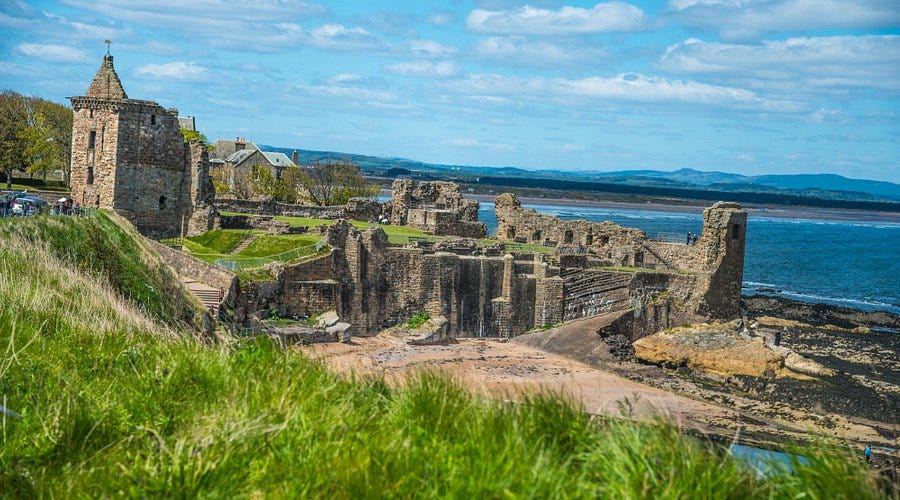
An hour northeast of Edinburgh via the Forth Bridge, St Andrews is Scotland’s most venerable town: its ruined cathedral, its medieval university and the Old Course, the most famous golf course in the world. The fishing villages of the East Neuk of Fife, including Anstruther, Crail and Pittenweem, are among the most beautiful in the United Kingdom.
The Scottish Borders
South of Edinburgh, the Borders offer a landscape of gentle hills, ruined abbeys and historic houses: Melrose Abbey, Dryburgh Abbey (where Walter Scott is buried), Abbotsford, Walter Scott’s Gothic home, and Traquair House, the oldest inhabited castle in Scotland. A calm day and one frequently overlooked by visitors.
When to visit Edinburgh

Edinburgh is a city for all seasons. The weather is the variable... the city never loses its interest.
🌸 Spring (March to May)
Princes Street Gardens in bloom, lengthening days, crowds still manageable. The best time to climb Arthur’s Seat and explore the city’s parks. Mild but unpredictable temperatures, so always a waterproof. One of the two best times to visit.
☀️ Summer (June to August)
The International Festival and the Fringe in August make Edinburgh the world capital of live performance. Very long days (sunset after 10pm in June). Very busy, so book everything well in advance. The most intense experience the city offers.
🍂 Autumn (September to November)
The light in October is extraordinary. Crowds thin out. The cultural season is at its peak: galleries, concerts, dining. One of the two best times to visit, along with spring.
❄️ Winter (December to February)
December brings Christmas markets to Princes Street and the Old Town. Hogmanay on 31 December is the most impressive New Year celebration in Europe. January and February are quiet and less expensive.
How many days to spend in Edinburgh
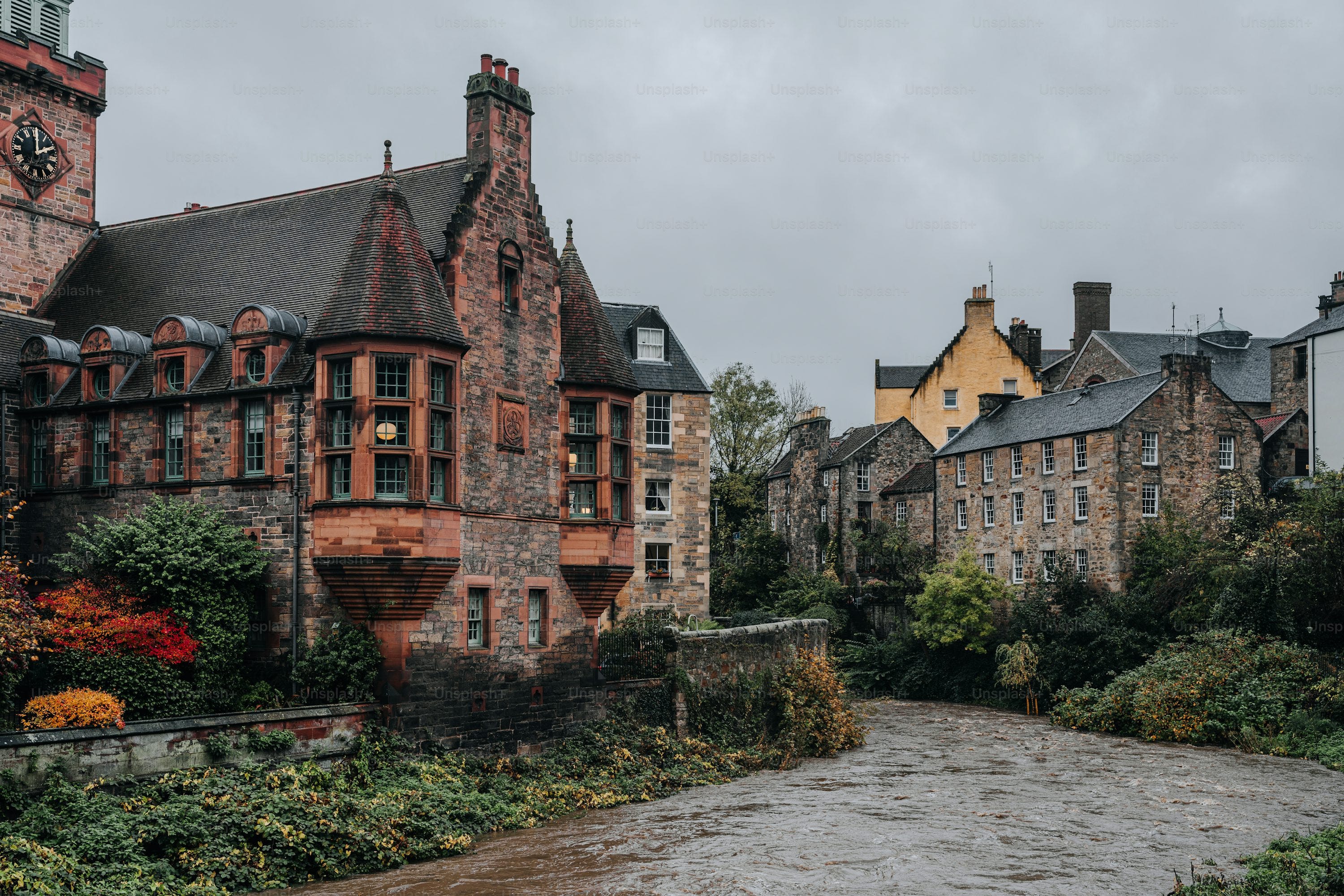
Three days cover the Castle, Holyroodhouse, Arthur’s Seat, the National Museum, an evening in Leith and a pub in the Old Town at a comfortable pace. Four to five days add the New Town, Stockbridge, the national gallery, and a day trip to Stirling or St Andrews. A week begins to reveal the Borders or the Highlands, and to understand how the city works day to day.
Edinburgh is a city that scales with time. Three days give you the monuments. Five days give you the neighbourhoods. A week starts to show you what the locals know. Each additional day reveals something the previous one had stirred in you.
Edinburgh and Harry Potter: what Rowling really borrowed from the city
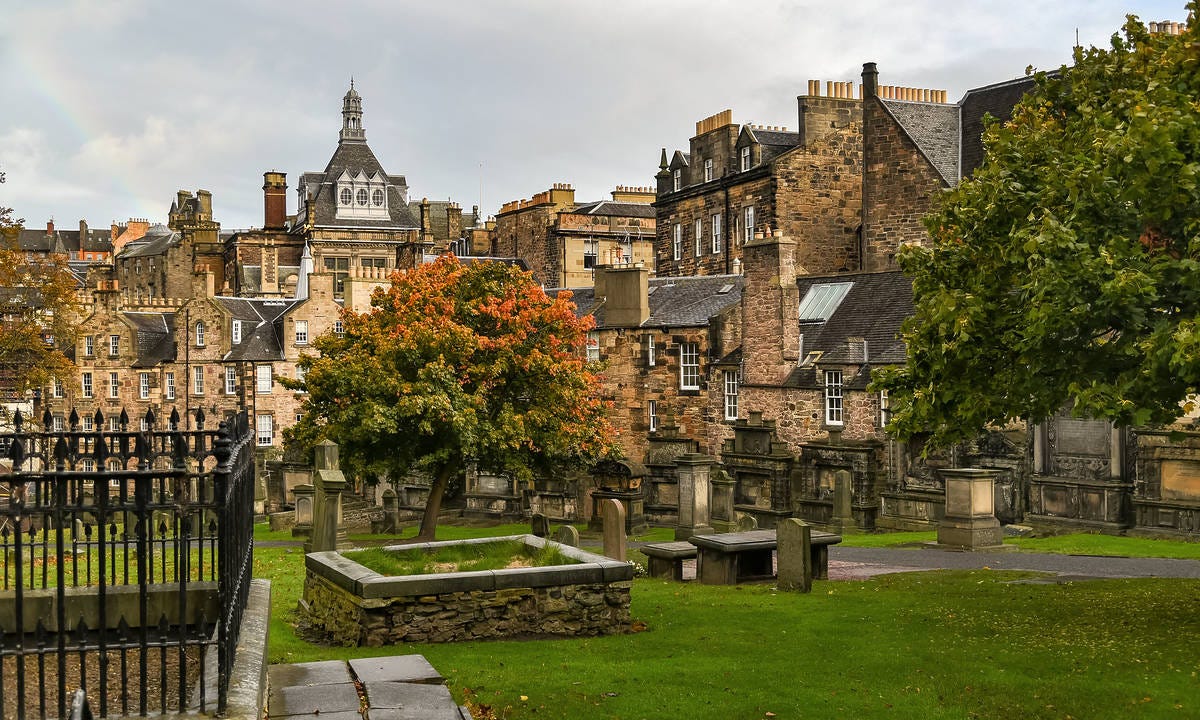
Edinburgh is not simply the city where J.K. Rowling wrote Harry Potter. It is, in many respects, the city the books came from.
Rowling arrived in Edinburgh in December 1993, a single mother, nearly penniless, with three chapters in her suitcase. She intended to stay a few weeks with her sister for Christmas. She never really left.
George Heriot’s School and Hogwarts
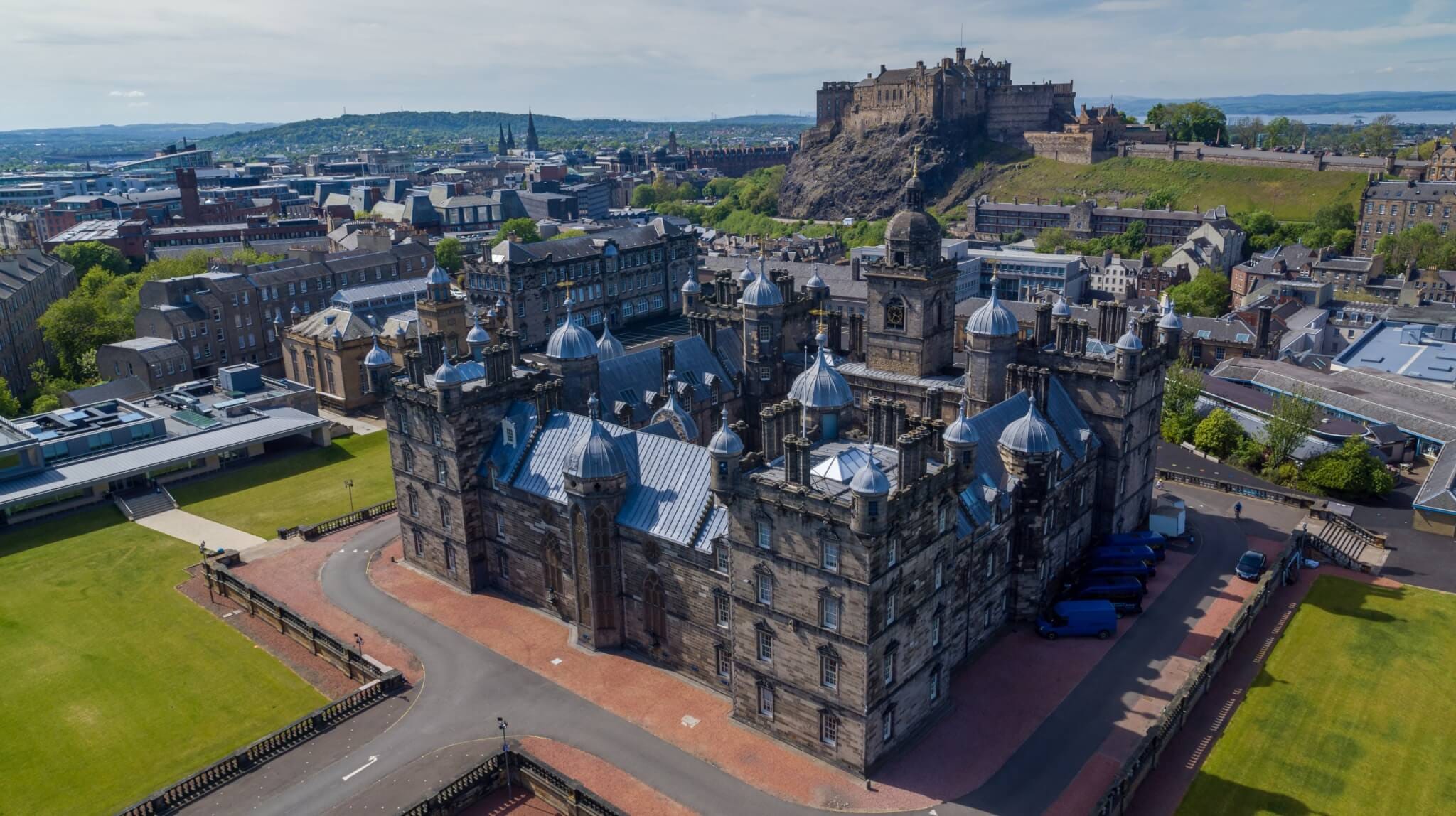
A few minutes’ walk from Greyfriars Kirkyard stands George Heriot’s School, founded in 1628. The building is a masterpiece of Scottish Renaissance architecture: four towers, a large central quadrangle, stained-glass windows, carved stonework. And, the detail that catches the eye, the school is divided into four houses. Rowling has always denied drawing direct inspiration for Hogwarts from it, saying she imagined the school long before she ever laid eyes on Heriot’s. What she did admit: “Bizarrely, I’ve come to live in the shadow of what could be a lot like Hogwarts.” The building is visible very clearly from Greyfriars Kirkyard, which is the next stop on this list.
Greyfriars Kirkyard and the grave of Tom Riddle
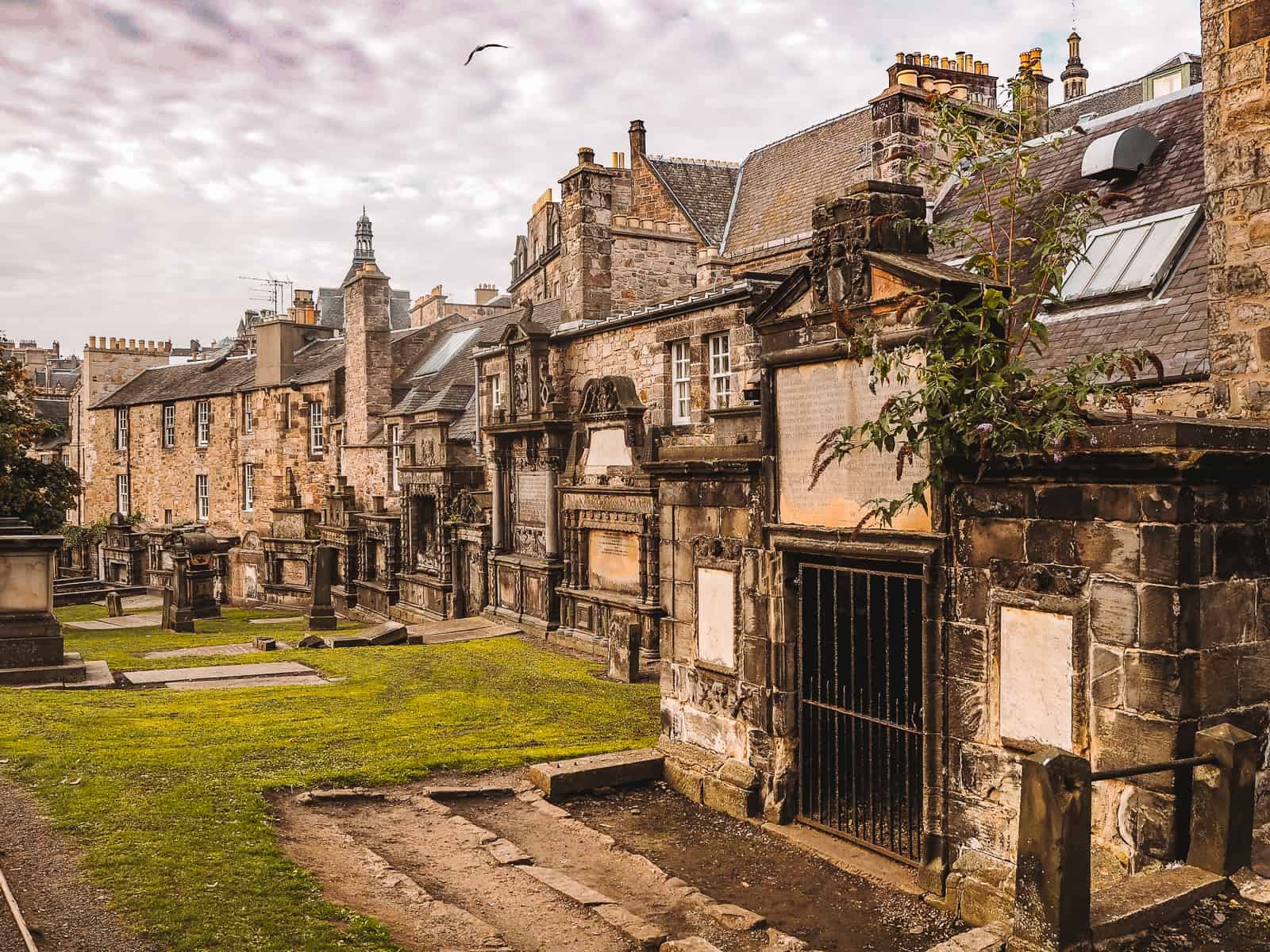
This is where it all falls into place. Rowling walked regularly through this graveyard with her daughter, and the names on the headstones clearly made their way into her imagination. The grave of Thomas Riddell (died 1806) is here: Tom Riddle, Lord Voldemort’s real name before he chose his alias. Also present: headstones bearing the names McGonagall, Moodie, and several Blacks, including one Robert Potter. The Tom Riddle grave is now the most-visited in the cemetery, covered in lipstick marks and messages left by fans from around the world.
The kirkyard is also home to the real Greyfriars Bobby, the Skye Terrier whose statue stands at the entrance, who guarded his owner’s grave for fourteen years after his death: one of the most moving stories the city has to offer.
Victoria Street and Diagon Alley
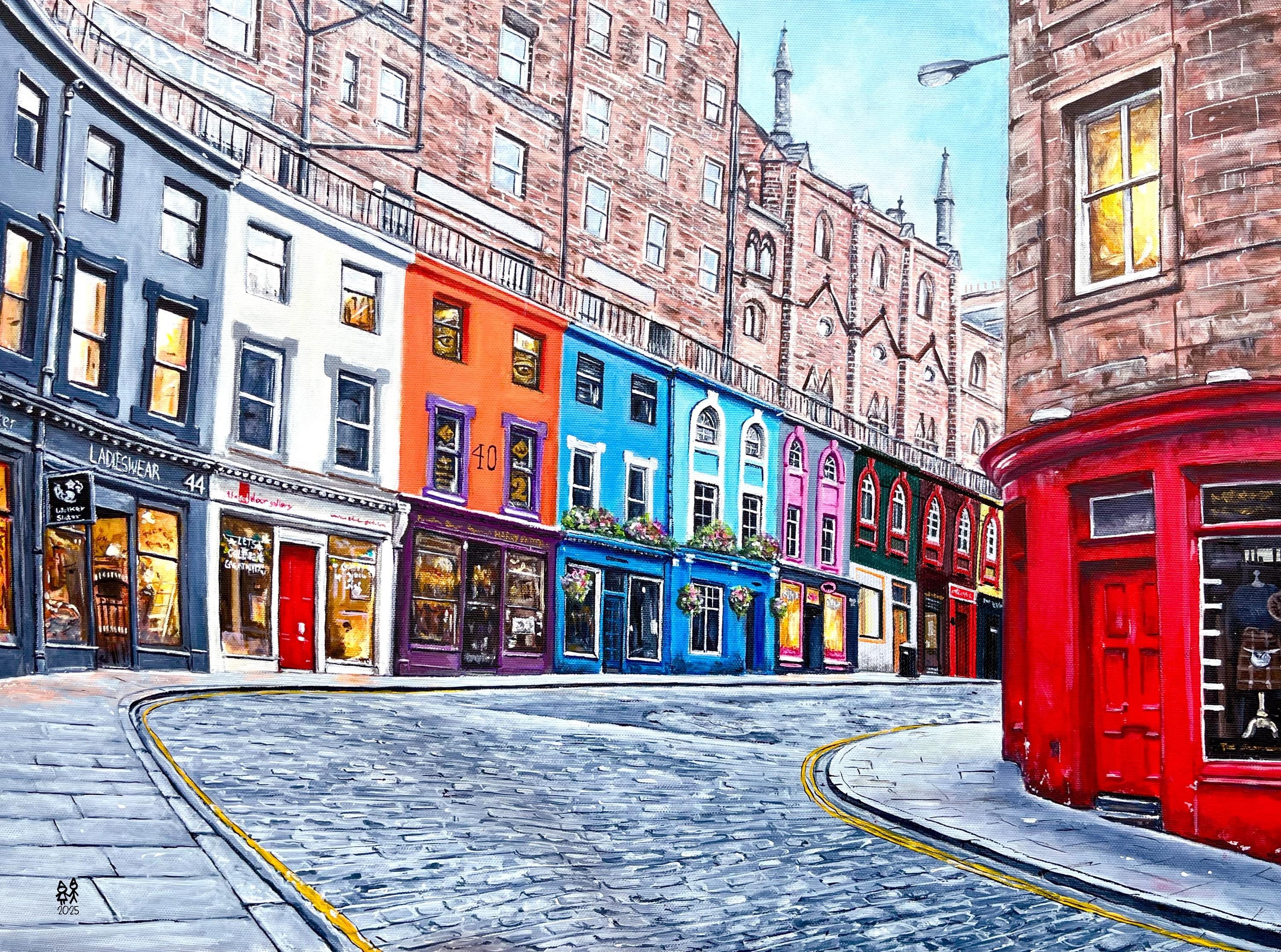
From Greyfriars, head up to Victoria Street. This curved, cobbled street, lined with two-level colourful facades, independent shops and overhanging signs, is the strongest candidate for the inspiration behind Diagon Alley. There is even a joke shop at the bottom of the street. Rowling has never officially confirmed it, but the resemblance is striking and local guides do not shy away from making the connection.
The Elephant House and the Balmoral
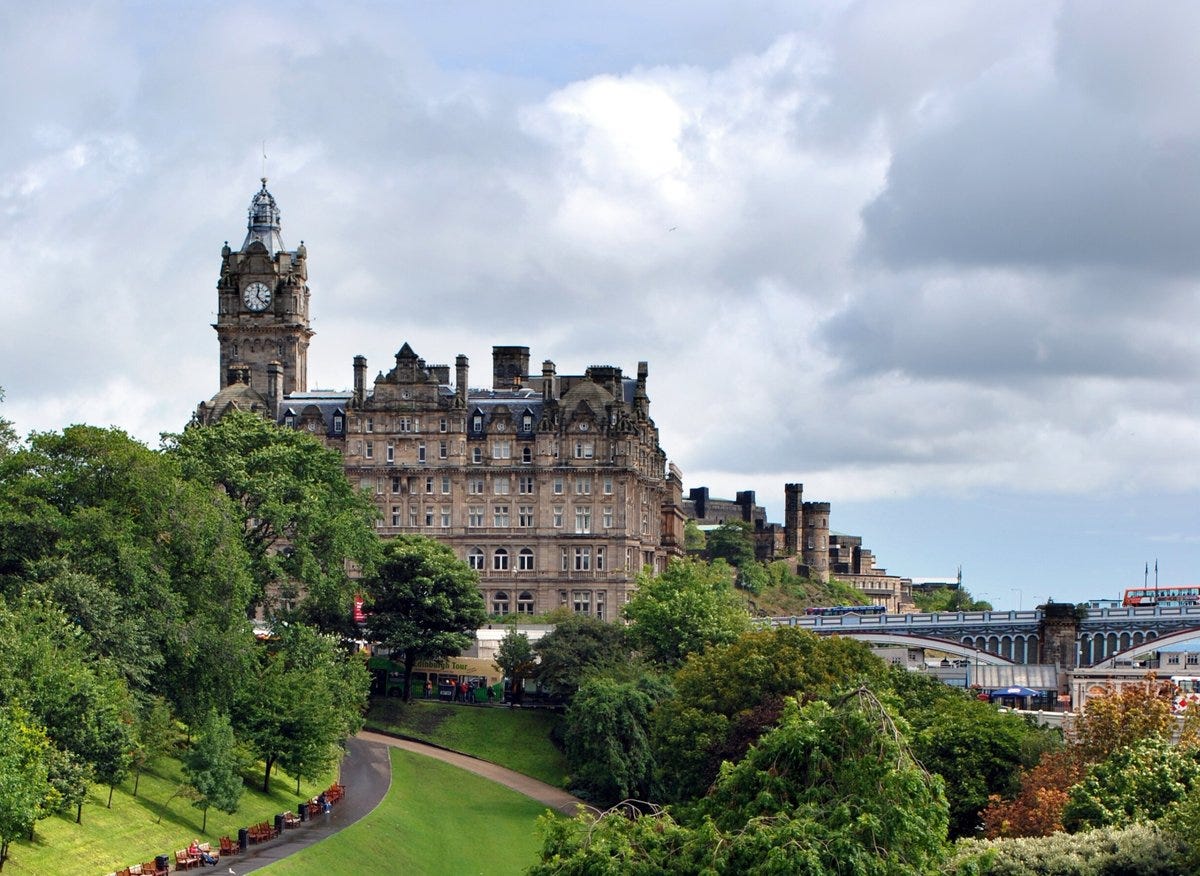
The Elephant House, a cafe on George IV Bridge with a direct view of the castle, markets itself as the “birthplace of Harry Potter.” This is not quite accurate: Rowling wrote mainly at Nicolson’s, a cafe owned by her brother-in-law (now a Chinese restaurant) where she could sit with her daughter without spending much. It was at the Balmoral, the clock-tower hotel on Princes Street, that she finished the final book. She wrote on a marble bust in suite 552: “J.K. Rowling finished writing Harry Potter and the Deathly Hallows in this room on 11th Jan 2007.” The suite now bears her name and costs around £2,000 to £3,000 a night.
Things you probably didn’t know about Edinburgh
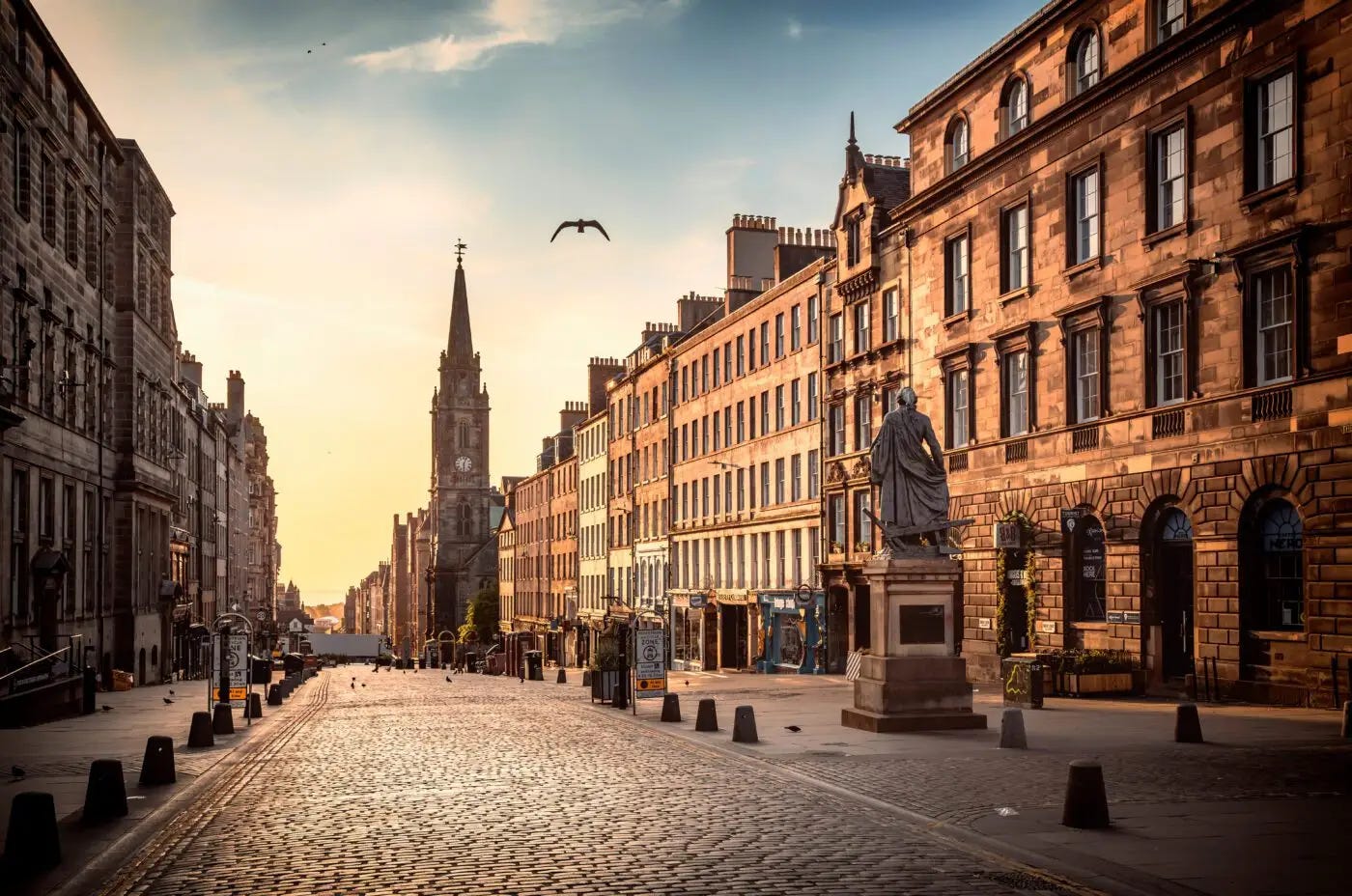
The Balmoral clock runs three minutes fast. For more than a century, the hotel has kept its clock set three minutes ahead to help travellers avoid missing their train at Waverley Station just below. It is corrected to the exact time just once a year: on the stroke of midnight on 31 December.
The Royal Mile is not a mile. Edinburgh’s most famous street runs exactly one Scots Mile, the old Scottish unit of measurement, which works out to 1.81 kilometres, a good 107 yards longer than a standard English mile. And it isn’t even one street: it is a sequence of five streets that change name as you descend (Castlehill, Lawnmarket, High Street, Canongate, Abbey Strand).
Scrooge was born in Edinburgh. Or nearly. Charles Dickens, visiting the university, was strolling through Canongate Kirkyard when he came across the headstone of one Ebenezer Lennox Scroggie, described as a “mealman” (corn merchant). Dickens misread it as “meanman,” and the idea for the most miserly character in English literature was born.
John Knox is buried under parking space number 23. The great Protestant reformer, who died in 1572, was interred in the churchyard of St Giles’. That churchyard was tarmacked over decades later and turned into a car park. His grave now lies officially beneath space 23, marked with a small plaque.
Edinburgh has a brigadier penguin. Sir Nils Olav III, a king penguin resident at Edinburgh Zoo, has been honorary Colonel-in-Chief of the Norwegian Royal Guard since 2008, and was promoted to Brigadier in 2016. During each visit of the Norwegian Guard, he formally inspects the troops.
An elephant once lived in the castle. In 1838, the 78th Highlanders regiment returned from Sri Lanka with an unusual souvenir: a live elephant, adopted as their regimental mascot. The animal quickly developed a fondness for beer. Edinburgh Castle therefore housed, at one point in its history, both the Scottish Crown Jewels and an alcoholic elephant.
The castle has a secret eavesdropping window. In the Great Hall, a small window concealed above the fireplace allowed rulers to listen in on conversations taking place among their guests below. It is known in Scots as the “laird’s lug,” meaning “the lord’s ear.”
Suggested 3-day itinerary
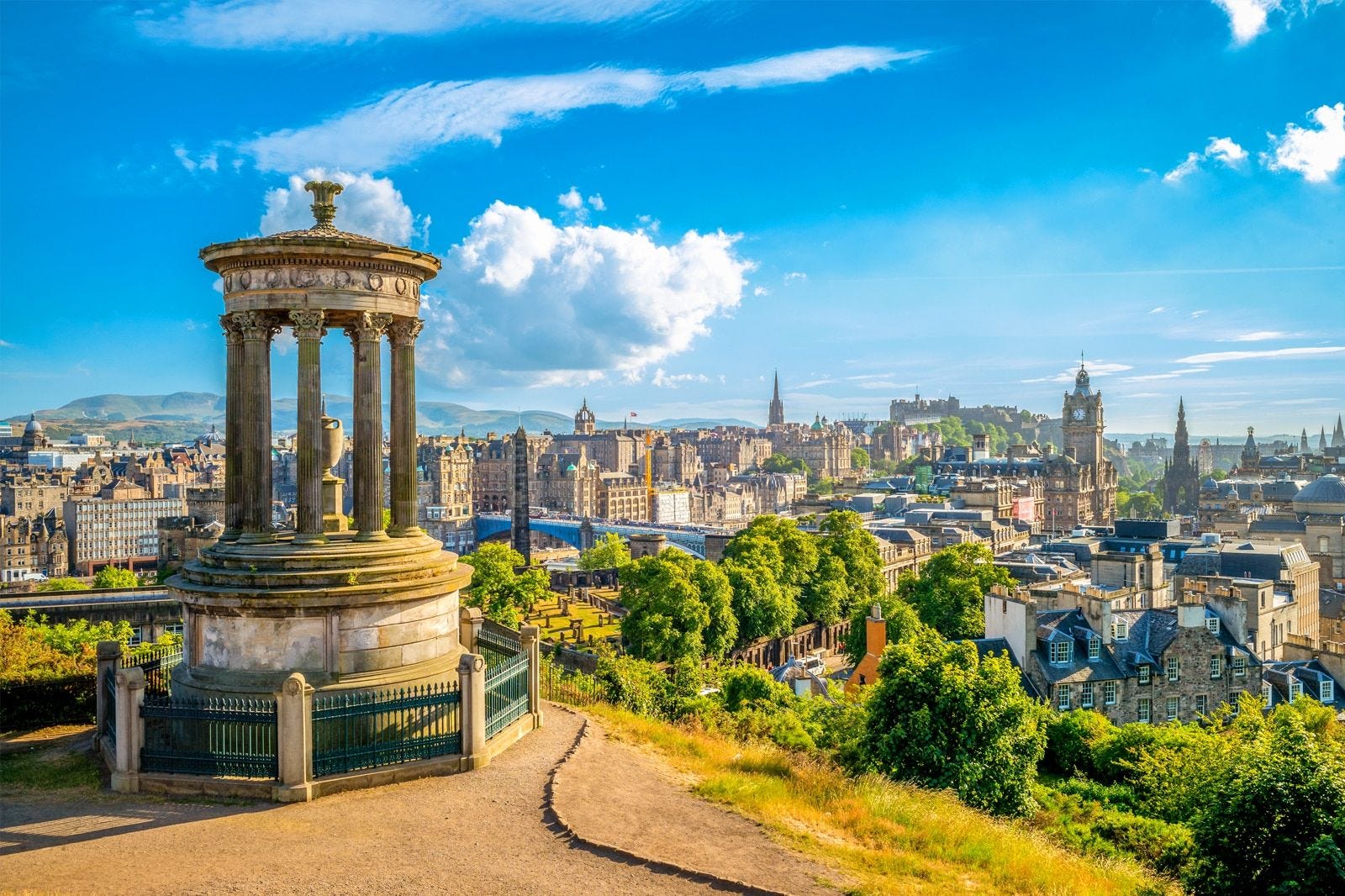
Day 1: The Old Town
Edinburgh Castle first thing (book in advance). Crown Jewels, Half Moon Battery, panoramic views. Walk down the Royal Mile. Visit Gladstone’s Land. Lunch in the Grassmarket. Afternoon: Mary King’s Close underground tour. Climb to Calton Hill for the evening view. Dinner in the Old Town. Whisky at the Bow Bar to end the night.
Day 2: Holyrood, Arthur’s Seat and Leith
Morning: early climb to Arthur’s Seat from Holyrood Park. Visit the Palace of Holyroodhouse. Lunch in Leith (The Shore). Afternoon: Royal Yacht Britannia. Walk along the Water of Leith. Dinner at one of the restaurants on Leith Walk.
Day 3: New Town, museums and Stockbridge
Scottish National Gallery (free) on The Mound. Walk through Princes Street Gardens. George Street, Thistle Street: independent shops and cafes. Stockbridge market (Sunday) or a riverside walk. Scotch Whisky Experience in the afternoon. Scottish National Portrait Gallery. Dinner in the New Town. Evening at the Café Royal or a pub with a live folk session.
Where to eat
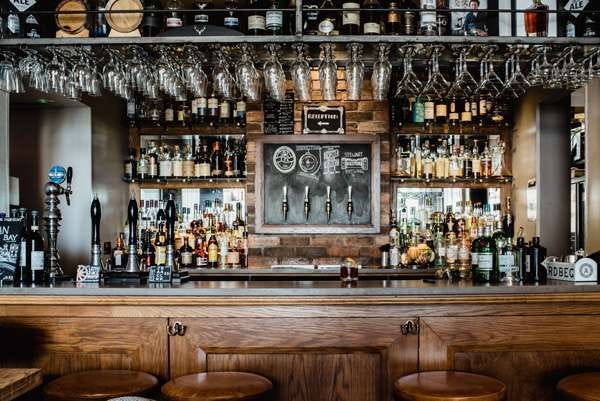
Scottish cuisine has undergone a radical transformation since the 1990s. The produce (Loch Fyne oysters, Atlantic salmon, Borders lamb, Highland game, langoustines from the cold northern waters) ranks among the finest in Europe, and the current generation of chefs is making exceptional use of it.
The Kitchin Contemporary Scottish, Leith Tom Kitchin, trained under Pierre Gagnaire and Alain Ducasse, opened this restaurant in a Leith warehouse in 2006 and earned his Michelin star in under a year. His “from nature to plate” philosophy has become the guiding principle for an entire generation of Scottish chefs. The langoustines, seasonal game and local cheeses are treated with an attention to provenance that exists nowhere else in Scotland. Book several weeks ahead.
Condita Tasting menu, Marchmont Ten covers per service, a single menu of seven to nine courses, entirely focused on seasonal Scottish produce. One of the finest tables in the British Isles, quiet and extraordinary.
The Scran & Scallie Gastropub, Stockbridge Tom Kitchin’s gastropub in Stockbridge: serious, generous Scottish pub food in a warm, unpretentious setting. The fish pie, house haggis and whisky bread pudding are emblematic. The best value on this list.
Aizle Seasonal Scottish, Southside Stuart Ralston offers a tasting menu without a set menu: the week’s ingredients are listed, and the dishes are built around them. Intimate atmosphere, precise service, excellent value for the level.
Café St Honoré French-Scottish, New Town A compact brasserie on a pedestrian lane in the New Town, with a daily changing board and one of the city’s best natural wine lists. One of those places Edinburgh residents have been eating at for twenty years.
Hendersons Vegetarian, New Town Opened in 1962, Henderson’s is Edinburgh’s oldest and most respected vegetarian restaurant. A salad bar and hot dishes made from local organic produce. Simple, honest, and extraordinarily good value.
Where to stay
The best area for a first stay is the Old Town or within easy walking distance of Princes Street. The New Town offers a calmer atmosphere and easy access to the best restaurants. Leith is ideal if gastronomy and harbour atmosphere are your priorities.
The Balmoral Luxury, Princes Street Edinburgh’s iconic hotel, whose clock tower is one of the city’s visual landmarks. Opened in 1902, it dominates Princes Street just above Waverley Station. Suite 552 is where J.K. Rowling finished writing Harry Potter and the Deathly Hallows. The spa, the Palm Court bar and the Michelin-starred restaurant Number One are three destinations in their own right.
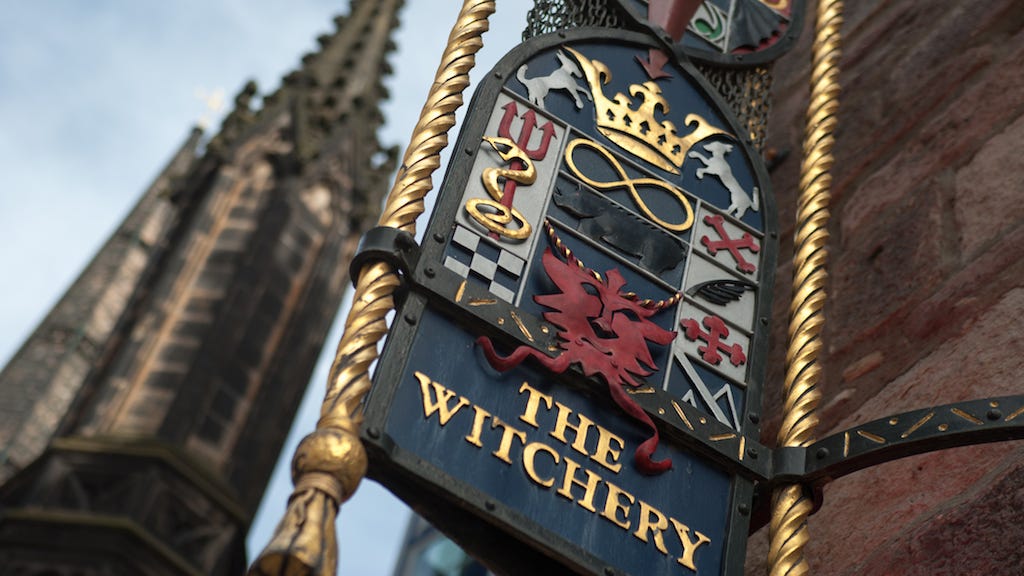
The Witchery by the Castle Boutique, Royal Mile Seven deliberately extravagant Gothic suites, right at the foot of the castle. Velvet, dark panelling, four-poster beds, candlelight... a world entirely unto itself. One of the most singular hotel experiences in the United Kingdom. The restaurant of the same name is one of the best addresses for game and Scottish beef.
The Scotsman Design, North Bridge The former offices of The Scotsman newspaper, converted into a characterful hotel at the exact junction between the Old Town and the New Town. The marble main staircase, the Art Deco pool and the rooms with their exceptional ceiling heights all speak to the grandeur of the original building.
The Bonham Boutique, West End A quiet Victorian hotel on a residential West End street, ten minutes’ walk from the New Town. Spacious rooms, attentive service, the atmosphere of a well-appointed private home. One of the best value-for-money options in the Edinburgh boutique category.
Code Hostel Budget, Rose Street Edinburgh’s best budget accommodation: right in the heart of the New Town, with private rooms and quality dormitories, a ground-floor cafe, and a level of design that puts most mid-range hotels to shame.
Practical information
Currency: British pound sterling (GBP). Contactless payment is accepted everywhere, in pubs, taxis, markets and public transport. Scottish banknotes are legal tender throughout Scotland.
Language: English. The Scottish accent, particularly in working-class neighbourhoods, may take a day or two to tune into. Scottish Gaelic appears on some signs.
Getting around: Most of central Edinburgh is walkable. The Lothian Buses network covers the whole city, pay with a contactless card. A tram line connects the airport to the city centre and on to Newhaven.
Free museums: The National Museum of Scotland, the Scottish National Gallery, the Scottish National Portrait Gallery and the Scottish National Gallery of Modern Art are entirely free for their permanent collections. One of the most underrated facts about Edinburgh.
Internet: A UK eSIM is the most practical solution. Wi-Fi is available in the vast majority of cafes, hotels and public spaces.
Weather: Edinburgh is one of the windiest cities in the United Kingdom. Rain can arrive at any moment regardless of season. Always carry a waterproof and wear comfortable shoes.
Tipping: Not automatic. Ten to fifteen percent for good restaurant service is the norm. No tip expected for drinks at the bar in a pub.
The August Festival: If you visit in August, book accommodation and shows at least four to six months ahead. The city operates at full capacity and prices rise sharply. In return, it is the most extraordinary experience Edinburgh has to offer.
Safety: Edinburgh is a very safe city by European and global standards. Standard vigilance in tourist areas is more than sufficient.
How Edinburgh fits into a trip to Scotland
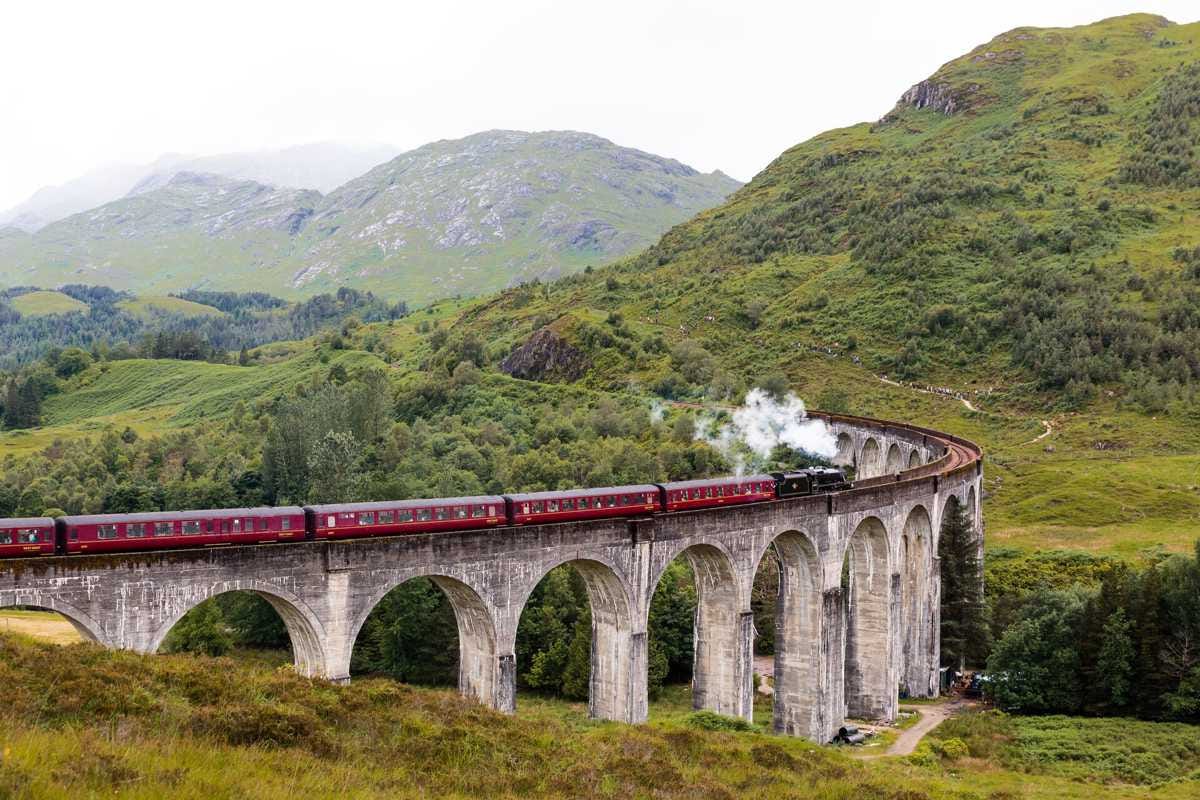
Most travellers combine Edinburgh with at least one other Scottish destination. Glasgow, fifty minutes away by train, is radically different: more working-class, more contemporary in its art and culture, and with a music scene and sense of hospitality entirely its own.
The Highlands are accessible from Edinburgh in an hour’s drive north. Inverness, the gateway to Loch Ness and the north coast, is three hours by train. The Isle of Skye, the most beautiful and spectacular of the Hebrides, can be done in a long day from Inverness or over two days from Edinburgh if you don’t want to rush.
On a broader scale, Edinburgh connects easily to London by train in four and a half to five hours. The journey hugging the east coast between Durham, Newcastle and the Scottish border is one of the most beautiful rail routes in England. This connection makes Edinburgh the natural other terminus of a British trip, mirroring London to the south.
Frequently asked questions
Is Edinburgh worth it for a first trip to Britain?
Absolutely. Edinburgh is one of Europe’s finest historic city centres, with a cultural, architectural and gastronomic density that fully justifies a multi-day stay. It is more compact and more navigable than London, and offers an introduction to Scottish culture that is entirely distinct from England.
How many days does it take to see Edinburgh properly?
Three days covers the essentials at a comfortable pace. Four to five days allow you to add the New Town, Leith, Stockbridge and a day trip. A week begins to reveal the city’s subtleties and allows you to reach the Highlands or the Borders.
What is the best time of year to visit Edinburgh?
Spring (April to May) and autumn (September to October) offer the best balance of weather, light and manageable crowds. August is Festival season: unmatched, but requiring reservations well in advance. December is extraordinary for Hogmanay and the festive atmosphere.
Is Edinburgh safe for tourists?
Yes, Edinburgh is a very safe city by European and global standards. Standard vigilance in tourist areas is entirely sufficient.
Are Edinburgh’s museums really free?
Yes, completely. The National Museum of Scotland, the Scottish National Gallery, the Scottish National Portrait Gallery and several other public museums charge no admission for their permanent collections. It is one of the most remarkable facts about the city.
What absolutely should not be missed in Edinburgh?
Edinburgh Castle, the climb to Arthur’s Seat, the National Museum of Scotland, a walk along the Royal Mile, an evening in Leith, and at least one night in a pub with a live folk session. These six experiences cover the essential Edinburgh and will form the foundation of every subsequent visit.
Do I need to rent a car in Edinburgh?
No, not for the city itself: the whole centre is walkable and buses cover the rest. If you plan day trips into the Highlands, the Borders or rural Scotland, however, a car is essential for any real freedom of exploration.
Plan your Edinburgh trip with ÆRIA Voyages
Every Edinburgh trip is different depending on available time, the chosen season, and what matters most: history, food, whisky, or landscapes. Some travellers want a week in the city and its neighbourhoods. Others want Edinburgh as the starting point for the Highlands, a cruise departing from Southampton, or a combined itinerary with Glasgow and the islands.
I help my clients build trips that go beyond the standard circuit: a private morning at the Castle before opening, a driving itinerary connecting Edinburgh, Stirling and Skye in a week, or a rail combination between Edinburgh and London.
If you’re planning a trip to Edinburgh and would like to explore the options, I’d be happy to help.
Yvan Junior Blanchette
Travel & Cruise Specialist
ÆRIA Voyages📩 yvanblanchette@aeriavoyages.com
📞 1-888-460-3388
🌐 aeriavoyages.com