

The Ultimate SANTORINI Travel Guide: What to know, where to go, and how to make the most of your visit
Updated 2026 | Greece | First-time visitors | In-depth travel
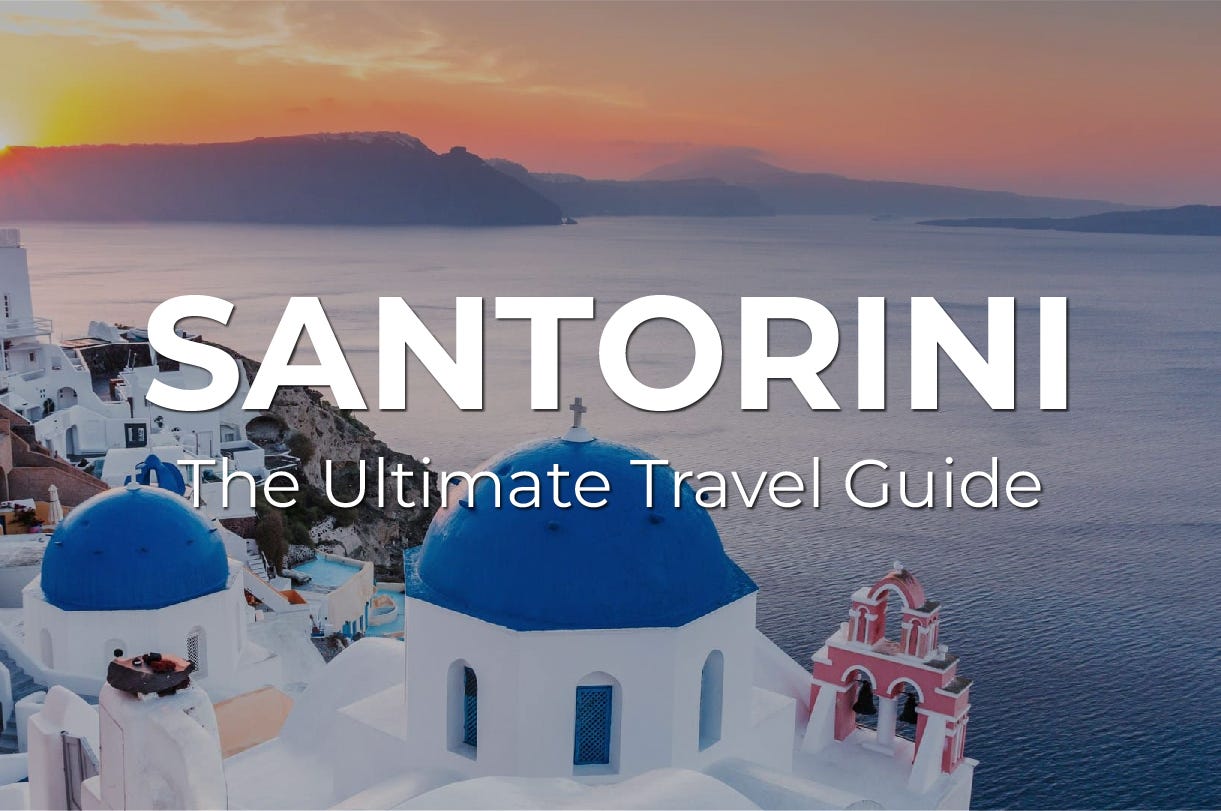
Santorini earns its reputation in a way that few heavily photographed places do. The caldera, formed by one of the largest volcanic eruptions in human history around 1600 BC, is a genuinely extraordinary geological phenomenon: a collapsed volcano whose walls rise as sheer white and ochre cliffs from the Aegean, with the villages of Oia and Fira perched on the rim above.
The photographs do not lie. They just cannot convey the scale, the quality of the light, or the experience of watching the sun descend behind the volcanic islands from a position 300 meters above the sea.
This guide covers the villages worth knowing, the experiences that define the island, the practical details you need before you go, and how to plan the right amount of time for the kind of trip you want.
Table of Content
🎙️ LISTEN TO THE BEYOND THE HORIZON PODCAST

Why Santorini is worth visiting
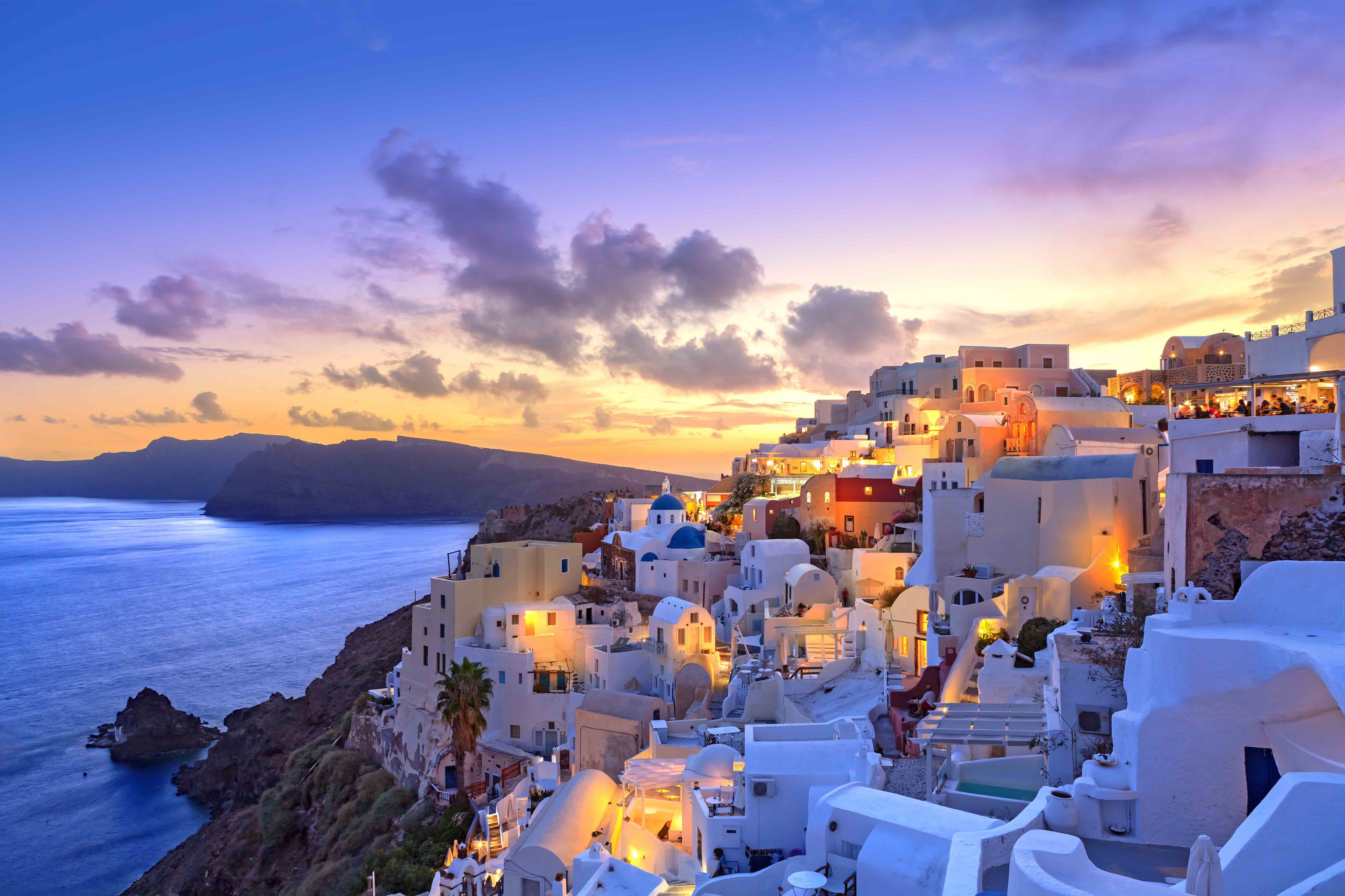
Santorini is not simply a beautiful Greek island. It is a geological event that people happen to live on. The island is the remnant of a massive volcanic caldera whose eruption around 1600 BC destroyed the Minoan civilization’s outpost at Akrotiri, may have contributed to the decline of Minoan Crete, and possibly inspired the legend of Atlantis. The caldera rim, where the famous villages sit, looks out over a bay that is actually the interior of the sunken volcano, with the two volcanic islands of Nea Kameni and Palea Kameni still active at its center.
The result of this geology is a landscape unlike any other in the Mediterranean: white cubic houses on vertical cliffs, terraced vineyards on volcanic soil that produces wines of remarkable character, black and red volcanic sand beaches, and the clear Aegean light reflecting off limestone and whitewash in a way that has drawn painters and photographers since the 19th century.
Santorini is also one of the most visited islands in the world, and it shows. July and August are genuinely overcrowded, with cruise ships disgorging thousands of passengers into villages that were built for a few hundred residents. The reward for visiting in shoulder season, or for simply timing your days well, is a version of the island that justifies the extraordinary prices and the extraordinary hype.
The villages you should know
Santorini is not a single village but a collection of distinct settlements, each with a different character and a different relationship to the caldera views that define the island.
Oia
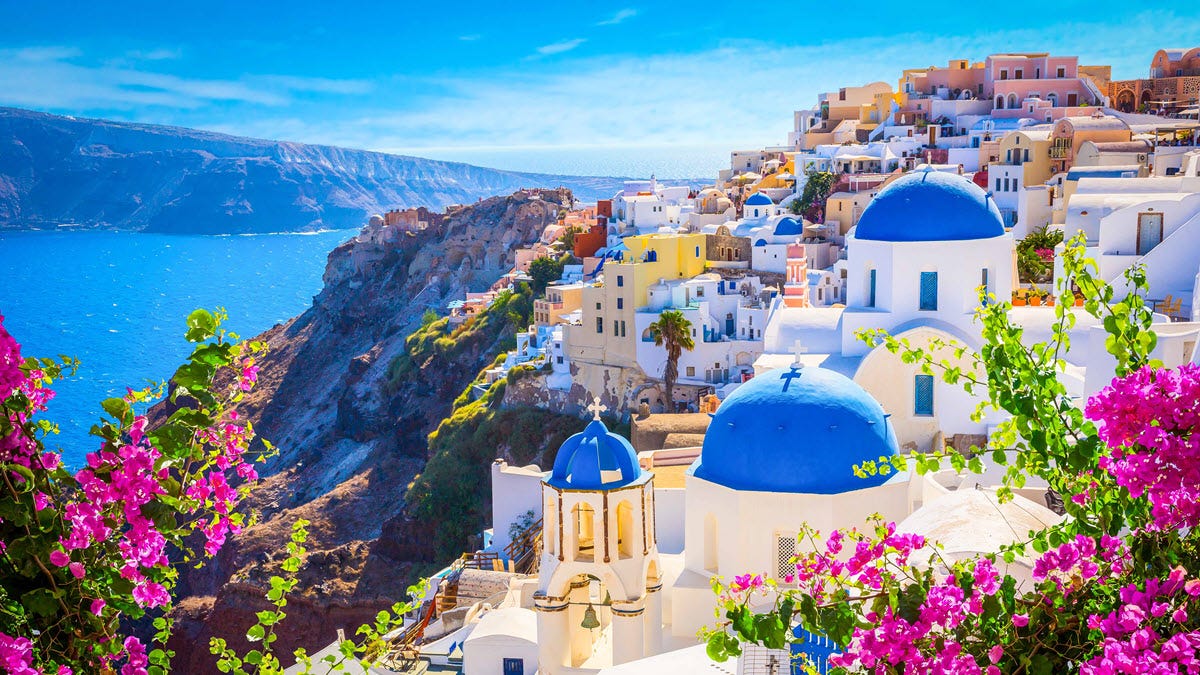
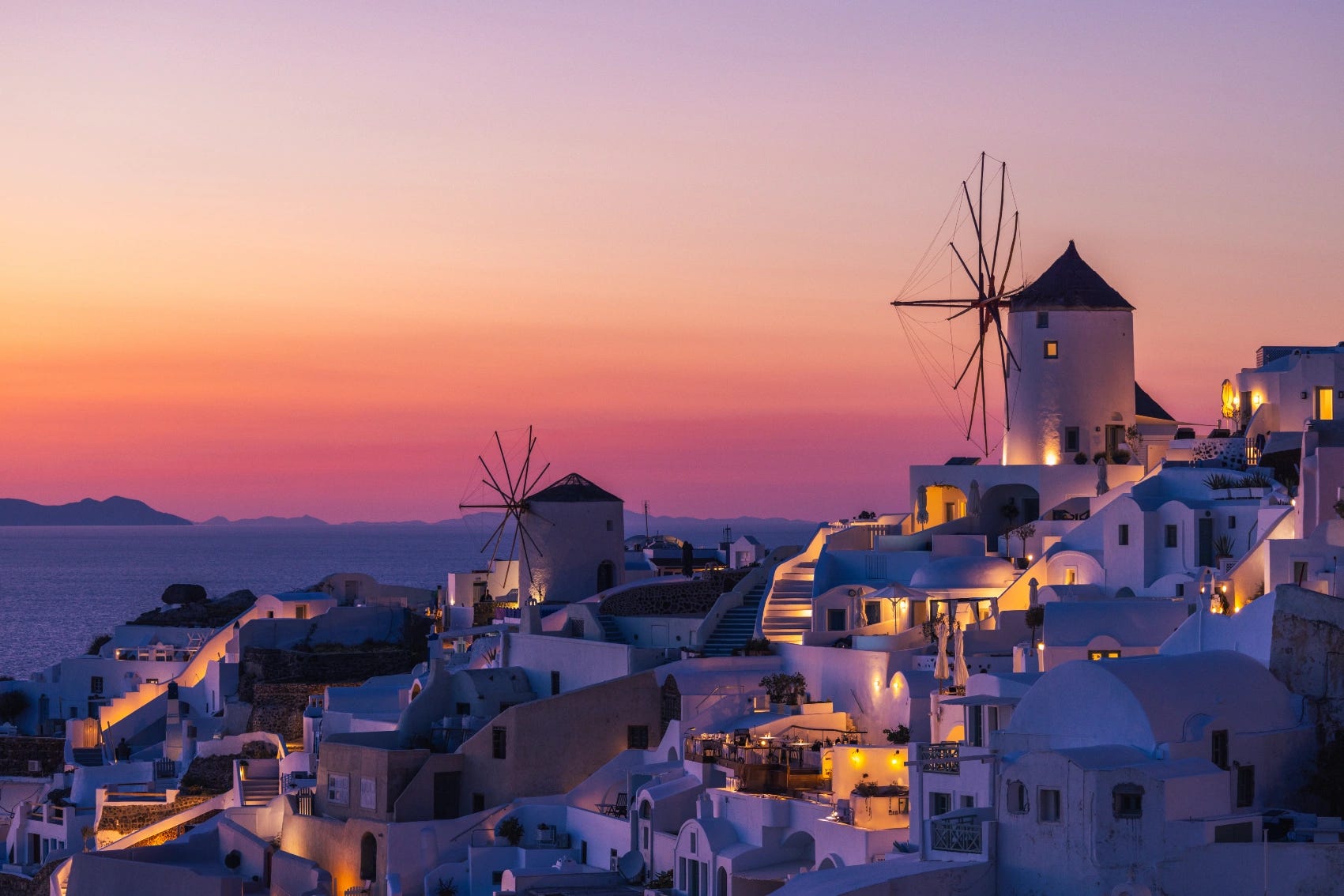
The most photographed village in Greece, built at the northern tip of the caldera rim and famous for its sunset views, its windmills, its blue-domed churches, and its concentration of luxury cave hotels and boutique restaurants. Oia is undeniably beautiful and genuinely extraordinary at dawn before the cruise ships arrive. By late morning in high season it is almost impassably crowded, and the famous sunset draws hundreds of people to the castle ruins to compete for the same photograph. The experience is real; so are the crowds. Go early, plan for the sunset well in advance, and book dinner in advance if you intend to stay.
Fira
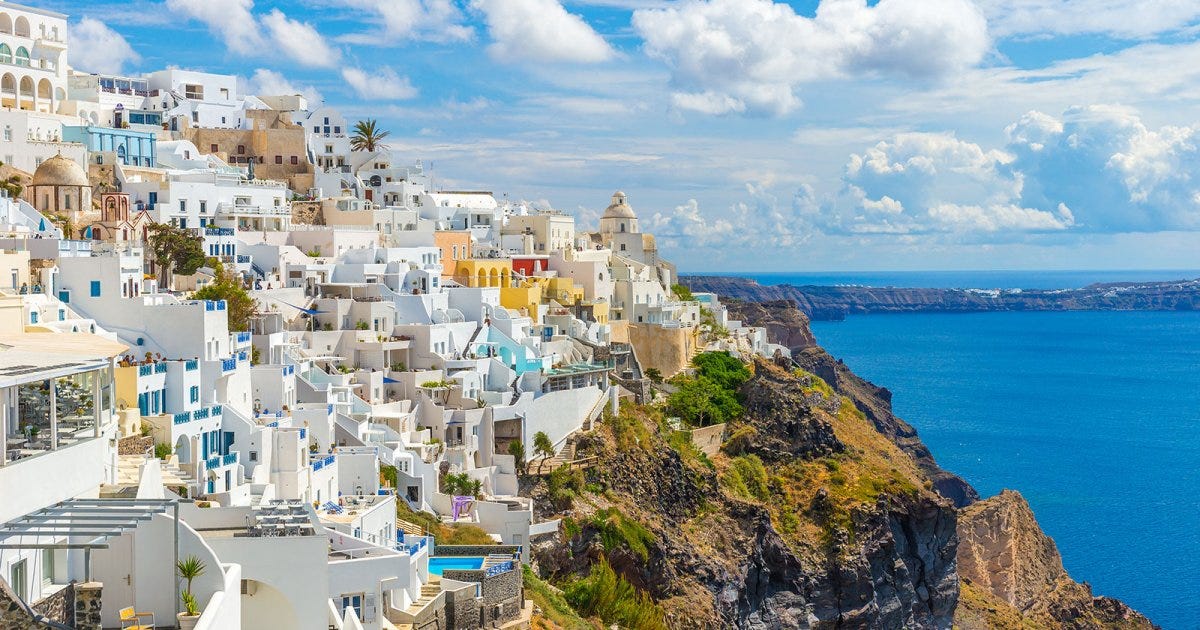
The capital and transport hub of Santorini, built on the caldera rim at the center of the island. Fira has more restaurants, bars, and shops than any other village, the main bus station connecting to everywhere else on the island, and caldera views that are slightly less polished than Oia’s but equally spectacular. It is noisier and more commercial than Oia but more functional as a base, with a better range of accommodation at every budget level. The Museum of Prehistoric Thera, with artifacts from Akrotiri, is here.
Imerovigli
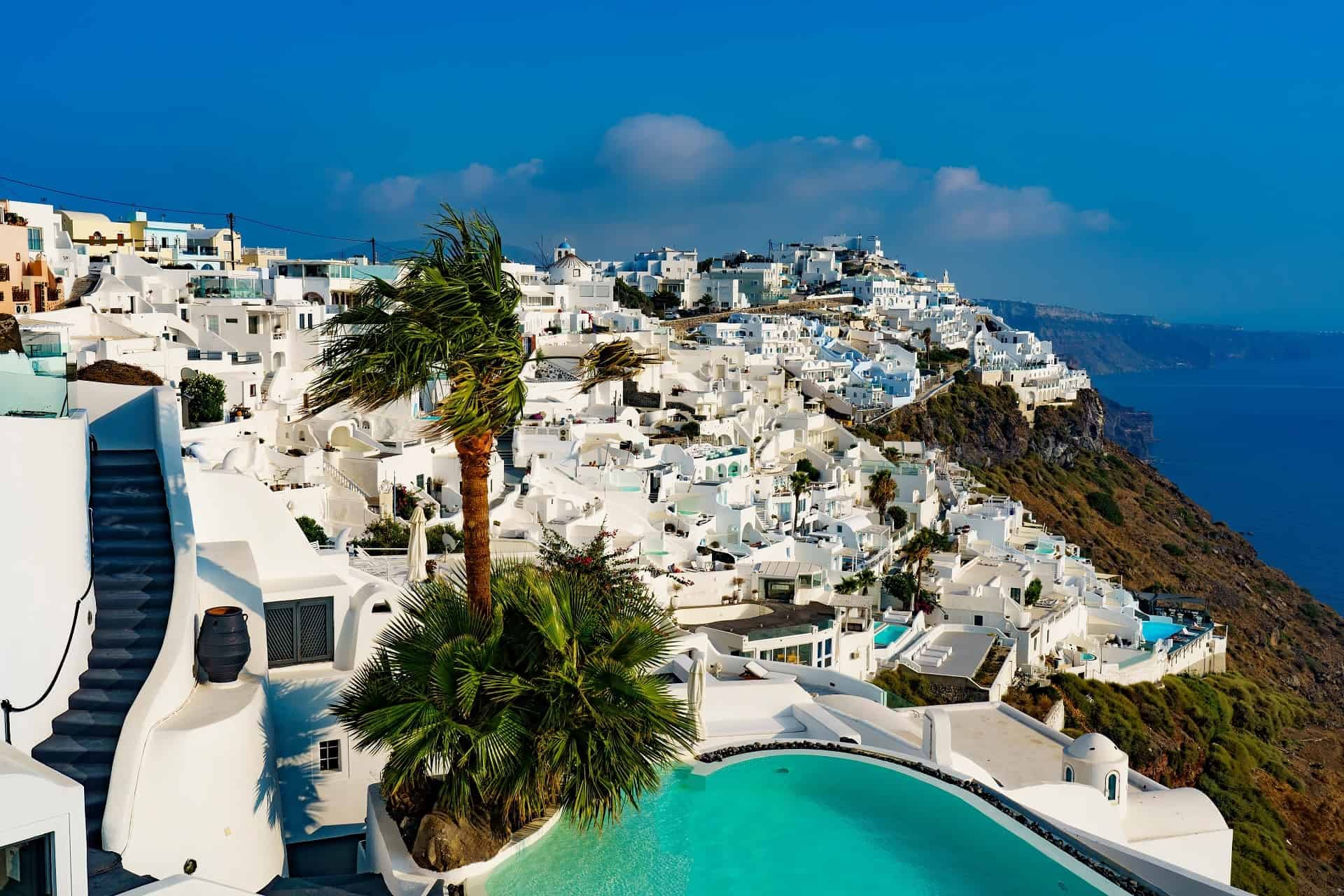
The village between Fira and Oia, at the highest point of the caldera rim, offering the most expansive views on the island: looking north toward Oia, south toward Fira, and out over the open Aegean. Imerovigli is quieter than either of its neighbors, more focused on high-end hotels and caldera-view dining, and without the commercial intensity of Fira or the postcard crowds of Oia. Skaros Rock, the volcanic peninsula that juts out from Imerovigli into the caldera, is one of the finest easy hikes on the island.
Firostefani
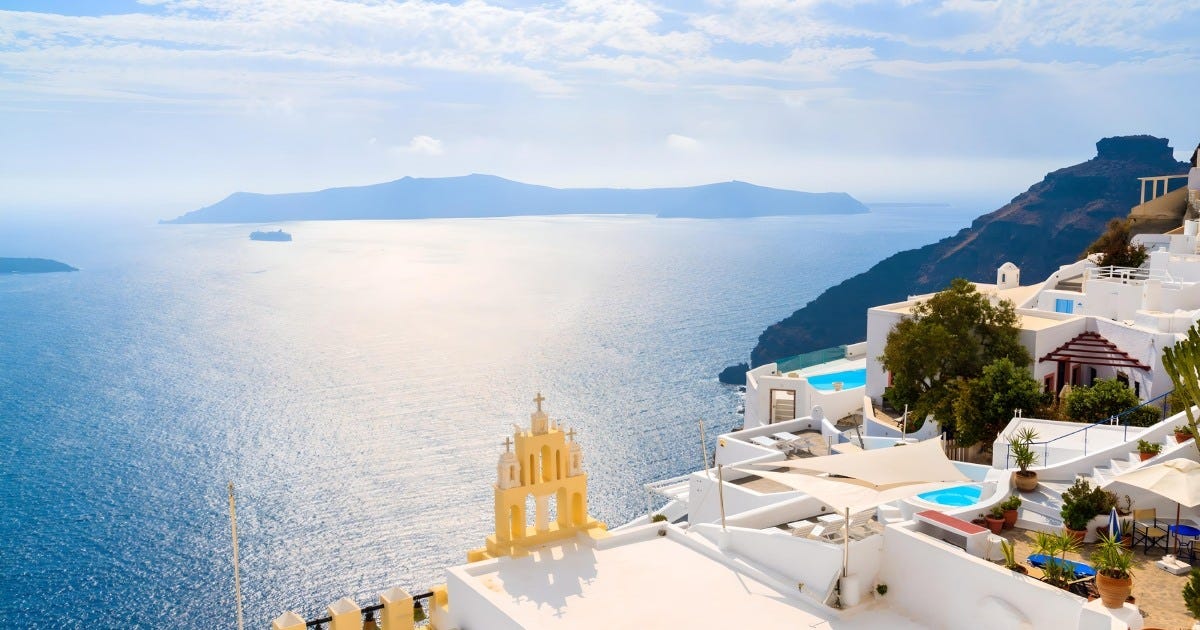
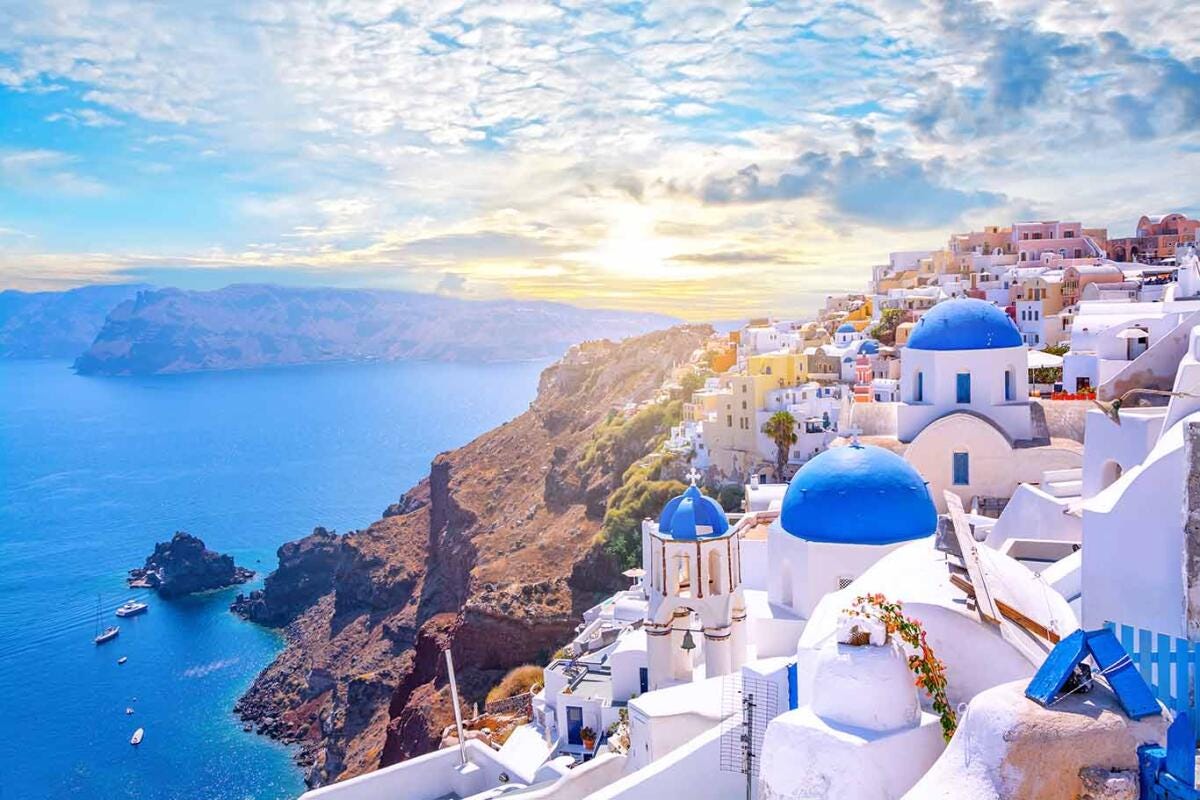
A small village between Fira and Imerovigli, walkable from both in under twenty minutes, with caldera views and a quieter atmosphere than either. Firostefani is the most sensible base for first-time visitors who want caldera views without Oia prices and Fira noise. The famous blue-domed church photographed on almost every Santorini postcard is here.
Pyrgos and the inland villages
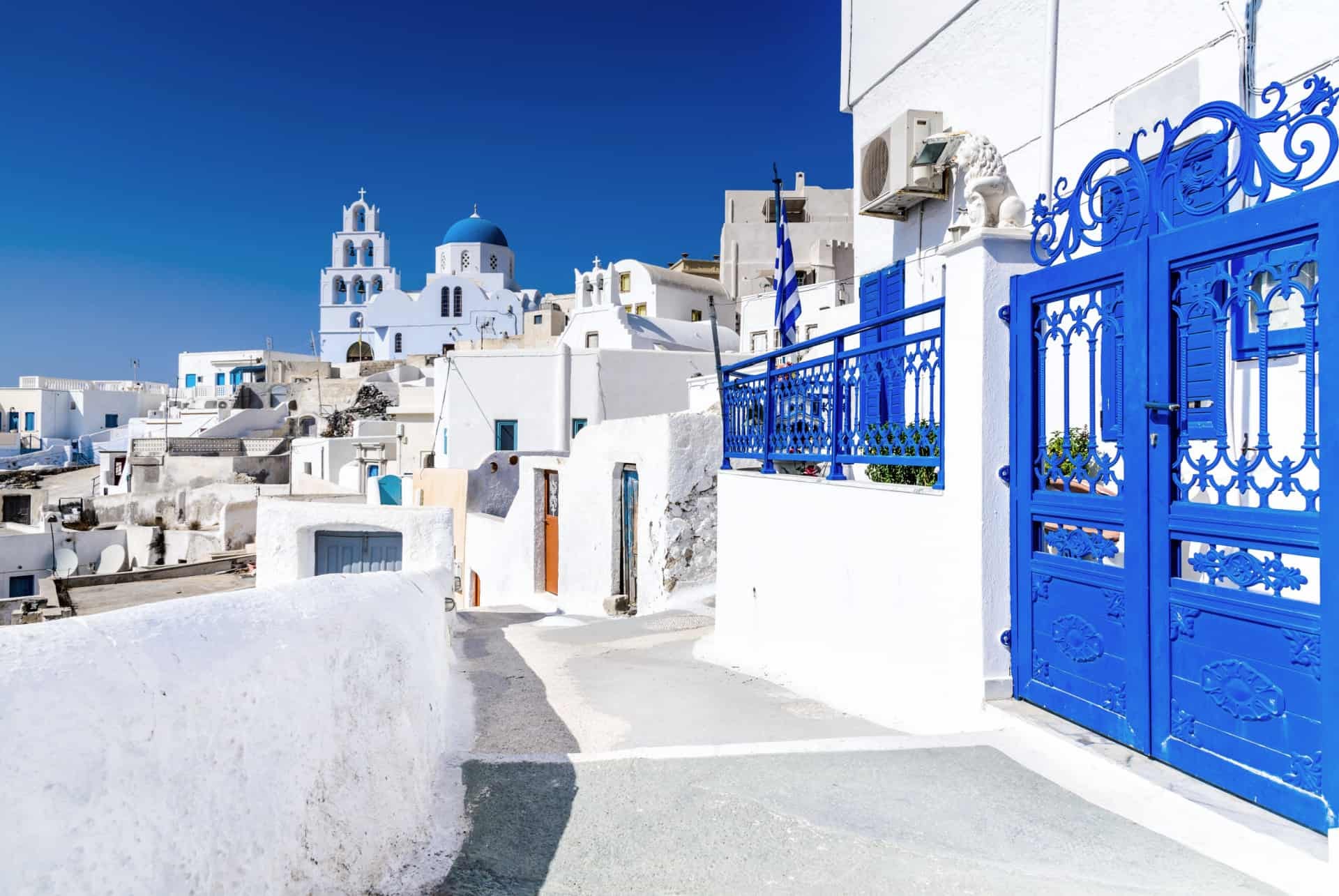
The inland villages of Santorini, particularly Pyrgos with its hilltop Venetian kasteli and its network of medieval lanes, offer a completely different and largely uncrowded experience of the island. Pyrgos was the medieval capital of Santorini, and its layered architecture, small local cafes, and sweeping views of the entire island from the top of the kasteli are among the most rewarding things on the island for visitors who venture beyond the caldera rim.
Kamari and Perissa
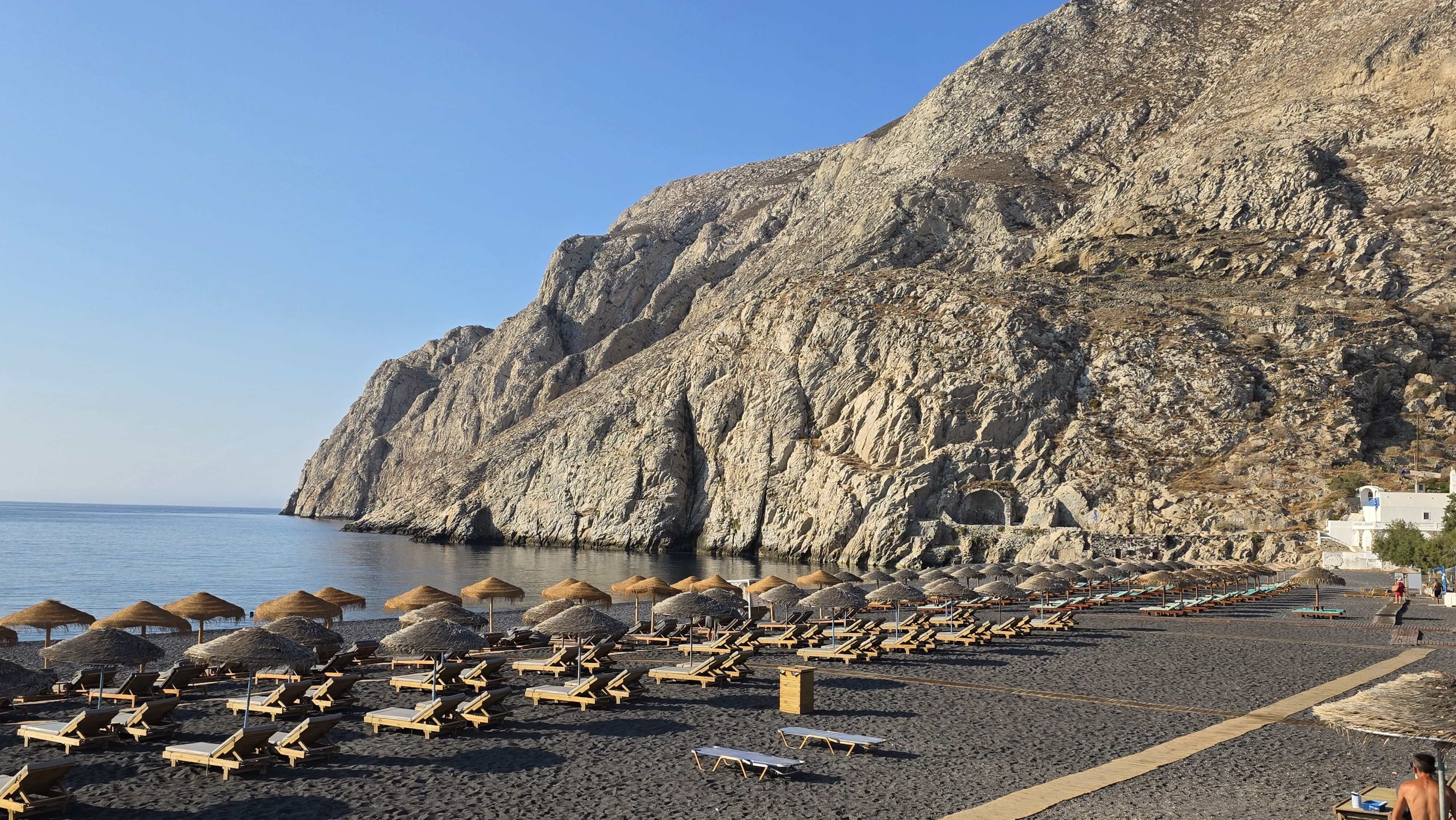
The beach resorts on the eastern side of the island, with black volcanic sand beaches, beach clubs, water sports, and a more affordable, relaxed atmosphere than the caldera villages. Kamari and Perissa are separated by the Mesa Vouno cliff and connected by a path over the top. Both offer calm, flat water for swimming and a very different Santorini from the cliffside villages. Recommended for travelers who want to balance the caldera experience with genuine beach time.
Activities not to miss
Santorini’s experiences divide naturally between the visual and the active: watching the caldera and the sunset, and moving through it by boat, on foot, or on water. Both dimensions are essential to a complete visit.

The Oia sunset
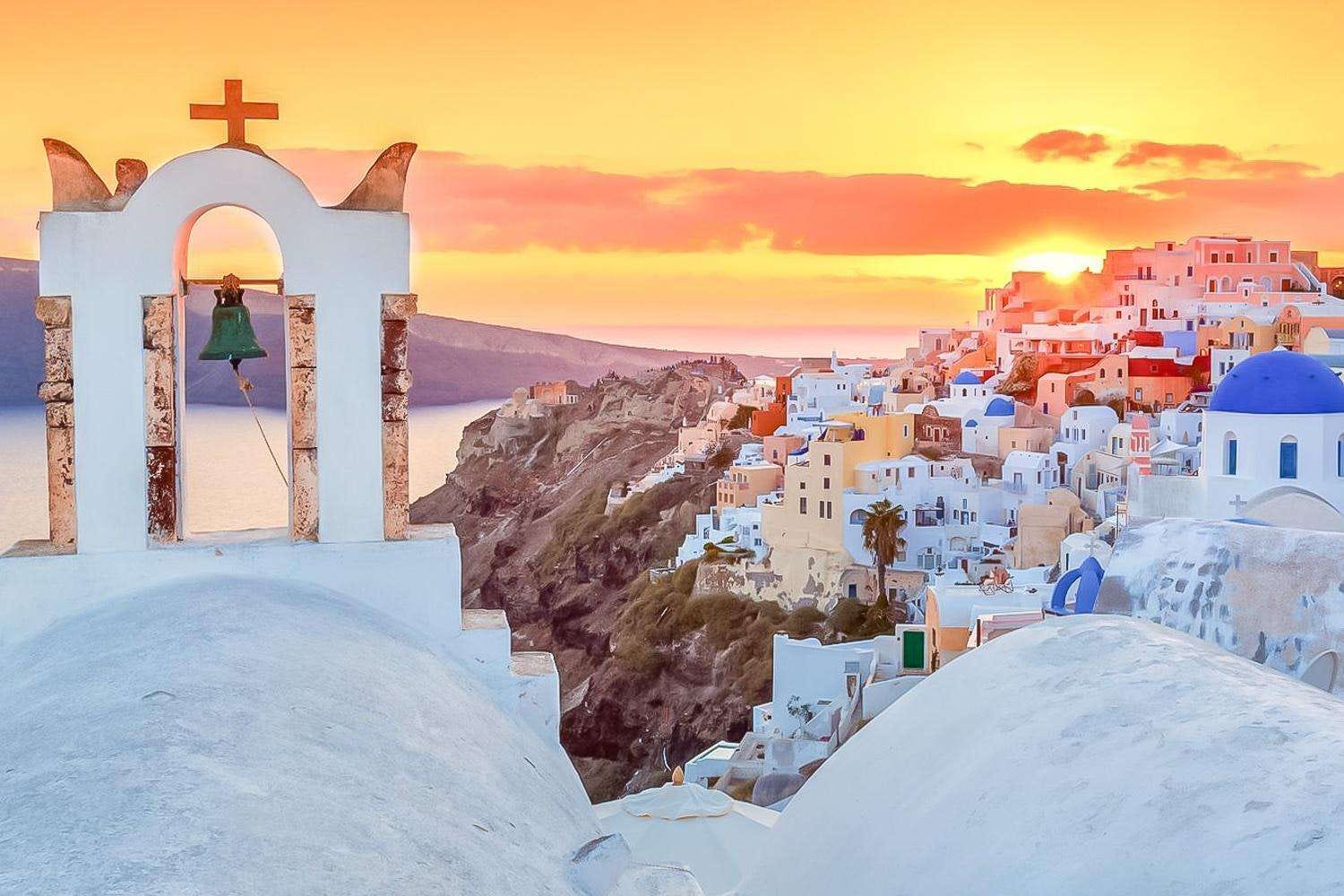
The most famous sunset in Greece, watched from the castle ruins at the northern tip of Oia. The sun descends behind the volcanic islands and the western horizon, turning the caldera cliffs gold and pink and the sea copper below. It is extraordinary. It is also shared with several hundred other people who have the same idea.
The key is to arrive at least ninety minutes before sunset to secure a position, and to manage your expectations about the crowds. Alternatively, watch the same sunset from Imerovigli or Firostefani with far fewer people and a better perspective on Oia’s own glowing lights.
Caldera boat tour with volcano and hot springs
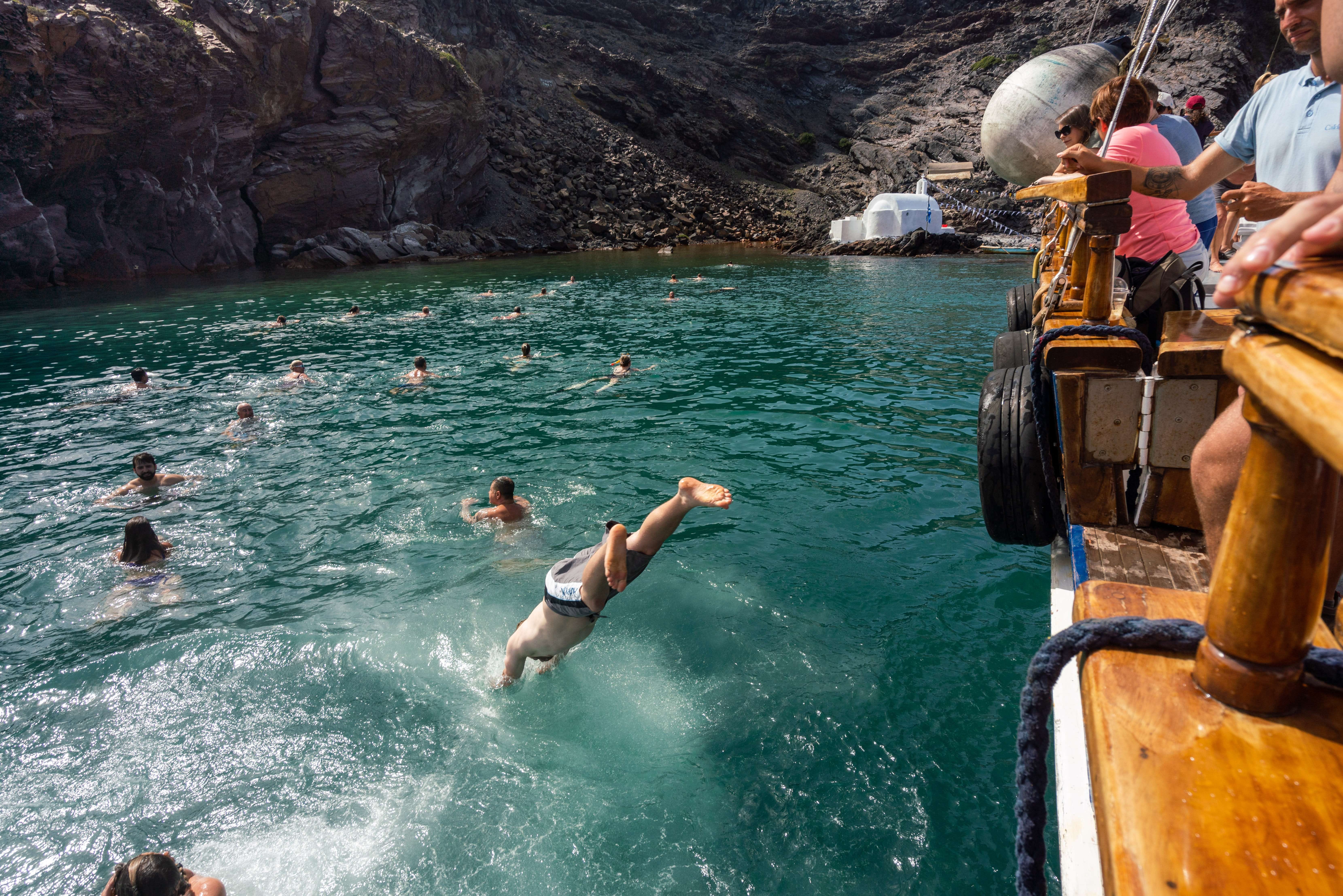
Sailing into the caldera, hiking to the crater of the active volcano Nea Kameni, swimming in the sulfurous thermal hot springs of Palea Kameni, and visiting the island of Thirassia (which broke off from Santorini in an ancient eruption) is the most complete way to experience the geological reality of the island. Full-day boat tours typically include a BBQ lunch on board, unlimited drinks, and end either below the cliffs of Oia for the sunset or with a bus transfer to Oia for the land-based version.
Catamaran sunset cruise
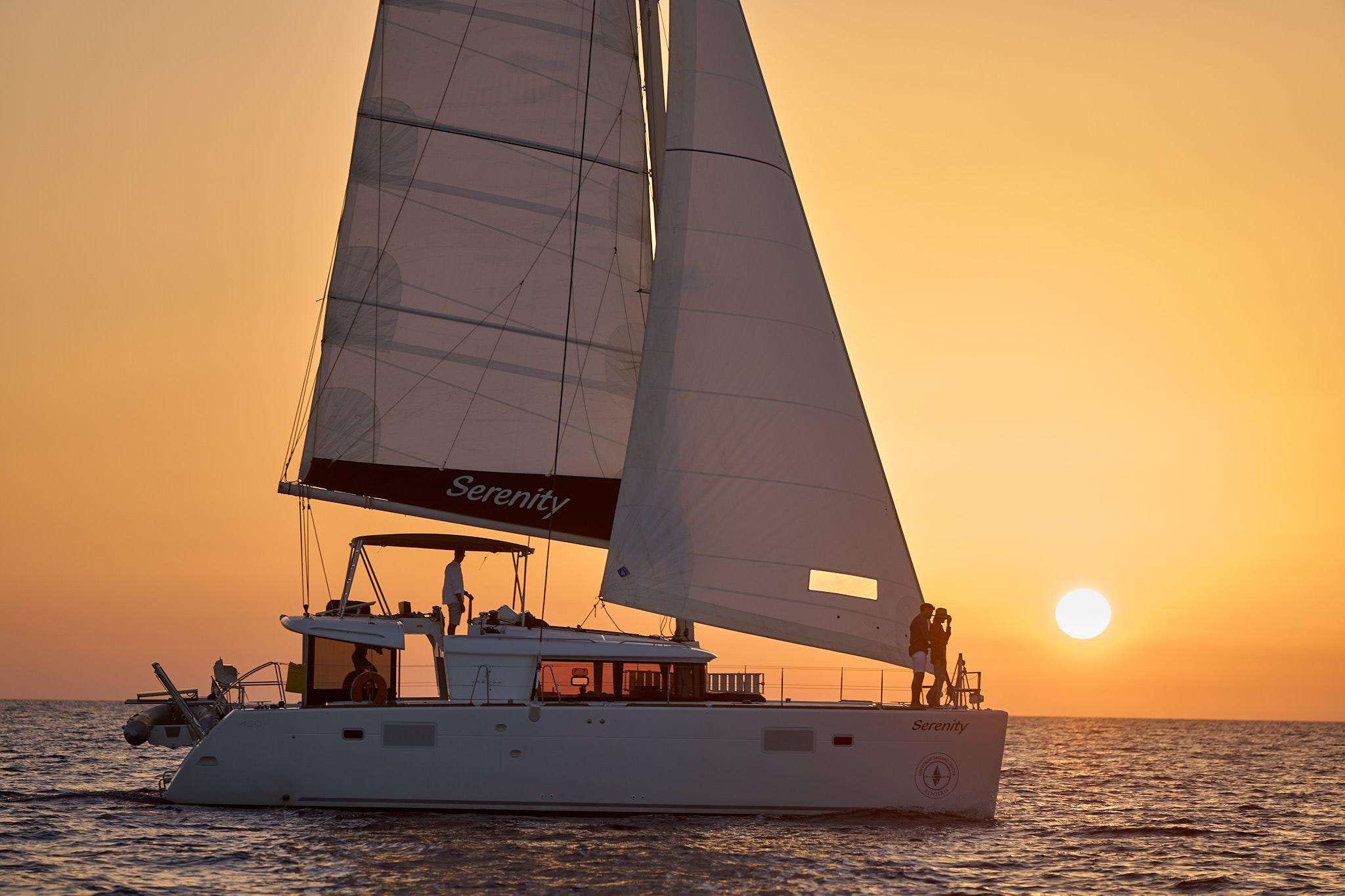
A smaller, more intimate version of the caldera boat experience: a catamaran with a maximum of ten to fourteen guests, sailing the caldera’s perimeter, stopping at swimming and snorkeling spots, and finishing below the cliffs of Oia for the sunset. A freshly cooked BBQ meal and unlimited wine are typically included. The catamaran offers significantly more freedom of movement and a quieter atmosphere than the larger traditional boats.
The Fira to Oia caldera hike
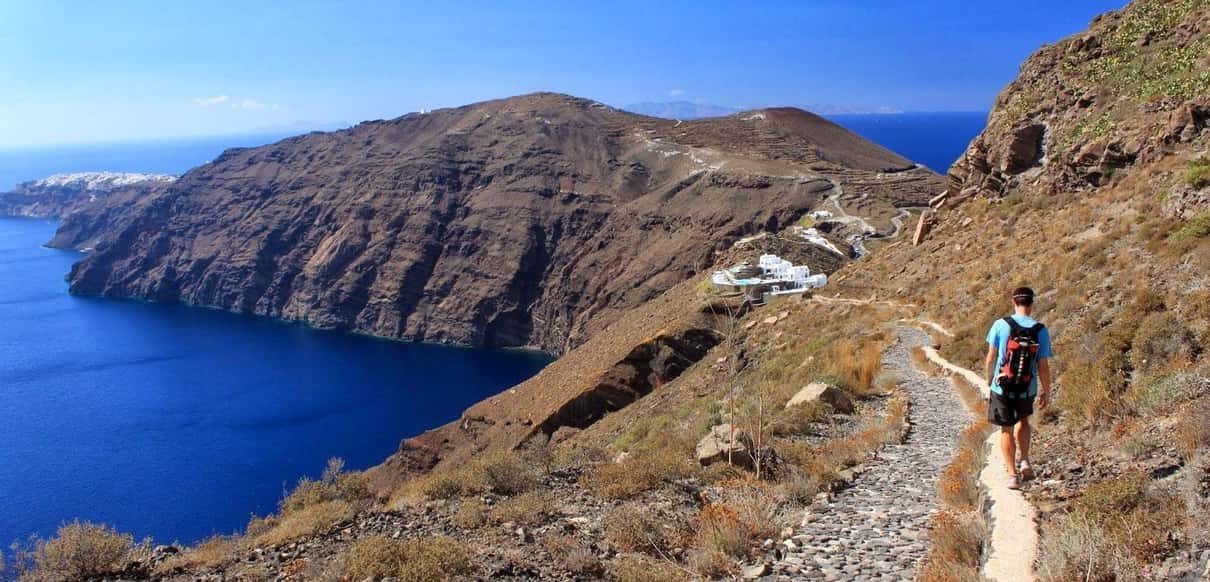
The 10.5-kilometer trail along the caldera rim from Fira through Firostefani and Imerovigli to Oia is the single best free activity on the island and, by the account of many who have walked it, one of the finest hikes in Greece. The trail passes along the volcanic cliff edge with continuous views over the caldera, through quiet sections of trail between the villages, with the option to detour to Skaros Rock in Imerovigli. Start at dawn or after 4pm to avoid the midday heat. Bring water, wear proper shoes, and take two to five hours depending on pace.
Akrotiri archaeological site
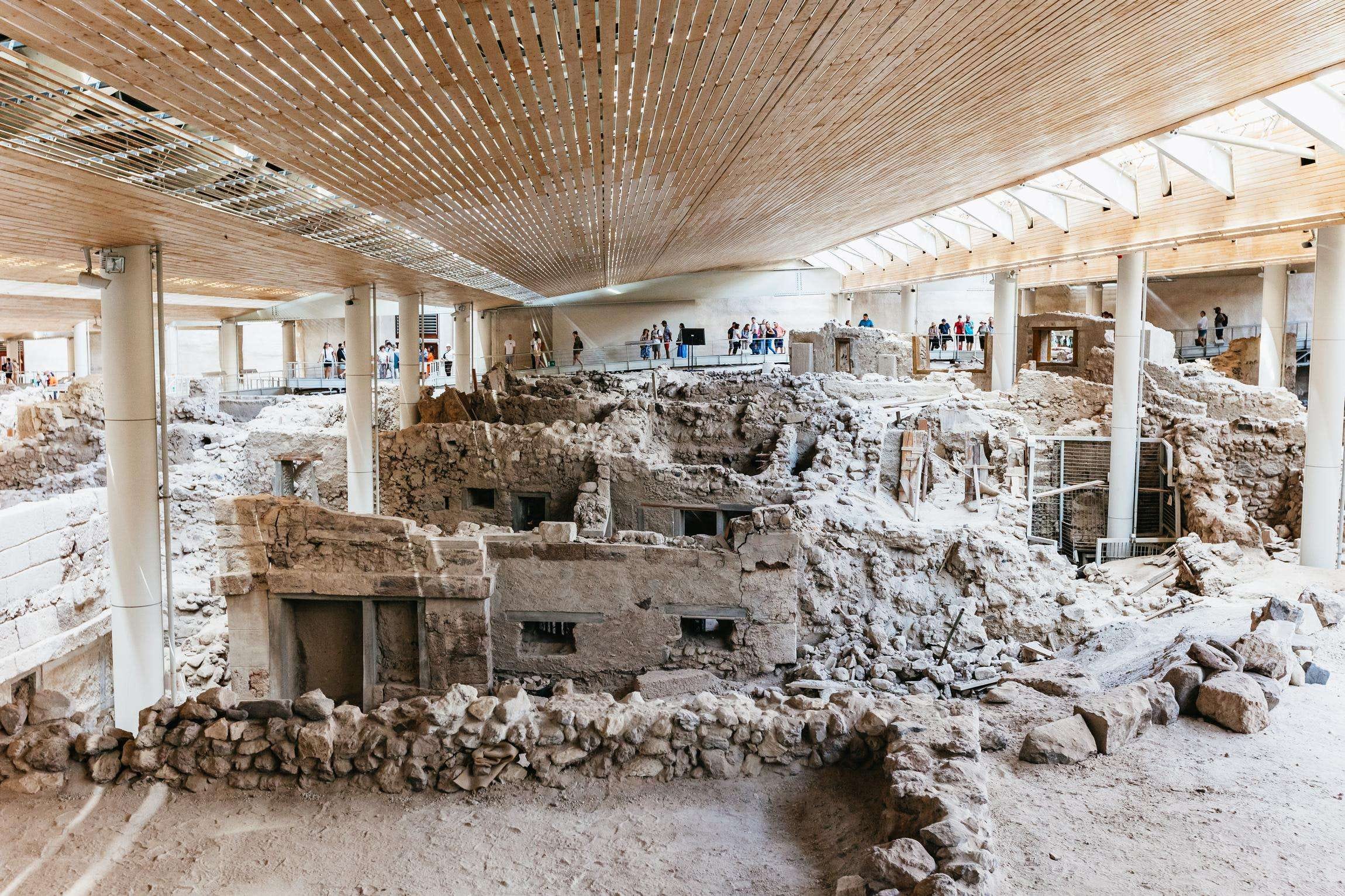
The Minoan Bronze Age city buried under volcanic ash around 1600 BC and excavated since the 1960s, often called the Pompeii of the Aegean. Multi-story buildings with intact walls, sophisticated drainage systems, pottery, and the ghost of an advanced civilization frozen at the moment of the eruption. The site is covered and significantly cooler than the outdoor attractions, making it an ideal midday activity in summer. The frescoes from the site (originals in Athens, reproductions on site) are among the finest Minoan artworks in existence.
Wine tasting on volcanic soil
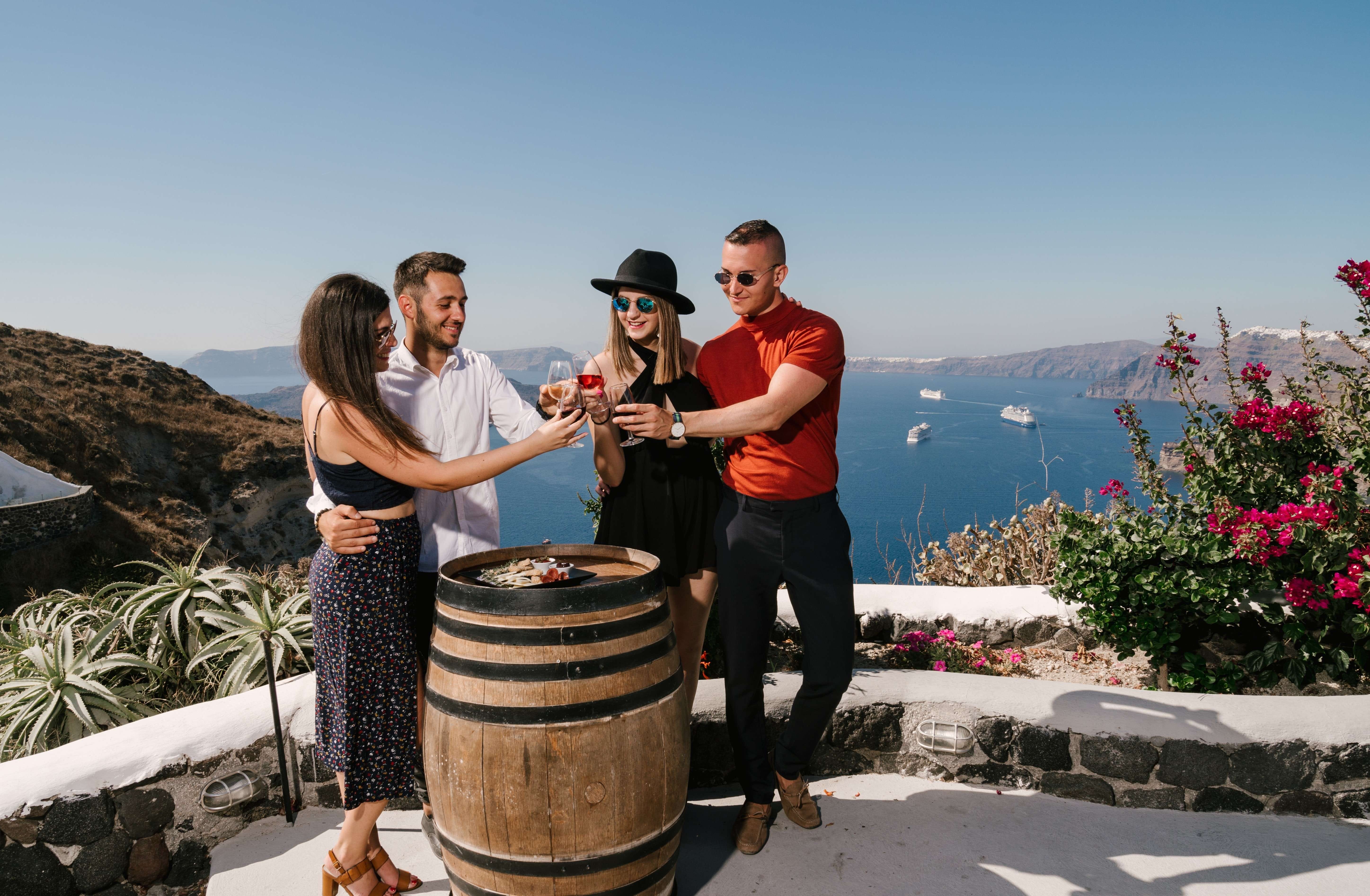
Santorini’s indigenous grape variety Assyrtiko, grown in the island’s volcanic soil using a distinctive low-to-the-ground basket training system called kouloura that protects the vines from the wind, produces one of the most distinctive white wines in the world: mineral, high-acid, bone-dry, with a salinity that comes directly from the volcanic terroir. Santo Wines and Venetsanos Winery both offer tastings with caldera views. Estate Argyros and Sigalas are the producers with the most serious international reputations. A wine tour covering two or three producers is one of the most memorable and genuinely educational activities on the island.
When to visit Santorini
Santorini is one of the most season-dependent destinations in this entire guide. The difference between May and August is the difference between an extraordinary island and a test of patience. Timing matters here more than almost anywhere else.
🌸 Spring
April to June. The finest season. Mild temperatures, the caldera views without the crowds, wildflowers on the volcanic slopes, and the island returning to life after winter. May is the sweet spot: warm enough to swim, cool enough to hike and walk, and the village lanes navigable at a human pace. Keukenhof-level tulip fields do not exist here, but the light and the uncrowded version of the island absolutely do.
☀️ Summer
July to August. Peak season with peak prices and peak crowds. Oia’s streets become genuinely claustrophobic from late morning through evening. The sunset at the castle draws hundreds of people fighting for the same spot. The caldera views are as beautiful as ever; accessing them comfortably is not. If you visit in summer: be on the caldera rim before 9am, retreat to a beach club from 11am to 4pm, and reclaim the villages after 6pm.
🍂 Autumn
September to October. Excellent, and the island’s best-kept secret. The sea is warmest in September (perfect for swimming), crowds drop significantly after mid-September, the grape harvest fills the island with activity, and the light on the caldera cliffs is extraordinary. Arguably the finest month to visit overall.
❄️ Winter
November to March. Most hotels, restaurants, and tourist businesses close. The island is genuinely quiet, with only a small permanent population active. For visitors who specifically want the off-season experience of a quiet Cycladic island, this can be extraordinary. For most travelers, the limited infrastructure makes it impractical.
How many days to spend in Santorini
Three days is the right amount for a complete experience: one day for the caldera villages and sunset, one day for the boat tour and swimming, and one day for Akrotiri, the inland villages, and wine tasting. Four days allows for the Fira to Oia hike, a beach day at Kamari or Perissa, and the slower exploration that reveals the island’s quieter character. Two days works for visitors combining Santorini with other Greek islands but requires prioritizing efficiently.
Santorini is a small island. Everything on it is accessible within thirty minutes by bus or taxi. The temptation is to rush through the highlights; the better approach is to choose fewer things and experience them more fully.
Suggested 3-day itinerary
Day 1
Oia at dawn before cruise ships arrive. Blue domes, windmills, Ammoudi Bay below. Walk back toward Imerovigli.
Skaros Rock hike from Imerovigli. Caldera views from the highest point on the rim. Lunch in Imerovigli.
Sunset from Imerovigli or Firostefani (same view as Oia, far fewer people). Dinner at a caldera-view restaurant.
Day 2
Full-day boat tour: volcano hike, hot springs swim, Thirassia. Depart from port below Fira.
BBQ lunch on board. Afternoon swimming and snorkeling at volcanic beaches.
Return to port at dusk. Dinner in Fira. Cable car or donkey ride back up if staying on the caldera.
Day 3
Akrotiri archaeological site (covered, cool, extraordinary). Red Beach viewpoint nearby.
Winery visit: Venetsanos or Santo Wines for Assyrtiko tasting with caldera views.
Pyrgos village and kasteli for the best panoramic view of the entire island. Farewell dinner in Fira.
Where to eat
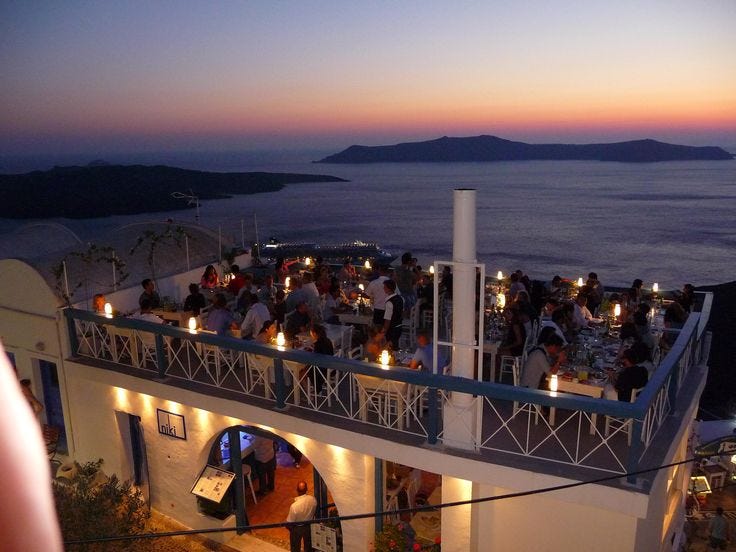
Santorini’s restaurant scene ranges from extraordinary caldera-view dining at prices that match the setting to simple tavernas in the inland villages where the food is honest and the bill is manageable. Greek cuisine on the island has a local character: fava bean puree from the island’s own legumes, cherry tomatoes with an intensely concentrated sweetness specific to volcanic soil, and seafood pulled from the Aegean the same morning.
Ammoudi Fish Tavern
Seafood
At the base of the 300 steps below Oia, on the rocks at the water’s edge. The freshest grilled octopus, sea urchin, and fish in Santorini. Genuinely worth the descent and the climb back up.
Metaxi Mas
Modern Greek
In the inland village of Exo Gonia, away from the caldera crowds, serving the most accomplished modern Greek cooking on the island. Local Santorini ingredients interpreted with precision and creativity.
Argo Restaurant Fira
Caldera view
A well-positioned caldera-view restaurant in Fira with a serious menu and views that justify the setting. Better value than equivalent Oia options.
Kastro Restaurant Oia
Traditional Greek
One of the few remaining genuinely traditional tavernas in Oia, with honest Greek cooking and a terrace overlooking the caldera without the luxury pricing of its neighbors.
Avocado Imerovigli
Casual cafe
The best midpoint stop on the Fira to Oia hike: a casual vegetarian-friendly cafe with caldera views, cold drinks, and genuinely good food at reasonable prices.
Pyrgos local kafeneion
Traditional cafe
A traditional Greek coffee house in Pyrgos village, serving Greek coffee and local pastries to a clientele that is almost entirely local. The closest thing to ordinary Greek island life available on Santorini.
Santo Wines terrace
Wine and mezedes
The winery terrace restaurant at Santo Wines, with the most expansive caldera view on the island and a selection of Santorini wines by the glass alongside simple Greek mezedes.
Where to stay
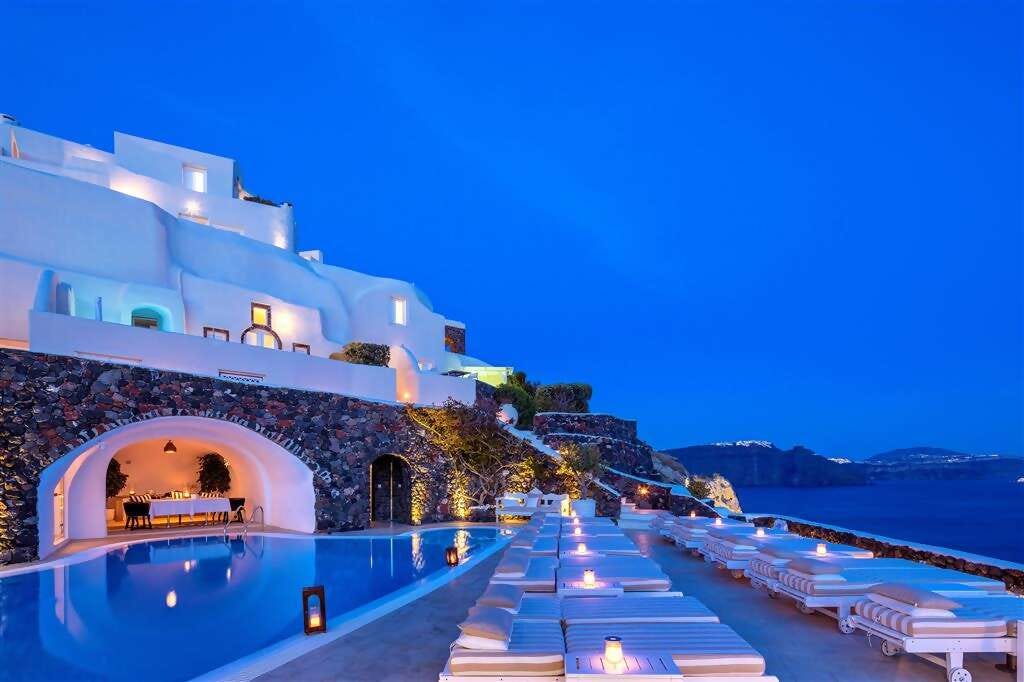
Where you stay on Santorini determines your entire experience of the island. The caldera-side villages (Oia, Fira, Imerovigli, Firostefani) offer the iconic cave hotel and infinity pool experience at the island’s highest prices. The eastern side (Kamari, Perissa) is dramatically cheaper and better for beach access. Fira is the most practical base for first-time visitors. Imerovigli offers the finest views at slightly lower prices than Oia.
Canaves Oia Suites
Luxury
One of the finest cave hotel collections in Oia, with infinity pools overlooking the caldera and service that matches the extraordinary setting. The definitive Santorini luxury experience.
Astra Suites Imerovigli
Luxury
The finest address in Imerovigli: a collection of cave suites and villas carved into the caldera cliff with the most expansive views on the island and a private infinity pool for each suite.
Ikies Traditional Houses Oia
Boutique / Luxury
A collection of traditional cave houses in Oia, each with a private terrace and caldera views, at slightly more accessible prices than the island’s biggest names.
Hotel Atlantis Fira
Mid-range
A reliable caldera-view option in Fira with pool, restaurant, and terrace views, at prices significantly below those of equivalent Oia properties. The best mid-range base on the caldera rim.
Zephyros Villas Perissa
Budget
Clean, comfortable villas at the black sand beach of Perissa with a pool and easy beach access. A fraction of the caldera price and an entirely different but genuinely enjoyable Santorini experience.
Altana Boutique Hotel Firostefani
Boutique / Mid-range
A small boutique hotel in Firostefani with caldera views, pool, and a quiet character that suits visitors who want the view without the Oia crowds or the Fira noise.
Practical information
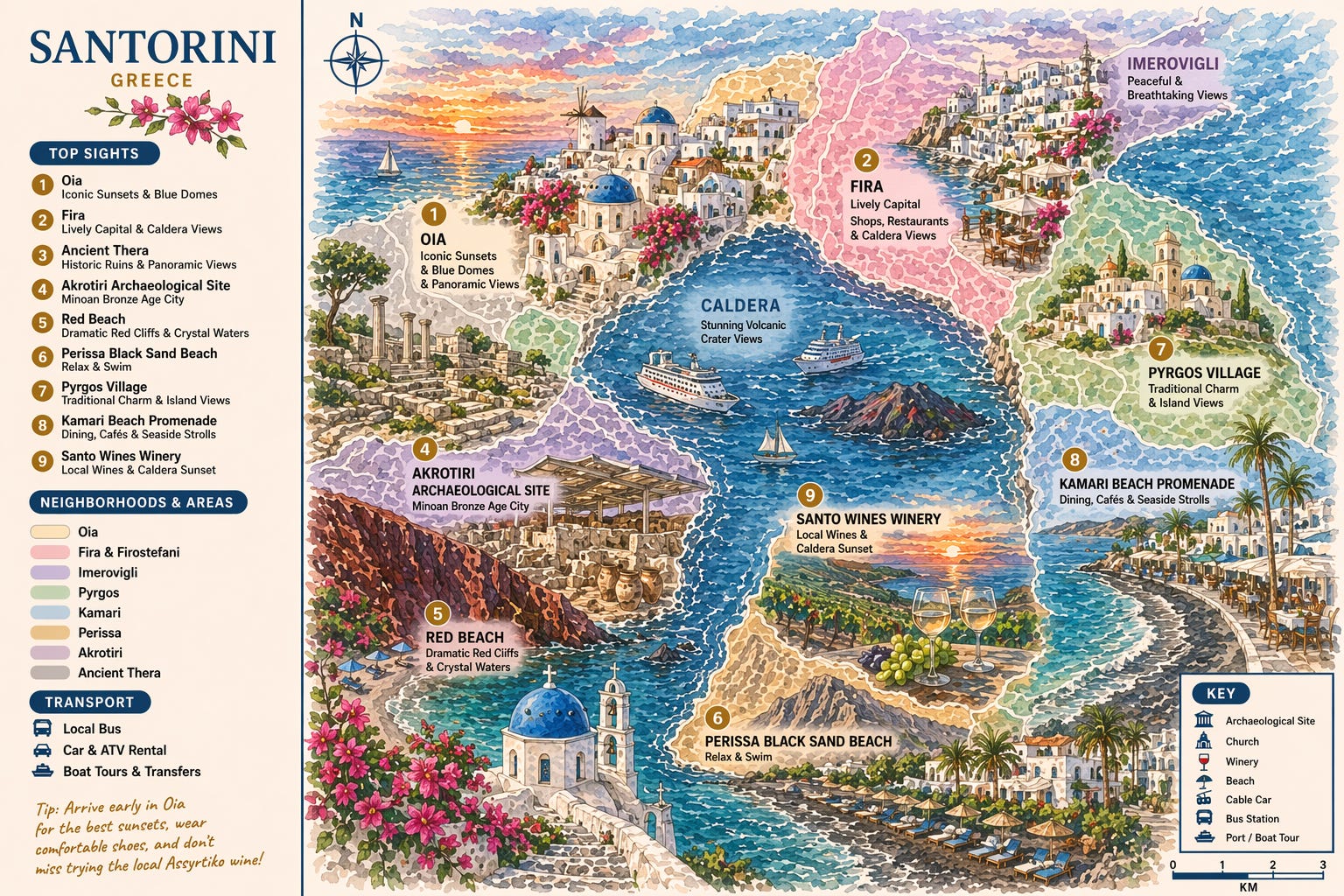
• Currency: Euro (EUR). Cards are accepted everywhere in tourist areas. Cash is useful for smaller tavernas, local markets, and tips.
• Language: Greek. English is spoken virtually universally in Santorini’s tourist industry. One of the most English-fluent tourist destinations in Greece.
• Getting around: The public bus (KTEL) network connects all major villages and beaches from the main terminal in Fira. Tickets cost 1.60 to 2.40 euros per ride. Taxis exist but are expensive, especially between Fira and Oia (around 35 euros). ATVs and scooters are widely available for rent (from 15-25 euros per day) and the most practical option for independent exploration; drive carefully on the winding island roads.
• Getting to Santorini: By air: Santorini Airport (JTR) has direct flights from Athens (45 minutes) and seasonal routes from major European cities. By ferry: High-speed ferries from Athens’s Piraeus port take 4-5 hours; conventional ferries take 8-9 hours. Both are reliable and offer caldera views on arrival that are among the most dramatic in the Mediterranean.
• The caldera stairs: The path from the Old Port (Skala) at the base of the caldera up to Fira involves 586 steps. A cable car also makes the climb (5 euros each way, queues in high season). Donkeys are no longer officially used for tourist transport due to animal welfare concerns; avoid any operations offering this service.
• The Oia sunset strategy: For the famous sunset, arrive at the castle ruins in Oia at least 90 minutes before sunset in July and August. Alternatively, watch from Imerovigli or Firostefani for the same quality of light with far fewer people. After the sunset in Oia, do not immediately head to the bus stop: the queue is extreme. Have dinner reservations and wait 90 minutes for crowds to thin.
• Booking: Book caldera-view accommodation 3 to 6 months ahead in summer. Boat tours fill up 1 to 2 weeks in advance in high season. The Fira to Oia hike and Akrotiri do not require advance booking.
• The heat: July and August midday temperatures regularly exceed 35C on exposed volcanic terrain with no shade. Plan outdoor activities for early morning and late afternoon. Akrotiri’s covered site is an excellent midday retreat.
• Internet: A Greek SIM or European roaming plan works across the island. Wi-Fi is available in most hotels and restaurants.
How Santorini fits into a broader Greece trip
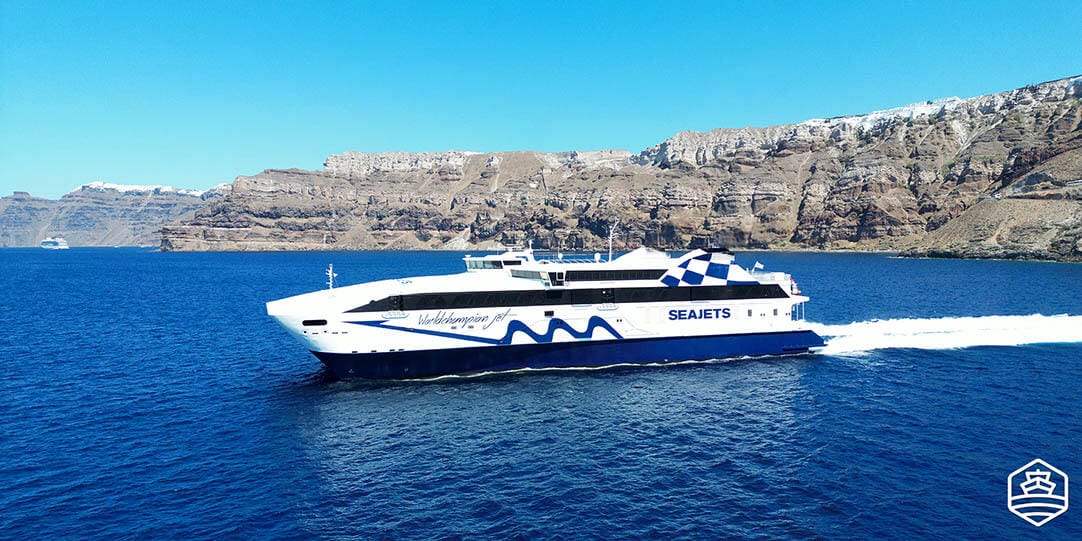
Santorini is most naturally combined with Athens and one or two other Cycladic islands. High-speed ferries connect Santorini with Mykonos (about 2 hours), Naxos (about 90 minutes), Paros (about 2 hours), and Crete (about 2 hours). A Greek island itinerary that combines Athens (3 days), Santorini (3 days), and either Mykonos or Naxos (2-3 days) covers the essential range of what the Cyclades offer.
For cruise passengers, Santorini is one of the most visited ports in the Eastern Mediterranean. A ship call typically allows 6 to 8 hours on the island. The most efficient use of that time: cable car up to Fira, bus to Oia for the village and the views, bus back to Fira, and cable car or stairs back to the port. A boat tour to the volcano is possible but requires careful timing against the ship’s departure.
Frequently asked questions
Is Santorini worth visiting despite the crowds and cost?
Yes, strongly, but only if you visit in the right season. April, May, September, and October offer the island that the photographs promise. July and August offer something more complicated. The caldera and the geology are genuinely extraordinary at any time of year; the experience of them depends entirely on the season.
How many days do you need in Santorini?
Three days covers the caldera villages, a boat tour, and Akrotiri at a comfortable pace. Four days adds the Fira to Oia hike, wine tasting, and a beach day. Two days works for island hoppers combining Santorini with other destinations but requires efficient prioritizing.
What is the best village to stay in?
Fira is the best base for first-time visitors: best bus connections, widest range of accommodation and restaurants, and caldera views at more reasonable prices than Oia. Imerovigli offers the finest views on the island at slightly lower prices than Oia with a quieter atmosphere. Oia is the most beautiful and the most expensive. Kamari or Perissa are best for beach-focused visitors on a budget.
What is the best time to see the Oia sunset?
Arrive at the castle ruins at least 90 minutes before sunset in peak season (July-August). In shoulder season (May-June, September-October), 45 to 60 minutes is sufficient. Alternatively, watch from Imerovigli or Firostefani for the same quality of light, the same direction, and approximately 90 percent fewer people.
Is the Fira to Oia hike difficult?
Moderate. The trail is 10.5 kilometers, involves some steep sections, and takes 2.5 to 5 hours depending on pace and photo stops. Anyone in reasonable fitness can complete it. Start at dawn to beat the heat, bring water, and wear proper shoes with grip on the uneven volcanic terrain.
What is Assyrtiko wine?
The indigenous white wine grape of Santorini, grown in volcanic soil using a traditional basket training method. The resulting wine is bone-dry, high in acidity, intensely mineral, and often described as having a volcanic salinity. It is one of the most distinctive white wines in the world and completely specific to this island. Do not leave Santorini without tasting it at one of the island’s estate wineries.
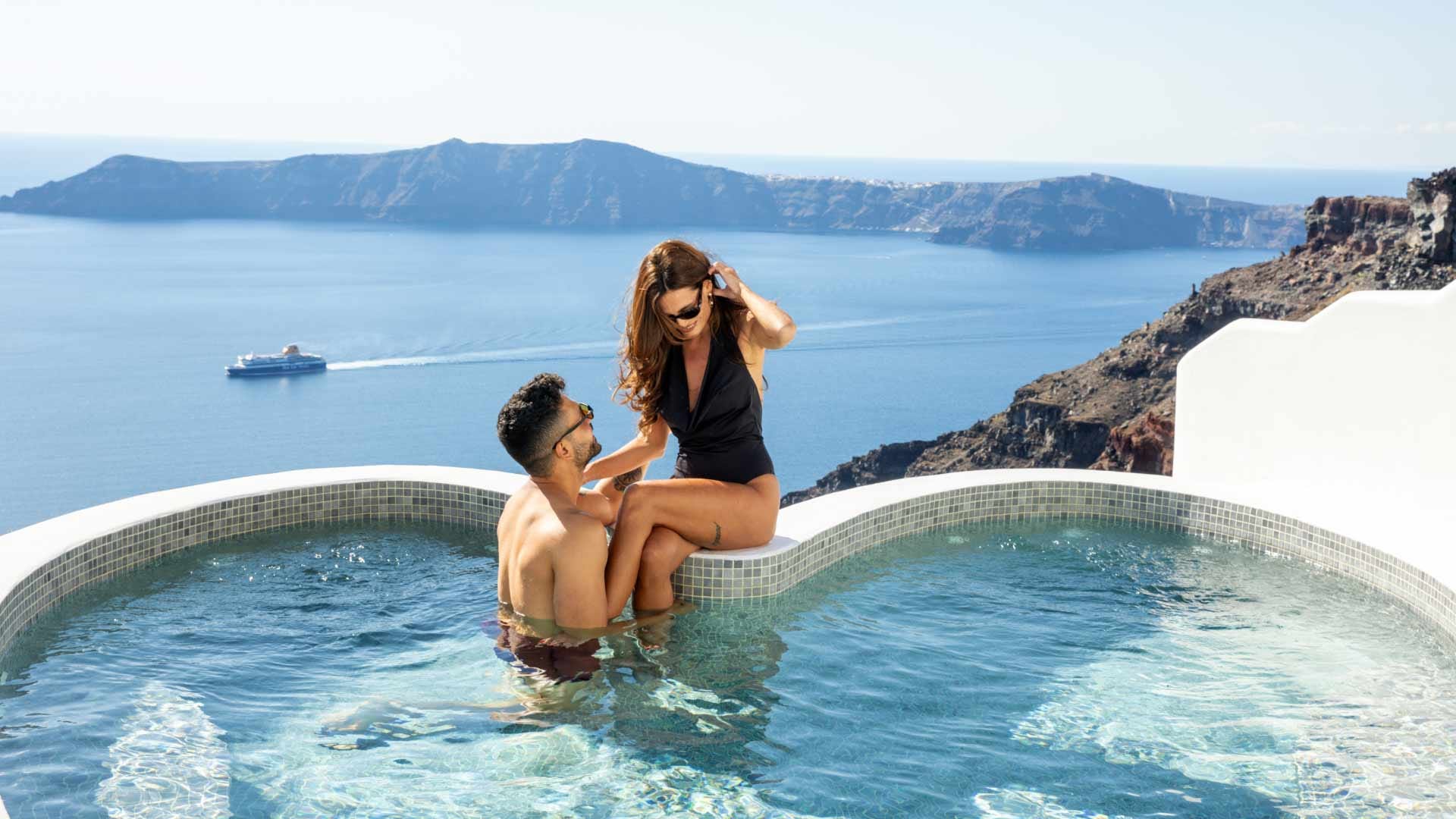
Is Santorini suitable for a honeymoon or romantic trip?
It is arguably the finest honeymoon destination in Europe, with the combination of extraordinary views, cave hotels with private infinity pools, exceptional sunset experiences, and the particular intimacy that caldera-view dining and private catamaran cruises provide. Book well in advance and visit in May or September for the most romantic version of the island.
Plan your Santorini trip with AERIA Voyages
Every traveler’s ideal Santorini experience looks different depending on the season, the kind of stay you want, and whether the island is the destination or part of a broader Greek island itinerary.
I help clients build trips that go beyond the standard experience: a private catamaran charter for a honeymoon, a curated multi-winery Assyrtiko tasting with a sommelier, a carefully timed island-hopping itinerary combining Santorini with Naxos and Athens, or a cruise itinerary that includes Santorini among the Eastern Mediterranean’s finest ports.
If you are planning a trip to Santorini and want to talk through the options, I would be glad to help.
Yvan Junior Blanchette
Travel & Cruise Specialist
ÆRIA Voyages📩 yvanblanchette@aeriavoyages.com
📞 1-888-460-3388
🌐 aeriavoyages.com