

The Ultimate Stockholm Travel Guide: What to know, where to go, and how to make the most of your visit
Updated 2026 | Sweden | First-time visitors | In-depth travel | ÆRIA Voyages
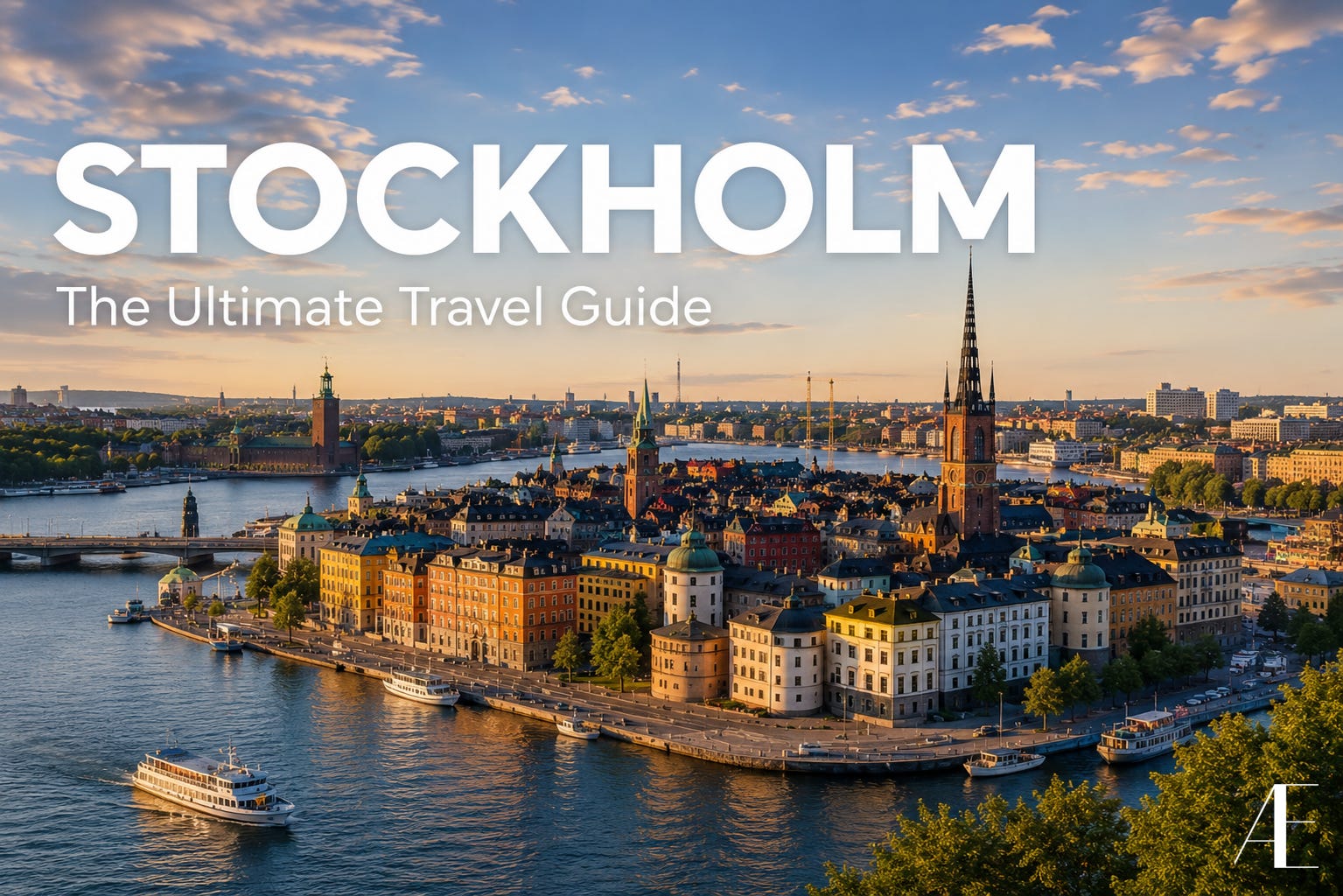
Stockholm does something few European capitals manage: it makes you forget you are in a capital. Spread across fourteen islands where Lake Mälaren meets the Baltic Sea, it is a city of water and light, of medieval stone and mid-century modernism, of a cuisine that was quietly transformed into one of the most technically accomplished in the world.
It has a warship that sank in the harbour in 1628, was pulled from the mud in 1961, and is now the most visited museum in Scandinavia. It has an open-air museum where reindeer graze within twenty minutes of the city centre. It has a metro system whose stations have been commissioned as public art for over fifty years.
And it has a quality of life, and a quality of welcome, that stays with you long after you leave.
This guide covers the neighbourhoods worth knowing, the experiences that define the city, the practical details to have before you leave, and how to plan the right number of days for the kind of trip you want to take.
Table of Contents
🎧 LISTEN TO THE BEYOND THE HORIZON PODCAST

Why Stockholm is worth it
Stockholm is not an easy city to summarise because it resists the reduction. It is not a place that announces itself loudly. It does not have the overwhelm of Paris or the drama of Edinburgh. What it has is something more considered: a city that has been built and rebuilt around a consistent idea of what urban life should feel like, and that manages to deliver that experience with a composure that no other Scandinavian capital quite matches.
The geography is a large part of it. Stockholm sits where Lake Mälaren, one of Sweden’s largest lakes, empties into the Baltic through a short channel. The result is a city on water in the most literal sense, not merely adjacent to a river or a harbour but genuinely embedded in it. Fourteen islands. Bridges constantly. Ferries as practical transport, not tourist attractions. The light on the water in late afternoon, with the city’s terracotta and ochre facades reflected across the inlet at Riddarfjärden, is one of the most quietly beautiful urban views in northern Europe.
The Old Town, Gamla Stan, predates the modern city by several centuries. It stands on one of the central islands, compact, cobbled, its lanes still following the logic of medieval construction. The Royal Palace, the cathedral, the Nobel Museum: all within a few minutes’ walk of each other. For visitors arriving from North America or from cities where history is measured in decades rather than centuries, Gamla Stan delivers exactly what Stockholm promises on the surface.
But the city’s real argument is what surrounds that historic core. The museum culture is exceptional, led by the Vasa Museum, which presents one of the most extraordinary archaeological objects in the world in a purpose-built hall of genuine architectural quality. The restaurant scene, rebuilt from the ground up over the past fifteen years, now includes one three-Michelin-star restaurant, four with two stars, and a constellation of one-star kitchens that would define the dining landscape in any other city. The design culture is everywhere, from the chairs in hotel lobbies to the layout of the public squares, and it shapes the experience of the city in ways that are genuinely difficult to articulate but immediately felt.
Stockholm is also, in practical terms, one of the most manageable capitals in Europe. English is universal, the public transport is excellent, the city is compact enough to walk significant distances, and the safety record is among the strongest on the continent. For travellers visiting Scandinavia for the first time, it is the natural starting point. For those who have been and are returning, it is a city that deepens with each visit.
The neighbourhoods to know
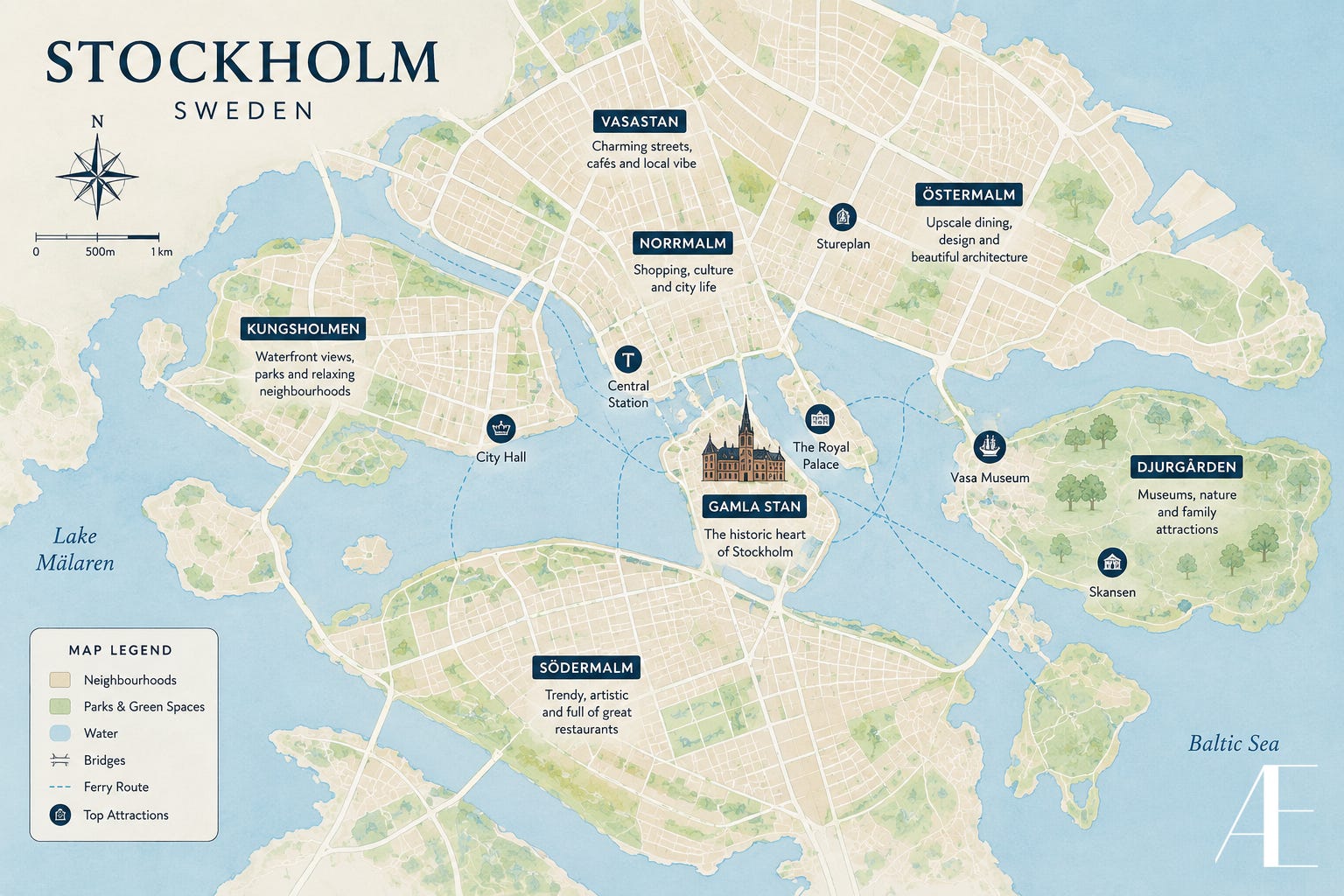
Stockholm organises itself across seven main districts, each with its own character. Understanding the differences between them makes planning a stay considerably easier.
Gamla Stan
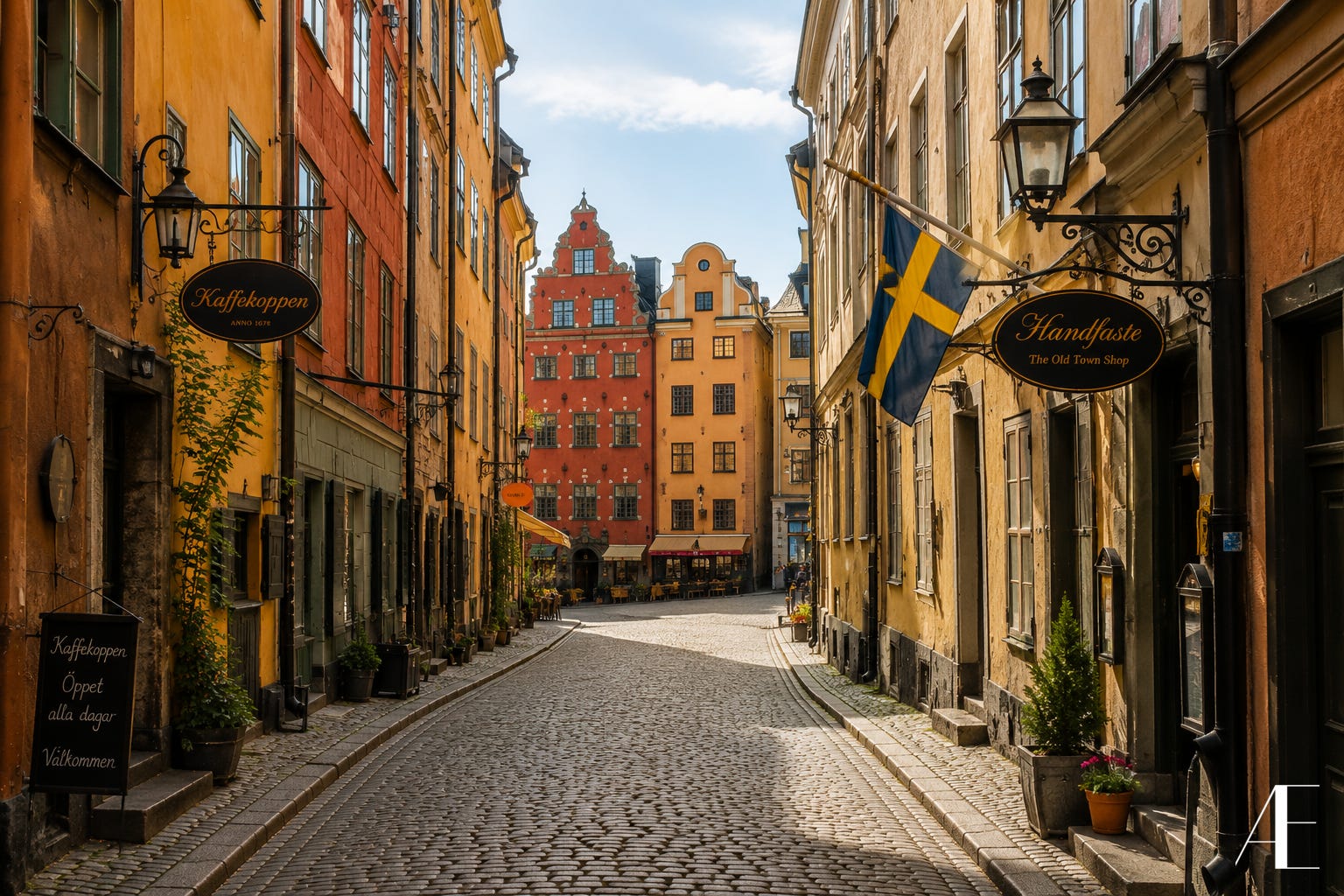
The historic heart of the city, built on the island of Stadsholmen. Gamla Stan is Stockholm’s medieval core, a dense web of alleys, staircases, and arched passageways where the street plan has not changed significantly since the 13th century. The Baroque houses along Stortorget, the main square, come in shades of terracotta, ochre, and rusty red. The Royal Palace, the Cathedral, and the Nobel Prize Museum are all here.
The two principal streets, Västerlanggatan and Österlanggatan, carry the bulk of the tourist traffic and the souvenir shops that come with it. But the real Gamla Stan is found in the side streets: the bookshops, the wine bars, the restaurants that do not need to advertise. Staying in Gamla Stan puts you in the middle of history and a few minutes’ walk from everything. The crowds thin after dinner, and the neighbourhood at night, with the old lanterns and the quiet cobblestones, is worth the elevated accommodation prices.
Södermalm
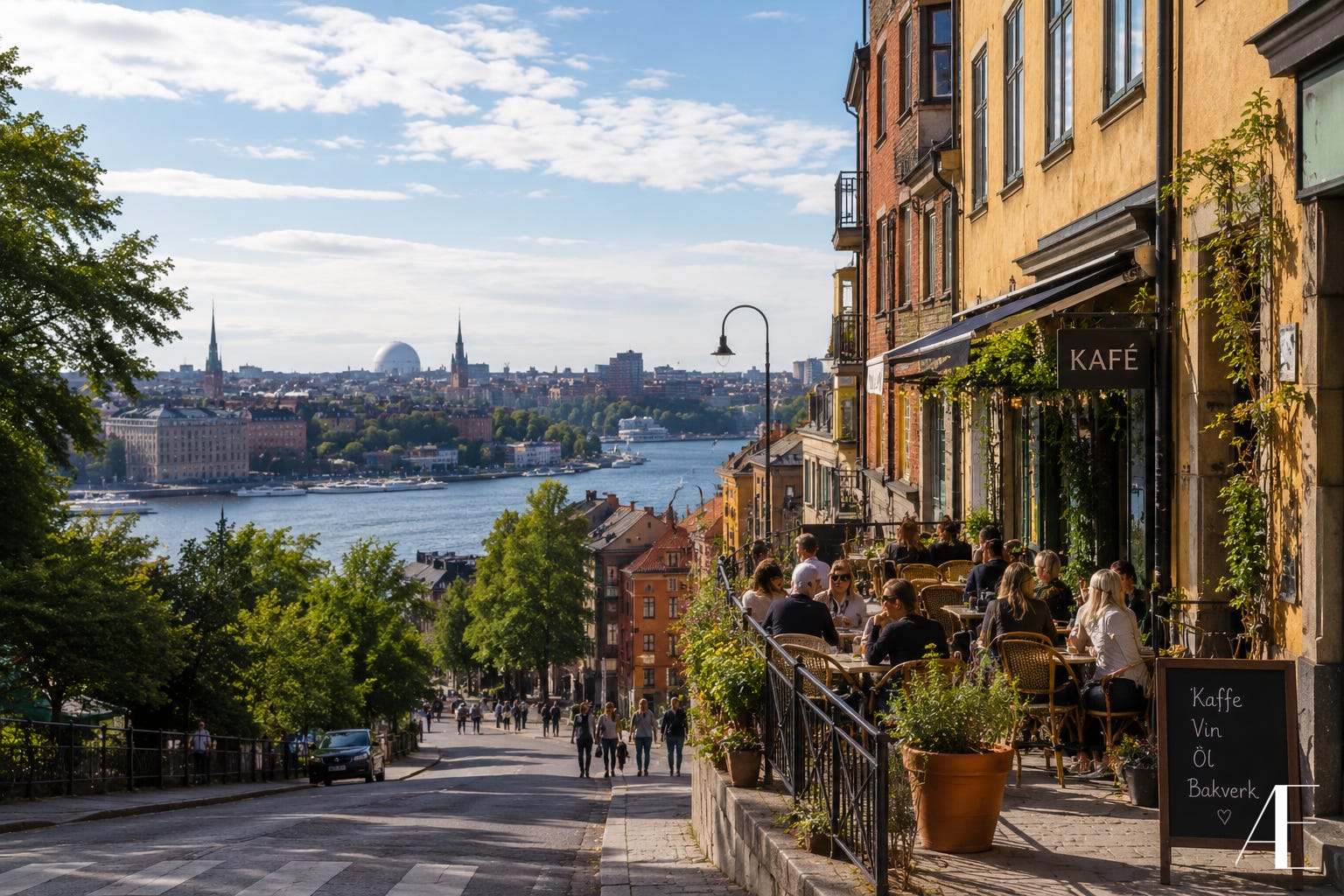
The large island south of Gamla Stan, and the neighbourhood that tells you most about Stockholm’s contemporary identity. Södermalm has been the creative and bohemian quarter of the city for decades, and while gentrification has raised both the rents and the restaurant count, the character remains. The SoFo district, a grid of streets in the eastern part of the island, concentrates the best vintage shops, independent cafes, and design studios in the city.
Götgatan, the main artery running north to south, carries everything from chains to sharp independent retailers. Fotografiska, the world’s largest photography museum, anchors the northeastern waterfront.
The views from Monteliusvägen, a clifftop walkway along the island’s northern edge, looking across the water to Gamla Stan and the City Hall, are among the best in Stockholm. Södermalm is also currently the city’s most exciting neighbourhood for new restaurant openings, with the Slussen redevelopment generating a cluster of new venues around the former transport hub.
Östermalm
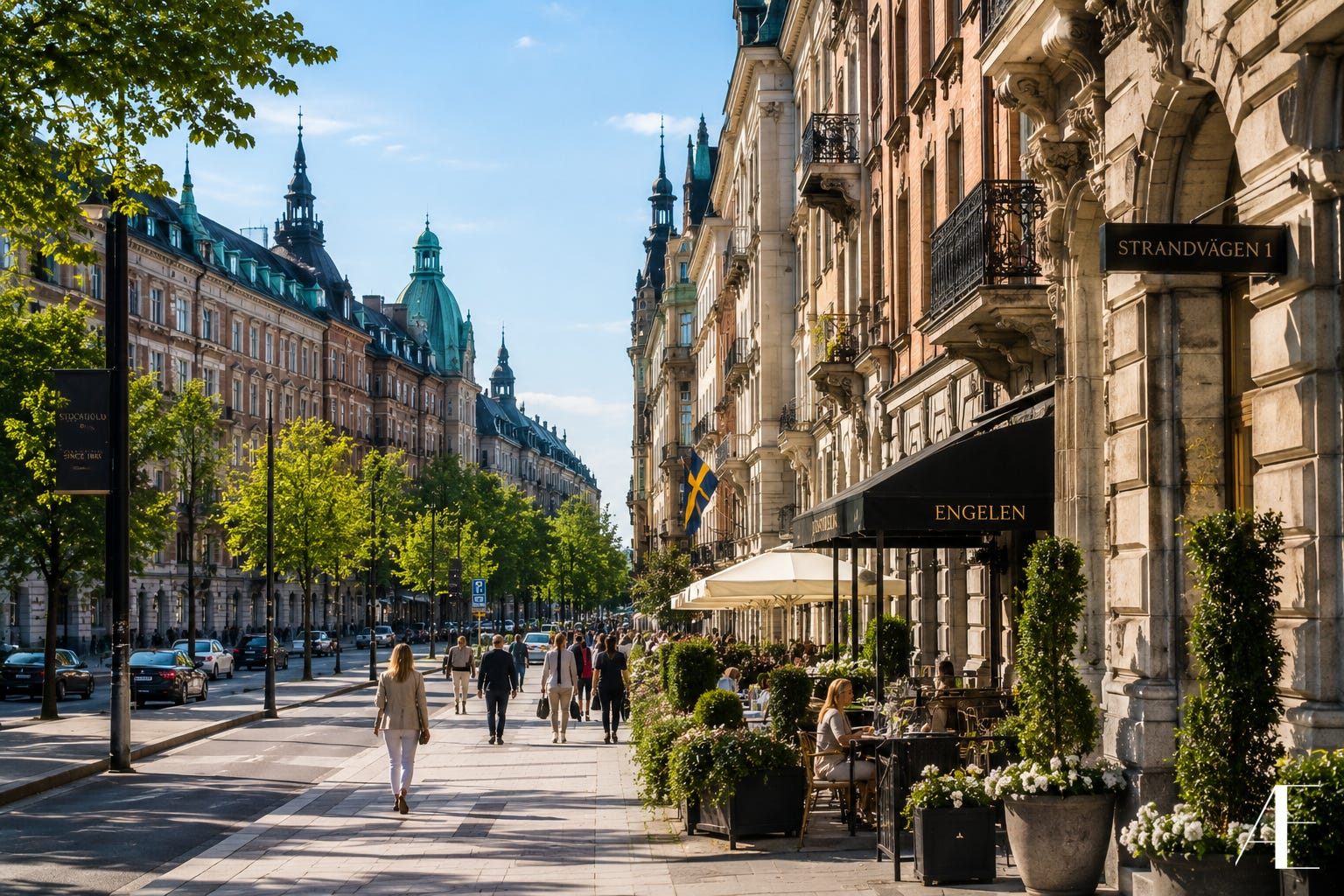
The prosperous, stately district in the northeast of the inner city, built on a grid in the late 19th century and still carrying the confidence of that era. Broad boulevards, art nouveau facades, the kind of food hall, Östermalmshallen, that makes you rethink what a covered market can be.
Strandvägen, the waterfront boulevard connecting Östermalm to Djurgården, is one of the most elegant streets in northern Europe, lined with grand apartment buildings that face the pleasure boats moored in the inlet below. Östermalm is where Stockholm’s most established fine dining restaurants tend to concentrate, and where the best high-end hotels sit. Stureplan, the square at its heart, is the hub of serious nightlife.
Djurgården
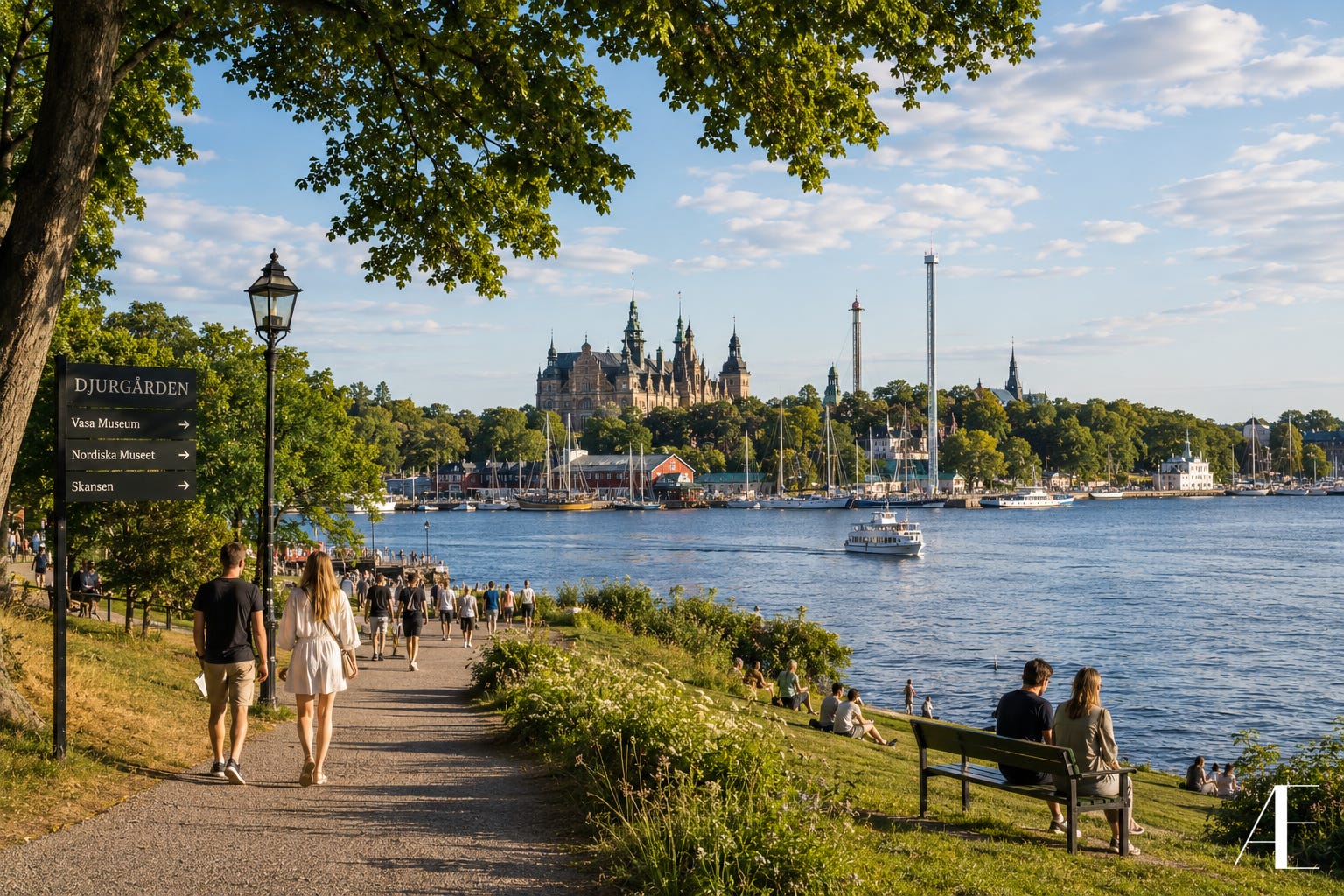
The island directly east of Östermalm, and the primary destination for Stockholm’s major museums. The Vasa Museum, the Nordic Museum, Skansen, ABBA The Museum, and the Gröna Lund amusement park are all here, set in a landscape of parkland and mature trees.
Djurgården is part nature reserve and part cultural campus, and the combination works surprisingly well. You can walk from the Vasa Museum to the organic kitchen garden at Rosendal’s Trädgård in twenty minutes, stopping to look at deer grazing in the park. Djurgården is best reached by the tram from Sergels Torg or by the ferry from Slussen, both of which are pleasant and efficient.
Norrmalm
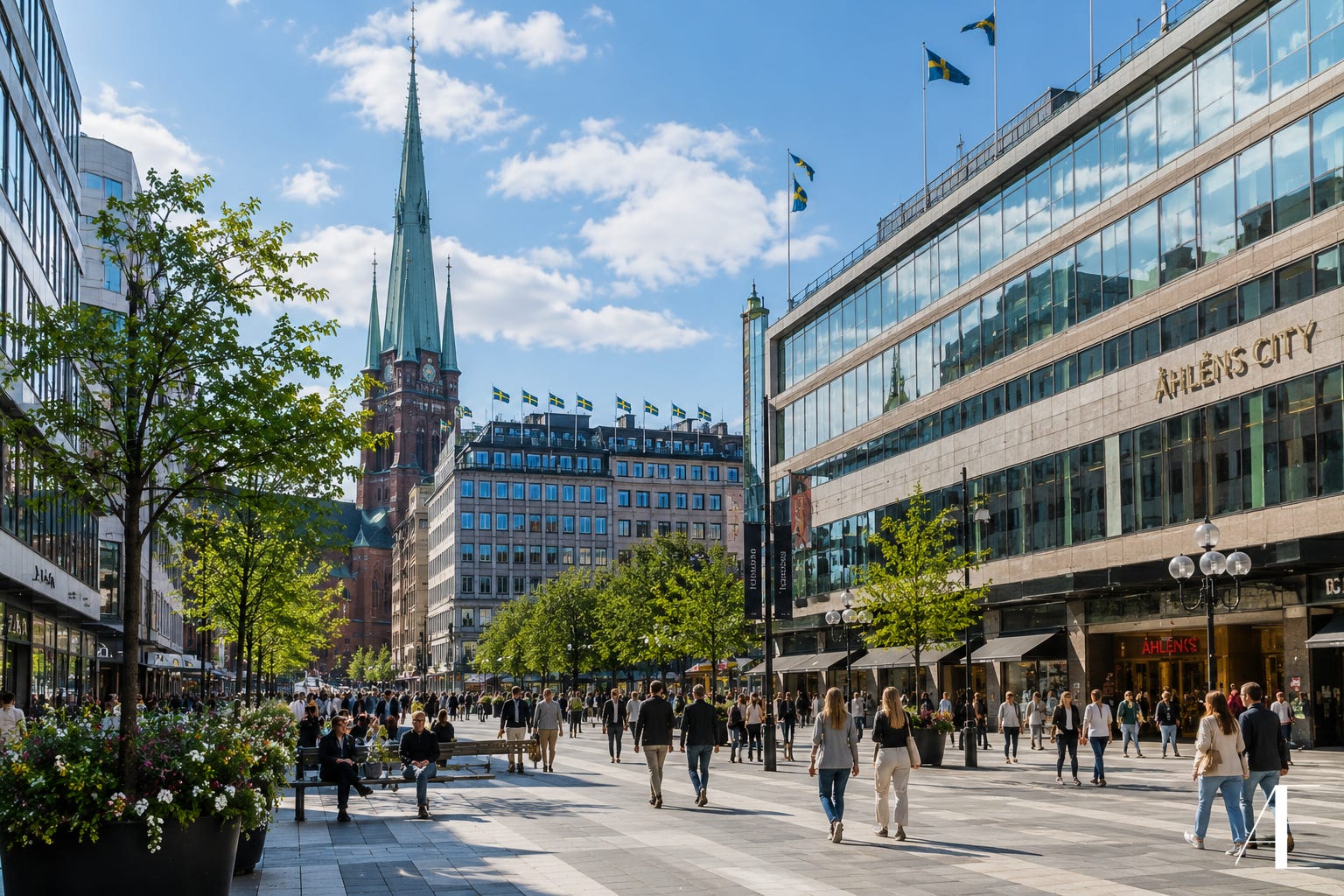
The commercial and transport centre of the city, where Stockholm Central Station sits and where the main shopping streets converge. Norrmalm is functional rather than beautiful, though it has its moments: the Royal Opera House, the Kulturhuset arts centre, and the start of Drottninggatan, the pedestrianised shopping street.
The iconic Sergels Torg, Stockholm’s main public square, with its glass obelisk and modernist urban design, is here. Norrmalm is where most visitors arrive and where many accommodation options sit, for the straightforward reason that everything else is within easy reach of it.
Kungsholmen
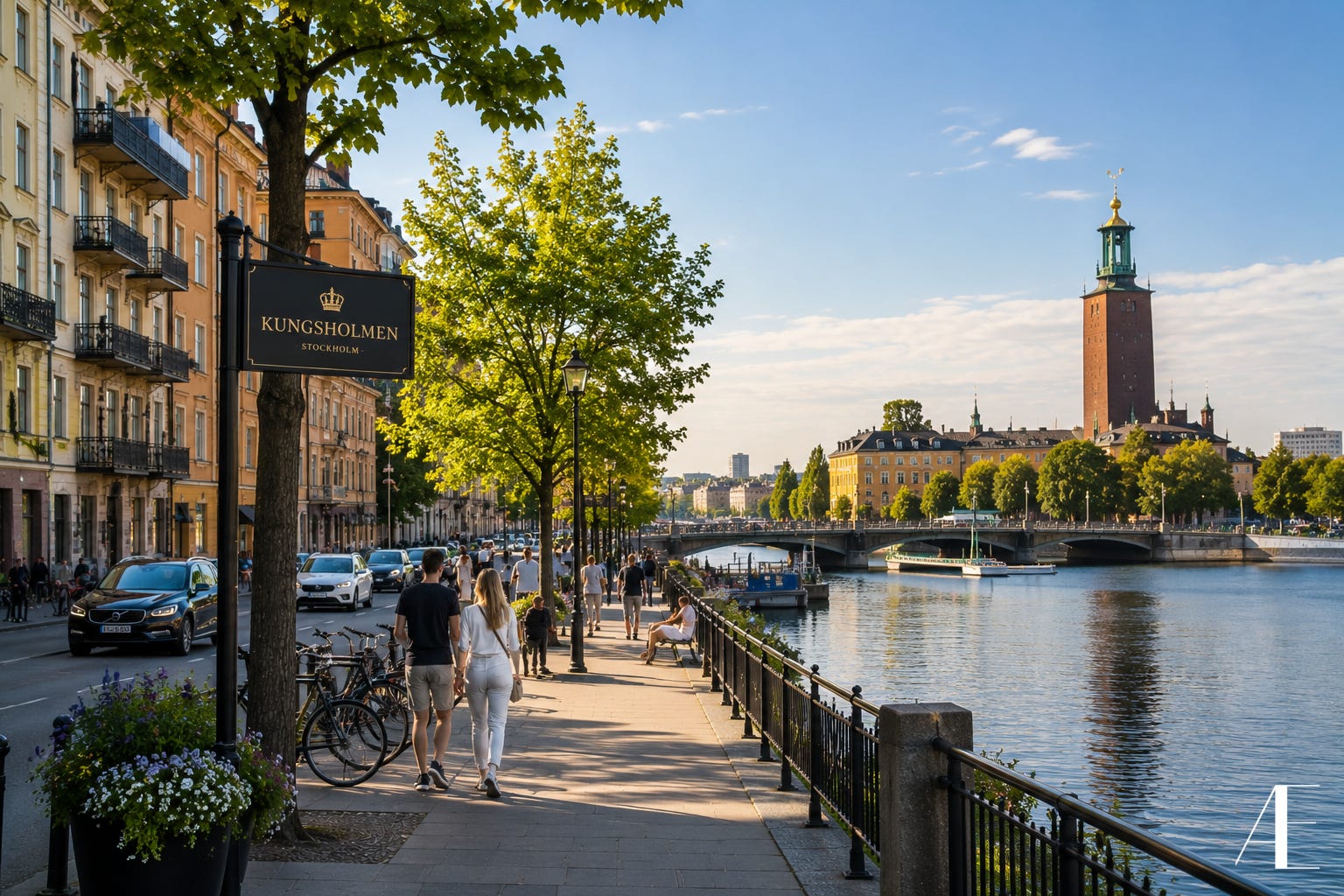
The island to the west of Norrmalm, best known as the home of Stockholm’s City Hall, the Stadshuset, where the Nobel Prize banquet is held each December. Beyond the City Hall and the attractive waterfront promenade, Kungsholmen is a residential neighbourhood with a local feeling, excellent independent cafes, and significantly lower prices than the more tourist-heavy areas. It is a good neighbourhood to stay in for travellers who want to be central without being in the middle of the crowds.
Vasastan
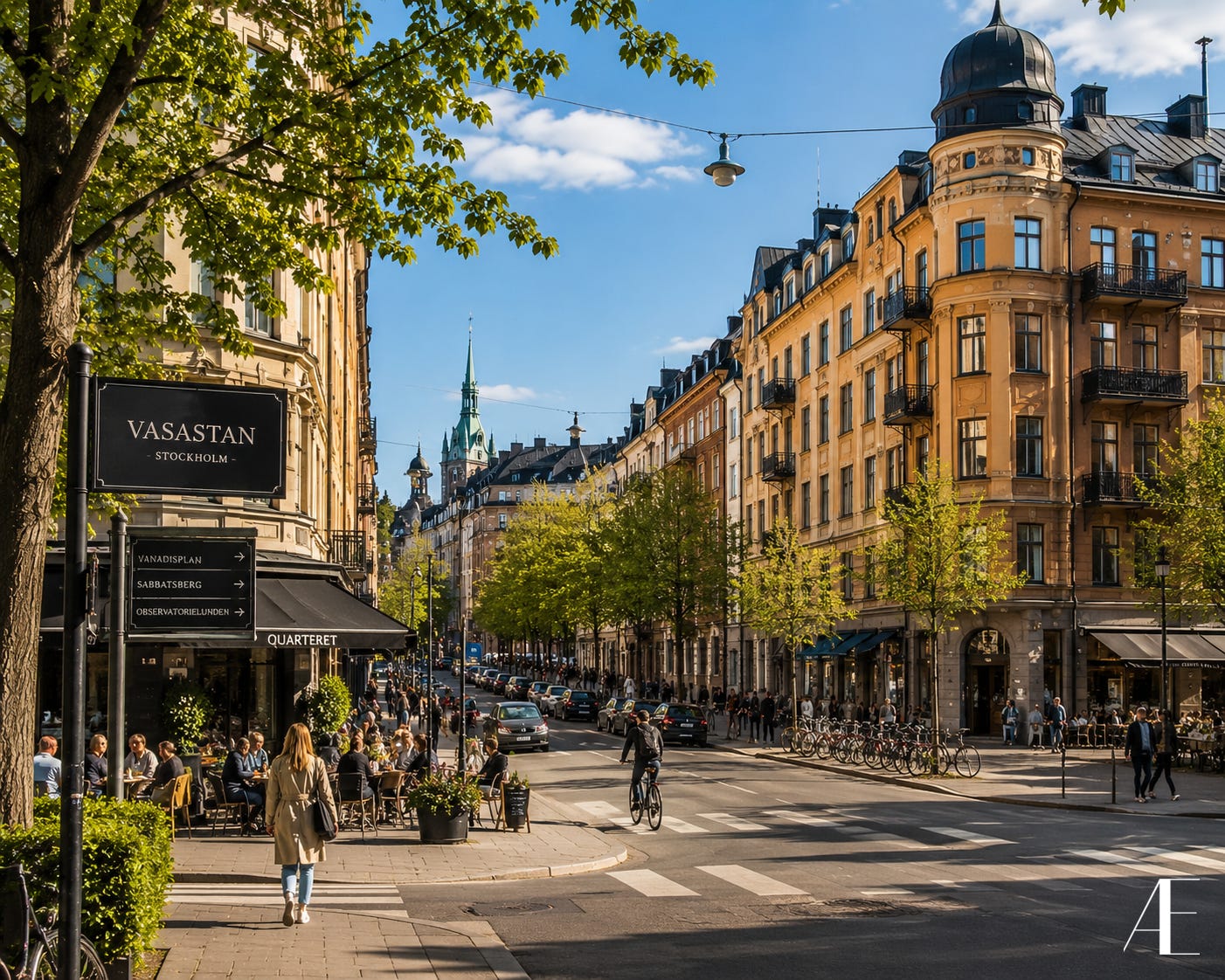
The neighbourhood immediately north of Norrmalm, built in the early 20th century and still carrying an atmosphere of professional, residential Stockholm. Wide streets, well-maintained apartment blocks, local restaurants and bars that serve a neighbourhood rather than tourists. The Observatorielunden park, set on a small hill with views south over the city, is worth visiting. Vasastan is increasingly interesting for food, with a cluster of serious restaurants that draw Stockholm’s most discerning diners away from the more central addresses.
Things you should not miss
Stockholm packs more remarkable experiences per square kilometre than almost any other Nordic city. These are the experiences that define the visit.

The Vasa Museum

The single most important cultural visit in Stockholm, and an experience that rewards the superlatives used to describe it. The Vasa was a royal warship commissioned by King Gustav II Adolf in the 1620s, built to project Swedish naval power across the Baltic. On its maiden voyage in August 1628, it sailed approximately 1,300 metres from the quayside before listing, taking on water through its open gun ports, and sinking in the harbour.
It sat on the bottom of Stockholm harbour for 333 years, preserved by the cold, brackish conditions, until a salvage operation raised it in 1961. The museum was built around the ship and opened in 1990. The Vasa stands in its dedicated hall at 98% intact, the most complete 17th-century vessel in existence, its carved decorations still bearing traces of the original paint. The scale of it, seen for the first time, is genuinely startling. Allow at least two hours. Book in advance in summer, particularly for the introductory film, which provides the essential context for the visit. Admission is 195 SEK September to May, rising to 230 SEK in summer; children under 18 enter free.
Skansen
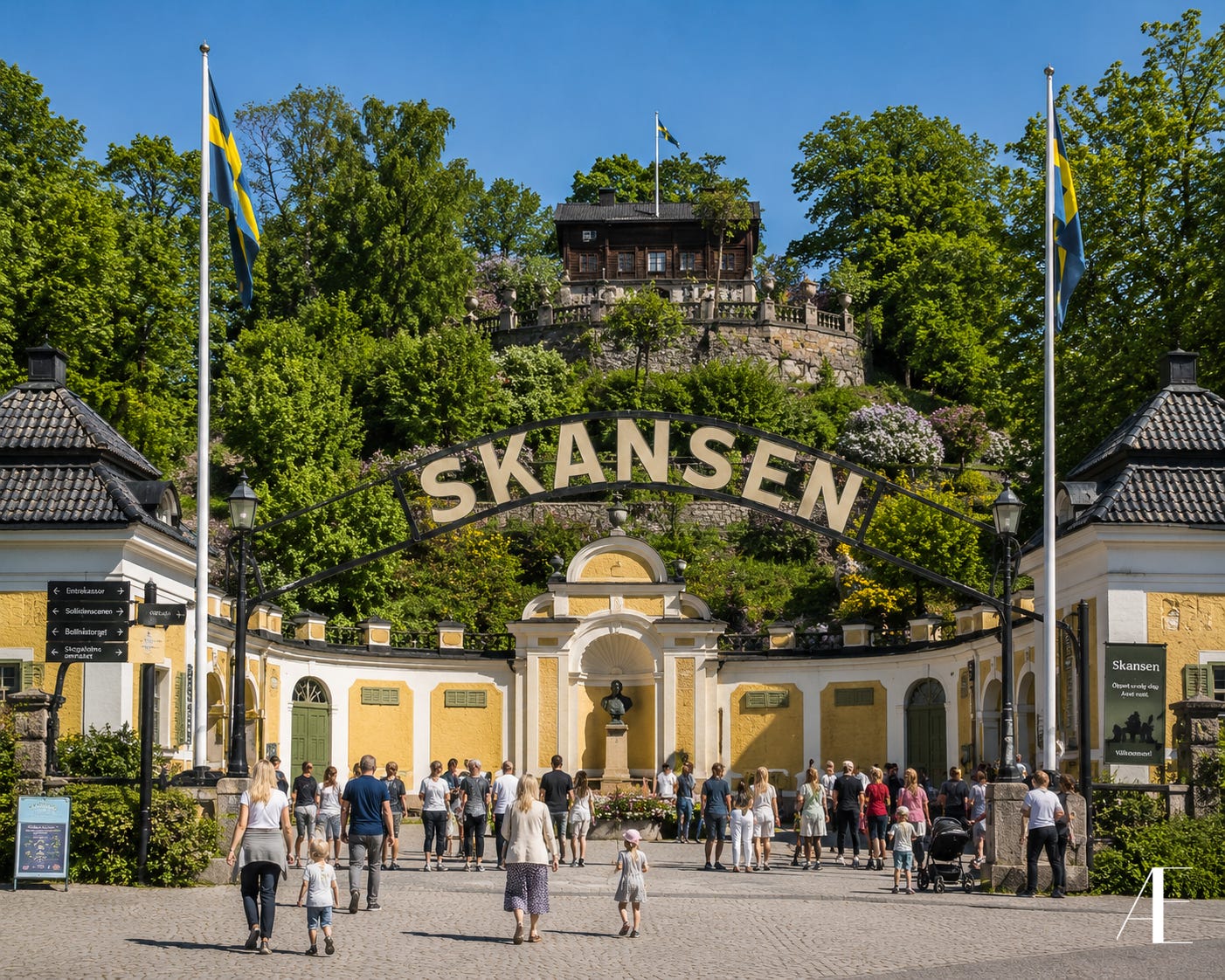
The world’s oldest open-air museum, founded in 1891, and still one of the best. Skansen occupies a large area of Djurgården and presents traditional Swedish buildings, crafts, and ways of life from different regions and eras of the country’s history, collected and reconstructed on a single site.
More than 150 historical buildings have been brought here and reassembled, from Sami homesteads to 19th-century urban workshops. But Skansen is not only a history museum: it also maintains a zoo of Nordic animals, where visitors can see elk, reindeer, wolverines, brown bears, and lynx in large enclosures. The combination works better than it sounds. Plan at least three hours, ideally a full morning. The views over Stockholm from the hilltop parts of the site are excellent.
Gamla Stan on foot

No guided tour, no agenda, no particular route. The right way to understand Gamla Stan is to walk into it from either end and follow whichever street seems most interesting. The alley called Mårten Trotzigs Gränd, only 90 centimetres wide at its narrowest point, is the kind of discovery that justifies this approach. Stortorget, the main square, is one of the most beautiful in Scandinavia, its coloured facades unchanged in their essential character for centuries.
The site of one of the most disturbing events in Swedish history, the Stockholm Bloodbath of 1520, when Danish King Christian II executed 82 Swedish nobles in a single day, is commemorated by a plaque on one of the buildings. The Cathedral, Storkyrkan, immediately adjacent to the Royal Palace, contains a 15th-century painting of the legend of Saint George and the Dragon that is considered one of the great works of medieval Scandinavian art. Do not rush Gamla Stan. It is a neighbourhood that reveals itself slowly.
Fotografiska
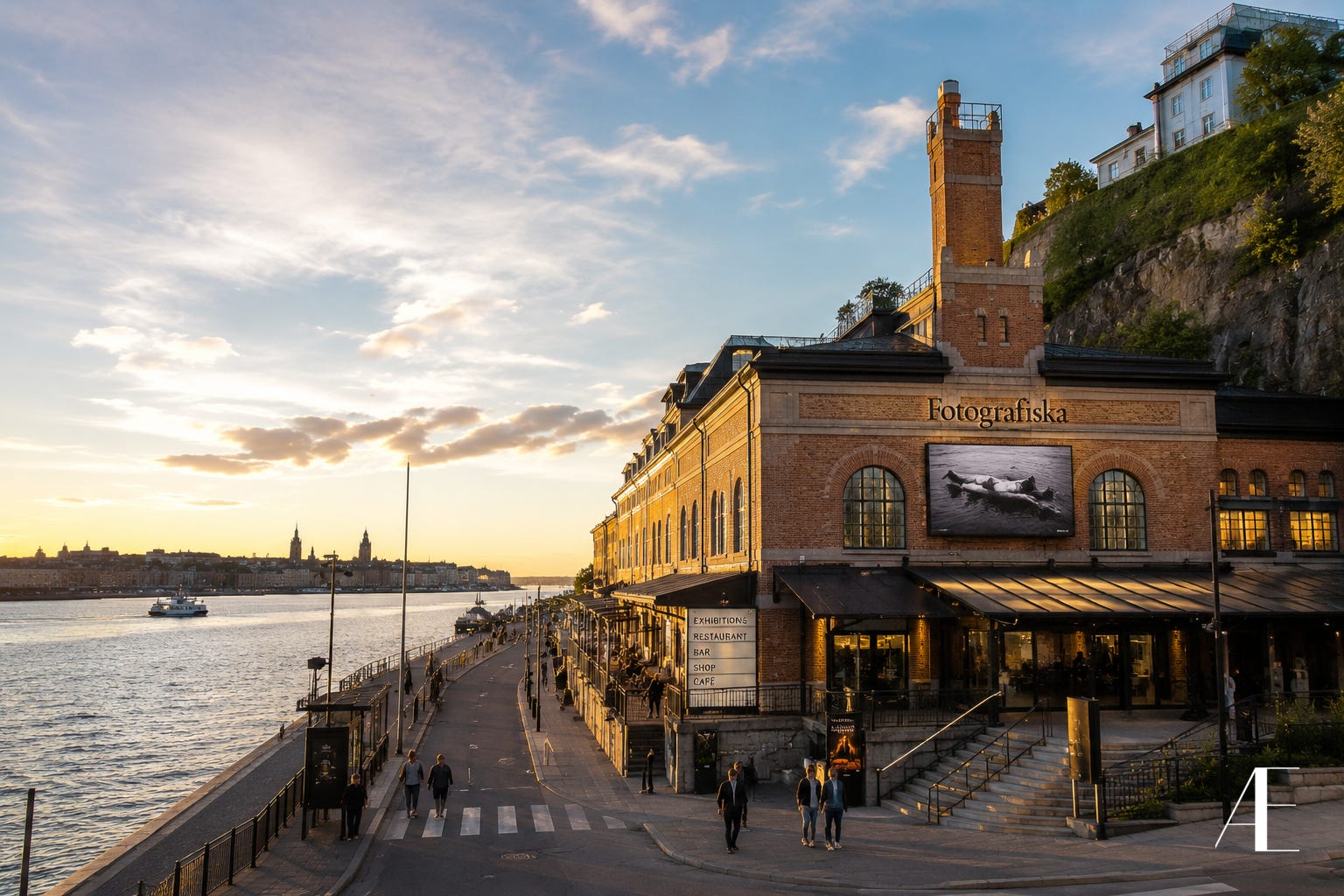
The world’s largest photography museum, occupying a converted waterfront warehouse in the northeastern corner of Södermalm, with views across the water to Djurgården. Fotografiska presents four or five major exhibitions simultaneously, rotating through a programme that mixes established international photographers with emerging voices and thematic shows.
The quality of curation is consistently high, and the building itself, with its raw industrial interiors and expansive water views, is an experience in its own right. The restaurant on the upper floor is worth a visit independently of any exhibition. Fotografiska is open late, making it a natural option for an evening visit.
The Stockholm Metro as art
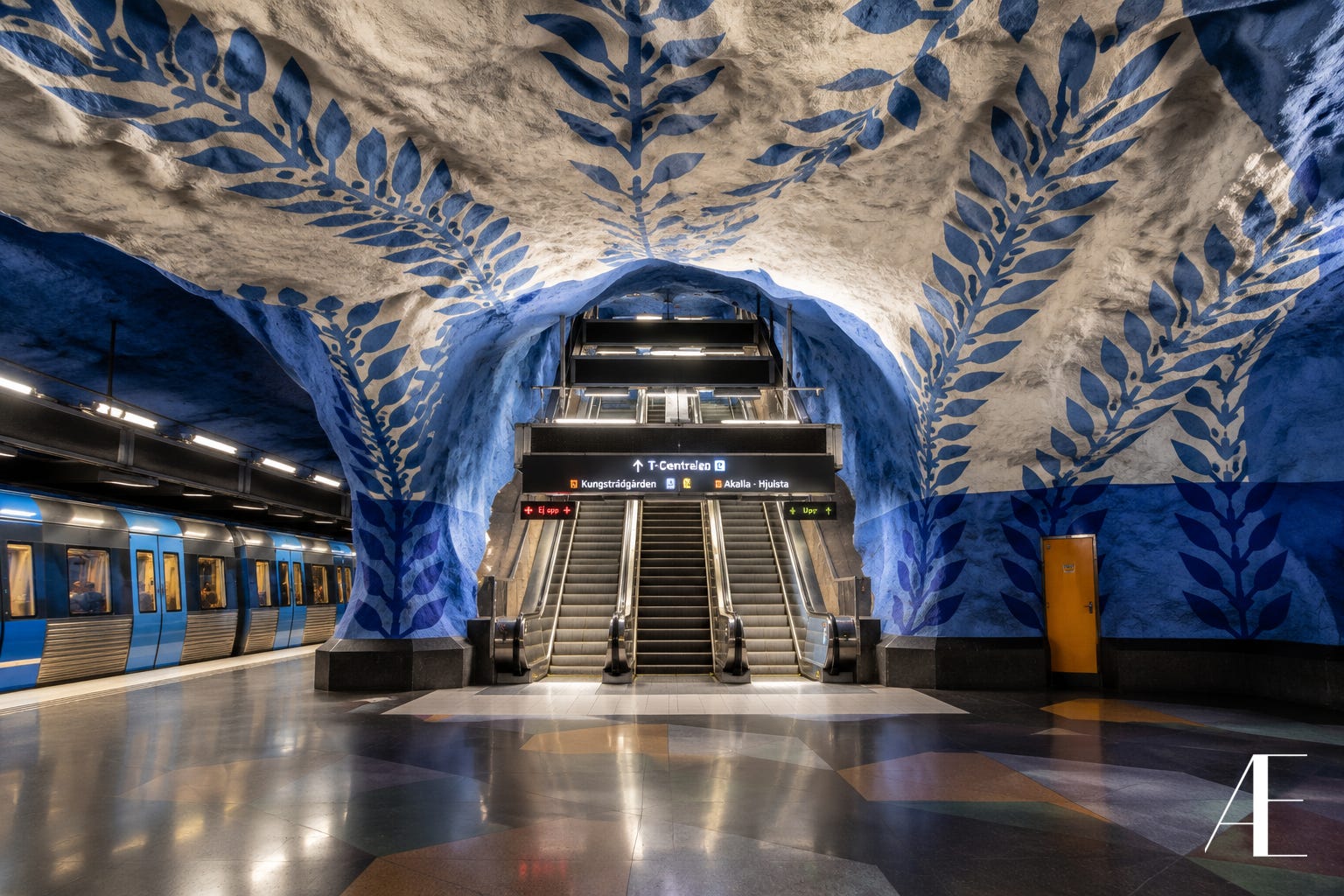
The Stockholm T-bana is the longest art exhibition in the world. Over ninety of the system’s hundred stations have been decorated with commissioned artworks since the 1950s, making an ordinary journey through the metro a genuinely extraordinary experience.
The Blue Line, which opened in the early 1970s, is particularly remarkable: Kungsträdgården station, with its excavated rock walls painted in vivid reds and greens and hung with fragments of the demolished 18th-century greenhouse that stood above it, is one of the great examples of public art anywhere in Europe.
T-Centralen, the central interchange station, features a large-scale ceiling mural by Per Olof Ultvedt. Solna Centrum, on the Blue Line, depicts a blood-red forest and a narrative about Swedish social issues. A single SL ticket, valid for 75 minutes, gives enough time to travel through several notable stations.
The Royal Palace and Gamla Stan’s Royal Sites

The Stockholm Palace, Kungliga Slottet, is one of the largest royal palaces in the world, with over 600 rooms on seven floors, and the official residence of the Swedish royal family. The Royal Apartments, the Treasury, and the Gustav III’s Museum of Antiquities are all open to visitors.
The changing of the guard, which takes place daily, is a more elaborate ceremony than its equivalents in many European capitals and worth timing a Gamla Stan visit around. The adjacent Riddarholmen church, just across a short bridge from Gamla Stan, is the burial place of most Swedish monarchs, from Gustav II Adolf to Gustav V, and is one of the finest medieval buildings in the city.
Drottningholm Palace
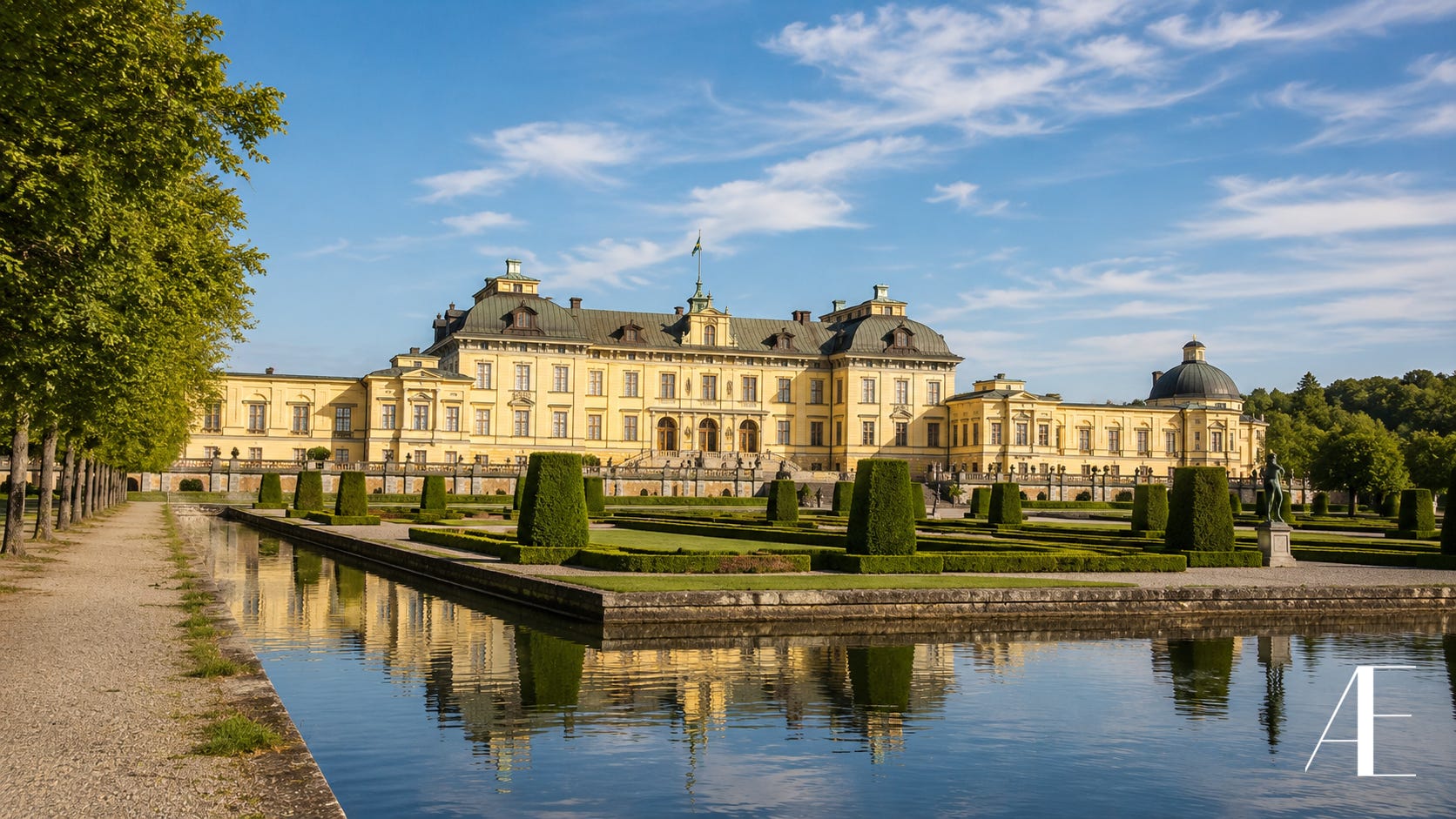
Located on the island of Lovön, approximately thirty minutes west of the city by boat, Drottningholm is the private residence of the Swedish royal family and a UNESCO World Heritage Site. The palace and its grounds were modelled on Versailles in the 17th and 18th centuries, and the formal gardens, baroque theatre, and Chinese Pavilion remain among the best-preserved examples of their kind in Europe.
The Drottningholm Court Theatre, built in 1766, still functions as a performance venue and uses many of its original 18th-century stage mechanisms, making it a unique attraction in itself. The boat from central Stockholm to Drottningholm takes around one hour each way and is one of the most pleasant journeys in the region. This is technically a day trip but is close enough to merit inclusion here: it should not be missed by anyone with four or more days in the city.
ABBA The Museum
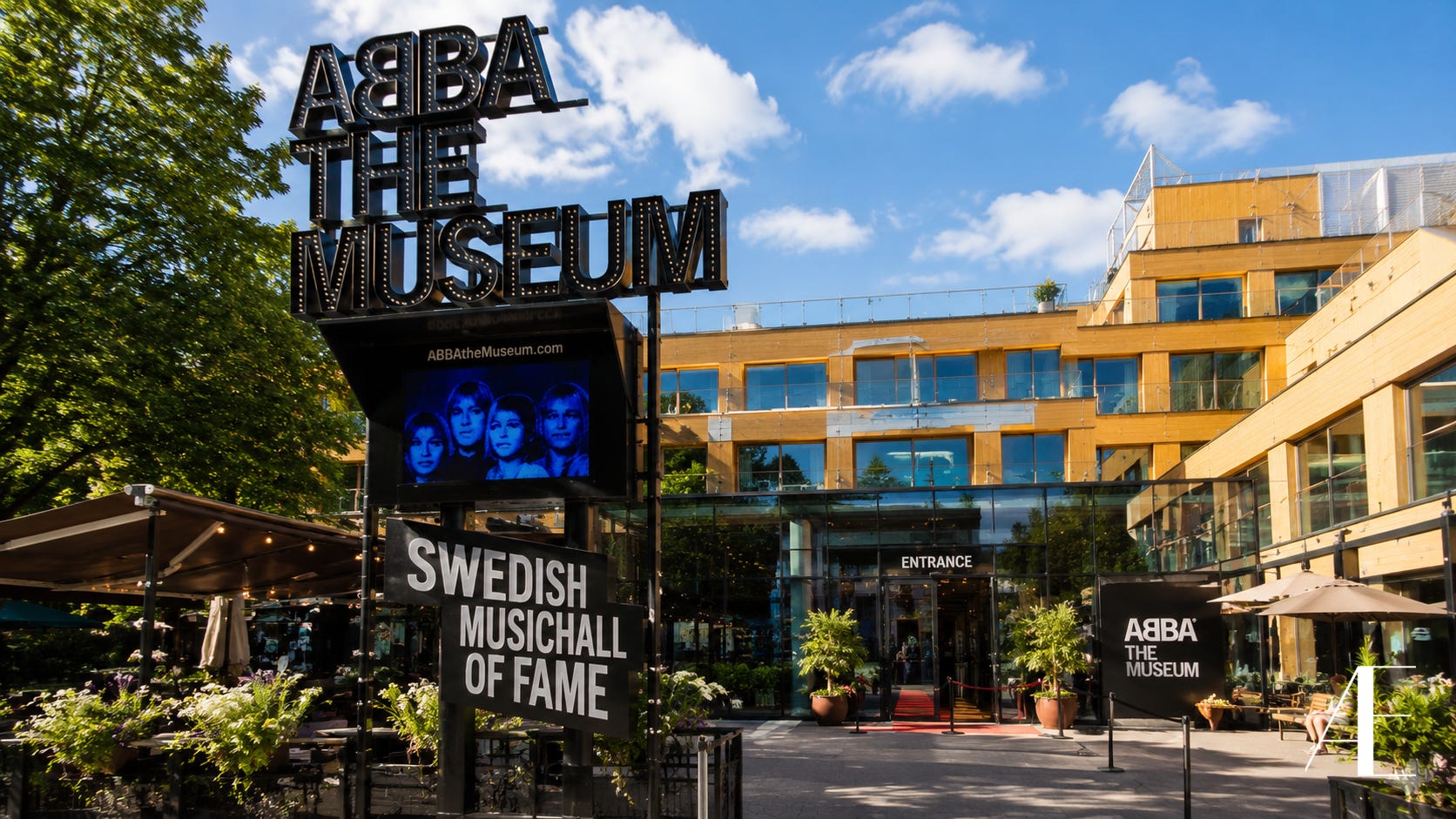
More engaging than the concept suggests, and the right museum for the phenomenon it describes. ABBA The Museum on Djurgården presents the band’s history through original costumes, instruments, memorabilia, and a well-designed series of interactive spaces that allow visitors to sing with holograms of the band members, mix original recordings, and try on virtual versions of the famous stage costumes.
The museum is honest about the scale of the ABBA phenomenon without becoming hagiographic. Worth two hours for anyone with even a passing interest in the band or in the music industry more broadly. Book timed entry in advance; it sells out consistently in summer.
Day trips from Stockholm

Stockholm’s geography makes it an excellent base for day trips in almost every direction. The archipelago stretches east into the Baltic, the lake country extends west and north, and several significant historic sites are within an hour by train.
The Stockholm Archipelago
The archipelago east of Stockholm comprises approximately 30,000 islands, islets, and skerries, stretching some eighty kilometres from the inner harbour out into the open sea. It is one of the most extraordinary natural environments in northern Europe, and accessible from the city by a network of public ferries and private boats.
The inner archipelago, reached within an hour, includes the island of Vaxholm, with its 16th-century fortress and well-preserved wooden townhouses, and is the most practical option for a half-day. The middle archipelago, two to three hours from the city, reaches islands like Grinda and Sandhamn, with beaches, walking trails, and seafood restaurants.
The best time for the archipelago is summer, when the ferries run most frequently and the light is at its most extraordinary. That said, the archipelago in winter, partly frozen and snow-dusted, is a different kind of remarkable. The Strömma company operates most of the island ferry services; check timetables carefully before planning a day out.
Uppsala
Sweden’s fourth-largest city, 70 kilometres north of Stockholm, is reachable by direct train from Stockholm Central in approximately forty minutes. Uppsala is the home of Uppsala University, the oldest university in Scandinavia, founded in 1477, and the city’s student character gives it an energy quite different from Stockholm.
Uppsala Cathedral, the largest church in the Nordic countries and the seat of the Archbishop of Uppsala, is one of the most impressive Gothic structures in Scandinavia, and the burial place of, among others, King Gustav Vasa and the scientist Carl Linnaeus.
Uppsala Castle, set on a hill above the city, houses a regional museum and offers good views over the rooftops. Old Uppsala, a few kilometres north of the city centre, contains a series of Viking-age royal burial mounds that are among the most significant archaeological sites in Sweden. Uppsala is an excellent choice for a half-day or full-day excursion.
Sigtuna
Sweden’s oldest town, founded around the year 980, sits on the northern shore of Lake Mälaren, approximately forty-five minutes north of Stockholm by train and bus. Sigtuna is a small, quiet place with a main street of wooden houses that has changed relatively little in two centuries, the ruins of several medieval churches, and a significant collection of Viking runestones. It is the most straightforward way to encounter Swedish medieval history outside Stockholm, and its lakeside setting is genuinely picturesque. Sigtuna is easily combined with Uppsala for a full day out.
Drottningholm Palace
See the previous section. Accessible by boat from Stadshuset (the City Hall) on Lake Mälaren, or by metro and bus for a faster, less scenic journey. The boat is the right choice in good weather.
Birka
A UNESCO World Heritage Site on the island of Björkö in Lake Mälaren, Birka was the most important trading centre in Scandinavia during the Viking Age, from approximately 750 to 975 AD. The island contains the largest known Viking Age burial ground in Sweden, with around 3,000 graves. Guided boat tours from Strömkajen in central Stockholm make the full-day trip practical and include entrance to the museum and a guided tour of the excavation sites. Birka is best visited in summer when the boats run regularly.
When to visit Stockholm
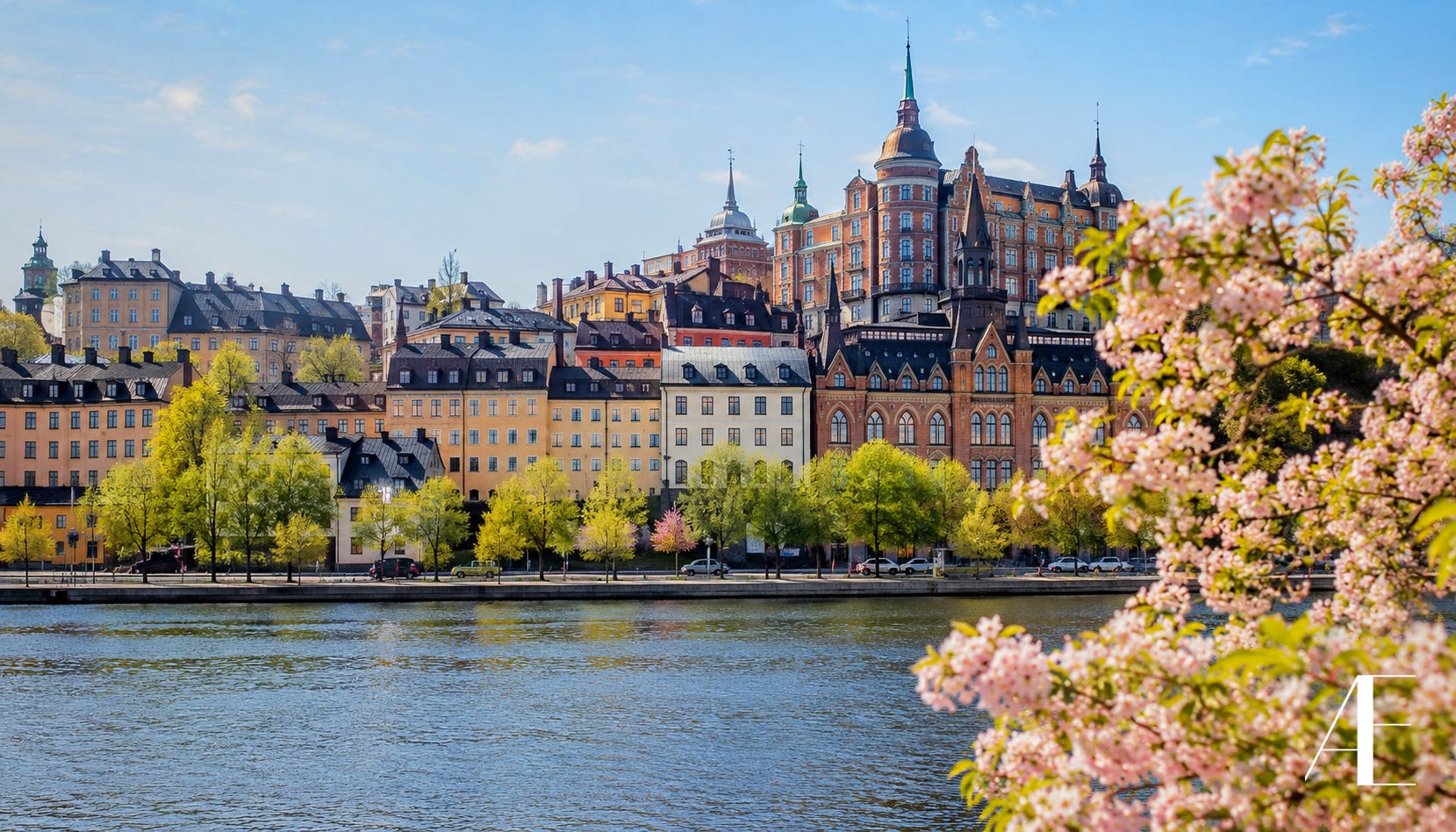
Stockholm is a year-round destination, but the experience changes significantly depending on when you go, and choosing the right time for the right kind of trip matters.
Summer (June to August) is the undisputed peak season, and for good reason. The long Nordic summer days are extraordinary: in June, Stockholm sees approximately eighteen hours of daylight, with the sun setting just before eleven in the evening and rising again before four in the morning. Temperatures typically reach 20 to 25 degrees Celsius, occasionally touching 30. The entire city moves outdoors.
The archipelago is at its most accessible and most beautiful. Midsummer, celebrated on the Friday between June 19 and 25, is the most important Swedish national festival and an unmissable experience if you can time a visit around it, though note that many Stockholmers leave the city for their summer cottages in the weeks around Midsummer, creating a quieter than usual capital. Stockholm Pride, in late July to early August, is one of the largest Pride events in Europe.
The August Crayfish Season, when Swedes gather for outdoor parties wearing bibs and paper crowns to eat crayfish with dill and drink aquavit, is something to seek out actively. The downside of summer is the crowds and the accommodation prices, both of which are at their annual peak.
Late spring and early autumn (May and September) offer the best balance of reasonable weather, manageable crowds, and significantly lower prices than peak summer. May in Stockholm is genuinely excellent: the city’s parks bloom, the outdoor terraces open, and the archipelago season begins.
The cherry blossoms in Kungsträdgården park, typically in mid-to-late April but often lasting into early May, attract large crowds of their own but are worth timing around. September combines crisp, clear days with the golden light of the Swedish autumn and the first fires in the bars and restaurants. October adds colour to the parks and streets.
Winter (November to March) requires honest preparation. Stockholm in December is cold, dark, and in the deepest part of the season, seeing as few as six hours of daylight. But it is also, for the right traveller, genuinely beautiful. The Christmas markets around Gamla Stan and Stortorget, running from late November through December, are among the best in Scandinavia, with mulled wine, open-fire cooking, and traditional crafts in surroundings that feel made for the season.
The city’s light installations during winter are impressive. Museum culture flourishes when the outdoors is not an option. January to March is Stockholm at its most affordable, and the interior life of the city, the cafe culture, the restaurant scene, the design shops, is at its most locally authentic.
How many days to spend in Stockholm
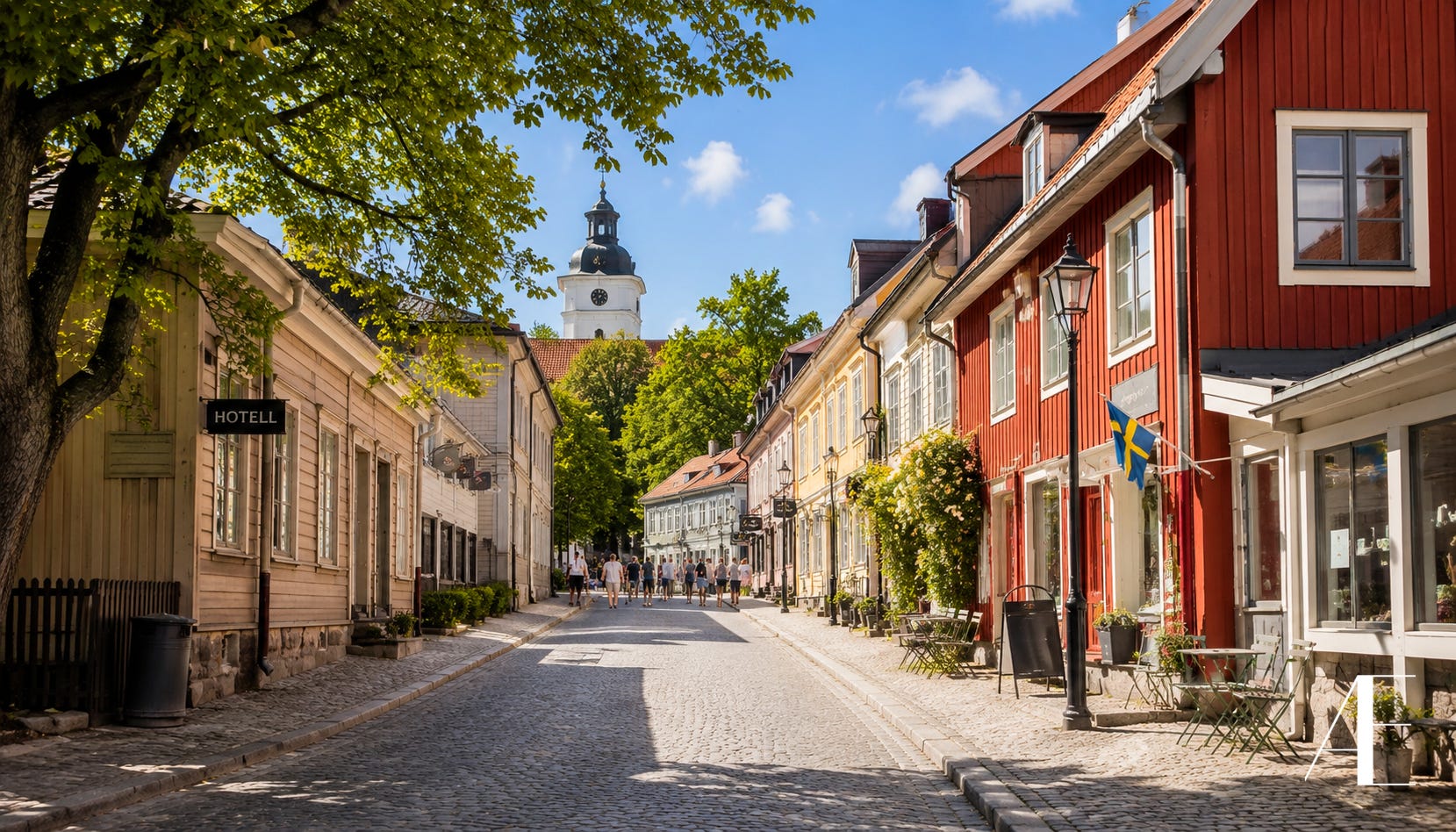
Three days is the minimum for Stockholm done properly. It gives you time to cover Gamla Stan, Djurgården, and Södermalm with some depth, to eat well twice or three times, and to take one short excursion toward the archipelago or Drottningholm.
Four or five days is the ideal visit for a first-time traveller. The additional time allows for a full day in the archipelago, more time in Östermalm and its food market, and the slower pace that Stockholm genuinely rewards. The city does not push you through its sights at pace. It invites you to sit in its cafes, walk its waterfronts, and notice things.
A week or more begins to reveal the deeper layers: the day trip to Uppsala and Sigtuna, the Birka Viking site, the neighbourhood restaurants in Vasastan and Kungsholmen that have nothing to do with tourism, the afternoon spent in a Stockholm sauna followed by a swim in the harbour. Stockholm for a week is never a problem of running out of things to do.
A suggested 4-day itinerary
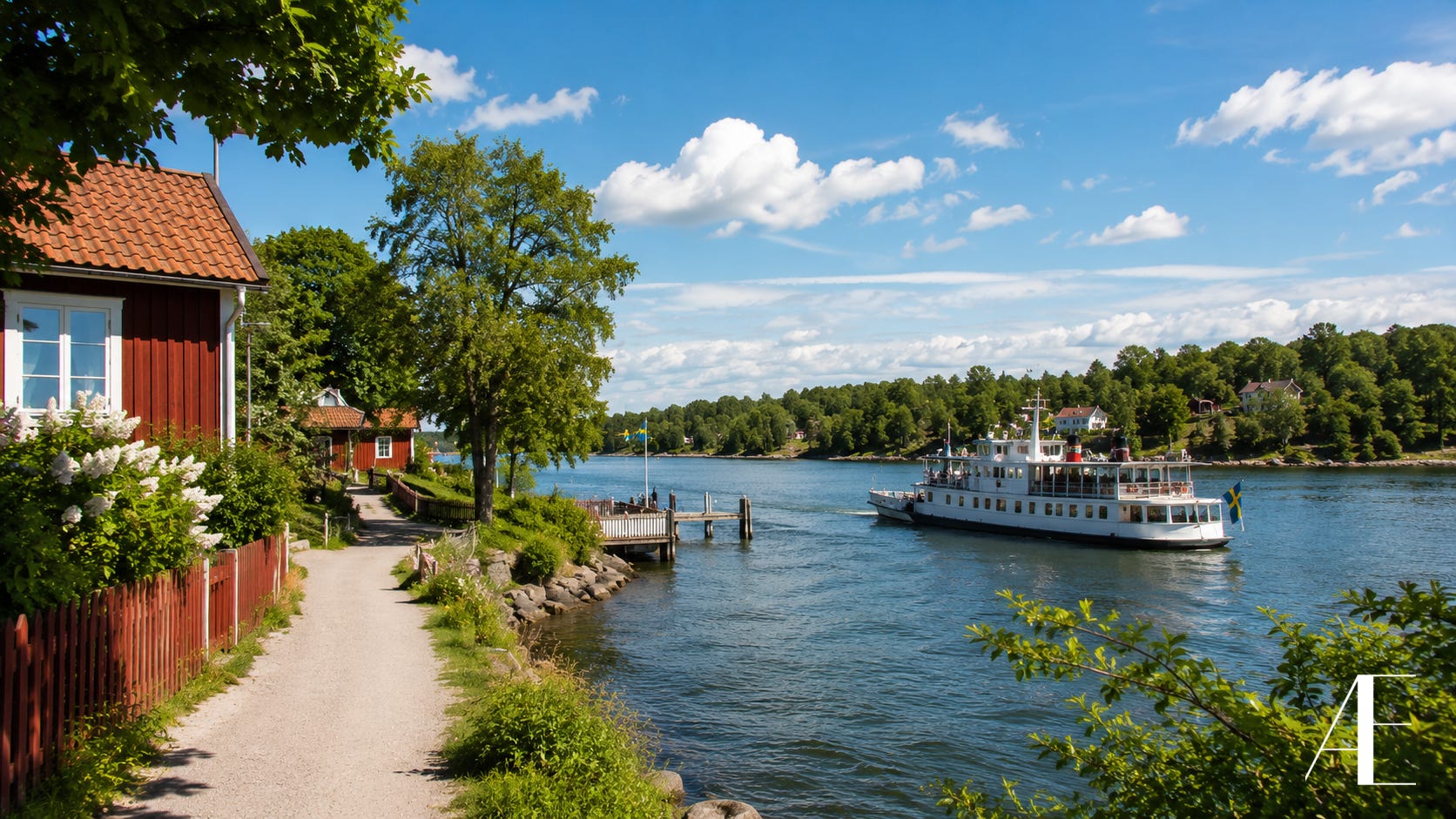
Day 1: Gamla Stan and the Royal Sites
Begin at Stockholm Palace for the changing of the guard, then work your way through the Royal Apartments and the Treasury. Cross the bridge into Riddarholmen to see the royal burial church. Return to Gamla Stan for lunch, ideally in one of the side streets away from the main tourist flow. After lunch, give Gamla Stan the slow walking afternoon it deserves: Mårten Trotzigs Gränd, Stortorget, the Cathedral, the Swedish Parliament visible across the water. Take the metro from Gamla Stan station and ride the Blue Line to Kungsträdgården for the evening, returning through the decorated stations. Dinner in Gamla Stan or on the edge of Södermalm.
Day 2: Djurgården, the Vasa, and Skansen
Take the Djurgården tram or ferry early to avoid the first wave of visitors at the Vasa Museum. Two hours minimum at the Vasa. Walk to Skansen for the afternoon, allowing three hours for a thorough visit. If the season is right, have a late lunch at Rosendal’s Trädgård, the organic kitchen garden and restaurant in the middle of Djurgården’s parkland. Take the tram back through Östermalm and visit Östermalmshallen, the food market, for shopping or an aperitivo at one of the stalls. Dinner in Östermalm.
Day 3: Södermalm, Fotografiska, and the City
Morning in Södermalm: the SoFo district for shopping and coffee, followed by the clifftop view from Monteliusvägen. Visit Fotografiska in the early afternoon. Cross back to central Stockholm via the ferry from Slussen to Kungsträdgården, then walk north along Strandvägen toward the Lydmar Hotel waterfront before turning into Norrmalm. Take a T-bana ride on the Green Line for the art. Evening back in Södermalm, now the city’s most dynamic area for new restaurants.
Day 4: Day trip to Drottningholm or the Archipelago
Take the morning boat to Drottningholm, spending three to four hours at the palace, gardens, Chinese Pavilion, and the Court Theatre. Return by early afternoon and spend the remainder of the day in whichever neighbourhood has been least covered: Vasastan for lunch and a cafe, Kungsholmen for the Stadshuset exterior and the waterfront. A final dinner in central Stockholm at one of the addresses covered below.
Where to eat
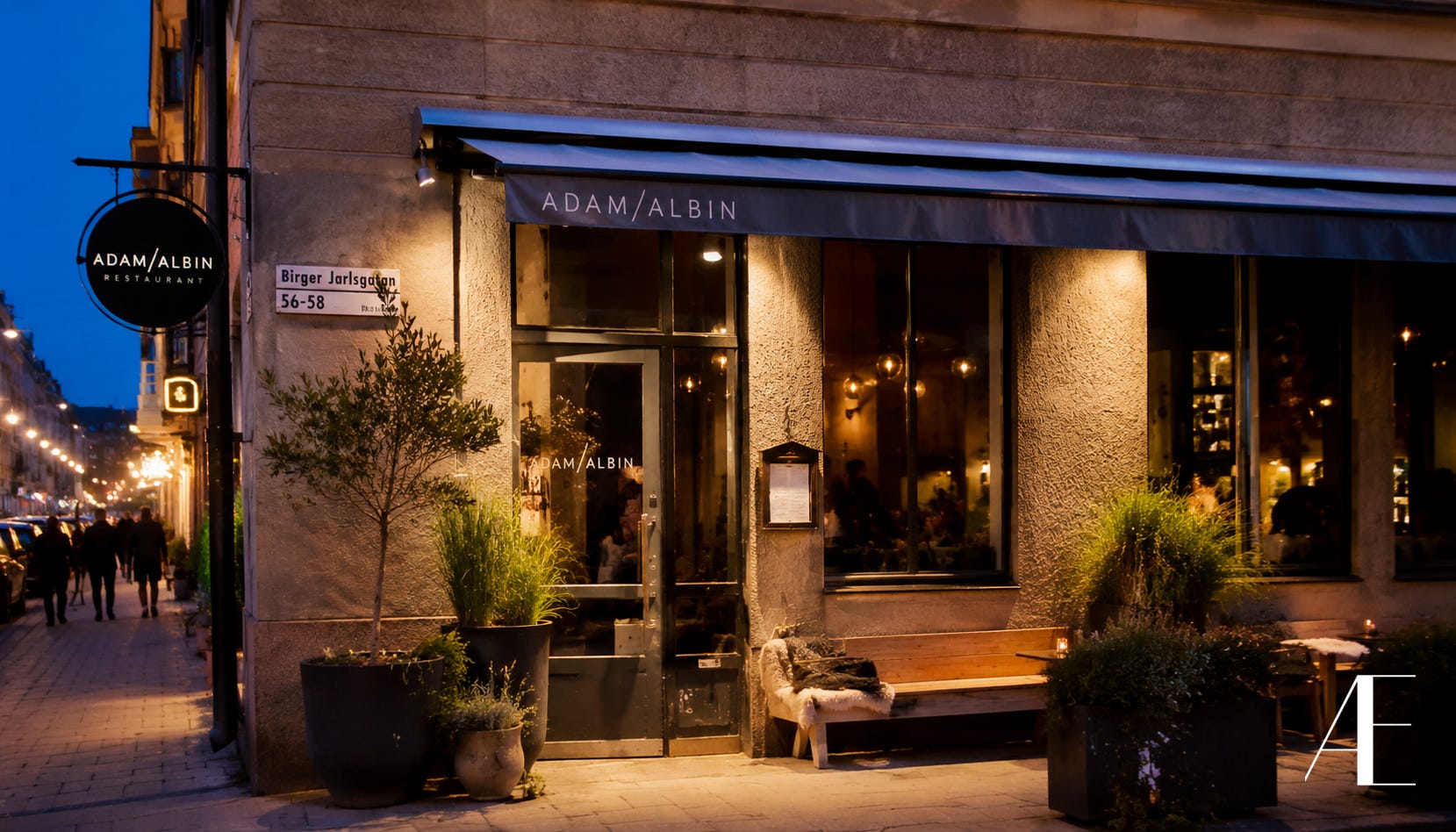
Stockholm’s restaurant scene underwent a fundamental transformation between roughly 2010 and 2020, moving from a city associated primarily with meatballs and pickled herring to one of the most technically ambitious dining cultures in the world. The Michelin guide now covers twenty-six restaurants in Sweden’s capital and immediate surrounds. The Nordic ingredients, previously presented simply, are now treated with the same rigour and creativity applied to French classical cuisine in its prime. What follows is a curated selection across different price points and cooking styles.
Frantzén
Nordic-Asian fine dining, Norrmalm
Sweden’s only three-Michelin-star restaurant, and since 2018 the first in the country to receive that designation. Chef Björn Frantzén operates from a renovated 19th-century townhouse in Norrmalm, where guests move through three floors of the building over the course of an evening, changing rooms between courses. The cooking is a hybrid of Nordic ingredients and Asian technique, with a particular debt to Japanese cuisine in the precision and restraint of the plating and flavour composition. Twenty-three seats. Weeks of advance booking, minimum. This is the restaurant that defines the ceiling of Stockholm’s dining culture, and it is worth the planning required to secure a table if serious dining is a priority of the trip.
Ekstedt
Open-fire Nordic cuisine, Östermalm
Chef Niklas Ekstedt cooks over open fire exclusively, using birch wood and traditional 18th-century Swedish techniques applied to contemporary Nordic ingredients. The result is a cooking style that is genuinely unlike anything else: the smoke, the char, the particular sweetness that fire gives to root vegetables and fish, running through an entire tasting menu. One Michelin star. The dining room is warm and intimate, and the cooking has a directness and honesty that makes it one of Stockholm’s most satisfying fine dining experiences. Significantly more accessible than Frantzén in terms of booking.
Adam/Albin
Nordic fine dining, Östermalm
A high-energy fine dining room from chefs Adam Dahlberg and Albin Wessman, with communal bar-style seating around the kitchen, a soundtrack that keeps the energy from tipping into solemnity, and a tasting menu that combines technical ambition with a slightly decadent richness. One Michelin star. The combination of serious cooking and relaxed setting has made it one of Stockholm’s most popular dinner reservations, and one of its most reliably excellent.
Aira
Modern Scandinavian, Djurgården
Situated on the waterfront on Djurgården’s harbour side, Aira is the restaurant that made Tommy Myllymäki’s reputation. Two Michelin stars. The interior is a Jonas Bohlin design that won best Swedish interior design in 2020, all considered lines and natural materials. The cooking draws on Nordic produce with global inspiration, and the water views from the dining room make the setting one of Stockholm’s most atmospheric.
Operakällaren
European gourmet cuisine, Norrmalm
Located in the Royal Opera House on Gustav Adolfs Torg, Operakällaren is one of the most grandly beautiful dining rooms in Sweden, with an oak-panelled interior adorned with historical paintings and the confidence of a restaurant that has been catering to Stockholm’s establishment for over a century. One Michelin star. Chef Stefano Catenacci produces a menu of Nordic produce treated with French technique, and the restaurant carries a formal weight that makes it the natural choice for a celebratory dinner. The wine list is among the most comprehensive in the city.
Ergo
Modern French-Nordic, Östermalm
One of Stockholm’s most recent Michelin additions, receiving its first star in 2025. Chefs Petter Johansson and Sanna Risberg, both veterans of Frantzén, have opened a restaurant that places French classical technique in dialogue with Nordic seasonality, without the theatrics of some of the city’s more established addresses. Elegant, precise, and thoughtfully composed. An excellent choice for fine dining without the ceremony of Frantzén or the buzz of Adam/Albin.
Östermalmshallen
Food market and stalls, Östermalm
Stockholm’s grand covered food market, built in the late 19th century in a striking Venetian Gothic style, is one of the best in Scandinavia. The permanent stalls sell exceptional Swedish produce, from gravlax and vendace roe to cloudberry jam and artisan cheeses. Several counters offer sit-down eating at lunch, and the fish mongers in particular are worth a close look. This is the place to understand Swedish food culture from the inside. Go at lunchtime on a weekday to eat with Stockholm’s office workers rather than at the weekend when it fills with visitors.
For a classic Swedish lunch
The dagens lunch, or daily lunch special, is one of Swedish food culture’s great institutions. For 100 to 150 SEK, most restaurants offer a complete weekday lunch: a main course, salad, bread, and coffee. The quality is consistently high, and eating a serious daily lunch rather than an expensive dinner is one of the most sensible ways to manage the cost of Stockholm. Any good local restaurant in Södermalm, Vasastan, or Kungsholmen will serve one.
Where to stay
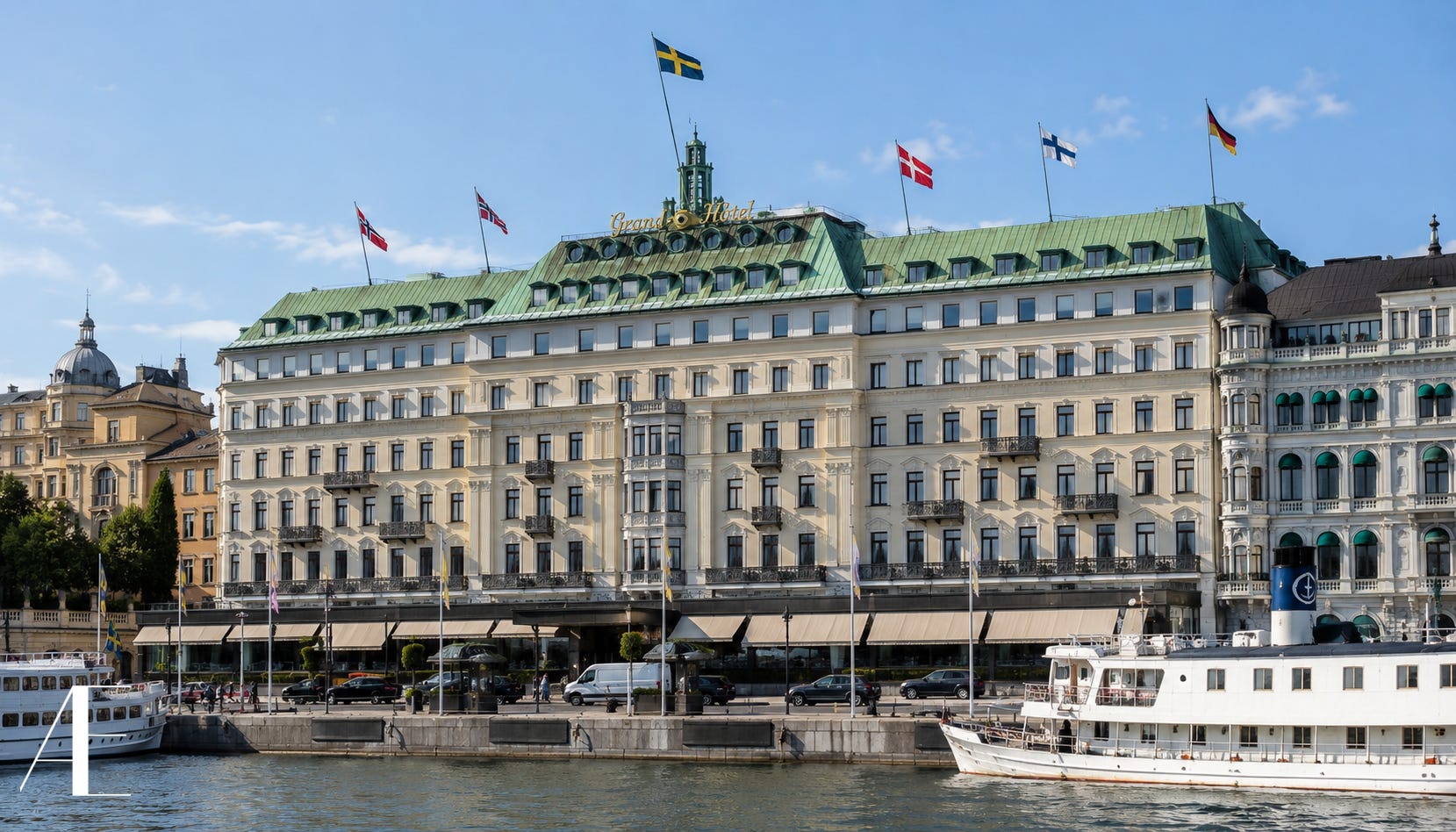
Stockholm’s accommodation options are genuinely strong across all price points. The following selection covers four tiers, with specific properties and an honest assessment of what each offers.
Luxury
Grand Hôtel Stockholm
Blasieholmen, adjacent to Gamla Stan
The most historically significant hotel in Stockholm, facing the Royal Palace across the water from Blasieholmen. The Grand has been the address of Nobel laureates and heads of state since its opening in 1874, and the main building retains the gilt and grandeur appropriate to that history. The Nordic Spa within the hotel is one of Stockholm’s finest, and the breakfast buffet, the Veranda restaurant with its views across the water, is regularly cited as one of the best hotel breakfasts in Scandinavia. The hotel is large, which means the service is occasionally impersonal by comparison with smaller properties, but the history and the location are genuinely without equal in the city.
Lydmar Hotel
Norrmalm, facing the Royal Gardens
The finest boutique hotel in Stockholm, and one of the best in northern Europe. The Lydmar occupies a building from the early 19th century facing Nybrokajen, with views across the water to the National Museum and Skeppsholmen. Forty-six rooms, each individually furnished with a combination of period details and carefully chosen contemporary art, leather, and natural materials. No two rooms are identical. The dining room and terrace are one of Stockholm’s great social spaces: the Jazz Brunches on weekends, the Lydmar Live summer concerts on the terrace, the rotating photographic exhibitions in the lobby. The service is personal and unhurried. Guests have complimentary access to the Nordic Spa at the Grand Hotel next door. Book well ahead; the Lydmar fills consistently.
Boutique
Hotel Rival
Mariatorget, Södermalm
Part-owned by ABBA’s Benny Andersson and occupying a beautifully restored 1937 Art Deco cinema on Södermalm’s most pleasant square, Hotel Rival is Stockholm’s most characterful mid-market option. The retro glamour aesthetic, the excellent in-house bistro, and the Södermalm neighbourhood all work together to create a stay that feels genuinely of the city rather than merely in it. One of Stockholm’s great neighbourhood hotels.
Bank Hotel
Östermalm
A prestigious contemporary boutique hotel in a restored bank building near the waterfront and the city’s best shopping. Eighty-two individually designed rooms and suites that blend historic architectural detail with modern luxury. Two restaurants, a rooftop pool, sauna, and a fitness centre. The Bank Hotel positions itself as Östermalm’s answer to the Lydmar, with a slightly grander scale and a more formal atmosphere.
Mid-Range
Downtown Camper by Scandic
Norrmalm
One of the more inventive hotels in Stockholm at this price point: an outdoor adventure aesthetic applied to a central city hotel, with paddleboard rental, city hiking maps, rooftop yoga, and an excellent all-day restaurant. A refreshing alternative to conventional mid-range options and a good choice for active travellers who want central access without paying boutique prices.
Hotel Frantz
Between Gamla Stan and Södermalm
A smaller boutique hotel in a building dating from 1647, with tastefully designed rooms and a location that puts both the Old Town and Södermalm within easy walking distance. Friendly staff, a good breakfast, and the quiet confidence of a hotel that knows what it is. Excellent value for the neighbourhood.
Budget
Stockholm’s budget accommodation options are generally clean and well-managed, reflecting Swedish standards of public life. The Collectors Lord Nelson Hotel in Gamla Stan offers small but characterful rooms in the heart of the Old Town at mid-to-budget prices. Several well-designed hostels operate in Södermalm and Vasastan for travellers prioritising budget over amenities. The principle of paying a premium for location is correct in Stockholm: the public transport is good enough to make outlying hotels practical, but the city rewards walkers, and walking requires being well-placed.
Practical information
Currency: Sweden uses the Swedish Krona (SEK). As of 2026, approximately 10 to 11 SEK to 1 Canadian dollar. Stockholm is a near-cashless society in practice: card payment is accepted everywhere, and many cafes and smaller venues no longer accept cash at all. Carry a card with low foreign transaction fees. ATMs are available throughout the city but are used primarily for emergencies.
Language: Swedish is the official language, but English is spoken fluently and universally in Stockholm. Menus, museum signs, and transport information are routinely available in English. No Swedish is required to function normally in the city, though learning the greeting (hej), thank you (tack), and please (snälla or varsågod) is always appreciated.
Getting around: The SL (Storstockholms Lokaltrafik) network covers the metro (T-bana), buses, trams, commuter trains, and inner-city ferries on a single integrated ticketing system. A single 75-minute ticket costs 43 SEK and allows unlimited transfers within that window. A 24-hour pass is around 175 SEK, a 72-hour pass 350 SEK. Tap a contactless bank card directly at the gates and readers for the simplest experience. The SL app is useful for journey planning. For the central areas of Stockholm, much of the visiting is best done on foot: Gamla Stan to Östermalm is under thirty minutes at a comfortable pace.
Airport: Stockholm Arlanda Airport, the main international airport, is approximately 45 kilometres north of the city. The Arlanda Express train runs to Stockholm Central Station in approximately 20 minutes and costs around 300 SEK. The Flygbussarna airport coaches are cheaper (around 130 SEK) but take approximately 45 minutes depending on traffic. Taxis are available but significantly more expensive; use only metered, licensed vehicles.
Tipping: Sweden’s service industry operates on a living wage model, which means tips are genuinely optional rather than a concealed component of compensation. The cultural norm is to round up to the nearest convenient amount at restaurants or to leave 5 to 10% at a sit-down dinner if the service was notably good. No one will be offended by not tipping, and no one will be made uncomfortable by a small tip. In taxis, rounding up the fare is standard.
Safety: Stockholm is one of the safest major capitals in Europe by any measure. Violent crime rates are low, and the city is navigable without anxiety at most hours. Standard urban precautions apply, particularly against opportunistic theft in crowded areas like Gamla Stan on summer weekends and on crowded metro lines. The emergency number is 112.
Electricity: Sweden uses the standard European 220-240V with Type F (Schuko) two-pin plugs. North American travellers will need a universal adapter.
Weather: Pack layers regardless of season. Summer temperatures can reach 25 to 30 degrees Celsius but evenings cool quickly, and Atlantic fronts can bring rain at any time of year. Winter requires serious outerwear: temperatures regularly fall below zero from November through February, with occasional cold snaps reaching minus fifteen or lower. Spring and autumn are variable and require a waterproof layer.
Systembolaget: Sweden’s state-run alcohol retail monopoly operates all off-licence alcohol sales. Most supermarkets carry only wine and beer up to 3.5% ABV. For anything stronger, visit a Systembolaget, found throughout the city, during opening hours, typically Monday to Friday 10:00 to 18:00, Saturday 10:00 to 15:00. Restaurant and bar service of alcohol is unrestricted.
How Stockholm fits into a broader Scandinavian trip
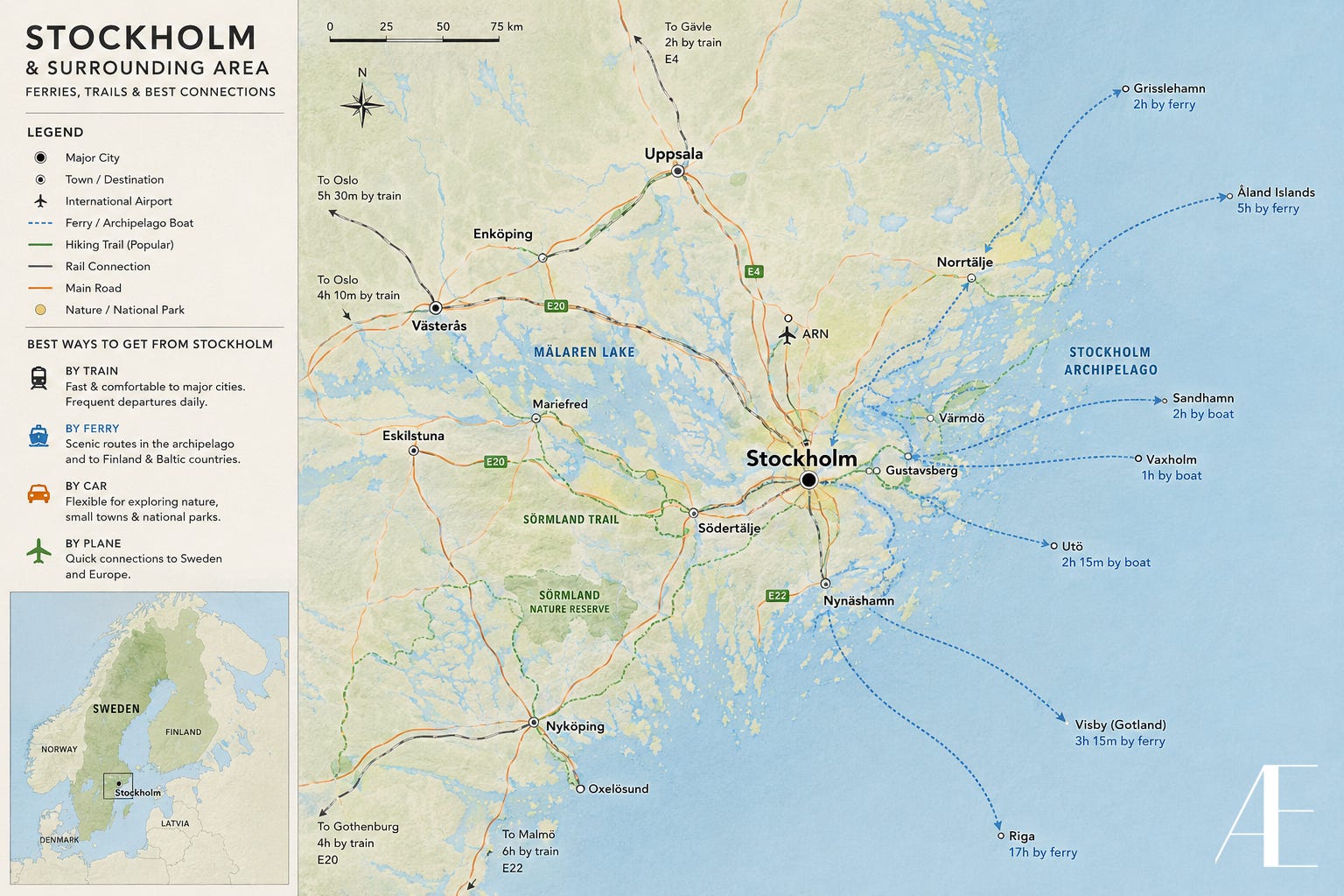
Stockholm is the natural hub of any Scandinavian itinerary, both geographically and logistically. It sits at the convergence of the main rail corridors through northern Europe and within easy flying distance of the entire region.
Stockholm and Copenhagen is the most natural pairing. The direct train between the two cities takes approximately five hours (or slightly longer with current infrastructure), crossing the Øresund Bridge between Malmö and Copenhagen in one of the more dramatic rail passages in Europe. The combination covers Swedish and Danish culture, two of Scandinavia’s most interesting food cities, and a contrast in urban character, Stockholm’s archipelago and waterways against Copenhagen’s flat, bicycle-scaled city, that is instructive.
Stockholm and Norway typically means adding Oslo or Bergen to the itinerary. Oslo is approximately five to six hours from Stockholm by direct train, a journey through some of the most beautiful Swedish and Norwegian landscape. Bergen is more comfortably reached by flying to Oslo and continuing by train or plane. The Norway in a Nutshell route, which combines rail, fjord ferry, and scenic mountain railway, is one of the great travel experiences of northern Europe and pairs naturally with a Stockholm base.
Stockholm and the Swedish Highlands is a less obvious but genuinely rewarding extension. The overnight sleeper train from Stockholm to Kiruna in Swedish Lapland opens up the far north: the Icehotel at Jukkasjärvi (open in its permanent cold rooms year-round), the possibility of northern lights from September through March, and the extraordinary landscape of the Arctic interior. This is a longer extension requiring at minimum three or four days in the north.
Stockholm and the Baltic Capitals is the natural cruise itinerary for anyone interested in the region. Ferry services connect Stockholm directly to Helsinki (overnight), Tallinn (overnight), and Riga, and day or overnight cruises on the archipelago sea are one of the most distinctive ways to extend a Stockholm visit into the broader Baltic.
Frequently asked questions
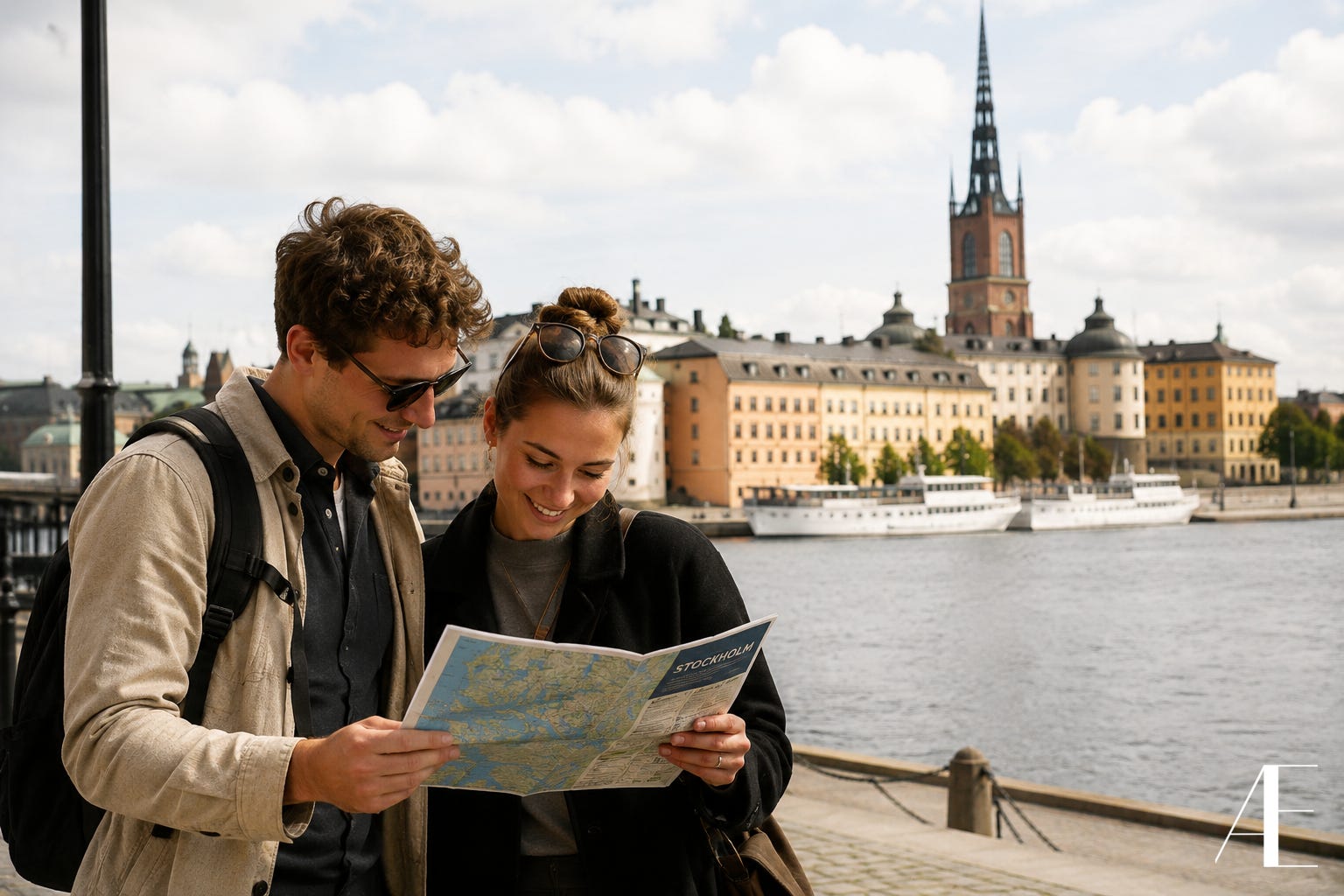
Is Stockholm worth visiting for the first time, or is it better suited to experienced European travellers?
Stockholm is an excellent first destination in northern Europe, and in some ways a better introduction to the region than Copenhagen or Oslo. It is large enough to feel like a significant capital while remaining compact enough to be manageable without a car or complex planning. The English spoken here is near-universal, the public transport requires no Swedish whatsoever, and the cultural density, museums, architecture, food, the archipelago immediately adjacent, is high enough to reward a traveller at any level of experience.
How expensive is Stockholm really?
Stockholm is one of the more expensive cities in Europe, and there is no point in pretending otherwise. A sit-down dinner with wine at a good mid-range restaurant will cost 400 to 600 SEK per person. A café lunch or dagens lunch special can be done comfortably for 120 to 160 SEK. A single metro ticket is 43 SEK. Museum admission runs from free (the Moderna Museet’s permanent collection, the Historiska Museet) to 230 SEK (the Vasa in peak season). The honest advice is to eat the daily lunch special seriously, drink at the level of Swedish beer and house wine rather than cocktails, and spend the savings on one exceptional meal. Stockholm at the top of its restaurant culture is genuinely world-class and worth the cost.
Do I need to book museum tickets in advance?
For the Vasa Museum and ABBA The Museum, advance booking is strongly recommended in summer and during Swedish school holidays. For most other museums, arriving and buying at the door remains practical outside peak season. The Stockholm Pass (from approximately 949 SEK for 24 hours) gives access to over sixty attractions and may offer value for visitors planning three or more paid visits per day, though ABBA The Museum is notably excluded and must be purchased separately.
Is the Stockholm Card or Stockholm Pass worth buying?
It depends entirely on the itinerary. For a visitor planning to visit the Vasa Museum, Skansen, Fotografiska, a boat tour, and one or two additional museums in a single day, the pass likely pays for itself. For a visitor spending significant time walking, in cafes, and in the free areas of Gamla Stan, it will not. The honest advice is to add up the individual admission prices for the specific attractions you plan to visit and compare them to the pass cost before purchasing.
What is the best way to experience the Stockholm archipelago?
The most practical options are the Strömma ferry services, which run scheduled routes to the main island destinations from Strömkajen in central Stockholm. In summer, the ferries are frequent and can be taken on an ad hoc basis. For a first visit, the island of Vaxholm offers the classic Stockholm archipelago experience within a comfortable half-day, with the historic wooden town, the fortress, and the ferry journey through the inner islands. Sandhamn, further out and requiring a longer ferry, is the choice for anyone who wants genuine outer archipelago scenery and a longer day on the water.
Is Stockholm safe for solo travellers, including solo women?
Stockholm is among the safest cities in Europe for solo travel by any demographic. The public transport is reliable late into the evening, the city is well-lit, and the culture of not interfering with strangers in public space means that the kind of low-level harassment common in some other capitals is essentially absent here. Standard precautions in crowded tourist areas and public transport still apply.
Can I visit Stockholm without speaking Swedish?
Entirely. English in Stockholm is genuinely universal, not merely adequate. Museum staff, restaurant servers, hotel receptionists, taxi drivers, and the average person on the street in Gamla Stan will all communicate in comfortable English without hesitation. The T-bana signage, the SL app, and restaurant menus are routinely available in English. Swedish is worth learning a few words of out of courtesy; it is not remotely necessary for navigating the city.
Plan your trip to Stockholm with ÆRIA Voyages
Stockholm sits at the intersection of several of the most popular travel styles I work with: the Scandinavian capital circuit, the Baltic cruise itinerary, the northern lights extension into Swedish Lapland, and the Nordic river and coastal cruise routes that call at the city’s waterfront. It is a destination I recommend without hesitation as a first visit to northern Europe and one that I know rewards a return trip.
Whether you are looking to pair Stockholm with Copenhagen and Oslo on a Nordic rail journey, join a Baltic cruise that begins or ends in the city, or build a private itinerary that balances the museum culture with serious time in the archipelago, I can build that trip in detail from the ground up. My role is to handle the logistics, the accommodation selection, and the timing so that you arrive knowing exactly what to expect and where to spend your time, rather than working it out on arrival.
If Stockholm is on your list, or if you are thinking about Scandinavia and are not yet sure where to begin, get in touch and we can work out what the right version of the trip looks like for you.
Yvan Junior Blanchette
Travel & Cruise Specialist
ÆRIA Voyagesyvanblanchette@aeriavoyages.com
1-888-460-3388
aeriavoyages.com