

The Ultimate Travel Guide to LYON: What to Know, Where to Go, and How to Make the Most of Your Visit
Updated 2026 | France | First-Time Visitors | In-Depth Guide

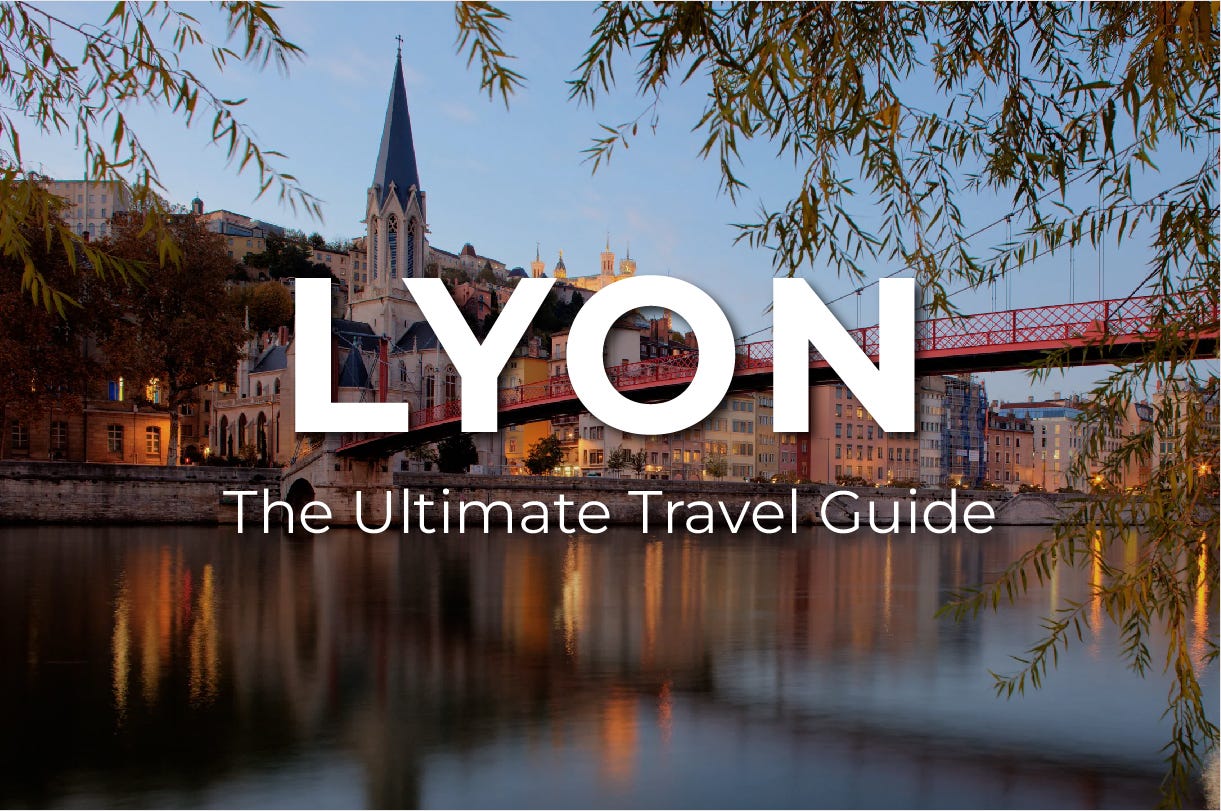
Lyon is the city that many travellers discover by accident and never stop recommending. It doesn’t have Paris’s global fame - or the crowds that come with it. What it does have is something rarer: an identity entirely its own, irreducible, rooted in its two rivers, its hillsides, its traboules, and a culinary culture the world recognises as uniquely Lyonnais.
Named the world capital of gastronomy by UNESCO, France’s third-largest city, Lyon is also the best-preserved Renaissance heritage site in Europe, listed as a World Heritage Site since 1998. It reveals itself slowly, on foot, and rewards those who give it the time it deserves.
This guide covers the neighbourhoods worth knowing, the experiences that define the city, the practical details to have in hand before you go, and how to plan the right number of days depending on the kind of trip you want.
Table of Contents
Why Lyon Is Worth the Trip
The Neighbourhoods to Know
Must-Do Experiences
Day Trips from Lyon
When to Visit Lyon
How Many Days to Spend in Lyon
Suggested 3-Day Itinerary
Where to Eat
Where to Stay
Practical Information
How Lyon Fits Into a Broader France Trip
Frequently Asked Questions
Plan Your Lyon Trip with ÆRIA Voyages
Why Lyon Is Worth the Trip
Lyon doesn’t try to impress you. It’s one of the first things you notice on arrival: the city trusts its substance over its staging. The banks of the Saône don’t come with a sign telling you they’re beautiful. The bouchons have no tourist script. The traboules don’t announce themselves.
What sets Lyon apart from most major French destinations is the density of what it offers within walking distance. In two hours on foot, you can move from a medieval neighbourhood to an ancient Roman site, pass through a farmers’ market, walk alongside a river, and step inside a 19th-century basilica with a view over the entire Rhône valley. None of these things are an hour’s bus ride from another.
Lyon is also one of the most accessible cities in Europe for Quebec and French-Canadian visitors. The language is the same. The dining culture is generous and unpretentious. And value for money is noticeably better than Paris across almost every spending category.
The Neighbourhoods to Know
Lyon is best understood as a collection of hillsides and riverbanks, each with its own character. Deciding where to spend your time depends on what draws you.
Vieux-Lyon (5th arrondissement)
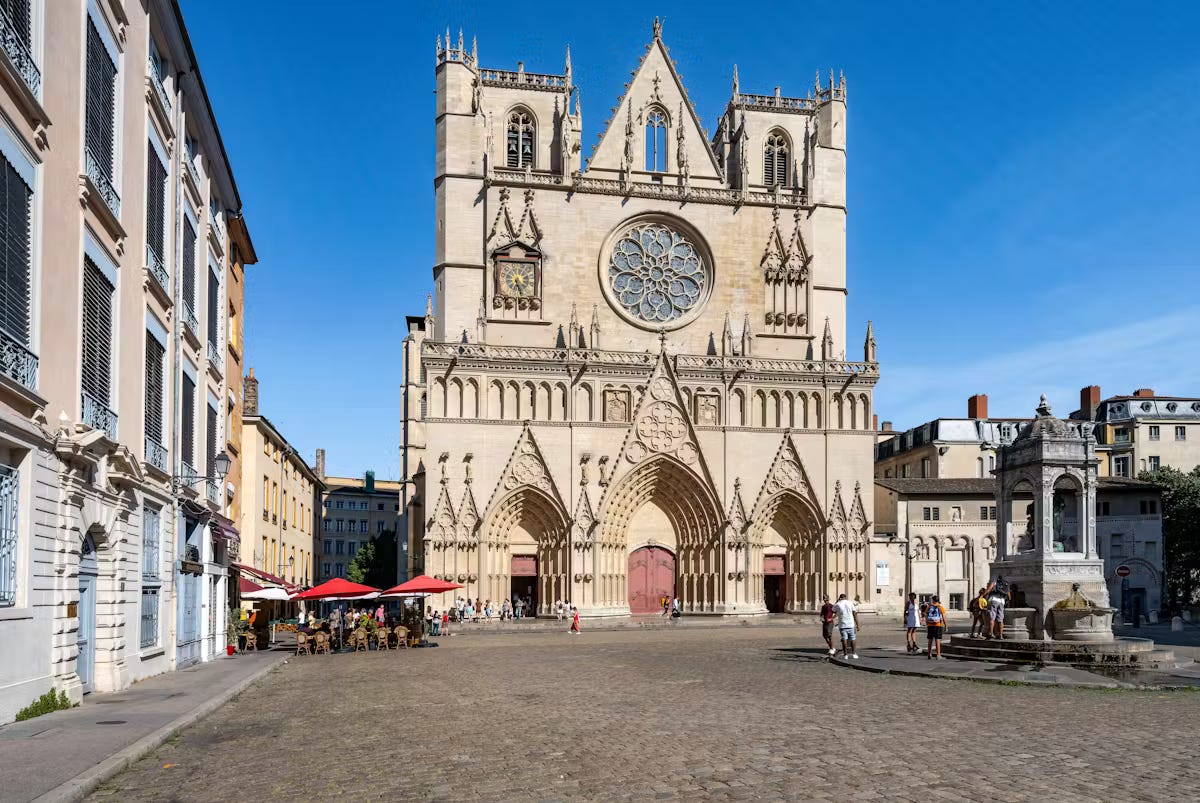
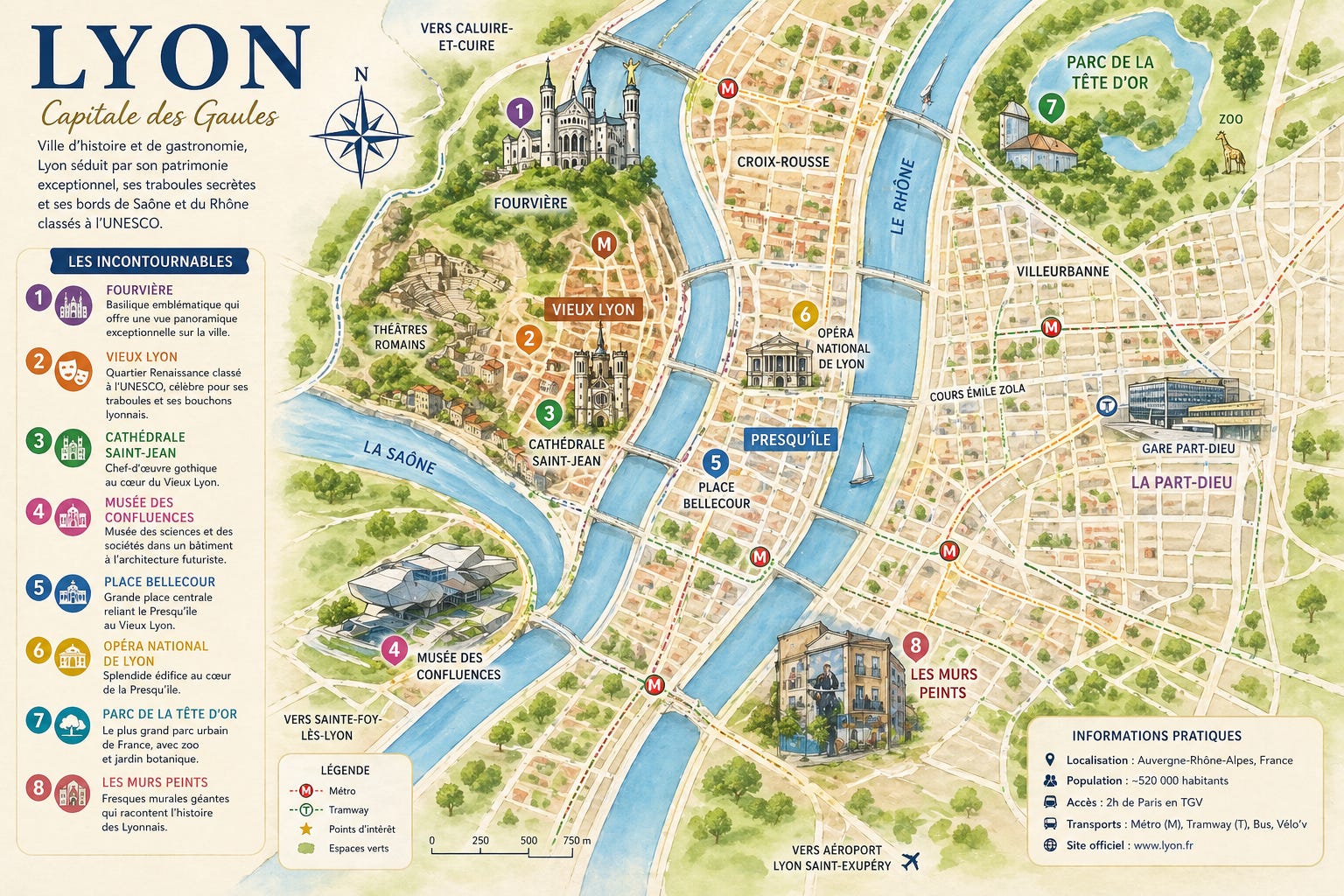
The historic district, listed as a UNESCO World Heritage Site, is one of the largest Renaissance ensembles in Europe and the natural starting point for any visit. The streets of Saint-Jean, Saint-Georges, and Saint-Paul form the spine of a neighbourhood whose ochre and pink facades have come through five centuries largely undisturbed.
The Gothic Cathedral of Saint-Jean-Baptiste anchors the square of the same name. The nearby courthouse, with its twenty-four columns, earned Lyon the nickname “the city of twenty-four columns.” But what makes Vieux-Lyon truly unique are the traboules: interior passageways that cut through buildings from courtyard to courtyard, connecting two parallel streets through a network of galleries, spiral staircases, and covered walkways. During Lyon’s silk-weaving era, the canuts used them to transport their fabrics sheltered from the elements. Today, some are open to the public; others require a little curiosity to find. It’s one of Lyon’s most enjoyable games.
La Presqu’île (1st and 2nd arrondissements)
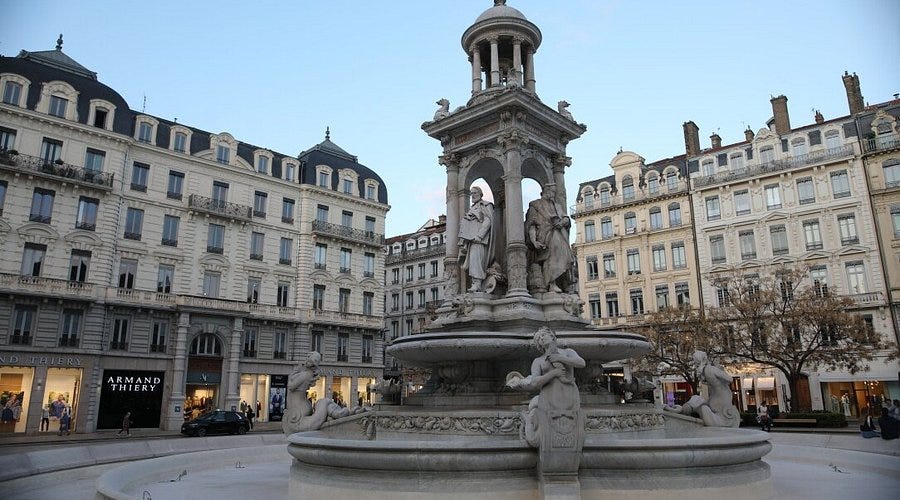
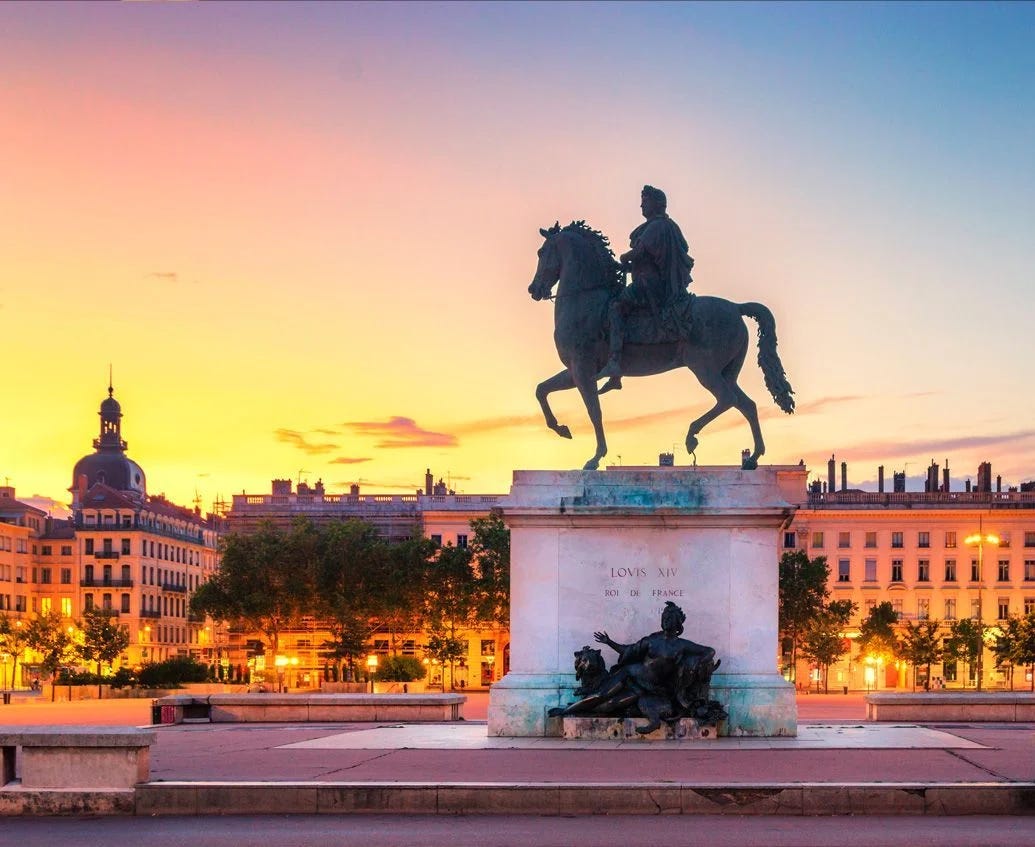
La Presqu’île is Lyon’s modern heart, wedged between the Rhône and Saône, stretching north from La Confluence to Les Terreaux. This is where the great squares, shops, museums, and nightlife are found. Place Bellecour, one of the largest pedestrian squares in Europe, is its ground zero: all distances in Lyon are measured from here.
The pedestrianised Rue de la République runs north toward Les Terreaux, concentrating most of the city’s shopping. Place des Terreaux is home to the Bartholdi fountain - originally commissioned for Bordeaux and ultimately installed here - and the Hôtel de Ville, one of the finest city halls in France.
La Croix-Rousse (1st and 4th arrondissements)
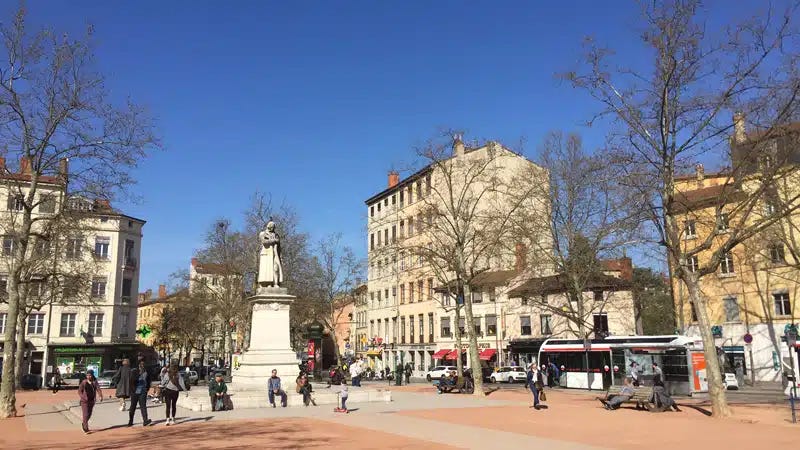
The hill that works, as opposed to Fourvière, the hill that prays. La Croix-Rousse is the former neighbourhood of the canuts, the silk weavers whose revolts in the 19th century left a mark on French social history. The buildings have extraordinarily high ceilings, designed to accommodate the large Jacquard looms. Today the neighbourhood is home to a creative community, farmers’ markets on Tuesday and Saturday mornings along the boulevard, independent cafés, and traboules that are different from those of Vieux-Lyon - more austere, more surprising. To reach it from La Presqu’île you can take the metro, the funicular, or climb on foot up staircases that give you a completely different sense of the city’s topography.
Fourvière and Its Heights
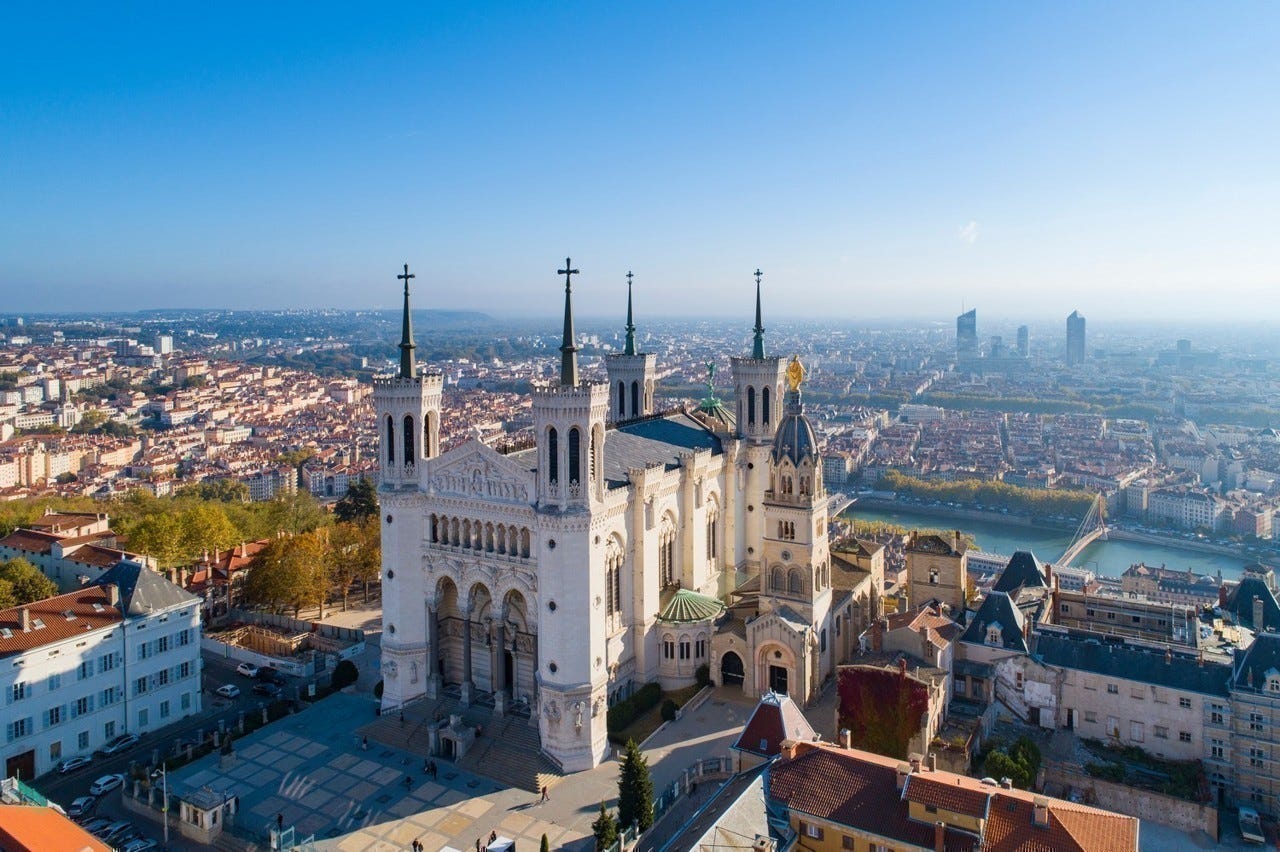
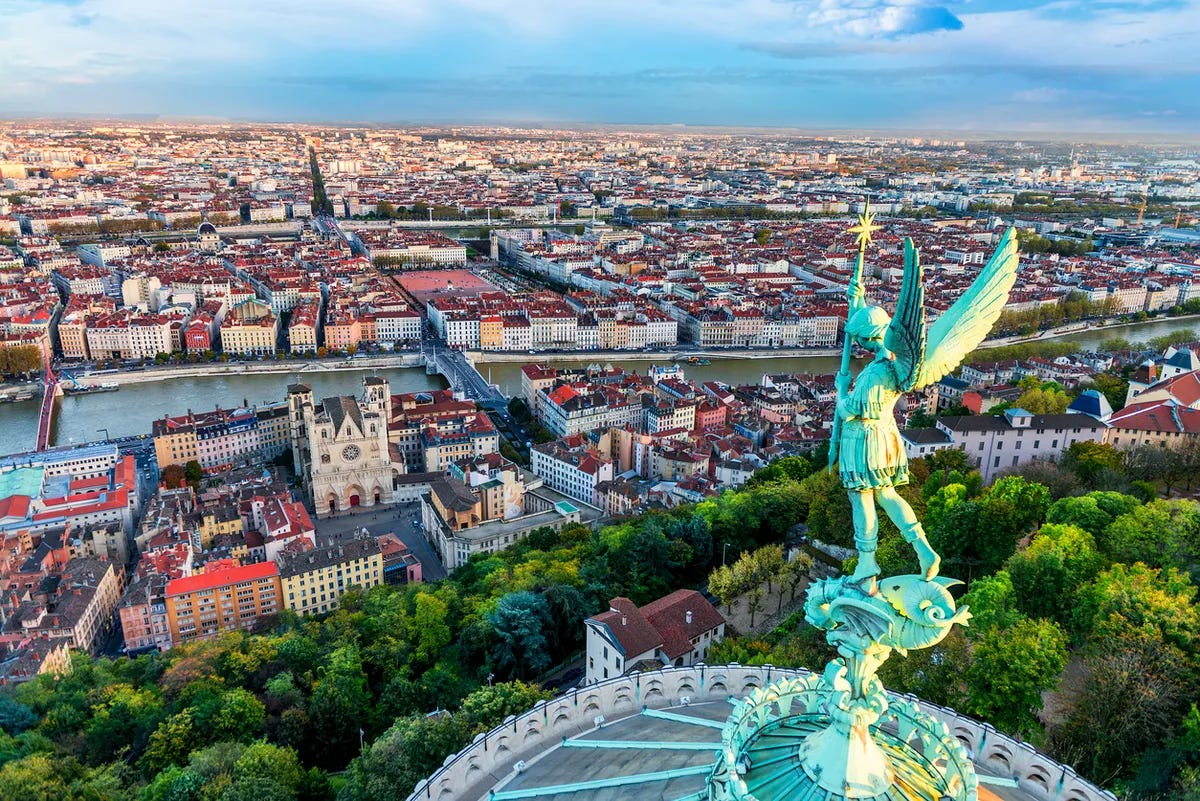
The hill of Fourvière has dominated Lyon for two thousand years. This is where the Romans founded Lugdunum in 43 BC, and the remains of that founding - the Roman theatres of Fourvière - are among the best-preserved in Gaul. You can ascend to Fourvière by funicular from Saint-Jean station, or on foot through the Jardin du Rosaire. At the summit: the Basilica of Notre-Dame de Fourvière, built between 1872 and 1884 as a votive offering following the Franco-Prussian War, with a mosaic-covered interior that takes your breath away. And above all, from the esplanade, a view across the entire city, both rivers, and - on a clear day - the Alps.
La Confluence (2nd arrondissement)
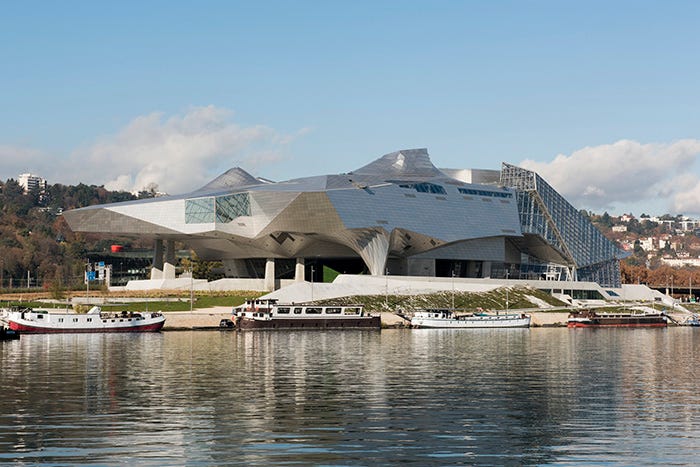
At the southern tip of La Presqu’île, where the Rhône and Saône converge, the Confluence district is Lyon’s most ambitious urban regeneration project of the past twenty years. Former industrial wasteland has given way to contemporary architecture by Zaha Hadid, Kengo Kuma, and others; to the Musée des Confluences with its steel-and-glass facade; and to public spaces along the water. The Sunday-morning Marché de la Création takes place there. This is Lyon today, in deliberate contrast to the Renaissance Lyon that lies twenty minutes away on foot.
Must-Do Experiences
The Traboules of Vieux-Lyon and La Croix-Rousse
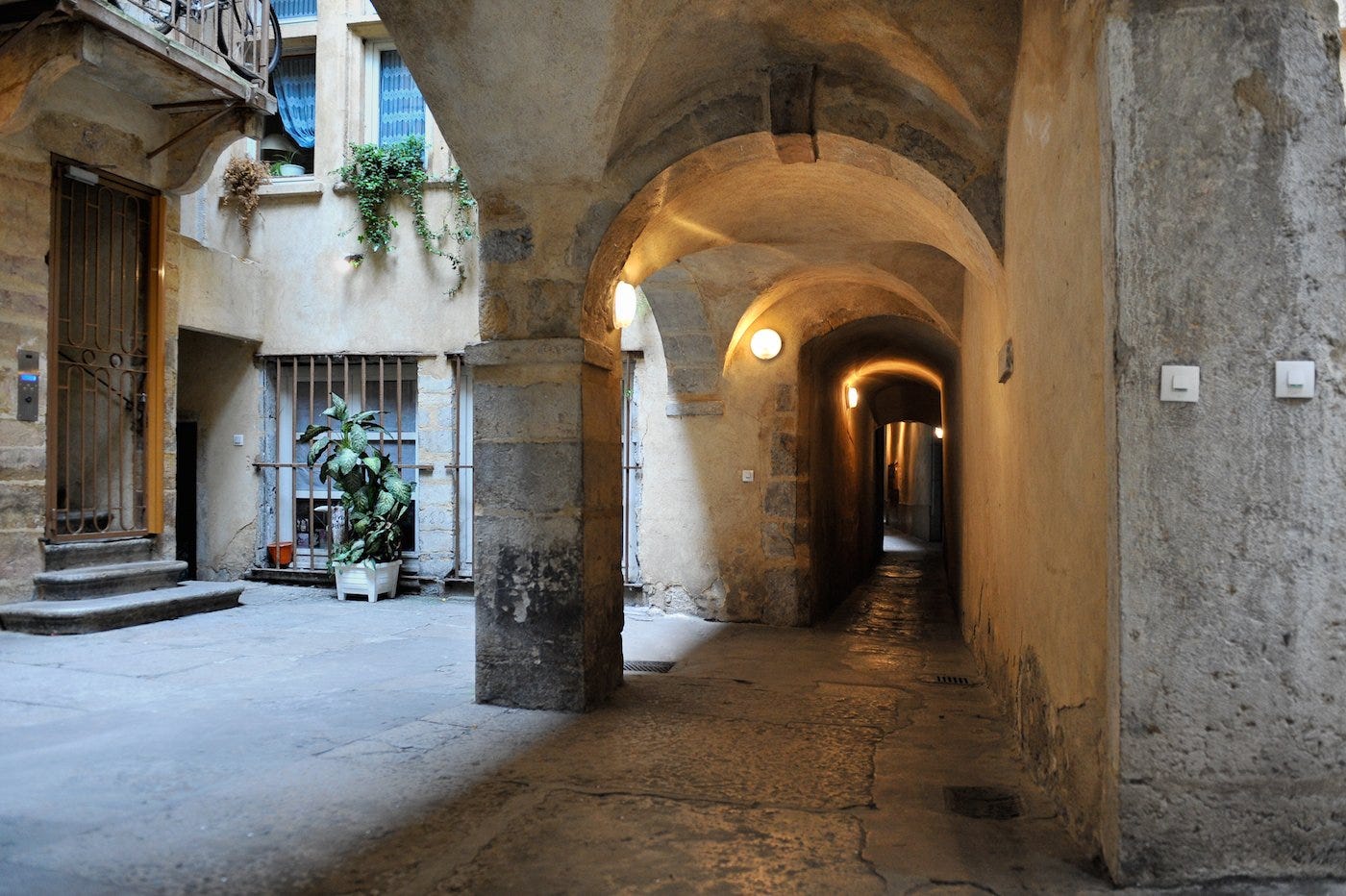
The most specifically Lyonnais experience there is. Some traboules are signposted and permanently open to the public, particularly those on Rue Saint-Jean. Others open if you simply push the carriage door.
A guided traboule tour is one of the best two hours you can invest in Lyon: a good guide knows the passages that appear on no map and explains why this architecture is found nowhere else in the world.
The Basilica of Notre-Dame de Fourvière
The interior is breathtaking, with mosaics covering every surface and a deployment of marble columns that fills the space. The view from the outdoor esplanade alone is worth the climb. Free entry. Allow an hour on site, more if you do the rooftop tour - available at an additional charge and offering an even more striking panorama.
The Roman Theatres of Lugdunum
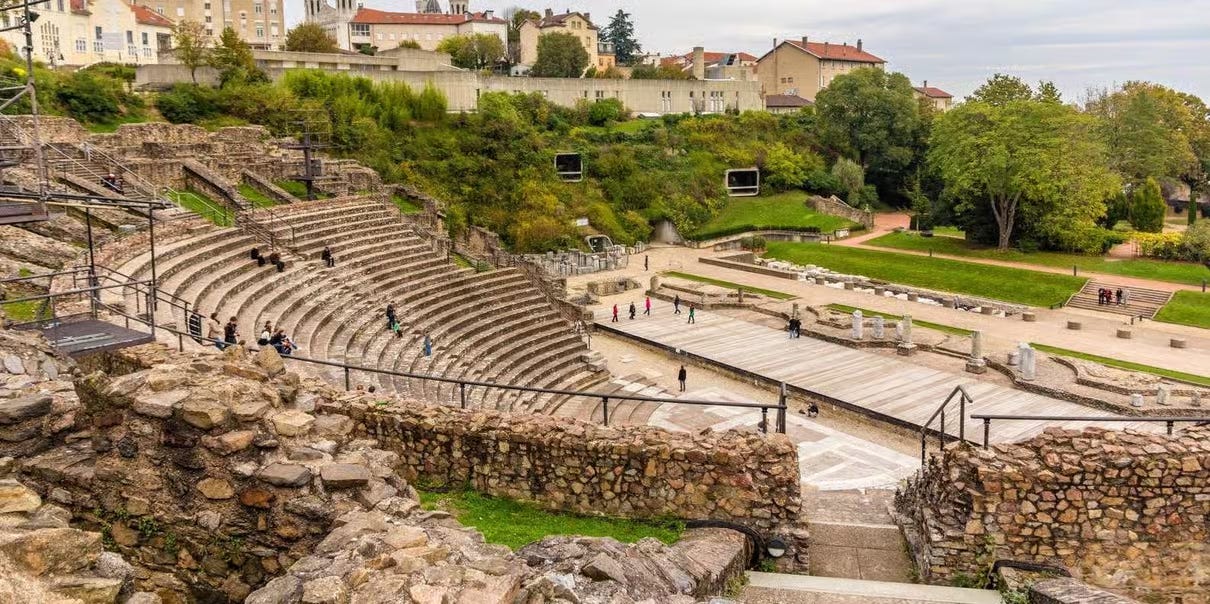
Two Roman theatres, including the Grand Theatre dating from the 1st century BC with an original capacity of ten thousand spectators, sit on the slopes of Fourvière. The Lugdunum Museum directly below is one of the finest Gallo-Roman museums in France. The theatres are still used for performances in summer during the Nuits de Fourvière festival.
Les Halles Paul Bocuse
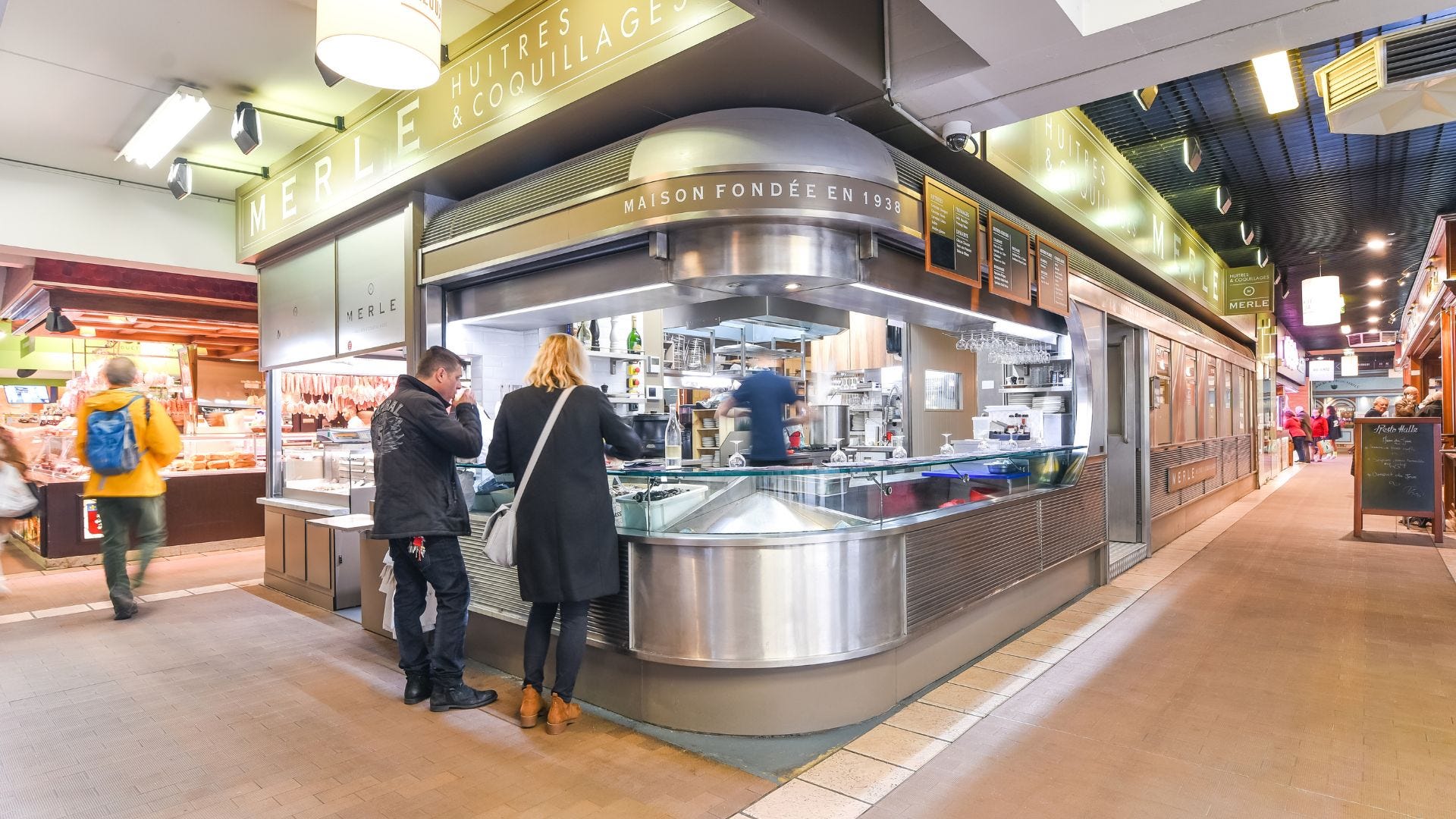
Paul Bocuse presided over Lyonnais gastronomy for more than half a century until his death in 2018. The covered market that bears his name, on Boulevard de la Part-Dieu, is Lyon’s most celebrated: thirty-eight specialist vendors gathered under one roof, with cheesemakers, charcutiers, fishmongers, chocolatiers, and bakers. It’s a place people come to wander as much as to shop. Some stalls serve lunch on-site. Go on a Saturday morning.
The Musée des Confluences
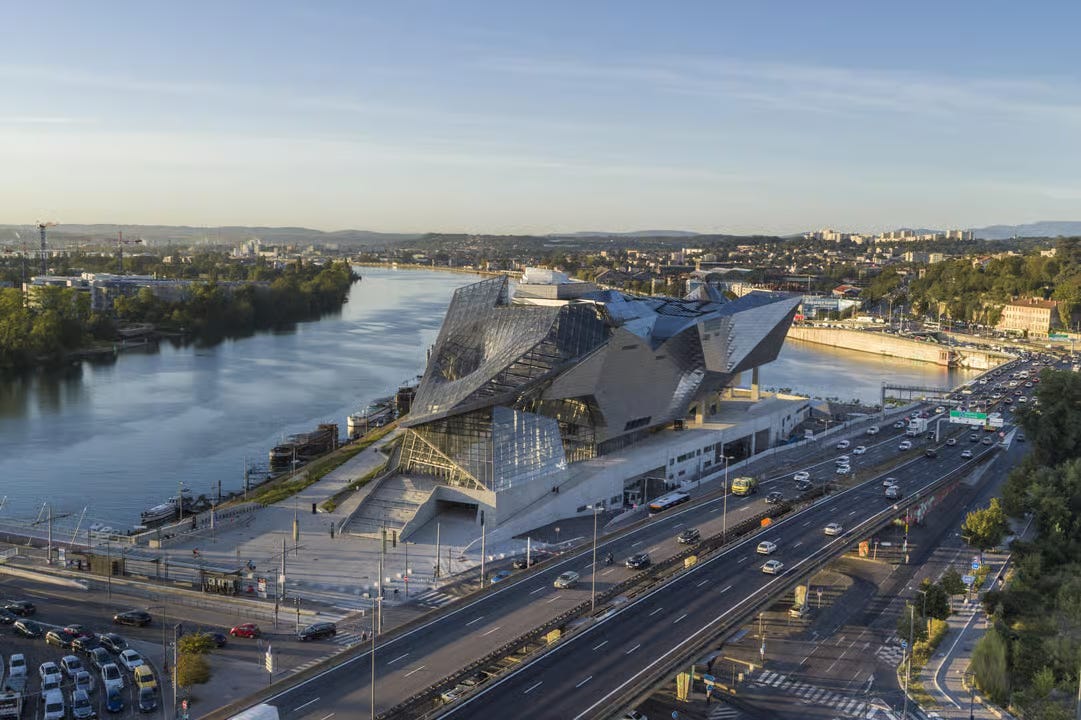
A museum of science and human societies housed in spectacular architecture at the tip of La Presqu’île. The permanent collections explore the origin of the world, the history of civilisations, and questions of life itself, with ambitious curation throughout. The building itself, designed by Austrian firm Coop Himmelblau, is an attraction in its own right. Allow two to three hours.
The Musée des Beaux-Arts de Lyon
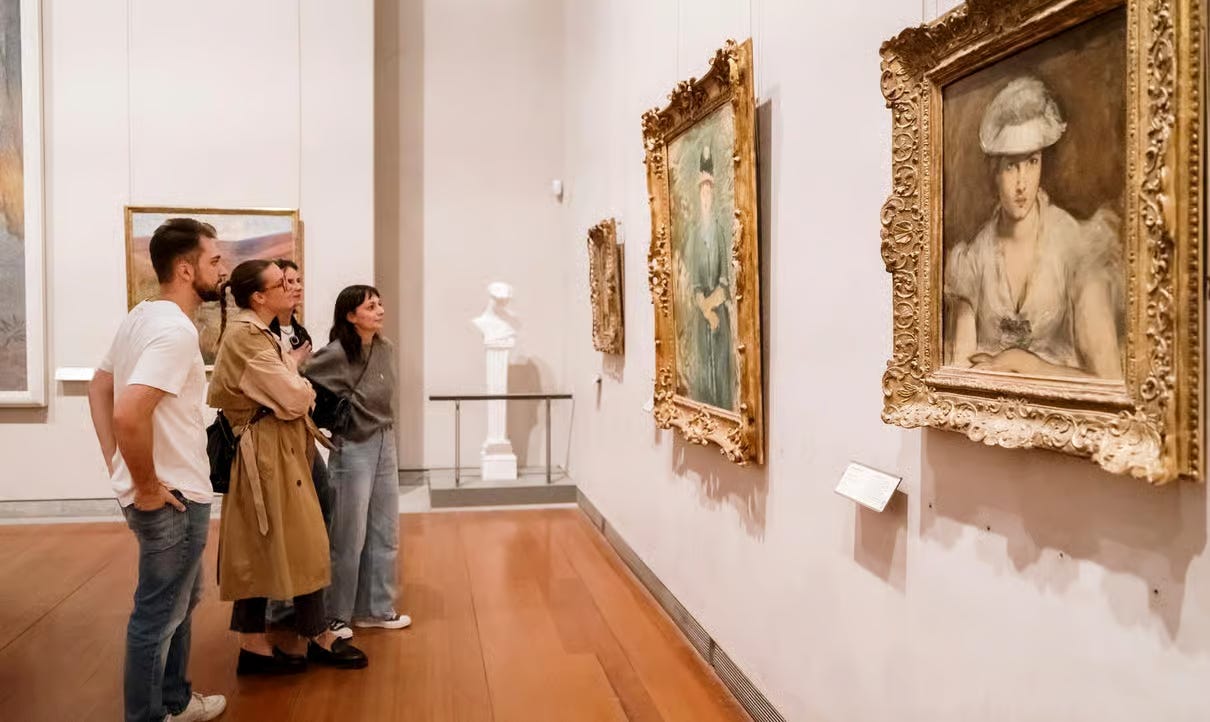
Set in the former Benedictine convent on Place des Terreaux, this is one of the largest fine arts museums in France outside Paris, with collections spanning Antiquity to modern art. The interior cloister, planted with trees and sculptures, is one of the most peaceful spots in the city. Allow two to three hours.
Parc de la Tête d’Or
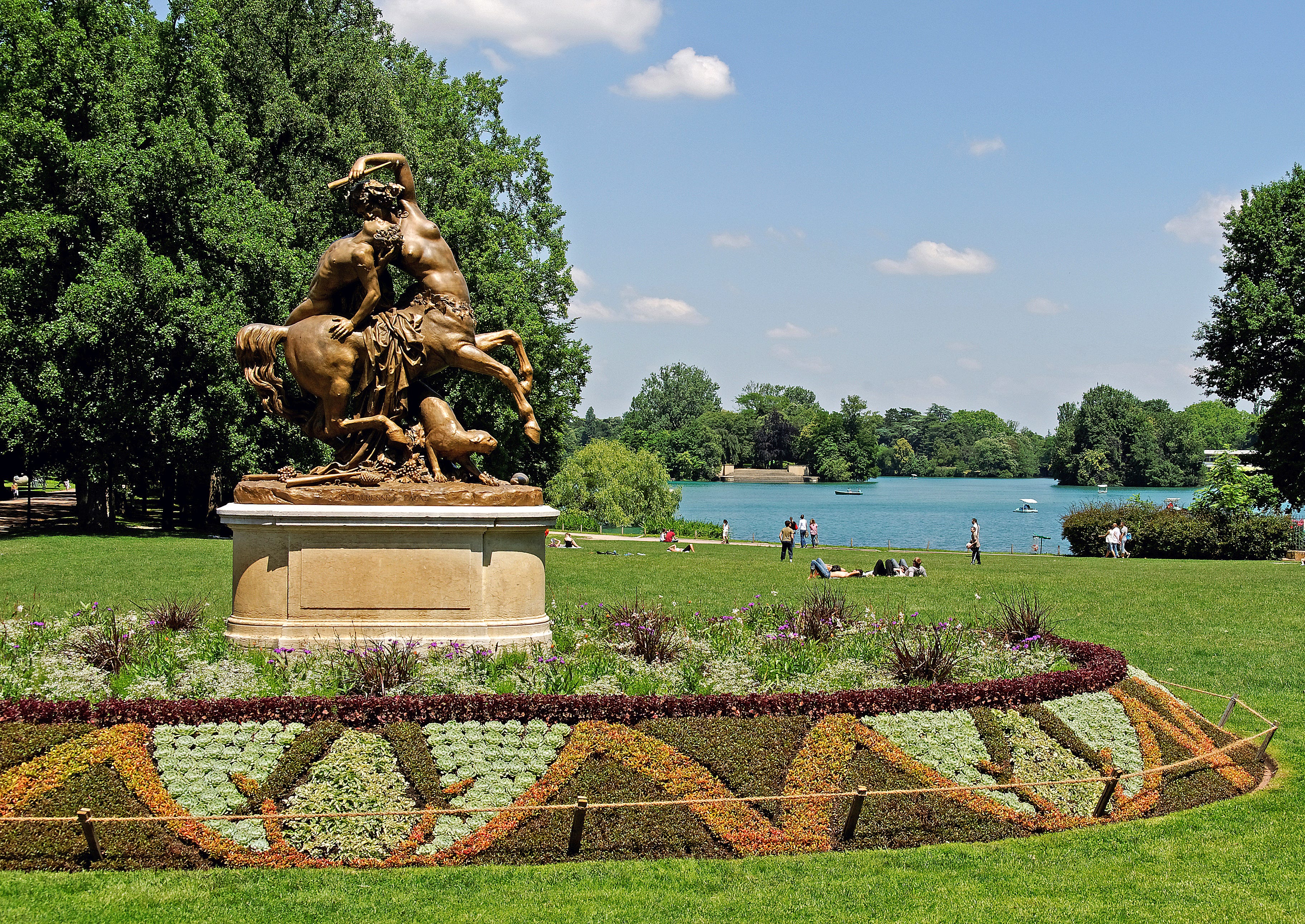
France’s largest urban park: 117 hectares, open year-round, free of charge. A lake, a botanical garden, a free zoo, a rose garden, and paths for running or cycling. This is where Lyonnais go on Sunday mornings. Ideal for a morning of decompression between two intense days of sightseeing.
A Cruise on the Saône or Rhône
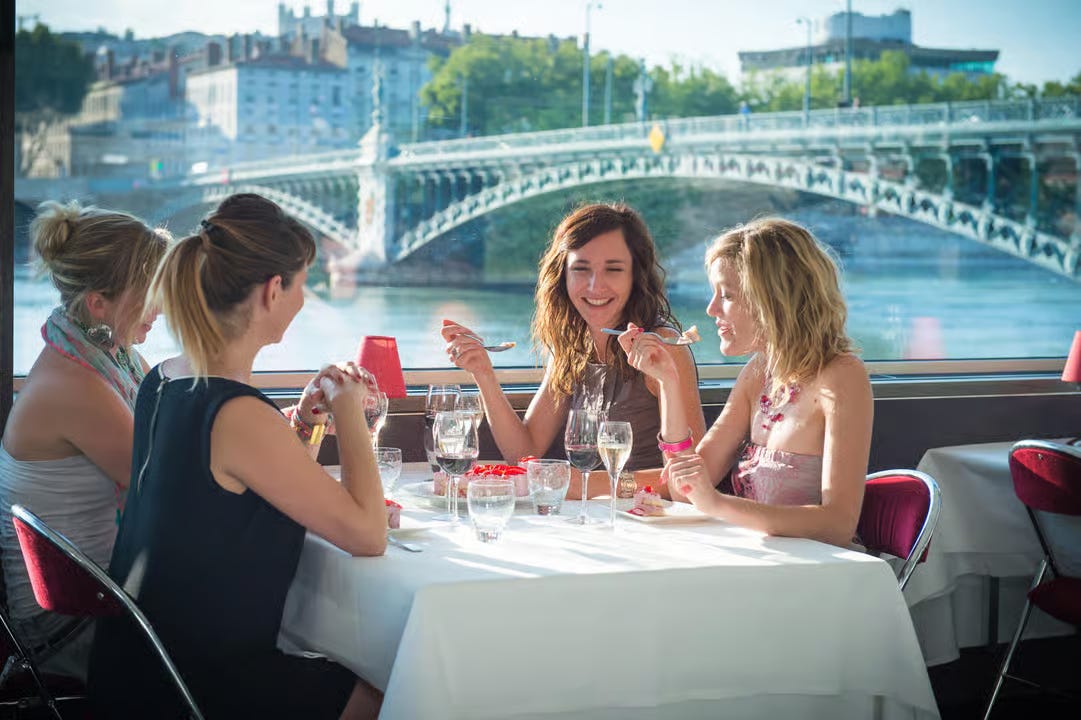
The two rivers that flank La Presqu’île reveal themselves differently from the water. Day or evening cruises offer a different reading of the Fourvière skyline, the banks of the Saône, and the Confluence landscape. In the evening, with the city’s lights reflected on the water, it’s one of the most memorable experiences a stay in Lyon can offer.
The Fête des Lumières
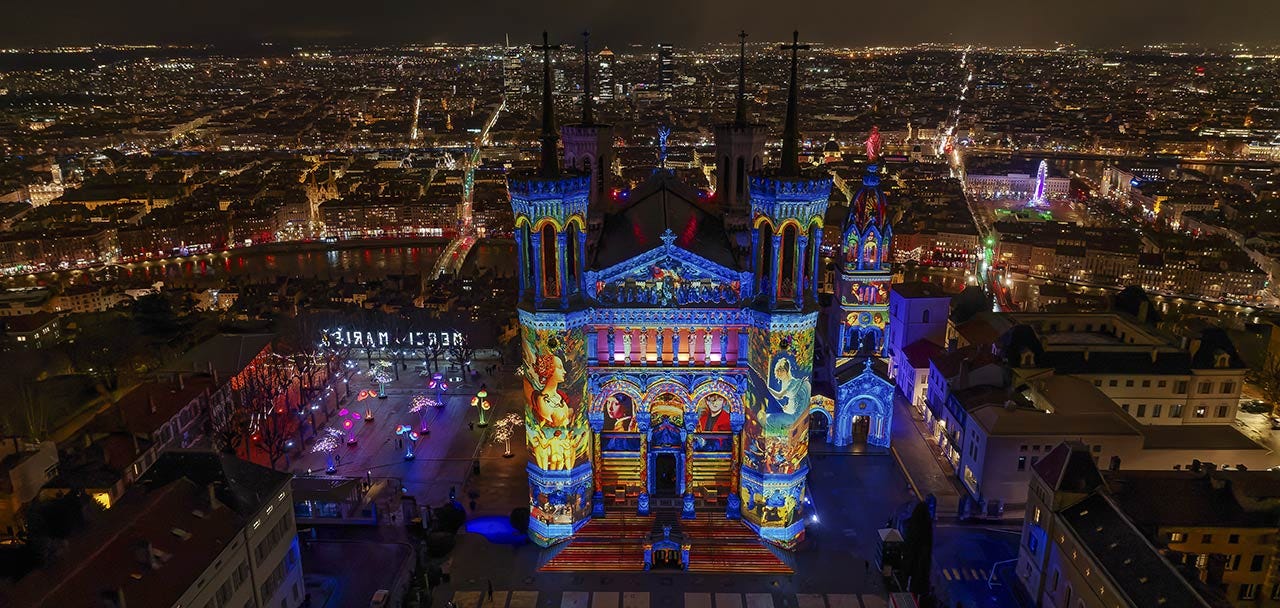
Every year, over four evenings in early December, Lyon transforms into an open-air nocturnal art gallery. Light installations take over the facades of monuments, squares, and streets. The event draws several million visitors over four evenings and is entirely free. If your travel dates can coincide with the Fête des Lumières, plan accordingly - it’s one of the most extraordinary public events in Europe.
Day Trips from Lyon
Lyon is ideally placed to explore several major destinations by train or car.
The Côtes du Rhône and Beaujolais
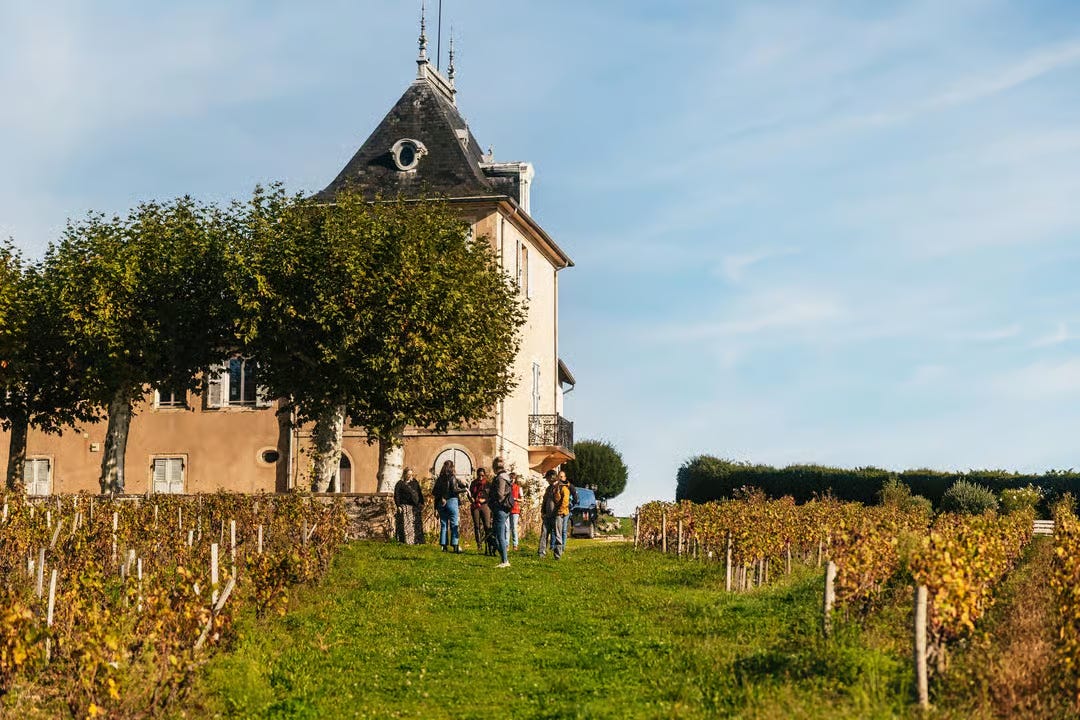
The Côtes du Rhône wine region begins a few dozen kilometres south of Lyon, with appellations including Crozes-Hermitage, Saint-Joseph, and Côte-Rôtie. To the north, the Beaujolais is even closer: the villages of Fleurie, Moulin-à-Vent, and Brouilly can all be visited in a day from Lyon. Guided tours from the city allow you to combine estate visits and tastings without the concern of driving.
Pérouges
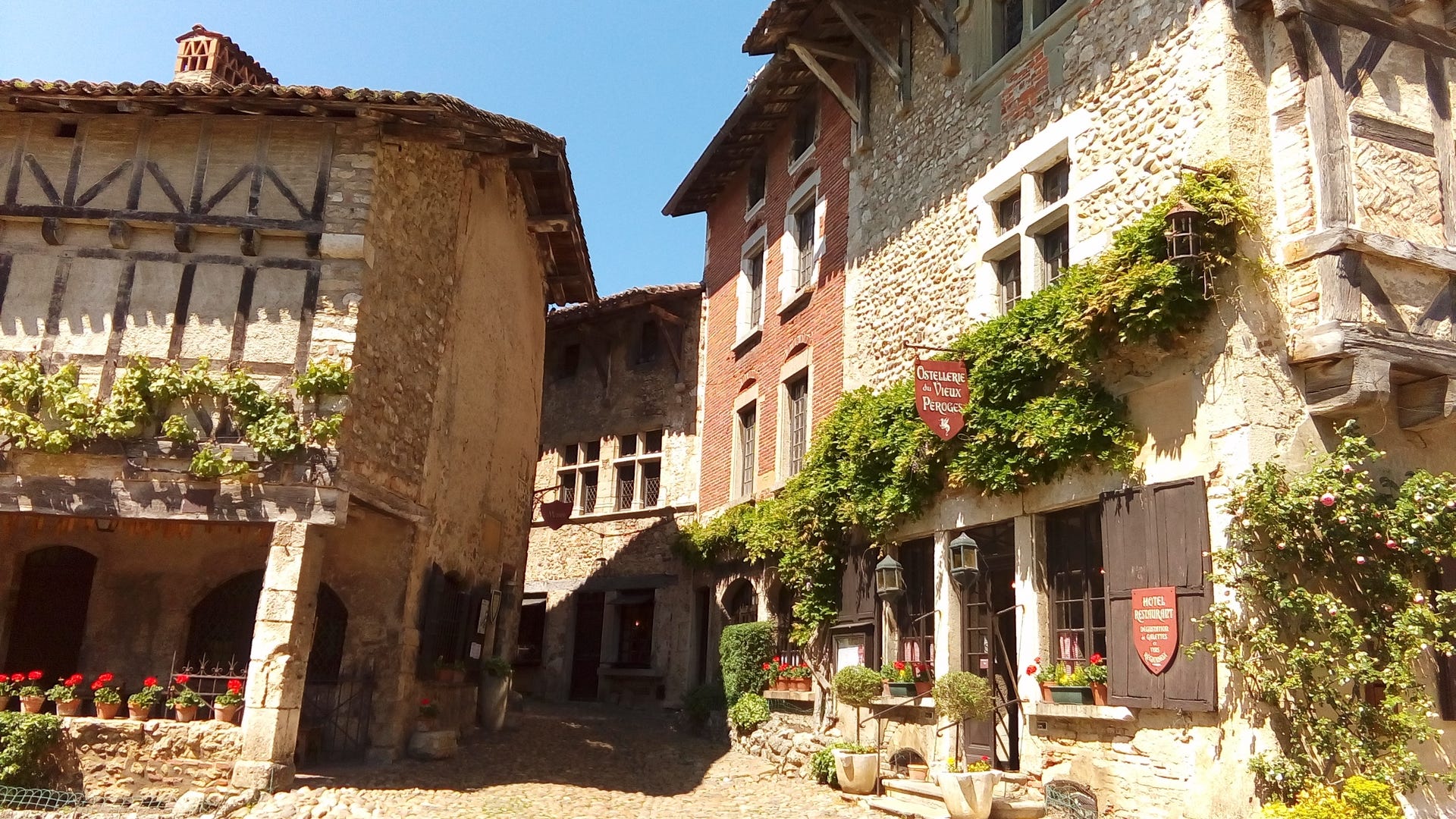
This fortified medieval village, perched on a hill about forty kilometres north-east of Lyon, is one of the most beautiful villages in France. Its cobbled streets, half-timbered houses, and central square have barely changed since the 15th century. It has served as the backdrop for numerous historical films. People go primarily for the galette de Pérouges - a buttery, sugary tart eaten on the square. By car, about an hour each way. By bus or train from Lyon, allow around an hour and a half with connections.
The Palais Idéal du Facteur Cheval
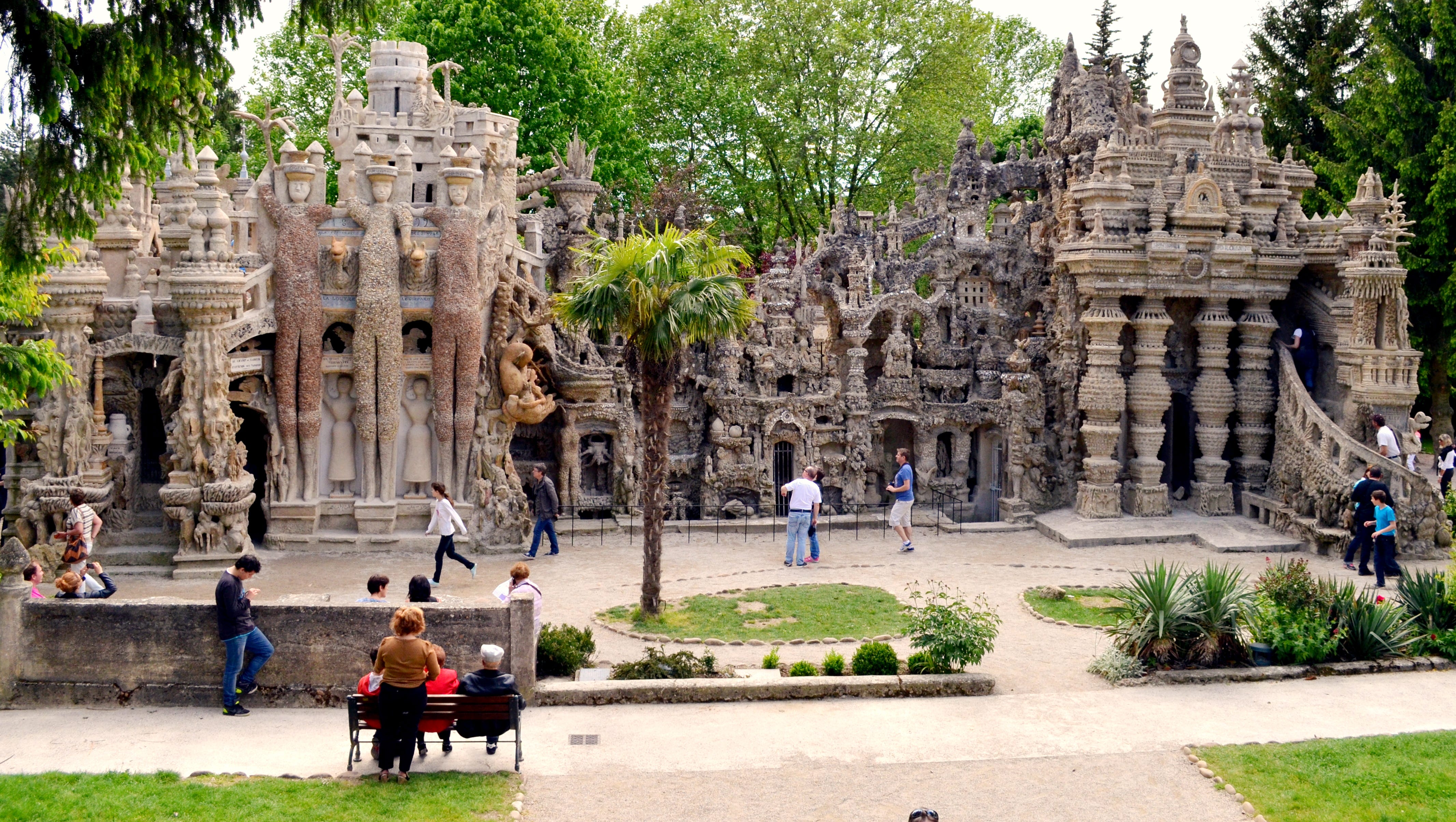
In Hauterives, an hour’s drive from Lyon, the postman Ferdinand Cheval spent thirty-three years building entirely alone - using stones gathered on his daily round - a fully sculpted palace of absolute originality. The result is one of the most significant works of outsider art in the world, listed as a historic monument. Unexpected, moving, and impossible to anticipate. Best done by car; difficult otherwise.
Annecy and the Alps
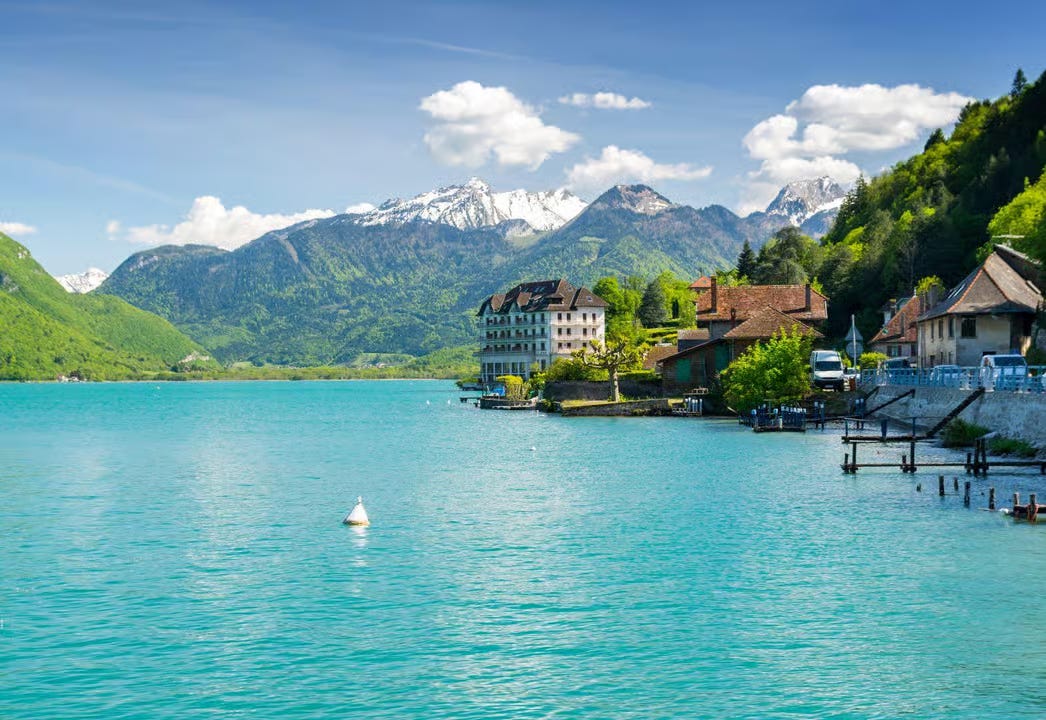
Annecy, about an hour and a half from Lyon by motorway or train, is a medieval town on an alpine lake whose water is among the clearest in Europe. It makes for a full-day excursion, ideal in summer when you can swim in the lake. In winter, French Alpine ski resorts, including Les Deux Alpes and Chamonix, are reachable from Lyon in two to three hours depending on the destination.
Vienne
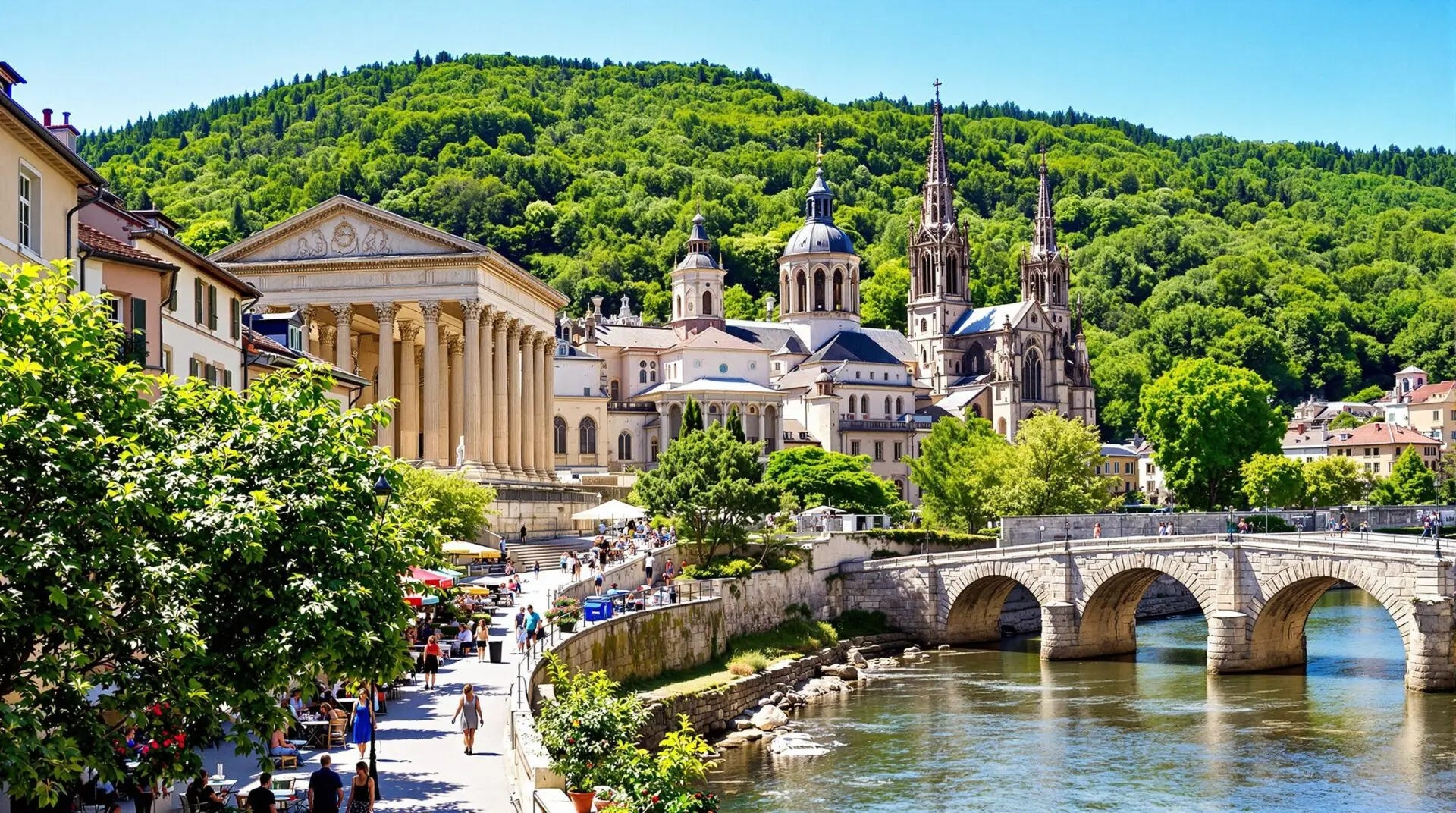
A former Roman city half an hour from Lyon by train, Vienne retains one of the best-preserved Roman temples in France - the Temple of Augustus and Livia - along with a large ancient theatre still used for the summer jazz festival. A morning or an afternoon is enough. Ideal to combine with a visit to a nearby Côtes du Rhône estate.
When to Visit Lyon
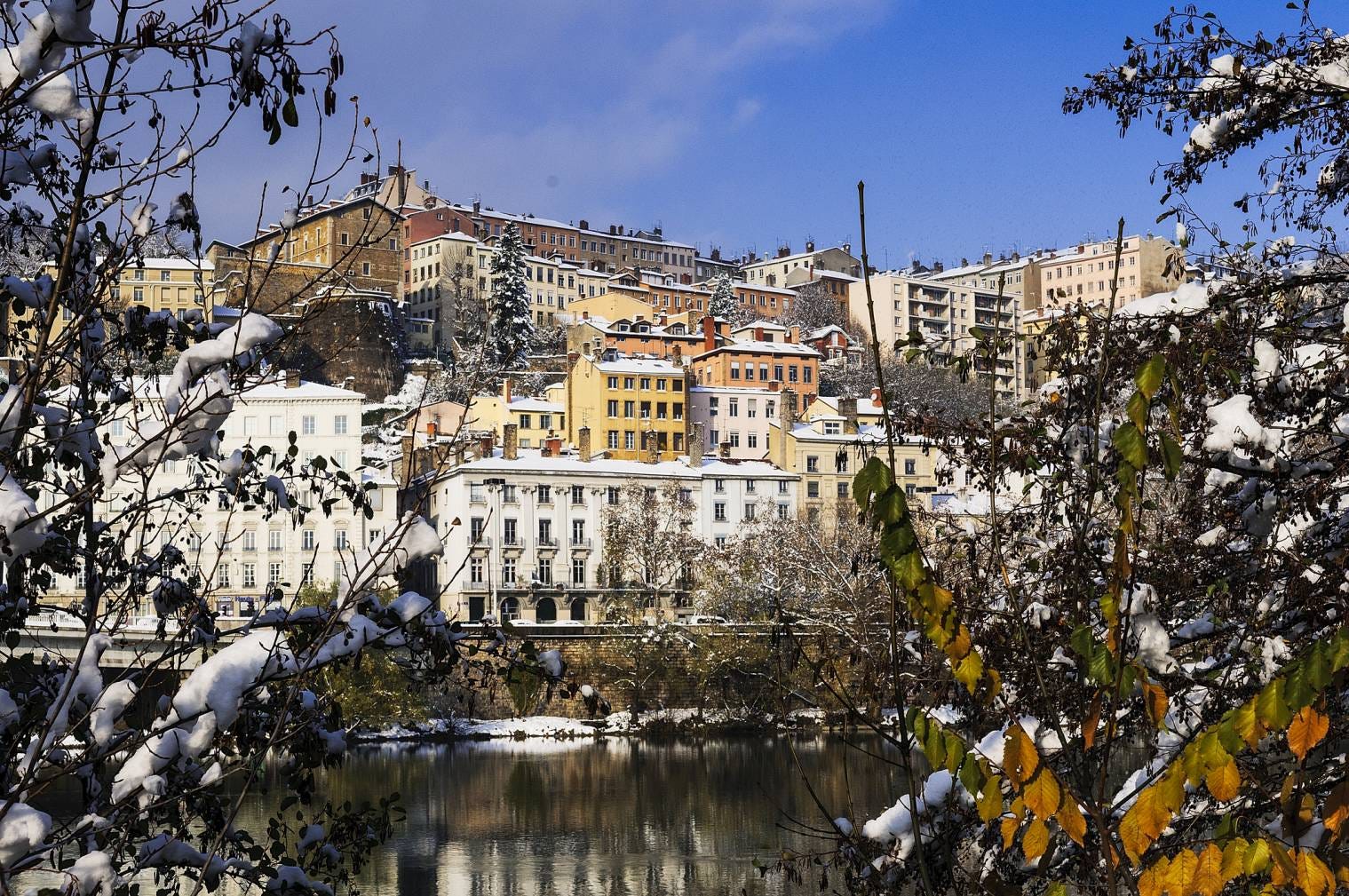
Lyon is a four-season destination with distinctly different characters throughout the year.
🌸 Spring
April through June. The city opens up, terraces return, the Croix-Rousse markets and quaysides welcome strollers again. Beautiful light, mild temperatures. Crowds remain manageable, except around the French public holidays in May. One of the two best times to visit.
☀️ Summer
July and August. Hot and lively. Les Nuits de Fourvière, Lyon’s major summer festival occupying the Roman theatres through July, is the city’s most important cultural event. The banks of the Rhône, fitted out for summer with terraces and activities, become the shared living room of the entire city. Museums and restaurants run at full capacity.
🍂 Autumn
September through November. Often the most beautiful season. The light takes on a particular quality in the lanes of Vieux-Lyon. Crowds thin after mid-September. The gastronomic season is in full swing: the markets are at their finest with mushrooms, truffles, and game. The most atmospheric and most authentically Lyonnais time to visit.
❄️ Winter
December through February. Lyon in December means, first and foremost, the Fête des Lumières, which transforms the city for four evenings into an open-air gallery. Outside that event, January and February are quiet, with shorter queues in museums, easier restaurant reservations, and a city that breathes differently.
How Many Days to Spend in Lyon
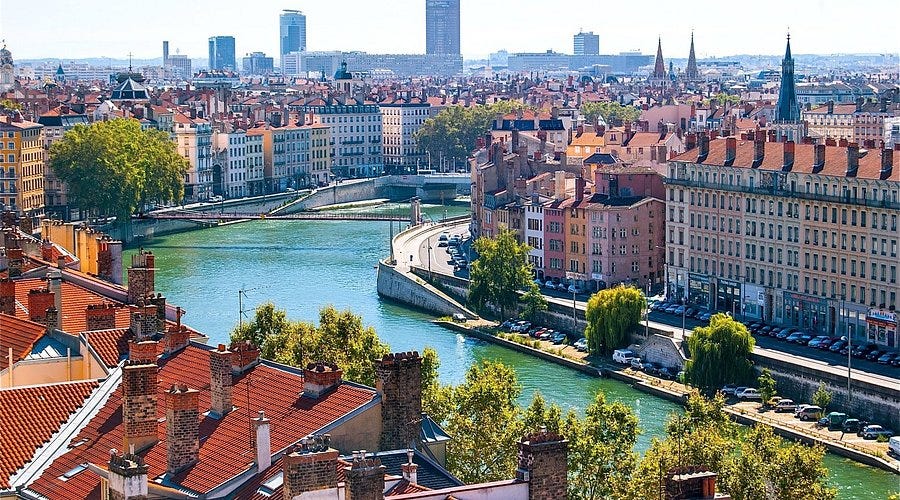
Two days allow you to cover Vieux-Lyon, Fourvière, La Presqu’île, and at least one good meal in a bouchon. Three days offer time to add La Croix-Rousse, Les Halles Paul Bocuse, and a half-day excursion. Five days or more is when Lyon begins to reveal its more discreet layers: the restaurants with no sign above the door, the small galleries of La Presqu’île, the neighbourhood markets.
Lyon is a city that deepens with time. The longer you stay, the more you understand why its residents never leave.
Suggested 3-Day Itinerary
Day 1
Morning at Fourvière: take the funicular up from Saint-Jean, visit the basilica, take in the view from the esplanade. Descend through the Jardin du Rosaire.
Afternoon in Vieux-Lyon: traboules, the Cathedral of Saint-Jean, a coffee on the banks of the Saône.
Dinner in a bouchon in La Presqu’île. First drink by the Rhône.
Day 2
Morning at Les Halles Paul Bocuse: wander among the stalls, lunch on-site or nearby.
Afternoon at the Musée des Beaux-Arts, then a walk along La Presqu’île to Place des Terreaux and the Bartholdi fountain. Pass by the Lyon Opera House with its glass rooftop.
Dinner at a contemporary restaurant or a gastronomic table, depending on budget.
Day 3
Morning at La Croix-Rousse: farmers’ market if it’s a Tuesday or Saturday, the canuts’ traboules, a coffee on the hillside streets.
Afternoon at the Musée des Confluences and the Confluence district.
Sunset from the Fourvière esplanade or from the quaysides. Dinner wherever the mood takes you.
Where to Eat
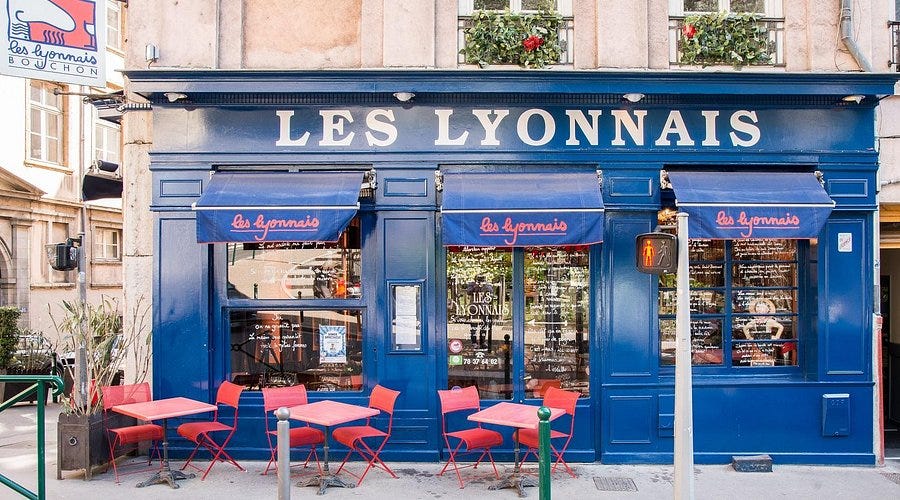
Lyon is, more than any other French city, a place where gastronomic quality is structural rather than exceptional. Good addresses aren’t isolated islands in a desert - they’re everywhere, from the market to the neighbourhood bouchon to the starred table.
The Lyonnais bouchon is the institution that defines the city’s cuisine. A small room, checked tablecloths, a handwritten blackboard, a Beaujolais or Côtes du Rhône wine, and a generous, hearty cuisine: tablier de sapeur (breaded and fried tripe), pike quenelles with Nantua sauce, chicken liver cake, braised veal’s head with ravigote sauce, cervelle de canut (a herbed fresh cheese served as dessert). Here are some reliable addresses.
Café des Fédérations | Classic bouchon, La Presqu’île One of the most authentic bouchons in the city, open since 1929. Noisy atmosphere, generous cooking, a menu that never changes. Book ahead.
Daniel et Denise | Gastronomic bouchon, Vieux-Lyon and Saint-Jean Joseph Viola, Meilleur Ouvrier de France, runs three addresses under this name. The veal sweetbread and foie gras pâté en croûte has become a cult dish. The Vieux-Lyon location on Rue Créqui is the most consistent.
Chez Hugon | Traditional bouchon, La Presqu’île A tiny bouchon, very popular with locals, where the staff don’t always speak English and don’t apologise for it. Cooking of absolute honesty.
Les Fines Gueules | Modernised bouchon, Vieux-Lyon On a cobbled street in Vieux-Lyon, the menu moves between tradition and lightness. The house vacherin for dessert is remarkable.
Le Bouchon des Cordeliers | Neighbourhood bouchon, La Presqu’île Checked tablecloths, house quenelles with Nantua sauce, estate-bottled wines. A reliable classic in the heart of the city.
Takao Takano | Gastronomic Japanese chef Takao Takano, trained under Bocuse and based in Lyon for years, offers Franco-Japanese cuisine of remarkable precision. Two Michelin stars. Book several weeks in advance.
Les Halles Paul Bocuse | Market For a quick lunch between stalls or a long morning of tasting. Mère Richard cheeses, Sibilia charcuterie, and Bouillet chocolates are the essential stops.
Where to Stay
The best neighbourhood to base yourself in Lyon depends on what you’re looking for. La Presqu’île is the most central and convenient. Vieux-Lyon is the most romantic, but can be noisy on weekends. La Croix-Rousse is the most authentically Lyonnais.
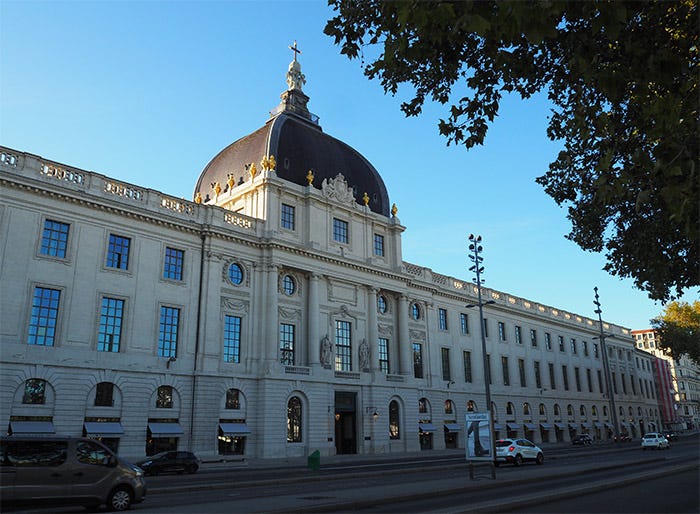
InterContinental Lyon - Hôtel-Dieu | Luxury Set in the former Hôtel-Dieu, the 18th-century Renaissance hospital in the heart of La Presqu’île, with its listed dome and stone corridors. The most spectacular luxury address in Lyon.
Hôtel Le Royal Lyon | Luxury / Upscale Facing Place Bellecour, a bourgeois institution of La Presqu’île. Elegant rooms, attentive service, unbeatable location.
Hôtel Edmond W Lyon | Boutique / Mid-range, 6th arrondissement An Art Deco-inflected boutique hotel in the upscale Brotteaux neighbourhood, a short walk from Les Halles Paul Bocuse. An excellent choice for a gastronomically oriented stay.
Hôtel des Artistes | Mid-range, La Presqu’île Facing the Théâtre des Célestins on one of the most pleasant streets in La Presqu’île. Well-maintained classic rooms; bouchons and restaurants within walking distance.
Hotelo Lyon Ainay | Mid-range, Southern Presqu’île A warm small hotel between Bellecour and Perrache. Sober, carefully kept rooms, everything accessible on foot. Excellent value for money given its location.
SLO Hostel Lyon | Budget, La Croix-Rousse A design hostel on the Pentes de la Croix-Rousse, with dormitories and private rooms. Social atmosphere, direct access to the traboules and neighbourhood markets.
Practical Information
Currency: Euro (EUR). Cards are accepted almost everywhere. Keep some cash for markets and the smaller bouchons that don’t always take cards.
Language: French. Lyon is less exposed to Anglophone tourism than Paris: a few words of French go further here. In traditional bouchons, staff don’t always speak English - and that’s part of the charm.
Getting around: Lyon has an excellent public transport network run by TCL, with four metro lines, trams, buses, and two funiculars (les ficelles) connecting La Presqu’île to Vieux-Lyon and Fourvière. A single ticket costs around €2. A book of ten tickets or a day pass is more economical for a multi-day stay. The city is also very cycle-friendly, with Vélo’v bikes available in stations across the city.
Arriving from Paris: The TGV from Paris-Gare-de-Lyon connects the two cities in approximately 2 hours. Frequent departures all day. Booking in advance significantly reduces the ticket price.
Internet: An eSIM or a European data plan is more than sufficient. Hotels and most cafés offer reliable Wi-Fi.
Safety: Lyon is a safe city. The tourist neighbourhoods present no particular concern. Standard awareness in busy areas is all that’s needed.
Reservations: For popular bouchons, book at least 48 hours in advance, a week ahead for the most sought-after addresses. Major museums don’t require advance booking except during peak periods. The Fête des Lumières doesn’t require tickets but rewards arriving early for the most popular installations.
How Lyon Fits Into a Broader France Trip
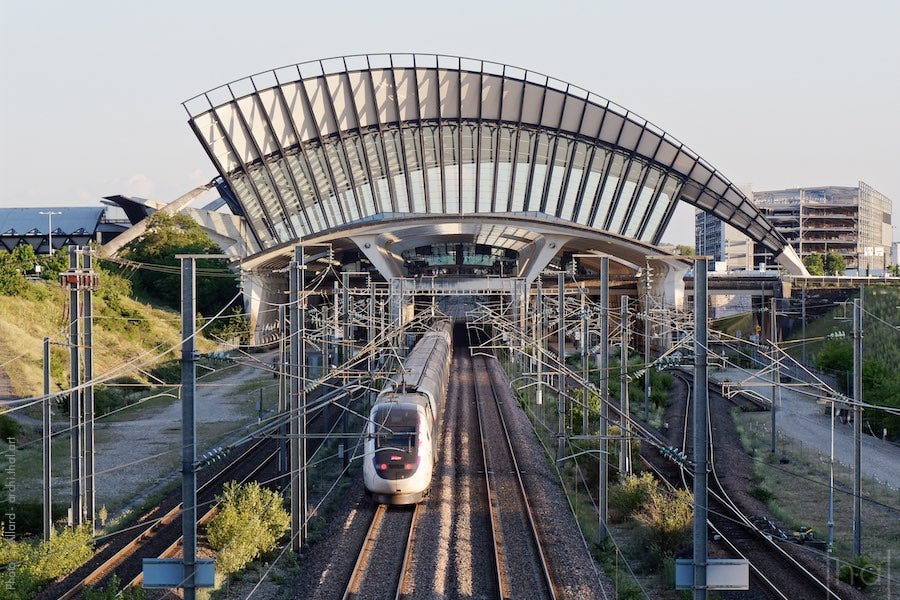
Lyon is the natural hub for a journey through southern and central France. From Paris, two hours by TGV. From Marseille, one hour forty minutes. From Geneva, two hours. This position makes Lyon an exceptional transit point on itineraries that combine several regions.
The classic pairings from Lyon are Provence by TGV toward Avignon or Marseille, Burgundy heading north toward Dijon, the Alps by car toward Annecy or Grenoble, and the Beaujolais or Côtes du Rhône as day trips. For travellers with two weeks or more, a train circuit Lyon–Avignon–Marseille–Nice covers some of the most varied and most beautiful landscapes in France without ever boarding a plane.
Lyon also makes an excellent base for a Rhône river cruise, with several companies operating itineraries between Lyon and Arles or Avignon. It’s one of the most celebrated river cruises in Europe, and Lyon is the natural starting or finishing point.
Frequently Asked Questions
Is Lyon worth visiting for first-time travellers to France? Yes, without hesitation. Lyon is different from Paris in a way that complements rather than repeats the experience. It’s more intimate, more accessible, and its gastronomic and cultural identity is strong enough to justify a trip devoted entirely to it.
How many days should I spend in Lyon? Two days covers the essentials. Three days allows a comfortable pace with a day trip. Five days or more begins to reveal the city in depth.
What is a Lyonnais bouchon? A bouchon is a traditional restaurant unique to Lyon: small room, warm service, generous and hearty cuisine (offal, quenelles, charcuterie), local wines, a handwritten daily menu. The Lyonnais bouchon is a recognised culinary institution, with its own authenticity standards certified by a professional association. It’s the most specifically Lyonnais gastronomic experience you can have.
What is a traboule? A traboule is an interior passageway that cuts through one or more buildings to connect two parallel streets. Found only in Lyon, they were used by the silk-weaving canuts to transport their fabrics sheltered from the rain. Vieux-Lyon and La Croix-Rousse have several hundred, around thirty of which are open to the public. Some are signposted; others reveal themselves simply by pushing open a carriage door.
What is the best time of year to visit Lyon? Autumn (September to November) offers the best combination of weather, atmosphere, and manageable crowds. December is unmissable if the Fête des Lumières can coincide with your trip. Spring is beautiful and less crowded than summer.
Is Lyon safe for tourists? Lyon is a generally safe city. The tourist neighbourhoods present no particular concern. Standard awareness on public transport is sufficient.
Can I visit Lyon speaking only Quebec French? Perfectly. French is the language of the city and you will have no difficulty at all. Lyon has the added advantage over Paris of being less saturated with English in its tourist areas, which makes the experience more immersive for a French-speaker.
Plan Your Lyon Trip with ÆRIA Voyages
The ideal Lyon trip looks different for every traveller, depending on how it fits into a larger journey - whether that’s a Rhône river cruise, a train circuit through southern France, or a week combining Paris and the Lyon region. I help my clients build trips that go beyond the standard itinerary: selecting hotels by neighbourhood according to the trip’s priorities, securing reservations at the most in-demand bouchons, combining a stay with a river cruise or a day trip through the surrounding vineyards.
If you’re planning a trip to Lyon or the region and would like to talk through your options, I’d be glad to help.
As a travel specialist, I’m here to turn your ideas into a journey that’s truly yours. Don’t hesitate to reach out.
Yvan Junior Blanchette
Travel & Cruise Specialist
ÆRIA Voyages📩 yvanblanchette@aeriavoyages.com
📞 1-888-460-3388
🌐 aeriavoyages.com