

The World Cruise: Why most people NEVER do it, and why some DO
World cruise · A different kind of travel · For those who have been thinking about it
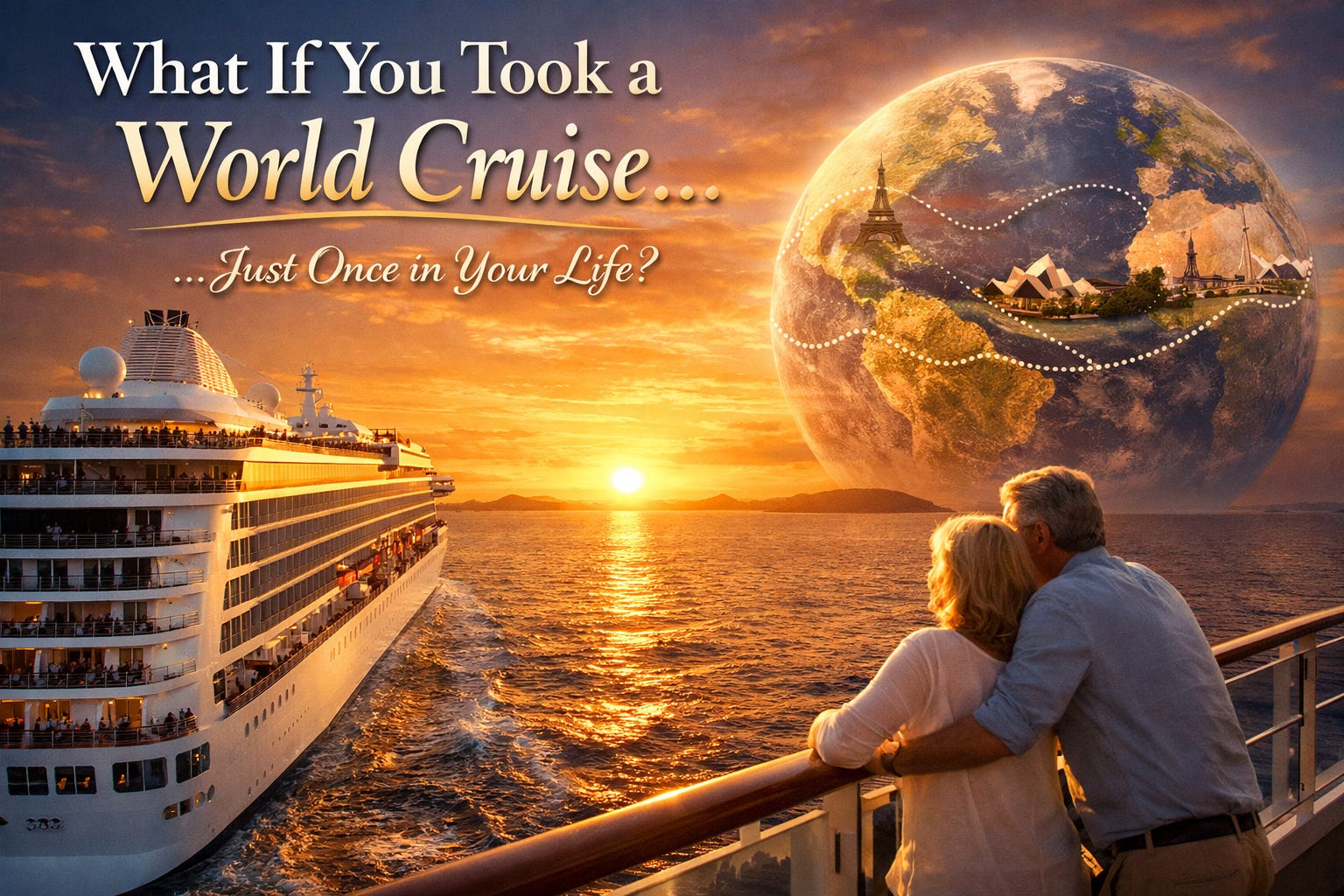
There is a moment that happens quietly. It does not arrive with a decision or a plan. It slips in between two busy days, late at night when things finally slow down, in the pause between what you are doing and what you have always thought you might do one day.
What if I actually did it? Not in rushed vacations. Not in trips spread across decades, each one a fragment. But in one continuous journey. A world cruise.
The dream most people leave exactly where it started
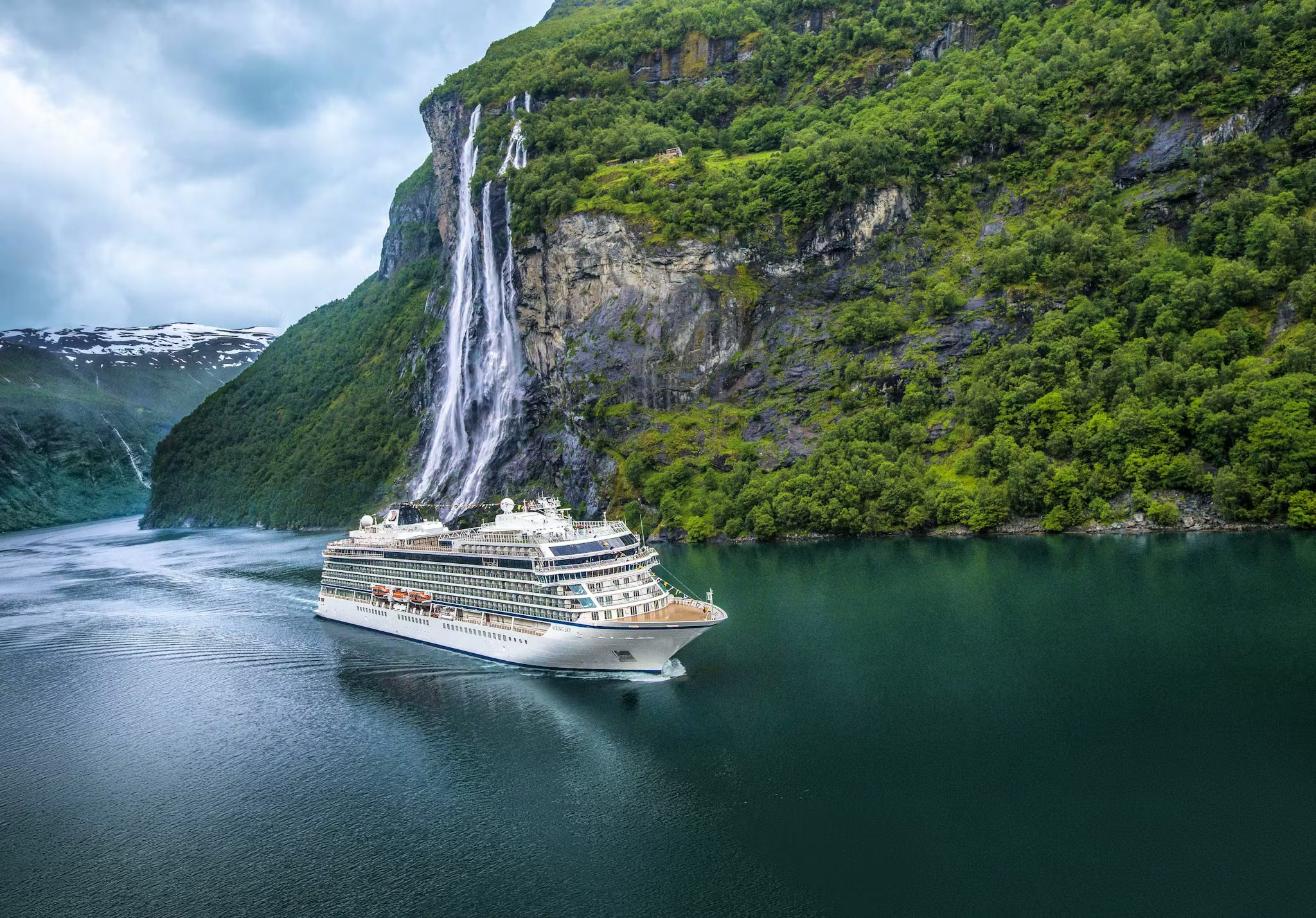
Almost everyone has thought about it at some point. Crossing oceans. Waking up in a different country every few days. Watching continents unfold not through the window of an airport but through the slow, unhurried rhythm of the sea.
And yet for most people, it stays exactly where it started. Because it feels too large, too distant, too complicated. So it gets postponed.
Maybe one day. Maybe when things settle down. Maybe later.
But later has a way of becoming never.
The people who actually go
The people who do a world cruise are not a completely different species. They are not all retired billionaires with unlimited time and nothing pressing them anywhere. They are, more often than not, people who arrived at a very simple conclusion.
If not now, when?
Some are marking a milestone. Some are closing one chapter and looking for the start of the next. Some are simply done waiting for the conditions to be perfect, because they have realised the conditions are never going to be perfect. And almost all of them will tell you the same thing when they return: I wish I had done it sooner.
Not because the voyage was flawless. Not because every port exceeded every expectation. But because what they experienced was not just travel. It was a shift in how they saw time, distance, and their own life.
What changes when you cross an ocean slowly
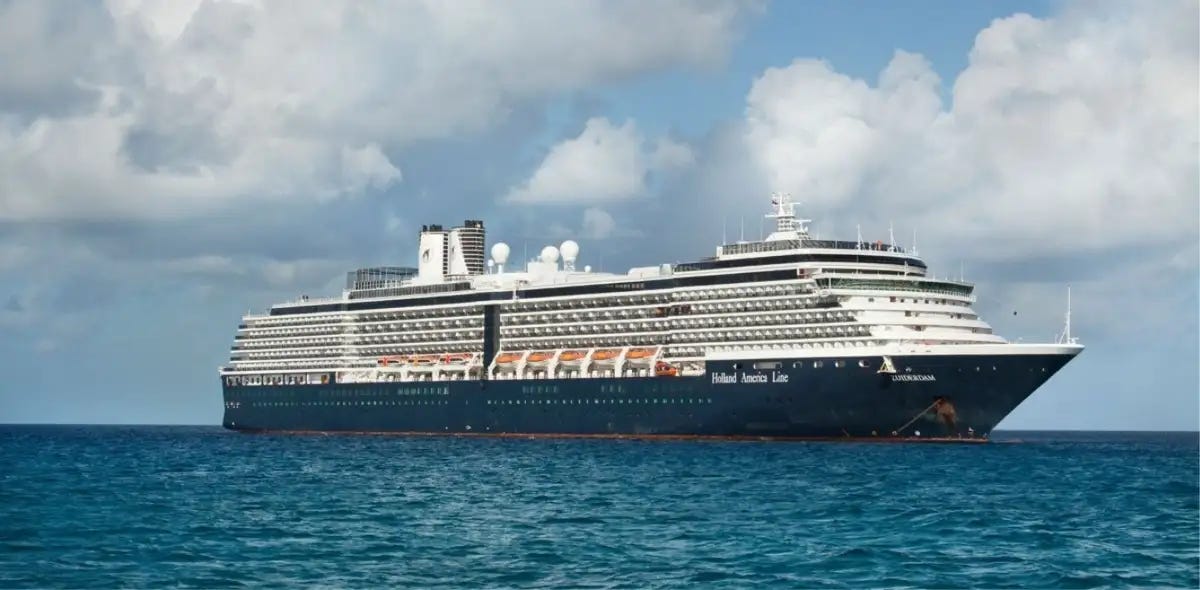
When you travel in the conventional way, the world feels large and fragmented. Flights compress distance into something almost meaningless. A fourteen-hour journey becomes a few hours of discomfort and a nap. You land somewhere and you are simply there, with none of the feeling of having actually gone.
On a world cruise, something different happens. You feel the distance. You watch the sea change colour as you move from one ocean to another. You understand geography the way no map ever taught you, because you have crossed it. The Pacific is not just a name for blue space on a globe. It is something you have been on, in the quiet middle of, with nothing visible in any direction for days.
And somewhere in that experience, the world stops feeling overwhelming and starts feeling connected. Not smaller, exactly. Just real in a way it was not before.
Life at sea is not a long holiday
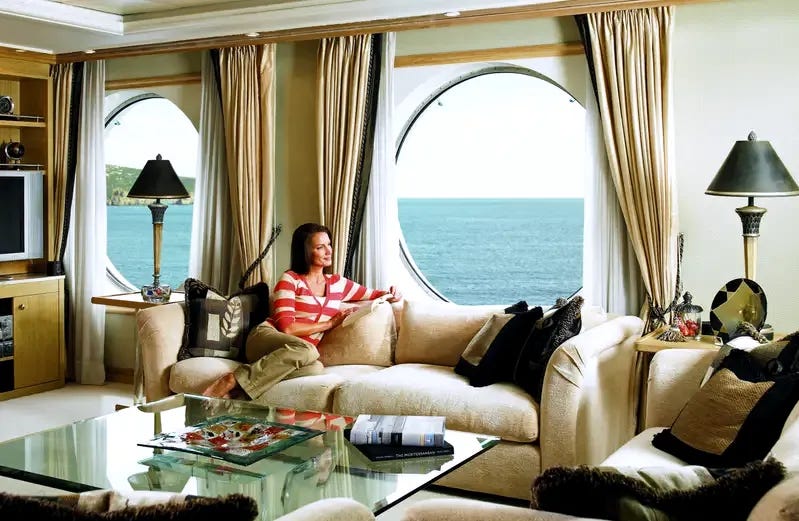
One of the most common misconceptions about a world cruise is that it is simply a very long vacation. It is not. It becomes a way of living.
You develop routines. You have your morning coffee in the same chair with the same view, except the view is never quite the same because the sea is always moving. You recognise faces. You build friendships with people you would never have met otherwise, people from different countries and different lives who are all, for a few months, inhabiting the same small world with you. You have your table in the restaurant and your preferred deck for an evening walk.
The rhythm settles in: mornings at sea with nothing ahead of you but horizon, afternoons in cities you have been reading about your whole life, evenings filled with conversation and unhurried meals and the particular kind of reflection that only comes when you have genuinely stepped outside your ordinary life.
And over time, without it being forced or performed, you slow down. Not because you have nothing to do. Because you have finally given yourself permission to stop rushing.
The shift that nobody mentions in the brochure
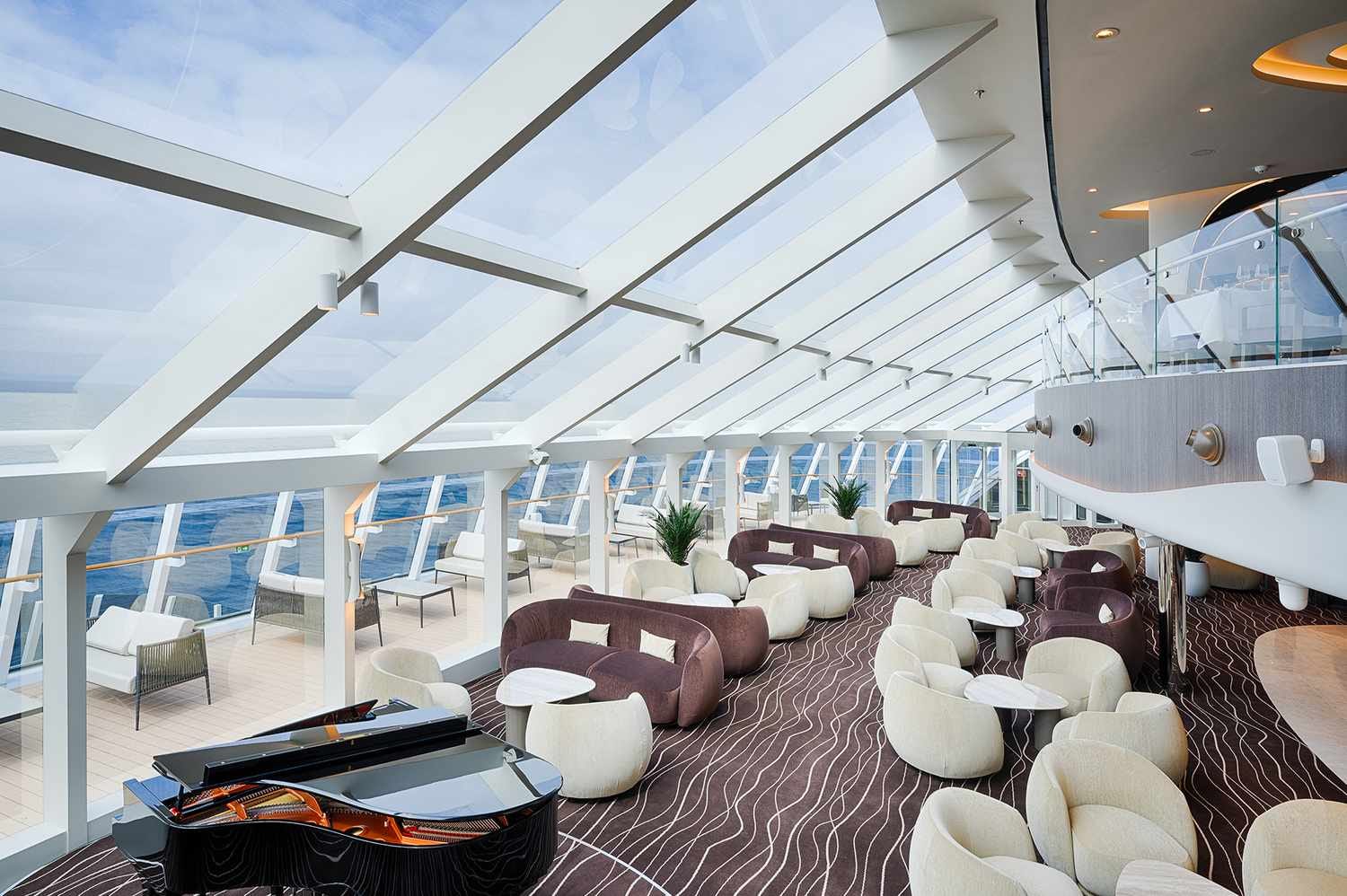
There is a reason people come back different from a world cruise, and it is not just the destinations.
When you remove yourself from your usual environment for that length of time, you gain something that is genuinely rare in modern life: perspective. Unhurried, uninterrupted, undiluted perspective. You think differently about what actually matters. You reassess how you have been spending your time and what you want the next chapter to look like. Not because anyone prompted you to, but because four months at sea with good food, good company, and enough silence will do that to a person whether you invite it or not.
Some return with clarity they have been chasing for years. Others with plans they could never quite form while they were in the middle of everything. Many return with a quiet sense that they have experienced something they cannot fully explain to the people who were not there. And that, it turns out, is entirely the point.
The practical reality
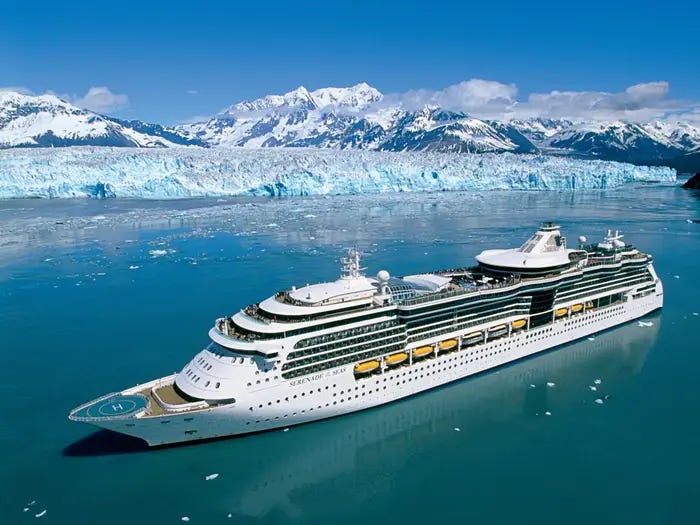
At this point most people start listing the reasons it would not work. Time. Money. Responsibilities. The cat. All of those are real, and none of them should be dismissed.
But here is something most people never hear: there is not just one way to do a world cruise.
Full circumnavigations typically run between 100 and 180 days and vary enormously in price, from around $25,000 per person in an interior cabin on a mainstream line to $150,000 or more per person in an all-inclusive suite on an ultra-luxury vessel. The right level is the one that matches how you actually travel, not the most or least expensive option.
Segment cruising is also an option. Most lines allow guests to join a world voyage for a portion of the full itinerary, covering one or two regions rather than committing to the entire circumnavigation. It is a way to experience the atmosphere and pace of a world cruise without the full duration, and many travellers use it as a first step.
The question worth asking is not whether it is possible. It is what it would actually look like for you specifically, on the right ship, at the right level, on the right route.
The question that tends to change things
Most people ask: can I do a world cruise?
The better question is: what would it look like if I did?
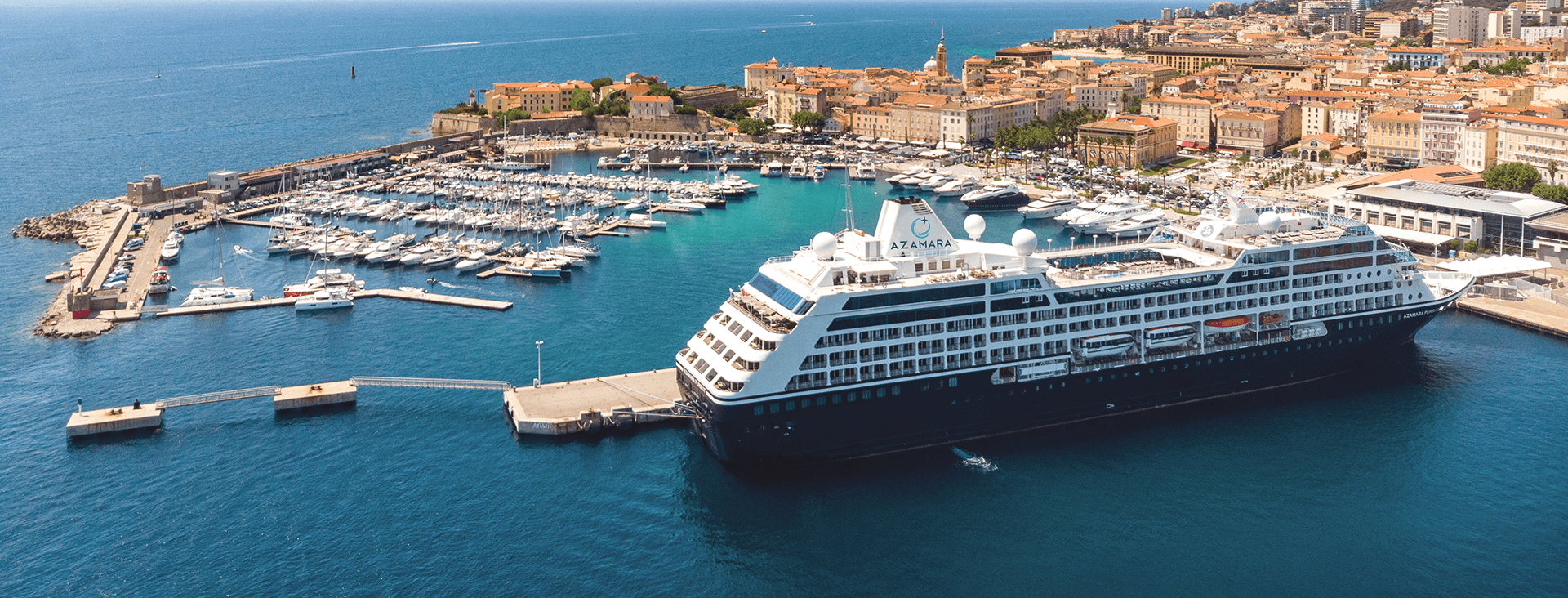
What route would excite you? What level of comfort would you want to come home to at the end of each day? Would you want a ship with 400 guests or 2,000? One that structures your days or one that leaves them entirely open? Would you want to stay longer in each port, the way Azamara and Oceania are known for, or cover more ground across more destinations?
Once you start asking those questions, the abstract dream becomes a specific possibility. And specific possibilities can be planned.
A closing thought
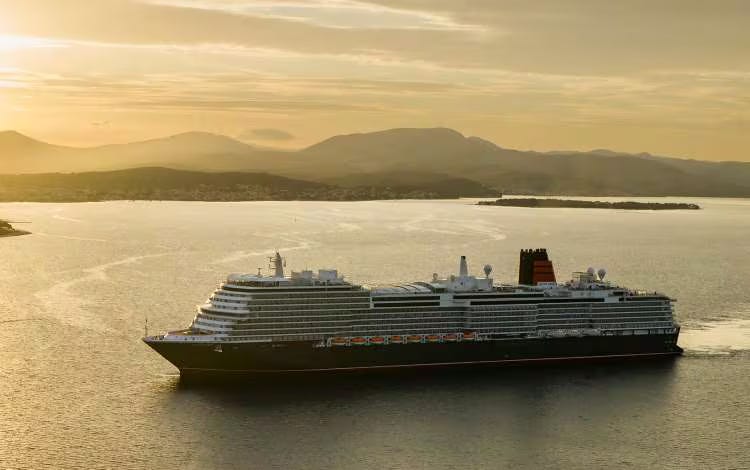
Most people will travel the world in pieces over the course of a lifetime. A week here. Ten days there. A career’s worth of fragments. Very few will ever experience it as a whole, not because they could not have, but because they never seriously stopped to consider that they could.
For those who do, it tends to become one of the defining experiences of their life. Not the most comfortable, not the easiest, not always the most convenient. But one of the truest.
So perhaps the question is not whether it makes sense. Perhaps the question is simply this: what if you did it, just once?
Plan your World Cruise with ÆRIA Voyages
If this has been sitting in the back of your mind, you do not have to figure it out alone. I help travellers navigate the world cruise landscape, understand what the different options genuinely offer, and design a journey that fits who they are.
Whether you are seriously considering it or simply curious about what it would look like for you, I would be glad to have that conversation.
Yvan Junior Blanchette
Travel & Cruise Specialist
ÆRIA Voyages📩 yvanblanchette@aeriavoyages.com
📞 1-888-460-3388
🌐 aeriavoyages.com