
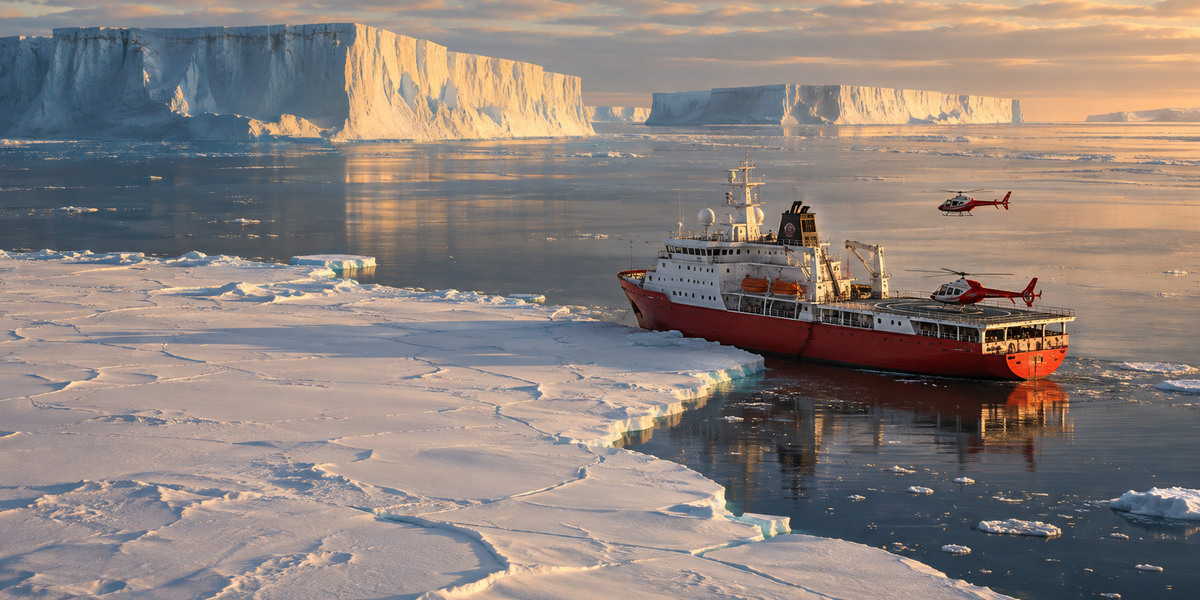
Most Antarctic cruises meet penguins. A Snow Hill voyage goes looking for one penguin in particular, in one place in particular, and accepts from the first day that it might not succeed. That honesty is exactly what makes it the rarest expedition in polar travel. The emperor penguin is the bird people picture when they picture Antarctica: tall, unhurried, impossibly dignified, with a chick balanced on its feet. Yet a standard Antarctic Peninsula cruise will almost never show you one. Peninsula landings are built around gentoo, chinstrap and Adélie colonies. Emperors breed somewhere else entirely, on sea ice, far from the usual routes, and the one colony travellers can realistically aim for sits off a small island in the Weddell Sea called Snow Hill.
Why Emperor Penguins Are Different
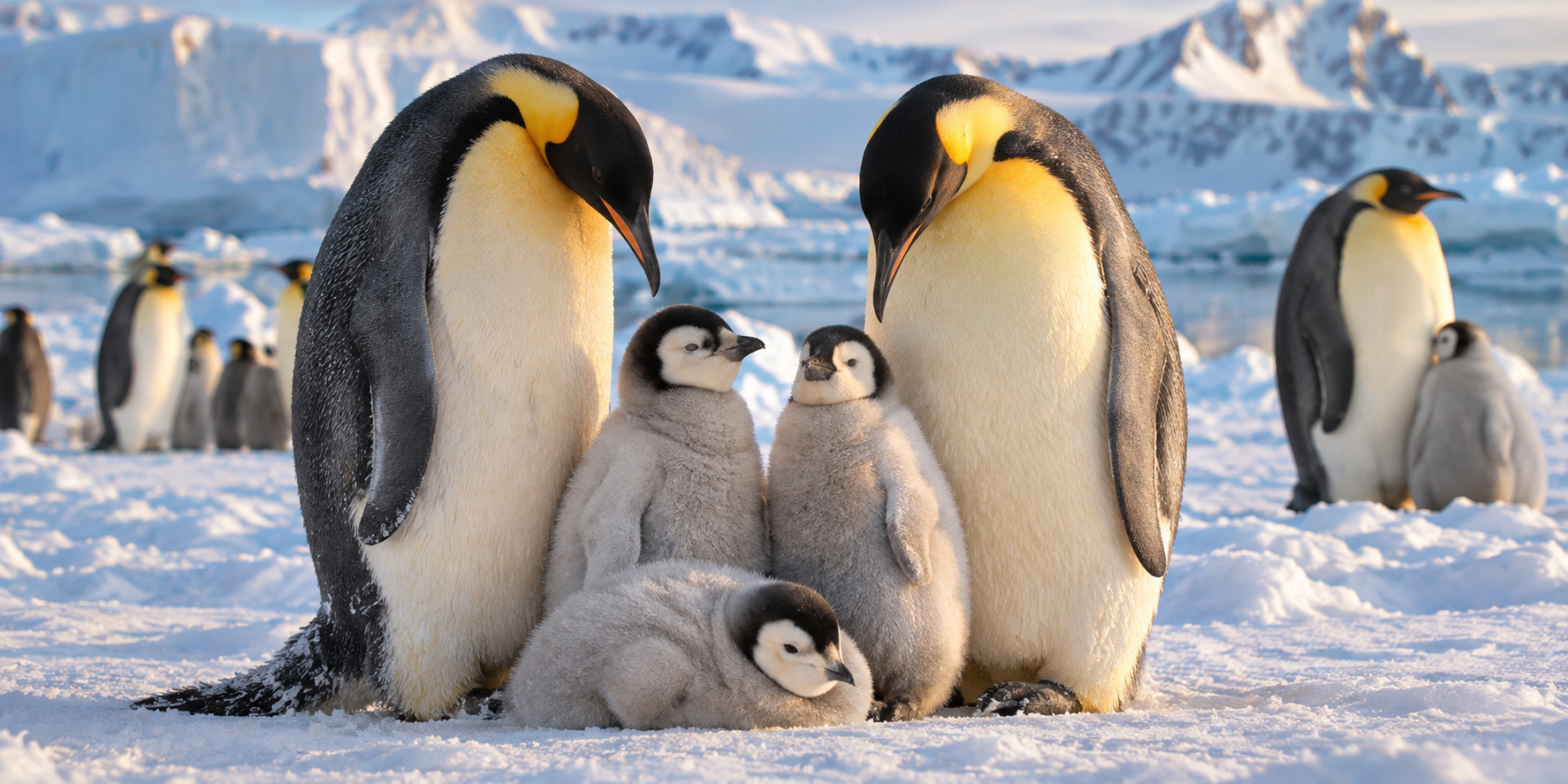
Every other penguin you are likely to meet on a cruise breeds on rock or shingle, in colonies you can walk to from a beach. The emperor does the opposite. Emperors breed on fast ice, the sheet of sea ice that stays attached to the coast. Their colony is not on land at all. It stands on a frozen platform that forms each winter and breaks up each summer. They breed through the Antarctic winter, the season no ship can visit. The males incubate through the worst of it, and by the time expedition ships return in spring, the chicks are already large, grey and downy, gathered in crèches while their parents commute to open water to feed. Chicks fledge in November and December. That timing is the whole reason a Snow Hill voyage exists, and why it can only exist in a narrow early season window. Emperor colonies are scattered around the Antarctic coastline, most of them deep in regions no passenger ship reaches. Snow Hill matters because it is the exception: the northernmost known emperor colony, and the closest one to South America.
Snow Hill: The Northernmost Colony
Snow Hill Island lies in the northwestern Weddell Sea, southeast of James Ross Island, off the eastern coast of the Antarctic Peninsula. It is a modest island, roughly 33 kilometres long and 12 kilometres wide, almost entirely capped in snow and ice. The colony itself is not on the island. It forms on the level sea ice off the island's south coast. It was discovered remarkably late: an overflight first confirmed it in July 1997, and counts since then have put it at around 4,000 breeding pairs, roughly 8,000 adult birds, plus the season's chicks. The island carries human history too. In 1902 and 1903, the Swedish Antarctic Expedition led by Otto Nordenskjöld wintered in a hut on Snow Hill after their ship was trapped and eventually lost in the ice. That story sets the tone for the whole region: the Weddell Sea has never made anything easy for anyone, human or penguin.
Why So Few People Ever Get There
Three barriers stack on top of each other. The ice barrier: the Weddell Sea is famous for dense, multi year pack ice and enormous tabular icebergs, and the same fast ice that gives the emperors their breeding platform blocks ships from reaching the coast. It takes one of the strongest ice class ships available, and even then the ship often stops many miles short. The weather barrier: the realistic way in is by helicopter, and helicopters need visibility, manageable winds and a safe place to land on the ice. The calendar barrier: come from January onwards and the colony is dispersing. The voyages cluster in November and into early December, a window of a few weeks per year. Oceanwide Expeditions states plainly that the chance of the route being free of multi year pack ice is less than 50 percent. Quark Expeditions builds its itinerary around the uncertainty, allowing around five days in the vicinity of Snow Hill to wait for a workable window. When a recent Quark voyage succeeded, guests were flown more than 60 nautical miles over the sea ice to reach the colony, in small groups, over two days. This colony was not visited by travellers at all until 2004, when Quark, sailing the icebreaker Kapitan Khlebnikov, became the first company to bring guests to it.
How a Snow Hill Voyage Actually Works
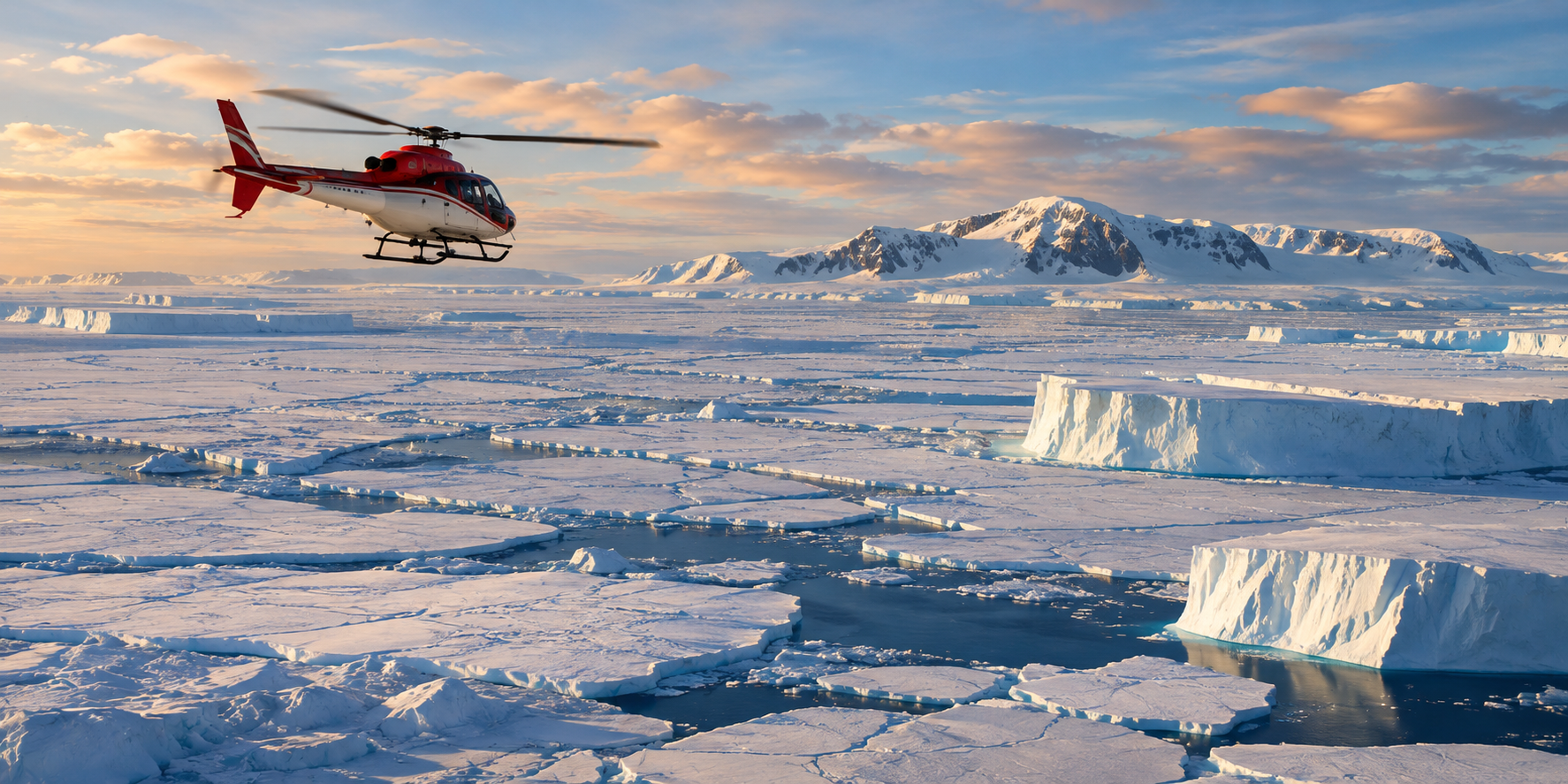
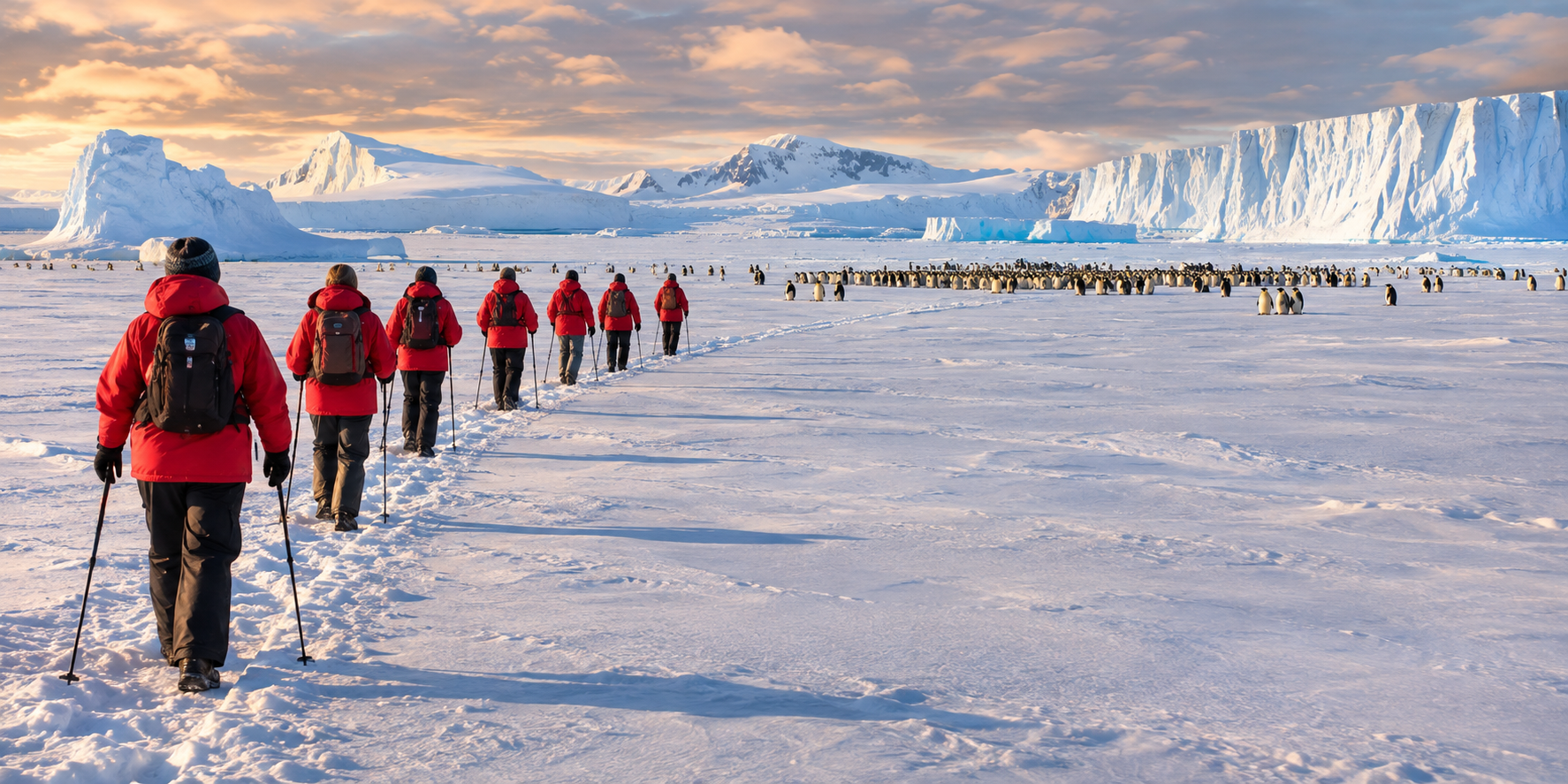
Stage one, the approach: from Ushuaia, or on Quark's programme from Buenos Aires with a flight to Ushuaia, the ship pushes into the Weddell Sea through the Antarctic Sound, among tabular icebergs, with days filled with briefings on weather, ice charts, helicopter procedures and biosecurity. Stage two, the helicopter bridge: on Quark's Ultramarine, two twin engine helicopters shuttle guests in small groups to a prepared landing site on the sea ice, well away from the colony, and never flying over the birds. Oceanwide's Ortelius works the same way, flying guests to a site roughly 45 minutes on foot from the rookery. Stage three, the walk: the last stretch is done on foot across the sea ice. Operators are explicit: you must be able to board a helicopter and walk 45 to 60 minutes unassisted in snow, carrying whatever gear you choose to bring. Stage four, time at the colony, then the whole thing in reverse. Around that central quest, the better itineraries build in Weddell Sea alternatives: Zodiac cruising among icebergs, landings on the eastern Peninsula, and helicopter flightseeing when conditions permit. On a trip defined by uncertainty, the quality of plan B is part of the product.
The Ships and Operators Who Can Even Try
Quark Expeditions, Ultramarine: two twin engine helicopters, then a walk on the ice; 14 days from Buenos Aires and Ushuaia, November departures; first to bring travellers in 2004; Snow Hill capacity reduced to about 150 guests; about five days held near Snow Hill. Oceanwide Expeditions, Ortelius: ship helicopters to the ice edge, then about 45 minutes on foot; 11 days round trip Ushuaia, November to early December; states the odds honestly at under 50 percent; helicopter transfers included, flight time never guaranteed. Ponant, Le Commandant Charcot: a true polar icebreaker that can navigate heavy ice directly, on longer luxury icebreaker voyages into the Weddell Sea. Scenic, Scenic Eclipse: helicopter excursion from a discovery yacht on early season Weddell Sea itineraries, offered at additional cost and always weather dependent. Two lessons: the ship is not a detail, it is the expedition; and no operator guarantees the colony. The honest ones say so in writing, in advance.
What It Is Like at the Colony
The helicopter noise fades. The walk is quiet, just boots on snow and wind. Then the sound of the colony reaches you: thousands of birds calling, chicks chirping, a low, constant murmur across the ice. You approach slowly, under your guides' direction, and stop at the distance the expedition team sets. IAATO wildlife guidelines govern everything here, and wildlife always has the right of way. What you see in November is a colony at full stretch: adults in immaculate black, white and soft gold, commuting in lines between the colony and the ice edge; chicks gathered in fluffy grey crèches, moulting toward independence; and the scale of it, around 4,000 pairs spread across the ice, in a place almost no one gets to see. No drones are allowed. The guides' distance rules are the condition that makes visits like this acceptable at all.
When to Go, and How Far Ahead to Book
Season: November into early December, every year, full stop. That is when the fast ice still holds, the chicks are present, and ships can operate in lengthening daylight. There is no second Snow Hill season later in summer. Booking horizon: these voyages are few, small and famous among polar travellers, with only a handful of departures across whole seasons and capacity deliberately reduced to about 150 guests on Snow Hill sailings. Cabins on the most desirable dates can be spoken for well over a year ahead. Ice conditions cannot be predicted a year out. What you can choose is the operator's record, the number of days the itinerary holds in the Weddell Sea, and the strength of the alternative programme.
The Honest Chapter: What If You Do Not Make It?
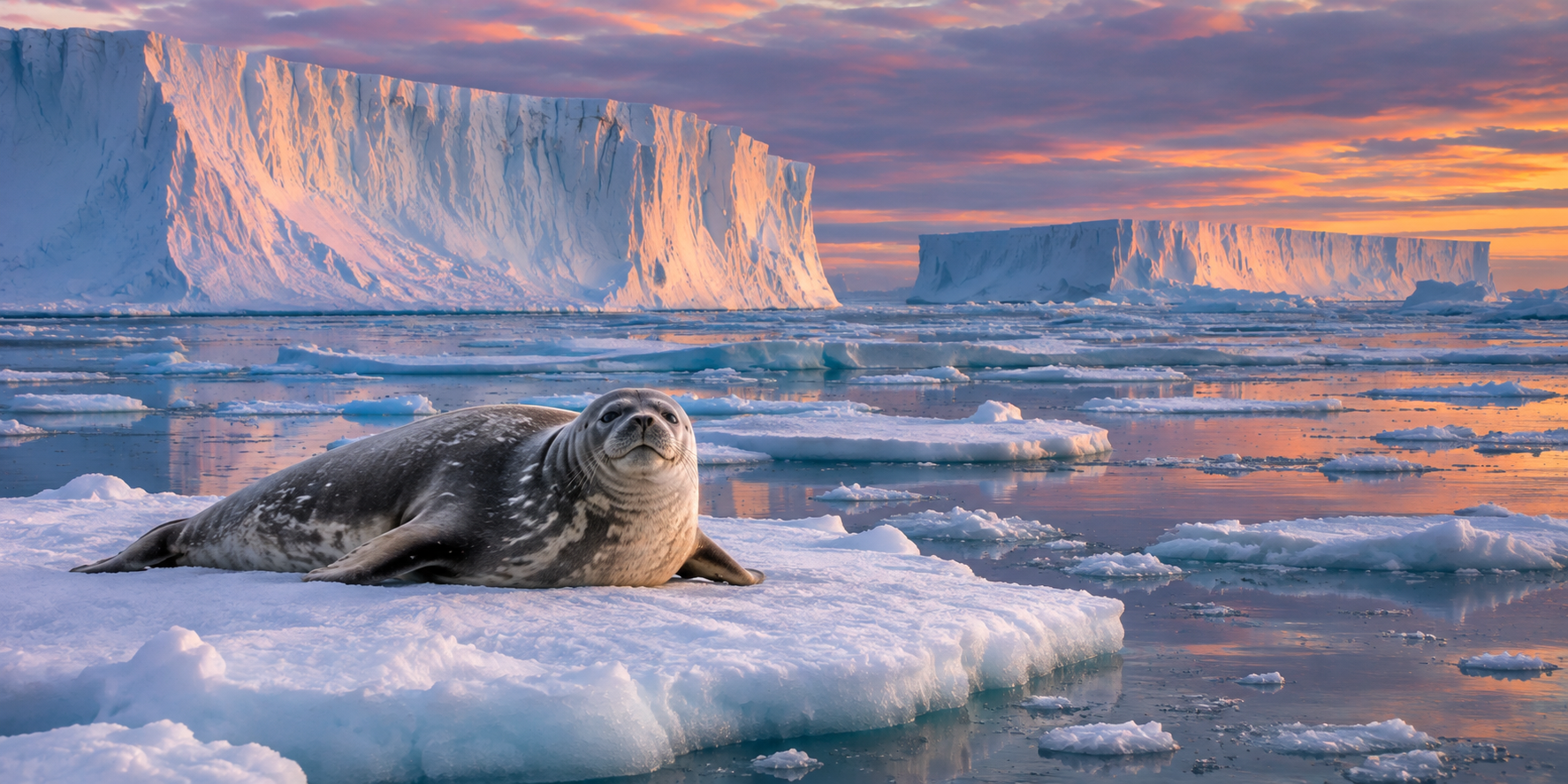
Say it plainly: you might sail all that way and not reach the colony. Heavy ice, a week of wind, unsafe landing conditions. It happens, and it is nobody's fault. What remains is not nothing. The Weddell Sea is one of the great Antarctic regions in its own right: cathedral sized tabular icebergs, vast pack ice, Adélie penguin colonies on islands such as Devil Island, Weddell seals hauled out on floes, leopard seals hunting the edges, and the stark, rarely visited eastern coast of the Peninsula. And there is the Shackleton resonance of these waters, the sea that trapped the Endurance in 1915. The travellers who come home happy from an unsuccessful Snow Hill voyage are the ones who booked it as a Weddell Sea expedition with a chance of emperors, rather than as a ticket to a guaranteed sighting.
At a Glance: Snow Hill, Honestly Summarised
| Where | on fast ice off the south coast of Snow Hill Island, northwestern Weddell Sea. |
| How many | around 4,000 breeding pairs, roughly 8,000 adults, plus chicks in season. |
| Why special | the northernmost emperor colony, and the only one travellers can realistically target. |
| When | November to early December only. |
| How | ice class ship, then helicopter to the ice, then 45 to 60 minutes on foot. |
| Odds | operators state under 50 percent for a clear route in a given attempt. |
| Who | Quark, Oceanwide, Ponant and Scenic among them, each differently. |
| Fitness | board a helicopter, walk unassisted in snow for up to an hour, carry your own gear. |
| Guaranteed | no, never. |
The ÆRIA Recommendation
Choose the operator and the itinerary, not the headline. Days held in the Weddell Sea, helicopter capability, reduced guest capacity and a serious alternative programme matter more than any photograph in a brochure. Book it as a quest, in writing, with your eyes open. Read the operator's own language about probability. If under 50 percent odds and a magnificent plan B still excite you, you are exactly the traveller this voyage was made for. Give it time: book early, keep your dates as flexible as the season allows, and compare the fine print that decides these trips, helicopter policy, landing day structure, and what actually happens on the days the ice says no. If the ice opens, the helicopters fly, and you walk that last quiet stretch to stand before 4,000 pairs of emperor penguins and their chicks, you will have seen something that almost no one alive has seen.
Ready to plan your Snow Hill emperor penguin expedition?
Connect with a polar expedition specialist today!
Yvan Junior Blanchette
Travel and Cruise Specialist
ÆRIA Voyages | ÆRIA Expeditions
☎️ 1 888 460-3388 or 450-820-9720
✉️ yvanblanchette@aeriavoyages.com
🌐 aeriavoyages.com

Member discussion: