
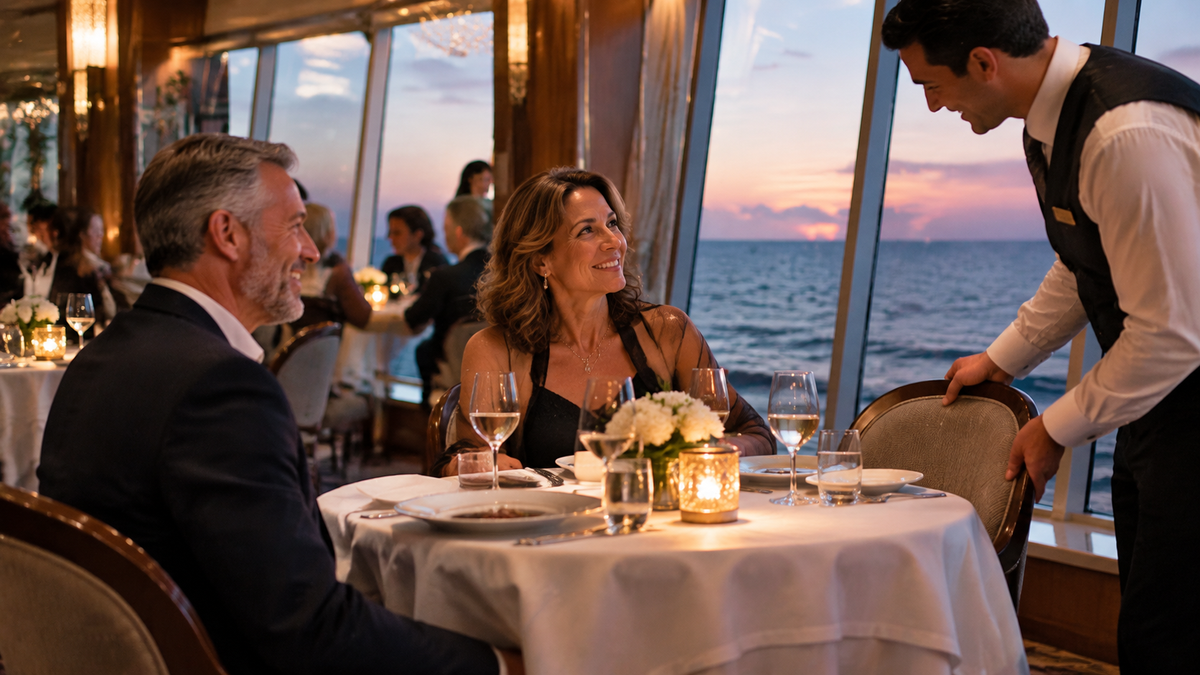
You booked it. The date is on the calendar, the ship has a name, and you may already be counting the sleeps. Now comes the part that quietly decides how the cruise actually feels: between booking and boarding there is a series of small steps that separates a stressful departure from one where the vacation starts the minute you step onboard.
This is the guide I give my own clients. It follows the real order of things, from the booking confirmation to disembarkation, with the tricks that appear in no brochure and the short list of accessories that genuinely change life in a cabin. Pin it, and pull it out before every sailing.
Step 1: Right after booking, the checks that prevent disasters

Names must match the passport, letter for letter. A shortened first name or a differently spelled compound last name is easy to fix now and painfully hard to fix at the airport or the terminal. Read the confirmation the moment it arrives.
Check the passport expiry date. Most cruise lines and ports of call require a passport valid for at least six months beyond your return date. If yours is getting close, renew it now, not in departure month.
Buy travel insurance early. Cancellation and interruption coverage protects the money you just spent, and emergency medical care abroad costs sums your provincial health plan barely touches. There is another reason to act fast: some protections, such as coverage for pre-existing conditions, depend on how soon after booking the trip you buy the policy.
Write down the final payment date and the cancellation penalties. Set a phone reminder a week ahead. A missed final payment can cancel the booking, and released cabins do not always come back.
Keep everything in one place. Confirmations, booking number, receipts: one email folder plus a cloud copy. The day you need them, you will be standing in a line with your phone at 12 percent.
Step 2: The countdown at a glance

| When | What to do |
|---|---|
| At booking | Verify names and passport, buy travel insurance |
| At final payment (often 120 days out, depending on the line and itinerary) | Pay the balance and reconfirm special requests: bed setup, dining time, accessibility needs |
| When online check-in opens (line dependent, often between 45 and 14 days out) | Complete check-in and grab the earliest terminal arrival time offered |
| 30 to 21 days out | Book specialty restaurants, shows and the most popular excursions; buy drink and Wi-Fi packages, often cheaper before sailing |
| 14 to 7 days out | Print and protect luggage tags and boarding passes, download the cruise line app |
| Departure week | Pack, ready the house, print the essential documents |
| The day before | Already be in the port city if you are flying in |
| Departure day | Board at your assigned time, do the safety drill, enjoy your first meal onboard |
Step 3: Online check-in and the cruise line app

Online check-in is not a formality to rush through: it is where you pick your terminal arrival time, and the early slots fill up fast. Do it as soon as it opens, passport and payment card in hand (the card goes on your onboard account), plus an emergency contact.
Then download the cruise line's app and pull up your booking. Onboard it becomes your remote control: daily program, restaurant menus, reservations, deck plans and, on many ships, messaging with your travel companions. Downloading it at home, on your own Wi-Fi, beats doing it on the terminal's.
Step 4: Book ahead what fills up
A few things reward early action:
- Specialty restaurants. The best times at the best venues disappear weeks out.
- Popular excursions. Small groups, famous sites, limited capacity: if it is the one you dream about, do not wait until you are onboard.
- Drink and Wi-Fi packages. They are very often discounted before sailing, sometimes substantially, and almost never cheaper onboard.
Honesty requires the flip side: do not schedule every hour. Part of the pleasure of a cruise is an afternoon with no plan at all. Book what fills up, leave the rest open.
Excursions from our independent suppliers are often less expensive and of better quality than the ones sold by the cruise lines. We recommend these two suppliers:
Important notes: you will hear that it is less risky to take the cruise line's excursions because they will wait for you if the excursion runs late... that is not always the case!
Our suppliers also offer a guarantee of return to the ship before it sails, along with satisfaction guarantees and a lowest price guarantee policy.
Step 5: Documents, on paper and in the cloud
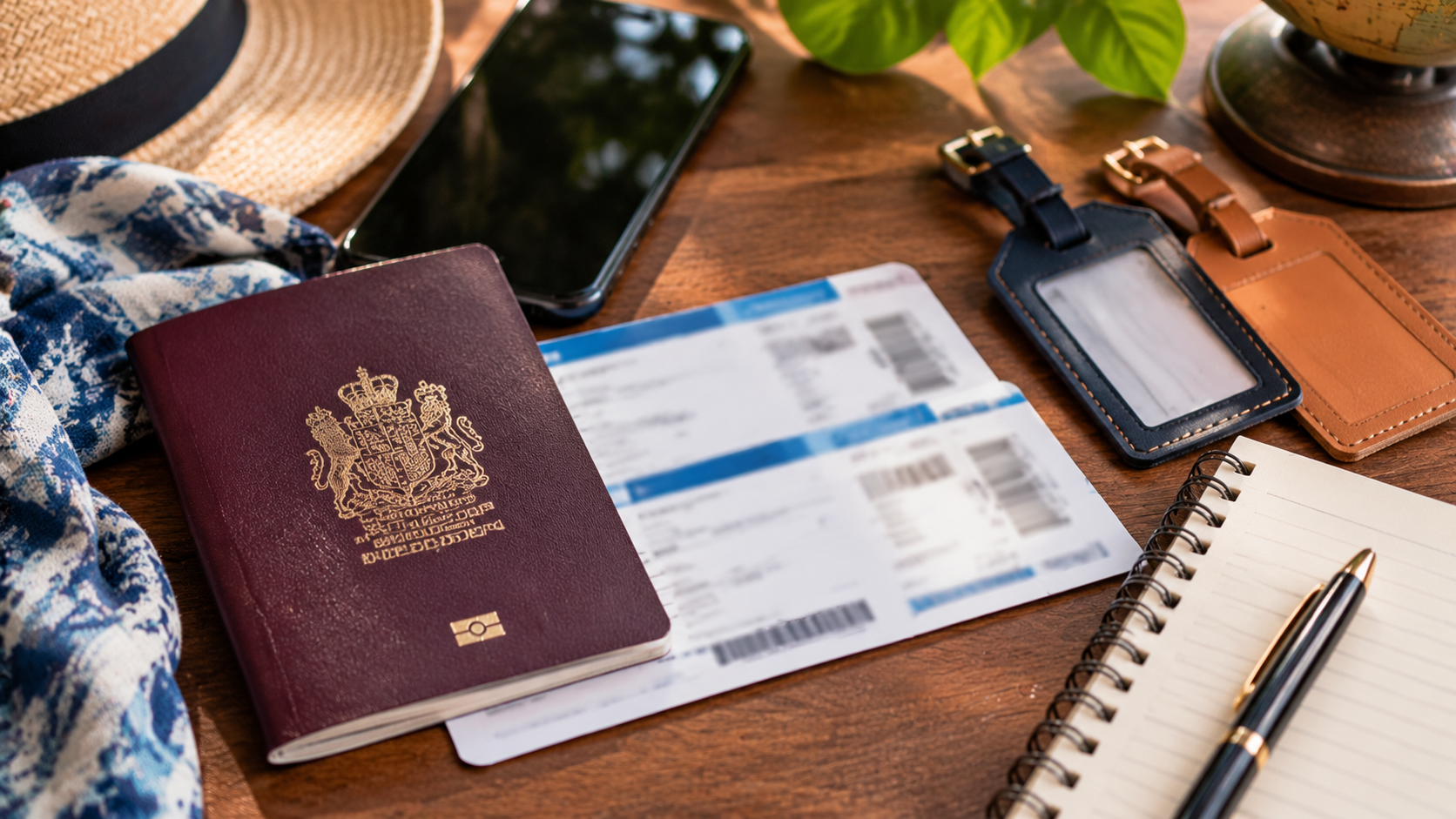
Gather:
- passport,
- boarding passes,
- luggage tags,
- proof of insurance,
- and any visas or electronic travel authorizations required by certain ports of call.
A cruise calling in the United Kingdom can require an electronic travel authorization, for example; rules change, so check for your exact itinerary.
Make two copies: a digital one, reachable from your phone and a cloud account, and a paper one, carried in a different bag from the originals. Leave a copy of your itinerary with someone at home too. It takes ten minutes, and on the day a wallet disappears in a port of call, it changes everything.
Step 6: The savvy cruiser's kit
Cabins are compact by design, but they hide a superpower: their walls and ceilings are steel. Here are the accessories my clients thank me for putting in their suitcase. I list no prices: they move constantly on Amazon.ca, so follow the links for today's number.
Magnetic hooks, the number one accessory
They stick to the cabin's steel walls and create storage where none existed: hats, lanyards, drying swimsuits, the daily program, small bags. Choose sturdy ones with a swivel hook.
Example: Hanging magnetic hooks.
Luggage tag holders
The line's luggage tags print at home on ordinary paper, then get handled in rain, on conveyor belts and by dozens of hands. A clear zip-seal holder with a steel loop keeps them readable and attached. Just check your line's tag format, narrow or wide, before ordering.
Example: Luggage tag holders.
A retractable lanyard for your ship card
That card is everything at once: your cabin key, your onboard payment method and your ID for getting off and back on. Worn around the neck in a clear holder, it saves you searching for it a hundred times a day.
Example: Cruise lanyards with retractable reel.
A magnetic motion-sensor night light
An inside cabin at night is pitch black. A small light that wakes when you do, sticks to the steel wall and guides you to the bathroom spares stubbed toes and a fully awakened cabin mate.
Example: Magnetic USB rechargeable night light.
A power strip, with an important warning
Cabin outlets are scarce, often one or two for everyone. But: surge-protected strips are banned onboard everywhere, and several lines, including the Royal Caribbean group, now also ban multi-outlet devices that add regular plugs. Check your line's current policy before buying anything. Where it is allowed, choose a non-surge model made for cruising.
Example: Travel power strip without surge protection. And if your line bans it, a plain multi-port USB charger, which adds no outlets, is accepted everywhere.
A floating waterproof phone pouch
For the beach, the kayak, the excursion boat and windy sea days. The key word is "floating": a pouch that sinks protects your phone all the way to the bottom. Example: Pelican Marine waterproof cellphone pouch.
Towel bands or clips
On deck, the wind is real: your towel ends up three chairs down and your spot becomes unfindable. An elastic band or a sturdy clip solves both problems. Example: Towel bands.
Compression packing cubes
Roll your clothes, fill, then zip the second zipper to compress: the volume melts away and, miraculously, you can find things without emptying the suitcase. Example: Compression cubes.
A hanging toiletry bag
Cabin bathroom counters are tiny. A bag that hangs from the door hook or the towel bar keeps everything at hand and nothing on the counter.
Example: Travel hanging toiletry bag.
The shortcut for the short on time
All-in-one kits bundle the essentials: lanyards, tag holders, magnetic hooks, waterproof pouches and towel bands.
Example: Cruise essentials kit (13 pieces).
Nearly free, no shopping link needed:
- a highlighter to mark your picks in the paper daily program,
- wrinkle-release spray (irons and steamers are banned in cabins),
- a small dry bag for excursions,
- a foldable laundry hamper,
- a few cable ties to tame the charging cords by the bed.
Step 7: Pack like a pro
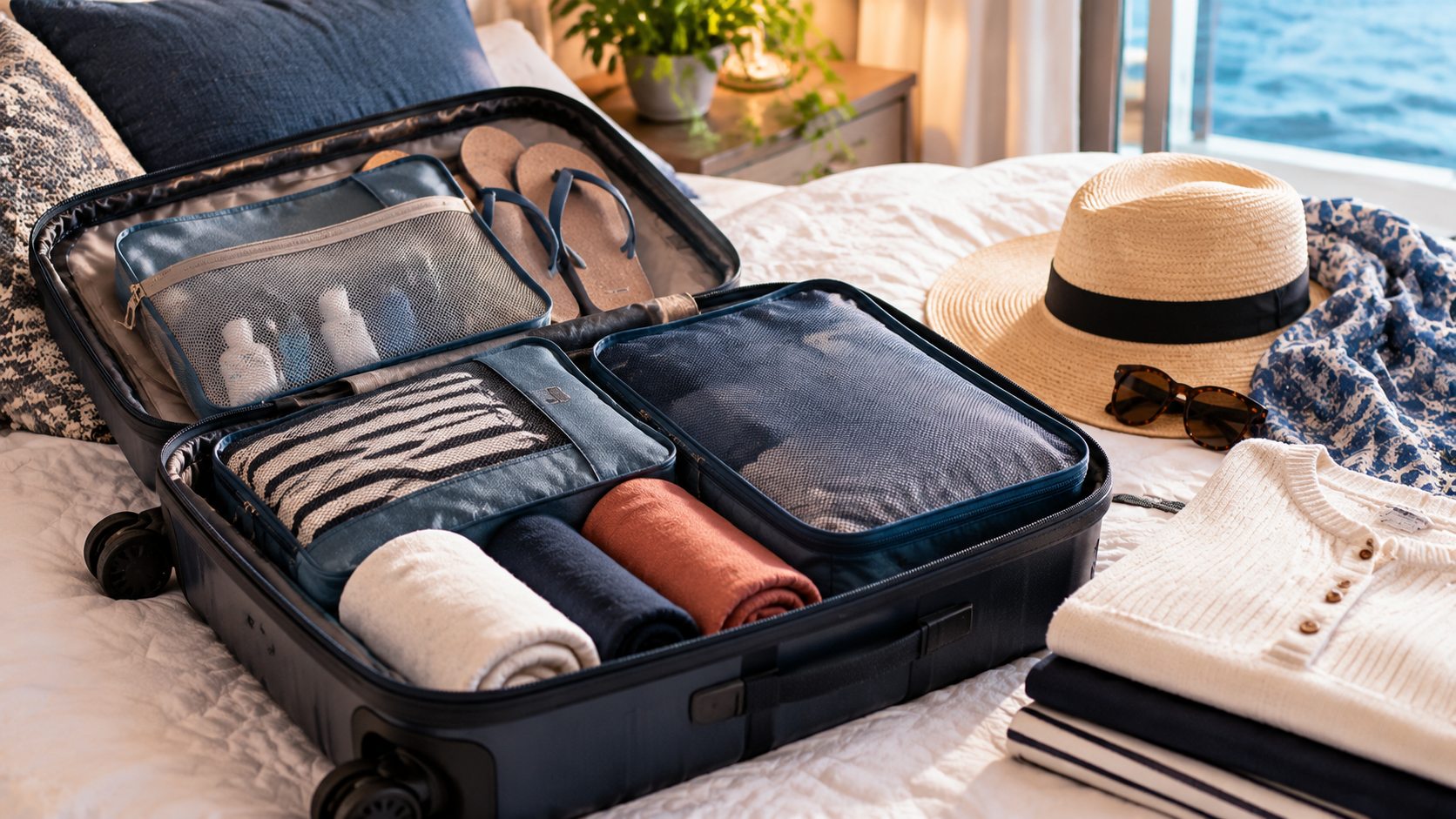
The first-day carry-on is sacred. Bags dropped at the terminal may not reach your cabin until late afternoon. So keep on you: passport and documents, every medication for the whole trip (never in checked luggage, ever), chargers, a swimsuit if the pool is calling, and something presentable for the first dinner.
Dress in layers. One smarter outfit for elegant nights if your line has them, one warm layer for windy decks, evenings at sea and northern ports, and already broken-in shoes for ports that are meant to be walked.
Photograph your suitcases and their contents before you leave. If anything goes missing, that simple step speeds up claims and helps everyone spot your bags.
Step 8: The night before and the trip to the port

If you are flying to your embarkation port, arrive the day before... always! A delayed or cancelled flight can be rebooked; a departed ship cannot.
The hotel night near the port is not an expense, it is peace-of-mind insurance, and it turns departure morning into a stroll instead of a sprint.
At the terminal, attach the tags to your bags before handing them to the porters, keep documents and medication in your carry-on, and have your passport in hand rather than at the bottom of a bag.
Step 9: Embarkation day, step by step

- Arrive at the terminal in your assigned window. Showing up earlier does not get you in earlier if your group has not been called, and terminals are pleasanter when everyone respects the flow.
- Drop the bags with the porters (a tip of a few dollars is always appreciated), check in, clear security, boarding pass and passport in hand.
- Complete the safety drill as soon as you board. It is mandatory. On most ships, a short video in the app plus a quick stop at your assembly station to have your card scanned does it. Done early, it frees the rest of your day.
- Have lunch without rushing. The buffet is packed in the first hour; on many ships a sit-down restaurant is usually open on embarkation day: ask around, it is dramatically calmer.
- Explore while the cabins get ready. Cabins are usually ready in the early afternoon. Scout the dining room, the pool deck, your muster station and the café that will become your spot.
- Meet your cabin steward. This is the person looking after your comfort all week: bed requests, ice, extra pillows, now is the moment, with a smile.
- Book your specialty restaurants if you have not already. Book them early: in the app, by phone, or in person at the desk indicated onboard.
Step 10: Small tricks that change the cruise

- Airplane mode the moment you sail away, then connect to the ship's Wi-Fi if you have the package. Cellular roaming at sea is among the most expensive there is. I can suggest a reliable eSIM service for your connectivity needs at your destination, if needed.
- Photograph the daily program and the menus instead of carrying the paper everywhere.
- The ship's tap water is drinkable. A simple refillable bottle covers port days.
- Live on ship time, which is not always local time in port: excursion meeting points and the all-aboard time follow the ship's clock. You will find ship time easily on the cabin TV and the cabin phone display.
- Always come back with margin. The ship does not wait for latecomers: do not be the tourist running down the pier after the ship, just in time to watch it sail away.
Step 11: A tear-free disembarkation

The night before disembarkation, put your tagged suitcases (your steward will have given you the tags during the preceding days) outside your cabin door by the requested time, generally no later than about 10 p.m., but keep a small overnight bag: pajamas, toiletries, clothes for the trip home, documents and medication.
Review your account statement before the last evening rather than in the guest services line at 7 a.m. the next morning. Charges posted to your onboard account will be charged automatically to the credit card on file: there is nothing you need to do.
In the morning: have a proper breakfast, vacate the cabin on time, and keep passport and return documents in hand. And if your flight home is late in the day, several lines sell disembarkation excursions that fill the day and keep your luggage: the gentlest possible ending to the trip.
The printable checklist
- ☐ Names checked against the passport, passport valid six months past return
- ☐ Travel insurance bought (cancellation, interruption, medical)
- ☐ Final payment made and confirmation received
- ☐ Online check-in done, arrival time chosen
- ☐ Restaurants, shows, excursions and packages booked
- ☐ Cruise line app downloaded and booking linked
- ☐ Tags printed and slipped into tag holders
- ☐ Documents on paper and in the cloud, copy left with someone at home
- ☐ Cabin kit: magnetic hooks, lanyard, night light, waterproof pouch, cubes
- ☐ First-day carry-on: documents, medication, chargers, swimsuit
- ☐ Hotel night near the port booked if flying in
- ☐ House ready: mail, plants, pets, and the souvenir notifications turned off (that last one is optional)
A word from ÆRIA Voyages
This guide covers the great majority of departures, but every ship has its quirks: power strip policies change, check-in windows vary, and port requirements differ.
When I prepare a departure with a client, we walk these steps together, for their exact ship and itinerary, and tick the boxes one by one. A successful cruise is not luck: it is preparation you stop noticing the moment you are onboard!
A departure prepared without weeks of thinking about it?
Tell me about your cruise, and we will tick the boxes together.
Yvan Junior Blanchette
Travel and Cruise Specialist
ÆRIA Voyages | ÆRIA Expeditions
☎️ 1 888 460-3388 or 450-820-9720
✉️ yvanblanchette@aeriavoyages.com
🌐 aeriavoyages.com

Member discussion: