
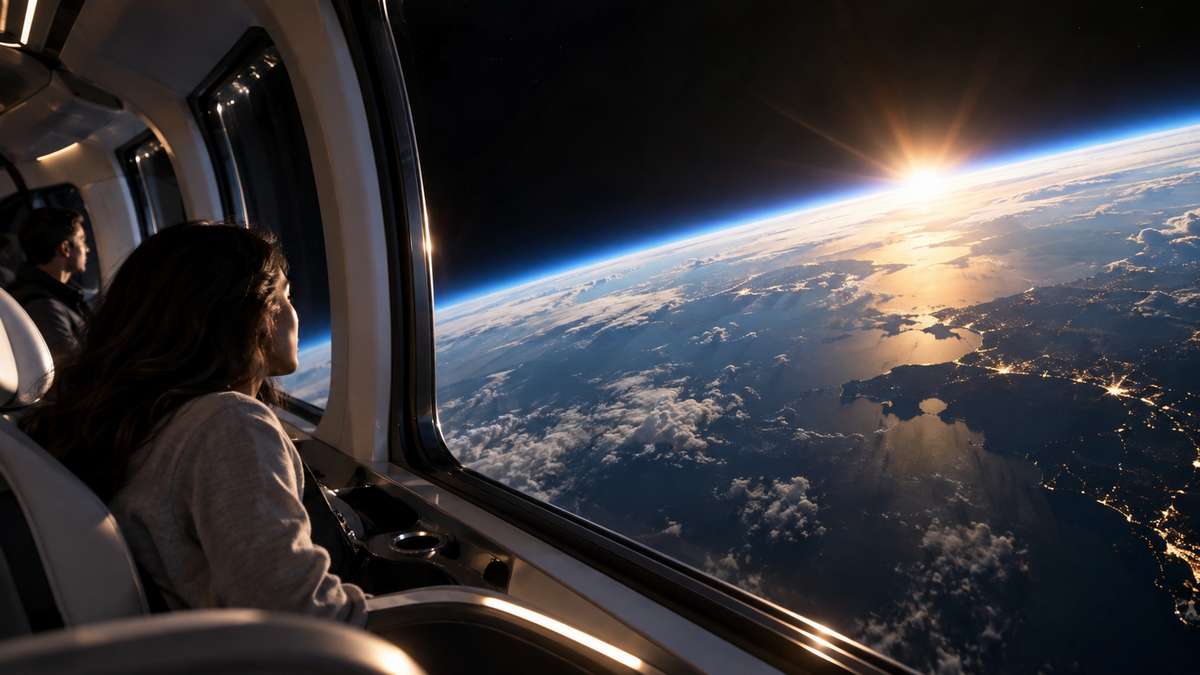
For most of human history, space belonged to astronomers, scientists, national governments, and the unfettered imagination. Then, almost imperceptibly, a tectonic shift occurred. Private enterprises began engineering vehicles capable of carrying non-career astronauts beyond Earth’s atmosphere, ushering civilian passengers across internationally recognized boundaries of space and turning sci-fi concepts into commercial reality.
Space tourism is no longer a speculative future, because it has already arrived. While traveling beyond Earth remains extraordinarily expensive and reserved for a tiny fraction of humanity, a distinct category of expeditionary travel is quietly taking shape.
The Spectrum of Commercial Spaceflight
Commercial space travel exists on a broad continuum ranging from entry-level terrestrial simulations to full-scale orbital missions:
- Atmospheric & Terrestrial Preparation: Zero-gravity parabolic flights and centrifuge-based astronaut training replicate specific physical sensations of spaceflight without leaving Earth.
- Stratospheric Journeys: High-altitude balloon systems transport passengers into the upper atmosphere, offering panoramic views of Earth’s curvature against the blackness of space without high-G rocket acceleration.
- Suborbital Spaceflight: Rocket-powered craft cross the edge of space, granting passengers several minutes of weightlessness and sweeping views of Earth before gliding back to the surface.
- Orbital Expeditions: The most demanding tier involves traveling at extreme velocities to circle the Earth over several days, docking with private habitats or commercial space stations.
Suborbital vs. Orbital: Distinct Paradigms
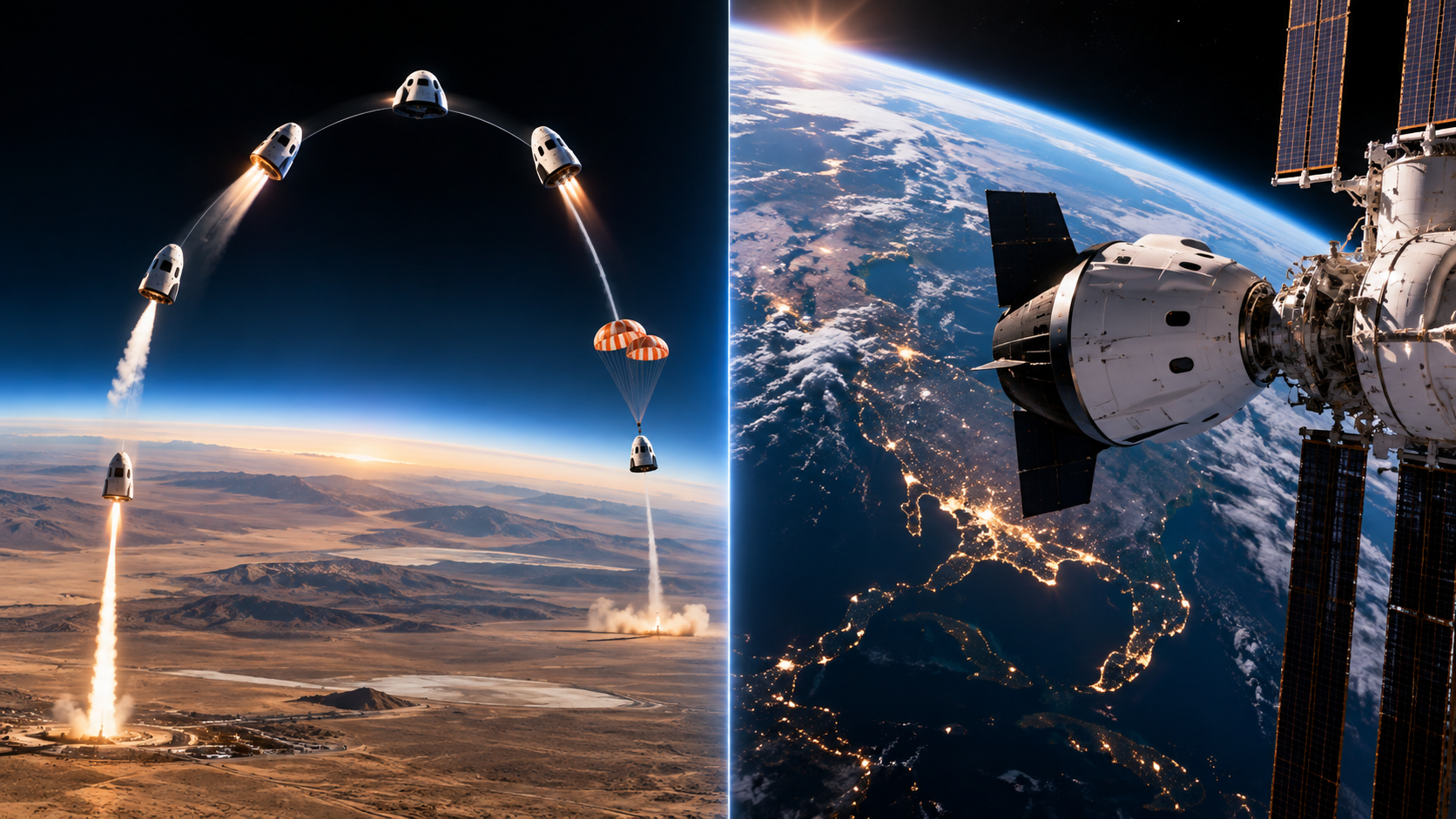
The technical gap between suborbital and orbital flight fundamentally reshapes the passenger experience:
| Feature | Suborbital Flight | Orbital Flight |
|---|---|---|
| Trajectory | Reaches space, then returns to Earth without completing an orbit | Accelerates to orbital velocity and circles Earth |
| Microgravity Duration | Several minutes | Days or longer |
| Preparation | Safety instruction and physical familiarization | Extensive mission-specific preparation, often lasting weeks or months |
| Notable Vehicles | Virgin Galactic spacecraft; Blue Origin New Shepard* | SpaceX Crew Dragon |
| Typical Experience | Brief spaceflight, microgravity, and views of Earth from the edge of space | Extended life and operations in microgravity while orbiting Earth |
*Blue Origin announced in January 2026 that New Shepard flights would pause for at least two years while the company redirects resources toward lunar programs.
Suborbital providers demonstrate that there is no single standard for commercial space travel. Virgin Galactic utilizes a horizontally launched, air-dropped spaceplane, whereas Blue Origin relies on a traditional vertical rocket-and-capsule architecture.
The Overview Effect & The Human Experience
For many space travelers, the defining moment is not the high-speed acceleration or the novelty of weightlessness, but the profound cognitive shift known as the Overview Effect. Looking back from space, Earth appears as a fragile, borderless biosphere suspended in a void. This psychological realization, specifically seeing the totality of human existence in one view, is increasingly recognized as the primary allure of off-planet travel.
Safety, Regulations, and Accessibility
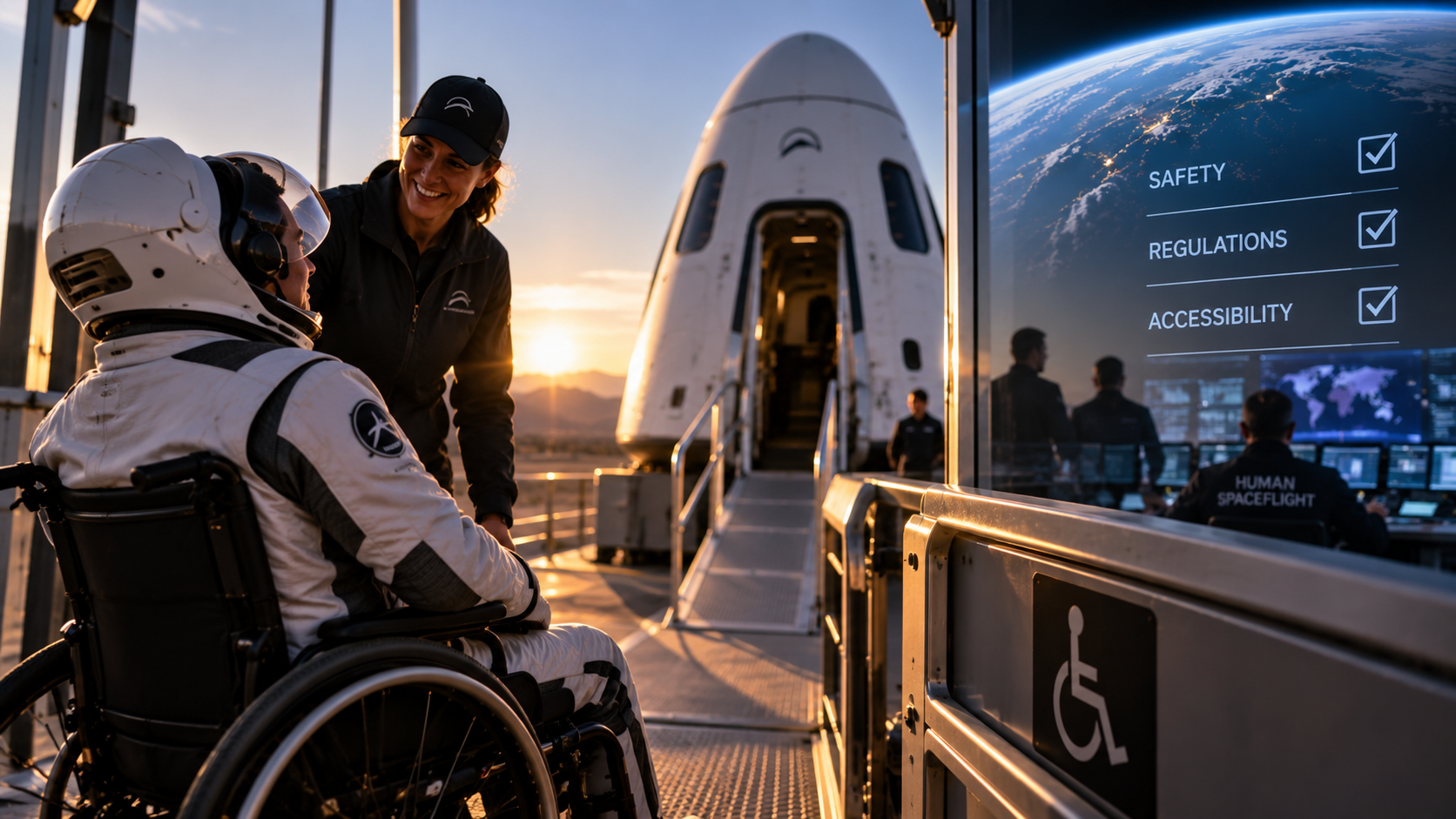
Unlike commercial aviation, which operates under strict airworthiness certifications, human spaceflight currently functions under an informed-consent model. In the United States, current regulatory frameworks allow commercial operators to fly passengers provided all known risks are fully disclosed. The FAA does not certify these craft as safe in the traditional airline sense, leaving participants to approach these journeys as high-risk expeditions.
Accessibility is also expanding beyond traditional physical norms. Following landmark missions like Blue Origin’s NS-37, which carried the first wheelchair user above the Kármán Line, the industry is gradually re-evaluating long-held assumptions about who can physically go to space.
The Next Frontier of Exploration
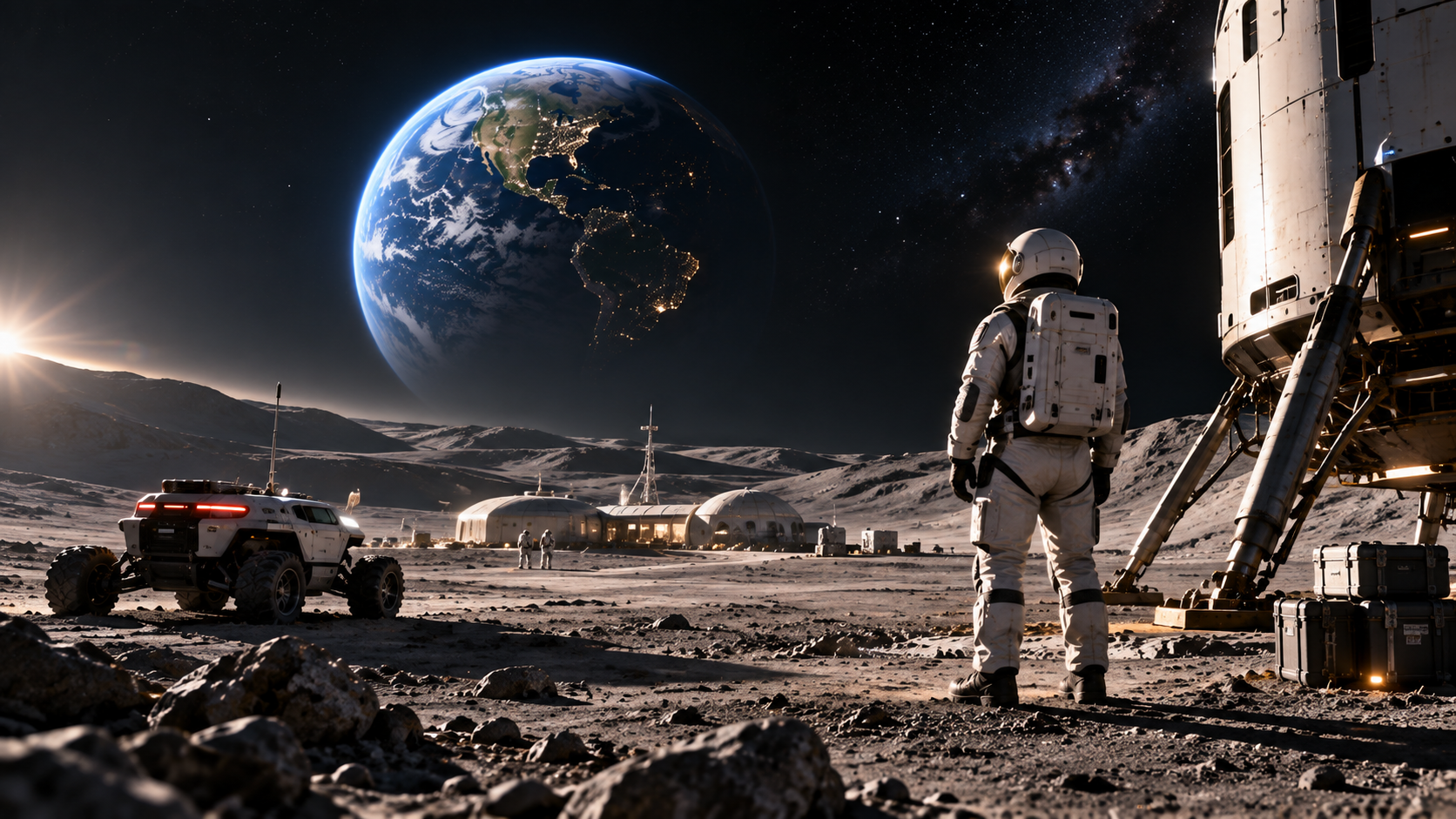
Space tourism is the logical evolution of extreme expedition travel. Just as polar explorers cross the Drake Passage knowing the environment dictates the rules, space flight participants accept specialized training, physical discomfort, and inherent risk in exchange for an unparalleled perspective.
ÆRIA Beyond tracks this expanding domain, ranging from stratospheric ballooning to orbital habitats, to separate genuine aerospace developments from hyperbole. The fundamental question is no longer whether civilians will reach space, but how quickly the doorway will open.

Member discussion: