

How much does a world cruise actually cost in 2026?
World cruise guide · Updated 2026 · Pricing · Inclusions · How to choose
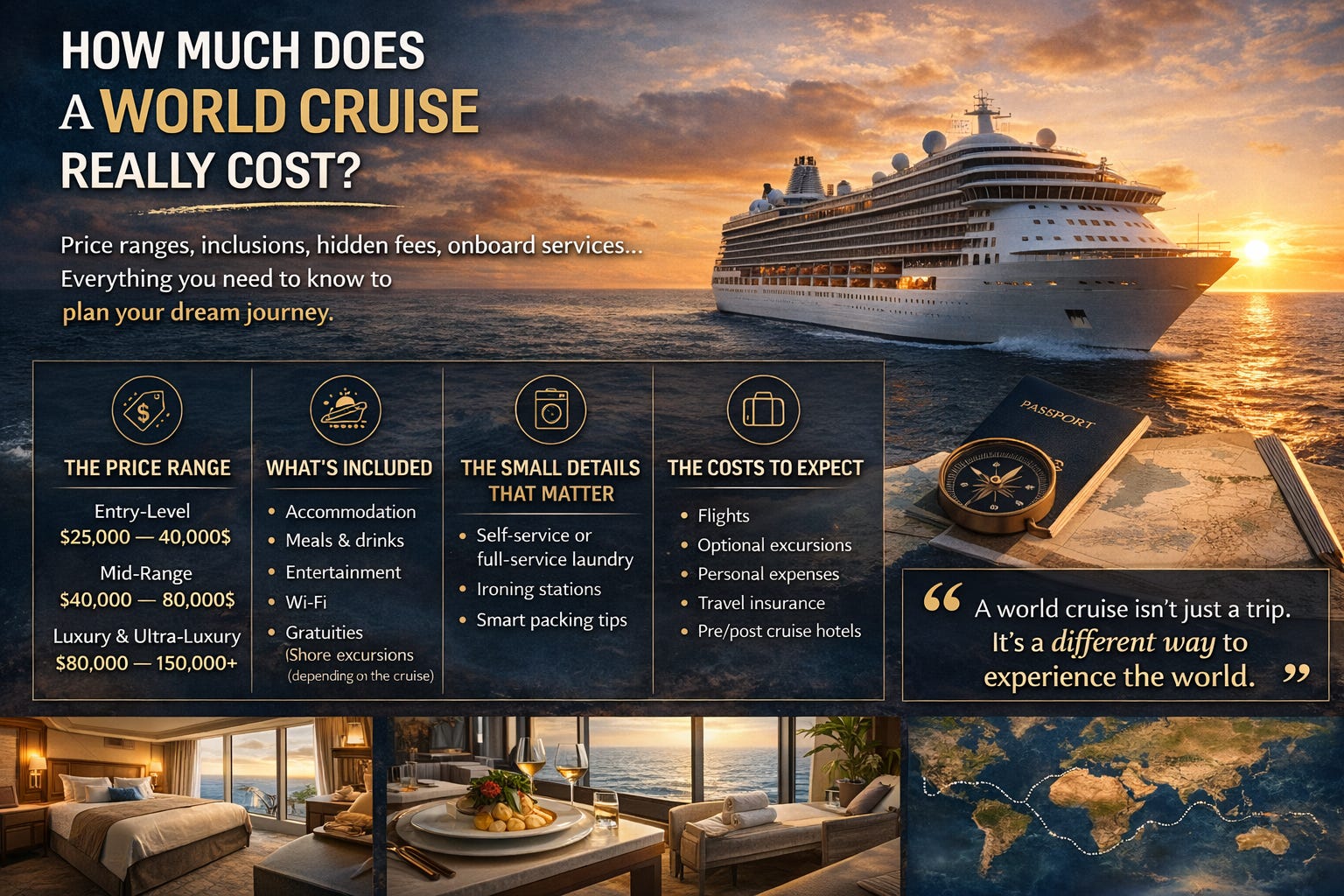
At some point, after the dream starts to feel a little more real, the question comes up. Yes, but how much does it actually cost?
The answers you will find online range from $25,000 to over $800,000, and both figures are technically correct. The real question is not what a world cruise costs. It is what kind of world cruise you are actually looking at.
Table of Content
🎙️ LISTEN TO THE BEYOND THE HORIZON PODCAST

The range is real, and it is enormous
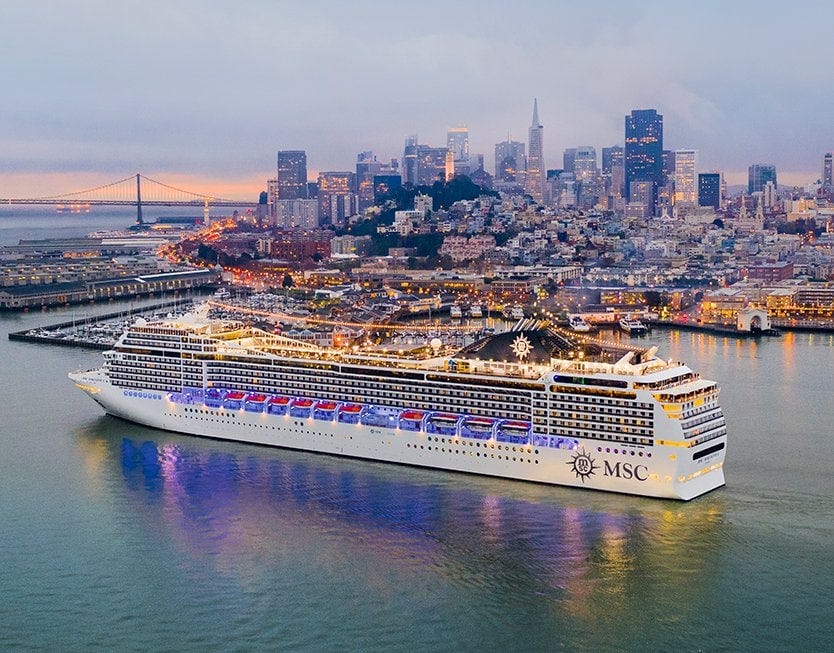
A world cruise typically lasts between 100 and 200 days. The price range reflects that length, but it also reflects something more fundamental: not all world cruises are the same product.
At the entry level, mainstream lines like Princess Cruises or Holland America offer world voyages from roughly $25,000 to $40,000 per person, in interior or ocean-view cabins, with more passengers on board and fewer inclusions. These are genuine circumnavigations, and for many travellers they deliver exactly what they are looking for.
The mid-range, from $40,000 to $80,000 per person, is where most premium and upper-premium lines operate. Oceania Cruises, for example, offered its 199-night 2025 world voyage on Vista from approximately $50,000 per person, including a drinks package, 72 shore excursions, or an $7,200 onboard credit. Viking’s 137-night world cruise on Viking Sky was priced from around $60,000 per person, including flights, Wi-Fi, and excursions. This is the segment where inclusions become genuinely substantial and the space-to-guest ratio begins to make a meaningful difference.
At the ultra-luxury level, Silversea, Seabourn, and Regent Seven Seas define the upper end. Silversea’s world cruises have been priced from around $99,000 per person. Regent’s 2027 Grand European Discovery, a 174-night sailing, opens at approximately $149,000 per person, fully all-inclusive, with 400-plus included shore excursions. The highest Regent suite on a world cruise has been listed at $840,000 per person, a record for the industry. Seabourn’s 2026 Ring of Fire world cruise, 129 days aboard Seabourn Sojourn, sold out entirely before it departed.
What those numbers actually include
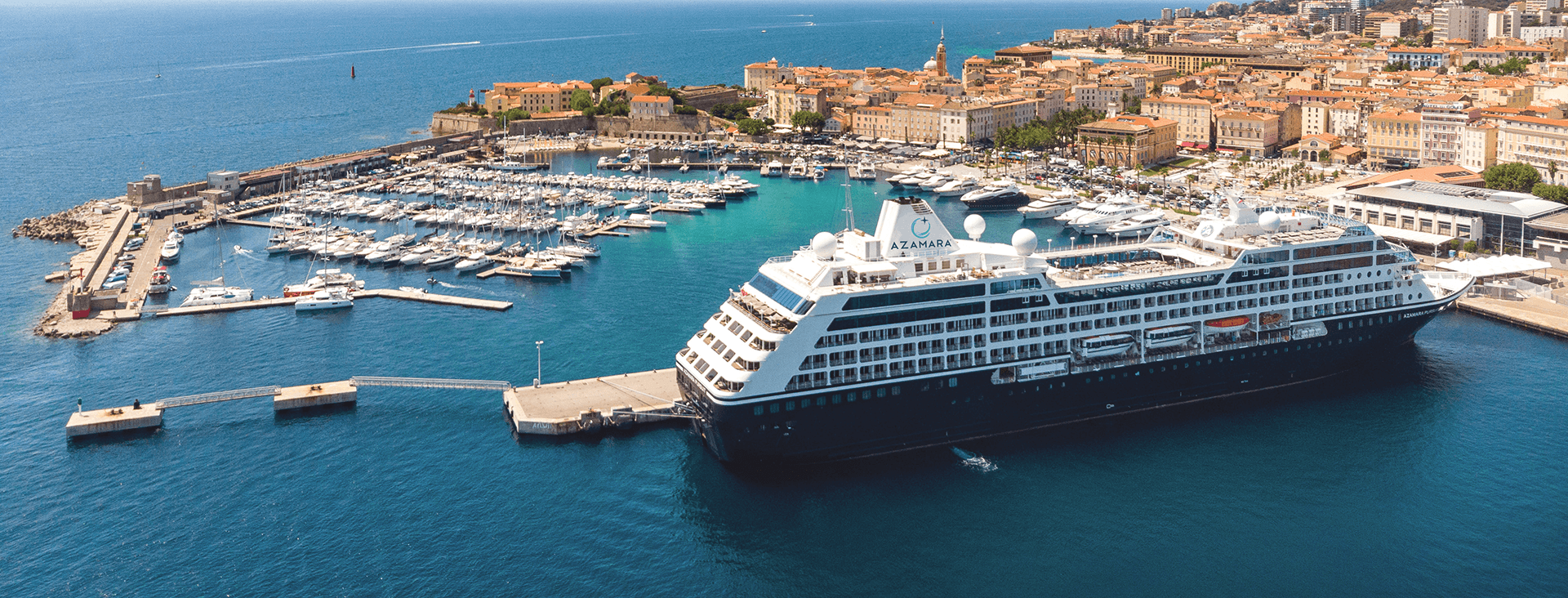
This is where most people misread the market. The sticker price is only part of the story. What matters is what you are comparing.
An ultra-luxury fare at $100,000 per person typically covers accommodation in an all-suite cabin for four to six months, all meals across every restaurant including specialty dining, premium spirits and wines throughout the voyage, unlimited Wi-Fi powered by Starlink, gratuities, and often a meaningful selection of shore excursions. Regent Seven Seas includes all of this, plus round-trip business class flights from home on most sailings.
When you divide that against the number of days at sea, the per-day cost of a $100,000 world cruise over 140 nights is approximately $714 per person. For a $50,000 fare over 120 nights, it is around $417 per day. That figure covers accommodation, transport between continents, all dining, entertainment, and access to destinations across the globe.
Compared to the cost of funding four to six months of independent travel at a similar standard, including hotels, flights, restaurants, transfers, and planning time, the math often looks quite different than the headline number suggests.
What is not in the fare and should be
Even the most comprehensive world cruise fare has costs that sit outside it, and experienced travellers budget for them from the start rather than discovering them mid-voyage.
Flights are the most significant variable. Some lines include them, many do not. On a premium line without air included, business class round-trip from Canada to a European embarkation port can add $4,000 to $8,000 per person before the voyage has started.
Shore excursions are the second. Even lines that include a selection of tours will offer premium or private options beyond the standard programme. Travellers who prefer private guides, smaller vehicles, and customised itineraries ashore often spend $3,000 to $10,000 or more over the course of a world cruise in additional excursion costs.
Personal spending, specialty dining on lines where it is not fully included, spa treatments, and onboard purchases add another layer. For a 120-night voyage, $5,000 to $15,000 in discretionary onboard spending is a reasonable planning figure depending on your habits.
Travel insurance is non-negotiable at this length. A policy covering medical evacuation, trip interruption, and cancellation for a journey of four to six months will cost several thousand dollars and is not optional.
Pre- and post-cruise hotel stays in embarkation cities add to the total. Many experienced world cruisers build a few days either side, particularly when adjusting for time zones at the start of a Pacific or Asian itinerary.
The right question is not “what does it cost?” but “what fits?”
Two people can book the same world cruise and have entirely different experiences. One chooses a veranda cabin, limits excursions to what is included, and finds the daily rhythm of the ship the point of the voyage. Another books a suite, takes private tours in every major port, and upgrades every experience available. Neither is wrong. But they are not buying the same thing.
The mistake most people make is evaluating a world cruise purely on fare. What actually determines whether you will look back on the experience as the trip of a lifetime or the trip that disappointed you is alignment: between the ship and your personality, between the level of inclusion and your travel habits, and between the itinerary and what genuinely excites you about the world.
A smaller ship carrying 450 guests will feel completely different from one carrying 2,000, even if the per-day fare is identical. A line that structures every evening with formal programming will suit a different traveller than one that lets the day unfold without a schedule. Lines that emphasise port immersion with overnight stays, as Azamara and Oceania do, attract a different traveller than those who move through ports quickly in favour of more destinations.
Choosing the line that fits
The world cruise market is anchored by a handful of brands, each with a distinct identity.
Oceania Cruises is the culinary line, with itineraries designed for travellers who care as much about what happens at the table as what happens ashore. Its world voyages are among the longest in the market, reaching up to 199 nights, and the culinary programme with Jacques Pépin as founding Executive Culinary Director is genuinely among the best at sea.
Seabourn is the intimate line, carrying as few as 450 guests on its ocean ships with a crew-to-guest ratio close to one-to-one. Its world cruises sell out faster than almost any other product in the market. The 2026 Ring of Fire voyage sold out before departure, and the 2028 40th anniversary world cruise is already filling.
Regent Seven Seas is the most inclusive line in the market, with fares that cover everything including flights, shore excursions, specialty dining, and all beverages. For travellers who want nothing to think about beyond showing up, Regent is the benchmark.
Silversea sits between Regent and Seabourn, with a strong expedition offering alongside its ocean product and one of the most extensive destination networks in luxury cruising. Its world cruises are known for unusual port selections and itinerary depth in regions most lines skip.
Viking Ocean occupies a distinct lane: slightly larger ships, a Scandinavian design aesthetic, a no-casino and no-children policy, and a loyal repeat clientele. Its world cruises typically include flights and excursions and are priced competitively for the inclusions offered.
The per-day lens is the most useful one
When people first hear a $100,000 world cruise price, the number is disorienting. When they hear $714 per day, fully all-inclusive, for a suite on a small luxury ship sailing across six continents over five months, the conversation shifts.
That is not a defence of the price. It is a framework for evaluating it honestly. The question to ask is not whether $100,000 is a lot of money, because it obviously is. The question is what $100,000 buys in terms of experience, comfort, and time over those months, compared to how else you might allocate that investment.
For some travellers, the answer is that it does not fit their life or their budget, and there are genuinely excellent world voyages available for a quarter of that. For others, it is the most rational way they can think of to spend several months, and they book it and return for the next one.
Frequently asked questions
How long is a typical world cruise?
Most range from 100 to 200 days. Some lines offer shorter grand voyages of 60 to 90 nights that cover multiple continents without completing a full circumnavigation. World cruise segments, where you join for a portion of the full voyage, are also available on most major lines and allow guests to experience 20 to 40 days of a longer itinerary.
Is a world cruise truly all-inclusive?
It depends entirely on the line. Regent Seven Seas is the most comprehensive, including flights, shore excursions, specialty dining, and all beverages. Seabourn includes all dining, premium beverages, and Wi-Fi but not excursions or flights. Oceania includes dining and offers a choice of excursions, beverages, or onboard credit as a package add-on. Viking typically includes excursions and flights. Always read the specific fare inclusions before comparing prices between lines.
When should I book a world cruise?
As early as possible. World cruises from Seabourn, Regent, and Silversea routinely sell out a year or more before departure, and specific suite categories go first. Seabourn’s 2026 Ring of Fire voyage sold out entirely. Regent’s 2026 world cruise had most suite categories sold out well in advance. The 2028 and 2029 programmes from major lines are already open for booking and filling.
Can I join a world cruise for just part of it?
Yes. Most lines offer world cruise segments that let you board and disembark at intermediate ports, joining the voyage for a portion of the full itinerary. This is a popular option for travellers who want to experience a world cruise environment for three to six weeks without committing to the full duration.
What is the best world cruise for first-timers?
Viking Ocean or Oceania are frequently recommended for first-time world cruisers. Both offer a strong sense of structure and itinerary depth without the formality of some ultra-luxury lines, and their inclusions packages simplify budgeting. Seabourn is ideal for travellers who have cruised before and want the most intimate experience at this level. Regent suits those who want everything handled with no decisions to make after booking.
Planning your Cruise Vacation with ÆRIA Voyages
Every traveller’s ideal world cruise looks different depending on what they want from the experience, how they like to travel, and what they are prepared to spend. I help clients sort through those questions, from comparing itineraries across lines to understanding exactly what each fare covers, so that the decision is based on the right information rather than the headline number.
If you are curious about a specific programme, want to understand what options exist at your budget, or simply want to talk through whether a world cruise makes sense for where you are in your travel life right now, I would be glad to have that conversation.
Yvan Junior Blanchette
Travel & Cruise Specialist
ÆRIA Voyages📩 yvanblanchette@aeriavoyages.com
📞 1-888-460-3388
🌐 aeriavoyages.com