

The Ultimate CUNARD Cruise Guide: what it is, how it works, and what to expect
Luxury cruise guide · Updated 2026 · Premium luxury · Ocean liner heritage · Four Queens · Transatlantic crossing
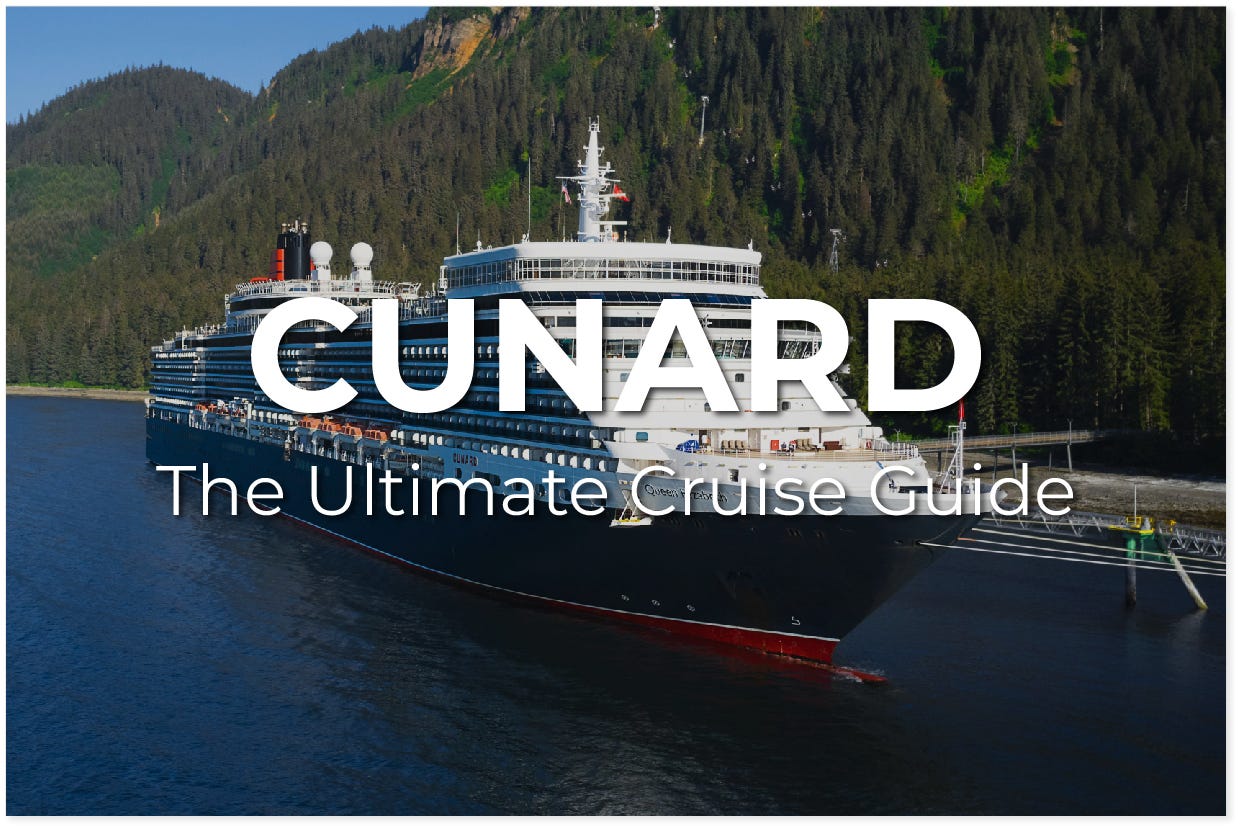
Cunard is the oldest name in ocean travel still actively sailing. Founded in 1839, it predates the concept of a cruise industry by several decades. It carried immigrants, royalty, mail, and soldiers across the North Atlantic before most of its competitors had built their first ship.
That history is not merely decorative. It shapes everything about how Cunard approaches the sea, from the formality of its dining rooms to the architecture of its ships to the specific rhythm of life on board that its guests describe as unlike anything else at sea.
This guide covers everything you need to know about the brand, its four-ship fleet, the Grills system, dining tiers, the transatlantic crossing, Queen Mary 2, the newest ship Queen Anne, and how Cunard compares to the rest of the luxury cruise field in 2026.
Table of Content
🎙️LISTEN TO THE BEYOND THE HORIZON PODCAST

A brief history of Cunard
Samuel Cunard was a Nova Scotia-born shipping merchant who, in 1839, won the British government’s first contract to carry Royal Mail by steam across the North Atlantic. The following year, the paddle steamer Britannia completed the inaugural crossing from Liverpool to Halifax and Boston in fourteen days, carrying passengers alongside the post. That combination of reliability, regularity, and speed established the template for everything that followed.
Through the second half of the nineteenth century and the first half of the twentieth, Cunard built and operated some of the most celebrated ships in maritime history: the Mauretania, which held the Blue Riband for the fastest transatlantic crossing for over two decades; the Aquitania, the only ship to serve in both World Wars; and the original Queen Mary and Queen Elizabeth, which dominated transatlantic travel in the postwar era and carried heads of state, film stars, and hundreds of thousands of emigrants across the Atlantic.
The arrival of commercial jet aviation in the late 1950s ended the era of the ocean liner as a form of transport. Cunard adapted, pivoting toward leisure cruising while retaining the scale and formality that defined its history. The company passed through various ownership structures over the decades, including a merger with White Star Line during the Great Depression, and was eventually acquired by Carnival Corporation in 1998, under which it operates today as an independent brand.
The modern fleet era began with the delivery of Queen Mary 2 in 2004, purpose-built as a transatlantic ocean liner rather than a cruise ship. Queen Victoria followed in 2007, Queen Elizabeth in 2010, and Queen Anne in 2024, the first new Cunard ship in over fourteen years and the line’s 249th vessel since its founding.
The Cunard fleet in 2026
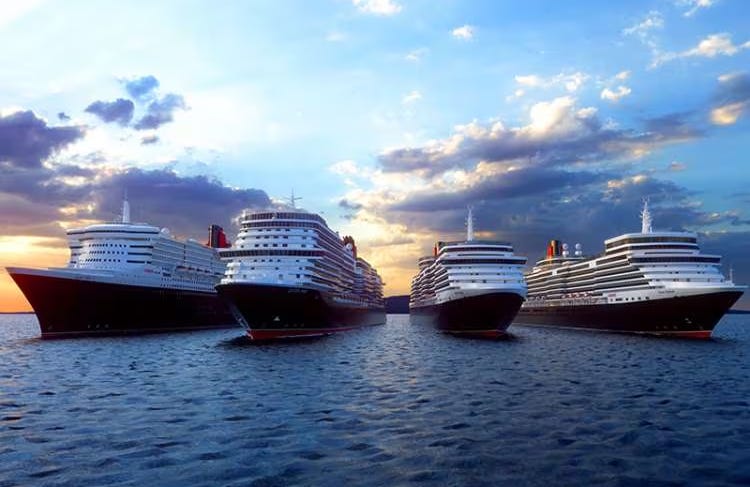
Cunard currently operates four ships, collectively known as the Queens. They are not identical products. Each has a distinct character shaped by its era of construction, its size, and the specific role it plays in the fleet’s itinerary programme.
Queen Mary 2 is the flagship and the only purpose-built ocean liner in active service anywhere in the world. At 148,528 gross tons and 1,132 feet in length, she was the largest passenger ship ever built at the time of her delivery and remains the largest ocean liner ever constructed. She carries approximately 2,700 guests and is designed specifically for the North Atlantic crossing, with a hull and propulsion system built for open-ocean conditions rather than warm-weather cruising. She is structurally and experientially different from every other ship in the fleet.
Queen Victoria, delivered in 2007 and refurbished in 2023, carries up to 2,489 guests. Her interior draws heavily from the great British ocean liners of the mid-twentieth century, with rich woodwork, a three-deck atrium, and public spaces that feel closer to a London hotel of a certain era than to any contemporary cruise ship.
Queen Elizabeth, delivered in 2010, carries approximately 2,100 guests and offers a slightly lighter Art Deco interpretation of the Cunard aesthetic. She deploys primarily in the Mediterranean, Caribbean, and Asia-Pacific regions and was repositioned in 2024 to operate more Caribbean departures from Miami.
Queen Anne, the newest ship, entered service in May 2024 after a maiden cruise from Southampton to the Canary Islands. At 113,000 gross tons carrying 3,000 guests, she is the largest ship in the current Cunard fleet and introduces a more contemporary design language while retaining the tone, formality, and rhythm that define the brand. She features the Artisans’ Foodhall in place of the traditional buffet, a dedicated wellness zone, and an expanded enrichment programme space.
Cunard fleet at a glance
Queen Mary 2: 2,700 guests, 148,528 GT, 1,132 feet, delivered 2004, ocean liner, transatlantic flagship
Queen Victoria: 2,489 guests, 90,049 GT, delivered 2007, refurbished 2023
Queen Elizabeth: 2,100 guests, 90,900 GT, delivered 2010
Queen Anne: 3,000 guests, 113,000 GT, delivered May 2024, most contemporary ship in fleet
All ships: four accommodation and dining tiers, Afternoon Tea daily, formal evenings, enrichment programme
Itinerary range: transatlantic crossings, Mediterranean, Northern Europe, Caribbean, Alaska, Asia, world voyages
The Grills system: how Cunard structures its experience
Cunard is one of the very few cruise lines that still operates a tiered dining and accommodation system, where the grade of cabin you book determines which restaurant you eat in throughout the voyage. This is not a legacy quirk. It is a deliberate design choice rooted in the ocean liner tradition of class-based travel, reinterpreted for a modern audience as a spectrum of experience rather than a hierarchy of access.
The four tiers are Britannia, Britannia Club, Princess Grill, and Queens Grill. Understanding the difference between them is essential before booking any Cunard voyage.
Britannia
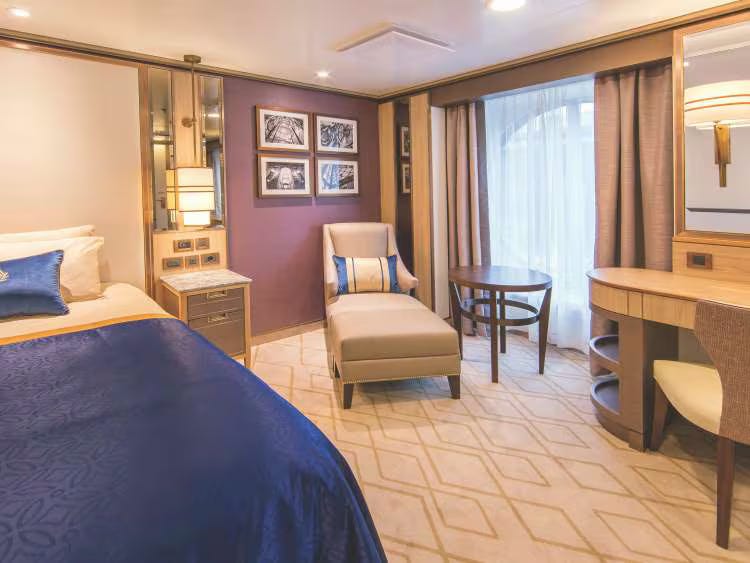
The entry tier covers inside cabins, outside cabins, and standard balcony staterooms. Guests in Britannia are assigned to the main Britannia Restaurant for dinner, with open seating for breakfast and lunch. The Britannia Restaurant is large, formal, and genuinely elegant. It is not a compromise. But it operates differently from the Grill restaurants: assigned seatings, shared tables possible, and a fixed menu format rather than à la carte service at every meal.
Britannia Club
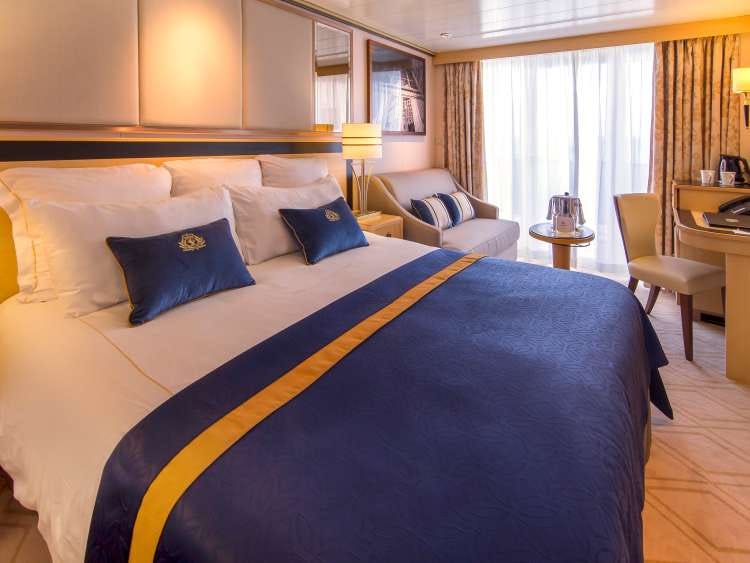
Britannia Club is available only in select balcony cabin categories and represents the first step toward dedicated dining. Guests in Britannia Club eat at the Britannia Club Restaurant, a smaller, more intimate venue with flexible dining times and a more refined service style than the main restaurant. It is an accessible way to experience a quieter dining room without booking a full Grill suite.
Princess Grill
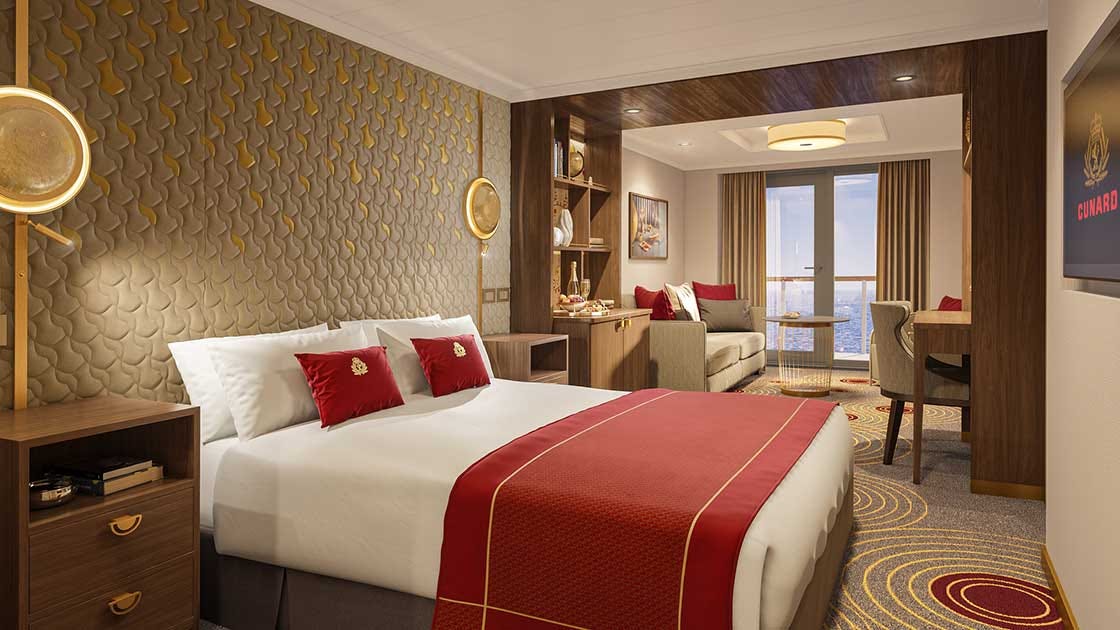
Princess Grill is the entry point to Cunard’s suite tier and the beginning of the dedicated Grill experience. Suites range from approximately 245 to 420 square feet with private balconies, walk-in wardrobes, and bathrooms with separate shower and bath. Guests have their own reserved table in the Princess Grill restaurant for the duration of the voyage, with à la carte service at every dinner. Additional benefits include exclusive access to the Grills Lounge and Grills Terrace, an elevated Afternoon Tea served daily in the Grills setting, in-suite dining from the Princess Grill menu available around the clock, and a pillow concierge menu.
Queens Grill
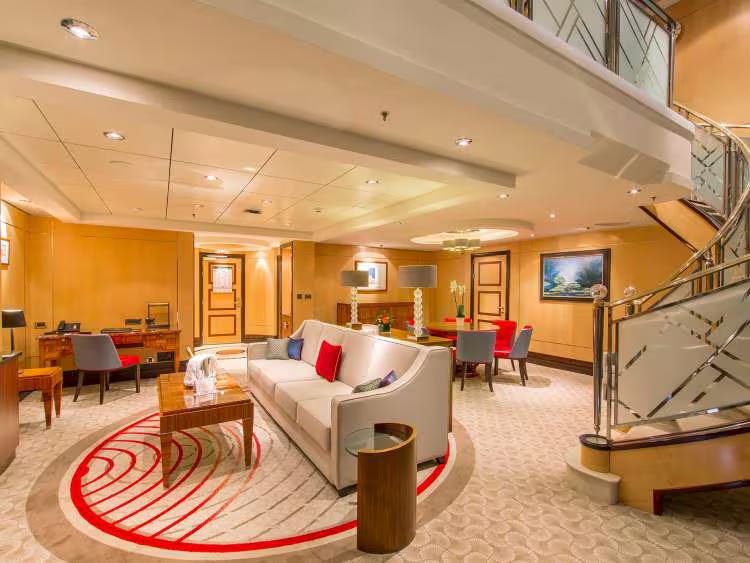
Queens Grill is the pinnacle of the Cunard experience and the direct equivalent of the suite categories on other luxury lines. Suites begin at the Penthouse level and rise through Master Suites and Grand Suites to the Duplex Suites on Queen Mary 2, which span two levels and can reach over 2,130 square feet. Queens Grill guests receive a reserved table in the exclusive Queens Grill restaurant, where the menu is à la carte and the service is personal to an extraordinary degree. Additional benefits include a 24-hour butler service and steward, a complimentary mini-bar stocked with two bottles of spirits or wine and unlimited soft drinks, a bottle of Champagne on arrival, pre-dinner canapés delivered daily, fresh flowers in the suite, binoculars and a world atlas on request, and priority tender services in port. The Grills Lounge is fully exclusive to Grill guests, and on Queen Victoria and Queen Elizabeth, the Grills Courtyard provides a private al fresco terrace inaccessible to the rest of the ship.
The practical effect of the Grills system is to create a ship-within-a-ship experience for suite guests: their own restaurant, their own lounge, their own terrace, and a level of service continuity over the course of the voyage that produces something very close to the personal relationship dynamic of a small luxury hotel.
Queen Mary 2 and the transatlantic crossing
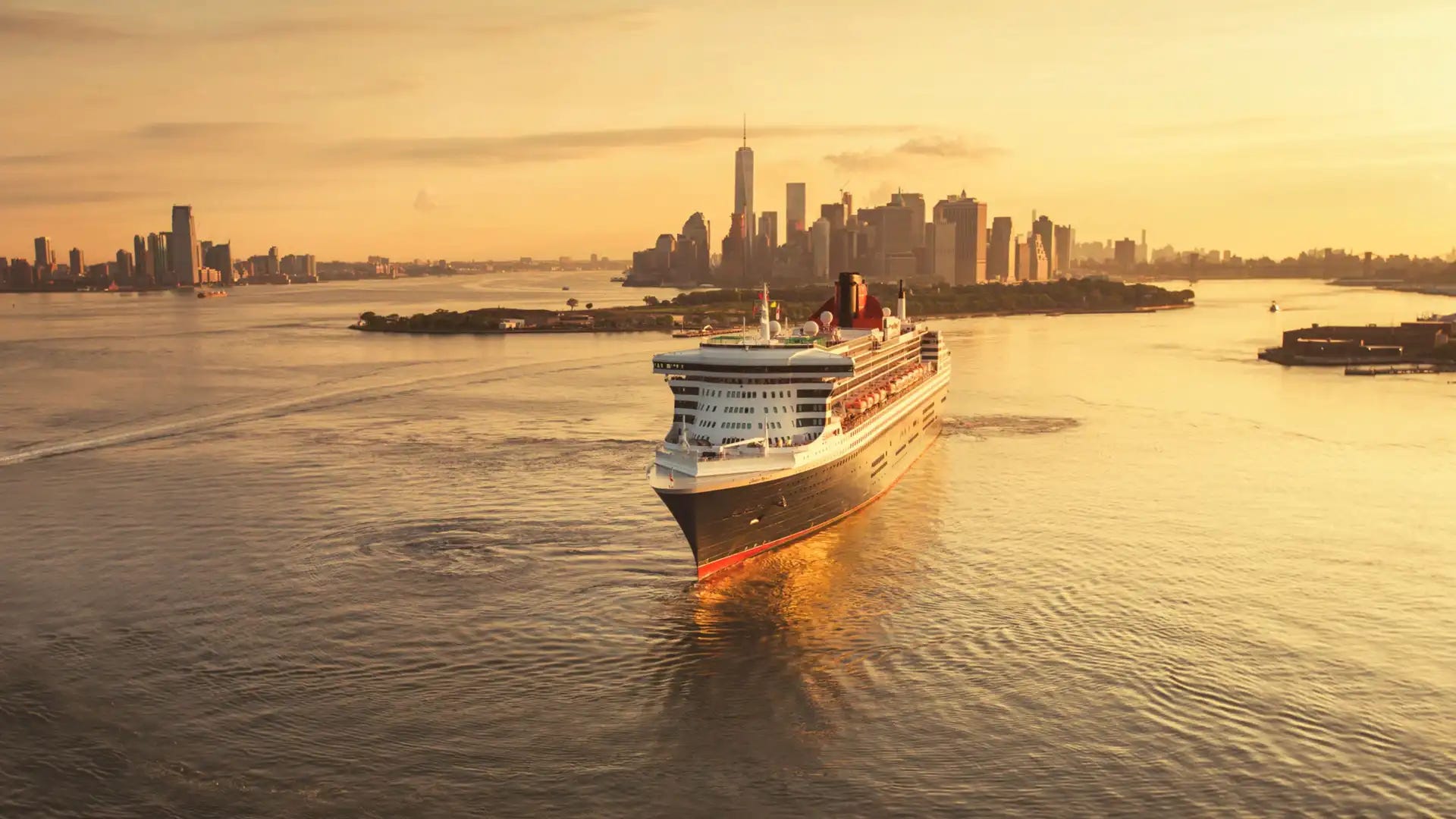
No Cunard experience is more singular than the transatlantic crossing on Queen Mary 2, and no other product in the cruise industry replicates it.
Queen Mary 2 is not a cruise ship. She was designed from the hull up as an ocean liner: heavier, more powerful, with a deeper draught and a hull form that stabilises her in the open Atlantic in conditions that would force a conventional cruise ship to alter course. She is the only vessel still in regular scheduled service between Europe and North America, completing approximately twenty crossings per year between Southampton and New York City in a journey of six to seven days each way.
The crossing offers something that cannot be found on any other voyage in the world: six days entirely at sea, with no ports, no tender operations, no shore excursions, and no option to leave the ship. For many guests, this is precisely the point. The transatlantic crossing attracts a specific kind of traveller, one for whom the voyage is the destination. Days are structured around the enrichment programme, which on QM2 includes lectures from historians, scientists, authors, and explorers, often integrated into the themed crossings the ship operates through the year. The library on board is frequently described as one of the finest afloat. The ballroom hosts daily dance classes. The planetarium is the only one at sea.
For 2026, Cunard also operates a 51-night Queen Mary 2 sailing from Southampton to Sydney via the Panama Canal, departing January 11, alongside Queen Anne’s 109-night world voyage departing the same day.
Dining across the fleet
Dining on Cunard operates on two tracks: the tiered Grill system described above, and the shared venues available to all guests.
The Queens Grill restaurant is the finest dining room afloat in the Cunard fleet. Service is personal, the menu is essentially bespoke on request, and the atmosphere is among the most formally elegant of any restaurant at sea. For many Queens Grill guests, the daily dinner becomes one of the most anticipated hours of the voyage.
The Verandah restaurant, available on Queen Mary 2 and Queen Anne, offers French-regional cuisine at a supplemental charge and is open for lunch and dinner. On Queen Mary 2 it occupies the space once used by the signature Todd English restaurant.
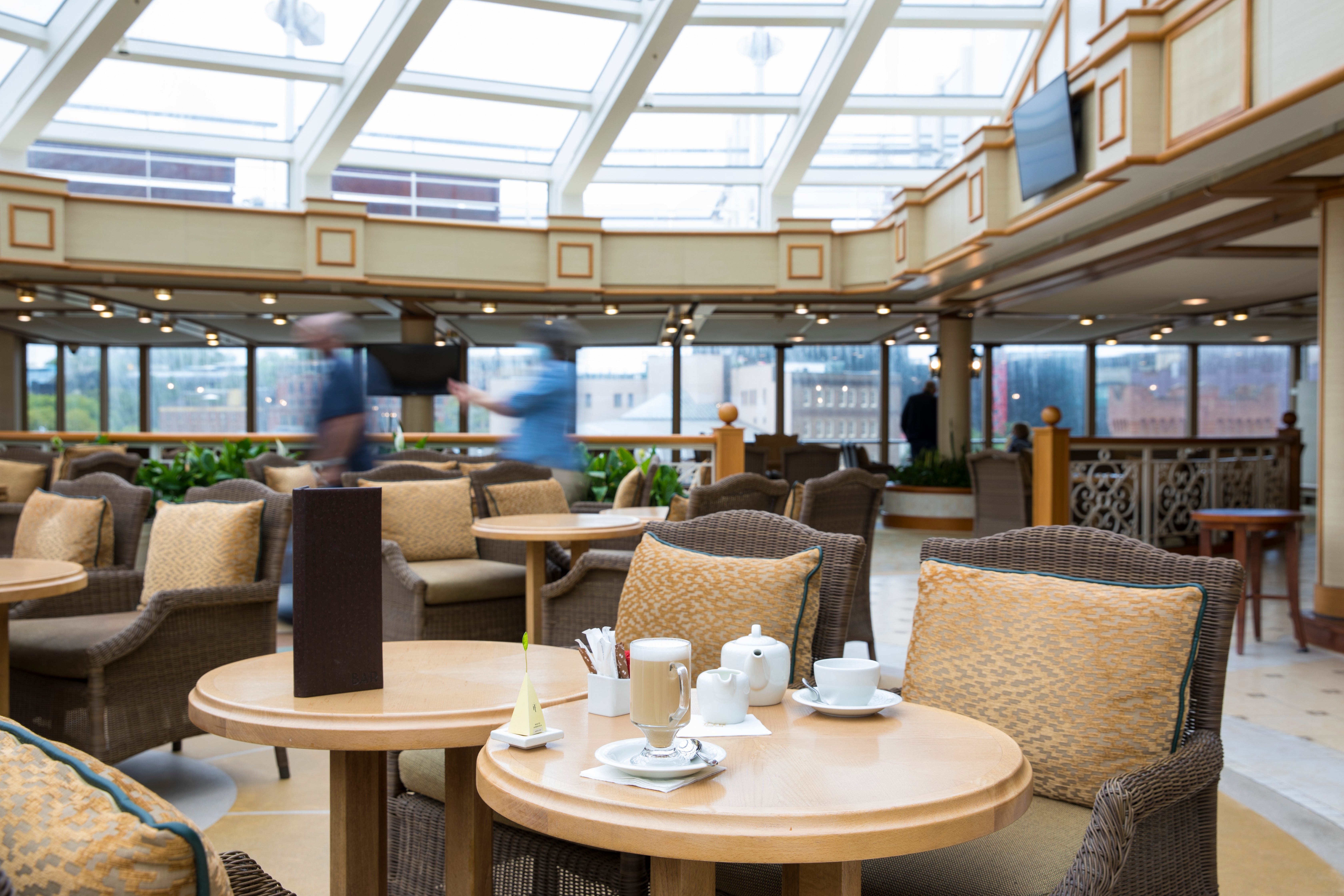
Afternoon Tea is one of the most distinctively Cunard experiences on any ship in the fleet. Served daily in the Queen’s Room on Queen Mary 2 and equivalent grand salons on the other ships, it involves white-gloved servers, a pianist, tiered stands of finger sandwiches and pastries, and a ritual that has been part of the Cunard vocabulary since the earliest ocean liners. Grill guests receive their own elevated Afternoon Tea in the private Grills Lounge. A Champagne Afternoon Tea is available fleet-wide as an upgrade.
Guest chef residencies are a growing part of the Cunard programme. For 2026, the line has confirmed the return of Michel Roux to selected Norwegian Fjords voyages, continuing his popular residency that brings one of the most celebrated names in French cuisine to the ship for multiple cooking demonstrations and exclusive dinners.
The enrichment programme
The enrichment programme is one of Cunard’s most consistently praised distinctions, and one that sets it furthest apart from the majority of the luxury cruise sector.
Every Cunard sailing features a curated programme of lectures, talks, and demonstrations delivered by guest speakers drawn from academia, exploration, journalism, the arts, and science. These are not brief introductory sessions. On longer voyages and world cruises they form a substantive educational offering: a series of hour-long lectures on destination history, geopolitics, natural science, or cultural themes, followed by informal conversation, small-group discussions, and often a dedicated question period.
The programme on Queen Mary 2’s transatlantic crossings is particularly celebrated. The ship’s design includes a dedicated lecture space, and the Cunard 185th Anniversary crossing in June 2025 featured Dr. Stephen Payne, the ship’s original designer, as a guest speaker. Authors, historians, and scientists sail regularly on themed crossings that attract guests specifically for the intellectual programme rather than the destinations.
What is and is not included
Cunard is not a fully all-inclusive product at any tier, and understanding this clearly matters before comparing it to lines like Regent or Seabourn.
The base fare across all tiers includes the stateroom or suite, all meals in the assigned dining venue, complimentary tea and coffee in the buffet restaurants, Egyptian cotton bed linen, nightly turndown, satellite television, and the daily shipboard programme. Britannia guests receive room service until 10am; Britannia Club and Grill guests receive a full 24-hour complimentary room service menu.
Not included in the standard fare: beverages beyond tea, coffee, and water with meals; shore excursions; Wi-Fi (sold in packages); speciality dining at The Verandah or guest chef events; spa treatments; and gratuities (though these can be pre-paid). Queens Grill guests receive a complimentary mini-bar and canapés, which reduces but does not eliminate the beverage spend for suite guests.
This structure makes Cunard meaningfully different from Regent, Seabourn, or Silversea in terms of onboard cost management. A Cunard voyage can be booked at a lower headline price precisely because the inclusions are more selective. The right comparison depends on your habits: guests who drink little and take few excursions may find Cunard excellent value at the Grill tier; guests who drink wine with every dinner and take daily tours will find the total cost closer to a fully all-inclusive line.
How Cunard compares to other luxury cruise lines
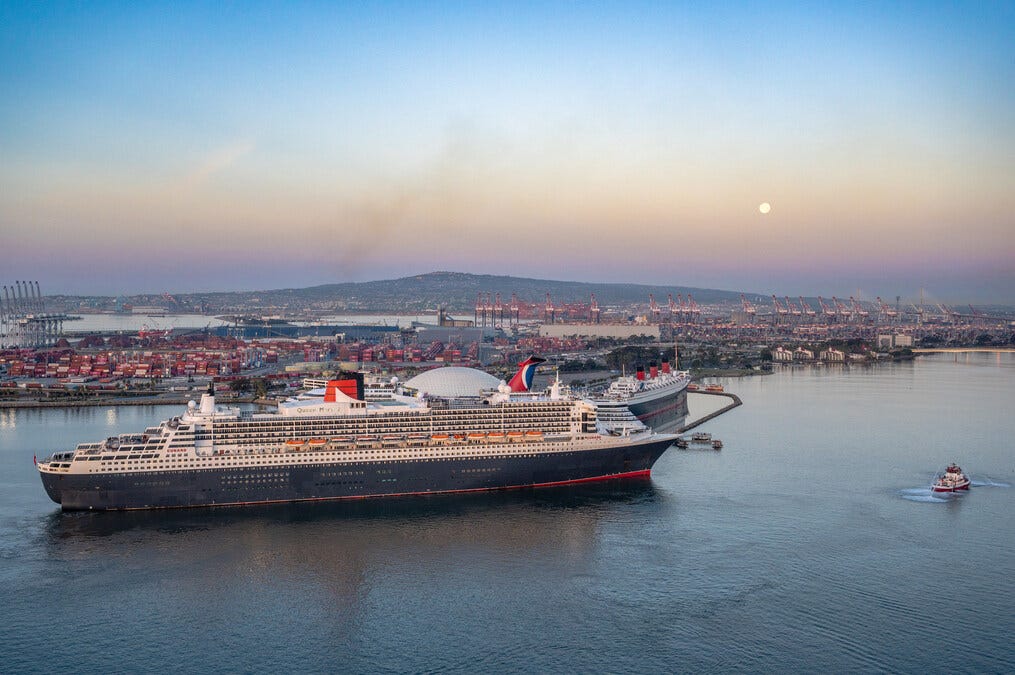
Cunard
Best for: History, tradition, and the transatlantic crossing
The only ocean liner still sailing regular scheduled transatlantic service. The most formally structured dining system in the luxury segment with four tiers. The finest enrichment programme at sea. Not all-inclusive, but the Queens Grill offers a genuinely private ship-within-a-ship experience. Larger ships than most luxury competitors.
Seabourn
Best for: Intimacy and all-inclusive simplicity
Much smaller ships (264 to 600 guests) with a more casual and socially intimate atmosphere. Fully all-inclusive with Thomas Keller dining at no supplement. No formal dining hierarchy. A polar expedition fleet. Better suited to guests who find Cunard’s formal structure appealing in concept but prefer a less structured daily routine.
Regent Seven Seas
Best for: The most comprehensive all-inclusive package
Fully all-inclusive including shore excursions, business class flights, pre-cruise hotel, and all dining with no supplements. No tiered dining system. Ships carry 700 to 850 guests. Better suited to guests who want zero financial complexity after booking.
Silversea
Best for: Expedition range and destination depth
The broadest expedition fleet in the luxury segment. S.A.L.T. culinary programme. Fully all-inclusive. No formal dining tiers. A very different onboard atmosphere from Cunard: casual, destination-focused, without the ceremony.
Oceania Cruises
Best for: Culinary depth and long-form itineraries
The strongest culinary programme in the upper-premium segment with Jacques Pépin. Longer voyages and a strong world cruise offering. Not fully all-inclusive. Ships carry 670 to 1,250 guests. The closest competitor to Cunard in itinerary length and port depth, but a fundamentally different onboard atmosphere.
Who Cunard is best suited for

Cunard works best for a specific profile of traveller, and that specificity is one of the brand’s greatest assets rather than a limitation.
Travellers who value the historical weight and continuity of a brand that has been sailing the same route for 186 years
Guests who appreciate structured formality: dedicated dining rooms, formal evenings, Afternoon Tea as a daily institution, and a daily programme of intellectual enrichment
Those who want to experience the transatlantic crossing on Queen Mary 2, which remains a genuinely singular product with no equivalent anywhere in the cruise industry
Couples who want a world cruise with the cultural depth of the enrichment programme and the social texture of a ship that operates at a deliberately unhurried pace
Guests drawn to the ship-within-a-ship privacy of the Queens Grill experience, which produces a level of service continuity over a long voyage that few other products match
Cunard is less suited to travellers who want a fully all-inclusive model with beverages and excursions bundled into the fare, those who prefer the most intimate small-ship environments, or those looking for casual, flexible service without ceremony. Cunard’s formality is not a bug. It is the product.
Frequently asked questions
Is Cunard all-inclusive?
No. Cunard includes meals in the assigned dining venue, room service (full 24-hour service for Britannia Club and Grill guests), and basic non-alcoholic beverages with meals. Beverages beyond that, Wi-Fi, shore excursions, speciality dining, and gratuities are charged separately or pre-paid. Queens Grill guests receive a complimentary mini-bar as part of their suite benefits.
What is the difference between Princess Grill and Queens Grill?
Both are suite tiers with reserved dedicated restaurants and access to the exclusive Grills Lounge and Terrace. Princess Grill suites typically run from 245 to 420 square feet with a balcony. Queens Grill suites begin at the Penthouse level and rise to Grand Suites and Duplex Suites of over 2,000 square feet, with butler service, canapés, Champagne on arrival, fresh flowers, and a complimentary mini-bar. The Queens Grill restaurant is the more formally exclusive of the two, with an essentially bespoke menu on request.
What makes Queen Mary 2 different from the other Cunard ships?
Queen Mary 2 is an ocean liner, not a cruise ship. She was designed for the North Atlantic crossing rather than for tropical cruising, with a hull form, propulsion system, and structural weight that make her uniquely stable in open-ocean conditions. She is the only vessel still operating scheduled regular transatlantic service between Europe and North America, completing roughly twenty crossings per year. Her onboard atmosphere is more formal and intellectually oriented than the other ships, with a planetarium, a larger library, and an enrichment programme built around the crossing experience.
What is included in the enrichment programme?
The enrichment programme varies by sailing but typically includes daily lectures from guest speakers in fields including history, science, exploration, literature, and current affairs. Queen Mary 2 has the most developed programme, particularly on themed crossings. The line also operates guest chef residencies: Michel Roux is confirmed for selected 2026 Norwegian Fjords voyages. Dance classes, language programmes, and destination briefings are also part of the standard programme fleet-wide.
When was Queen Anne launched and how does she differ from the other ships?
Queen Anne entered service in May 2024 after a maiden cruise from Southampton to the Canary Islands. At 113,000 gross tons carrying 3,000 guests, she is the largest ship in the current Cunard fleet. Her design is more contemporary than the older Queens: the traditional buffet is replaced by the Artisans’ Foodhall, the wellness facilities are expanded, and the public spaces are lighter and more modern in tone while retaining the Cunard rhythm and formality.
Who owns Cunard?
Cunard is owned by Carnival Corporation and operates as an independent brand within the Carnival portfolio. It was acquired by Carnival in 1998 and has maintained its own management, identity, and positioning since then, separate from other Carnival-owned lines including Seabourn, Princess, Holland America, and P&O.
Plan your Cunard Cruise with ÆRIA Voyages
Every traveller’s ideal Cunard voyage looks different depending on the ship, the tier, the itinerary, and what they are hoping to take away from the experience. I help clients navigate those questions: from choosing between the transatlantic crossing and a Mediterranean voyage, to understanding the practical differences between Britannia Club and Princess Grill, to timing a booking around the enrichment programme on themed sailings.
If you are curious about pricing, current availability, or whether Cunard is the right fit for your travel vision, I would be glad to talk it through.
Yvan Junior Blanchette
Travel & Cruise Specialist
ÆRIA Voyages📩 yvanblanchette@aeriavoyages.com
📞 1-888-460-3388
🌐 aeriavoyages.com