

Royal Caribbean International: What it is, How it works, and What to expect
Cruise guide · Updated 2026 · Megaship · Family · Perfect Day at CocoCay · 29 Ships
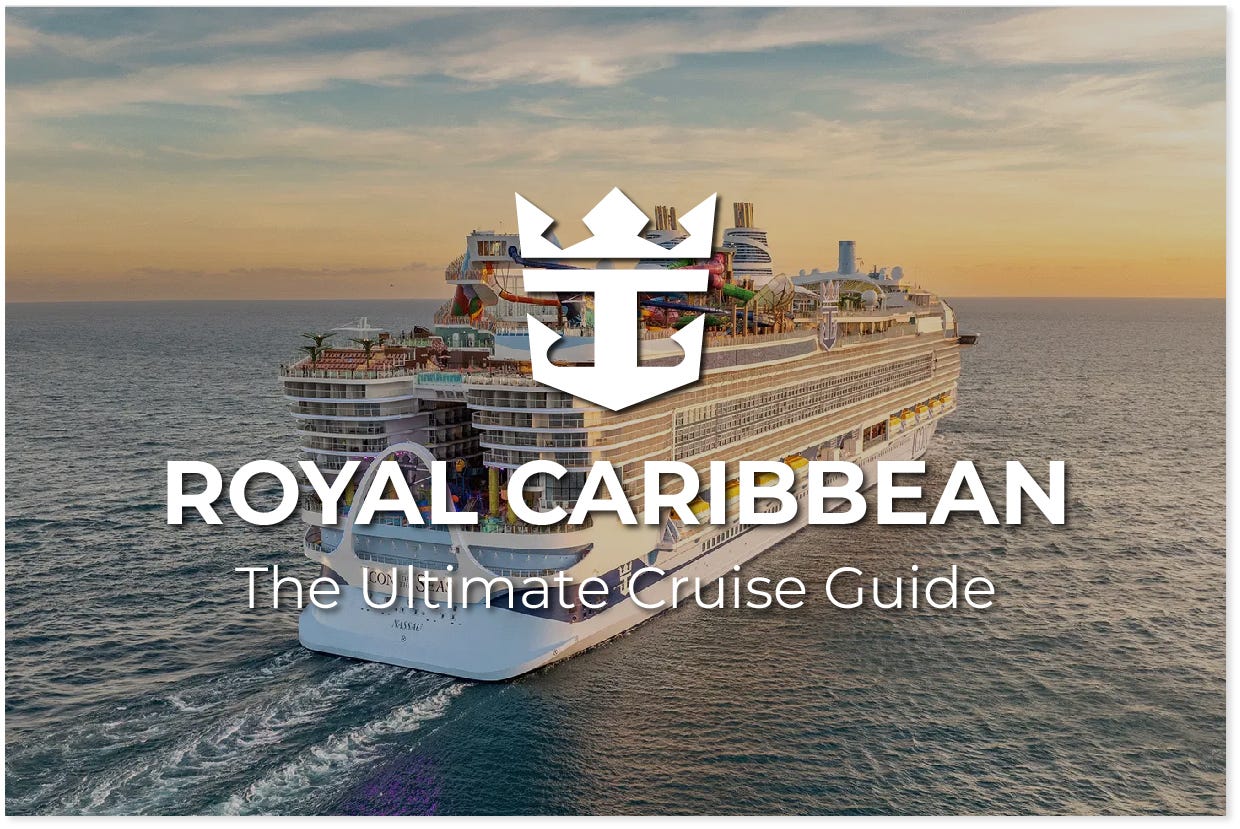
Royal Caribbean International is the world’s largest cruise line by revenue and the most visited by passengers, and its approach to the cruise product is the opposite of everything the expedition and luxury lines are doing.
Where SeaDream carries 112 guests on a private anchorage, Royal Caribbean sails 7,600 on a ship with a waterpark, an ice rink, a carousel, a FlowRider surf simulator, a skydiving simulator, 40 restaurants, and a neighbourhood for every mood.
This is not a criticism. It is a description of a product that has been deliberately engineered to deliver the maximum amount of activity, entertainment, and vacation value to the broadest possible range of guests at an accessible price. No cruise line does what Royal Caribbean does at this scale. No other line in the world has built ships this large, this complex, or this consistently focused on the idea that a cruise ship can be the destination.
This guide covers Royal Caribbean’s history, its seven ship classes in useful detail, the Icon class and what makes it genuinely different, the ship-to-class matching logic for different travellers, Perfect Day at CocoCay, what is and is not included, and how Royal Caribbean compares to alternatives in 2026.
Table of Content
🎧 LISTEN TO THE BEYOND THE HORIZON PODCAST
EPISODE COMING SOON…
A brief history of Royal Caribbean International
Royal Caribbean International was founded in 1968 through a partnership between American hospitality entrepreneur Ed Stephan and three Norwegian shipping families: Sigurd Skaugen, Anders Wilhelmsen, and Gotaas Larsen. The company was established specifically to capitalise on the growing American appetite for leisure cruising in the Caribbean, and its first ship, Song of Norway, entered service in 1970, sailing from Miami.
The founding vision was deliberate and consequential: unlike the ocean liners of the era, which had been passenger and mail carriers adapted for cruise use, Royal Caribbean would build ships from the outset as floating resorts. Song of Norway introduced the Viking Crown Lounge, a glass-enclosed observation bar cantilevered over the side of the ship, which became the brand’s signature architectural statement for decades.
Royal Caribbean listed on the New York Stock Exchange and grew through the 1980s and 1990s by consistently building ships with record-breaking features. In 1999, Voyager of the Seas introduced the concept of neighbourhoods: distinct themed zones within the ship that gave different guests different experiences simultaneously, reducing the homogeneity that had characterised cruise ship design. The Voyager class also introduced the first rock-climbing wall at sea, the first ice skating rink, and the Royal Promenade, a four-deck-high interior boulevard running the length of the ship.
In 2009, Oasis of the Seas became the largest cruise ship ever built at the time, at 225,282 gross tons, and introduced Central Park with living trees growing in the open air at sea, and the AquaTheater diving and aquatic performance venue. The Oasis class redefined what a cruise ship could be in scale and physical complexity, and has been iterated through six vessels across the following fifteen years.
The Icon class, beginning with Icon of the Seas in January 2024, represents the current pinnacle: ships of approximately 250,000 gross tons carrying up to 7,600 guests at maximum capacity, powered by liquefied natural gas, with eight neighbourhoods, the largest waterpark at sea, and a level of onboard complexity that took shipbuilding four years to complete.
Royal Caribbean International is the primary brand of the publicly traded Royal Caribbean Group (NYSE: RCL), which also owns Celebrity Cruises and Silversea Cruises. The company is headquartered in Miami, Florida.
The seven ship classes: a practical guide
Understanding which Royal Caribbean ship is right for a given trip requires understanding the class system, because the experience varies enormously across 29 ships spanning three decades of design evolution. The right question is not “which Royal Caribbean ship should I sail?” but “which class of Royal Caribbean ship matches what I want from this trip?”
Icon class: the current flagship experience
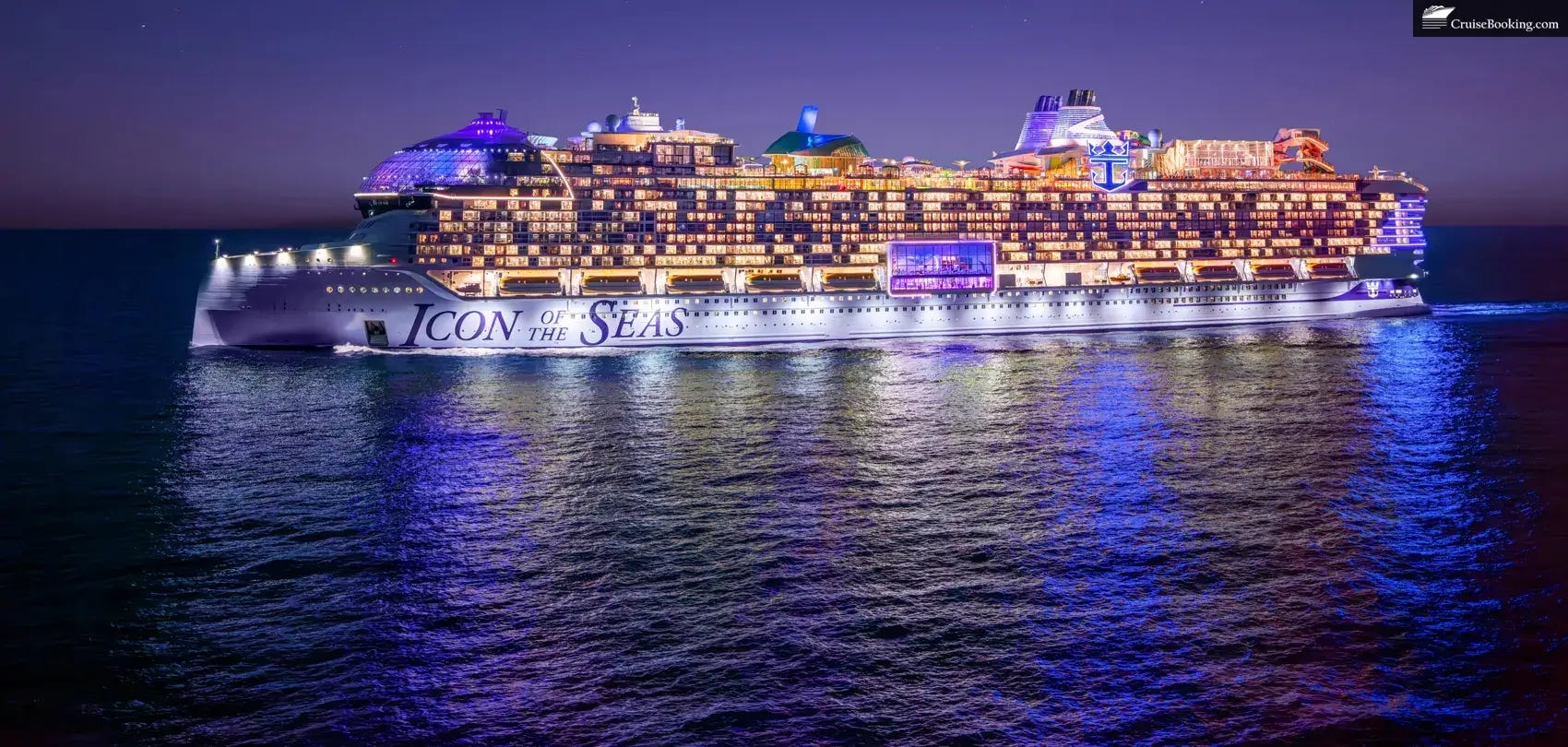
Three ships: Icon of the Seas (January 2024), Star of the Seas (August 2025), and Legend of the Seas (July 2026). A fourth unnamed Icon-class ship is on order for 2027.
Icon of the Seas is, at the time of writing, the largest cruise ship ever built: 248,663 gross tons, 1,196 feet long, 20 decks, 2,805 staterooms, and a maximum capacity of approximately 7,600 guests at 5,610 double occupancy, served by 2,350 crew. Star of the Seas is nearly identical. Legend of the Seas, debuting July 2026, introduces new features including Crown’s Edge, a skywalk and ropes course over the ocean, and Category 6 Waterpark with six slides including the first open freefall waterslide at sea.
The eight neighbourhoods on Icon-class ships are the organisational principle of the product: AquaDome (the forward performance and dining zone with the largest waterpark at sea), Thrill Island (roller coaster, FlowRider surfing, the pool deck), Central Park (a living garden with restaurants in the open air), the Royal Promenade (the main shopping and entertainment boulevard), Surfside (family zone with children’s aquapark and carousel), the Suite Neighbourhood (private experience for suite guests with dedicated pool and restaurant), Chill Island (quieter adult-oriented pool and beach club zone), and the Hideaway (adults-only). Every Icon-class ship is powered by LNG and sails from Florida ports with stops at Perfect Day at CocoCay.
Icon-class ships are the right choice for: families who want the maximum activity density, first-time cruisers who want to experience everything the format has to offer, guests who are travelling with mixed groups and need to accommodate wildly different preferences simultaneously, and anyone who believes the ship itself should be as much the vacation as the destinations.
Oasis class: six ships, the established megaship standard
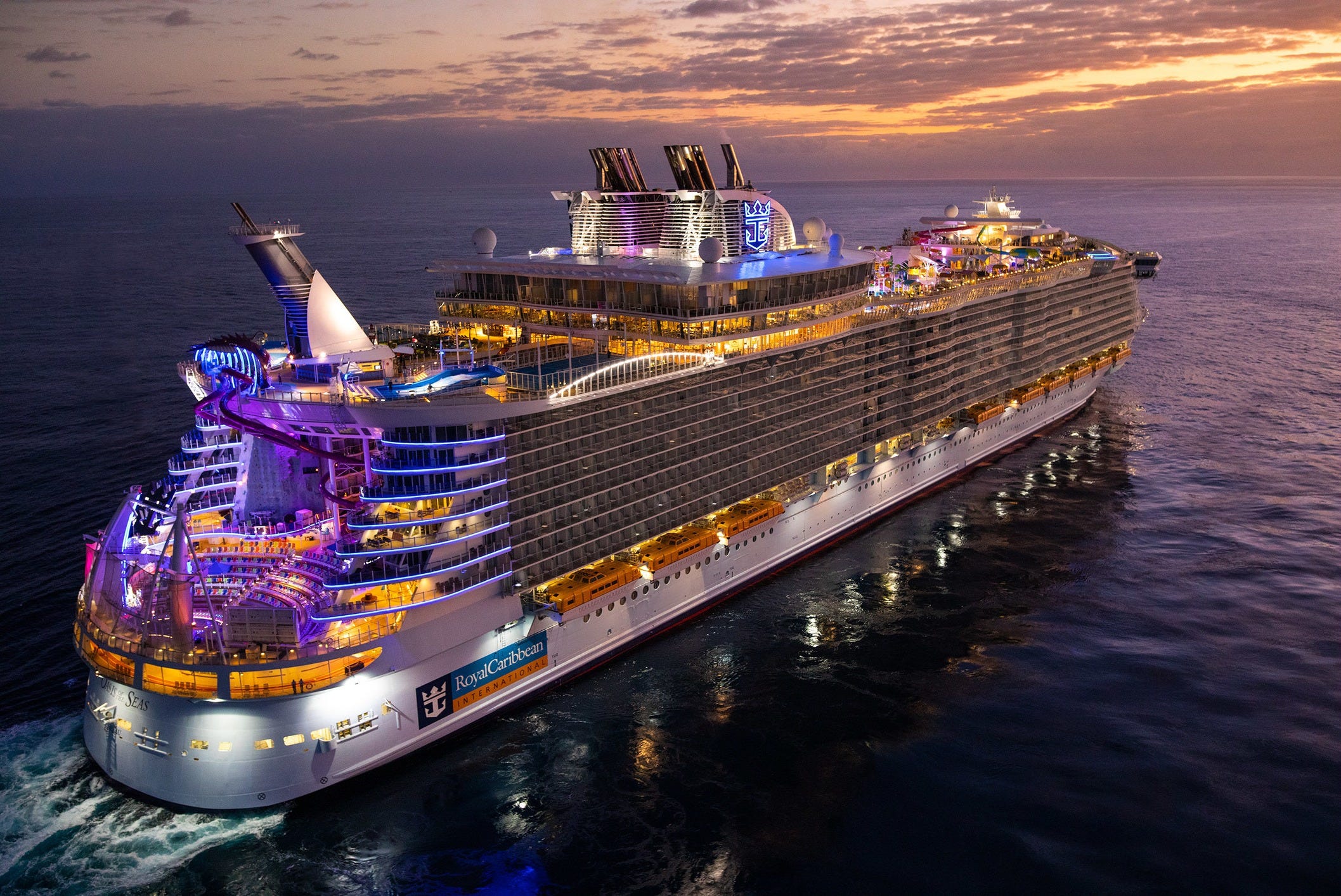
Six ships: Oasis of the Seas (2009), Allure of the Seas (2010), Harmony of the Seas (2016), Symphony of the Seas (2018), Wonder of the Seas (2022), and Utopia of the Seas (2024). Gross tonnage ranges from 225,282 to 236,857. Capacity at double occupancy from 5,400 to 6,780 depending on the ship.
The Oasis class introduced the neighbourhood concept in 2009 and every ship in the class carries the same fundamental framework: seven neighbourhoods including the distinctive Central Park with real trees and the AquaTheater. Each successive Oasis-class ship has added features and capacity, with Utopia of the Seas being the most recent and most feature-rich member. Utopia specialises in 3 and 4-night short sailings from Port Canaveral with intensive Perfect Day at CocoCay programming.
Oasis-class ships are the right choice for: guests who want the full neighbourhood megaship experience at a slightly lower price point than the newest Icon-class ships, families who found that the Oasis concept matches their vacation style, and anyone sailing the established Eastern and Western Caribbean circuits from Florida.
Quantum class: five ships, innovation for mixed-climate itineraries
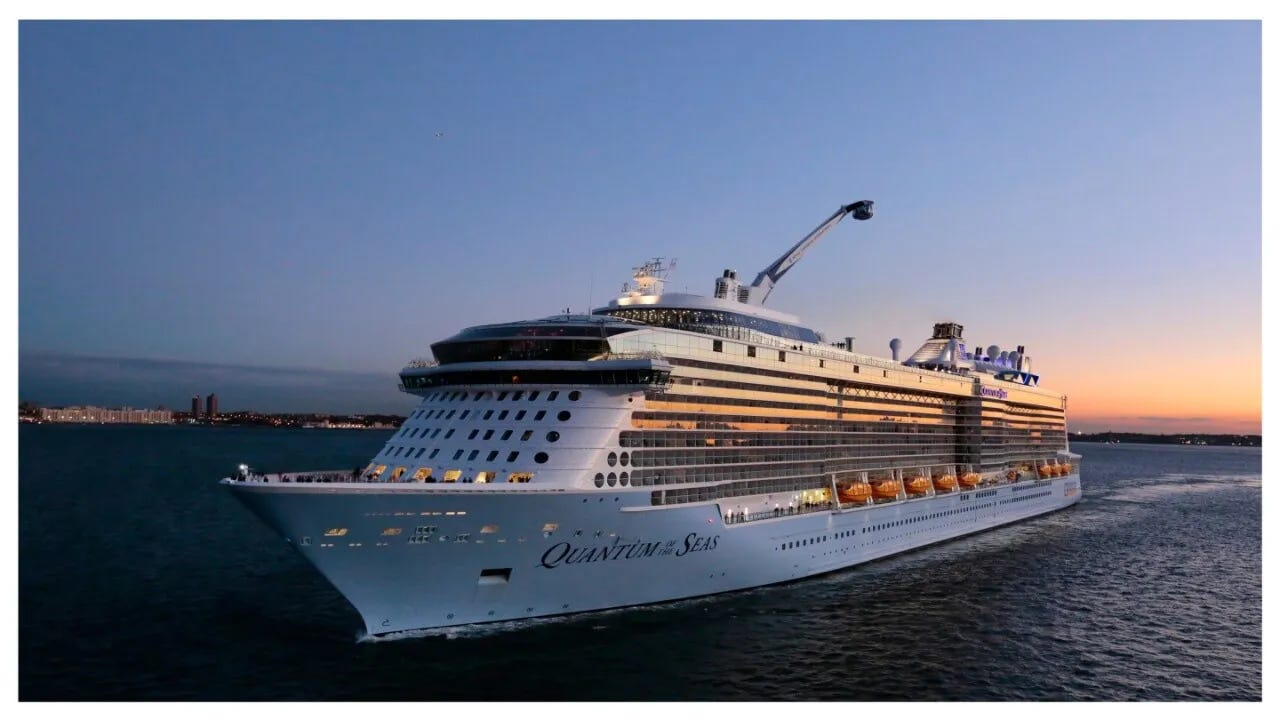
Five ships: Quantum of the Seas (2014), Anthem of the Seas (2015), Ovation of the Seas (2016), Spectrum of the Seas (2019), and Odyssey of the Seas (2021). At approximately 168,000 to 169,000 gross tons, the Quantum class is noticeably smaller than the Oasis and Icon ships and was designed specifically for global itinerary versatility rather than pure Florida-Caribbean mega-resort operations.
The Quantum class introduced: North Star, a glass observation capsule on a mechanical arm that lifts guests 300 feet above the sea; RipCord by iFLY, an indoor skydiving simulator; bumper cars in SeaPlex, a multi-purpose sports and entertainment venue; and Two70, a 270-degree rear-facing lounge that transforms from daytime viewing space to robotic-screen entertainment theatre. The Quantum-class ships do not have ice skating rinks or the traditional Royal Promenade in its classic form.
Quantum-class ships are the right choice for: guests sailing Europe, Alaska, Australia, New Zealand, Asia, or Hawaii, where the ship needs to work in cooler and more varied weather conditions than a purely Caribbean deployment; guests who prioritise the North Star and iFLY experiences; and those seeking a somewhat more manageable scale than the Oasis and Icon behemoths.
Freedom, Voyager, and Radiance/Vision classes: the heritage fleet
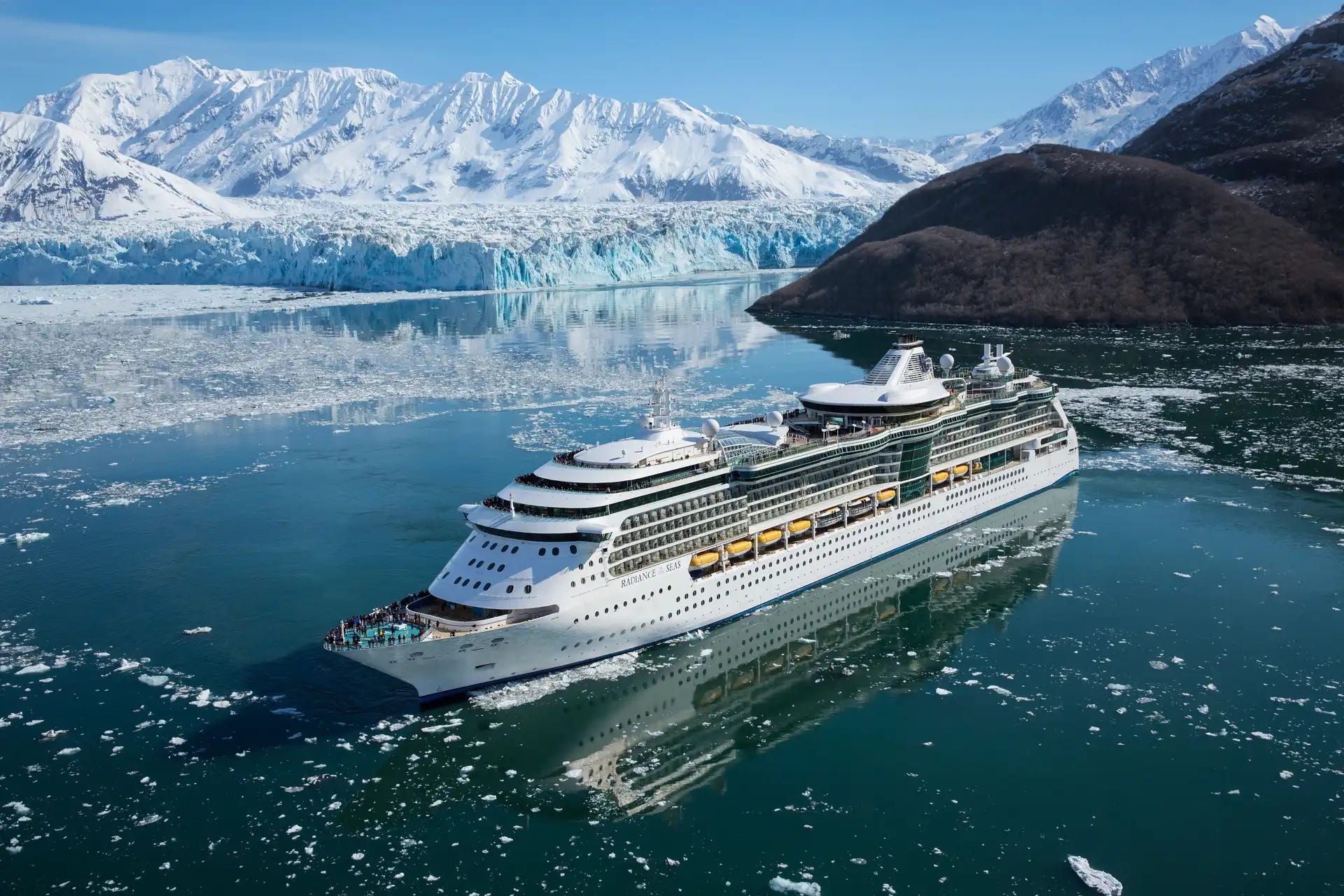
Freedom class (5 ships, 2006 to 2008): Approximately 155,000 gross tons, 3,600 to 4,375 guests. These ships popularised many features that are now standard, including the FlowRider, ice rink, and Royal Promenade. All have been through the Royal Amplified refurbishment programme. A solid mid-tier option that offers the core Royal Caribbean experience at a better value price point than newer ships.
Voyager class (5 ships, 1999 to 2004): Approximately 138,000 gross tons, 3,100 to 3,800 guests. These ships invented the neighbourhood concept that every subsequent class has built on. Older but consistently maintained and periodically amplified, they remain strong performers on itinerary-focused sailings where port access matters more than onboard spectacle.
Radiance class (4 ships, 2001 to 2004) and Vision class (4 ships, 1995 to 1999): The smallest ships in the active Royal Caribbean fleet, at approximately 73,000 to 90,000 gross tons and 2,000 to 2,500 guests. These ships lack many of the signature features of the modern fleet but provide the most manageable scale and the best access to smaller ports that cannot accommodate the megaships. They are the right choice when itinerary access, particularly in Alaska, the British Isles, or the Mediterranean, requires a smaller footprint.
Royal Caribbean fleet summary in 2026
Icon class: 3 ships active (Icon, Star, Legend of the Seas launching July 2026), up to 7,600 guests, 248,000 to 250,000 GT, LNG powered, 8 neighbourhoods
Oasis class: 6 ships, 5,400 to 6,780 guests at double occupancy, 225,000 to 237,000 GT
Quantum class: 5 ships, approximately 4,900 guests, 168,000 GT, global itineraries
Freedom class: 5 ships, 3,600 to 4,375 guests, 155,000 GT
Voyager class: 5 ships, 3,100 to 3,800 guests, 138,000 GT
Radiance class: 4 ships, 2,100 to 2,500 guests, 90,000 GT
Vision class: 4 ships, 2,000 to 2,500 guests, 73,000 GT
Perfect Day at CocoCay: the private island programme
Perfect Day at CocoCay is Royal Caribbean’s private island destination in the Bahamas, and it functions as a major strategic asset and a core part of the product for Caribbean itineraries. Most Icon, Oasis, and Freedom-class Caribbean sailings include a stop at CocoCay.
The island is divided into ten neighbourhoods. Seven are free to all guests with their cruise fare: the beaches of Chill Island and South Beach, the Oasis Lagoon (the largest freshwater pool in the Caribbean), Splashaway Bay kids’ aquapark with slides and water cannons, and five complimentary dining venues serving burgers, tacos, salads, and fruit. Three neighbourhoods require separate admission: Thrill Waterpark (fourteen waterslides including Daredevil’s Peak at 135 feet, the tallest slide in the Caribbean), Coco Beach Club (exclusive beach with infinity pool and restaurant), and Hideaway Beach (adults-only with swim-up bar and live entertainment).
For the vast majority of guests whose cruise fare includes a CocoCay stop, the island provides a genuinely full beach day at no additional cost. The Oasis Lagoon, complimentary dining, beaches with included chairs and umbrellas, and the children’s aquapark are all included. The paid amenities represent upgrades for those who want them, not an access fee for the basic experience.
The Royal Beach Club Santorini, announced in 2025, is scheduled to open in summer 2026, adding a private beach club at Santorini in Greece to Royal Caribbean’s portfolio of private destination experiences for Mediterranean guests.
What is and is not included
Royal Caribbean is emphatically not an all-inclusive cruise line. This is the single most important practical fact for a prospective guest to understand before comparing Royal Caribbean prices to any competitor in this guide. The base cruise fare covers a specific and relatively narrow set of services, and additional costs accumulate significantly over the course of a voyage.
Included in the standard Royal Caribbean fare:
Accommodation in the booked stateroom or suite
All meals in the main dining room (traditional or My Time Dining with reservations)
Buffet access at the Windjammer
Entertainment including shows, the ice rink, and most activity venues
Use of the pools, hot tubs, fitness centre, and basic recreation facilities
Complimentary activities including the rock-climbing wall, FlowRider observation, and most sports deck facilities
Standard beach access, loungers, and complimentary dining at Perfect Day at CocoCay on eligible sailings
Port taxes and fees
Not included (and commonly significant costs):
Beverages: alcohol, soft drinks, specialty coffees, and most bottled water are charged separately. The Deluxe Beverage Package, the most common purchase, typically runs 80 to 110 dollars per person per day
Specialty dining: most named restaurants beyond the main dining room and Windjammer carry a cover charge of 20 to 70 dollars per person. Icon of the Seas alone has over 40 dining venues, most with surcharges
Wi-Fi: purchased per device per day or as a package, typically 20 to 30 dollars per device per day unless bought in advance
Gratuities: automatically charged to the account at approximately 18 to 20 dollars per guest per day
Shore excursions: priced separately per excursion per person
Thrill Waterpark, Coco Beach Club, and Hideaway Beach at CocoCay
Spa treatments
The Royal Suite Class private experience, if applicable
For a seven-night cruise with two adults including the beverage package, Wi-Fi, gratuities, and two specialty dining meals, the actual total cost is commonly 40 to 70 percent higher than the headline cruise fare. This is not unique to Royal Caribbean among mainstream lines, but it is a structural reality that anyone budgeting a Royal Caribbean vacation needs to account for before comparing headline prices to competitors.
Suite Class and the Royal Suite experience
Royal Caribbean has invested substantially in its suite tier, and on the newest ships the suite experience is genuinely distinct from the rest of the ship rather than simply a larger room.
The Royal Suite Class on Icon, Oasis, and Quantum-class ships includes dedicated dining in the exclusive Coastal Kitchen restaurant (no surcharge for suite guests), access to the Suite Lounge, dedicated concierge service, priority boarding and debarkation, and on Icon-class ships access to the Suite Neighbourhood with its private pool deck and sun terrace.
Suite categories span from the Junior Suite (the entry level, which provides the Coastal Kitchen access but is not a true two-room suite) through Superior and Ultra Spacious Suites to the Star Class at the top: Owner’s Suites, Villa Suites, and the Ultimate Family Suite (a multi-room suite with its own slide, climbing wall, and private hot tub designed specifically for families). Star Class guests receive the Royal Genie, a dedicated concierge who pre-books all dining, entertainment, and excursions before the voyage and manages every aspect of the onboard experience.
The Star Class is the closest Royal Caribbean gets to an all-inclusive experience: gratuities, beverages, specialty dining, and Wi-Fi are included for Star Class guests. At this tier, the total cost comparison with premium and ultra-luxury competitors begins to narrow, though the onboard atmosphere and scale remain fundamentally different.
How Royal Caribbean compares to other lines
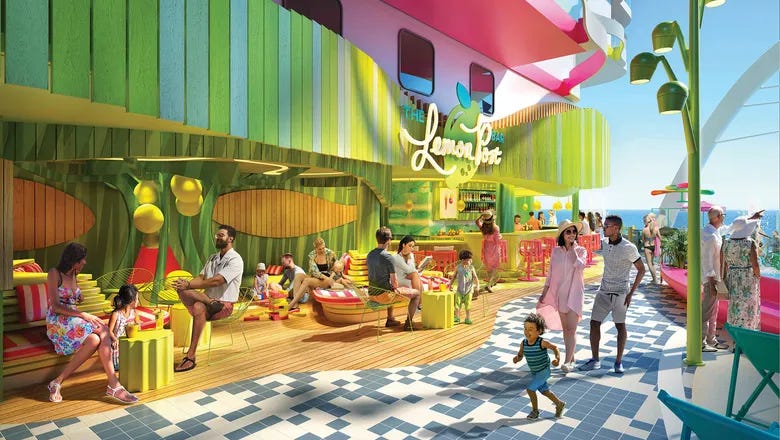
Royal Caribbean International
Best for: The most activity-dense family vacation available at sea, the largest ships in the world, the most onboard entertainment options in any price tier, a private island destination (CocoCay) that functions as a genuine beach resort, and accessible entry-level pricing before add-ons. Not best for: intimacy, quiet, port-intensive itineraries on smaller vessels, all-inclusive simplicity, or travellers who want a smaller ship for any reason.
Norwegian Cruise Line
Best for: A similar mainstream megaship product with the Freestyle Dining model (no fixed times or tables) and a stronger solo traveller programme through Norwegian’s dedicated solo studio cabins. Comparable price point and similar “extras not included” fare structure.
MSC Cruises
Best for: A European-owned alternative to the American mainstream with strong Mediterranean itinerary depth and a more international passenger mix. MSC Yacht Club provides an all-inclusive ship-within-a-ship option at the suite level.
Celebrity Cruises
Best for: A more design-forward, adult-skewing premium experience with the Edge class and Daniel Boulud’s Forbes Five-Star restaurant, the Always Included fare bundle, and a calmer onboard atmosphere. A meaningful step up in design and culinary standard from Royal Caribbean’s mainstream positioning.
Princess Cruises
Best for: A slightly older-skewing, more quietly refined mainstream experience with the MedallionClass technology, a strong Alaska programme, and the Plus and Premier package structure that simplifies daily costs. Similar scale to Royal Caribbean’s larger ships but with less emphasis on thrill-based entertainment.
Virgin Voyages
Best for: An adults-only alternative to Royal Caribbean with all dining included (no specialty surcharges), no buffet, a boutique hotel aesthetic, and a more socially curated atmosphere. Ships at 2,770 guests versus Royal Caribbean’s 5,000 to 7,600 on modern ships.
Who Royal Caribbean is best suited for
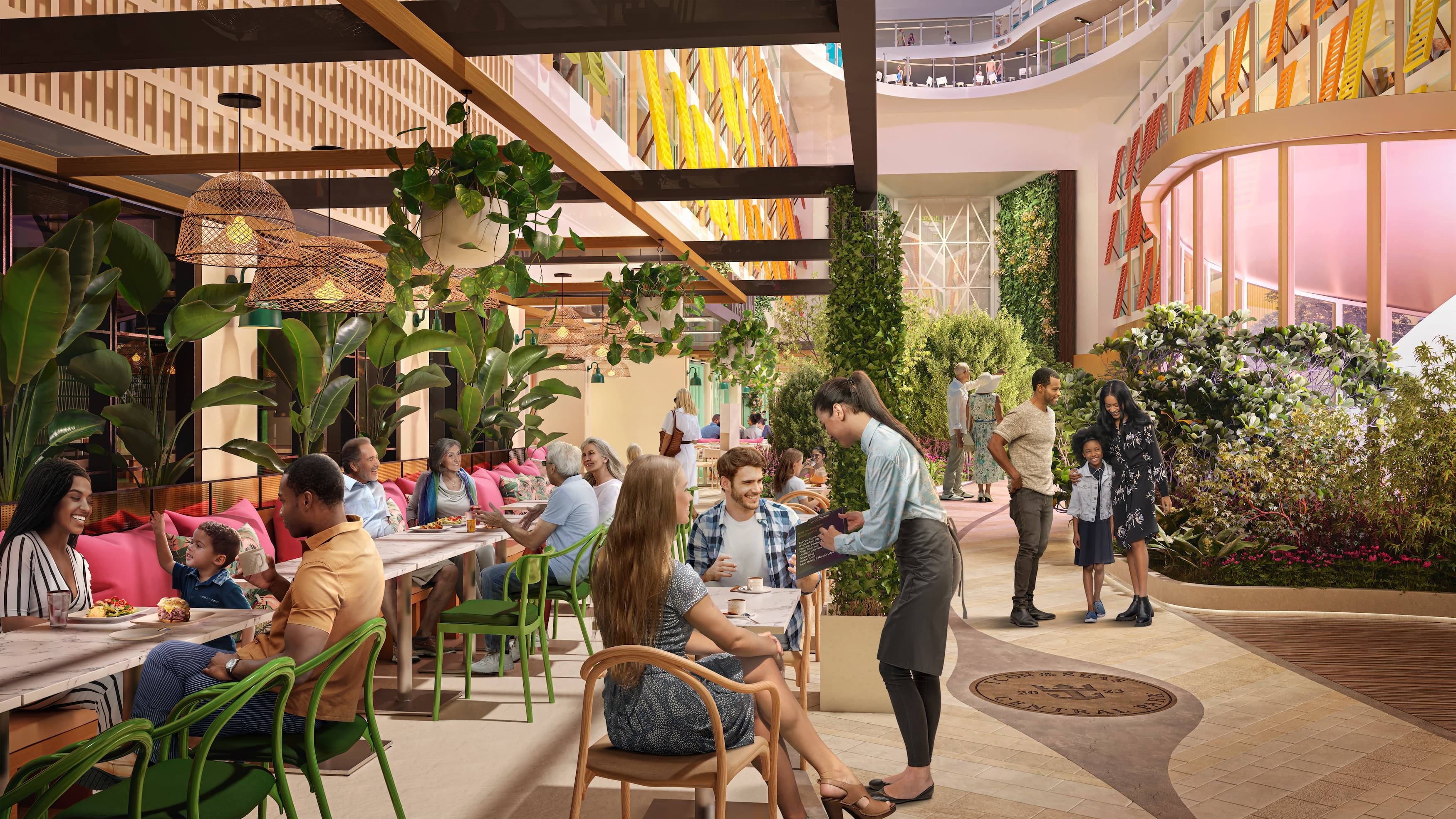
Royal Caribbean is the most genuinely family-friendly cruise product in the market, and its scale and activity density make it the natural first choice for a specific and very large category of traveller.
Families with children of any age who want a vacation where every member of the group, from toddler to grandparent, finds something compelling to do simultaneously without anyone having to compromise
First-time cruisers who want to understand what the mainstream cruise product is before exploring alternatives, and who prefer to start with the option that has the most activities and the most visible value
Groups with mixed preferences: the megaship format solves the problem of varied interests by having enough activities for every person in the group to find their own version of the vacation
Guests whose itinerary priority is the private island experience at Perfect Day at CocoCay, which Royal Caribbean has invested more heavily in than any other destination in its portfolio
Budget-conscious travellers who prioritise the lowest headline fare before add-ons, understanding that the total cost will rise with packages
Guests for whom the ship’s onboard entertainment is as important as the ports, and who want the widest possible menu of activities to choose from
Royal Caribbean is less suited to guests who prioritise small-ship intimacy, cultural or expedition depth, fully all-inclusive simplicity, access to small ports unavailable to megaships, a quiet or formally elegant atmosphere, or itineraries that require polar-class or expedition-capable vessels.
Frequently asked questions
Is Royal Caribbean all-inclusive?
No. The base fare covers accommodation, the main dining room and Windjammer buffet, most entertainment, pool and gym access, and port taxes. Beverages, Wi-Fi, gratuities, specialty dining, shore excursions, and CocoCay premium experiences are all charged separately. The total actual cost for a typical seven-night sailing with two adults adding the beverage package, Wi-Fi, and gratuities commonly runs 40 to 70 percent above the headline fare.
What is the Icon class and how is it different?
Icon of the Seas (2024) and Star of the Seas (2025) are the two largest cruise ships ever built, at approximately 248,000 to 250,000 gross tons carrying up to 7,600 guests. Legend of the Seas, the third Icon-class ship, debuts July 2026. These ships are LNG-powered and organised into eight distinct neighbourhoods, including the largest waterpark at sea, a neighbourhood specifically for families with young children (Surfside), an adults-only zone (The Hideaway), a suite neighbourhood with private pool, and Central Park with living trees growing in the open air. They represent a categorically different physical complexity from any previous cruise ship.
Which Royal Caribbean ship is right for my trip?
The answer depends primarily on whether the itinerary or the ship is the priority. For Caribbean sailings where the ship and Perfect Day at CocoCay are the main event, Icon or Oasis class ships offer the most onboard activity. For Alaska, Europe, or global itineraries where port access and weather versatility matter, Quantum-class ships are better sized and more appropriately designed. For itineraries requiring smaller ports, Radiance or Vision-class ships provide the best access. For the best value at a lower headline cost, Freedom or Voyager-class ships deliver the core experience without the newest ship premium.
What is Perfect Day at CocoCay?
Perfect Day at CocoCay is Royal Caribbean’s private island destination in the Bahamas. The beaches, Oasis Lagoon pool, Splashaway Bay children’s aquapark, and five dining venues are included with the cruise fare. Thrill Waterpark, Coco Beach Club, and Hideaway Beach (adults-only) require separate admission. Most Icon, Oasis, and Freedom-class Caribbean sailings include a CocoCay stop.
What is the Royal Suite Class and what does it include?
The Royal Suite Class is the suite tier on Royal Caribbean’s modern ships, providing access to the exclusive Coastal Kitchen dining room, the Suite Lounge, dedicated concierge service, and priority services. Star Class, the highest tier within Royal Suite Class, includes the Royal Genie personal concierge, and bundles gratuities, all beverages, specialty dining, and Wi-Fi into the suite fare, creating the most all-inclusive experience available on Royal Caribbean. The Ultimate Family Suite on Icon-class ships includes its own in-suite slide, climbing wall, and private hot tub.
Who owns Royal Caribbean International?
Royal Caribbean International is the primary brand of Royal Caribbean Group (NYSE: RCL), a publicly traded company headquartered in Miami, Florida. Royal Caribbean Group also owns Celebrity Cruises and Silversea Cruises. Jason Liberty has served as President and CEO since 2022, with Richard Fain remaining as Chair of the Board of Directors.
Plan a Royal Caribbean Cruise with ÆRIA Voyages
Every Royal Caribbean voyage is different depending on the ship class, the itinerary, and how the onboard budget is allocated. I help clients navigate those choices: from matching the right ship class to the right itinerary and travel group, to understanding which add-on packages represent genuine value versus cost, to advising on whether Royal Caribbean or a competitor line better matches a specific family’s travel priorities.
If you are curious about pricing, current availability, or whether Royal Caribbean is the right fit for your travel vision, I would be glad to talk it through.
Yvan Junior Blanchette
Travel & Cruise Specialist
ÆRIA Voyages📩 yvanblanchette@aeriavoyages.com
📞 1-888-460-3388
🌐 aeriavoyages.com