

Aurora Expeditions: what it is, how it works, and what to expect
Cruise guide · Updated 2026 · Premium expedition · X-Bow fleet · IAATO founding member · B Corp certified · Antarctica · Arctic
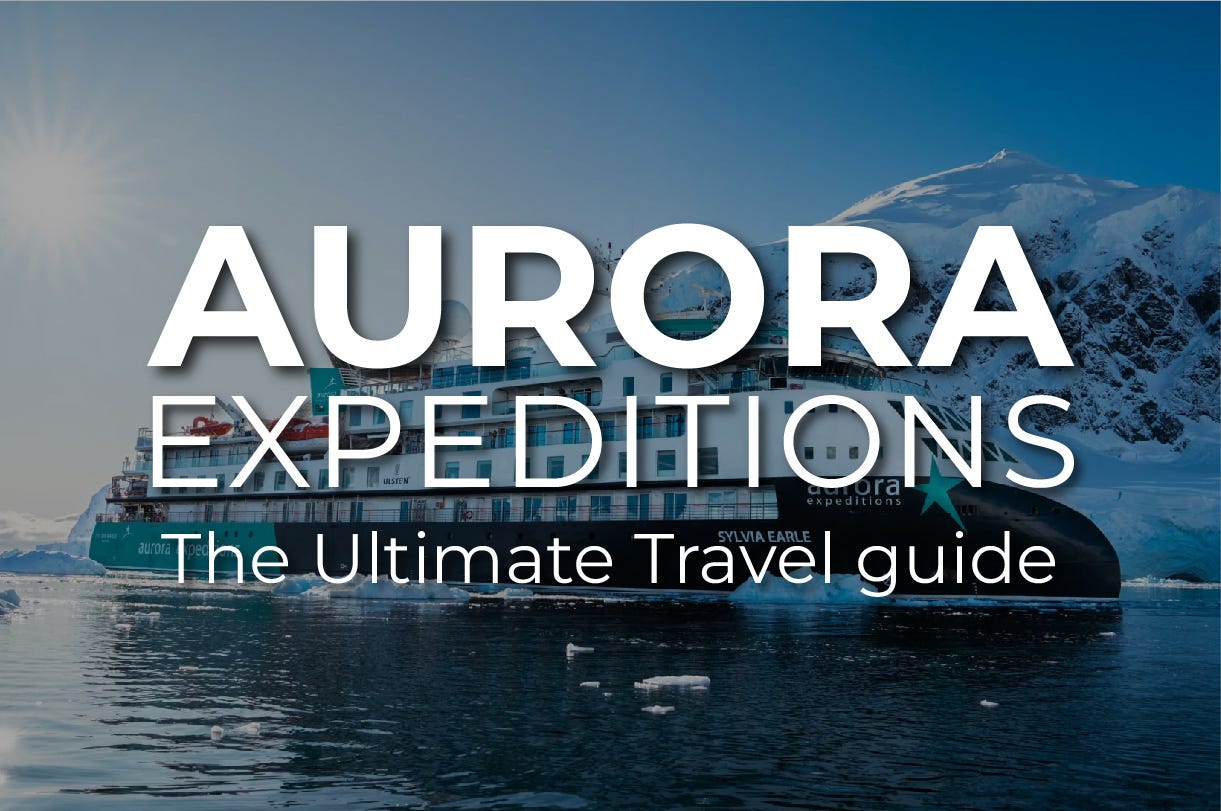
Aurora Expeditions was founded in Sydney in 1991 by Greg Mortimer OAM, the first Australian to summit Mount Everest, and his wife Margaret Mortimer. Their first Antarctic expedition sailed in 1992.
Thirty-four years later the company they built by accident, as Greg describes it, is one of the most respected expedition cruise operators in the world: a Certified B Corporation, a founding member of IAATO, the operator of three purpose-built X-Bow expedition ships capped at 130 guests in polar waters, and in 2026 the company in the middle of its most significant expansion since it launched its first purpose-built vessel in 2019.
Douglas Mawson, the newest and largest ship, made her maiden voyage to Tasmania in December 2025, returned to East Antarctica for the first time in fifteen years, and is named for the Australian geologist and explorer whose pioneering 1911 to 1914 Australasian Antarctic Expedition remains the template for serious Antarctic science.
This guide covers Aurora’s founding and Australian identity, all three X-Bow ships in full specification, the 130-guest polar cap and why it matters, what is and is not included, the activity programme including kayaking, camping, and scuba diving, the solo traveller programme with no single supplements, the B Corporation status, the return to East Antarctica and the Ross Sea, the 2026 European expansion, the Lindblad charter of Greg Mortimer from 2027, and how Aurora compares to the expedition competition.
Table of Content
The activity programme: the most comprehensive in the expedition market
How Aurora Expeditions compares to the expedition competition
🎧 LISTEN TO THE BEYOND THE HORIZON PODCAST
WILL BE AVAILABLE SOON.
A brief history of Aurora Expeditions
Greg Mortimer was born in Orange, New South Wales, and became one of Australia’s most celebrated mountaineers, the first Australian to summit Everest in 1984 and the first to summit Everest without supplemental oxygen alongside Tim Macartney-Snape. He is also the first Australian to have climbed both Everest and K2. In 1991, he and his wife Margaret founded Aurora Expeditions in Sydney with the intention of applying the mountaineering ethos of careful preparation, small group discipline, and genuine respect for the environment to marine expedition travel.
The first Aurora Antarctic expedition sailed in 1992 aboard a chartered vessel. The early years operated on chartered ships, developing the expedition format, the guide culture, and the conservation philosophy that would come to define the brand. In 1995, Aurora introduced the first commercial climbing expedition in Antarctica, one of several industry firsts that reflect the company’s appetite for genuine adventure beyond the Zodiac landing. Greg Mortimer was also a founding member of IAATO, the International Association of Antarctic Tour Operators, established to create operational and environmental standards for polar tourism. That founding membership is not a historical footnote: IAATO’s regulations on shore landing group sizes, wildlife approach distances, and footprint minimisation are the framework within which the entire expedition industry operates, and Aurora helped write them.
Through the 2000s and 2010s, Aurora expanded its geographic range from Antarctica to the Arctic, subantarctic islands, South Georgia, the Falklands, New Zealand’s subantarctic archipelago, and the Chilean fjords, while maintaining its identity as a small-group, guide-intensive, activity-forward operator. The fleet remained chartered through this period, with ships such as Polar Pioneer providing reliable if ageing tonnage.
The transformation of the company’s physical product came with the ordering of its first purpose-built vessel. Greg Mortimer, Aurora’s inaugural newbuild, was delivered in 2019 and was the first passenger ship in the world to feature the Ulstein X-Bow hull. Sylvia Earle, an identical sister ship named for the American oceanographer and National Geographic Explorer-in-Residence, followed in 2022. Douglas Mawson, the third and newest ship, was delivered in September 2025 and made her maiden voyage to Tasmania in December 2025.
In January 2024, Aurora Expeditions achieved Certified B Corporation status, recognising the company’s verified commitment to high standards of social and environmental performance, accountability, and transparency. Aurora was one of the first expedition cruise operators to achieve B Corp certification, and the status governs the company’s approach to its environmental footprint, staff welfare, community impact, and governance.
In December 2025, it was announced that Greg Mortimer will be chartered to Lindblad Expeditions for Alaska operations from 2027 through 2030, a three-year arrangement that allows Aurora to maintain two ships in its own programme while providing Lindblad with a proven X-Bow vessel for the US-flagged Alaska market. Aurora continues to operate Greg Mortimer through the 2026 season.
Aurora Expeditions is headquartered in Sydney, Australia. The company is Australian-owned and operated, and its Australian identity shapes the brand in ways that are genuinely felt: the expedition culture is adventurous without being performatively rugged, the atmosphere is warm and unpretentious, and the company’s founding story runs through the presentation of the ships themselves.
The three ships: all X-Bow, all purpose-built
All three Aurora Expeditions ships share the same defining design feature: the Ulstein X-Bow, the patented inverted hull design developed by the Norwegian shipbuilder Ulstein Group. In a conventional hull, the bow rises to a point above the waterline, riding up and over waves before slamming down. The X-Bow inverts this: the bow profile projects forward and downward below the waterline, slicing through wave energy rather than overriding it. The practical effect in the Drake Passage and other heavy polar seas is a meaningfully smoother passage with less pitching, less bow slamming, and substantially less seasickness than conventionally bowed vessels of comparable size. Greg Mortimer was the first passenger ship ever built with the X-Bow, making Aurora Expeditions the originator of this now-widely-adopted design in expedition cruising.
All three ships were built at China Merchants Heavy Industry’s Haimen Shipyard in Jiangsu, China, using the Ulstein CX103 Infinity-class design. All three are owned by SunStone Maritime Group and operated under exclusive long-term charter by Aurora Expeditions. All three are Bahamas-flagged and registered in Nassau.
Greg Mortimer
Greg Mortimer was delivered in 2019 as the world’s first X-Bow passenger ship. She carries a maximum of 148 guests in 76 cabins at her full capacity, capped to 130 guests on all polar expedition voyages as of 2024. She is 104 metres long across 8 decks, with a Polar Class 6 (PC6 / 1A) ice-strengthened hull. Her design includes expansive observation decks at multiple levels, a restaurant and bar, a lecture theatre, a library, a wellness centre, and a mudroom and boot room for Zodiac and expedition operations.
From 2027, Greg Mortimer will be chartered to Lindblad Expeditions for Alaska operations through 2030. She continues to sail in the Aurora fleet through the full 2026 season.
Sylvia Earle
Sylvia Earle was delivered in October 2022 as the near-identical sister ship to Greg Mortimer. She carries a maximum of 130 guests in 71 cabins (her maximum capacity at double occupancy is lower than her sister’s as all her cabins are configured for a slightly more spacious layout per passenger). She is 104 metres long, 8 decks, Polar Class 6, and shares the X-Bow hull and the same expedition infrastructure as Greg Mortimer. Named for Dr. Sylvia Earle, the American marine biologist and oceanographer who has spent more time living and working underwater than any other human, the ship carries her name as a statement of Aurora’s conservation values.
Douglas Mawson
Douglas Mawson was delivered in September 2025 and made her maiden voyage to Tasmania in December 2025. She is the seventh and final vessel in the Ulstein CX103 Infinity-class series. She carries a maximum of 154 guests in 86 cabins at full capacity, and is capped at 130 guests on polar expedition voyages. She is 104.4 metres long, 8 decks, Polar Class 6, and features the same X-Bow hull as her sisters along with updates to the interior design reflecting Aurora’s evolving aesthetic and the lessons of six years of operating the first two ships.
Named for Sir Douglas Mawson, the Australian geologist and explorer who led the Australasian Antarctic Expedition from 1911 to 1914 and made some of the most important scientific and geographical discoveries in Antarctic history, Douglas Mawson’s arrival enabled Aurora’s return to East Antarctica and the Ross Sea for the first time in fifteen years. Her 2025 to 2026 inaugural season included the Mawson’s Antarctica itinerary retracing the explorer’s historic voyage from Hobart, the Ross Sea Odyssey, Subantarctic Discovery, and Epic Antarctica: Crossing the 7th Continent. She was named one of Time magazine’s World’s Greatest Places 2026.
Ten dedicated solo-occupancy staterooms are available on every voyage across all three ships, part of Aurora’s commitment to eliminating single supplements fleet-wide.
Aurora fleet at a glance
Greg Mortimer: 2019, 76 cabins, 148 max guests (130 on polar voyages), 104 metres, Polar Class 6, X-Bow, chartered to Lindblad 2027 to 2030
Sylvia Earle: 2022, 71 cabins, 130 guests maximum, 104 metres, Polar Class 6, X-Bow
Douglas Mawson: 2025, 86 cabins, 154 max guests (130 on polar voyages), 104.4 metres, Polar Class 6, X-Bow, maiden voyage December 2025, Time World’s Greatest Places 2026
The 130-guest polar cap: why it matters
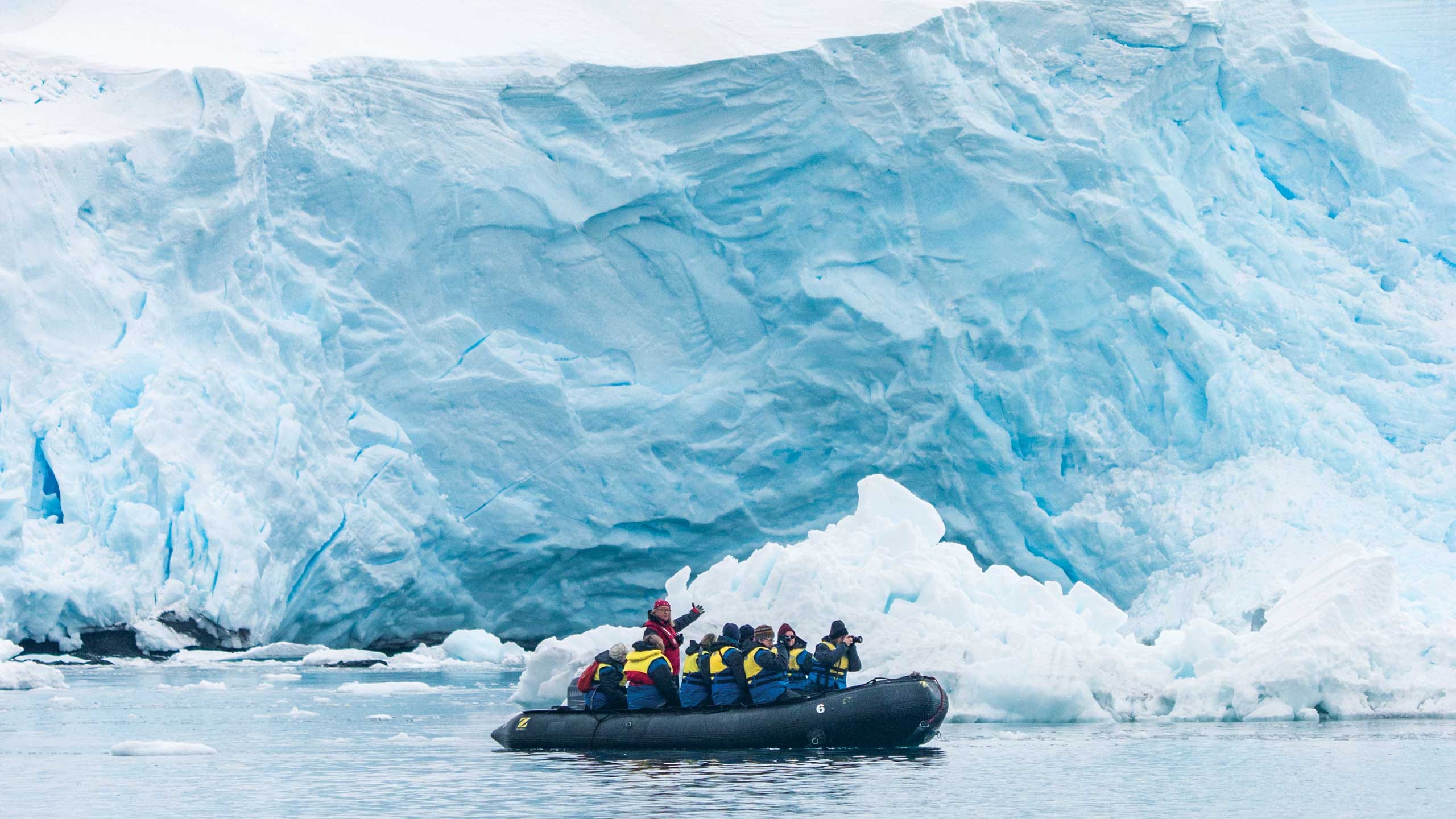
Since 2024, Aurora Expeditions caps all polar expedition voyages at 130 guests on all three ships, regardless of each ship’s physical maximum capacity. This is a voluntary operational decision that goes beyond IAATO’s requirements and reflects Aurora’s founding philosophy that smaller groups in the most sensitive environments produce better outcomes for guests, for wildlife, and for the ice.
The practical consequence is significant. IAATO regulations in Antarctica permit simultaneous shore landings in groups of up to 100 guests when only one ship is present at a landing site. At 130 guests, Aurora’s ships operate two Zodiac groups ashore simultaneously rather than the sequential rotation required by larger ships, giving every guest more time on the ice and more time with the expedition team per day. The expedition team-to-guest ratio across the Aurora fleet is approximately 1:8, meaning one guide for every eight guests in the field, a ratio that produces genuinely educational and personalised encounters rather than the managed crowd experience of larger ships.
What is and is not included
Aurora Expeditions operates a clear inclusions model that covers the core expedition experience. It is not a fully all-inclusive model in the manner of Atlas Ocean Voyages or PONANT, and understanding the specific gaps is important for accurate budgeting.
Included in every Aurora Expeditions fare:
All meals: daily breakfast, lunch, dinner, afternoon tea, and snacks throughout the voyage
House wines, beers, and soft drinks with dinner
Captain’s Welcome and Farewell receptions including house cocktails, beer, wine, and non-alcoholic beverages
All shore excursions, Zodiac cruises, and guided walks
All onboard briefings, lectures, and the expedition enrichment programme
Complimentary Wi-Fi (available across the fleet; Aurora encourages guests to also embrace the opportunity to disconnect)
Complimentary initial consultation with the onboard expedition doctor and access to the medical clinic
One 3-in-1 waterproof polar expedition jacket to keep on all polar voyages
Complimentary use of Muck Boots during the voyage
Port surcharges, landing permits, and fees
Use of snorkelling equipment where the programme includes snorkelling
Not included:
Alcoholic beverages and soft drinks outside dinner service: the bar is open throughout the day and drinks are available for purchase, but only the dinner beverage inclusion is standard
Gratuities for ship crew and restaurant staff: not included and appreciated at the guest’s discretion. Gratuities are included in the suite tier as part of the suite benefits package
Wi-Fi beyond the complimentary access (which can be variable in remote polar regions)
Optional activities with a surcharge: sea kayaking, scuba diving, mountaineering, and ice camping programmes carry additional fees (see below)
Pre and post-voyage hotel accommodation and transfers unless specifically stated in the itinerary
International and domestic flights
The dinner beverage inclusion, rather than open bar throughout the day, is the most important practical difference from lines like Atlas Ocean Voyages or PONANT that include spirits all day. Guests who drink consistently throughout the day should factor bar costs into their budget.
The activity programme: the most comprehensive in the expedition market
Aurora Expeditions’ activity offering is more diverse and more physically ambitious than any comparable expedition cruise operator. The company’s mountaineering origins are visible in what it has built: the activities programme is not a selection of gentle optional extras but a genuine adventure menu that includes experiences unavailable anywhere else in the expedition cruise market.
Included activities on all voyages:
Zodiac cruising and guided shore landings, multiple times per day in expedition destinations
Wildlife lectures and natural history presentations by the expedition team
Open bridge access at the captain’s discretion
Citizen Science participation: guests contribute to real scientific data collection programmes during the voyage
Optional activities available at additional cost on qualifying voyages:
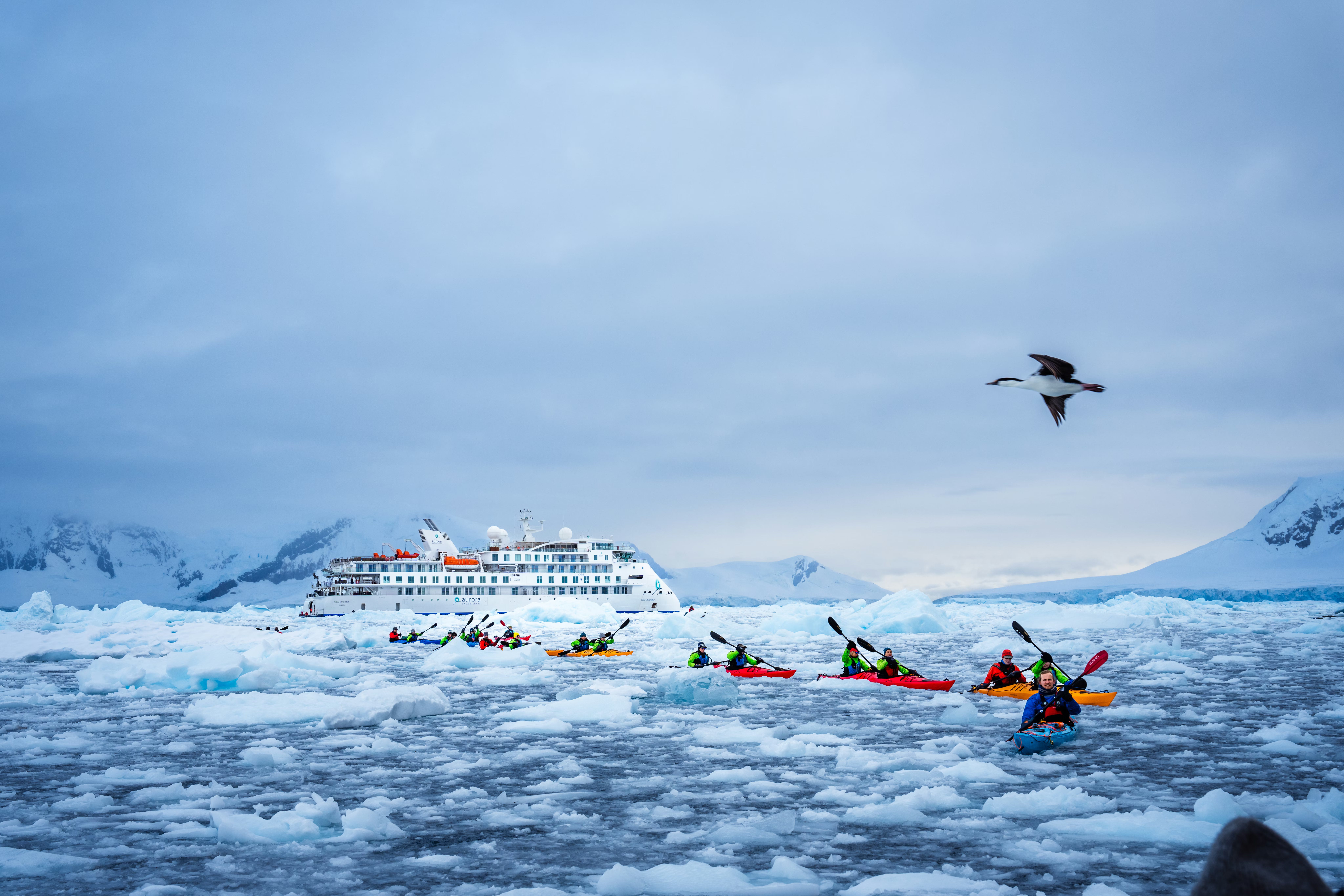
Sea kayaking is Aurora’s signature premium activity, with groups of up to 10 guests per guide exploring coastlines, bays, and ice formations inaccessible to Zodiacs from the water surface. Aurora provides kayak booties and dry suits. Guests with their own dry suits may use them with approval. Available on Antarctic, Arctic, and other qualifying itineraries.
Overnight ice camping is available on Antarctic expedition voyages: guests spend a night on the Antarctic ice under the midnight sun, sleeping in expedition-grade sleeping bags on Therma-Rest pads on the ice itself. Aurora cannot guarantee a sound sleep, but the experience of spending the night on the white continent under the austral summer sky is cited by those who have done it as one of the defining experiences of a lifetime of travel.
Mountaineering and climbing in Antarctica: the programme that started in 1995 as the world’s first commercial climbing expedition in Antarctica continues in 2026 on qualifying itineraries. Routes are selected by the expedition team based on conditions and participant capability.
Snowshoeing is available on select voyages with equipment provided, allowing access to terrain beyond the immediate shoreline of landing sites.
Scuba diving in Antarctica requires prior experience in cold water and drysuit diving. Groups are small, guided by certified dive masters, and access the under-ice marine environment that most Antarctic visitors never see.
Stand-up paddleboarding (SUP) is available on qualifying voyages in protected conditions.
The solo traveller programme
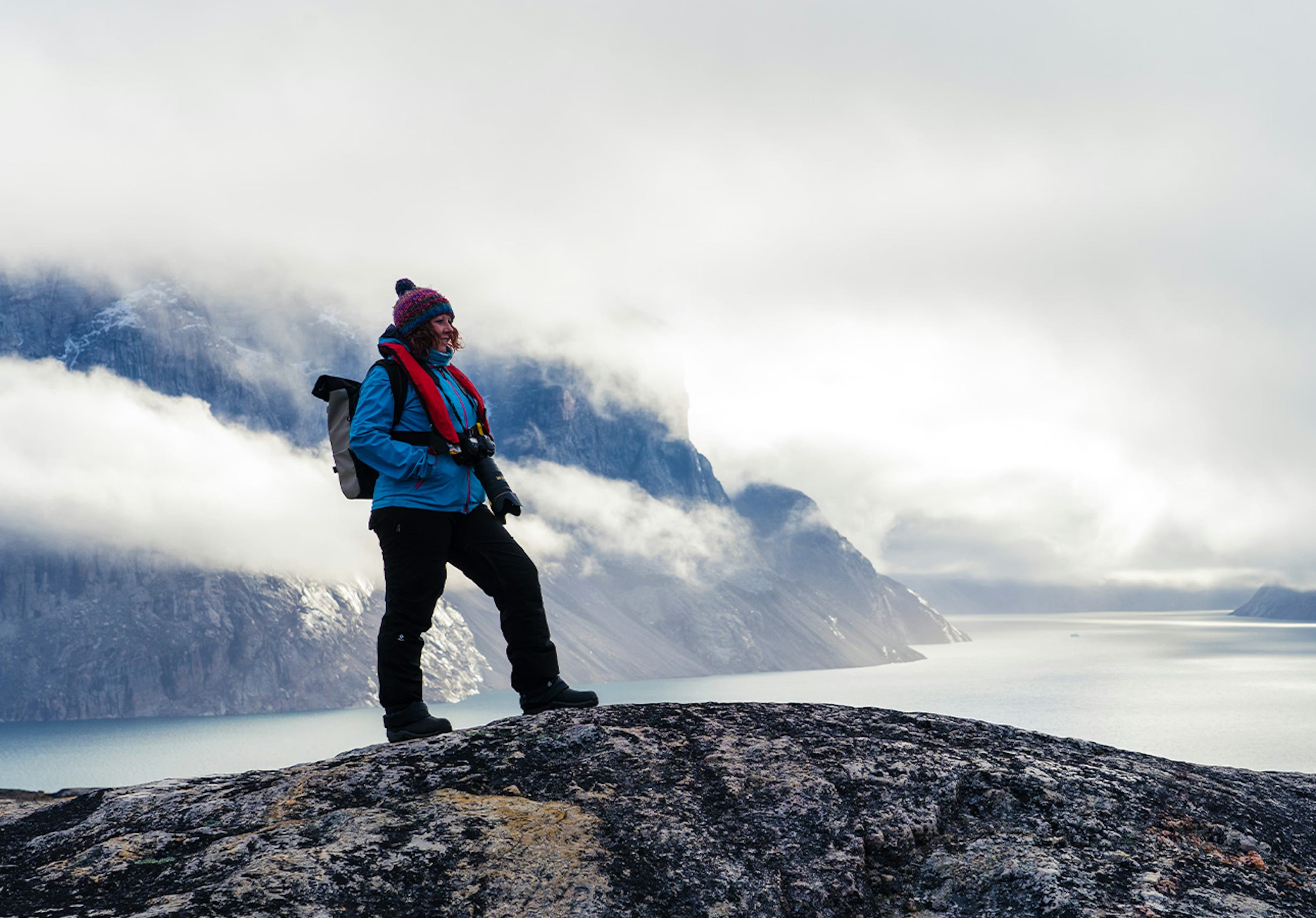
Aurora Expeditions eliminated single supplements fleet-wide and reserves ten dedicated solo-occupancy staterooms on every voyage across all three ships. This makes Aurora one of the most accessible expedition cruise operators for solo travellers by a significant margin: the standard penalty for sailing alone, which on most lines adds 50 to 100 percent to the per-person fare, does not apply to guests in the dedicated solo cabins.
The decision reflects Aurora’s understanding that solo travellers are disproportionately represented in the expedition market: people who want a physically demanding, intellectually engaging, and deeply experiential voyage are often people who travel alone. The solo cabin programme means that the most appropriate guests for the Aurora product are not penalised for being who they are.
B Corporation certification and the salmon decision
In January 2024, Aurora Expeditions achieved Certified B Corporation status, verified by B Lab to meet rigorous standards across social and environmental performance, transparency, and accountability. B Corp certification requires comprehensive evidence of how a company treats employees, communities, the environment, and customers, and is renewed through an ongoing assessment process rather than a one-time award.
The most visible practical expression of Aurora’s environmental commitment came in the 2025 to 2026 season, when the company banned all salmon from onboard menus across the entire fleet, citing the environmental impacts of salmon farming. In an industry where smoked salmon is practically a default breakfast offering, the decision was bold and deliberate. Aurora replaced salmon with alternative proteins and highlighted the decision publicly as an expression of the values that drove the B Corp certification. It is the kind of decision that a company makes when environmental commitment is genuine rather than marketed.
The company’s AI-powered navigation system, developed in partnership with Australian climate-technology firm CounterCurrent, was deployed in October 2025, using real-time data to optimise routing for fuel efficiency and reduced emissions. Celestyal also collects marine data through its Citizen Science programme as a standard component of every expedition voyage.
The itinerary range in 2026
Antarctica is the founding programme and remains the core of the Aurora calendar, with 32 voyages in the 2025 to 2026 season across all three ships. The itinerary range spans the standard Antarctic Peninsula (9 to 14 nights from Ushuaia), the Antarctic Circle crossing, South Georgia and the Falklands, the Weddell Sea, and the deep Antarctic programmes that distinguish Aurora from most competitors: the Ross Sea Odyssey and the Mawson’s Antarctica itinerary to East Antarctica, both operated from Hobart and Dunedin by Douglas Mawson.
East Antarctica and the Ross Sea represent the most significant itinerary development of the 2025 to 2026 season. After a fifteen-year absence, Aurora returned to East Antarctica aboard Douglas Mawson, retracing the route of Sir Douglas Mawson’s 1911 to 1914 Australasian Antarctic Expedition and reaching the Ross Sea, the most remote and least visited region of the entire Antarctic continent. These voyages are the most ambitious in the current fleet programme and among the most ambitious offered by any luxury or premium expedition operator globally.
New Zealand’s subantarctic islands including the Snares, Auckland, Campbell, Antipodes, and Bounty Islands are programmed across multiple voyages, with departures from New Zealand ports.
The Arctic programme covers Svalbard, Greenland, Iceland, the Northwest Passage, and the Danish Strait, operating during the northern summer season.
The British Isles, Mediterranean, and Atlantic Coast are new additions to the programme from 2026, with Douglas Mawson operating Small Ship Cruise format voyages at up to 154 guests in warm-water European destinations. These sailings differ from the expedition format: they retain the expedition team and the enrichment programme but operate as culturally immersive small ship cruises rather than landing-intensive polar expeditions.
Patagonia and the Chilean fjords are operated as part of the southern hemisphere shoulder season programme.
2027 note: Greg Mortimer transfers to a three-year charter with Lindblad Expeditions for Alaska operations from 2027 through 2030. Aurora’s 2027 season runs with Sylvia Earle and Douglas Mawson across 25 voyages.
How Aurora Expeditions compares to the expedition competition
Aurora Expeditions
Best for: The most physically ambitious activity programme in the expedition cruise market (camping on the ice, commercial climbing, cold water scuba, sea kayaking), the X-Bow hull on all three ships producing the smoothest Drake Passage crossing of any comparable vessel, the first expedition operator to eliminate single supplements fleet-wide, Certified B Corporation status, the deepest Southern Hemisphere expedition pedigree including East Antarctica and the Ross Sea, and an Australian-owned company whose founding story runs through the vessels and the expedition culture.
Lindblad Expeditions / National Geographic
Best for: The deepest photography programme in expedition cruising with a Certified Photo Instructor on every departure, a National Geographic Photographer on select ships, the OM System gear locker, and the longest continuous Galápagos programme in expedition travel. Comparable scale and polar cap. Less physically adventurous activity offering than Aurora.
Swan Hellenic
Best for: The deepest cultural and humanities expert programme in the expedition segment, shore excursions included in the base fare, and itinerary destinations in West Africa and the Asia-Pacific that Aurora does not programme. Less physically active than Aurora; more academically oriented.
HX Expeditions
Best for: All-inclusive since November 2024, the Science Centre for guest research participation, a significantly lower price entry point, and the world’s first hybrid-electric expedition ships. Ships at 200 to 490 guests, larger landing groups on the bigger vessels.
Atlas Ocean Voyages
Best for: Fully all-inclusive including open bar with spirits, charter flights and hotel on Antarctic voyages, and art deco design interiors. Comparable guest count (198 versus Aurora’s 130 polar cap). Less activity diversity than Aurora’s adventure programme.
Quark Expeditions
Best for: The deepest polar ice access of any standard passenger operation, with Polar Class 4 capability on MV Ultramarine (199 guests). A more adventure-focused product than Atlas or Swan Hellenic but without the same activity breadth as Aurora.
Who Aurora is best suited for
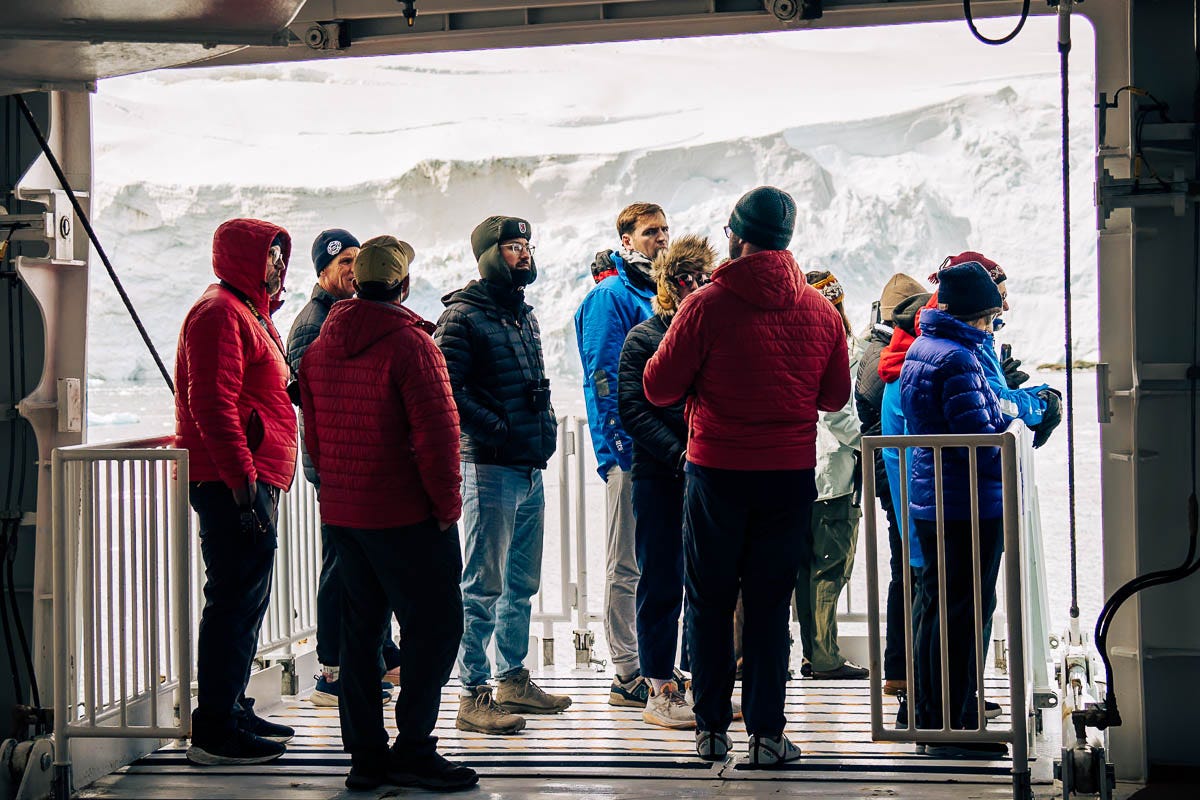
Aurora works best for a specific profile of guest, and the activity programme is the most effective filter.
Physically active travellers who want to do more in Antarctica and the Arctic than watch from the deck or walk a standard shore path: those who want to kayak, camp on the ice, climb a peak, or dive beneath the surface. Aurora’s optional activity programme is the most comprehensive available on any expedition ship.
Solo travellers for whom the no-single-supplement policy and dedicated solo cabin allocation remove the most common financial barrier to expedition travel. No other expedition line in this tier has made as explicit and as comprehensive a commitment to the solo traveller.
Australian and New Zealand clients who want to sail with the expedition line that shares their national identity, departs from Hobart and Dunedin as well as Ushuaia, and was founded by one of Australia’s most celebrated explorers.
Guests who want the X-Bow Drake Passage crossing advantage: the combination of a smoother passage, fewer sick days, and more functional time in the field is meaningful on a 10 to 14-night voyage where the crossing represents 20 to 30 percent of the total time at sea.
Travellers for whom the B Corporation certification and the company’s environmental decisions (including the salmon ban) represent genuine values they want to align their spending with.
Guests interested in East Antarctica and the Ross Sea, regions accessible via Douglas Mawson on itineraries that most competitors do not operate.
Aurora is less suited to guests who want a fully open bar throughout the day included in the base fare, those who want the most formally luxurious accommodation standard in the market, or those whose primary interest is the cultural humanities expert programme rather than physical adventure.
Frequently asked questions
Why is the guest cap set at 130 for polar voyages?
Since 2024, Aurora voluntarily caps all polar expedition voyages at 130 guests on all three ships, regardless of each ship’s physical maximum capacity. This allows IAATO-compliant simultaneous shore landing groups rather than sequential rotation, ensures an expedition team-to-guest ratio of approximately 1:8, and reflects Aurora’s founding philosophy that smaller groups in sensitive environments produce better outcomes for guests, wildlife, and the environment. It is a voluntary commitment that goes beyond regulatory requirements.
What is the X-Bow and why does Aurora use it on all three ships?
The Ulstein X-Bow is a patented hull design in which the bow profile projects forward and downward into the water rather than rising to a conventional point above the waterline. This allows the ship to slice through wave energy rather than overriding it, dramatically reducing the pitching, bow slamming, and seasickness that characterise Drake Passage crossings in rough conditions. Greg Mortimer was the first passenger ship ever built with this design, making Aurora the originator of its application in expedition cruising. Sylvia Earle and Douglas Mawson share the same X-Bow design.
Is Aurora Expeditions fully all-inclusive?
Not quite. All meals are included. House wines, beers, and soft drinks are included with dinner, and the Captain’s Welcome and Farewell receptions include house cocktails, wine, and beer. Alcoholic beverages and soft drinks outside dinner service are charged separately at the bar. Wi-Fi, the expedition jacket, Muck Boots, shore excursions, and Zodiac landings are included. Gratuities for crew are not included in standard cabin categories (they are included in suite benefits). Optional premium activities including kayaking, scuba diving, ice camping, and mountaineering carry additional fees.
What are the optional activities and how much do they cost?
Optional activities at additional cost include sea kayaking, overnight ice camping in Antarctica, scuba diving, mountaineering and climbing in Antarctica, snowshoeing, and stand-up paddleboarding. Costs vary by activity and voyage; kayaking typically adds several hundred dollars per person for the full programme, and ice camping adds a similar amount. These are booked and confirmed in advance of the voyage through Aurora Expeditions directly.
What is B Corporation certification and what does it mean for Aurora?
B Corporation certification is awarded by B Lab to companies that meet verified standards across social and environmental performance, transparency, and accountability. Aurora achieved certification in January 2024 and is one of the first expedition cruise operators to do so. Practical expressions of the certification include the fleet-wide ban on farmed salmon, the Citizen Science programme on every expedition, the AI-powered navigation system to optimise fuel efficiency, and the no-single-supplement policy.
What is happening with Greg Mortimer in 2027?
In December 2025, Lindblad Expeditions announced a three-year charter of Greg Mortimer for Alaska operations, running from 2027 through 2030. Aurora continues to operate Greg Mortimer through the full 2026 season. From 2027, Aurora’s fleet in its own programme consists of Sylvia Earle and Douglas Mawson, covering 25 voyages in the 2027 Arctic and Beyond season.
Plan your Aurora Expedition with ÆRIA Voyages
Every Aurora voyage is different depending on the ship, the destination, and which activity programme is selected. I help clients navigate those choices: from comparing the Antarctic Peninsula programme to the East Antarctica and Ross Sea voyage on Douglas Mawson, to advising on whether the optional kayaking or ice camping programme is right for a specific traveller’s fitness and experience level, to understanding how Aurora compares to Lindblad, Swan Hellenic, or Atlas for a first polar expedition.
If you are curious about pricing, current availability, or whether Aurora Expeditions is the right fit for your travel vision, I would be glad to talk it through.
Yvan Junior Blanchette
Travel & Cruise Specialist
ÆRIA Voyages📩 yvanblanchette@aeriavoyages.com
📞 1-888-460-3388
🌐 aeriavoyages.com