

FICAV, Travel Insurance, and Your Credit Card: Why You’re Probably Not as Protected as You Think
By Yvan Junior Blanchette | Travel and Cruise Specialist | ÆRIA Voyages
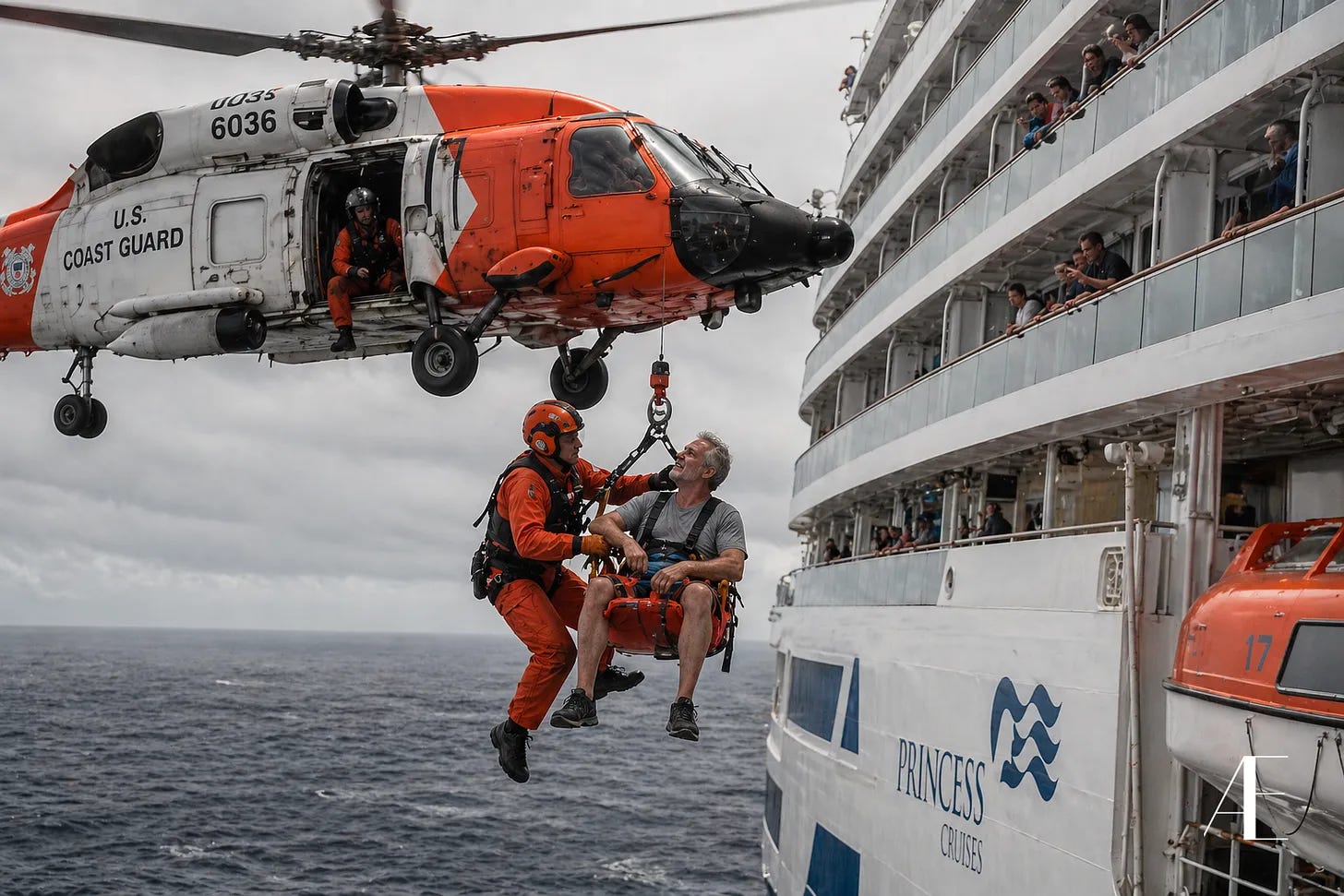
A cardiac arrest in the middle of the Pacific. A potential bill of $150,000 USD. And the difference between financial ruin and zero dollars out of pocket.
Here’s why choosing the right travel insurance is one of the most important decisions you’ll make when planning a trip.
Some conversations stay with you. A colleague of mine, a travel advisor, told me one a few months ago, and I’ve been repeating it ever since to every client who says, “Don’t worry, I’ve got my credit card.”
One of his clients (let’s call him Michael) had planned everything down to the last detail. A beautiful cruise from San Diego to Hawaii, weeks of anticipation, the trip of a lifetime. Somewhere in the Pacific, far from any shore, Michael goes into cardiac arrest.
The ship’s medical team stabilizes the situation. But time is critical. The decision is made: emergency medical evacuation by helicopter to a U.S. hospital.
That transport, a hoist rescue over open ocean, coordination with the U.S. Coast Guard, transfer to a specialized medical center, would have cost Michael more than $150,000 USD.
But Michael didn’t pay a single extra dollar.
Because my colleague had recommended the right insurance.
Table of Content
🎧 LISTEN TO THE BEYOND THE HORIZON PODCAST

FICAV: Your Financial Safety Net, But Not Your Medical Shield
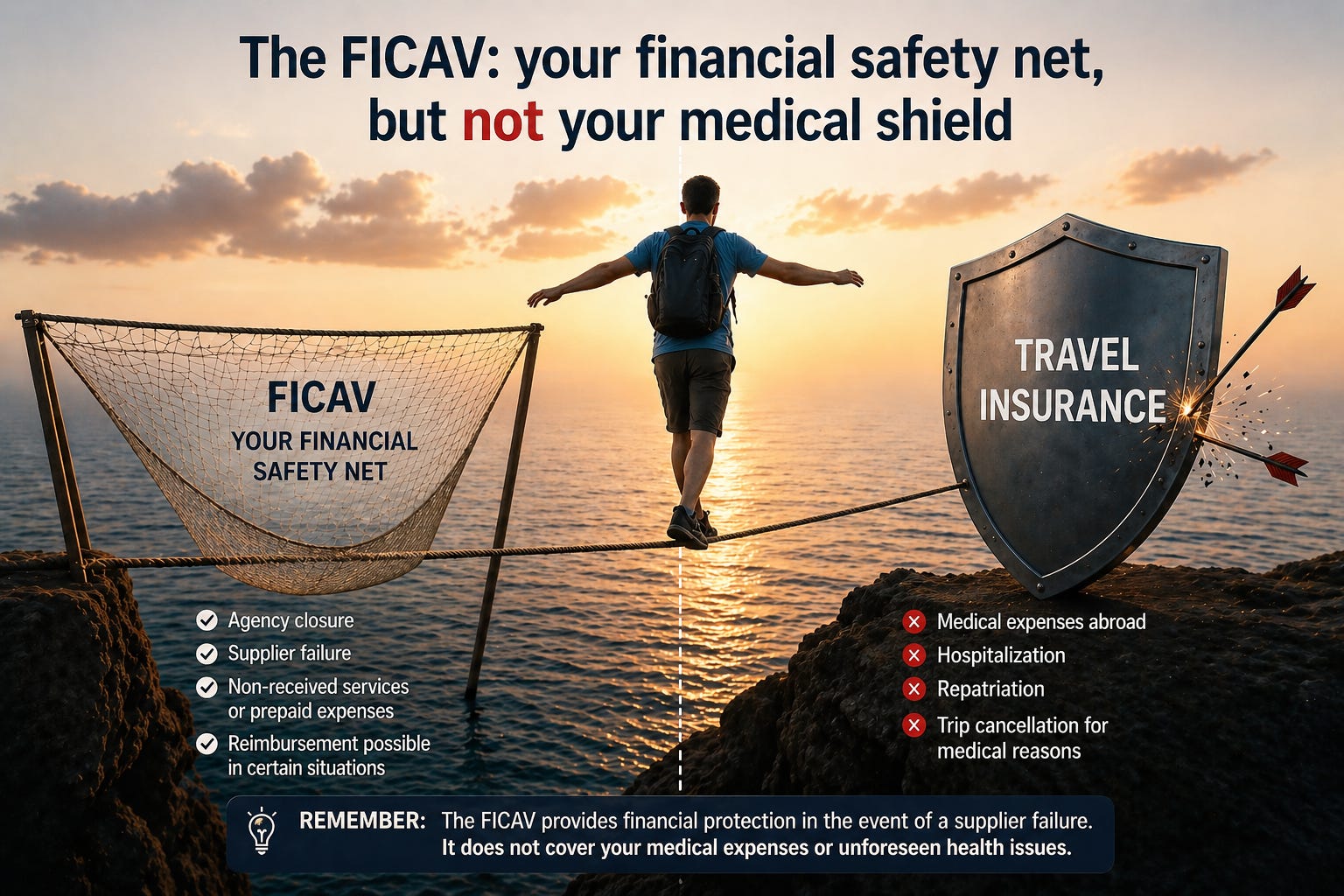
Let’s start by clearing up something that many Quebec travellers confuse: FICAV is not travel insurance in the traditional sense.
The Fonds d’indemnisation des clients des agents de voyages (Travel Agents’ Client Indemnity Fund) is administered by Quebec’s Office de la protection du consommateur. It’s a one-of-a-kind mechanism: automatic financial protection that you receive at no extra cost whenever you purchase travel services through a travel agency holding an OPC permit.
Its role is specific: to protect you if you don’t receive the services you paid for. Concretely, that means:
FICAV can step in if:
Your airline or cruise line goes bankrupt
Your hotel shuts down due to a strike, natural disaster, or political crisis
A cancelled or delayed flight causes you to miss prepaid nights or activities
Your travel agency ceases operations
Since its creation in 2004, the Fund has helped nearly 22,600 Quebec travellers and paid out more than $10.7 million in reimbursements. It’s real, solid protection that has proven its worth. The fund even reached its $125 million cap, which temporarily suspended contribution collection, a sign of responsible management.
But here’s what FICAV does not cover:
Its scope is strictly limited to amounts paid for travel services that were never delivered. It does not cover your life, your health, or your physical wellbeing. No medical evacuation, no emergency care abroad, no repatriation.
That’s precisely why FICAV and travel insurance are complementary, not interchangeable.
One more essential condition to keep in mind: FICAV protection only applies if you booked through a travel agency holding a Quebec OPC permit. If you book directly on an airline’s website, a hotel platform, or any foreign booking site, you are not covered. That’s one more good reason to work with your travel advisor.
Your Credit Card: Useful, But Dangerously Insufficient
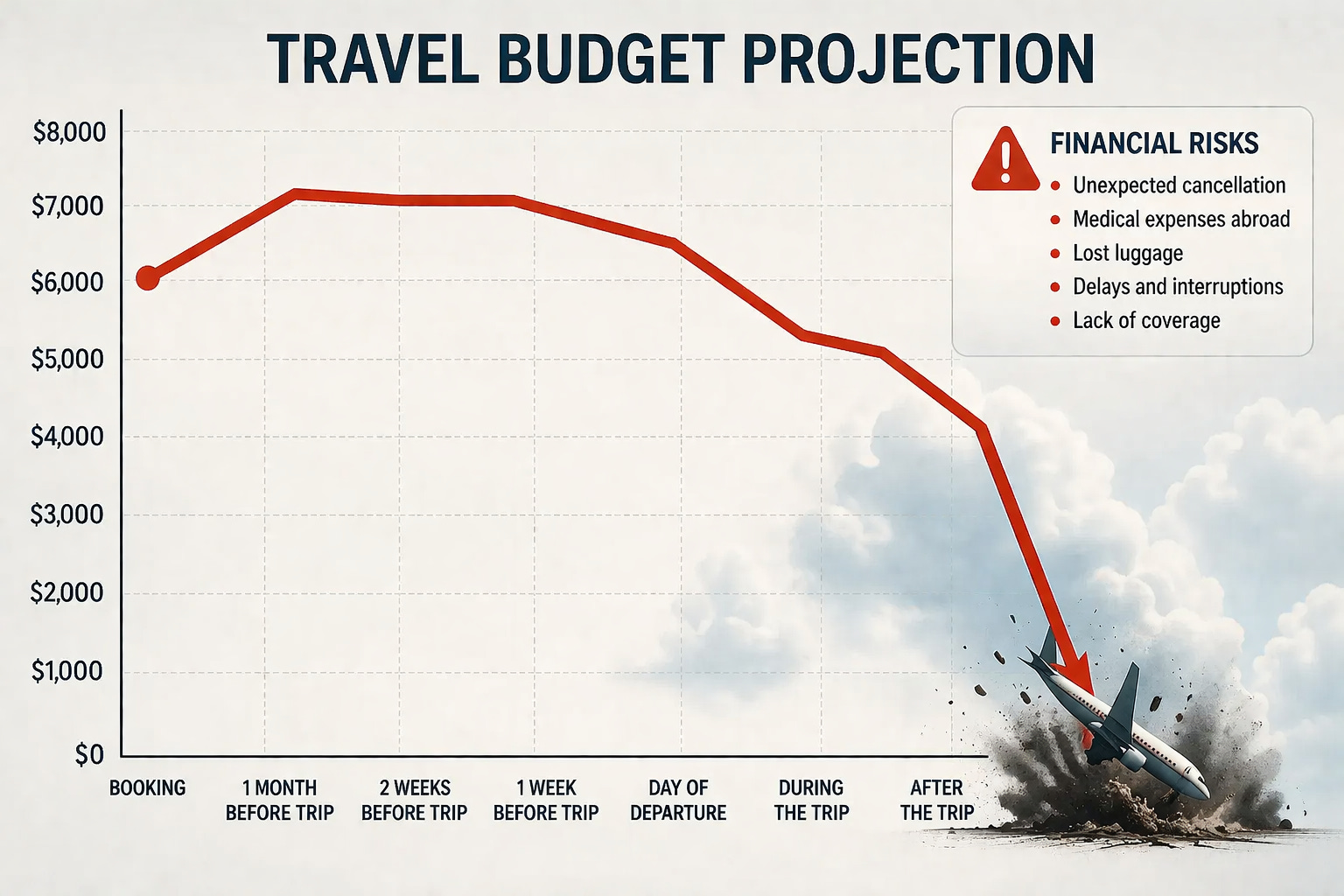
It’s a sentence I hear several times a week: “I’ve got my Visa Infinite, I’m covered.”
I understand the logic. Banks do a lot of marketing around the travel benefits of their premium cards. And it’s true that these cards offer some genuine protections, especially for the small, everyday inconveniences of travel.
But for a serious medical emergency abroad? Let me explain why that can go very wrong.
Medical Coverage Caps: A False Sense of Security
A single emergency room visit in the United States costs an average of $2,500 USD... before receiving any treatment. A 10-day hospitalization can easily reach $300,000 or more.
Standard credit cards typically cap their medical coverage between $15,000 and $20,000 CAD. Even premium cards, often capped at $150,000, can fall dramatically short for a serious situation in the United States, Japan, or even within Canada outside your home province, destinations where medical costs rank among the highest in the world.
For Michael and his helicopter over the Pacific, even a premium credit card would have left him personally on the hook for well over $150,000 USD.
Pre-existing Conditions: The Most Common Trap
The vast majority of credit card travel insurance policies exclude pre-existing medical conditions. If you’ve had heart problems, diabetes, or high blood pressure, and you experience a complication while travelling, you could find yourself with no coverage at all. A dedicated travel insurance policy can cover these conditions, usually with a prior declaration and a slightly adjusted premium.
The Trip Must Be Fully Paid With the Card
Many people don’t realize this: to activate certain credit card protections, you must have paid for the trip in full with that card. If you used Aeroplan points, a gift certificate, or any other form of payment for even part of the trip, some protections may not apply.
Trip Duration Limits
Credit cards typically limit their coverage to shorter trips, often 15 to 21 days, sometimes up to 60 or 90 days depending on the card. Snowbirds spending 4 to 6 months in Florida need to know without any ambiguity that they are not covered by their credit card beyond that limit.
Age Restrictions
This is a particularly sensitive point for experienced travellers: many credit card insurance policies significantly reduce, or eliminate entirely, their medical coverage once the cardholder reaches a certain age. Ironically, coverage tends to shrink exactly when health risks are at their highest.
Michael Didn’t Pay a Dollar. Here’s Why.

Let’s go back to our man in the Pacific.
The difference between a catastrophic bill and zero dollars came down to one thing: he had taken out a comprehensive travel insurance policy, recommended by an advisor who knows his craft.
That policy included emergency medical evacuation coverage with no restrictive cap, 24/7 assistance that coordinated the entire intervention, and no exclusions for cardiac emergencies with no prior declared history.
The moment his condition was reported, the insurance company took over completely: coordinating with the Coast Guard, arranging the helicopter, liaising with the receiving hospital, keeping his family back in Quebec informed. Michael only had one job: focus on getting better.
The transport alone would have been over $150,000 USD. The insurance cost a few hundred dollars.
It’s the simplest math there is when it comes to travel.
What You Should Do Before Your Next Trip

Here are the essential questions to ask, yourself, your bank, and your travel advisor.
1. What is the maximum medical coverage on your credit card? If that number is below $1 million CAD (the minimum recommended by CAA-Quebec), seriously consider supplemental coverage.
2. Do you have any pre-existing medical conditions? If so, verify explicitly whether they are covered. Never assume: read the exclusions.
3. What is the maximum trip duration covered by your card? If your trip exceeds that limit, you are not covered for the portion beyond it.
4. Did you pay for the entire trip with that card? If not, some protections may not activate.
5. Does your travel agency hold a valid OPC permit? That’s the condition for FICAV protection to apply. You can verify it on the OPC website.
The Advice I Give Every Client

Travelling is one of the most wonderful things a person can do. And travelling well means travelling with peace of mind.
FICAV protects your financial investment. Good travel insurance protects your life and your health. Your credit card can fill in the gaps for smaller inconveniences: delays, lost luggage, minor cancellations. But it should never be your only safety net when a serious medical emergency strikes.
Michael is probably out on the water somewhere right now, enjoying a well-earned vacation. He got a second chance, thanks in part to the doctors, and in part to a decision he made before he ever set foot on that ship.
That decision is one you can make today.
Plan your next vacation with ÆRIA Voyages
Questions about your travel insurance coverage? Reach out: it’s exactly the kind of conversation I’d rather have before it becomes urgent.
Yvan Junior Blanchette
Travel & Cruise Specialist
ÆRIA Voyages📩 yvanblanchette@aeriavoyages.com
📞 1-888-460-3388
🌐 aeriavoyages.com