

Canyon Spirit: What It Is, How It Works, and What to Expect
Guide · Updated 2026 · Luxury rail · American Southwest · Glass-dome coaches · All-inclusive onboard · Armstrong Collective
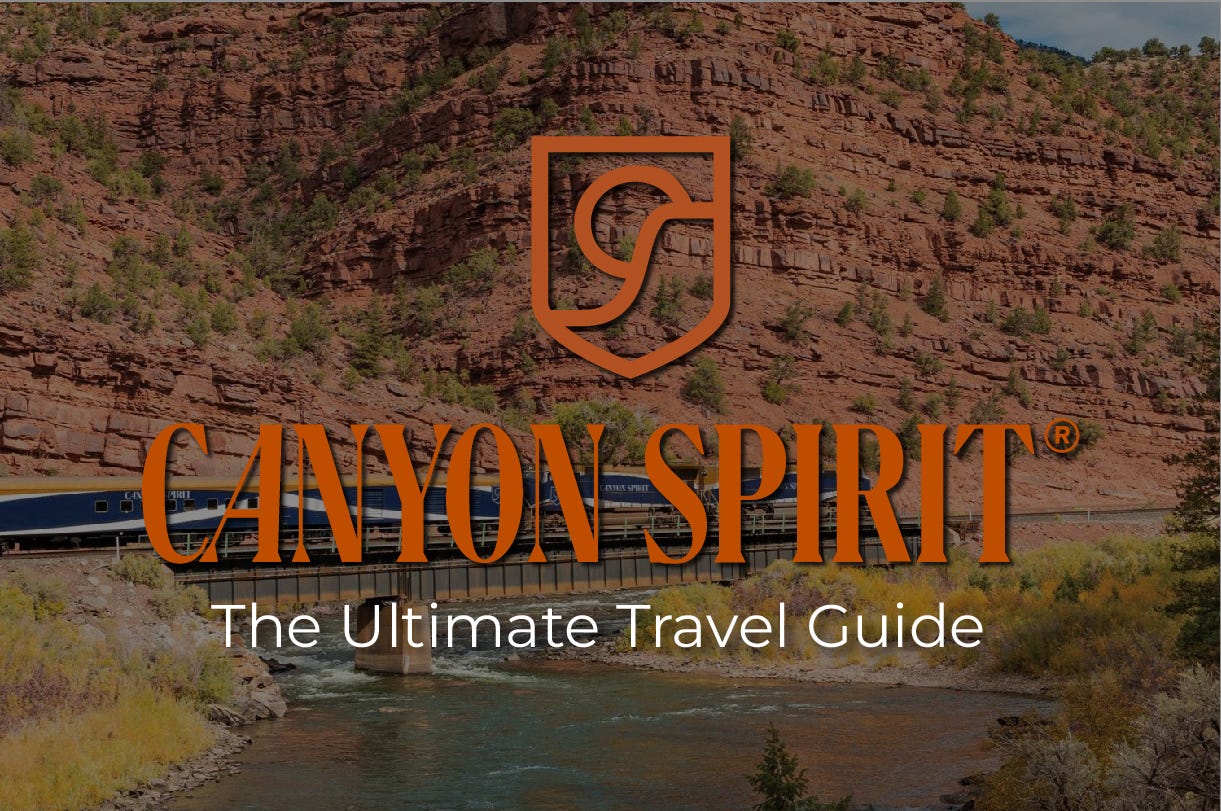
Canyon Spirit is America’s answer to the Rocky Mountaineer experience, and it comes from the same company. Armstrong Collective, the operators behind Rocky Mountaineer’s iconic Canadian routes, launched Canyon Spirit in 2026 as a rebrand and expansion of their American Southwest route, formerly called Rockies to the Red Rocks.
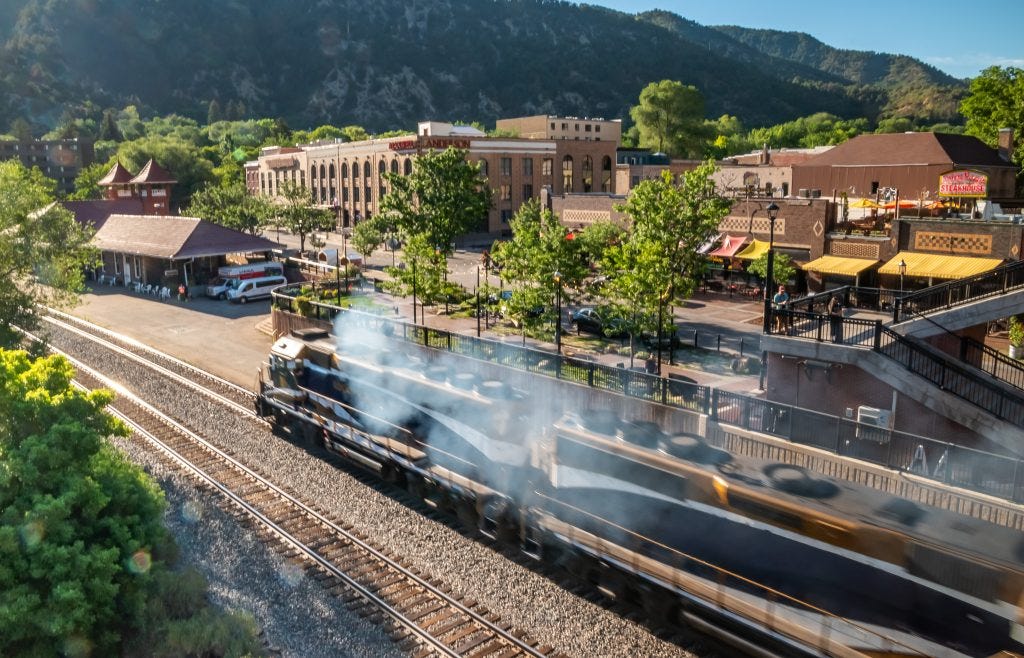
The train travels by daylight only, through landscapes that genuinely cannot be seen any other way: the deep canyon corridors of the Colorado River, the red sandstone formations of Utah’s canyon country, the mountain passes above Glenwood Springs, and the desert expanses between Moab and Salt Lake City. Every meal, every drink, and every story told by the onboard Hosts is part of the fare. No sleeping cars, no overnight rail, no darkness. Just glass-dome windows and the American Southwest rolling past, all day long.
This guide covers Canyon Spirit’s origins from Rocky Mountaineer, the Armstrong Collective, and the 2026 rebrand, the train’s design and what the glass-dome experience actually means, the routes and packages available, the two service levels (Signature and Premier), what is and is not included, the Reba McEntire partnership, how Canyon Spirit fits into a broader American Southwest itinerary, and how it compares to other luxury rail experiences.
Table of Content
🎧 LISTEN TO THE BEYOND THE HORIZON PODCAST

From Rocky Mountaineer to Canyon Spirit: the origin story
Rocky Mountaineer launched its first daylight-only rail journeys through the Canadian Rockies in 1990 and spent 35 years building a reputation as one of the most distinctive luxury rail experiences in North America. The formula was specific: travel only by daylight so guests never miss a view, feed them well in their seats, pair the food with storytelling about the landscape rolling past the windows, and build packages that include overnight hotel stays between train days so the absence of sleeping cars never becomes an inconvenience.
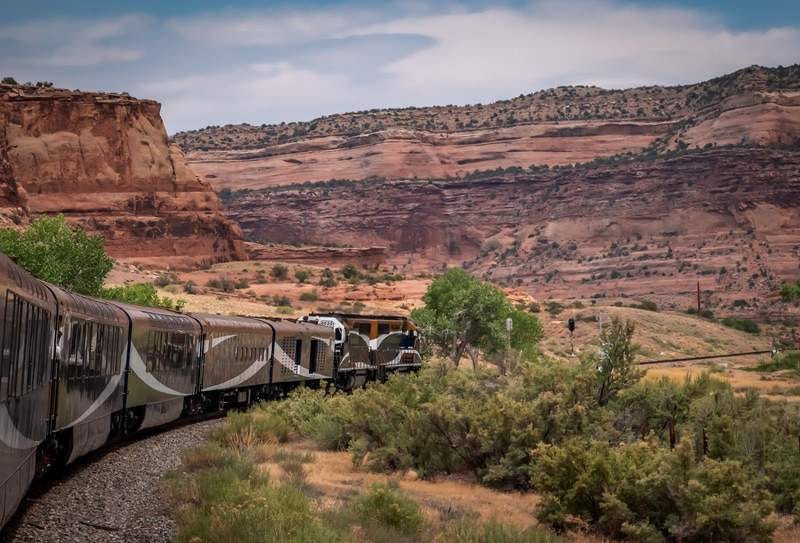
Armstrong Collective, the holding company behind Rocky Mountaineer, applied that formula to the American Southwest beginning with the route from Denver to Moab, Utah, launched as Rockies to the Red Rocks. The American Southwest route covers terrain that is, if anything, more visually dramatic than the Canadian Rockies: sandstone canyon walls that rise hundreds of metres from the canyon floor, the winding path of the Colorado River through geology that took 300 million years to form, desert plateaus and ghost towns and high mountain passes that shift from snow-capped peaks to red-rock desert within the same day of travel.
Starting with the 2026 season, Rockies to the Red Rocks became Canyon Spirit. The rebrand is not merely cosmetic. It reflects the expansion of the route from a single Denver-to-Moab option to a broader network connecting Denver, Glenwood Springs, Moab, and Salt Lake City, with multiple route and duration configurations. Canyon Spirit now operates under its own brand identity, with its own website, its own package structure, and its own celebrity ambassador in the form of Reba McEntire, whose involvement reflects the train’s positioning at the intersection of American storytelling, landscape, and the spirit of exploration.
The train operates from April through November with weekly departures in each direction. It does not operate in winter.
The train: what the glass-dome experience means in practice
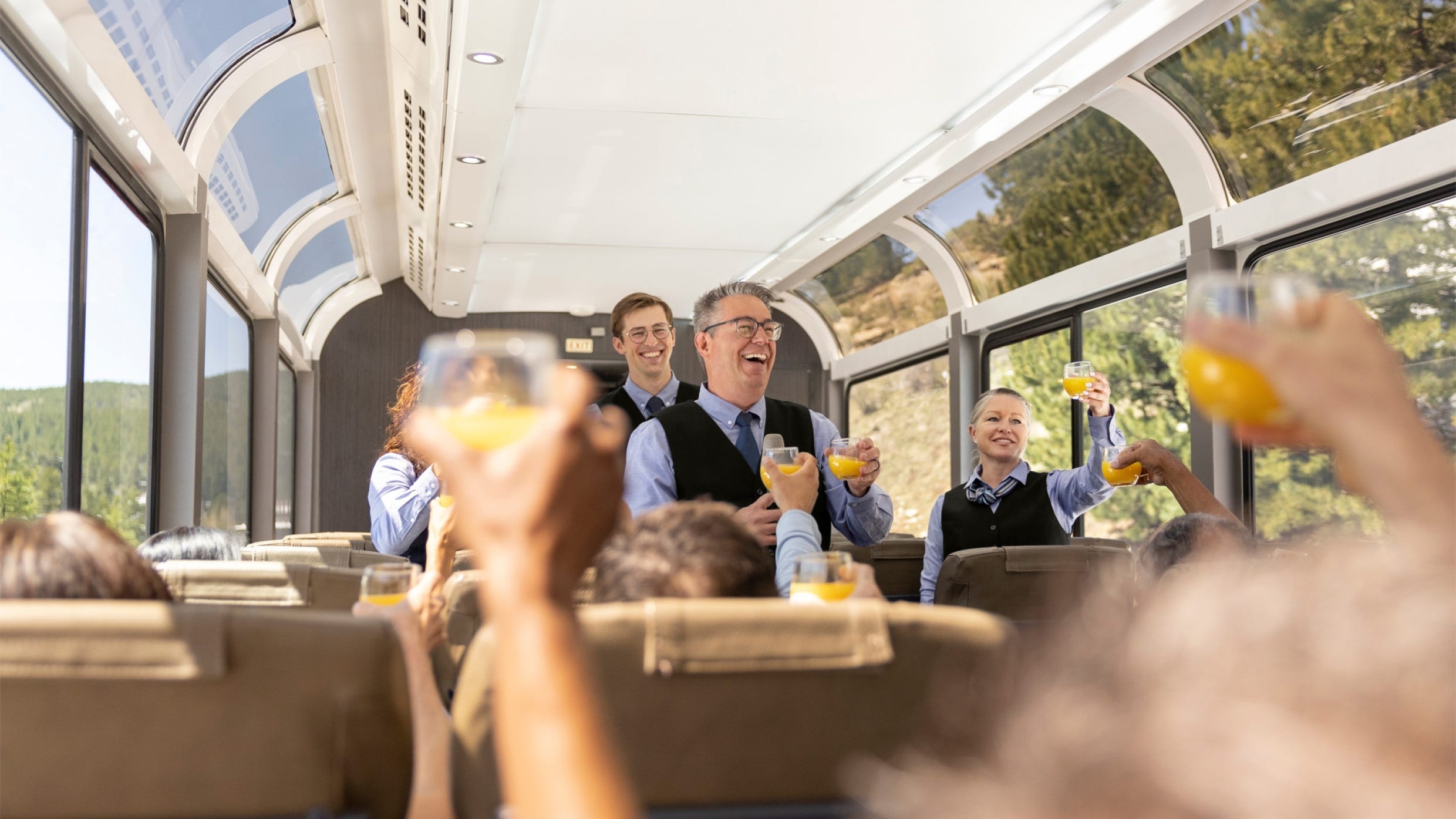
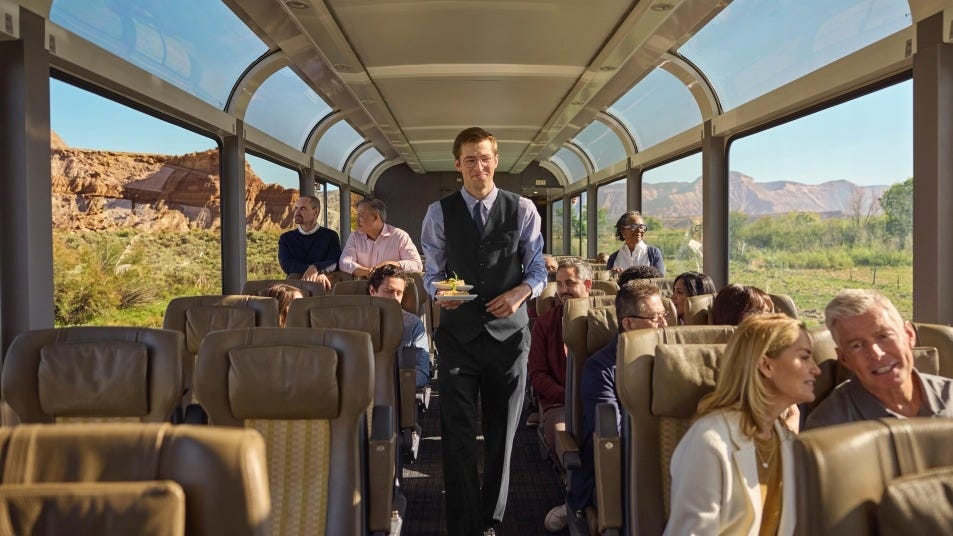
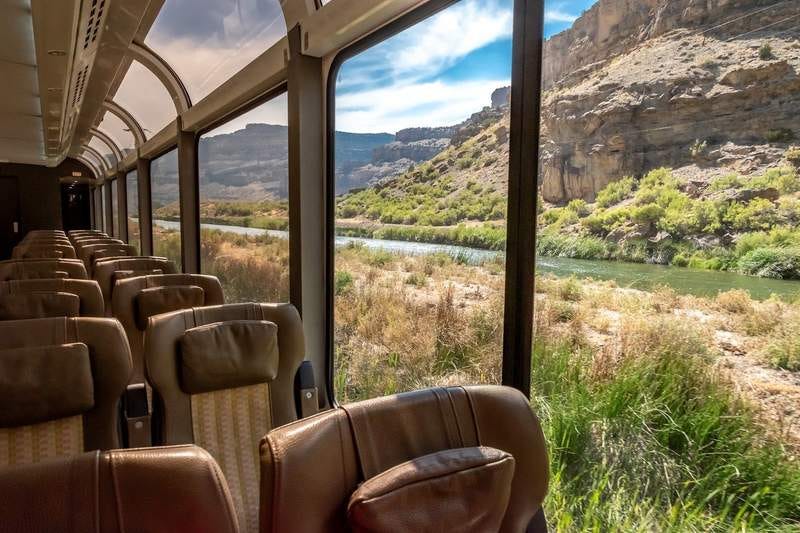
Canyon Spirit operates custom-designed single-level glass-dome coaches. The key words here are single-level and dome. Unlike the double-decker dome cars used on some North American rail routes, Canyon Spirit’s coaches are built as a single continuous level with the dome windows curving up and over from the side walls to the roof. The glass extends above the sightline of a seated passenger, meaning that cliffs rising above the train, canyon walls towering overhead, and mountain ridgelines above the track are all visible from your seat without standing, craning, or moving to a different part of the car.
The windows are oversized and the curvature of the glass at the top of the dome is what makes the difference between seeing the landscape and being surrounded by it. When the train runs along the Colorado River through Glenwood Canyon, which is among the most dramatic rail corridors in North America, the canyon walls are not something you look toward through a window at eye level. They are something that rises on both sides and arches overhead. That distinction matters.
All seating is pre-assigned and reclining. Seats are ergonomically designed and wide enough for genuine comfort over a full day of travel. There is no option to upgrade to a private compartment or sleeping accommodation because no such option exists. Canyon Spirit is a day train: you board in the morning, ride through the day, and step off in the late afternoon or early evening into a partner hotel. This is a fundamental design choice, not a limitation. The darkness of a sleeping car on this route would mean missing the entire reason to be on the train.
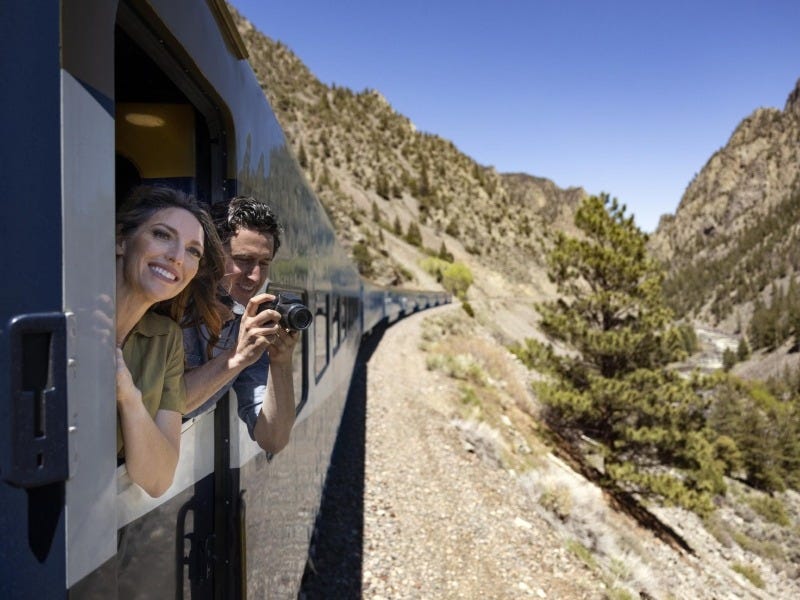
An outdoor viewing area on each car provides an unenclosed platform for photography, fresh air, and unmediated access to the landscape sounds and smells that glass filters out. The outdoor area is available at stops along the route and during designated viewing moments on moving segments.
The routes in 2026
Canyon Spirit operates between four points in 2026: Denver, Glenwood Springs, Moab, and Salt Lake City. The routes can be travelled in either direction and are combined into packages of varying length.
Denver to Moab (two days of rail travel)
The flagship two-day route departs Denver Union Station at 9am and arrives in Glenwood Springs between 5pm and 6pm on Day 1, with hotel accommodation in Glenwood Springs included. On Day 2, the train departs Glenwood Springs at 7am and continues to Moab. This is the most popular single itinerary and covers the most dramatic canyon corridor section of the route: the passage through Glenwood Canyon along the Colorado River, the high-altitude crossing above Glenwood Springs, and the descent into Utah’s canyon country toward Moab.
Moab is the gateway to Arches National Park and Canyonlands National Park, and most packages include time in Moab before or after the rail journey to explore both.
Denver to Salt Lake City (three days of rail travel)
The three-day option adds a full additional day of rail travel, with an overnight in Moab between the second and third days. The journey continues from Moab into Utah’s canyon system and arrives in Salt Lake City, set against the Wasatch Mountains. Salt Lake City is a major flight hub that adds airport convenience for guests who want to fly in or out rather than returning to Denver.
Reverse routes (Moab to Denver and Salt Lake City to Denver)
Both routes operate in reverse direction with the same included features and the same scenic content. The decision between eastbound and westbound travel is primarily one of preference in the sequence of landscapes rather than any material difference in the experience.
The package structures
Canyon Spirit organises its offerings into three package tiers, each building on the previous.
Signature Rail
The entry package includes the rail journey with all onboard Signature inclusions (see below), motorcoach transfers between the train and the overnight hotels, and the mid-journey hotel stays in Glenwood Springs and, on the three-day route, in Moab. It does not include hotel stays in Denver or Salt Lake City at the journey start and end, which the guest books independently.
Signature Rail is designed for travellers who want to build their own itinerary around the rail journey: guests who are already staying in Denver and want to add the train as a centrepiece, or those who have independent plans in Moab or Salt Lake City and want the train to connect them.
Signature Rail and Stay
Signature Rail and Stay adds hotel accommodation at the start and end points of the journey: typically Denver at the beginning and Moab or Salt Lake City at the end, or both, depending on the route. It provides a more complete package for guests who want everything arranged in advance without booking hotels separately.
Signature Rail and Beyond
The most comprehensive package tier, Signature Rail and Beyond includes the rail journey, all mid-journey and start/end hotel stays, and curated excursions from Canyon Spirit’s partner operators at destinations along the route. Examples include guided tours of Arches and Canyonlands National Parks from Moab, jeep tours into canyon country, and multi-day national park programmes in Utah’s Mighty 5. This tier is designed for guests who want a complete American Southwest experience rather than just a rail journey, with Canyon Spirit coordinating all components.
The two service levels: Signature and Premier
Every Canyon Spirit departure operates at the Signature service level as standard. The Premier upgrade, available for an additional per-person fee, unlocks exclusive access to a separate lounge car.
Signature experience (standard)
All onboard inclusions in the Signature experience:
Regionally inspired meals delivered to your seat throughout the day, prepared by the Canyon Spirit culinary team from ingredients sourced with reference to the landscape and culture of the Southwest
A wide selection of alcoholic and non-alcoholic beverages throughout the journey
Gourmet sweet and savoury snacks available throughout the day
Up to three dedicated Hosts per coach who manage service, share stories about the landscape and its history, and provide assistance throughout
Pre-assigned reclining seats in the glass-dome coach
Outdoor viewing area access
Luggage handling and delivery to the overnight hotel between train days
Motorcoach transfers between the train and hotels where applicable
Hotel accommodation for mid-journey overnight stays in Glenwood Springs and Moab
Premier upgrade
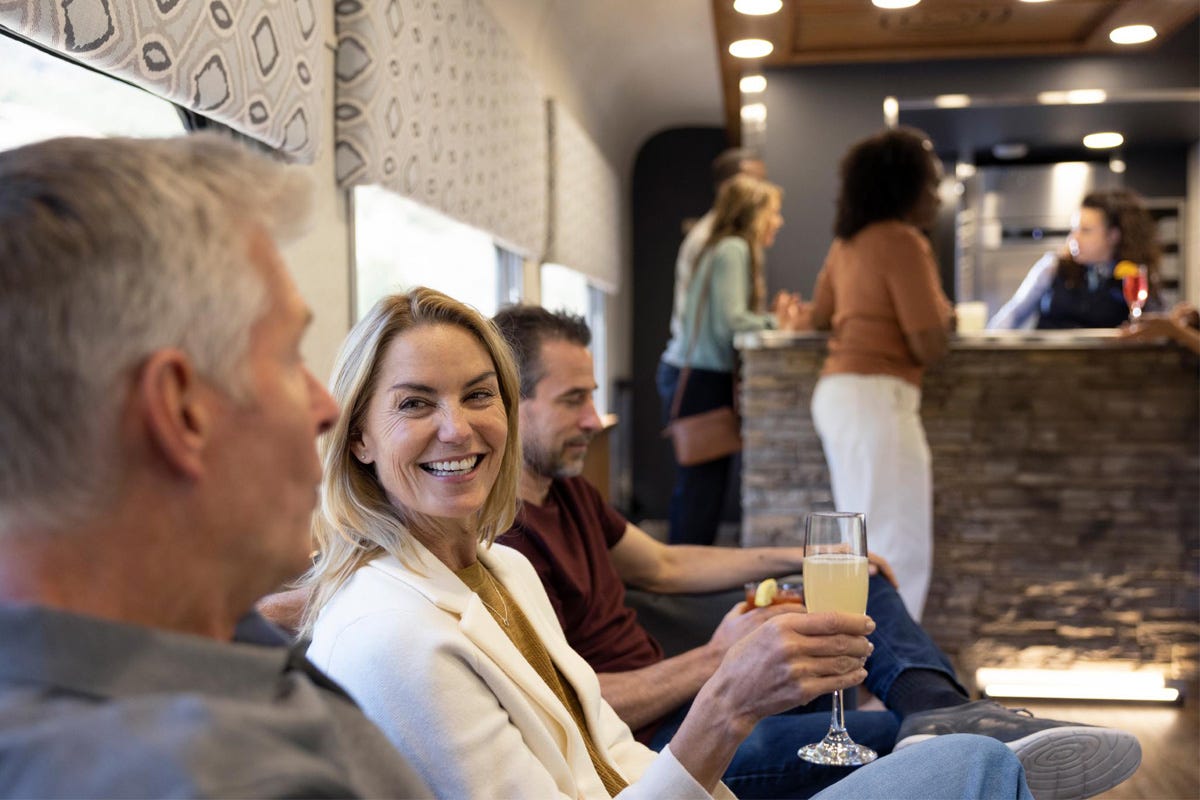
The Premier upgrade provides access to the exclusive lounge car, a separate enclosed space from the standard coaches with its own bar, additional seating configured for socialising and relaxation, and a dedicated Host. Additional benefits include:
Expertly paired wines with meals
Hand-crafted signature cocktails from the bar, including premium alcoholic beverages beyond the standard Signature selection
Gourmet snacks beyond the standard snack service
An exclusive outdoor viewing area attached to the lounge car
An additional restroom for added privacy and space
An expanded service team with an additional dedicated Host
The Premier upgrade is the closest Canyon Spirit comes to a private lounge experience. It is particularly well-suited to guests who want a more social onboard environment, those who want premium wine and cocktail service throughout the day, and those who find the standard coach configuration comfortable but want additional space and a different atmosphere.
What is and is not included
The Signature experience is all-inclusive for what happens on the train itself.
Included in every Canyon Spirit Signature fare:
All meals delivered to your seat throughout the travel day, regionally inspired and freshly prepared
All alcoholic and non-alcoholic beverages throughout the day
Gourmet snacks throughout the day
Onboard Host service
Luggage handling between the train and overnight hotels
Motorcoach transfers between the train stations and overnight hotels where applicable
Mid-journey hotel stays in Glenwood Springs and Moab as part of the rail journey
Outdoor viewing area access
Gratuities for onboard crew
Not included in Signature Rail packages:
Hotel accommodation in Denver and Salt Lake City at the journey start and end points (included in Rail and Stay and Rail and Beyond tiers)
Shore excursions and national park tours at destinations along the route (included in Rail and Beyond packages)
International and domestic flights
Travel insurance
The onboard all-inclusive model is the most important practical fact for guests comparing Canyon Spirit to Amtrak or other North American rail options. A traveller on Amtrak’s California Zephyr, which covers broadly similar geography between Denver and Salt Lake City, manages their own meals, snacks, and beverages at dining car prices or from their own supplies. A Canyon Spirit guest sits in a glass-dome coach and has food, wine, and storytelling delivered to their seat all day. These are not comparable products.
The Reba McEntire partnership
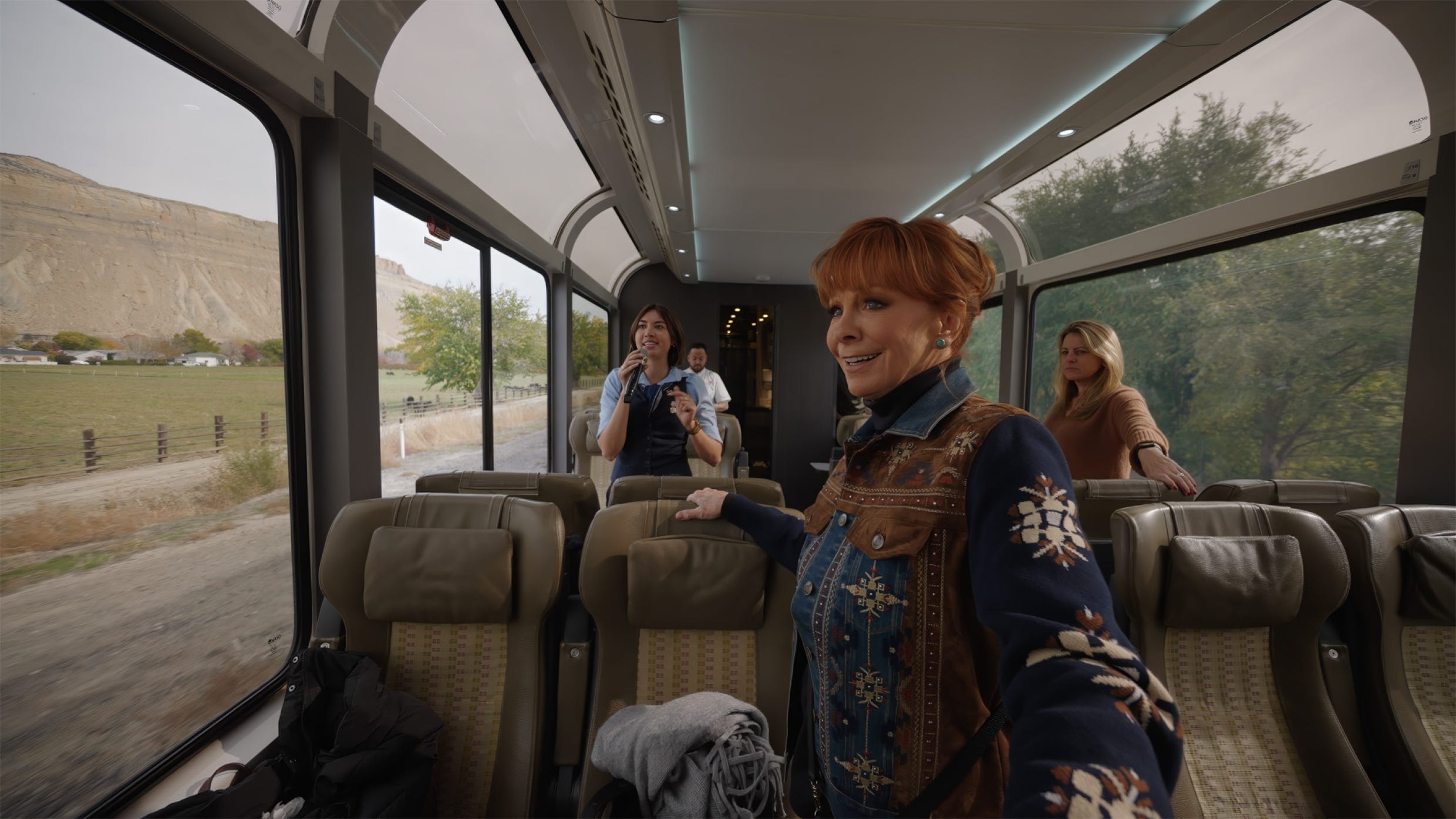
Canyon Spirit announced a partnership with Reba McEntire as its brand ambassador, framing the collaboration around shared values of storytelling, connection to the American landscape, and the spirit of exploration. McEntire’s association with the American West, her multi-decade career as a storyteller through music, and her cultural profile in the demographic most likely to seek a luxury train experience through the Southwest make her a genuinely appropriate match for the brand rather than a purely commercial arrangement.
The partnership manifests through marketing content and the framing of the journey as an invitation to pause and reconnect with the spirit of exploration, language drawn from McEntire’s own public statements about what the partnership means to her. It is a brand alignment rather than an onboard experience element: guests do not encounter Reba McEntire on the train.
How Canyon Spirit fits into a broader American Southwest itinerary
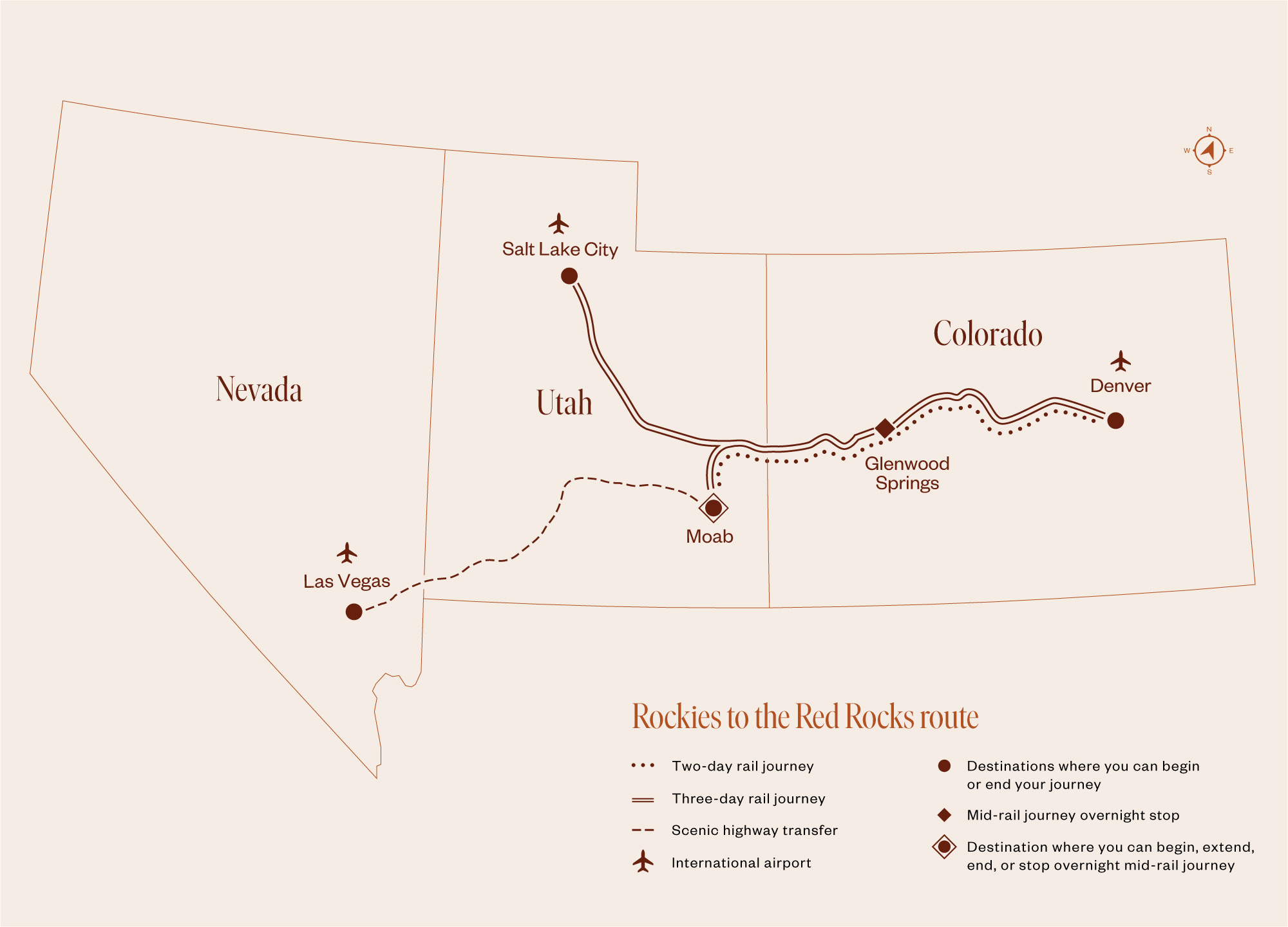
The train connects three of the most visited destination nodes in the American Southwest, and its value is greatest when understood as a scenic connector rather than a standalone experience.
Denver is the natural eastern anchor. It is a major airline hub with direct flights from most North American cities, including direct service from multiple Canadian airports. Three to four nights in Denver allows guests to explore the city, take day trips into Rocky Mountain National Park, and enjoy Colorado’s mountain culture before boarding the train.
Glenwood Springs is the midpoint overnight, a small Colorado resort town known for the world’s largest natural hot spring pool (Glenwood Hot Springs Lodge), the Glenwood Caverns Adventure Park, and access to the surrounding White River National Forest. It is not merely a logistical stop. A night there rewards guests who explore beyond the hotel.
Moab is the destination most guests cite as the highlight of the rail journey context: two world-class national parks within 45 minutes of town (Arches and Canyonlands), the Colorado River for rafting and kayaking, red rock hiking in every direction, mountain biking trails that attract riders from across North America, and a town whose scale and character feel proportionate to the landscape around it rather than overwhelmed by it.
Salt Lake City is the western terminus on the three-day route, a city set against the Wasatch Mountains with a distinct urban identity, proximity to Alta and Snowbird ski resorts in winter and extraordinary hiking in summer, and airport access that makes it a convenient end point for guests whose itinerary continues rather than returns.
The Signature Rail and Beyond packages specifically extend the Canyon Spirit journey into multi-day national park programmes in Utah: tours of all five of Utah’s Mighty 5 National Parks (Arches, Canyonlands, Capitol Reef, Bryce Canyon, and Zion), or programmes that extend into Wyoming and Montana’s geothermal landscapes. For a Canadian guest planning a dedicated American Southwest trip, combining Canyon Spirit with a guided national parks programme from Moab creates a 10 to 14-day itinerary with more visual and ecological variety than almost any land-based trip of comparable length anywhere else in North America.
How Canyon Spirit compares to other luxury rail experiences
Canyon Spirit
Best for: The most dramatic canyon and desert landscape in North America seen from glass-dome coaches at a fully all-inclusive onboard standard, built by the team that created Rocky Mountaineer’s Canadian formula and applied it to the American Southwest. Daylight-only travel that maximises viewing time. Available April through November. The only luxury rail experience operating in this specific geography.
Rocky Mountaineer (Canada)
Best for: The Canadian Rockies experience: Banff, Jasper, Whistler, and Vancouver connected by glass-dome daylight rail, with four route options and decades of established reputation. Broadly the same formula as Canyon Spirit but in a different geographic and cultural context. Operated by the same Armstrong Collective parent company.
Amtrak Sunset Limited and California Zephyr
Best for: Budget-accessible long-distance rail travel across the American Southwest and West with sleeper car options for overnight travel, connecting Los Angeles, Chicago, New Orleans, and intermediate cities. A completely different product from Canyon Spirit: functional point-to-point transportation rather than a curated luxury experience, with self-managed meals and less dramatic scenic routing on most segments.
VIA Rail Canada (The Canadian)
Best for: The classic Toronto to Vancouver transcontinental crossing, three to four nights, with sleeper accommodations and dining car service across the Canadian Shield, the prairies, and the Rockies. A different type of rail experience from Canyon Spirit: overnight transcontinental travel rather than daylight scenic viewing. Budget to premium accommodation options.
Belmond Royal Scotsman and European luxury trains
Best for: The European and Scottish luxury train experience with sleeping compartments, formal dining cars, and overnight journeys through the Scottish Highlands or European countryside. A higher price point than Canyon Spirit, typically a more formal atmosphere, and a different geographic and cultural context.
Maharajas’ Express (India)
Best for: The most palatial luxury train experience globally, with sleeping suites, butler service, and multi-day journeys across Rajasthan and other Indian regions. A completely different category from Canyon Spirit in both price and cultural context, and the product Uniworld pairs with their Ganges river cruise programme.
Who Canyon Spirit is best suited for
Canyon Spirit works best for a clearly defined profile of traveller, and the daylight-only format and the glass-dome design are the most effective filters.
Travellers who want to see the American Southwest at its most dramatic without a car, without the physical demands of multi-day hiking, and without the logistical complexity of managing national park transport and accommodation independently. The train solves all of these simultaneously.
Canadian travellers planning a dedicated American Southwest trip who want a centrepiece experience around which to build a 10 to 14-day itinerary. Denver is accessible from most Canadian airports, and the combination of Canyon Spirit with national parks touring from Moab is one of the most compelling land-based trip structures available in North America.
Rocky Mountaineer alumni who want the same formula applied to a different landscape. The same glass-dome coaches, the same Host-led storytelling model, the same seat-delivered cuisine and beverages, the same daylight-only philosophy: all recognisable to anyone who has done the Canadian Rockies route, applied to terrain that is equally spectacular in a completely different register.
Travellers for whom the journey itself is the point. Canyon Spirit is not efficient transport. It takes two to three days to cover ground that a direct flight covers in two hours. The guests it suits best are those who see that not as a trade-off but as the entire purpose.
Couples, small groups of friends, and multigenerational families for whom a shared, all-inclusive, scenery-focused experience provides the social infrastructure of a group trip without the structure of a guided tour.
Canyon Spirit is less suited to travellers who want to cover the American Southwest as efficiently as possible, those who want sleeping car accommodation for overnight rail travel, or those who want to combine rail travel with active adventure activities at a physical challenge level the train itself does not provide.
Frequently asked questions
What is the difference between Canyon Spirit and Rocky Mountaineer?
Canyon Spirit and Rocky Mountaineer are both operated by Armstrong Collective and share the same daylight-only, glass-dome, all-inclusive onboard formula. Rocky Mountaineer operates in the Canadian Rockies, connecting Vancouver, Banff, Jasper, and Whistler on four routes. Canyon Spirit operates in the American Southwest, connecting Denver, Glenwood Springs, Moab, and Salt Lake City. The rebrand from Rockies to the Red Rocks to Canyon Spirit in 2026 reflects the expansion of the American routes and the establishment of a distinct brand identity for the US operation.
Does Canyon Spirit have sleeping cars?
No. Canyon Spirit is a daylight-only train. Guests travel through the day, with the journey designed so that all the most dramatic scenery is passed in full daylight from the glass-dome coaches. Overnight stays are in partner hotels at intermediate stops (Glenwood Springs and Moab) and at journey endpoints. The absence of sleeping cars is a design choice, not a limitation.
What is included in the Signature experience?
The Signature experience, included in every Canyon Spirit fare, covers all meals delivered to the seat throughout the travel day, all alcoholic and non-alcoholic beverages, gourmet snacks, onboard Host service and storytelling, luggage handling and transfer to overnight hotels, motorcoach transfers between stations and hotels, mid-journey hotel stays, and gratuities for onboard crew. Hotel stays at the journey start and end points in Denver and Salt Lake City are not included in the Signature Rail package tier, though they are included in the Rail and Stay and Rail and Beyond packages.
What does the Premier upgrade add?
The Premier upgrade provides exclusive access to a lounge car separate from the standard glass-dome coaches. Additional inclusions are expertly paired wines, hand-crafted signature cocktails from the lounge bar, premium beverage access beyond the standard Signature selection, additional gourmet snacks, a dedicated lounge car Host, an exclusive outdoor viewing area, and an additional restroom. The Premier upgrade is pre-booked and available at an additional per-person charge.
When does Canyon Spirit operate?
Canyon Spirit operates from April through November with weekly departures in each direction. It does not operate in winter months. The 2026 season runs with once-weekly departures on each route, and availability is limited accordingly. Popular departures, particularly in May, June, September, and October, book well in advance.
How does Canyon Spirit fit into a broader American Southwest itinerary?
Most guests combine Canyon Spirit with time in Denver before the train, time in Moab after for national park exploration, and optionally a programme extending into Utah’s Mighty 5 or continuing to Salt Lake City. The Rail and Beyond packages coordinate all of these components as a single booking. For guests building their own itinerary around the rail journey, I recommend at minimum three to four nights in Denver including a day trip to Rocky Mountain National Park, two or three nights in Moab with guided tours of Arches and Canyonlands, and the two-day Denver to Moab route as the centrepiece.
Plan your Canyon Spirit Trip with ÆRIA Voyages
Canyon Spirit is one of the most specific and genuinely irreplaceable travel experiences available in North America, and it suits a specific type of traveller better than almost anything else I can recommend for the American Southwest. I help clients build complete itineraries around it: from selecting the right package tier and route direction, to coordinating pre and post-rail national parks programming, to advising on the Premier upgrade for guests who want the lounge car experience.
If you are curious about pricing, availability, or how Canyon Spirit fits into a broader American Southwest itinerary, I would be glad to talk it through.
Yvan Junior Blanchette
Travel & Cruise Specialist
ÆRIA Voyages📩 yvanblanchette@aeriavoyages.com
📞 1-888-460-3388
🌐 aeriavoyages.com