

The Ultimate Prague Travel Guide: What to know, where to go, and how to make the most of your visit
Updated 2026 | Czech Republic | First-time visitors | In-depth travel | ÆRIA Voyages
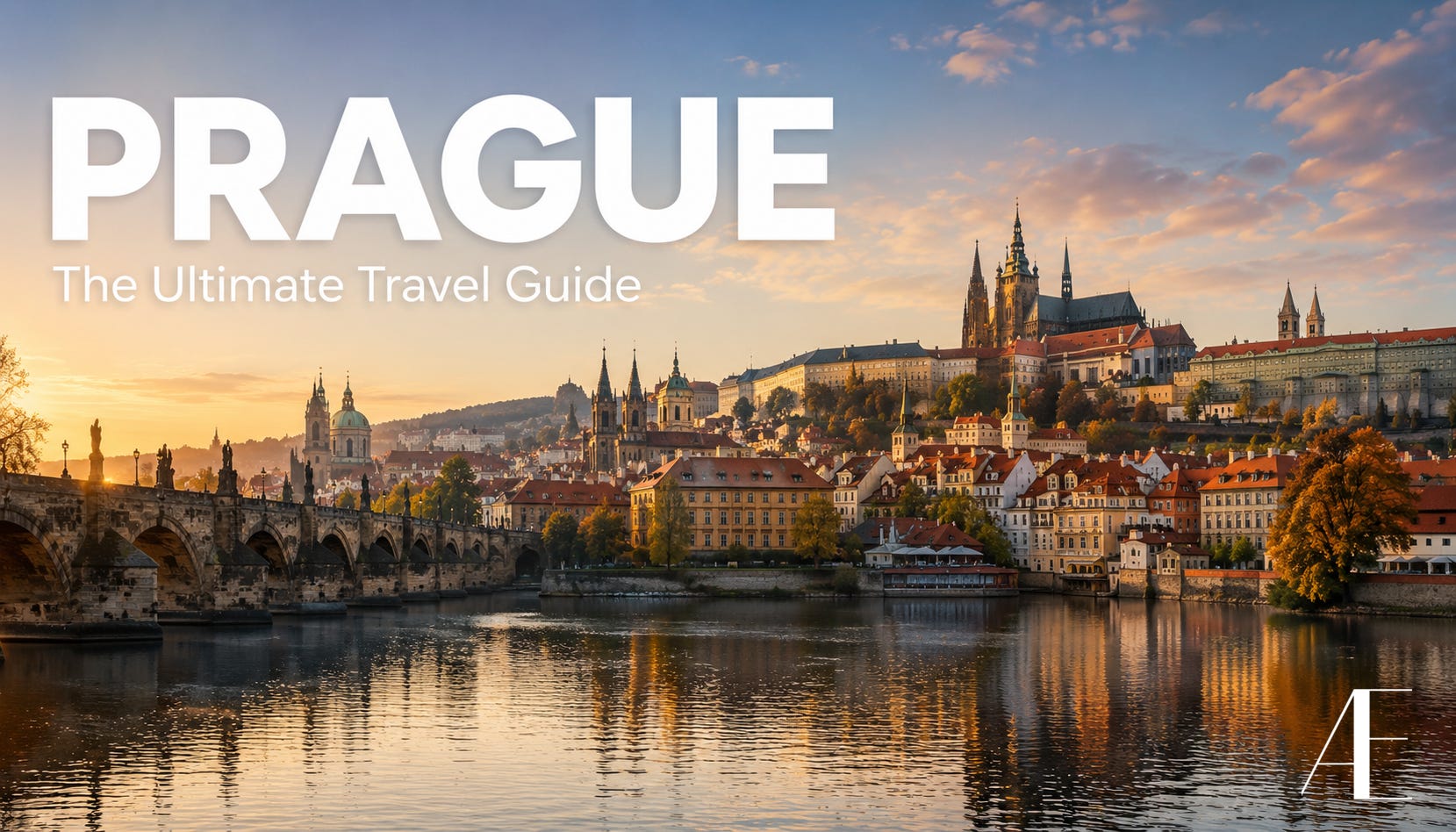
Prague is the city that other European cities are compared to when someone wants to invoke beauty without effort. Its medieval core survived the 20th century almost completely intact: no wartime bombing, no postwar clearance, no highway carved through the old town. What was built here across seven centuries of Bohemian ambition, Habsburg rule, and Central European culture simply remained, and what remained is one of the most concentrated accumulations of remarkable architecture in the world.
But the city underneath the spires is equally worth knowing. The Czech capital that emerged from communism in 1989 has spent the intervening decades rebuilding its restaurant culture, its creative neighbourhoods, and its sense of itself. Today’s Prague is two cities in one: the fairytale capital that photographers come to shoot at dawn, and a genuinely alive European city with its own cuisine, its own beer culture, and its own arguments about what it should become.
Both are worth your time.
This guide covers the neighbourhoods worth knowing, the experiences that define the city, the practical details to have before you leave, and how to plan the right number of days for the kind of trip you want to take.
Table of Contents
🎧 LISTEN TO THE BEYOND THE HORIZON PODCAST
AVAILABLE SOON…
Why Prague is worth it
The argument for Prague begins with the obvious and does not need to be apologetic about it. Stare Mesto, the Old Town, is the finest preserved medieval urban centre in Central Europe, possibly in all of Europe. The Gothic, Baroque, Renaissance, and Art Nouveau architecture did not arrive and get demolished in sequence, as it did in most comparable cities. It accumulated, and it stayed, and the result is a skyline that earns its nickname: the City of a Hundred Spires. The most famous photographs of Prague at dawn, with the fog lifting off the Vltava and the castle emerging on the hill above Mala Strana, are accurate. The city genuinely looks like that.
That much, however, is well known. What is less discussed is how deep the city goes once you step away from the tourist circuit. Prague’s residential neighbourhoods, Vinohrady, Zizkov, Karlin, Holesovice, are among the most interesting urban environments in Central Europe, with a restaurant and cafe culture that serves local residents at prices that still register as genuinely affordable by Western European standards. The city’s Michelin-starred dining scene, which received its first full national guide in 2025, is producing food of genuine international standard. The concert halls and opera houses, the Rudolfinum, the State Opera, the National Theatre, offer programming that would be exceptional anywhere on the continent.
There is also the price point, which matters. Prague is meaningfully less expensive than Paris, Amsterdam, or London for accommodation, food, and experiences of comparable quality. A serious dinner at a one-Michelin-star restaurant in Prague costs roughly what a good bistro meal costs in Paris. Czech beer, which is among the finest in the world and has been brewed in the city for centuries, costs less than sparkling water in most of the restaurants that serve it.
For Canadian travellers in particular, Prague offers the experience of a great European capital at a fraction of the cost of the Western European circuit, with the added dimension of a history that is less familiar and therefore more revealing. The story of Bohemia, the Habsburg Empire, the Jewish community of Josefov, the Nazi occupation, the communist decades, and the Velvet Revolution of 1989 is one of the most complex and compelling in modern European history, and it is all legible in the city’s streets, buildings, and museums if you know where to look.
The neighbourhoods to know
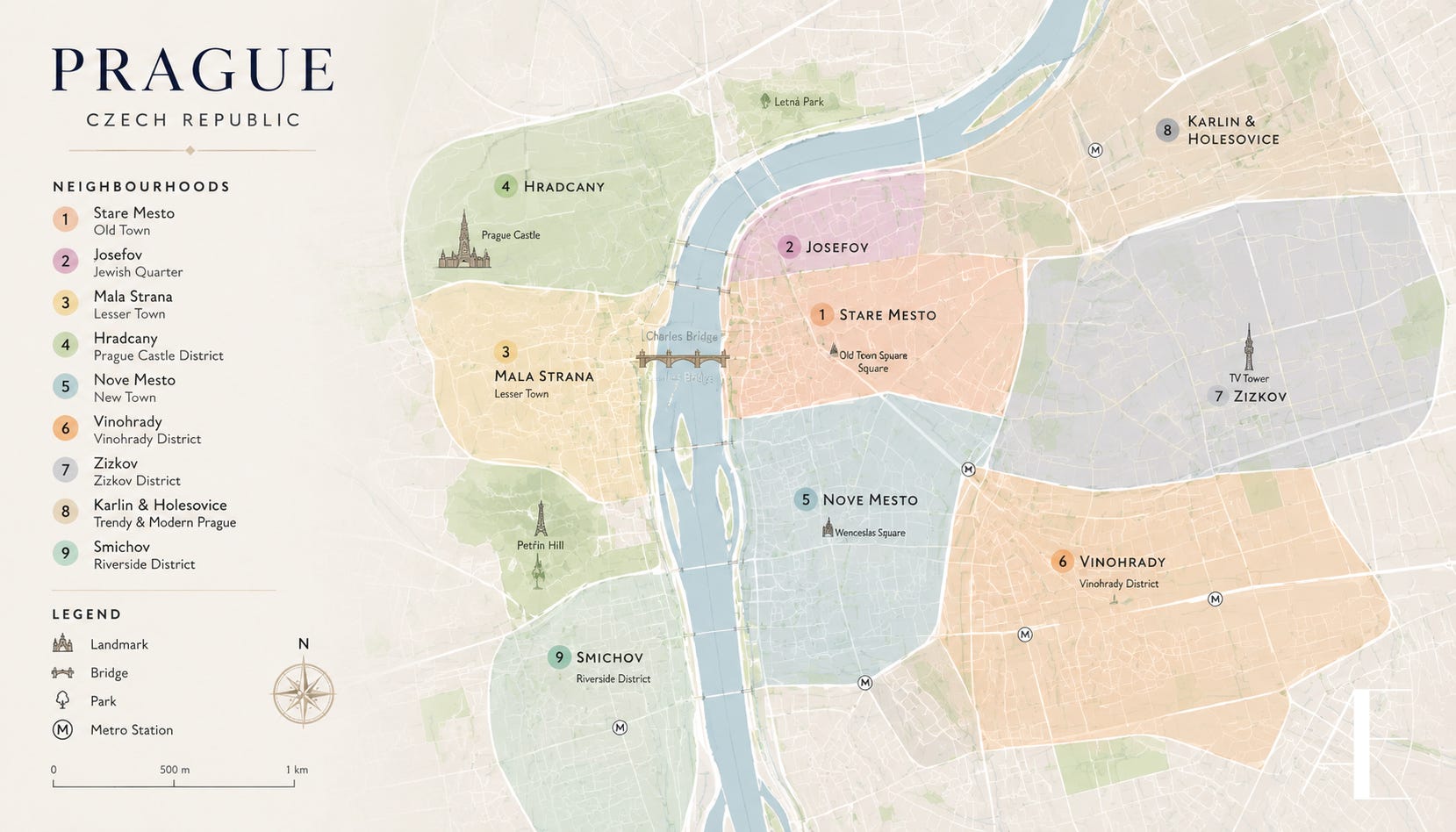
Prague organises itself across two banks of the Vltava and a series of distinct historic quarters, each with its own character and its own logic for the visitor.
Stare Mesto (Old Town)
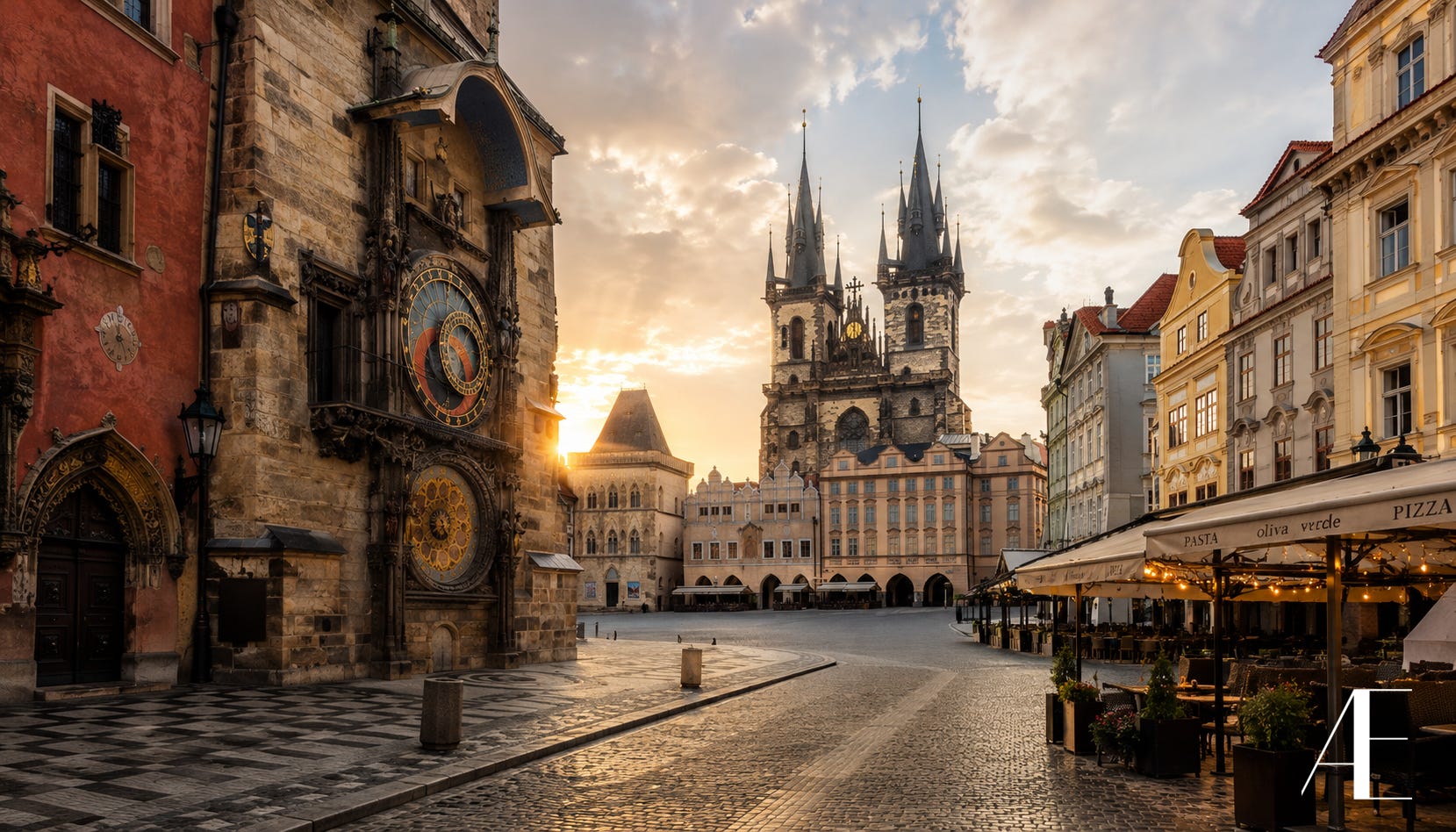
The historic heart of Prague, built on the right bank of the Vltava and centred on Old Town Square, Staromestske namesti. Stare Mesto is where the Astronomical Clock, the Tyn Church, the Klementinum library complex, and the entrance to Josefov all sit, within a dense and walkable medieval street plan whose alleys and courtyards still follow their original medieval logic. The Old Town is obligatory, and it is extraordinary. It is also, particularly in the summer months from late morning through early evening, extremely crowded. The right strategy is to be here early and late: the city before nine in the morning and after seven in the evening belongs to an entirely different register. For a first visit, consider spending the first evening in Stare Mesto specifically, when the day visitors have retreated and the amber lighting on the stone facades is at its most atmospheric.
Josefov (Jewish Quarter)
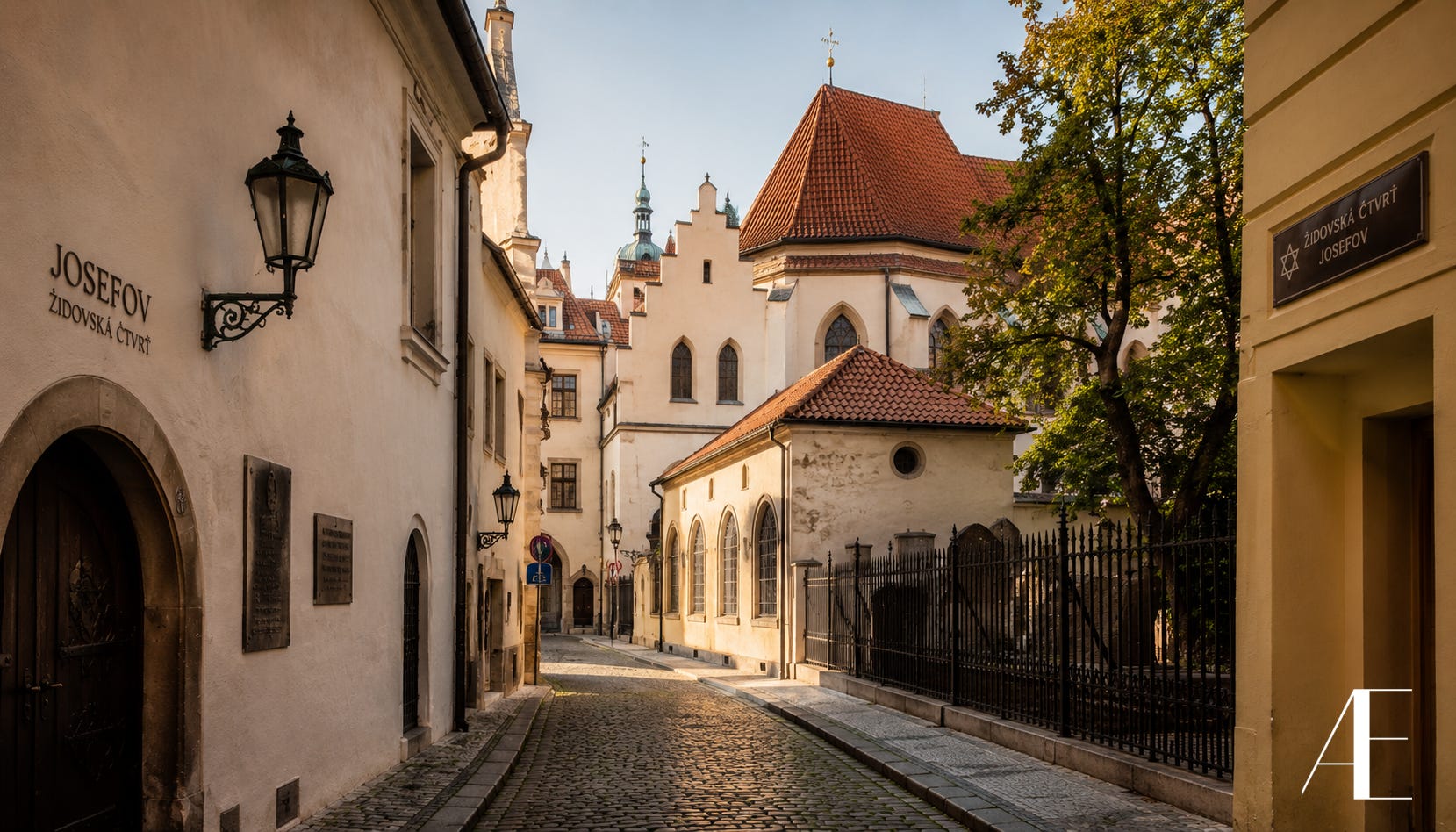
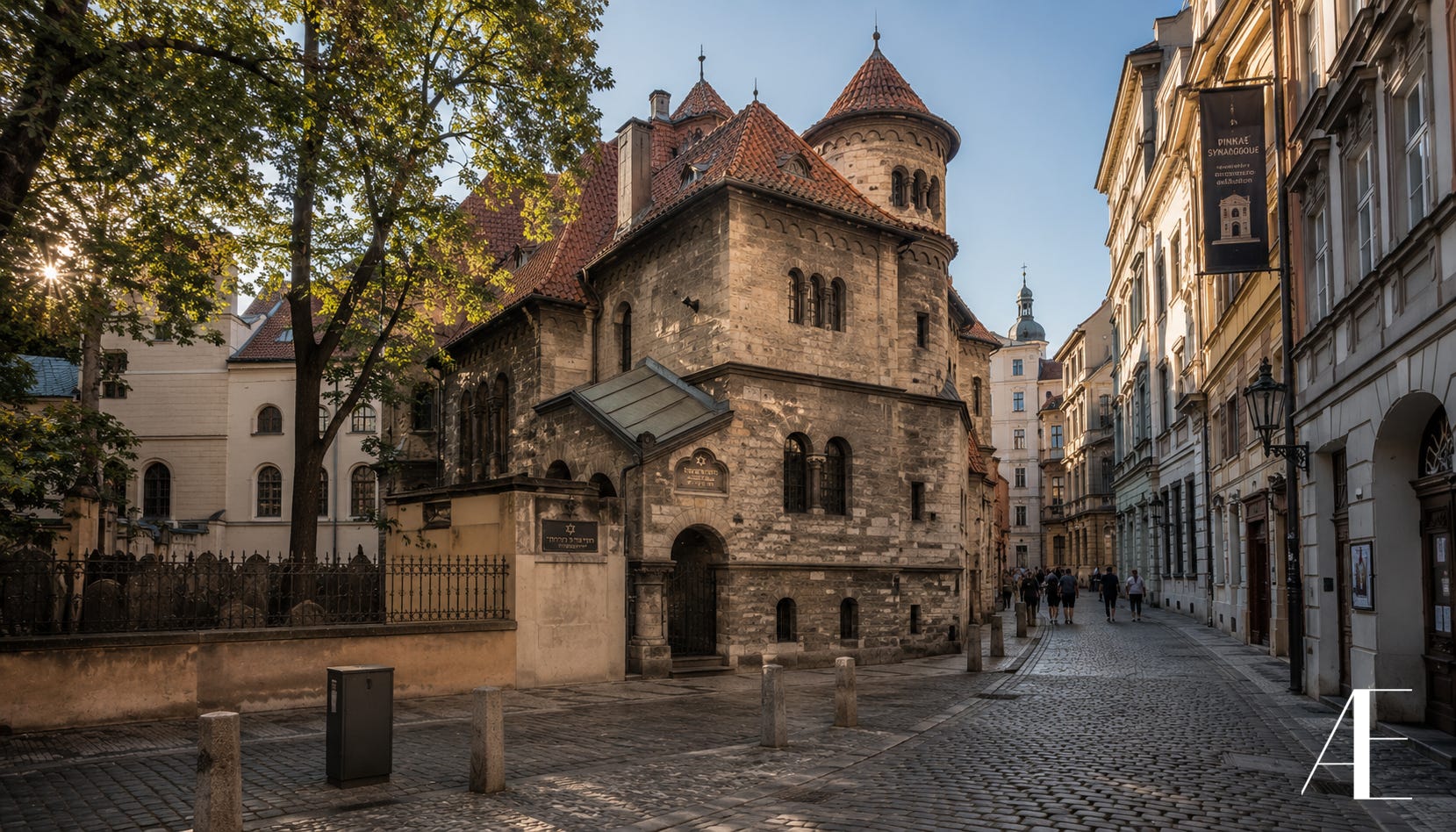
A small district within the Old Town, Josefov is the former Jewish ghetto of Prague and one of the most historically significant Jewish sites in Europe. Six synagogues, the Old Jewish Cemetery, and the Jewish Museum together constitute the finest collection of Jewish heritage on the continent. Most of the original ghetto was demolished at the end of the 19th century in a controversial urban renewal project, which paradoxically preserved the most important buildings by concentrating attention on them. The Old Jewish Cemetery, where twelve layers of burials are stacked atop one another due to the restrictions on Jewish burial within the city walls, is one of the most moving historical sites in Central Europe. Book tickets to the Jewish Museum complex in advance.
Mala Strana (Lesser Town)
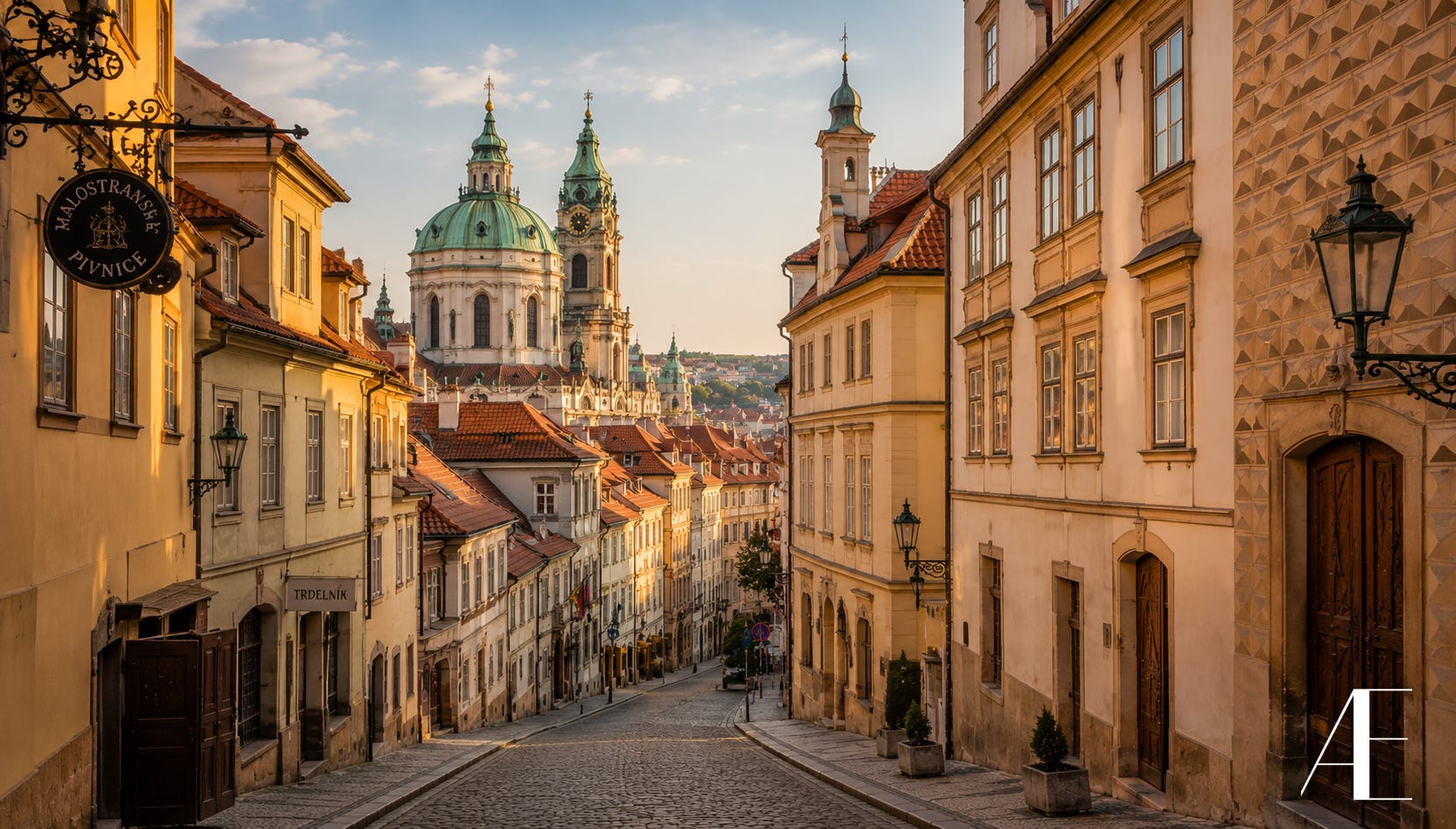
The Baroque quarter on the left bank of the Vltava, between Charles Bridge and Prague Castle. Mala Strana is the most romantic neighbourhood in the city: a landscape of palaces, embassy gardens, Baroque church domes, and steep lanes climbing toward the castle walls. The Church of St. Nicholas, with its enormous green dome dominating the central square, is one of the finest Baroque interiors in Central Europe. The neighbourhood’s walled gardens, the Vrtba Garden, the Wallenstein Garden, Vojanovy sady, are among Prague’s most beautiful and least crowded spaces, the kind of discovery that a first-time visitor will remember. Nerudova Street, the steep lane climbing from Mala Strana Square to the castle, is lined with Baroque house signs that predate street numbering. Mala Strana is best experienced on foot, slowly, with no particular destination.
Hradcany (Castle District)
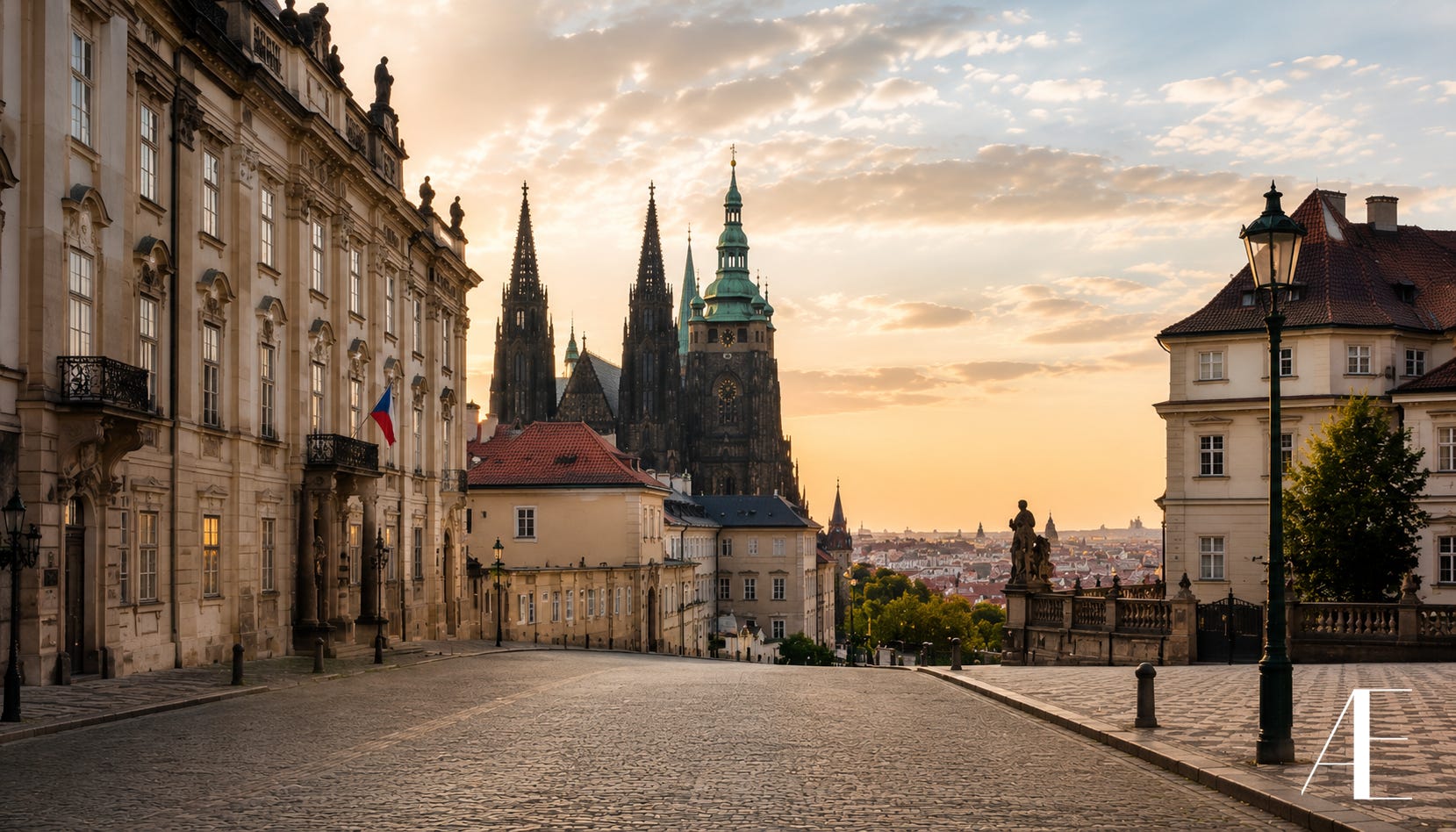
The district surrounding Prague Castle on the left-bank hill. Beyond the castle complex itself, Hradcany includes Strahov Monastery with its extraordinary Baroque library halls, the Loreta pilgrimage church with its famous bell carillon, and the street called Novy Svet, a short lane of small coloured houses from the 17th century that most visitors pass within two hundred metres of and never find. Hradcany is the part of Prague that repays walking without purpose most generously.
Nove Mesto (New Town)
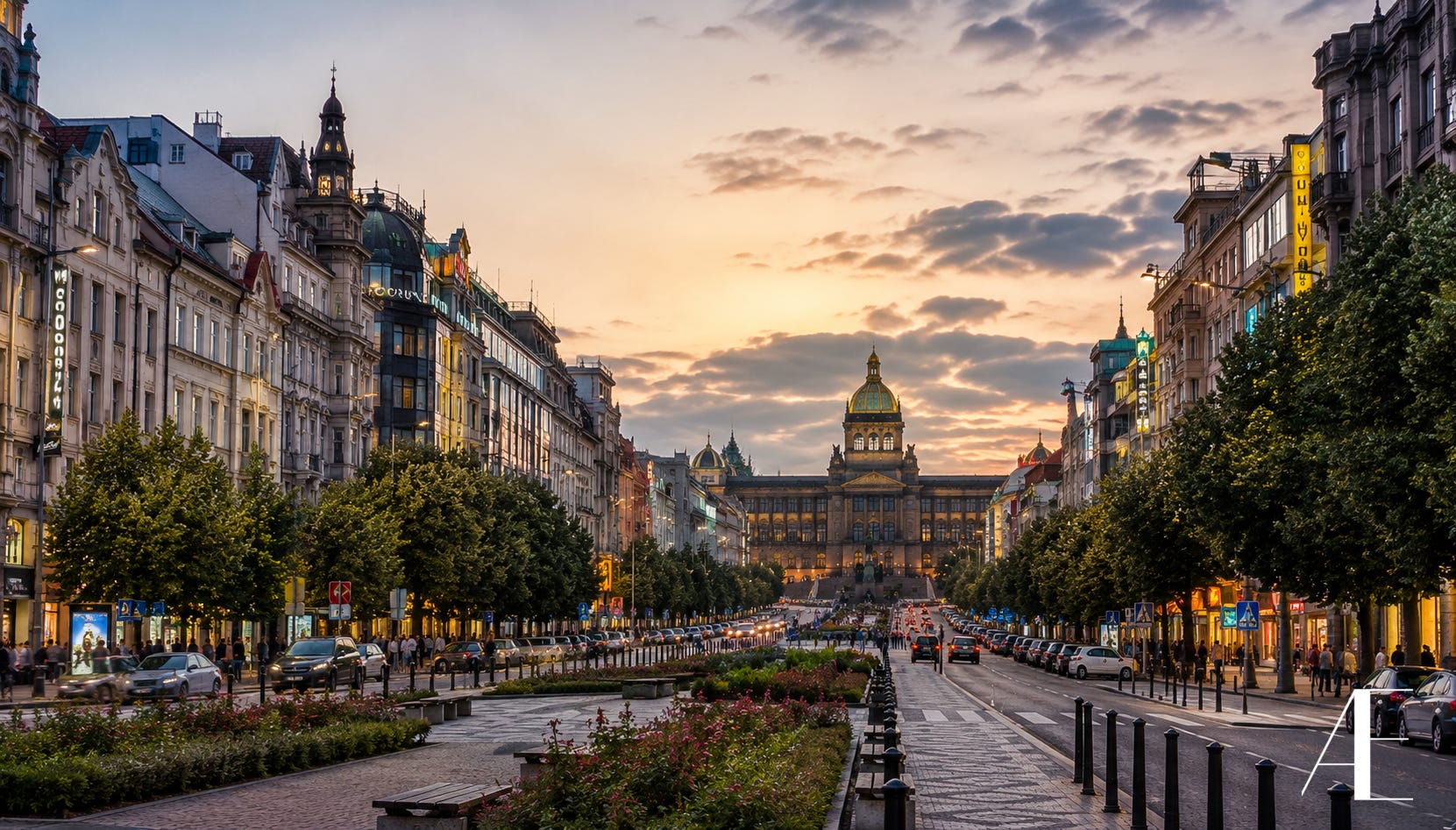
Founded by Charles IV in 1348 and therefore “new” only by Prague’s standards, Nove Mesto stretches south from Stare Mesto and contains Wenceslas Square, the broad boulevard that has been the stage for the defining moments of modern Czech history, including the declaration of Czechoslovak independence in 1918 and the Velvet Revolution demonstrations of November 1989. The Dancing House, Frank Gehry and Vlado Milunic’s 1996 deconstructivist building on the Vltava embankment, is here, as is the Municipal House, Prague’s finest Art Nouveau building and the home of the Smetana Concert Hall. Nove Mesto is functional rather than beautiful, but it contains enough significant landmarks to anchor a day.
Vinohrady
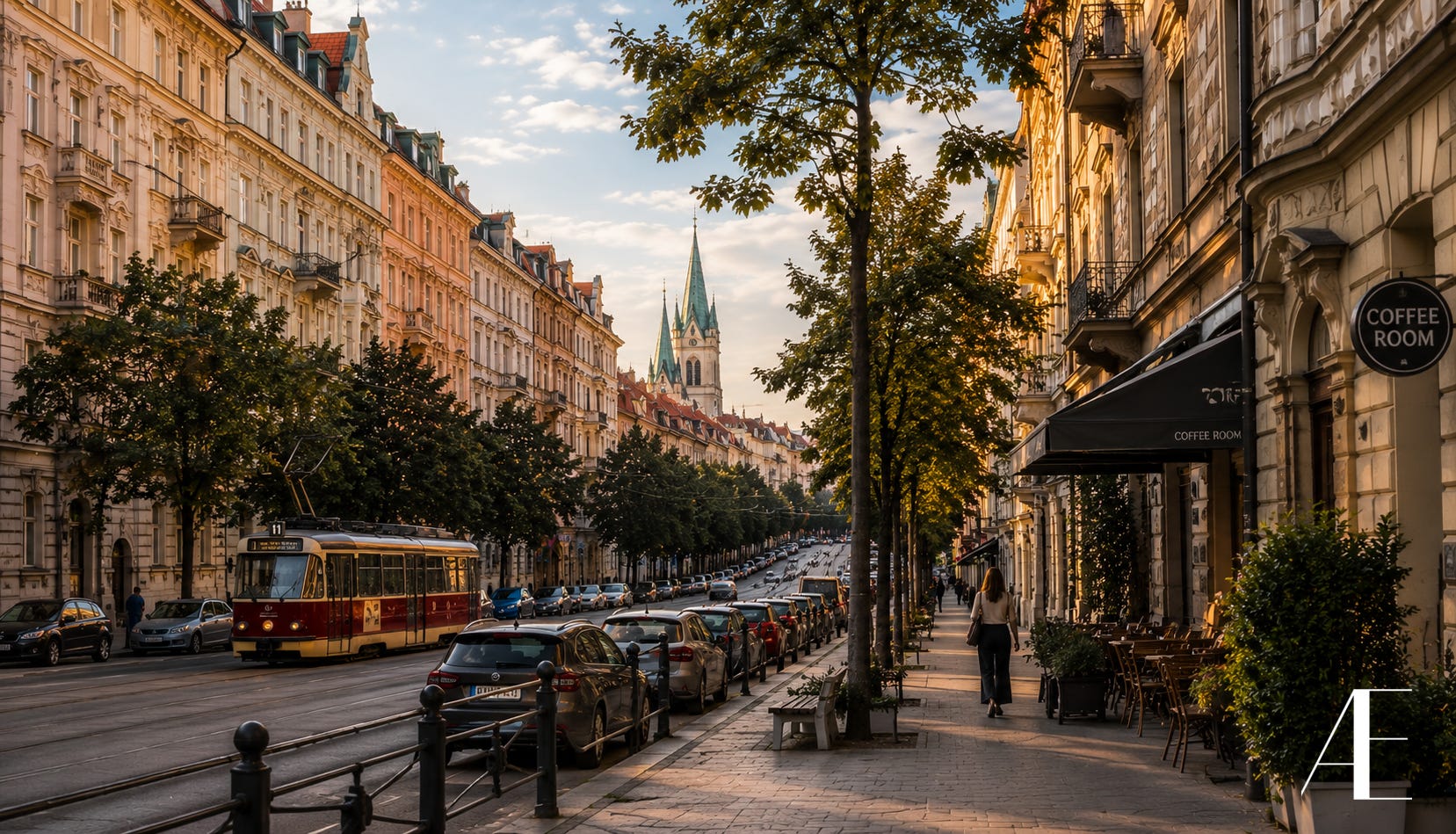
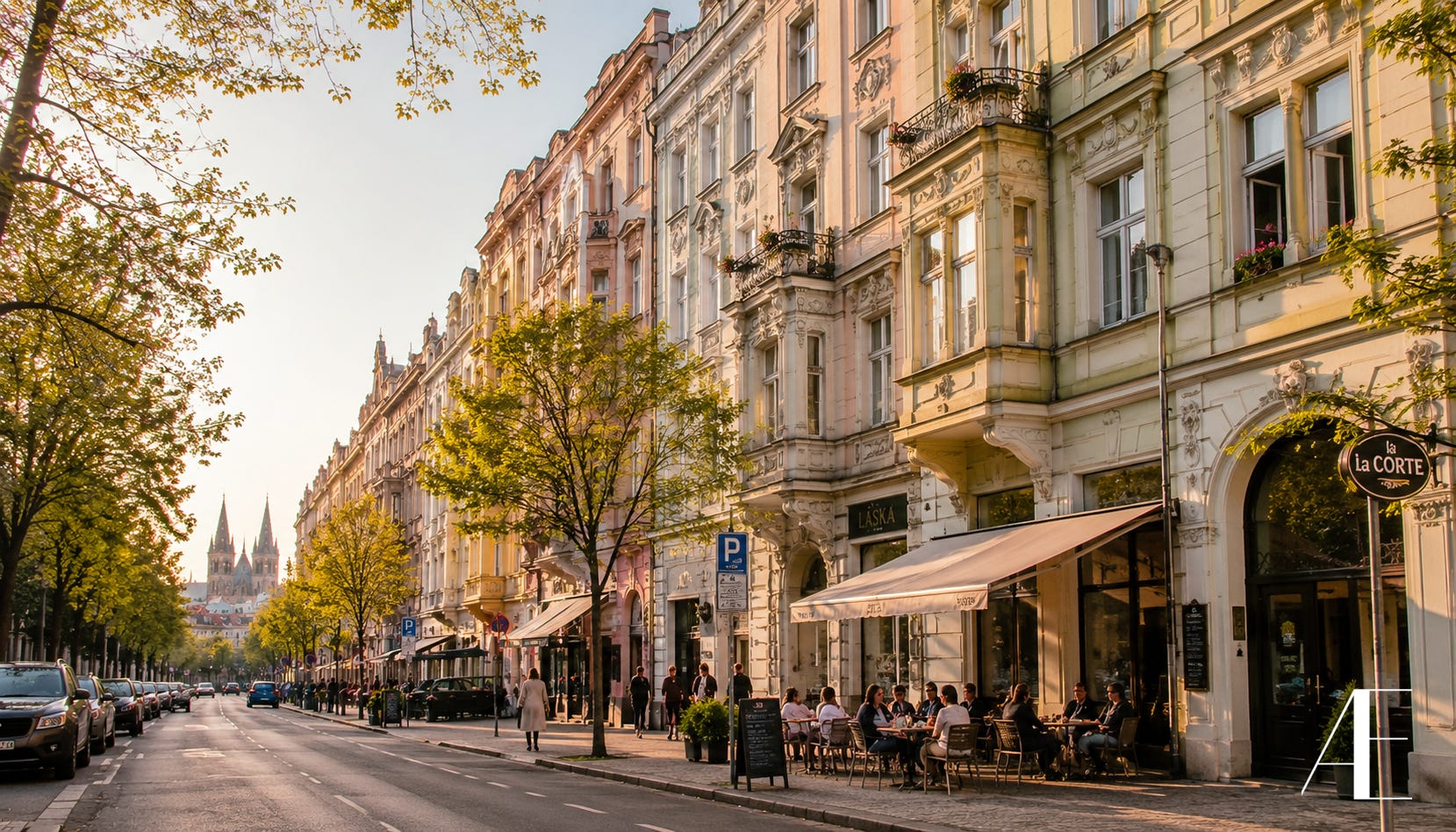
The neighbourhood that serious visitors to Prague eventually discover and wish they had found sooner. Built on a grid in the late 19th century as a residential suburb for Prague’s professional class, Vinohrady is a consistent landscape of Art Nouveau and historicist apartment buildings whose facades compete in elaborate stone decoration. The main square, Namesti Miru, is anchored by the neo-Gothic Church of St. Ludmila. The streets of Manesova, Blanska, and Vinohradska concentrate the best independent restaurants, wine bars, and cafes in the city. Prices here are genuinely 30 to 40 percent below the equivalent in Stare Mesto for food and accommodation of equal quality. Riegrovy sady, the neighbourhood park with its sprawling beer garden and views west over the city spires, is one of Prague’s great overlooked pleasures. Vinohrady is where Prague’s food culture is most interesting, and where a return visit to the city should be anchored.
Zizkov
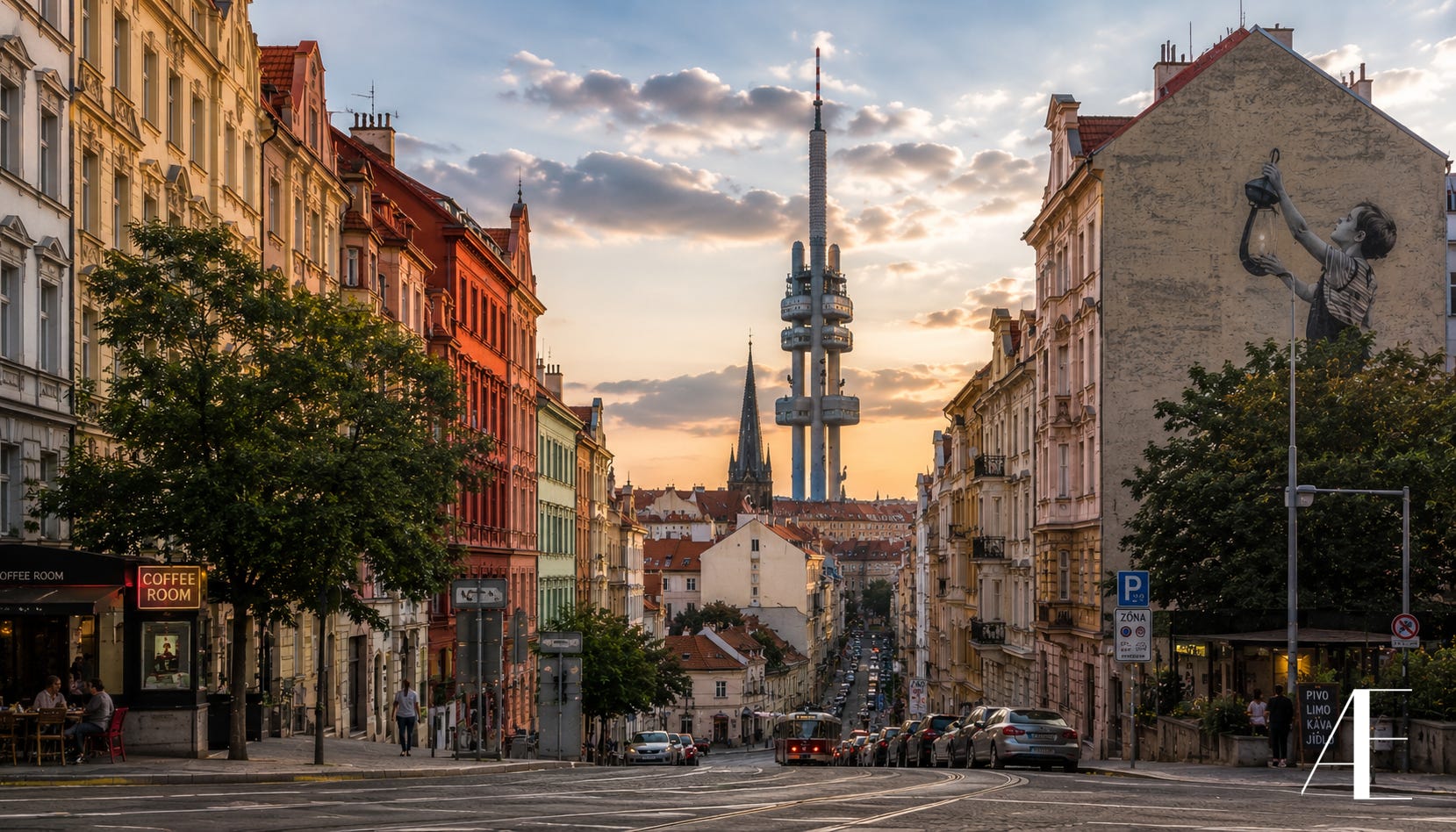
The most idiosyncratic neighbourhood in Prague, named after the 15th-century Hussite commander Jan Zizka, who never lost a battle in his lifetime and whose equestrian statue on Vitkov Hill is reputedly the largest bronze equestrian statue in the world. Zizkov was historically a working-class district and claims, with some justification, to have had more pubs per capita than anywhere else in Prague, a distinction that has gradually softened as the neighbourhood gentrifies. The Zizkov Television Tower, designed in the late communist era and often cited as one of Prague’s most divisive pieces of architecture, is unmissable from any elevated vantage point in the city. Newer cafes and natural wine bars sit alongside the traditional Czech hospoda pubs, and the atmosphere remains rougher and more characterful than the adjacent Vinohrady. Worth a dinner or a late evening.
Karlin
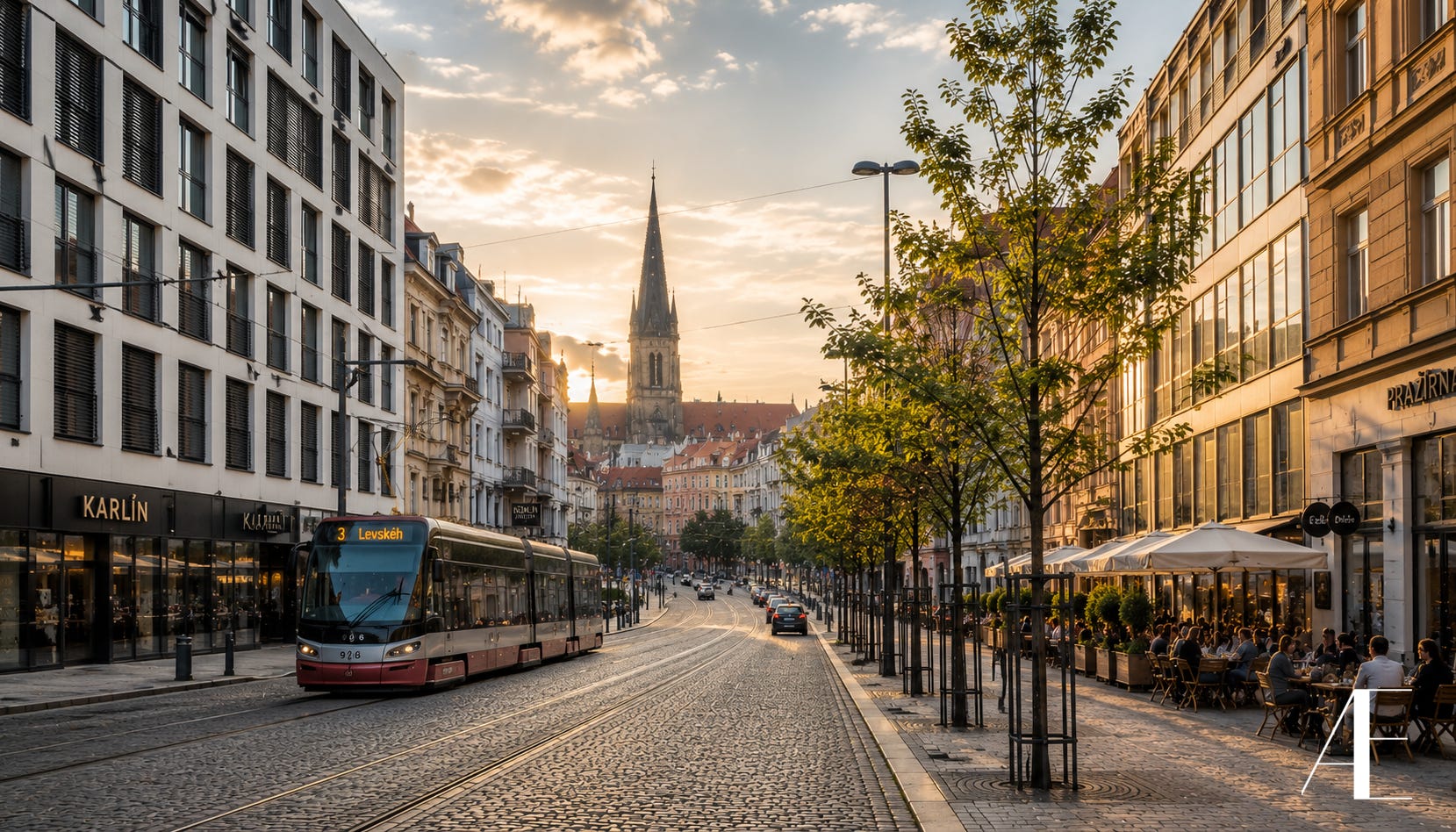
The neighbourhood between the Old Town and the industrial east of the city, devastated by floods in 2002 and rebuilt in the years since into one of the most interesting restaurant and bar destinations in Prague. Karlin has the elegance of Vinohrady’s architecture and the creative edge of Zizkov’s atmosphere. Eska, the landmark restaurant in a converted mill building on Pernerova Street, anchors a cluster of serious dining addresses. The neighbourhood’s Saturday market, at Karlinske namesti, is one of the best places in Prague to understand what contemporary Czech food culture actually looks like.
Things you should not miss
Prague rewards depth over breadth. These are the experiences that define the visit, chosen for what they offer a serious first-time visitor rather than for their ranking on aggregator platforms.

Prague Castle

The largest ancient castle complex in the world by area, occupying the hill above Mala Strana on the left bank of the Vltava. Prague Castle is not a single building but an entire walled town: the St. Vitus Cathedral, the Old Royal Palace, St. George’s Basilica, the Golden Lane, the Lobkowicz Palace, the Story of Prague Castle museum. Allow at least three hours for a serious visit, and purchase a combined ticket in advance. The best approach is on foot up the steep lanes of Mala Strana rather than by tram, which delivers you to the main gate but skips the entire experience of ascending toward it. The view from the castle terrace west over Mala Strana’s rooftops and the Vltava is one of the finest in Central Europe. Go as early as possible: by ten in the morning in summer, the main courtyard is genuinely difficult to navigate.
Within the castle complex, St. Vitus Cathedral deserves particular attention. Work began in 1344 under Charles IV and was not completed until 1929, nearly six centuries later, and the building carries that history in its fabric: Gothic flying buttresses, Art Nouveau stained glass by Alfons Mucha, the baroque silver tomb of St. John of Nepomuk, the Bohemian crown jewels in a locked chamber accessible only with seven simultaneous keys. The cathedral is free to enter the nave; the full tour requires a castle ticket.
Charles Bridge
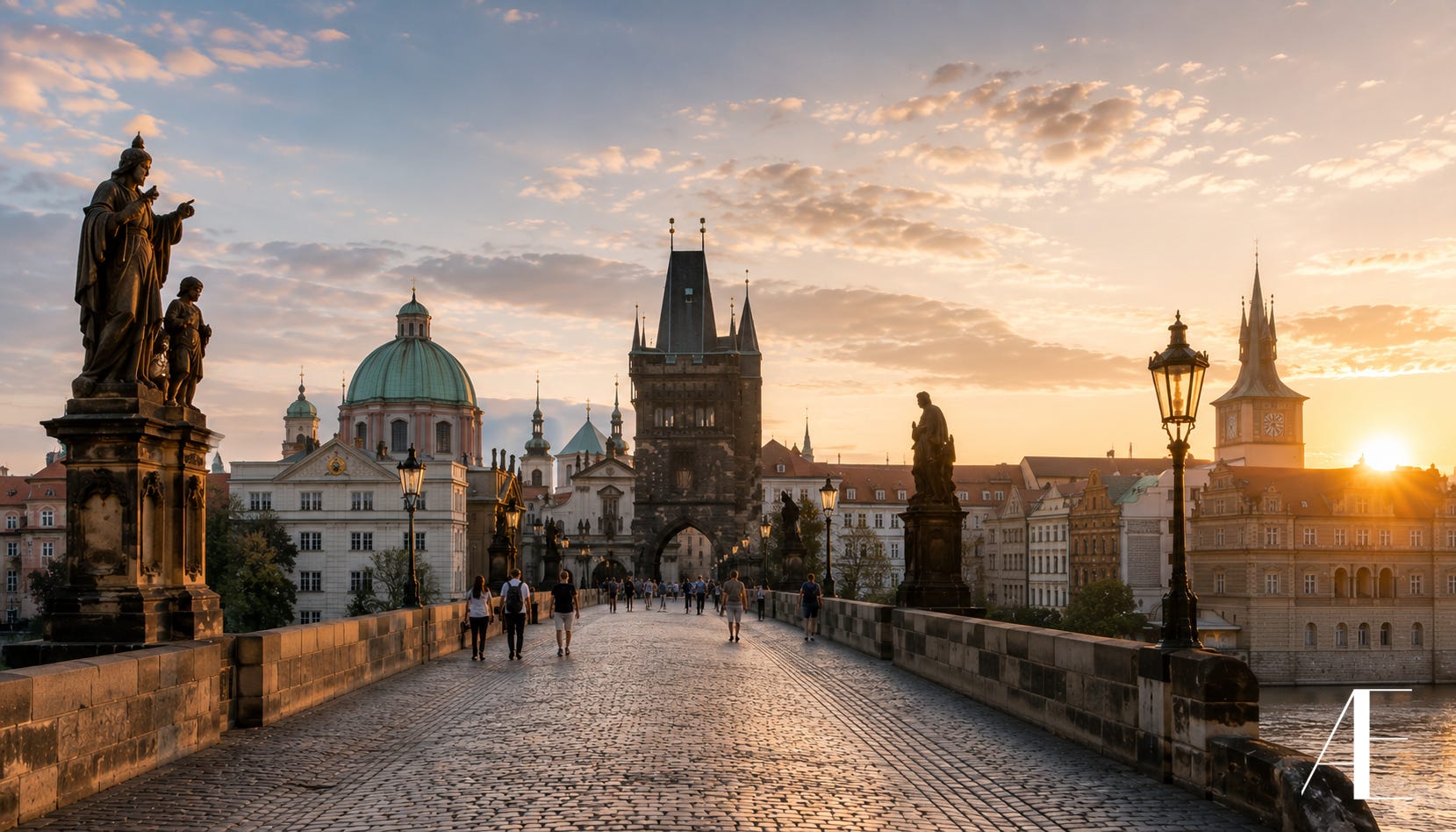
The Gothic stone bridge across the Vltava connecting Stare Mesto to Mala Strana, built beginning in 1357 under Charles IV and lined with thirty Baroque statues of saints added in the 17th and 18th centuries. Charles Bridge is unavoidable and entirely worth the attention. The question is simply when to visit. At midday in July, it is shoulder-to-shoulder with visitors in both directions. At dawn, particularly on a weekday before eight in the morning, it is one of the most extraordinary walks in Europe, with the castle emerging from the morning light above Mala Strana and the first mist lifting off the Vltava below. Come at dawn. The rest of the day can wait. The bridge is also exceptional in the late evening once the last tour groups have crossed, when the statue-lined walkway belongs largely to couples and photographers.
Old Town Square and the Astronomical Clock

The central square of Stare Mesto, surrounded by facades in every style from Romanesque to Baroque. The Old Town Hall, at the square’s western edge, carries the Astronomical Clock, the Orloj, on its southern face. Built in 1410, the Orloj is the oldest functioning astronomical clock in the world and displays not only the current time but the position of the sun and moon, the time of sunrise and sunset, the signs of the zodiac, and a calendar of saints’ days. At every full hour, the clock’s mechanism performs a brief procession of the Twelve Apostles through windows above the clock face. This is worth seeing once. The square itself, surrounded by the Tyn Church whose twin Gothic spires punctuate every photograph of Prague, the Baroque St. Nicholas Church, and the Jan Hus Memorial in its centre, is the natural first stop for any visit. Come early morning and return in the evening.
The Jewish Museum in Prague and the Old Jewish Cemetery

Six synagogues and the cemetery together form the Jewish Museum in Prague, the finest collection of Jewish heritage in Europe and one of the most important Jewish cultural sites in the world. The Old Jewish Cemetery, where burials were stacked twelve layers deep due to the physical constraints of the walled ghetto, contains approximately 12,000 tombstones visible above ground representing far more burials below. The Pinkas Synagogue carries the names of 77,297 Bohemian and Moravian Jewish victims of the Holocaust written on its interior walls, one of the most devastating memorials in Europe. The Spanish Synagogue, built in 1868 in a Moorish revival style, is architecturally the most beautiful of the six. Book tickets to the full complex in advance, particularly in summer. The cemetery and the Pinkas Synagogue require time to absorb. Budget at least two hours, ideally half a day.
Vysehrad

The cliff-top fortress at the southern end of the city centre, on the right bank of the Vltava, is one of Prague’s great undervisited sites. The original settlement at Vysehrad predates Prague Castle and according to legend was the seat of the earliest Bohemian rulers. Today the walled complex contains a Romanesque rotunda, a neo-Gothic basilica, the Vysehrad Cemetery where the most significant Czech cultural figures are buried, including Antonin Dvorak, Bedrich Smetana, and Alfons Mucha, and sweeping views south along the Vltava that no other vantage point in Prague provides. The grounds are a public park and free to enter. Vysehrad receives a fraction of the visitors that Prague Castle does, is quieter in almost every weather condition, and is genuinely moving as a place of Czech national memory.
Josefov on foot
See the formal attractions of the Jewish Museum, but spend time in the quarter simply walking. The streets of Josefov are where the contrast between what the neighbourhood was and what it became is most legible: the Parizska boulevard, the tree-lined avenue of luxury shops that replaced much of the demolished ghetto in the early 20th century, is simultaneously one of Prague’s most elegant streets and one of its more uncomfortable historical episodes, a reminder that urban renewal has always had its victims. The neighbourhood works best as a combination of the museum’s interiors and the streets outside, with the history providing context for the architecture.
Petrin Hill

The forested hill rising above Mala Strana to the southwest, accessible by a funicular railway from Ujezd Street that has been in operation since 1891. The hilltop carries the Petrin Lookout Tower, built in 1891 as a one-fifth scale model of the Eiffel Tower and offering the best panoramic view of the city from a position above the castle rather than below it. The hill is a public park and one of Prague’s most pleasant walking environments: forested paths, rose gardens, the Mirror Maze, and in late April the cherry blossoms along the orchard terraces below the tower. The funicular runs regularly and takes four minutes from bottom to top. Petrin is worth an hour on any visit and longer on a warm afternoon.
The Municipal House and Prague’s Art Nouveau

The Municipal House, Obecni dum, on Namesti Republiky at the border between Stare Mesto and Nove Mesto, is the finest Art Nouveau building in Prague and one of the finest on the continent. Built between 1906 and 1912 on the site of the former Royal Court, it contains the Smetana Concert Hall, several decorated cafe and restaurant spaces, and public rooms whose interior design represents the full repertoire of Czech Art Nouveau at its most ambitious. Alfons Mucha contributed to the decorative programme. Guided tours of the building’s interiors are available and worth booking; the American Bar in the basement is one of the most beautiful rooms in Prague. Mucha’s work can also be seen at the Mucha Museum nearby in Nove Mesto, which holds an extensive collection of his decorative posters and paintings.
Day trips from Prague
Prague’s central location in Bohemia makes it an excellent base for day trips. Several of the most significant medieval sites in Central Europe are within two hours by train.
Kutna Hora
The most essential day trip from Prague, and by most measures the best single day trip in Central Europe. Kutna Hora, an hour east of Prague by direct train, was one of the most important cities in medieval Europe, its silver mines funding the Bohemian Crown and the construction of the Royal Palace at Prague Castle. The medieval prosperity is still legible in the architecture, above all in St. Barbara’s Cathedral, a Gothic masterpiece begun in 1388 and unfinished for centuries, whose soaring nave and flying buttresses rival anything in Bohemia. A short walk from the town centre, the Sedlec Ossuary is one of the most extraordinary spaces in Europe: a 14th-century ossuary whose interior is decorated with the bones of approximately 40,000 people, arranged into chandeliers, garlands, and a coat of arms by a local woodcarver in 1870. The effect is neither macabre nor kitsch but genuinely strange and beautiful in a way that requires being there to understand. Book the ossuary entry in advance. The round trip by train costs approximately 140 CZK per person.
Cesky Krumlov
A UNESCO World Heritage town in South Bohemia, three hours from Prague by direct bus, Cesky Krumlov is routinely cited as one of the most beautiful small towns in Europe and the description is warranted. The town occupies a narrow bend in the Vltava river, encircled on three sides by the water and overlooked by a vast castle complex, the second largest in the Czech Republic after Prague Castle. The castle’s bear moat, the Baroque theatre, the decorated Mannerist tower, and the formal gardens are all open to visitors. The town below is a late medieval and Renaissance townscape of considerable integrity. The honest advice is to go on a weekday in May, September, or October: summer weekends bring day-trip buses from Prague in numbers that overwhelm the narrow streets. An overnight stay, which extends the experience into the quiet evenings after the day visitors leave, is the ideal approach.
Karlstejn Castle
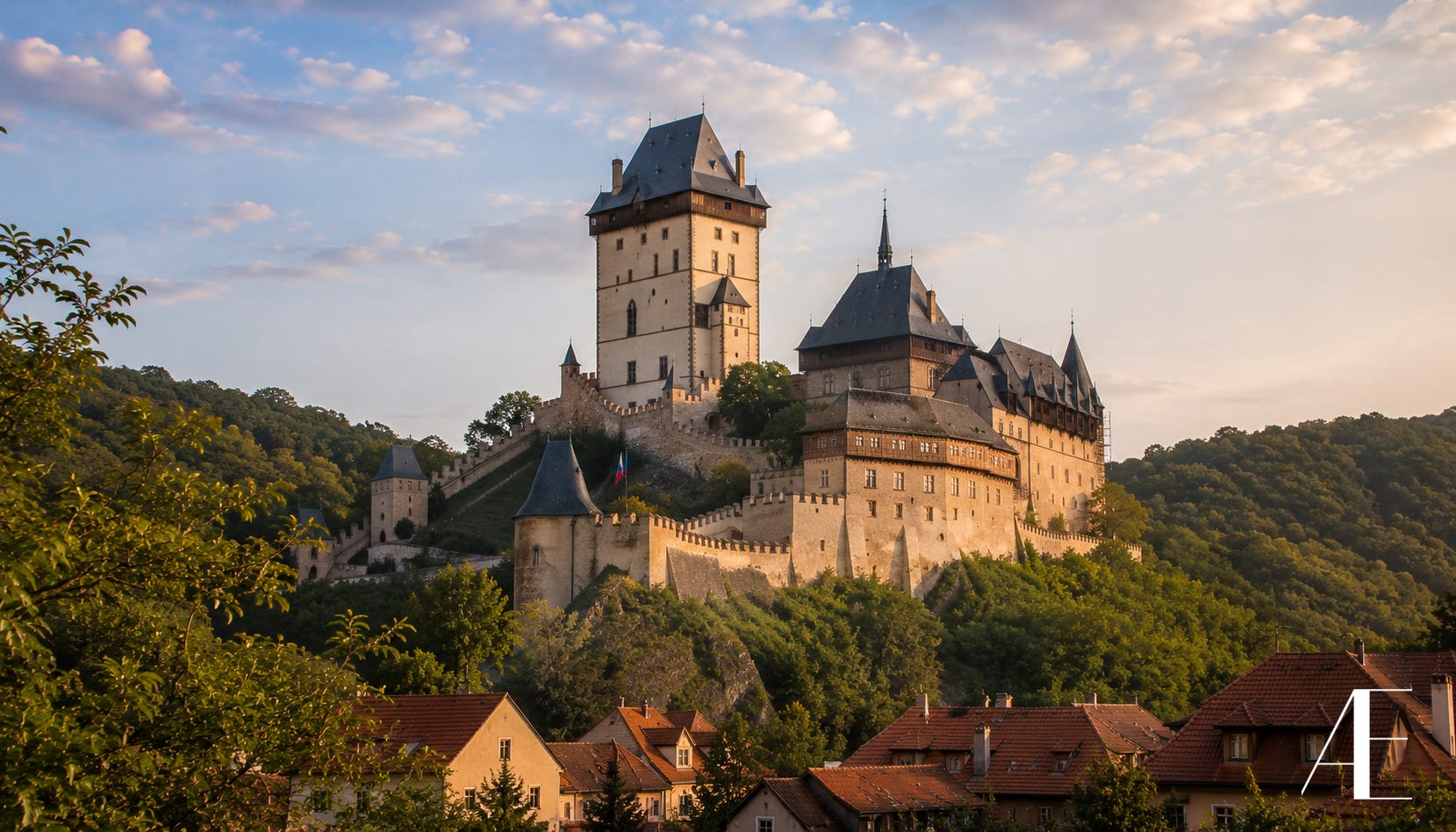
The most Gothic of the day trip castles, forty minutes southwest of Prague by train, Karlstejn was built by Charles IV in the 1340s as a repository for the Bohemian Crown Jewels and the imperial treasury. The castle rises dramatically above the Berounka valley, its towers stepping uphill in sequence, and the approach on foot from the train station along the valley road is one of the more picturesque castle approaches in Bohemia. The interior tour of the Chapel of the Holy Cross, lined with 129 panel paintings and semi-precious stones, requires advance booking and is limited to small groups. Karlstejn works well as a half-day trip, leaving time to return to Prague for the afternoon.
Terezin
For visitors with an interest in 20th-century history, Terezin, an hour northwest of Prague by bus, is the site of the Theresienstadt concentration camp where approximately 35,000 people died and which served as a transit point for deportations to Auschwitz and other death camps. The Small Fortress, converted from an Austro-Hungarian military prison, and the Ghetto Museum are both open to visitors. Terezin is not a comfortable visit but it is an important one, and the combination of Prague’s Jewish Museum with a visit to Terezin provides a more complete understanding of Czech Jewish history than either site alone.
Pilsen (Plzen)
The fourth-largest city in the Czech Republic, an hour and twenty minutes from Prague by train, Pilsen is the birthplace of Pilsner lager and home of the Pilsner Urquell Brewery, which has been producing the original Pilsner since 1842. The brewery tour includes a visit to the historic cellars where the beer still undergoes secondary fermentation in oak barrels and includes an unpasteurised tank lager tasting that is unavailable commercially. The city also has a significant medieval centre and a Great Synagogue second in size in Europe only to the Budapest Dohany Street Synagogue. Pilsen is the right choice for anyone whose relationship with Czech culture goes through its brewing history.
When to visit Prague
Prague is a year-round destination, but the experience changes dramatically by season and the choice matters.
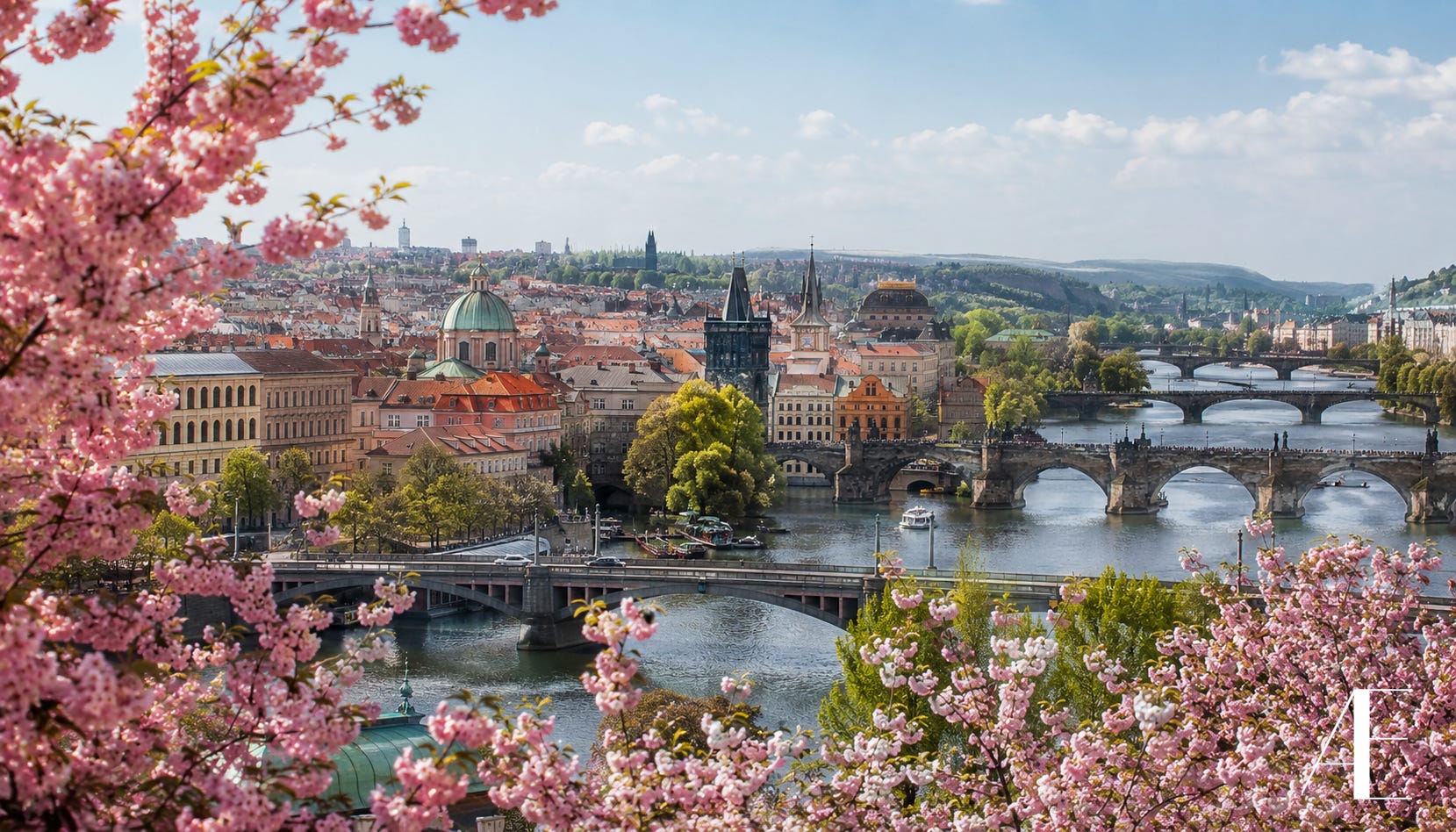
Late spring (May and early June) is the period that people who know Prague well recommend most consistently. The weather is genuinely pleasant, typically 15 to 22 degrees Celsius, the castle gardens and Petrin Hill are at their most beautiful, outdoor terraces open across the city, and the crowds, while present, have not yet reached the shoulder-to-shoulder density of high summer. Hotel prices are meaningfully below their July and August peak. The Prague Spring International Music Festival, one of the most important classical music events in Central Europe, runs from mid-May to early June and fills the city’s concert halls with exceptional programming.
Summer (June to August) brings the most visitors, the warmest temperatures, and the most difficult conditions for navigating the major sites. July and August see Charles Bridge and Old Town Square at their most crowded: ten in the morning to seven in the evening in midsummer, the bridge is genuinely difficult to move through. The strategy for summer is not to avoid Prague but to adjust the rhythm: the major sites at dawn and dusk, the residential neighbourhoods and restaurants during the day, skip-the-line tickets for everything significant booked in advance. Prague in summer evenings, when the golden light falls across the Baroque facades and the outdoor terraces fill, is worth any amount of strategic planning.
Early autumn (September and October) is the second best period to visit: the summer crowds thin noticeably after the first week of September, the weather remains warm enough for outdoor life well into October, and the autumn light on the city’s stone and terracotta is exceptional. Hotel prices fall from their summer peak. October is the quietest month before the Christmas season begins, with genuinely manageable crowds and temperatures of around 10 to 15 degrees Celsius.
Winter (November to March) requires honest preparation for the cold and the short days, but offers two distinct experiences worth planning around. The Prague Christmas Markets, which run at Old Town Square and Wenceslas Square from late November through January 6, are among the finest in Europe: traditional crafts, svarek (Czech mulled wine), trdelnik (chimney cake), and roasted sausages in a setting whose Gothic backdrop makes the Viennese markets look understated. December is therefore not a quiet month. January and February are the quietest and cheapest months of the year, with hotel rates 50 to 60 percent below summer peaks, and the city is genuinely beautiful under snow.
How many days to spend in Prague
Three days is the minimum for Prague done properly. It allows time to cover the Old Town, the Jewish Quarter, Charles Bridge, Prague Castle, and Mala Strana with some depth, to eat well twice or three times, and to wander rather than march.
Four or five days is the ideal visit for a first-time traveller. The additional time allows for a full day trip to Kutna Hora, an evening in Vinohrady, a performance at the State Opera or Rudolfinum, and the slower pace that reveals what Prague is actually like beneath the tourist circuit.
A week reveals the city at its deepest: two day trips, evenings across Vinohrady, Zizkov, and Karlin, the Strahov Monastery library, Vysehrad in the early morning, the Klementinum’s Baroque hall on a guided tour. Prague rewards the additional days more than most comparable cities because the centre is compact enough that the peripheral discoveries remain accessible.
A suggested 4-day itinerary
Day 1: The Old Town, Josefov, and Charles Bridge
Begin at Old Town Square before nine in the morning, while the Orloj mechanisms are still audible above the ambient noise and the light is raking across the Tyn Church. Walk the Old Town’s medieval street plan before the first tour groups arrive: Celetna Street, the Ungelt courtyard behind the Tyn Church, the alley of Tynska. Spend a serious half-day in Josefov, covering the Old Jewish Cemetery and the Pinkas Synagogue at minimum. Take a long lunch in the neighbourhood rather than at Old Town Square. Cross Charles Bridge in the late afternoon heading toward Mala Strana, when the foot traffic is moving in the other direction. Dinner in Mala Strana or the first exploration of Vinohrady.
Day 2: Prague Castle, Mala Strana, and Petrin
At the castle gates by nine, before the first coaches arrive. Spend three hours covering St. Vitus Cathedral, the Old Royal Palace, and the Golden Lane. Walk the castle perimeter for the views. Descend by foot through Hradcany, finding Novy Svet if possible, and spend the afternoon in Mala Strana: the Vrtba Garden, the Church of St. Nicholas, the walled gardens of Vojanovy sady. Take the funicular up Petrin Hill in the late afternoon for the view. Dinner in Mala Strana or Smichov.
Day 3: Nove Mesto, Vysehrad, and Vinohrady
Morning in Nove Mesto: the Municipal House for a guided interior tour or breakfast in the cafe, then Wenceslas Square and the National Museum. Walk south to Vysehrad: the cemetery, the basilica, the cliff-top views. Return north through Vinohrady for lunch at one of the neighbourhood’s good restaurants. Afternoon at leisure in Vinohrady: the street architecture, the Riegrovy sady beer garden in good weather. Evening dinner in Vinohrady or Zizkov.
Day 4: Day trip to Kutna Hora
Take the direct morning train from Praha hlavni nadrazi (Prague Main Station), arriving in Kutna Hora in approximately one hour. Begin at the Sedlec Ossuary, then walk or take a taxi into the town centre for St. Barbara’s Cathedral and the medieval silver mining museum. Return to Prague by mid-afternoon. Final evening dinner in Prague: a Michelin restaurant if reserved in advance, or a proper Czech hospoda for pork, dumplings, and the best Pilsner you will drink anywhere outside of Pilsen.
Where to eat
Prague’s restaurant scene has undergone a fundamental transformation since the fall of communism and particularly since 2015. The first full Michelin guide to the Czech Republic was published in 2025, validating a development that serious food travellers had already noticed. The city now has five Michelin-starred restaurants, a growing natural wine bar culture, and a neighbourhood dining scene in Vinohrady and Karlin that serves food of genuine quality at prices that remain meaningfully below Western European equivalents.
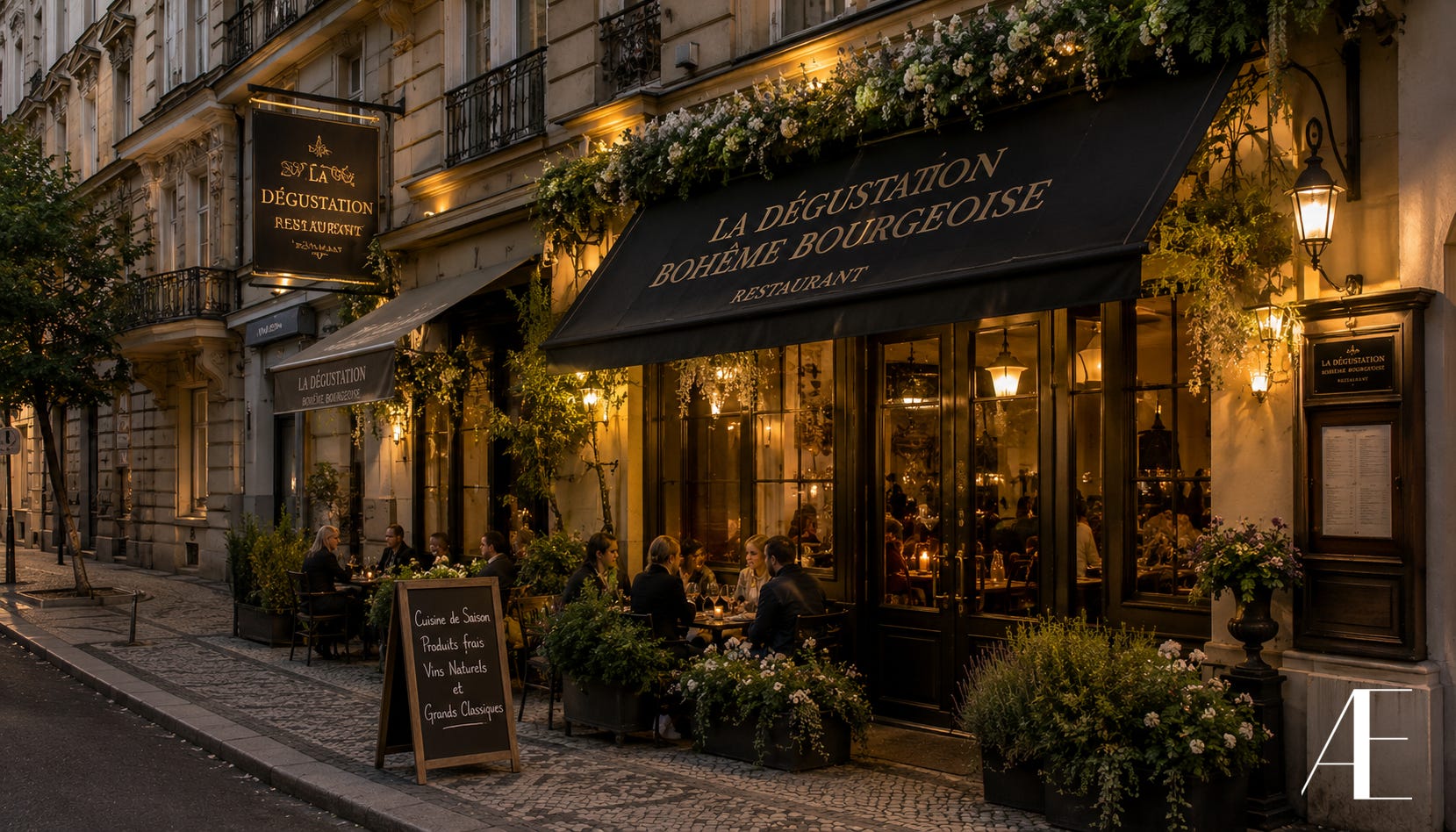
La Degustation Boheme Bourgeoise
Czech tasting menu, Stare Mesto
The older of Prague’s two long-standing Michelin-starred restaurants, and the one that most directly embodies the project of taking Czech culinary heritage seriously. Chef Oldrich Sahajdak builds his tasting menu around a 19th-century Czech cookbook, sourcing ingredients from small Czech farmers, hunters, and foragers and presenting them in eight courses of considerable refinement. The menu changes with the seasons and the availability of ingredients. The dining room is polished and intimate. This is the restaurant that most clearly makes the argument for Czech fine dining as a coherent tradition rather than a novelty.
Field
Modern Czech tasting menu, Stare Mesto
The second of the established Michelin-starred addresses, Field is somewhat more international in its influences than La Degustation but equally rigorous in its sourcing and technique. One Michelin star. The kitchen works with fermentation, pickling, and open-fire cooking in ways that place it within the broader New Nordic conversation while retaining a specifically Czech sensibility. The tasting menu is the right choice.
LEVITATE
Czech-Nordic-Asian fusion, Prague 2
One of the most interesting new additions to the Michelin guide in 2025, LEVITATE works primarily with Czech ingredients but applies Asian spicing and Nordic technique in ways that feel genuinely coherent rather than arbitrary. One Michelin star. A restaurant that is harder to categorise than La Degustation or Field and therefore, for some diners, more interesting.
Eska
Contemporary Czech, Karlin
The restaurant that did the most to establish Karlin as a serious dining destination, Eska occupies a converted mill building with an open kitchen, an in-house bakery, and a menu built around fermentation, seasonal Czech produce, and techniques the kitchen describes as “grown-up Czech food.” No Michelin star but consistently cited by serious food writers as the best value in Prague for this level of cooking. The bread alone, from the on-site sourdough bakery, justifies a visit.
Lokal
Traditional Czech pub and restaurant, multiple locations
The best argument against the idea that Czech pub food is irredeemably stodgy. Lokal is a small group of restaurants built around the proposition that traditional Czech cuisine, svickova (sirloin in cream sauce), smazeny syr (fried breaded cheese), pork knee with horseradish, can be made with proper ingredients and care. The Pilsner Urquell served at Lokal is kept to a standard of tank conditioning that makes it better than what most restaurants in Pilsen serve. A meal here costs a fraction of what equivalent care would cost at a comparable restaurant in Paris or London. There are several locations; the Dlouha Street branch in the Old Town is the most convenient for central stays.
Cafe Savoy
Viennese cafe and Bohemian cuisine, Mala Strana
The finest cafe in Prague, occupying a neo-Renaissance room on Vitezna Street in the western part of Mala Strana with a ceiling of extraordinary decorative plasterwork and a counter of exceptional pastry. The breakfast here, served until noon, is one of the best in Central Europe: house-baked breads, smoked salmon, Czech cheese, eggs cooked to order, and coffee of a quality that most European cafes would envy. Come for breakfast, come for a late afternoon cake and coffee, come for the room itself.
Kantyna
Czech butcher restaurant, Nove Mesto
A casual restaurant and butcher counter in Nove Mesto that serves the best roast pork and beef in Prague, carved at an open counter and accompanied by bread dumplings, sauerkraut, and pickled vegetables. No reservations. No pretension. A proper Czech lunch or early dinner that costs roughly 300 to 400 CZK per person with a beer.
For traditional Czech beer culture
The hospoda, the Czech pub, is the essential social institution of the country and Prague has thousands of them at every quality level. The best are found in Zizkov and Vinohrady rather than the Old Town, where prices are inflated and quality inconsistent. Look for a pub with Kozel, Bernard, or Uneticke pivo on tap rather than the mass-market brands, and be aware that the Czech tradition of paying the bill at the end of the evening rather than round by round requires keeping mental track of your consumption or asking the waiter, who marks a paper slip on your table.
Where to stay
Prague’s accommodation market is strong at the luxury end and highly competitive at mid-range. The Old Town and Mala Strana concentrate the most atmospheric options. Vinohrady offers the best value for longer stays.
Luxury
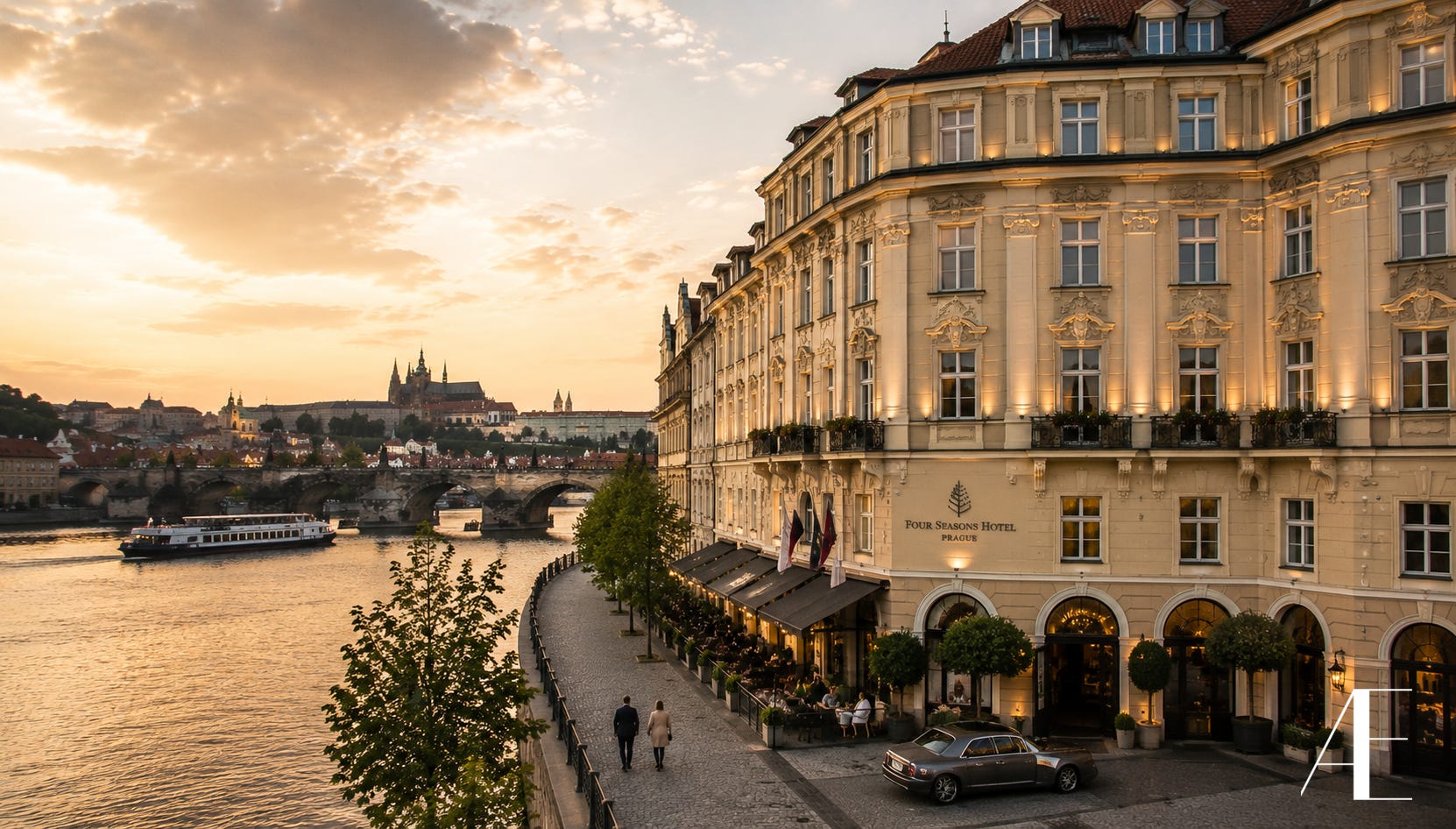
Four Seasons Hotel Prague
Old Town, riverside
The finest hotel in Prague by most measures and the reference point for the city’s luxury market. The Four Seasons occupies four historic buildings on the Vltava embankment, with direct views across the river to Mala Strana and Prague Castle. The CottoCrudo restaurant, the AVA Spa, and the service level are all exceptional. Rooms with castle-view and river-view face the most photographed panorama in Prague. The bridge is two minutes’ walk. Rates are at the top of the Prague market but represent value by the standards of comparable properties in Paris or London.
Augustine, a Luxury Collection Hotel
Mala Strana
A hotel built within a complex of seven historic buildings including a 13th-century Augustinian monastery, the Augustine is the most characterful luxury option in Prague and one of the most memorable hotel stays in Central Europe. Original beamed ceilings, a monastic brewery in the basement producing the house beer, a spa inspired by monastic healing traditions, and immediate access to the lanes of Mala Strana and the castle above. Four minutes on foot to the castle gates. Somewhat less expensive than the Four Seasons and, for the right traveller, considerably more interesting.
Boutique
Mandarin Oriental, Prague
Mala Strana
Set in a converted 14th-century monastery on Nebovidska Street in the heart of Mala Strana, the Mandarin Oriental offers one of Prague’s most serene hotel environments: original Gothic and Renaissance interiors, a spa in the former chapel, and the quiet of a Mala Strana side street at one of the best addresses in the city. A strong choice for travellers who want luxury with maximum neighbourhood immersion.
Grand Mark Prague
Nove Mesto
A design hotel in a restored Baroque palace offering genuine luxury at prices somewhat below the Four Seasons and Augustine. Strong reviews for service and interiors. A good choice for travellers who want boutique quality without the full ultra-luxury price point.
Mid-Range
Hotel Josef
Josefov / Old Town
A well-designed modern boutique hotel in the former Jewish Quarter, one minute from Old Town Square. Clean, contemporary, and professionally run, with a good breakfast and a central location that justifies the moderate premium over Vinohrady alternatives for a first visit.
Andaz Prague
Nove Mesto
Part of Hyatt’s design-focused Andaz brand, housed in a striking Art Nouveau building on Senovazne namesti. Good design, professional service, and a location that is genuinely central without being in the middle of Old Town tourist density.
For longer stays: Vinohrady
For visits of four days or more, the value proposition of Vinohrady is compelling: accommodation costs 30 to 50 percent less than the Old Town, the best restaurants and wine bars in the city are within walking distance, and the metro and tram connections make the historic centre no more than ten to fifteen minutes away. Several well-reviewed boutique hotels and apartment rental options exist in the neighbourhood for those willing to trade the immediate atmosphere of Stare Mesto for the authentic daily life of Prague’s most interesting residential district.
Practical information
Currency: Prague and the Czech Republic use the Czech Koruna (CZK). The Czech Republic is an EU member but has not adopted the Euro and has no confirmed timeline for doing so. Approximately 25 CZK to the Canadian dollar as of 2026, though this rate fluctuates. Cards are accepted almost universally in hotels, restaurants, and shops. Smaller pubs, market stalls, and some taxis still require cash. Always pay in CZK rather than Euro or your home currency: tourist-facing businesses that accept foreign currency do so at rates significantly worse than the mid-market rate.
ATMs: Use ATMs affiliated with major Czech banks: Ceska sporitelna, Komercni banka, CSOB. Avoid the standalone Euronet ATMs concentrated in tourist areas, which charge high fees. Always decline Dynamic Currency Conversion when offered, selecting “charge in Czech koruna” every time.
Currency exchange: Do not use street exchange offices near Old Town Square. Many display a “0% commission” sign but offer exchange rates significantly below the mid-market rate. Bank ATMs give the best rates for cash withdrawal.
Language: Czech is the official language. English is widely spoken in hotels, restaurants, and tourist areas. Outside the historic centre, English proficiency drops but the city remains navigable. Learning dobry den (good day), prosim (please), and dekuji (thank you) is appreciated and costs nothing.
Getting around: Prague’s public transport system, operated by DPP, covers metro, tram, and bus on an integrated ticket. A single 30-minute ticket costs 30 CZK; a 90-minute ticket costs 40 CZK. A 24-hour pass costs 120 CZK, a 72-hour pass 330 CZK. Contactless bank card payment now works directly at metro gates and on trams. The tram network is particularly useful: line 22, which connects the city centre to Mala Strana and then up toward the castle, is one of the most scenic tram rides in Central Europe. Trams also run through the night.
Taxis and ride-hailing: Street taxis in tourist areas have historically been a source of overcharging. Use Bolt or Uber exclusively, both of which show the price before the journey begins. A Bolt ride from the Old Town to Vinohrady costs approximately 80 to 120 CZK.
Tipping: The Czech standard is to round up the bill or leave approximately 10 percent for good service. Tipping 20 percent is not expected and will be noticed as unusual. Leave tips in cash if paying the main bill by card, and tell the server the total amount you intend to pay before the card transaction is processed.
Safety: Prague is one of the safer major capitals in Europe. The primary risks for visitors are opportunistic pickpocketing in the Old Town and on crowded trams, predatory currency exchange offices, and overcharging by unlicensed taxis. Standard urban precautions apply. The emergency number is 112.
Airport: Vaclav Havel Airport Prague is approximately 20 kilometres northwest of the city centre. The Airport Express bus connects to Prague Main Station (Praha hlavni nadrazi) in approximately 30 to 40 minutes at 100 CZK. The metro bus combination costs 40 CZK and takes approximately 45 minutes. Bolt from the airport to the centre costs approximately 500 to 700 CZK.
ETIAS: As of 2025, Canadian citizens travelling to the Schengen Area, which includes the Czech Republic, require ETIAS pre-travel authorisation. This is not a visa: it is an automated security check costing 7 euros, valid for three years, and takes minutes to apply for online at the official EU ETIAS website. Apply before departure.
Water: Tap water in Prague is safe to drink and of good quality. There is no need to purchase bottled water for consumption.
How Prague fits into a broader Central European trip
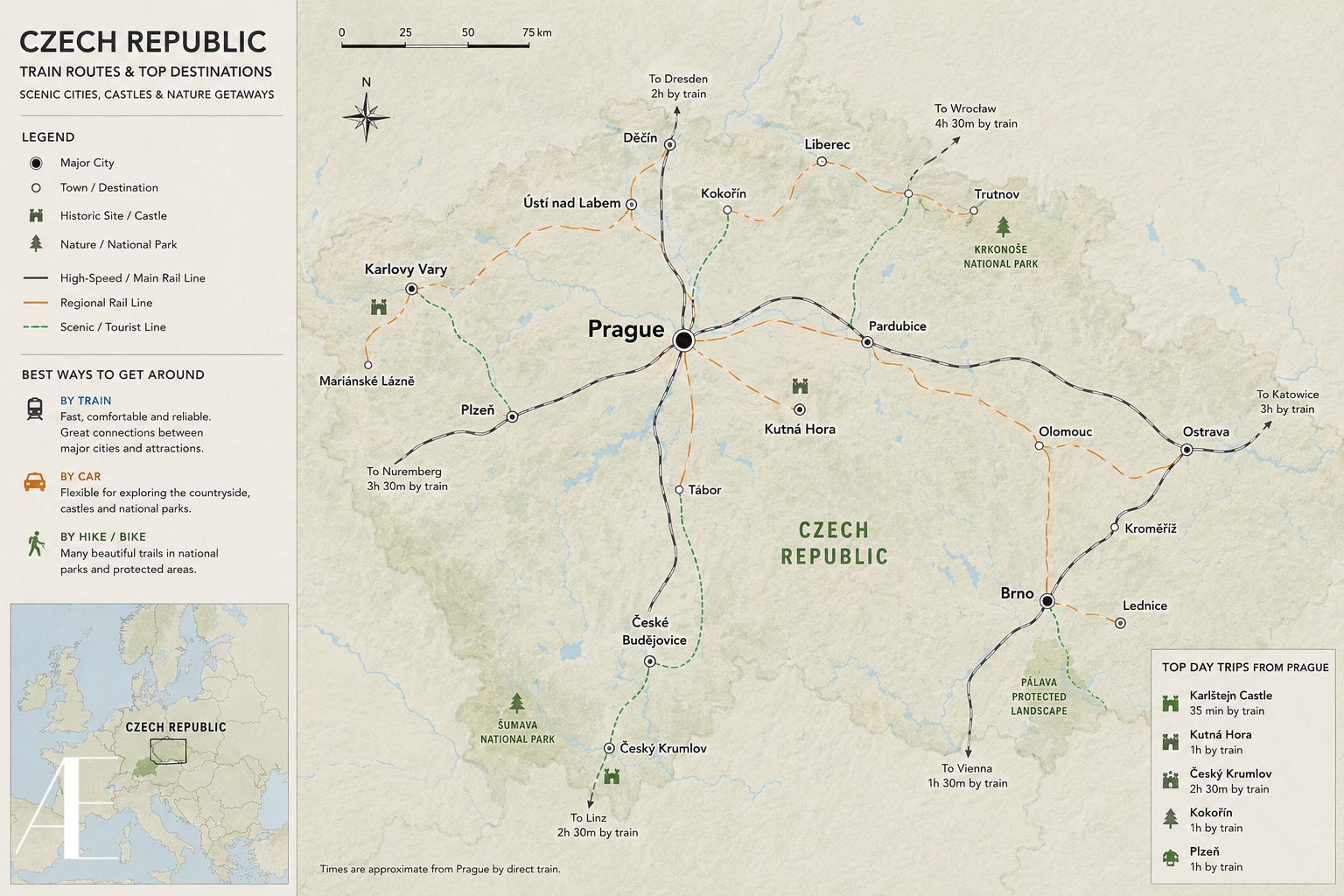
Prague is the natural hub for a Central European itinerary, connected by fast rail and good flight options to the other major capitals of the region.
Prague and Vienna is the most natural pairing in Central Europe. The two cities are connected by direct trains running four to four and a half hours, and the combination offers the full sweep of Habsburg culture: Prague as the Bohemian capital, Vienna as the imperial one. The contrast in character between the two cities, Prague more intimate and historically layered, Vienna more grandly formal, is instructive and makes each city more interesting by comparison.
Prague and Budapest extends the Central European circuit south and east. Budapest is approximately seven hours from Prague by direct train or a short flight, and the Hungarian capital offers a third architectural and cultural register: Ottoman baths, Art Nouveau covered markets, the Danube at a scale the Vltava cannot match. A Prague, Vienna, Budapest circuit covers the three great cities of the former Habsburg Empire and is one of the classic European itineraries for good reason.
Prague and Krakow is the most natural pairing for travellers interested in Central European Jewish history and the legacy of World War II. Krakow, home of Wawel Castle and the Kazimierz Jewish Quarter, and the gateway to Auschwitz-Birkenau, is approximately seven hours from Prague by train. Combined with Prague’s Jewish Museum and Josefov, the itinerary provides a coherent and profoundly affecting engagement with the history of Jewish Europe.
Prague and Berlin connects the Czech capital with Germany and Northern Europe. The direct train takes approximately four and a half hours. Berlin’s post-reunification energy and architectural ambition make an interesting counterpart to Prague’s historical continuity.
Prague as part of a river cruise: Prague is not a river cruise port itself, but it serves as the natural start or end point for Danube and Rhine river cruises departing from Passau, Nuremberg, Regensburg, or Vienna. Several operators include Prague in their itineraries as a land extension before or after the cruise, and the combination of the city’s medieval culture with the river cruise experience is one of the more elegant ways to combine the two.
Frequently asked questions

Is Prague worth visiting for the first time, or is it better for travellers who have already done the main European capitals?
Prague is an exceptional first destination in Central Europe and holds up as a first major European city for visitors from North America. It is compact and walkable, English is universally spoken, the history is both fascinating and accessible without prior knowledge, and the major sites are concentrated enough to cover in three to four days without a car. The city has none of the overwhelming scale of London or Paris for a first European visitor. For those who have done Western Europe, Prague offers the same level of architectural and cultural reward with a different historical narrative.
How crowded does Prague get, and how do I manage it?
The summer crowds on Charles Bridge and in the Old Town are real and should be planned around rather than hoped away. The strategies that work: visit the major sites before nine in the morning and after seven in the evening, book skip-the-line tickets in advance for the castle complex and the Jewish Museum, eat two or three streets away from Old Town Square where prices are lower and quality is higher, and spend afternoons in Vinohrady and Karlin where there are almost no tourists. The crowds are concentrated in a small geographic area; move fifty metres in any direction and they thin dramatically.
Does Prague accept Euros?
Some tourist-facing businesses near Old Town Square accept Euros, but do so at exchange rates significantly below the mid-market rate, typically 10 to 20 percent worse. Always pay in CZK. Use bank ATMs to withdraw Czech koruna if you need cash, and pay by card where accepted. This is the single most common source of unnecessary expense for visitors to Prague.
Is Prague safe?
Prague is one of the safer European capitals for visitors. The primary concerns are pickpocketing in crowded tourist areas and on the most tourist-frequented trams, predatory taxi drivers in tourist zones (avoided by using Bolt or Uber exclusively), and overcharging at street currency exchange offices. The city is safe to walk at night in all the neighbourhoods covered in this guide.
Is Czech food worth trying beyond the tourist cliches?
Yes, significantly so. The cliches, roast pork knee, bread dumplings, svickova, are genuine Czech dishes and worth trying once in a proper hospoda rather than a tourist restaurant. But the contemporary Czech food culture in Vinohrady, Karlin, and the Michelin-starred restaurants represents something considerably more interesting: a cuisine that is rediscovering its own ingredients and techniques through a 21st-century lens. The fermentation culture, the use of wild game, freshwater fish, and foraged ingredients, and the influence of Czech beer culture on the cooking all make the current moment in Prague’s restaurants worth engaging with.
Can I visit Prague without speaking Czech?
Entirely. English is universal in hotels, restaurants, tourist attractions, and the Old Town generally. Outside the centre, knowledge drops somewhat but the city remains navigable. The public transport system has English signage throughout. Czech is worth learning a greeting and a thank you as a matter of courtesy; it is not needed for practical navigation.
How expensive is Prague really?
Prague is significantly less expensive than the major Western European capitals for accommodation, food, and experiences of comparable quality. A good sit-down dinner with wine in Vinohrady costs roughly 600 to 900 CZK per person. A Czech lunch with beer at a proper hospoda runs 200 to 350 CZK. A pint of excellent Czech draft lager costs 50 to 80 CZK outside tourist areas. Museum admissions range from 200 to 350 CZK for major sites. The main exception is accommodation in the Old Town and Mala Strana in high season, which approaches Western European prices; the value proposition improves considerably in Vinohrady or in the shoulder season.
Plan your trip to Prague with AERIA Voyages
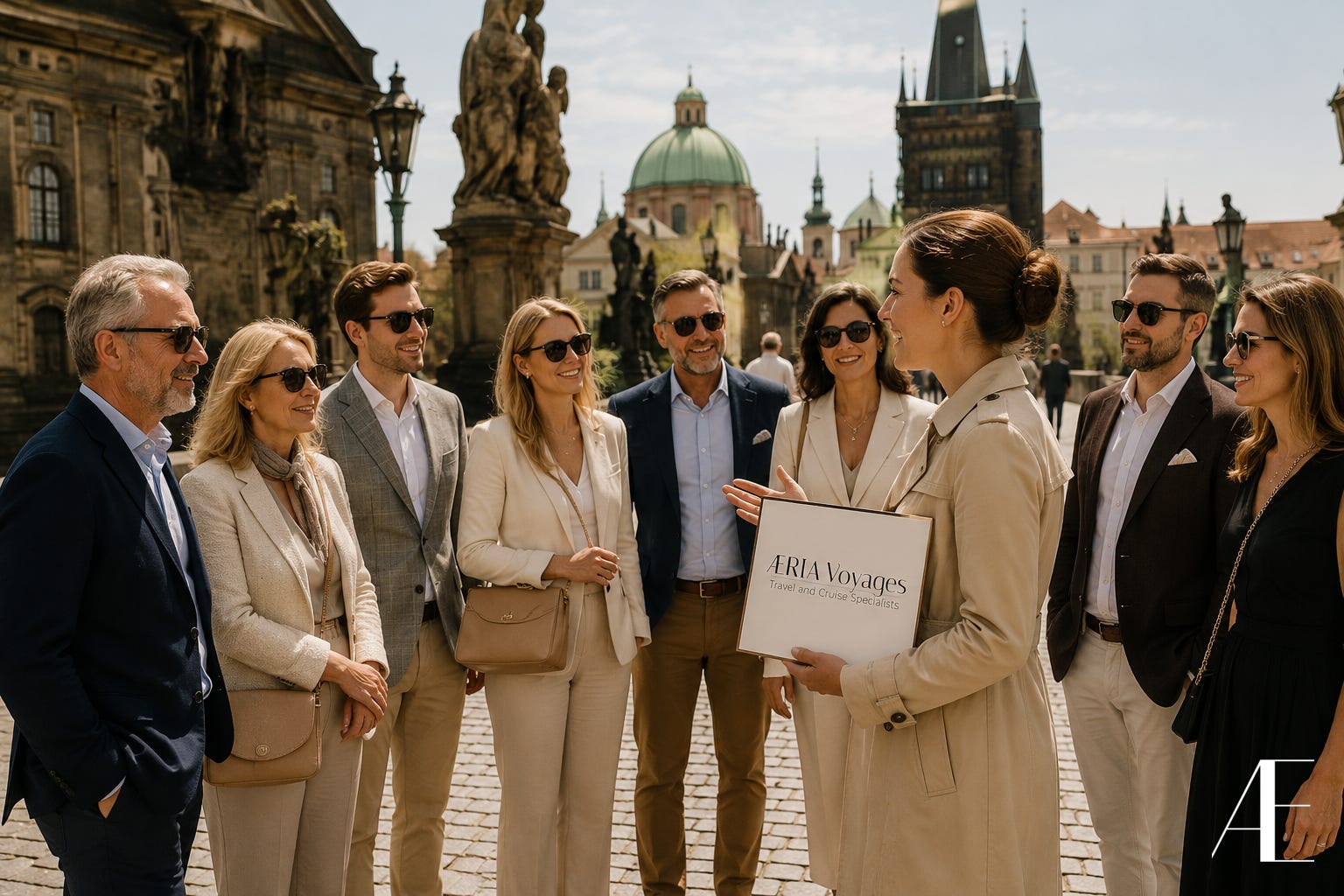
Prague sits at the junction of several of the itineraries I plan most regularly: the Central European capitals circuit combining Prague, Vienna, and Budapest; the land extension before or after a Danube river cruise; the cultural tour of Jewish Central Europe through Prague, Krakow, and Budapest; and the standalone city break for clients who want a European capital that delivers at the highest level of architecture, history, and food without the cost of Paris or the crowds of Rome.
Whatever brings you to Central Europe, Prague is almost certainly part of the answer. Whether you are thinking of it as the main destination or as part of a broader itinerary, I can build the trip in detail: the accommodation selection, the day trip logistics, the restaurant reservations that need to be made months in advance for La Degustation or Field, and the timing advice that makes the difference between Prague experienced at its best and Prague endured at its most crowded.
If Prague is on your list, or if you are considering Central Europe and are not yet sure where to begin, get in touch and we will work out what the right version of the trip looks like for you.
Yvan Junior Blanchette
Travel & Cruise Specialist
ÆRIA Voyages📩 yvanblanchette@aeriavoyages.com
📞 1-888-460-3388
🌐 aeriavoyages.com