

A Day in PARIS | Through the Eyes of an ÆRIA Refined Traveller
By Yvan Junior Blanchette | Travel and Cruise Specialist | ÆRIA Voyages
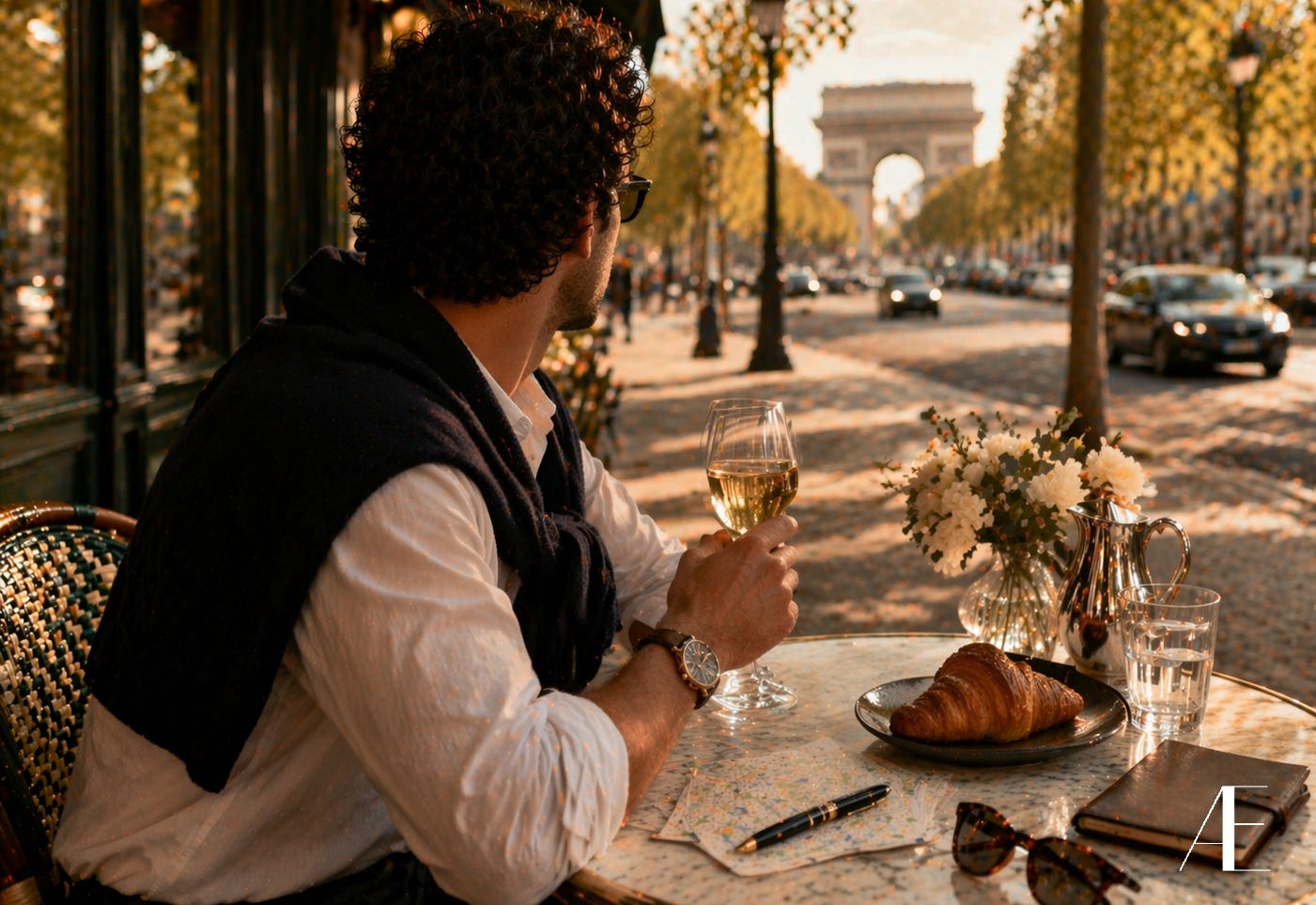
Your alarm is set for 8h30.
You are not in a rush. You never are. Rushing is what happens when a trip hasn’t been properly thought through, and you thought this one through a long time ago.
You lie there for a moment in the quiet of the room. The hotel you chose is not the most famous in Paris. It is not the largest. It is a small property in the 6th, sixteen rooms, a breakfast that a friend described as the reason she extended her stay by three days, and a location that puts you within walking distance of everything that matters today. You found it after considerable research that most people wouldn’t bother with.
That research was worth it.
Breakfast is unhurried. This is non-negotiable.
A table by the window. Coffee served properly, which in Paris means a small cup and someone who knows what they’re doing with an espresso machine. Bread from the boulangerie two doors down, which the hotel sources daily because they understand that this detail matters. You eat slowly and read and watch the street below come to life and feel, already, that the day is going exactly the way a day should go.
You have one thing planned for the morning. One is enough.
The Musée d’Orsay does not surprise most people the way it surprises you. You knew the collection. You knew the building, the converted Beaux-Arts railway station, the great clock faces that look out over the Seine. What you were not prepared for was the light in the upper Impressionist gallery on a clear morning. The way it falls across the Monet rooms. The way the Degas pastels look in it. You had arranged a private guided visit through the hotel concierge, just you and a specialist who has been working with this collection for twenty years. The questions you ask, and the answers you receive, are not available on any audio guide.
You stay until the light changes. Then a little longer.
The complete guide includes the private experience options, the specialist contacts, and exactly how to arrange a visit to the Orsay that goes well beyond a standard ticket.
You made this reservation five weeks ago.
The restaurant is not the kind of place that appears on lists of Paris’s most talked-about new openings. It is the kind of place that appears on lists made quietly, by people who eat seriously and don’t need to announce it. A chef who trained in three-Michelin-star kitchens and then opened something small and entirely his own in the 7th. Eighteen covers. A menu that changes with the market and the season.
You arrive on time. You are shown to a corner table with good light and a view of the small open kitchen. The menu is four courses with no choices, which is always a sign of confidence. You ask the sommelier a question about the wine list and end up in a conversation that lasts ten minutes and covers three regions and one producer you’ve never heard of but immediately want to know everything about.
What follows is the kind of lunch that reframes the rest of the day. Not because anything dramatic happens. Because everything is exactly right. The food, the pacing, the silence between courses, the quality of attention from a room that takes the whole thing seriously without taking itself too seriously.
You stay two and a half hours. It feels like forty minutes.
The complete guide has the reservation details, what to expect from the menu format, and three alternatives at different price points for different occasions.
You walk after lunch. This is deliberate.
The 7th arrondissement at this hour on a weekday afternoon is the quietest and most beautiful version of Paris that most visitors never find. The streets around the Musée Rodin are almost empty. You go in, not for the sculptures inside, but for the garden, where Rodin’s major works sit among rose beds and gravel paths and you can stand in front of The Thinker or The Burghers of Calais with almost nobody else around.
You spend an hour there. Moving slowly. Sitting occasionally. Thinking about nothing in particular.
On the way back you pass an antique dealer whose window contains something you stop in front of for a full minute. You go in. You spend forty minutes with the owner, who speaks no English and doesn’t need to. You leave with something wrapped in tissue paper that you already know exactly where it will go at home.
The complete guide has the Rodin garden timing, the antique dealers worth your afternoon in the 7th, and the one viewpoint most visitors to this arrondissement walk straight past.
Dinner is the thing you looked forward to most when you were building this trip.
The restaurant has been on your list for over a year. A friend went last spring and sent you a single message afterward: worth the journey alone. You filed that away and waited for the right moment. This is the right moment.
You dress for it. Not formally. Intentionally. In Paris this distinction matters and the room will notice.
The meal lives up to a year of anticipation, which almost never happens. The tasting menu is seven courses, each one rooted in classical French technique and then taken somewhere the classics never went. The wine pairing is considered and beautifully explained by a sommelier who loves what she’s talking about and makes you love it too. The room is beautiful in a way that reveals itself slowly, the right proportions, the right light, the right sound, none of it announced.
You walk back to the hotel afterward through streets that belong to Paris at its most itself, quiet and warm and indifferent to your admiration in the way that only truly beautiful cities can afford to be.
You sleep well. You always sleep well in a good room.
In the morning, over that breakfast again, you think about what made yesterday work. The private visit. The lunch that justified five weeks of planning. The garden in the afternoon. The dinner.
It was not a long list of things. It was a short list of the right things, each one given enough time and attention to actually become a memory rather than a moment.
You open your notebook and write a few things down. Not a to-do list for tomorrow. Notes toward the next trip. The producer the sommelier mentioned. The antique dealer’s card. The name of the chef’s other restaurant, the one he mentioned almost in passing as you were leaving, the smaller one, the one he’s most proud of.
You add Paris to the list of places you’ll return to. The list is long. You don’t mind.
There’s a version of Paris that impresses. And there’s a version that stays with you for years.
The ÆRIA Ultimate PARIS Travel Guide goes further. The hotels worth the research. The restaurants that require planning and deliver on it. The private experiences that exist outside the standard tourist infrastructure. A three-day itinerary built around quality, depth, and the conviction that fewer things done properly is always better than more things done quickly.
👉 Access The Ultimate PARIS Travel Guide
Being in a new city is exciting. It is also, if we’re honest, a little overwhelming. How do you find the hotel that is actually worth what it costs? How do you get a table at the restaurant that requires knowing the right people? How do you build a trip that feels considered rather than assembled?
That’s exactly where I come in.
I help Refined Travellers, and every other type of traveller, build trips designed around who they actually are. Not a package. Not a template. A real itinerary, built with you, that reflects the standard you travel at and the experiences that matter most to you.
👉 Let’s plan your trip together
Yvan Junior Blanchette
Travel & Cruise Specialist
ÆRIA Voyages📩 yvanblanchette@aeriavoyages.com
📞 1-888-460-3388
🌐 aeriavoyages.com