

The Ultimate LISBON Travel Guide: What to know, where to go, and how to make the most of your visit
Updated 2026 | Portugal | First-time visitors | In-depth travel
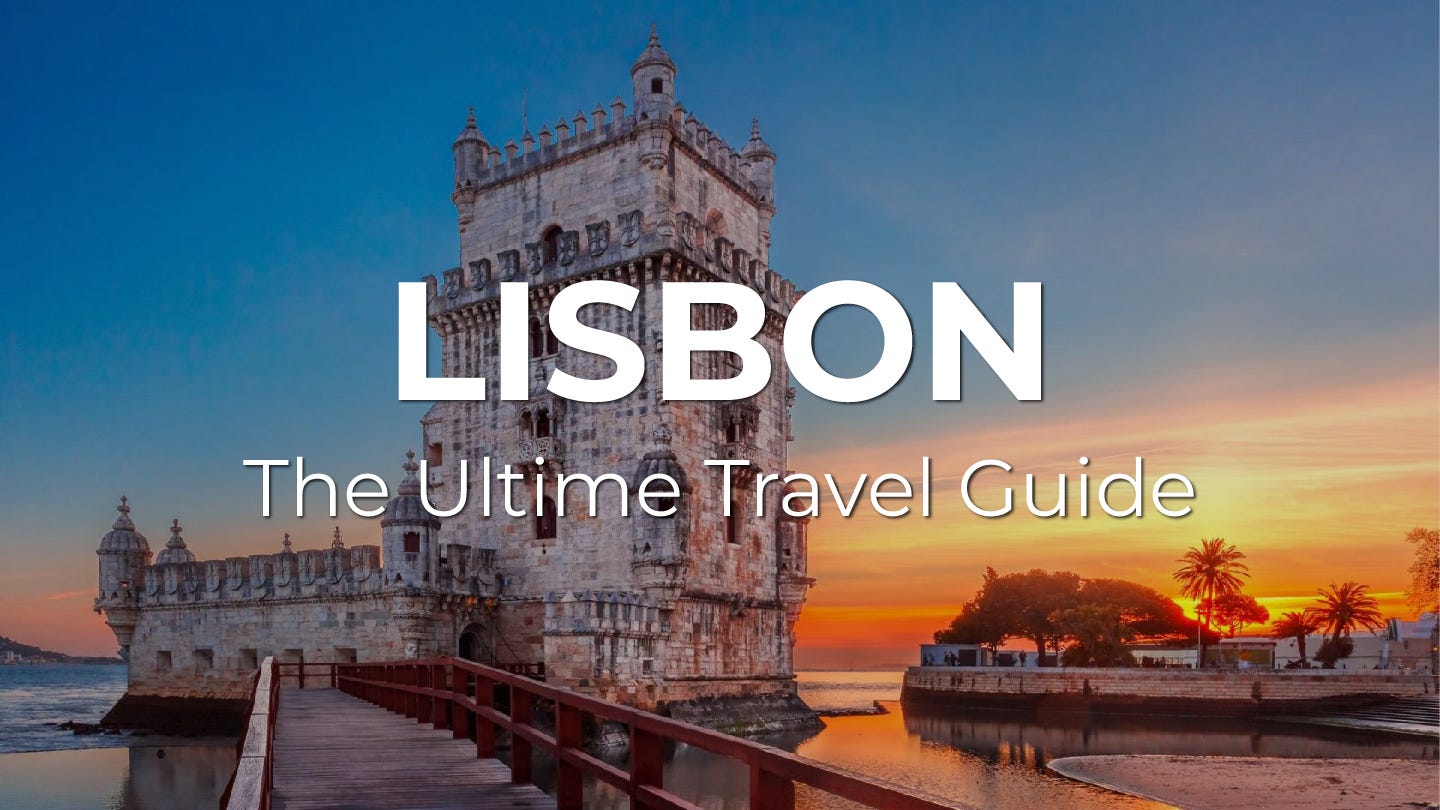
Lisbon is Europe’s quietest great city. It does not announce itself the way Rome or Barcelona does. It unfolds slowly, across seven hills, in azulejo tiles and fado music and the particular melancholy the Portuguese call saudade.
The light here is Atlantic light, softer and more luminous than Mediterranean light. The food is honest and excellent. The people are genuinely warm. And the city, for all the attention it has attracted in the past decade, has retained an authenticity that most European capitals lost a generation ago.
This guide covers the neighborhoods worth knowing, the experiences that define the city, the practical details you need before you go, and how to plan the right amount of time for the kind of trip you want.
Table of Content
🎙️BEYOND THE HORIZON: TRAVEL AND CRUISE PODCAST

Why Lisbon is worth visiting
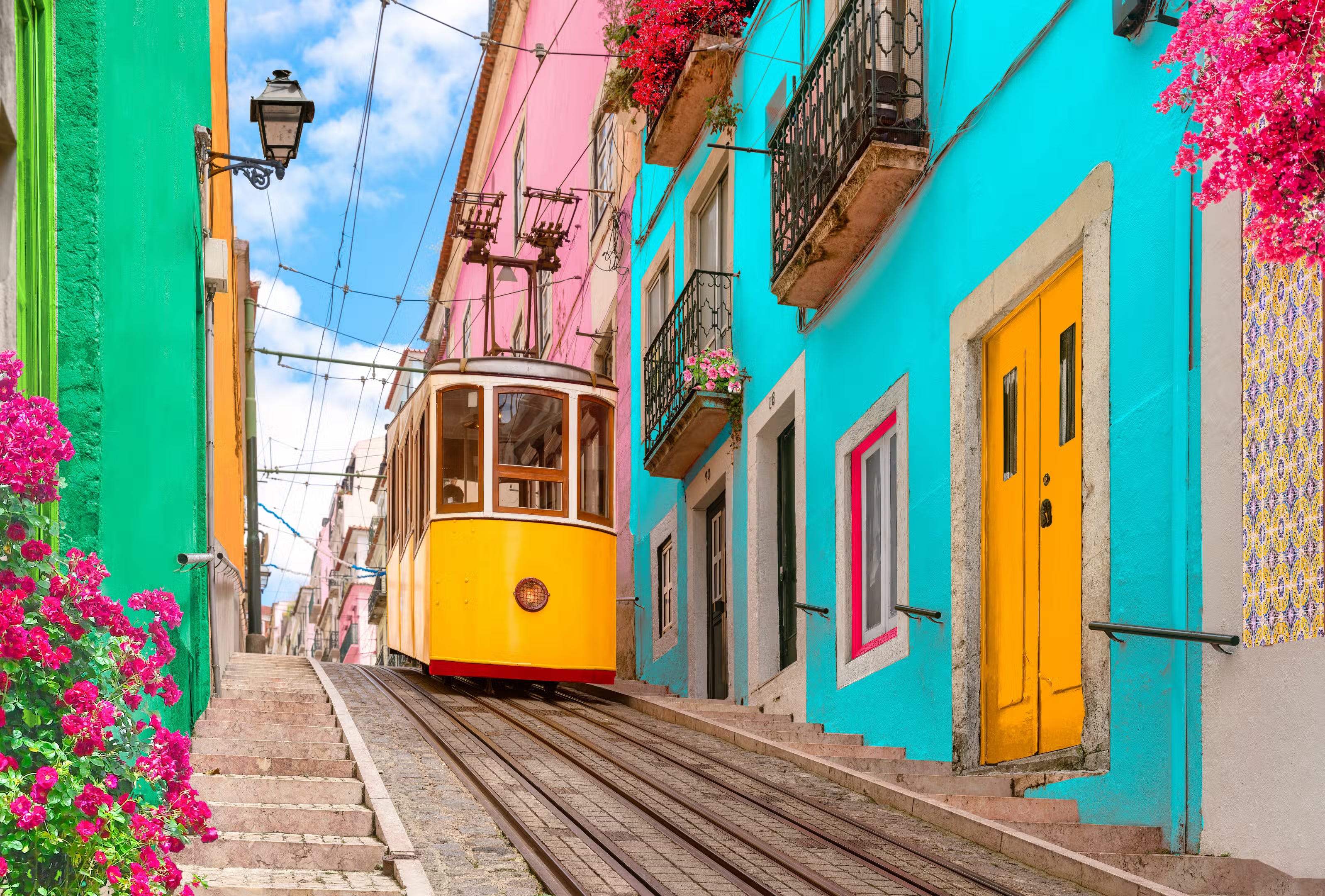
Lisbon has been one of the most talked-about destinations in Europe for the past decade, and the praise is deserved. It is a city that rewards visitors who slow down: the hills are steep but the views from the top are extraordinary, the trams are slow but the journey through the oldest neighborhoods is one of the pleasures of the city, the food is unfussy but the quality of the ingredients is exceptional. Lisbon does not try to impress you. It simply is what it is, which turns out to be more than enough.
The city sits at the mouth of the Tagus River, where it opens into an estuary wide enough to look like the sea. The light that bounces off that water and back onto the limestone hills is what painters and photographers have been chasing here for centuries. Combined with the azulejo tile facades, the wrought-iron miradouros, and the sound of fado drifting from an upstairs window in Alfama, it creates an atmosphere that is specific to Lisbon and nowhere else.
Lisbon also happens to be the gateway to some of the most beautiful landscapes in Western Europe: the fairy-tale palaces of Sintra, the dramatic cliffs of Cabo da Roca, the surf beaches of the Atlantic coast, and the wines of the Douro and Alentejo regions. For travelers discovering Portugal for the first time, the city is both the destination and the base for everything around it.
The neighborhoods you should know
Lisbon is built on seven hills, and its neighborhoods tend to follow those hills, each with a distinct character shaped by geography, history, and the people who live there.
Alfama
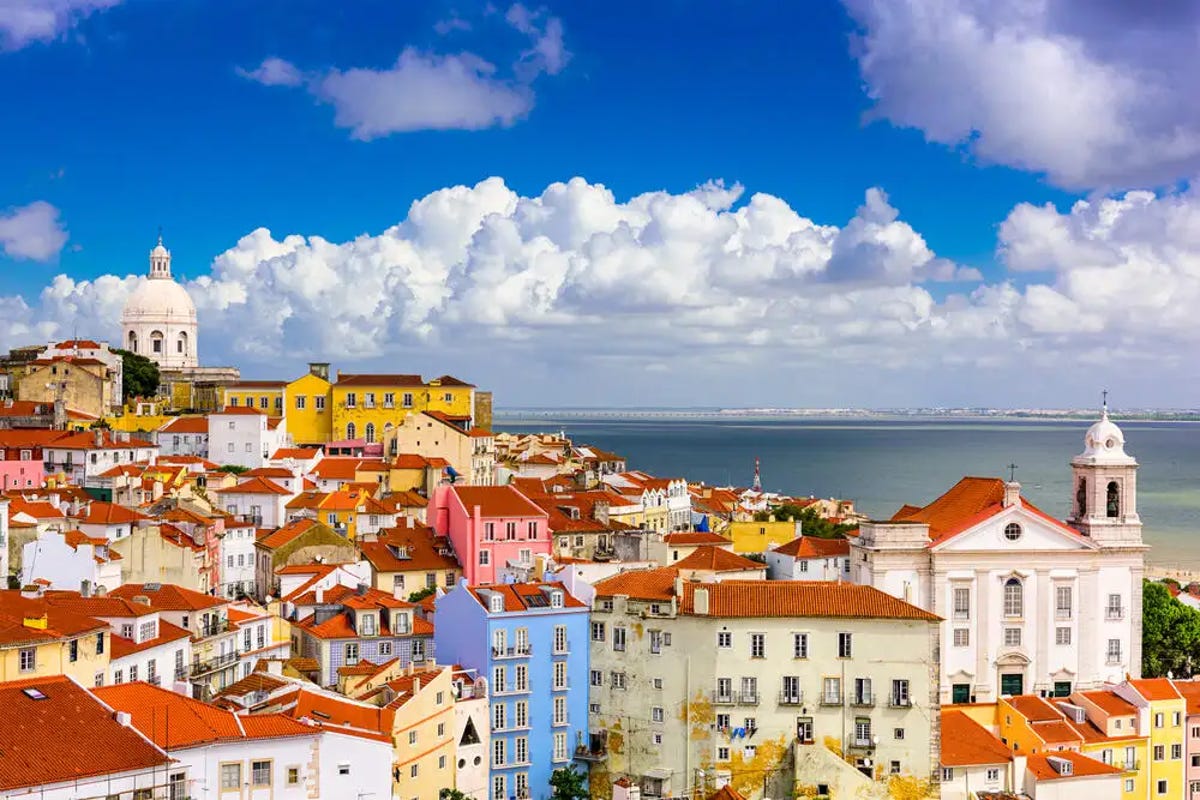
The oldest neighborhood in Lisbon, the only part of the city that survived the catastrophic earthquake of 1755 largely intact, and the birthplace of fado. Alfama climbs steeply from the Tagus riverfront up to the Castelo de Sao Jorge, a labyrinth of whitewashed alleys, small churches, laundry strung between windows, and the sound of birds and distant music. The neighborhood is touristy in patches, particularly around the tram 28 route, but move two streets off the main path and you find a community that has lived here for generations. Come on a Tuesday or Saturday morning, when the Feira da Ladra flea market spreads across the Campo de Santa Clara below.
Bairro Alto and Chiado
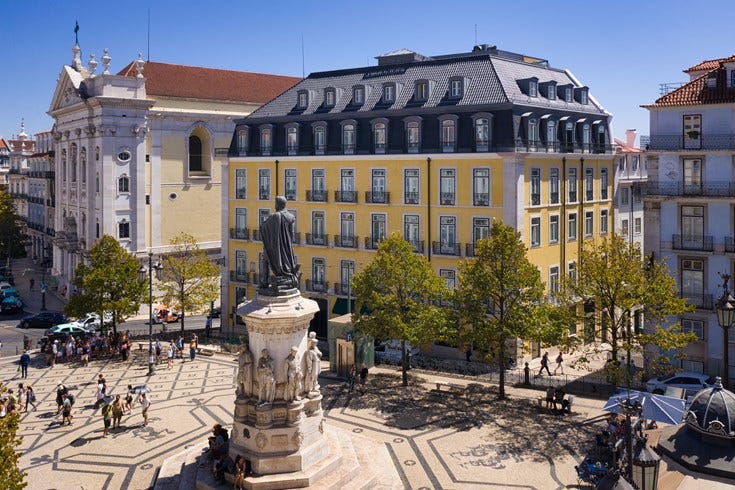
Two adjacent neighborhoods with complementary characters. Chiado is the sophisticated quarter: bookshops, cafe A Brasileira (where Fernando Pessoa drank his coffee), theatres, and the finest concentration of quality restaurants and concept stores in the city. Bairro Alto, immediately uphill, is where the nightlife lives: narrow streets packed with small bars from around 10pm until well past 3am. By day it is quiet, almost residential. By night it is one of the most atmospheric places in Portugal to drink wine at a pavement table.
Baixa and Rossio
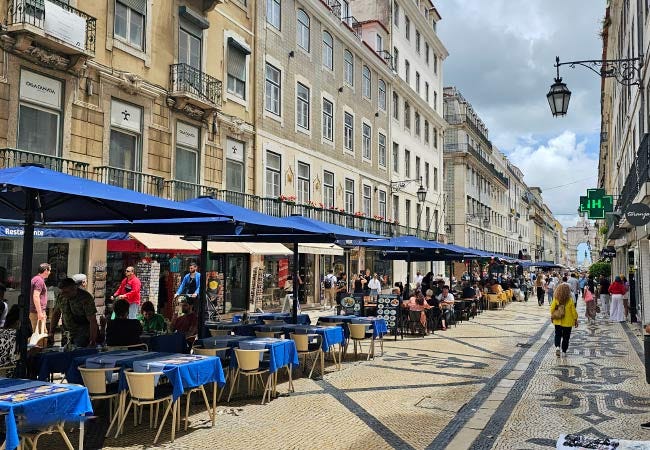
The flat, grid-planned lower city rebuilt after the 1755 earthquake by the Marquis of Pombal. Baixa is the commercial center of Lisbon, elegant in its Pombaline architecture and somewhat hollow in its modern function, full of tourist shops and banks. Rossio, the main square with its wave-pattern mosaic pavement, is the social heart of the city and worth crossing slowly. The Santa Justa Lift, an iron neo-Gothic elevator built in 1902, connects Baixa to the Chiado above and offers one of the finest views of the lower city from its upper platform.
Mouraria
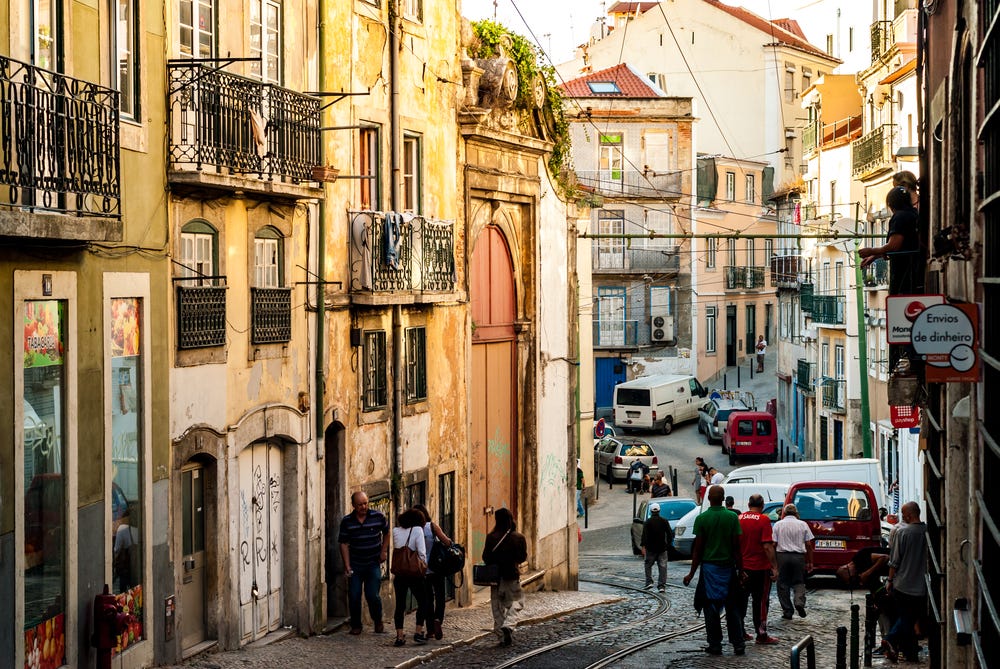
The historic Moorish quarter, immediately below the castle and adjacent to Alfama. Mouraria was the neighborhood where the Moors were confined after the Christian reconquest of 1147, and it retains a multicultural, layered identity that makes it one of the most interesting places in Lisbon to walk and eat. The streets are narrow and atmospheric, the restaurants span Portuguese, Indian, and Mozambican traditions, and the Intendente square at its northern edge has become one of the city’s most quietly vibrant public spaces.
Belem
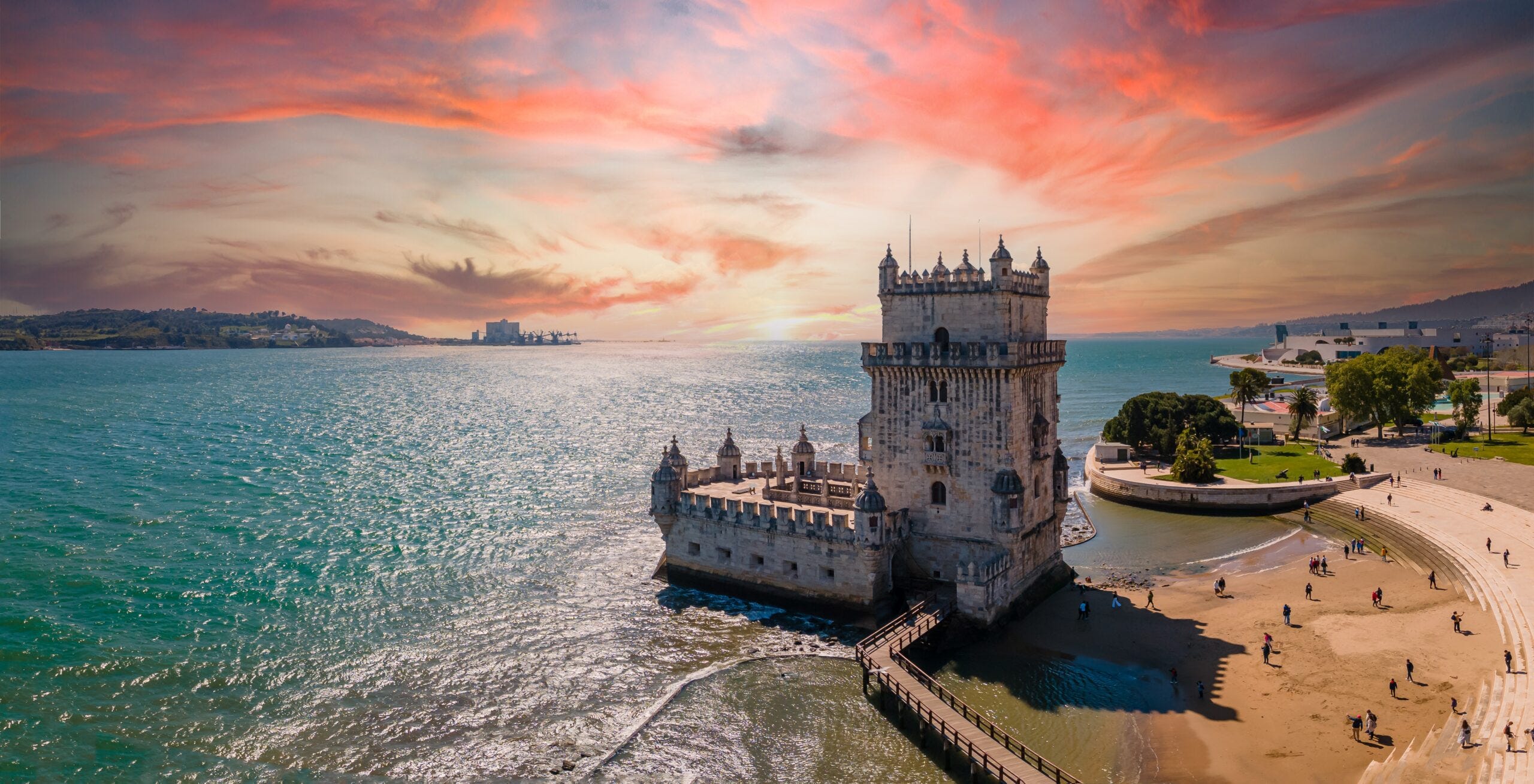
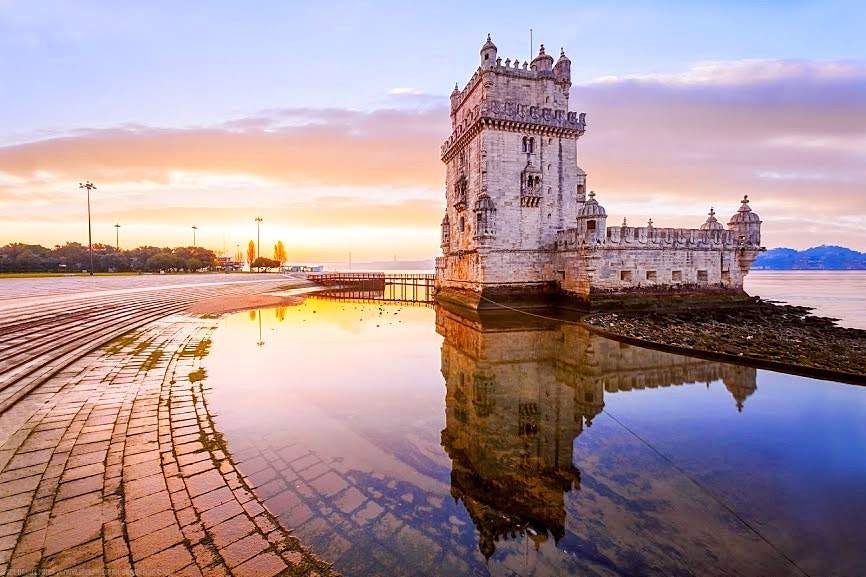
Not strictly a neighborhood but an essential destination: the riverside district west of central Lisbon where the Age of Discoveries monuments are concentrated. The Mosteiro dos Jeronimos, a UNESCO World Heritage masterpiece of Manueline architecture, and the Torre de Belem are both here. So is the Padrao dos Descobrimentos, the Monument to the Discoveries, and the original Pasteis de Belem bakery, where the recipe for the city’s iconic custard tarts has been a closely guarded secret since 1837. Take the tram or a taxi from the center; it is too far to walk comfortably.
LX Factory and Alcantara
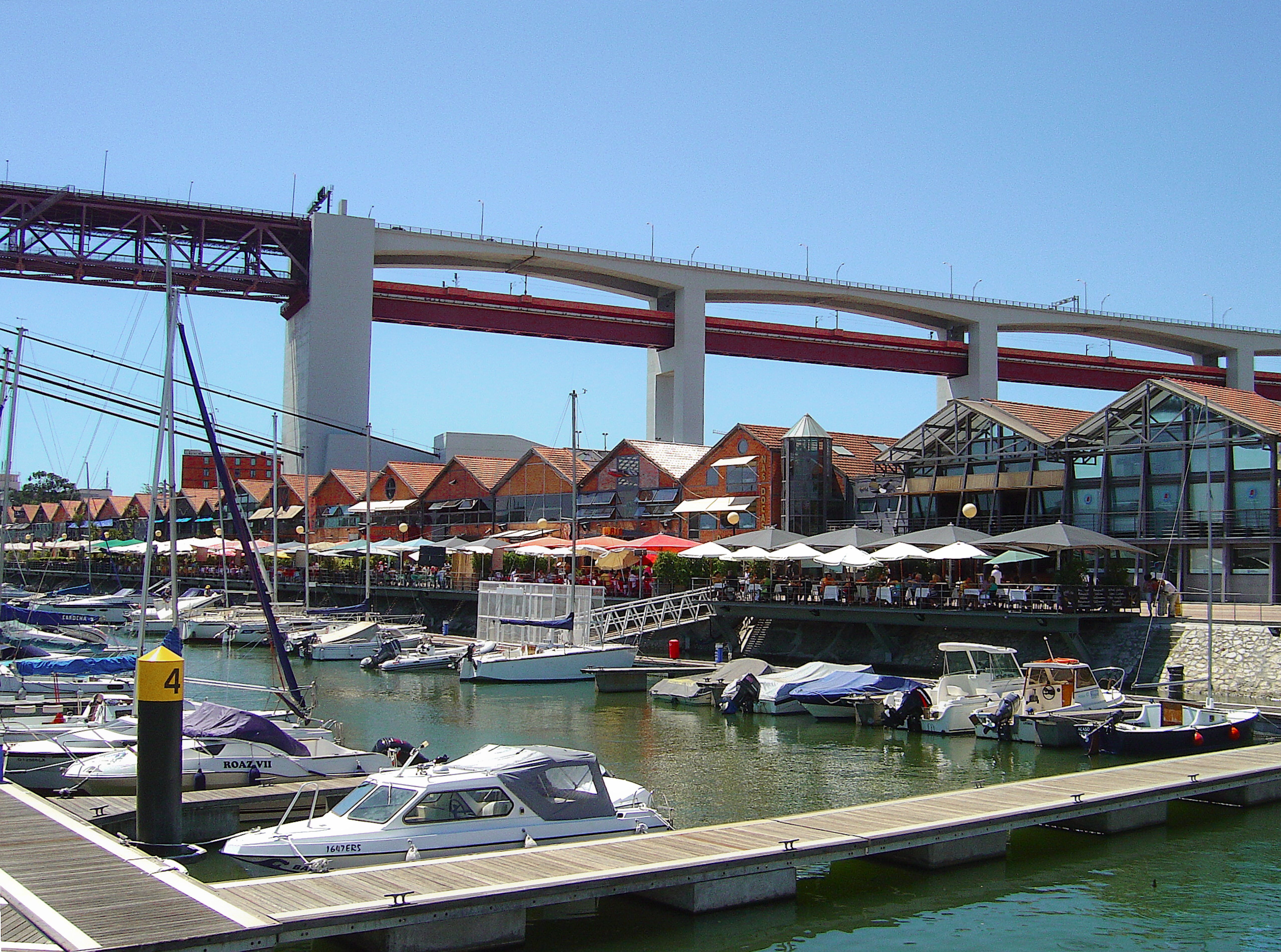
A 19th-century textile factory complex under the Abril 25 bridge, converted into one of the most interesting creative spaces in Lisbon: independent restaurants, concept stores, a weekend market, and a rooftop bookshop that is one of the most photographed spaces in the city. The surrounding Alcantara neighborhood is less visited than the center and more rewarding for it: riverside bars, the MAAT museum of art and technology, and a view of the bridge that makes you look twice.
Activities not to miss
Lisbon moves at a pace that suits unhurried exploration. These are the experiences that define the city, from the unmissable monuments to the small rituals that give it its character.

Belem: Jeronimos Monastery and the Discoveries
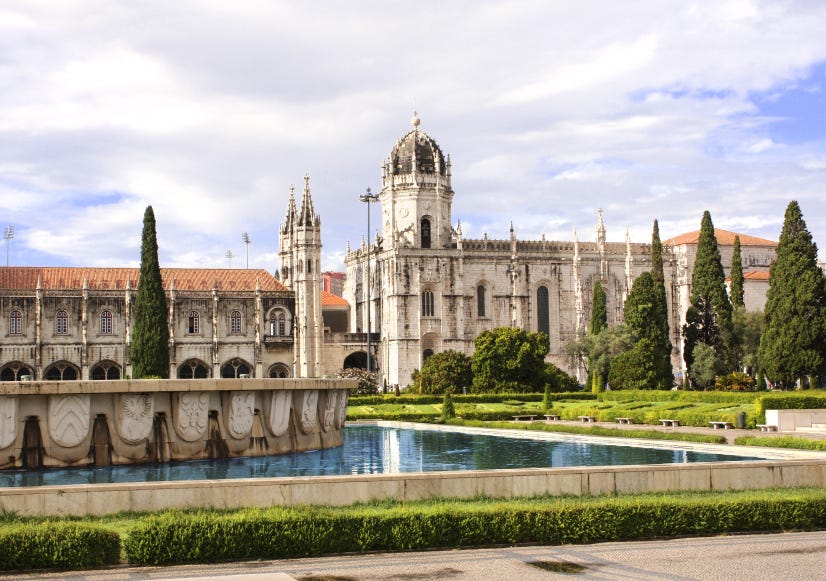
The Mosteiro dos Jeronimos is the finest example of Manueline architecture in existence: a style unique to Portugal that combines late Gothic structure with maritime motifs, armillary spheres, and the visual language of exploration. Built to commemorate Vasco da Gama’s voyage to India, it contains his tomb. The interior of the church, with its twisted columns and intricate vaulting, is extraordinary. Allow two hours minimum and book timed entry in advance during peak season.
Alfama walking tour and fado evening

Alfama is best understood with a guide who knows its history: the Moorish origins, the earthquake that spared it while destroying the rest of the city, the community of fadistas who kept the musical tradition alive through the 20th century. An evening that combines a walking tour of Alfama with dinner and a fado performance at one of the neighborhood’s traditional houses is one of the most complete Lisbon experiences available.
Castelo de Sao Jorge
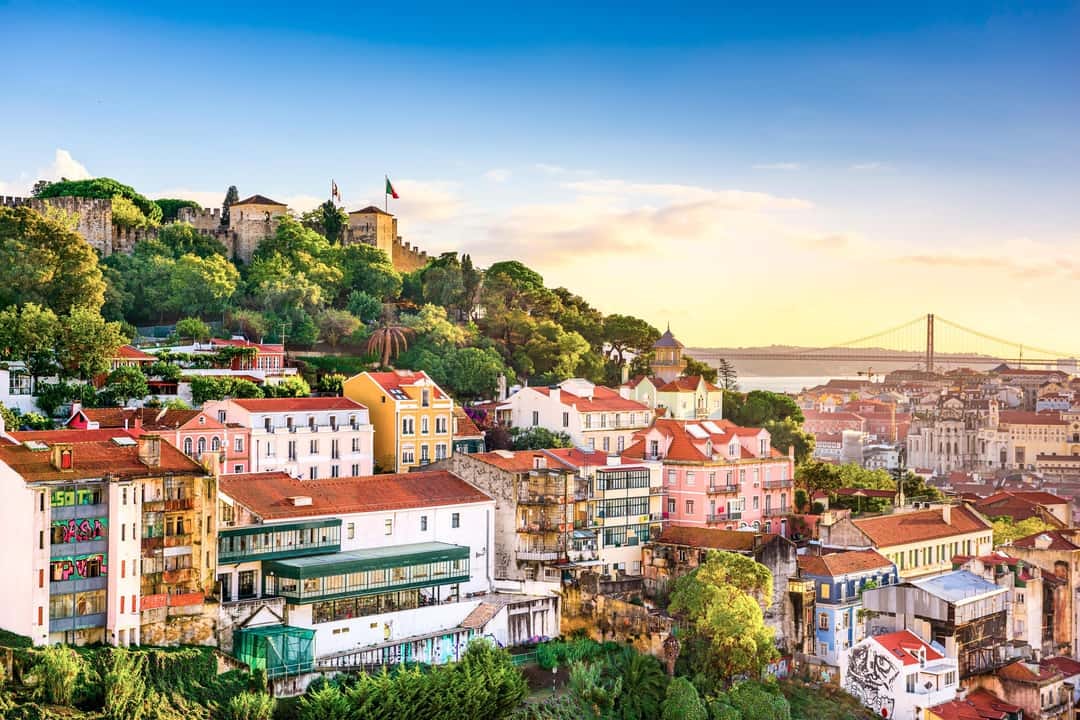
The hilltop castle that has dominated Lisbon since Moorish times, with the finest panoramic view of the city, the Tagus, and the bridge. The archaeological site within the castle walls contains excavations spanning 3,000 years of occupation, from the Iron Age to the Moorish period to the medieval Portuguese court. Go early morning or late afternoon for the best light and the thinnest crowds.
Tram 28 and the miradouros
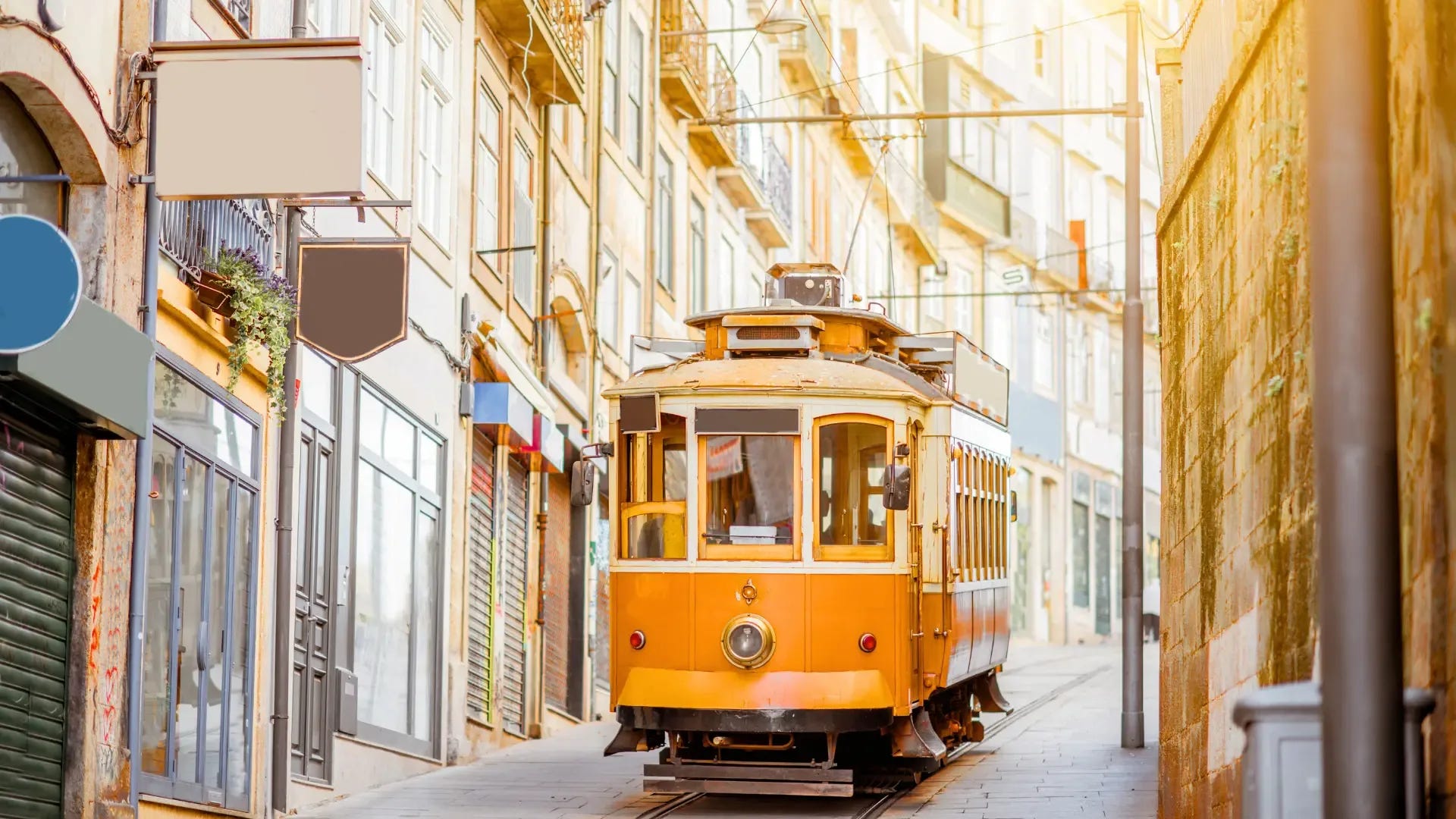
The vintage yellow Tram 28 climbs through Alfama, Graca, and Estrela, offering a slow transit through the oldest parts of the city that no bus or metro replicates. It is crowded and slow, which is precisely the point. Combine it with visits to the miradouros: the viewpoint terraces scattered across the hills, each with a different angle on the city. Miradouro da Graca and Miradouro de Santa Luzia are the most atmospheric; Miradouro de Sao Pedro de Alcantara has the finest view of the castle.
Pastel de nata and coffee culture

The pastel de nata, a flaky pastry shell filled with creamy egg custard and dusted with cinnamon and icing sugar, is the most important small ritual of Lisbon life. The original recipe belongs to Pasteis de Belem in the Belem district, where they have been baked since 1837. Every other version in the city is good; the original is extraordinary. Eat one standing at the counter, still warm, with a bica (the Portuguese espresso) alongside. This is not a tourist activity. It is how Lisbon starts every morning.
Tagus River sunset cruise

The Tagus estuary at sunset, seen from the water, with the city rising on its hills behind you and the April 25 bridge ahead, is one of the most beautiful urban views in Europe. A one to two hour evening cruise captures the light at its most extraordinary and provides a perspective on the city that no viewpoint on land can match.
Portuguese food tour
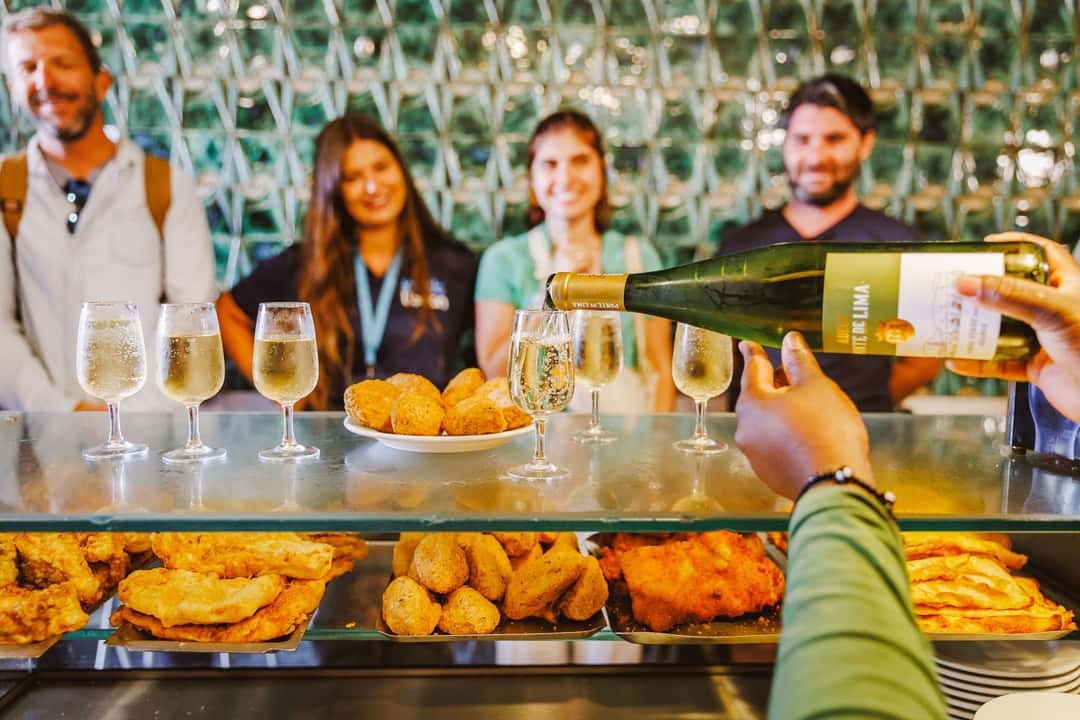
Portuguese cuisine is one of the most underrated in Europe: bacalhau (salt cod) in a hundred preparations, charcoal-grilled sardines, alheira sausage, percebes (barnacles) eaten with cold wine, petiscos (small plates that function like tapas but are distinctly Portuguese), and pastries that span the country’s monastic heritage. A guided food tour through the Mouraria, Alfama, or the Mercado da Ribeira covers the essentials with the context that makes them meaningful.
Day trips from Lisbon
Lisbon’s position at the southwestern edge of Europe makes it the starting point for some of the most diverse day trips available from any European capital: fairy-tale palaces, the westernmost point of mainland Europe, medieval walled towns, and the wine country of the Douro and Alentejo.
Sintra
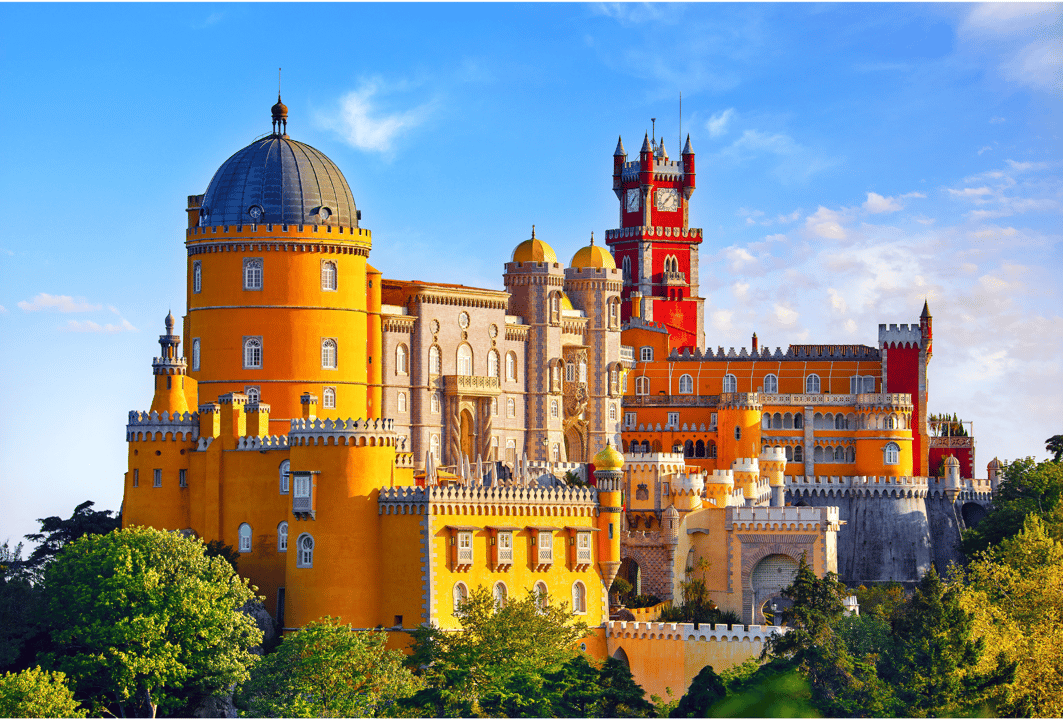
The single most visited day trip from Lisbon, and one of the most visually spectacular destinations in Portugal. Sintra is a UNESCO World Heritage town set in forested hills 30 minutes west of Lisbon, where the Portuguese royal family built their summer palaces across the centuries. Pena Palace, with its multicolored Romanticist towers visible from miles away, is the most famous. Quinta da Regaleira, with its mystical Initiation Well and Masonic symbolism, is the most fascinating. The town itself, with its pastry shops and cobbled lanes, is worth an hour. Book a guided tour: the palaces sell out and the logistics are complex on your own.
Cascais and the Estoril Coast
The elegant coastal town 30 minutes west of Lisbon by train, with a harbor full of fishing boats and pleasure yachts, excellent seafood restaurants, and the beach culture that Lisbon residents descend to on summer weekends. The Estoril Casino, the largest in Europe, overlooks the seafront and provided the inspiration for Ian Fleming’s Casino Royale. Cascais is best combined with a Sintra day trip or visited independently for a beach afternoon.
Obidos
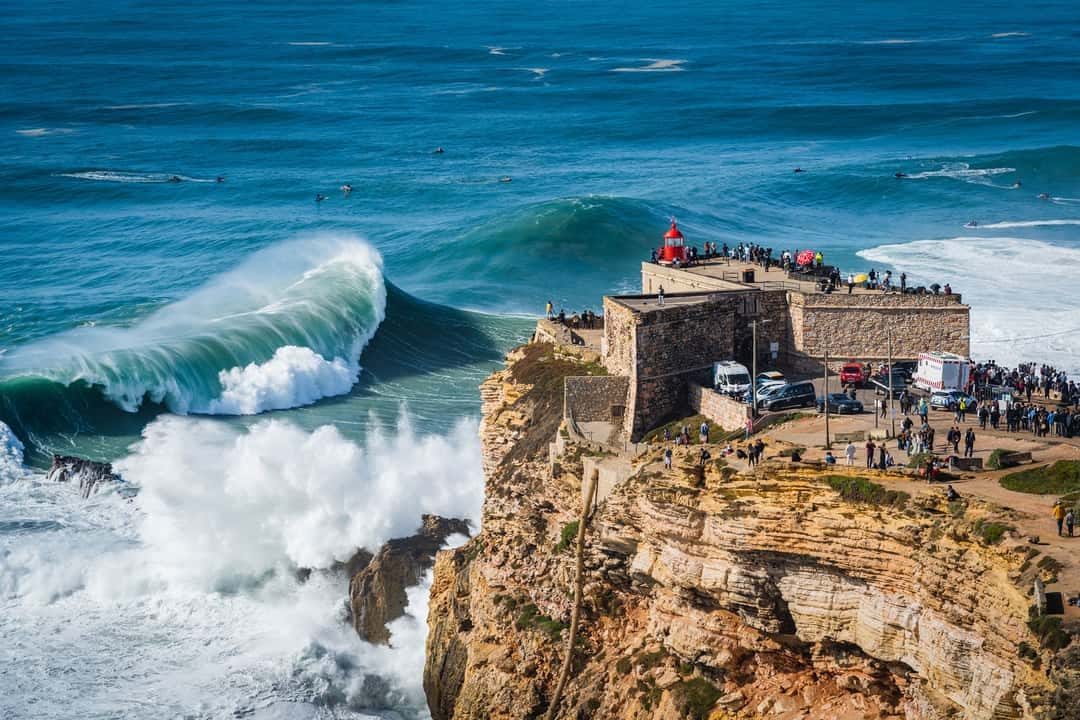
A perfectly preserved medieval walled town about an hour north of Lisbon, small enough to walk across in 20 minutes and extraordinary for it. The white houses with blue and yellow trim, the 14th-century castle converted into a pousada, and the streets so clean they look painted: Obidos is a set piece of medieval Portugal that has resisted every century since. Famous for ginja, a sour cherry liqueur served in a chocolate cup. Worth half a day, ideally combined with Nazare or Alcobaca.
Setubal Peninsula and Arrabida Natural Park
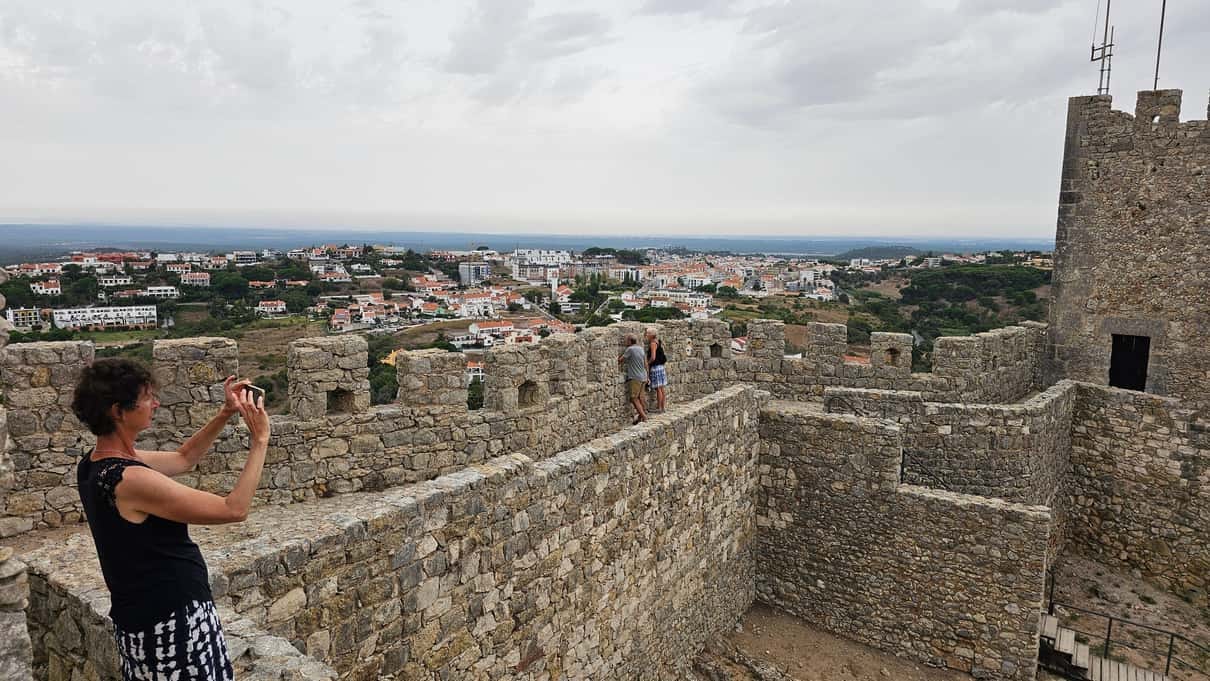
The peninsula south of Lisbon, across the Tagus, is one of the most beautiful and least visited natural areas in Portugal: dramatic limestone cliffs falling to turquoise water, the Serra da Arrabida Natural Park, the white sand beaches at Portinho da Arrabida, and the Moscatel wine of the Setubal region. About an hour from central Lisbon, it offers some of the finest swimming and scenery accessible as a day trip from any European capital.
When to visit Lisbon
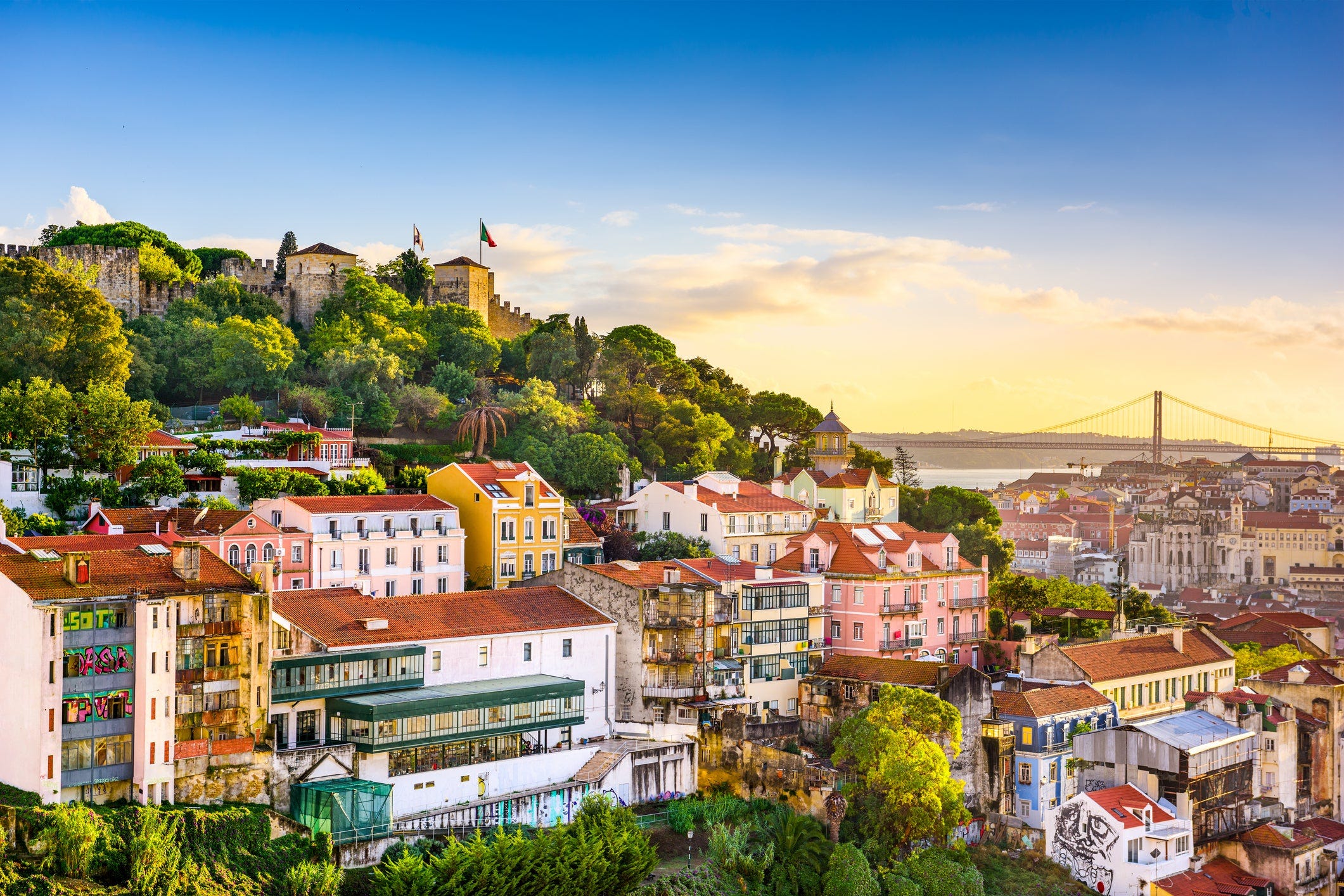
Lisbon has one of the most favorable climates in Western Europe, with mild winters and warm but not punishing summers. The city is genuinely enjoyable year-round, which makes it one of the few European capitals where a winter visit makes complete sense.
🌸 Spring
March to May. The finest season. Warm and sunny, wildflowers across the hills, long evenings, and manageable crowds. June starts to get busy. The Arraial Pride festival in June and the Santos Populares street celebrations on June 13 (Santo Antonio, the city’s patron saint) are the most atmospheric events of the year.
☀️ Summer
June to August. Hot but not extreme, usually around 30 to 32C, with the Atlantic breeze making it more comfortable than Mediterranean cities at similar temperatures. The city is busy but not as overwhelmed as Barcelona or Rome. The evenings are spectacular: long, warm, and full of outdoor dining.
🍂 Autumn
September to November. Excellent. September retains summer warmth with fewer crowds. October is superb for walking: cooler air, golden light, and the city fully operational. November brings the first rain but also a quieter, more residential version of Lisbon that many visitors prefer.
❄️ Winter
December to February. Mild by any European standard, rarely below 10C. Lisbon in winter is one of Europe’s best-kept secrets: affordable, uncrowded, and genuinely beautiful in the low winter light. Rain is concentrated in January and February but rarely lasts more than a day.
How many days to spend in Lisbon
Three days covers Alfama, Belem, the central neighborhoods, and one evening of fado at a comfortable pace. Four to five days adds a full day trip to Sintra, time for LX Factory and the riverside, and the slower exploration of Mouraria and Graca that rewards unhurried walking. A week lets you use Lisbon as a base for the Alentejo wine country or the beaches of the Setubal Peninsula.
Lisbon is one of those cities that reveals itself gradually. The first day shows you the monuments. The second shows you the neighborhoods. By the third, you start to understand why people who come for a week stay for a month.
Suggested 3-day itinerary
Day 1
Belem: Mosteiro dos Jeronimos, Torre de Belem, Monument to the Discoveries. Pastel de nata at Pasteis de Belem.
Tram 28 through Alfama. Castelo de Sao Jorge. Miradouro de Santa Luzia.
Alfama walking tour. Fado dinner at a traditional house in the neighborhood.
Day 2
Chiado: Livraria Bertrand, Cafe A Brasileira, Largo do Carmo and its roofless Gothic convent.
Santa Justa Lift and panoramic view. Walk down to Baixa. Mercado da Ribeira for lunch.
Bairro Alto aperitivo from 7pm. Dinner in Chiado or Bairro Alto. Wine bar until late.
Day 3
Mouraria food and cultural walk. Miradouro da Graca for the finest castle view.
LX Factory riverside. MAAT museum or simply the waterfront walk toward the bridge.
Tagus sunset cruise. Late dinner in Alcantara or back in the center.
Where to eat
Portuguese cuisine is built on exceptional ingredients: the finest olive oil in Europe, Atlantic seafood caught the same morning, wines from the Douro, Alentejo, and Vinho Verde regions that remain extraordinary value. These recommendations span different budgets and styles, all chosen for quality and character.
Tasca do Chico
Fado and petiscos
A small fado house in Bairro Alto with live performances most nights, excellent petiscos, and a genuinely intimate atmosphere. Book well in advance.
Cervejaria Ramiro
Seafood
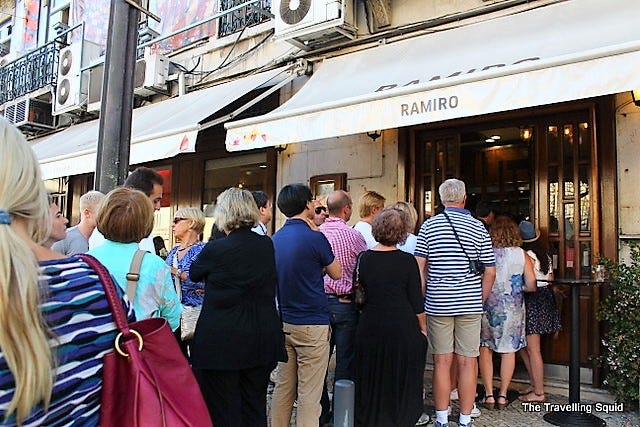
The definitive Lisbon seafood restaurant: enormous gambas, percebes, clams, and lobster in a noisy, tiled hall near Intendente. Consistently excellent for 60 years.
Taberna da Rua das Flores
Portuguese tavern
A Chiado institution for traditional Portuguese cooking done with care: bacalhau, roasted meats, excellent local wine list. Book at least a week ahead.
Time Out Market
Market hall
The original, and still one of the finest market food halls in Europe. A curated selection of Lisbon’s best chefs under one roof at the Mercado da Ribeira. Good for lunch or an informal dinner.
Solar dos Presuntos
Classic Portuguese
A Pombalina-era restaurant near Rossio that has been serving the most straightforward, correct Portuguese food in the city for decades. The bacalhau com broa is definitive.
A Cevicheria
Modern Portuguese
Chef Kiko Martins’s seafood-focused restaurant in Principe Real, serving extraordinary ceviches and contemporary fish dishes. One of the best tables in Lisbon.
Pasteis de Belem
Pastry
The original custard tart, made to a recipe kept secret since 1837. The queue moves fast. Eat them standing, with cinnamon, still warm.
Where to stay
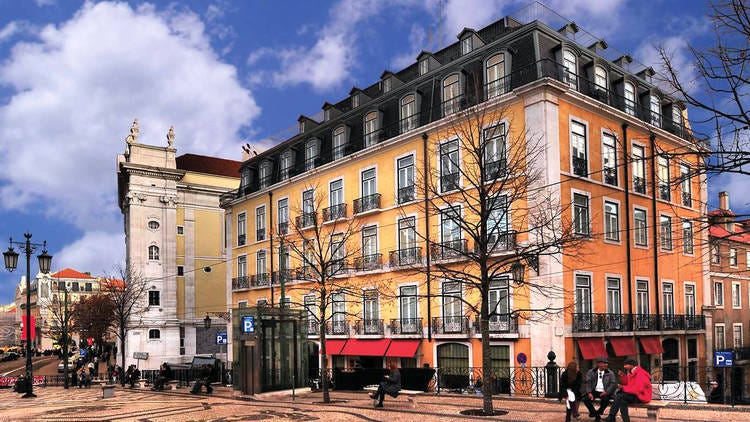
The best area to stay in Lisbon for first-time visitors is within walking distance of Chiado and Bairro Alto, which gives you easy access to the neighborhoods, the trams up to Alfama, and the restaurants and bars that define Lisbon evenings. Here are reliable options across different budgets.
Bairro Alto Hotel
Luxury
One of the finest hotels in Portugal, occupying a 19th-century palace at the border of Bairro Alto and Chiado. Extraordinary rooftop bar, impeccable service, and a genuine sense of the city around it.
Dear Lisbon - Palace Principe Real
Boutique / Mid-range
A converted palace in the elegant Principe Real neighborhood, with azulejo-tiled common areas and a garden. Quieter than Chiado, still perfectly central.
Memmo Alfama
Boutique / Mid-range
Built into the hillside below the castle in Alfama, with a terrace pool and panoramic Tagus views. Intimate, beautifully designed, and the most atmospheric location on this list.
Internacional Design Hotel
Mid-range
A playfully designed hotel on Rossio Square, with four differently themed floors and excellent central location. Good value for the position.
Home Lisbon Hostel
Budget
Consistently ranked among the best hostels in Europe, in a converted apartment near Rossio. Family-run, warm, and genuinely useful as a base for first-time visitors.
Torel Avantgarde
Boutique / Luxury
A hilltop boutique hotel above Intendente with extraordinary views, a pool, and one of the most interesting design concepts in Lisbon. Each floor references a period of Portuguese history.
Practical information
• Currency: Euro (EUR). Cards are widely accepted. Keep some cash for smaller tascas, the Feira da Ladra flea market, and neighborhood cafes that prefer it.
• Language: Portuguese. English is well understood in tourist areas, hotels, and most restaurants. A few words of Portuguese (bom dia, obrigado or obrigada) are genuinely appreciated and make a noticeable difference.
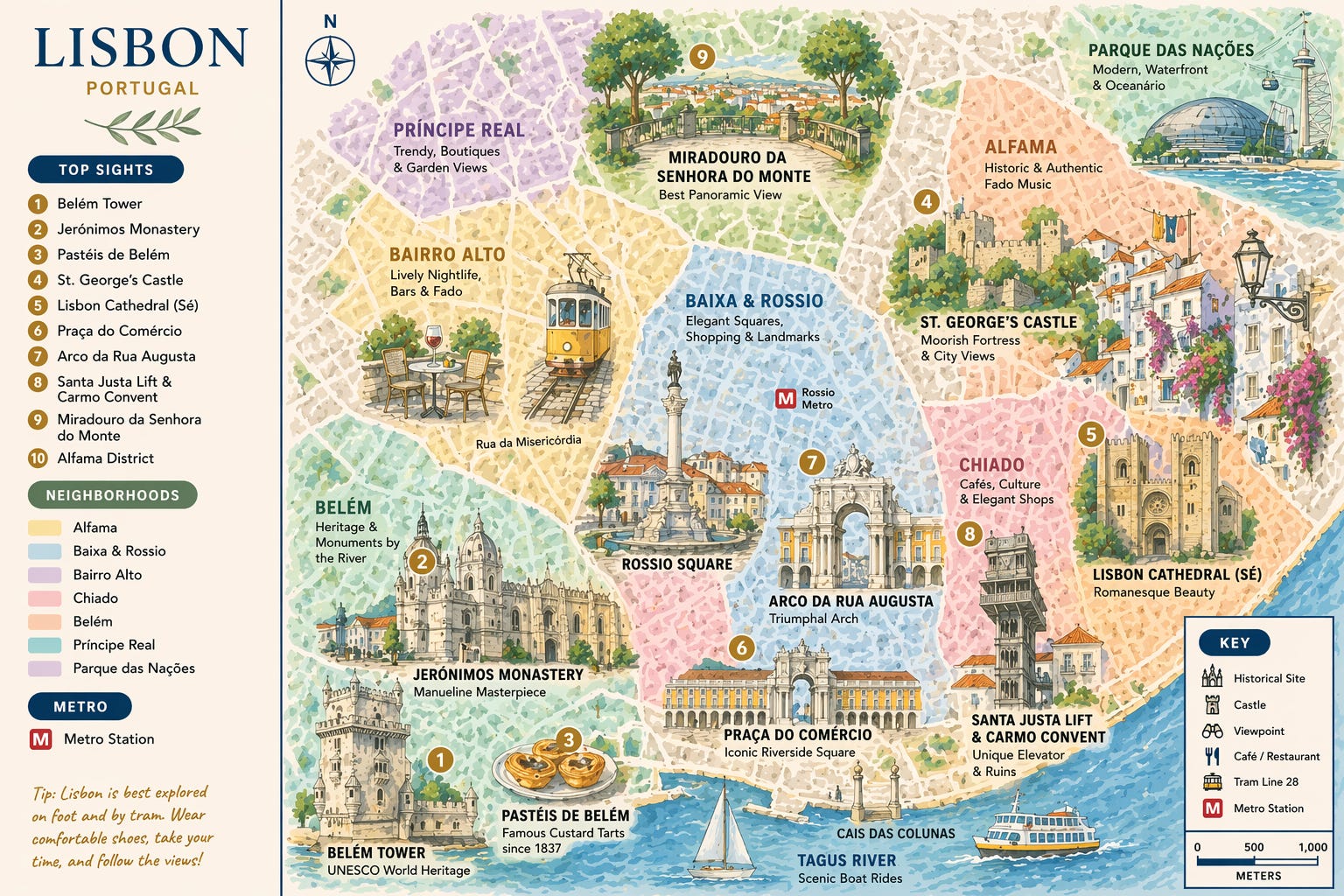
• Getting around: The city is best explored on foot, but the hills are steep: trams and elevators (elevadores) are part of the practical transport network as well as an attraction. The metro covers the main areas efficiently. Taxis and Uber are reliable and reasonably priced.
• The hills: Lisbon’s hills are steep and the cobblestones (calcada portuguesa) are beautiful but uneven and can be slippery when wet. Wear comfortable shoes with grip. Many of the most interesting routes involve significant climbing, which is worth knowing in advance.
• Internet: A Portuguese eSIM or European roaming plan works throughout the city. Wi-Fi is available in most cafes, hotels, and the metro.
• Safety: Lisbon is one of the safest capital cities in Europe. Pickpockets operate on Tram 28 and in the Alfama tourist areas. Standard vigilance in crowded spaces is sufficient.
• Tipping: Not mandatory but appreciated. Leaving five to ten percent for a good meal is the norm. Coffee at a counter: round up or leave the small change.
• Fado: Book fado evenings at established houses in Alfama (not the tourist traps on the main tram route) at least a few days in advance. The best houses are small, intimate, and sell out. A meal is typically included.
• Santos Populares: If visiting in June, the Festas de Santo Antonio on the night of June 12 to 13 is the most atmospheric event in the Lisbon calendar: the entire city is in the streets, grilling sardines, drinking wine, and dancing to pimba music until dawn.
How Lisbon fits into a broader trip
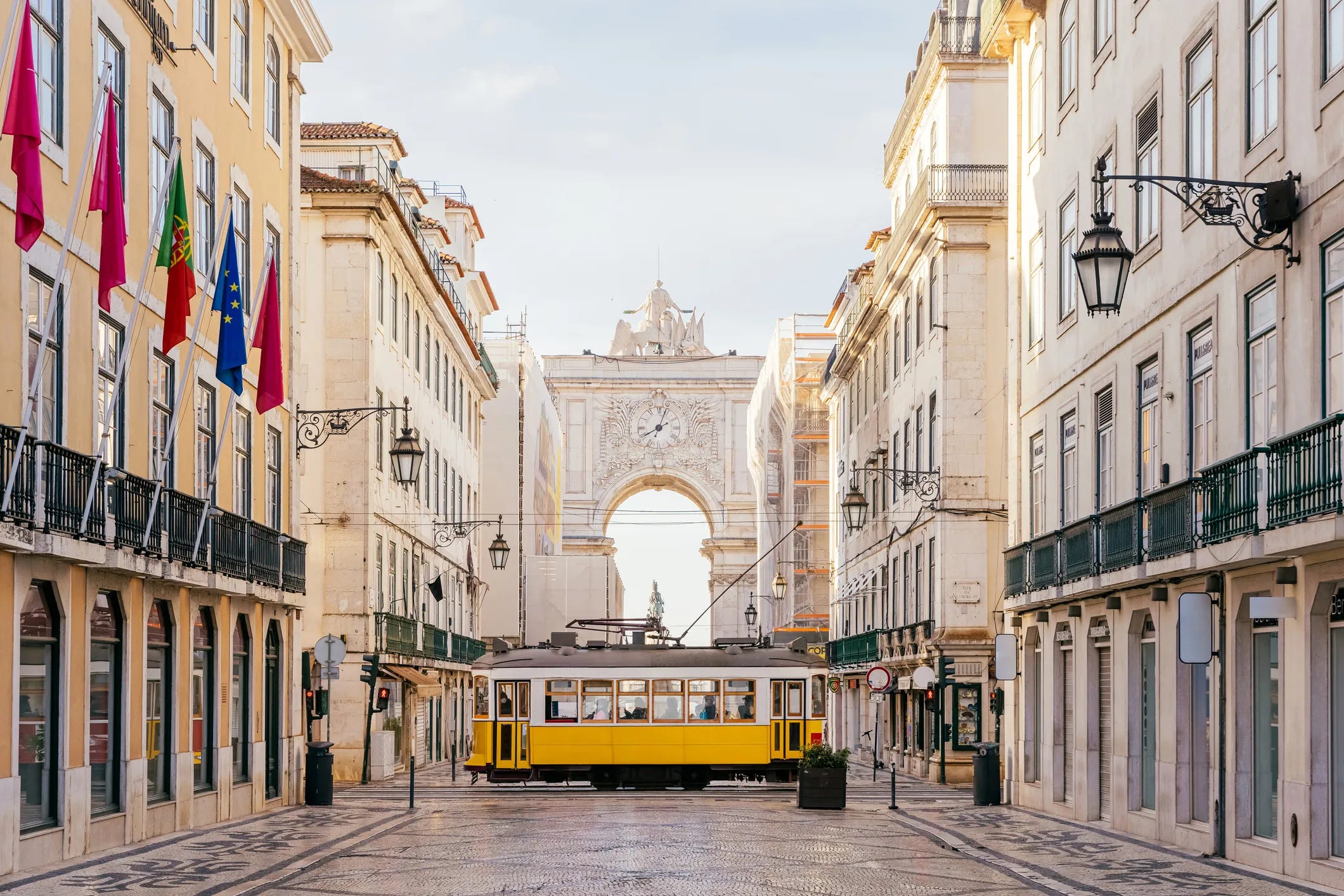
Most travelers combine Lisbon with at least one other Portuguese destination. The Algarve coast, about three hours south by train or bus, offers the finest beach scenery in Western Europe. Porto, three hours north by Alfa Pendular train, provides the complete counterpoint to Lisbon: northern, stony, wine-drenched, and architecturally extraordinary in a different register. The Douro Valley, accessible in a day from Porto, is one of the most beautiful wine regions on earth.
For travelers with ten days or more, a Portugal itinerary that moves between Lisbon, the Alentejo wine country, the Algarve, and Porto, with a river cruise on the Douro, is one of the most complete travel experiences available in Western Europe. The country is compact enough that distances that look significant on a map are manageable by train or rental car.
Frequently asked questions

Is Lisbon worth visiting for first-time travelers to Portugal?
Yes, without reservation. Lisbon is the indispensable starting point for Portuguese travel: it provides the historical, cultural, and culinary context for everything that follows, and it is one of the most immediately likable capitals in Europe.
How many days do you need in Lisbon?
Three days covers the essential neighborhoods and experiences at a comfortable pace. Four to five days allows for a full day trip to Sintra, time for LX Factory and the riverside, and the slower exploration that reveals the city’s real character.
What is the best time of year to visit Lisbon?
Spring (March to May) and autumn (September to October) offer the finest combination of weather, light, and manageable crowds. Lisbon in winter is genuinely underrated: mild, uncrowded, and beautiful. Summer is warm and lively without being as intense as other Mediterranean cities.
Is Lisbon safe for tourists?
Lisbon is consistently ranked among the safest capital cities in Europe. Pickpockets operate on Tram 28 and in heavily touristed areas of Alfama. Beyond standard vigilance in crowded spaces, the city presents very little risk.
What is fado and is it worth experiencing?
Fado is a uniquely Portuguese musical genre, listed by UNESCO as Intangible Cultural Heritage. Characterized by a Portuguese guitar, a viola baixo, and a singer expressing the untranslatable feeling of saudade (longing, melancholy, nostalgia combined), it is one of the most genuinely moving musical experiences in Europe when heard in the right setting. Book a reputable house in Alfama for a small-group performance with dinner.
Do I need to book Sintra in advance?
Yes. Pena Palace and Quinta da Regaleira both require timed entry tickets that sell out during peak season. Book at least 48 to 72 hours ahead, more in summer. A guided day trip from Lisbon handles the logistics and is strongly recommended for first-time visitors.
Is it easy to get around Lisbon without a car?
Yes. The metro, trams, buses, and Uber cover the city well. The hills make some routes tiring on foot, but the elevadores and the Santa Justa Lift ease the most challenging climbs. For day trips to Sintra and Cascais, the train from Rossio and Cais do Sodre is direct and efficient.
Plan your Lisbon trip with AERIA Voyages
Every traveler’s ideal Lisbon itinerary looks different depending on the time available, the experiences that matter most, and whether you want to stay in the city or use it as a base for the country around it. I help clients build trips that go beyond the standard circuit: a private fado evening in a centuries-old Alfama house, a curated Alentejo wine and cork experience, a Douro river cruise combined with Porto and Lisbon, or a complete Portugal itinerary that covers the country from north to south.
If you are planning a trip to Lisbon and want to talk through the options, I would be glad to help.
Yvan Junior Blanchette
Travel & Cruise Specialist
ÆRIA Voyages📩 yvanblanchette@aeriavoyages.com
📞 1-888-460-3388
🌐 aeriavoyages.com