

The Ultimate ATHENS Travel Guide: What to know, where to go, and how to make the most of your visit
Updated 2026 | Greece | First-time visitors | In-depth travel
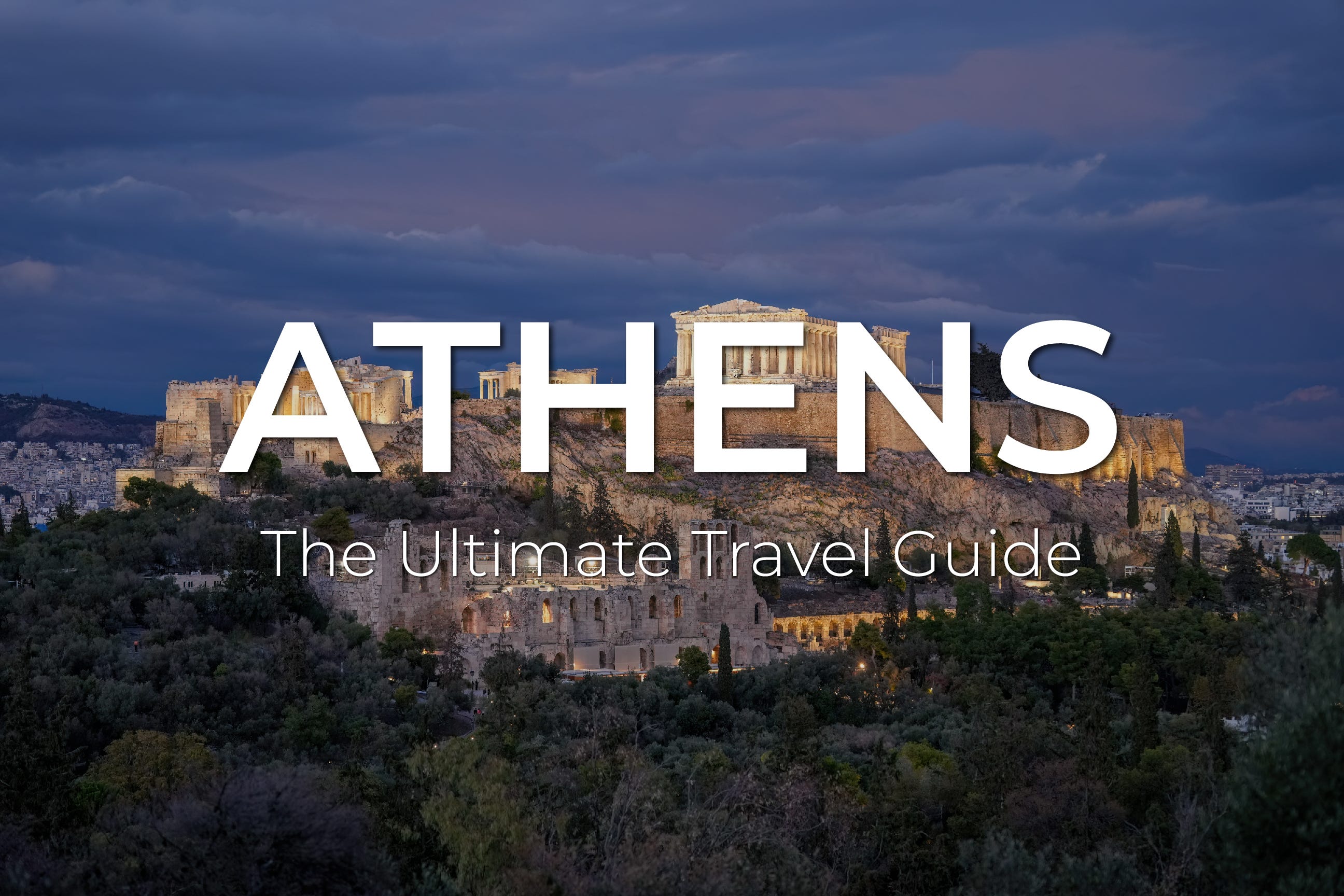
Athens is where Western civilization began, and the evidence is everywhere: in the marble columns of the Acropolis overhead, in the philosophical debates that still echo in the names of its streets, in the democratic traditions that shaped every government that followed. But Athens is not merely a museum. It is a living, noisy, opinionated Mediterranean city with excellent food, a nightlife scene that starts at midnight, and neighborhoods that have nothing to do with antiquity.
This guide covers both: the ancient city that draws visitors from around the world, and the modern one that makes them want to stay longer than planned.
Table of Content
🎙️BEYOND THE HORIZON: TRAVEL AND CRUISE PODCAST

Why Athens is worth visiting
Athens is the only major European capital where you can stand in a neighborhood cafe, look up, and see a 2,500-year-old temple on the hill above you. The Acropolis is not a ruin on the edge of town or a site you have to travel to see: it is the permanent backdrop of daily life, visible from rooftops, from market squares, from the windows of apartment buildings. No amount of preparation fully conveys what it feels like to be in its presence for the first time.
Beyond the ancient monuments, Athens has changed dramatically over the past two decades. The neighborhoods of Monastiraki, Psiri, Koukaki, and Exarcheia have developed into one of the most interesting urban food and cultural scenes in Southern Europe. Greek cuisine, long underestimated internationally, has found a generation of chefs willing to take it seriously. The city's coffee culture is among the most sophisticated anywhere. And the light, that particular golden Mediterranean light that photographers speak of, does something to everything it touches.
For travelers visiting Greece for the first time, Athens is the essential starting point. It anchors everything that follows: the islands, the Peloponnese, the northern mountains. Without it, the rest of Greece is beautiful but contextless.
The neighborhoods you should know
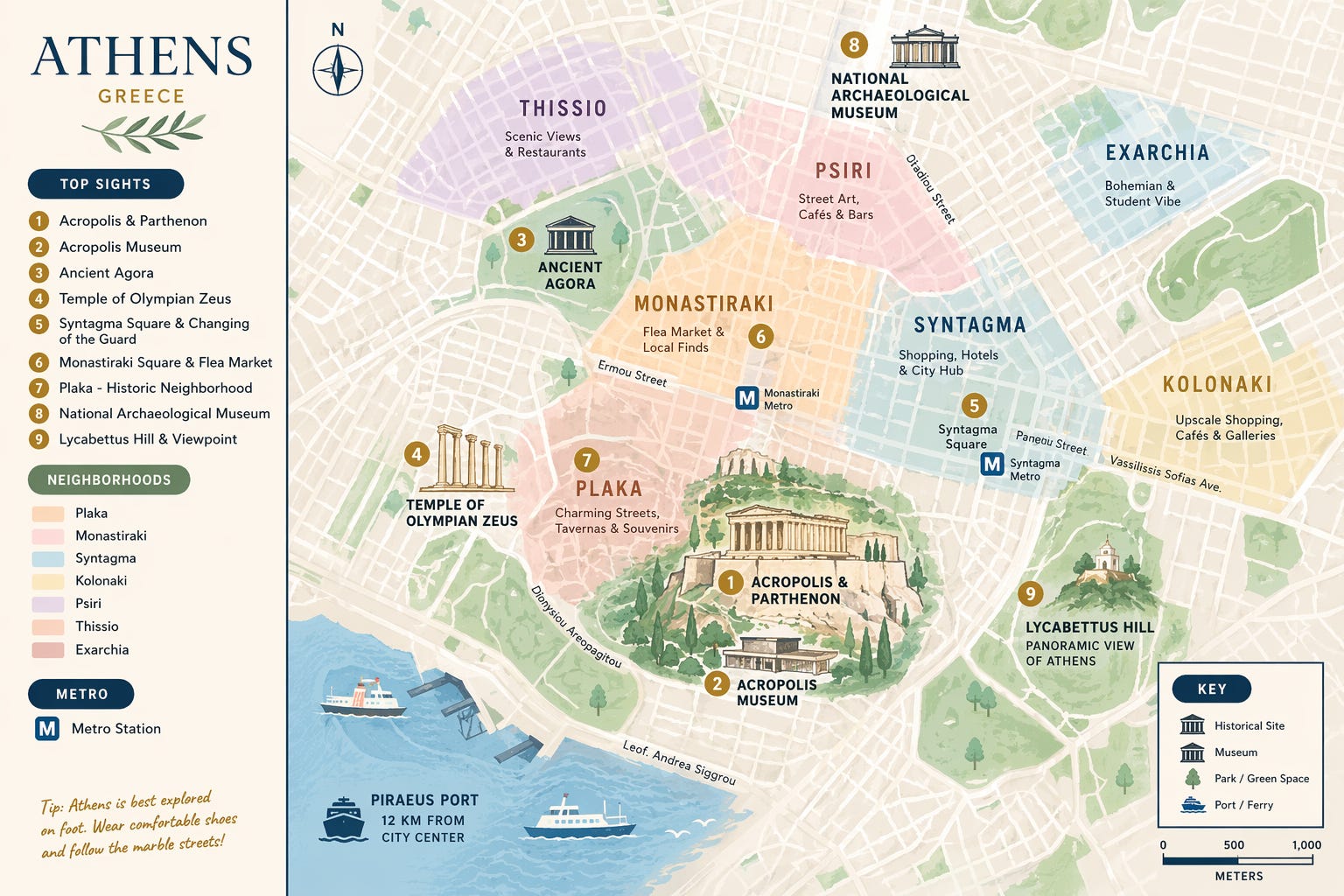
Athens is a large and sprawling city, but the areas of interest to most visitors are clustered in a relatively compact zone around the Acropolis. Each neighborhood has a distinct character worth understanding before you arrive.
Plaka
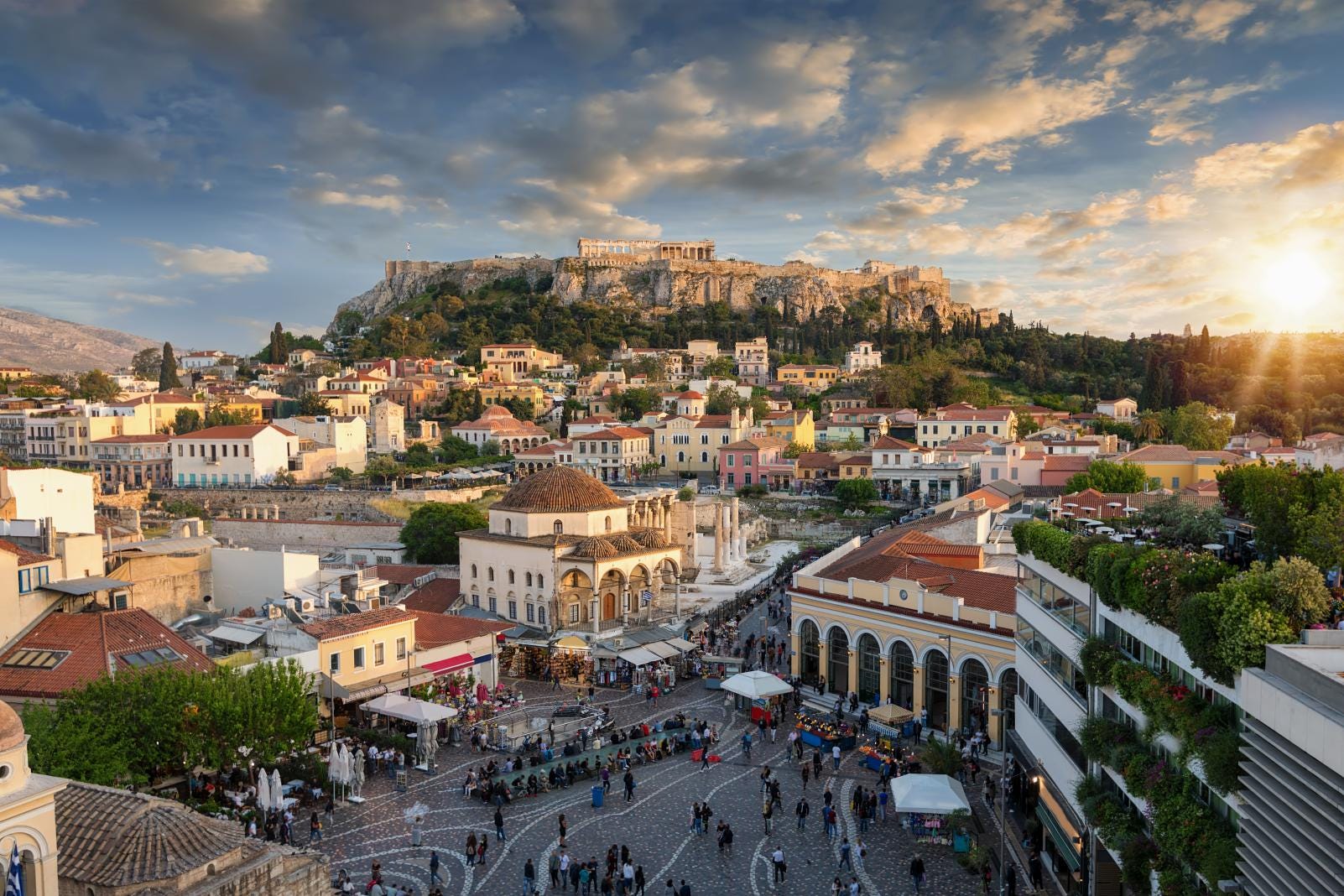
The oldest continuously inhabited neighborhood in Athens, built on the northern and eastern slopes of the Acropolis and dating back to antiquity. The streets are narrow, often stepped, and lined with neoclassical houses, small churches, and shops selling everything from linen and ceramics to questionable souvenirs. Plaka is unambiguously touristy, but it is also genuinely charming, particularly in the early morning or late evening when the crowds thin and the neighborhood shows its residential face. The small Byzantine churches tucked into its lanes are worth seeking out.
Monastiraki
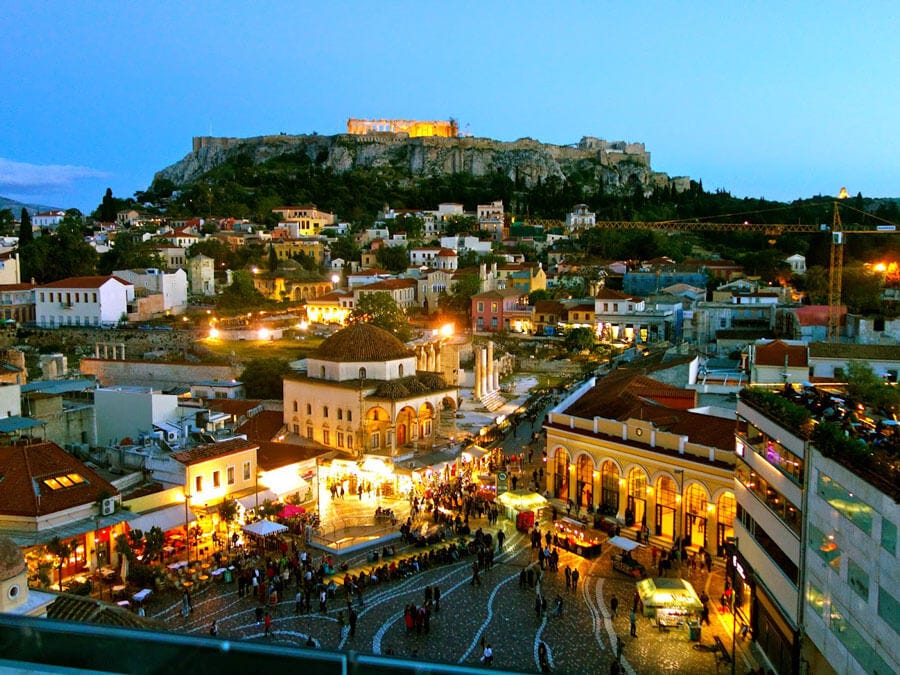
The beating commercial heart of central Athens, anchored by its famous flea market and the ancient Agora on its western edge. Monastiraki Square, with its mosque and the restored 18th-century Tzisdarakis Mosque, is one of the most atmospheric public spaces in the city. The flea market, which extends into the Avissinia Square area, is at its most interesting on Sunday mornings. The neighborhood connects directly to Psiri to the north and Plaka to the east, making it the natural hub for a day of walking.
Psiri
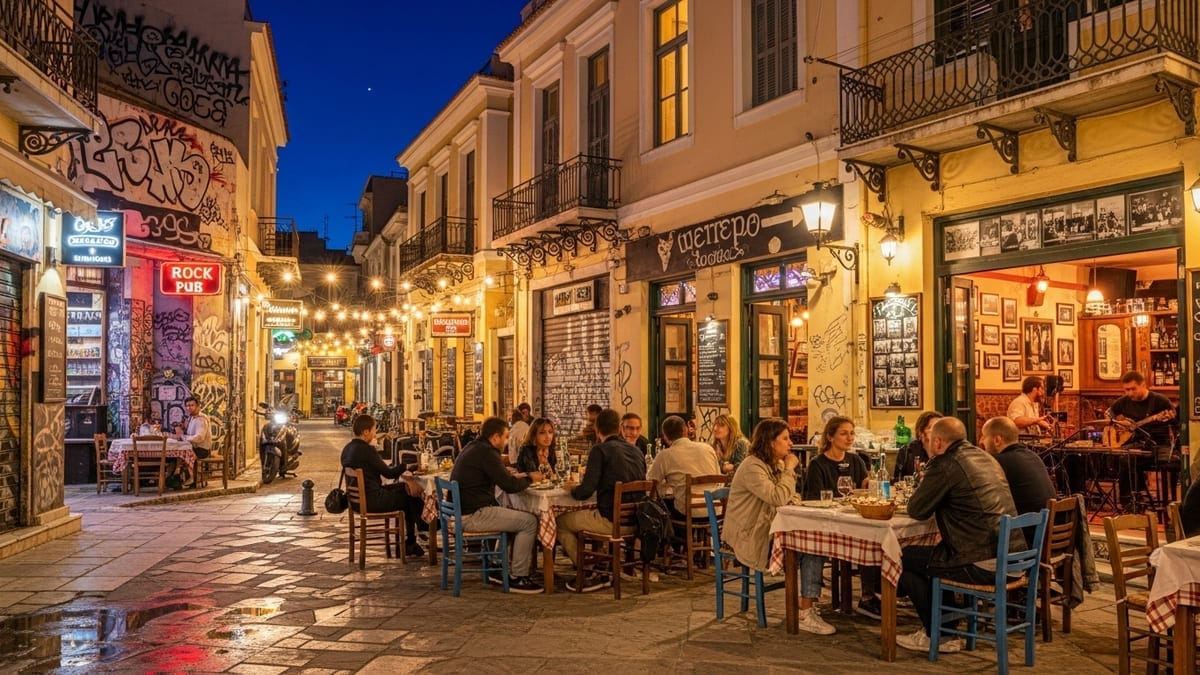
Just north of Monastiraki, Psiri spent most of the 20th century as a working-class neighborhood of craftsmen and small workshops. In the 1990s it became Athens's first nightlife district; today it sits in a more balanced state between its industrial past, its bohemian identity, and the restaurants and bars that have made it one of the best evening destinations in the city. The streets are lively without being aggressive. The food ranges from outstanding modern Greek to excellent cheap mezedes.
Koukaki
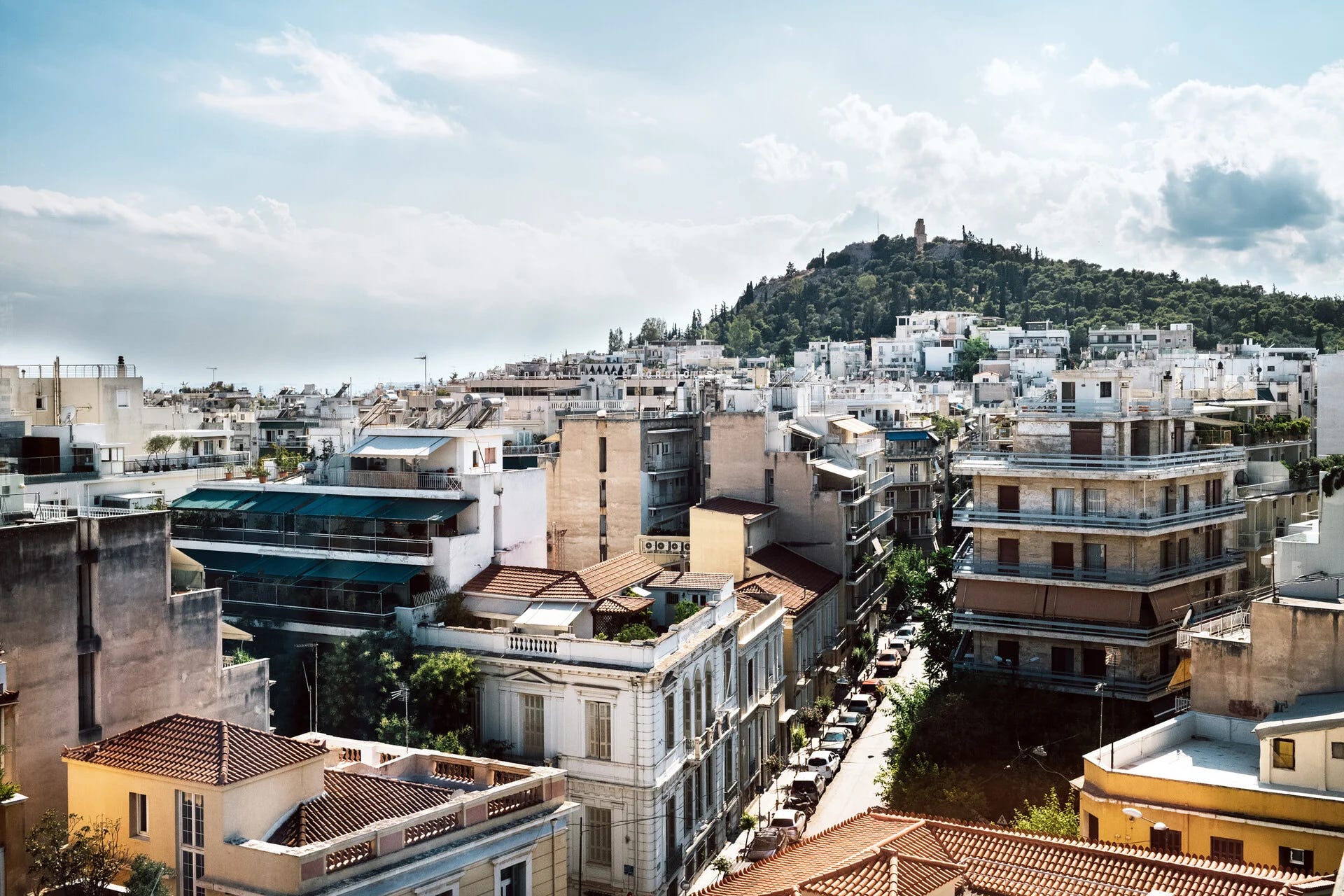
The residential neighborhood immediately south of the Acropolis, Koukaki is where Athenians who care about good coffee and independent bookshops actually live. It has no major monuments, which is precisely its appeal: the neighborhood gives you a sense of the city as it functions day to day, away from the tourist circuits. It is also home to some of the best new-wave Greek restaurants in Athens, in a stretch of streets between the Acropolis Museum and Filopappou Hill.
Exarcheia
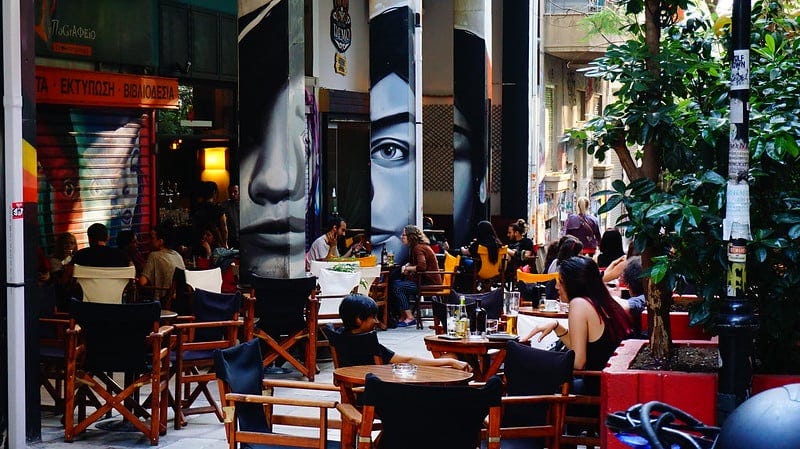
Athens's most politically charged neighborhood, the historic center of the Greek anarchist movement and student life, clustered around the National Technical University. Exarcheia has the best independent record shops and bookstores in the city, excellent cheap tavernas, and a street-art culture that covers entire building facades. It is not dangerous, but it is emphatically not polished: crumbling neoclassical buildings, hand-painted signs, and an atmosphere that resists gentrification actively. Worth visiting for a meal and a walk, particularly in the evening.
Kolonaki
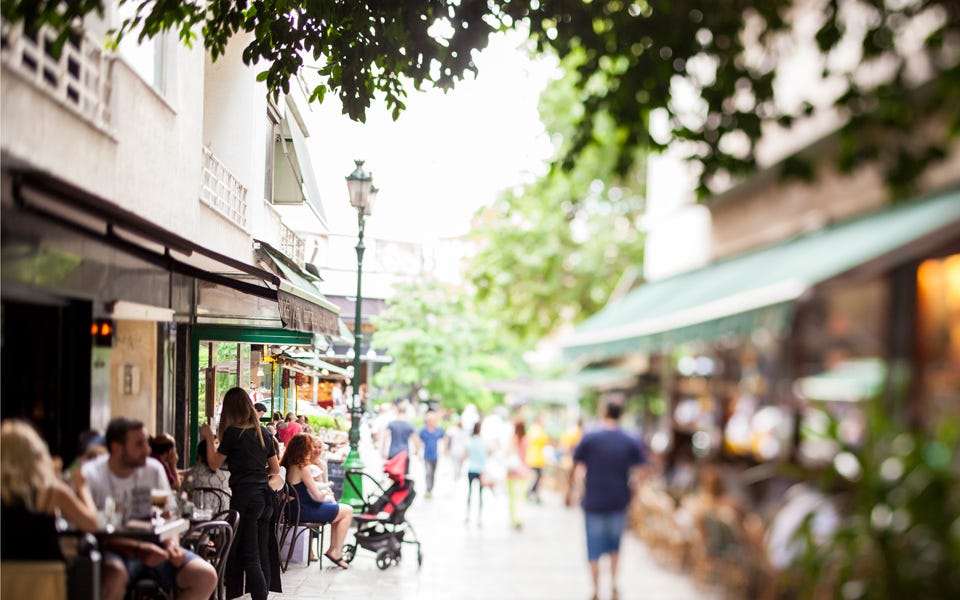
The upscale neighborhood on the slopes of Lycabettus Hill, with designer boutiques, well-heeled cafes, and the city's best art galleries and private museums. The Goulandris Museum of Cycladic Art is here, as is the funicular that climbs Lycabettus for the finest panoramic view of Athens. Kolonaki is quieter and more polished than the neighborhoods to the south, and offers a useful counterpoint to the intensity of Monastiraki and Psiri.
Activities not to miss
Athens offers more ancient monuments per square kilometer than almost any other city on earth. These are the experiences that matter most, organized to help you approach them well.
The Acropolis and the Parthenon

The centerpiece of Athens and one of the most significant monuments in human history. The Parthenon, built between 447 and 432 BC under Pericles, remains the definitive expression of classical Greek architecture despite 2,500 years of war, looting, earthquakes, and a Turkish gunpowder explosion.
The Acropolis site also includes the Erechtheion with its famous Caryatid porch, the Temple of Athena Nike, and the monumental Propylaea gateway. Go early: the site opens at 8am, and the first hour offers dramatically lower crowds and cooler temperatures. A guide is strongly recommended: the context transforms the experience.
The Acropolis Museum

One of the finest purpose-built museums in the world, designed specifically to house the surviving sculptures and artifacts from the Acropolis. The top floor, with its glass-walled Parthenon Gallery, allows visitors to see the original friezes in the same orientation they occupied on the temple, with the building itself visible through the windows. The Caryatids from the Erechtheion, five of the original six, are displayed at eye level on the first floor. Do not skip this museum: it completes the Acropolis visit in ways the hilltop alone cannot.
The Ancient Agora

The commercial, political, and social heart of ancient Athens, where Socrates walked and debated, where the first democratic institutions were established, and where the foundations of Western philosophy were laid. The site is less dramatic than the Acropolis but more historically resonant for anyone who understands what happened here. The Temple of Hephaestus, on the western edge of the Agora, is the best-preserved ancient Greek temple in existence. The Stoa of Attalos, a reconstructed ancient shopping colonnade, houses an excellent small museum.
The National Archaeological Museum

The greatest collection of ancient Greek art in the world, housed in a grand 19th-century neoclassical building in central Athens. The gold death masks from Mycenae, the bronze Poseidon of Artemision, the Antikythera Mechanism, and the extraordinary Cycladic figurines are among the highlights. Budget three to four hours minimum. The museum is often overlooked in favor of the Acropolis sites but is arguably the more complete experience of Greek civilization across all periods.
Athens Food Tour in Monastiraki and Psiri
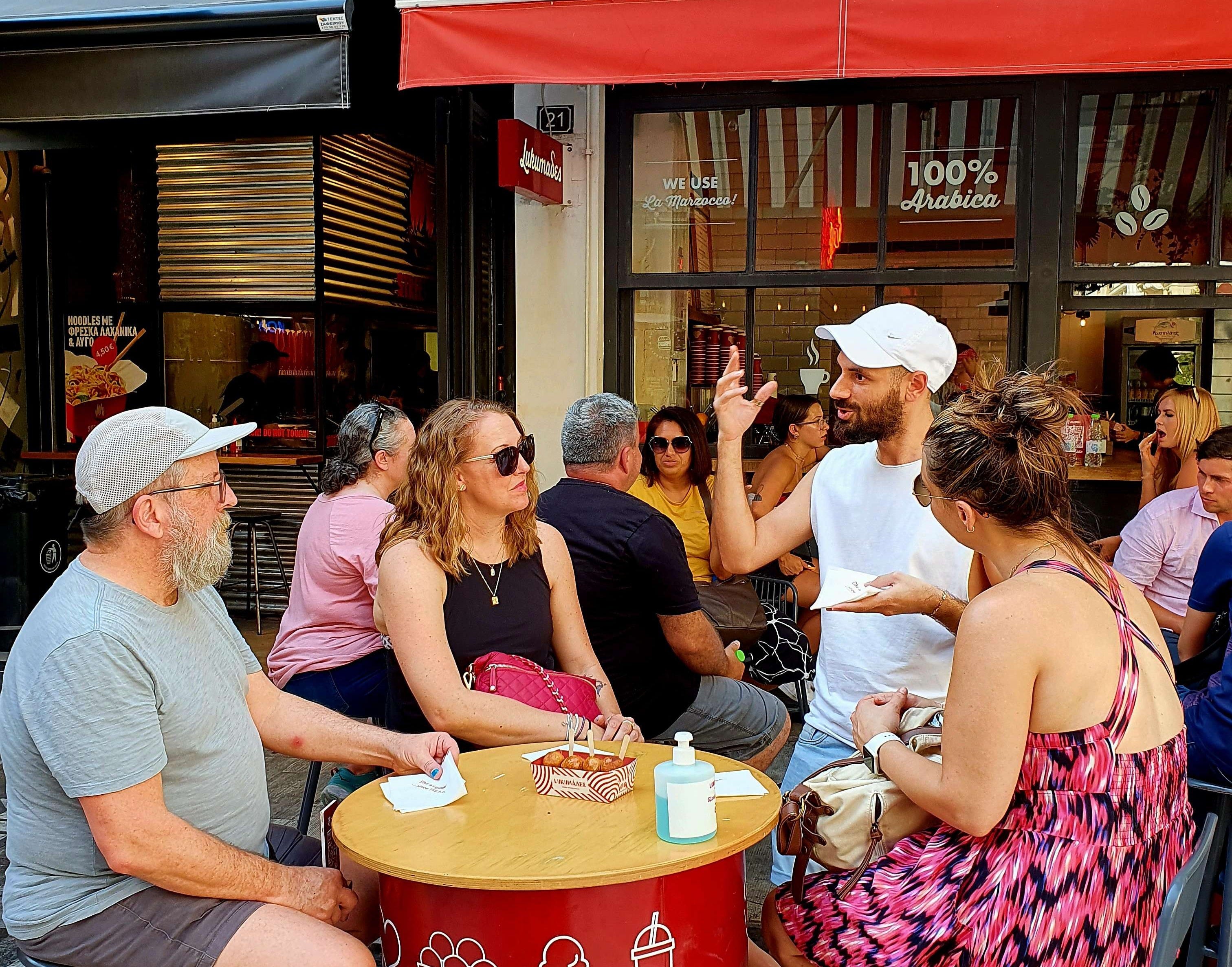
Greek cuisine is far more complex and regional than most visitors expect. A guided food tour through the central markets, the street food stands of Monastiraki, and the tavernas of Psiri is the most efficient introduction: tiropita, spanakopita, loukoumades, taramasalata, fresh olives, local cheeses, and the particular pleasure of Greek coffee drunk standing at a marble counter. The best food tours also cover the cultural context: what meze means, how Greeks actually eat, and why the taverna is a social institution rather than simply a restaurant.
Cape Sounion sunset tour
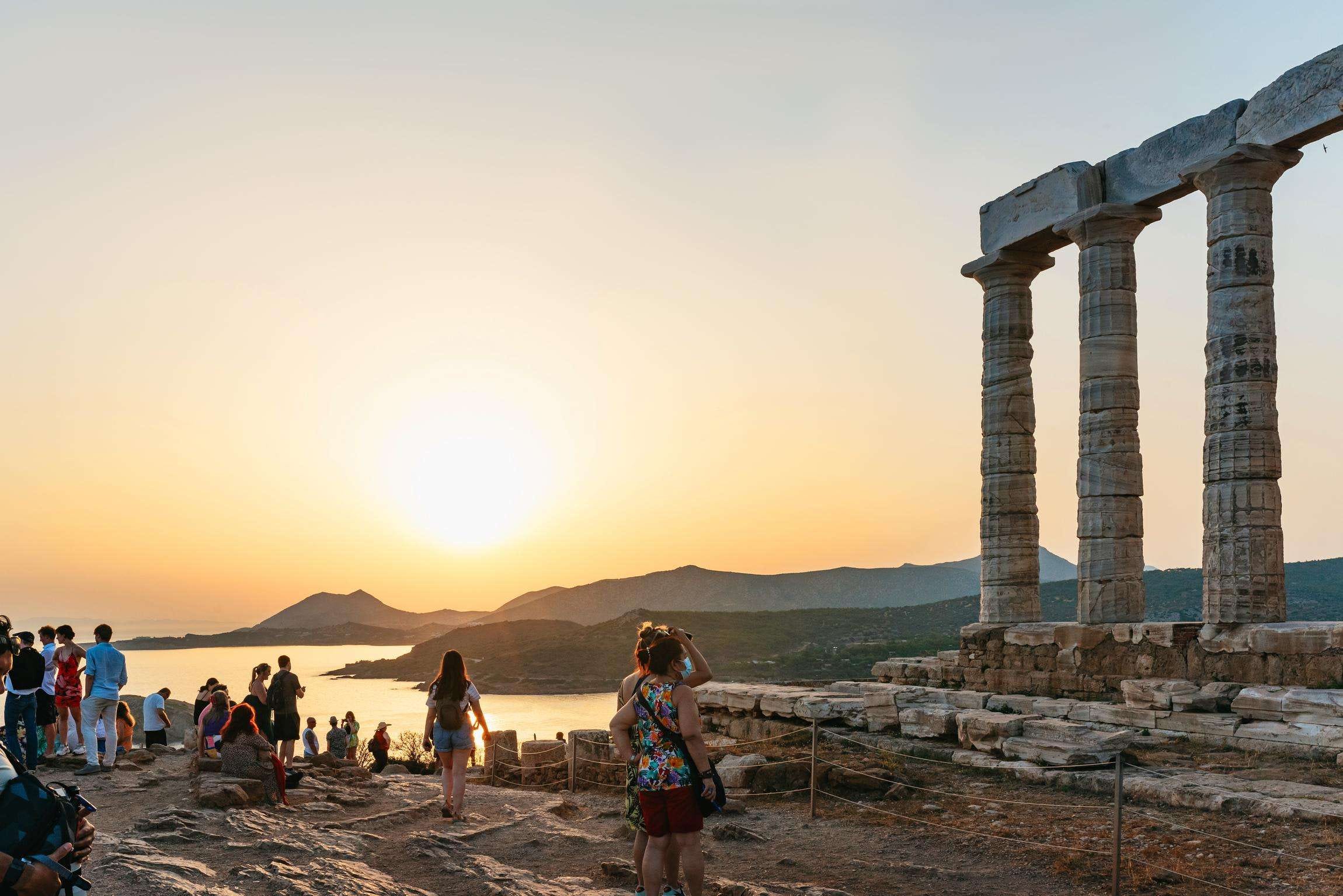
The Temple of Poseidon, perched on a sea cliff at the southern tip of the Attica peninsula, is one of the most dramatically situated ancient monuments in Greece. The coastal road south from Athens along the Athenian Riviera passes beaches, fishing villages, and the thermal lake at Vouliagmeni. The sunset from the temple, with the Aegean spreading below and the columns turning gold, is among the finest available on the Greek mainland.
Day trips from Athens
Athens's position in central Attica makes it one of the best-placed cities in Europe for day trips. Ancient sites, island escapes, and mountain villages are all within easy reach.
Delphi
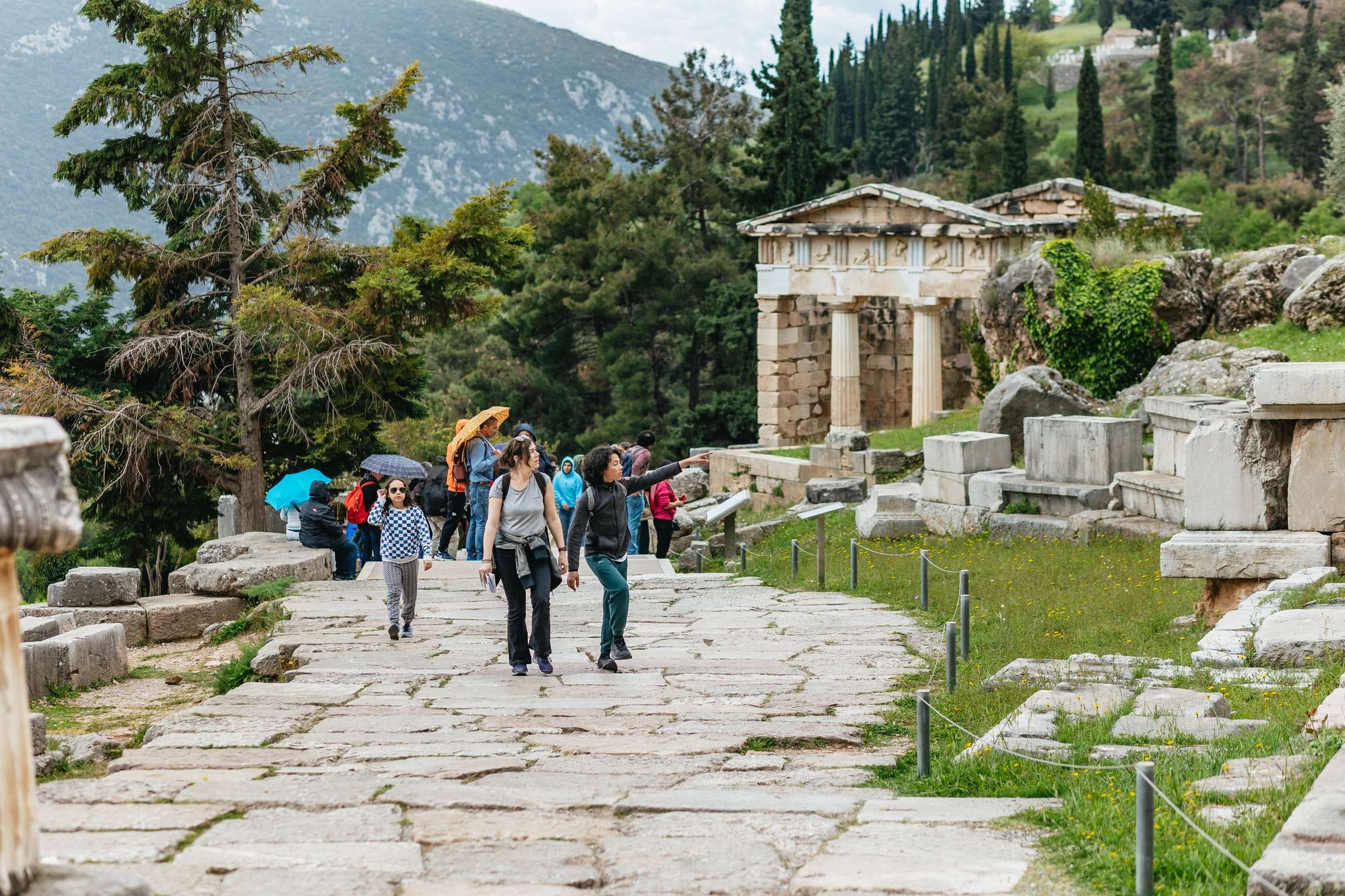
The most important sanctuary of ancient Greece, where the Oracle of Apollo delivered prophecies that shaped the course of civilizations. Set on the slopes of Mount Parnassus with extraordinary views of the olive groves below, Delphi is about two and a half hours from Athens by coach. The archaeological site, with the Temple of Apollo, the ancient theater, and the stadium, and the adjacent museum, with the famous Charioteer bronze, are both essential. Return via the mountain village of Arachova for lunch.
Saronic Islands day cruise
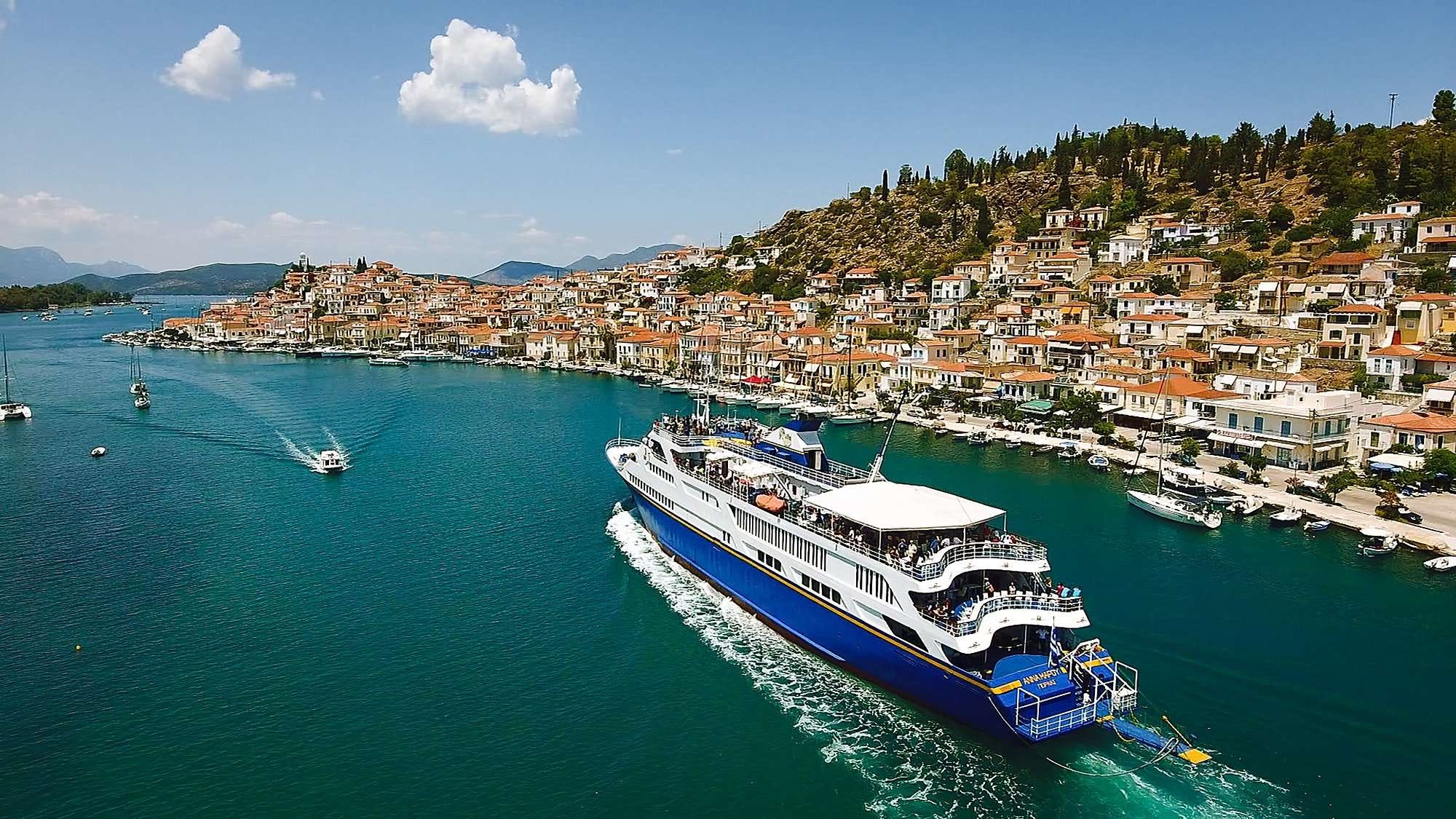
Aegina, Poros, and Hydra are all accessible within an hour or two by ferry from Piraeus, making a three-island cruise a perfectly manageable day from Athens. Hydra, which has no motorized vehicles and is built on a steep hillside above a harbor full of fishing boats, is the most beautiful. Aegina has the best-preserved Doric temple in Greece at Aphaia. Book a cruise that includes all three for the best overview.
Meteora
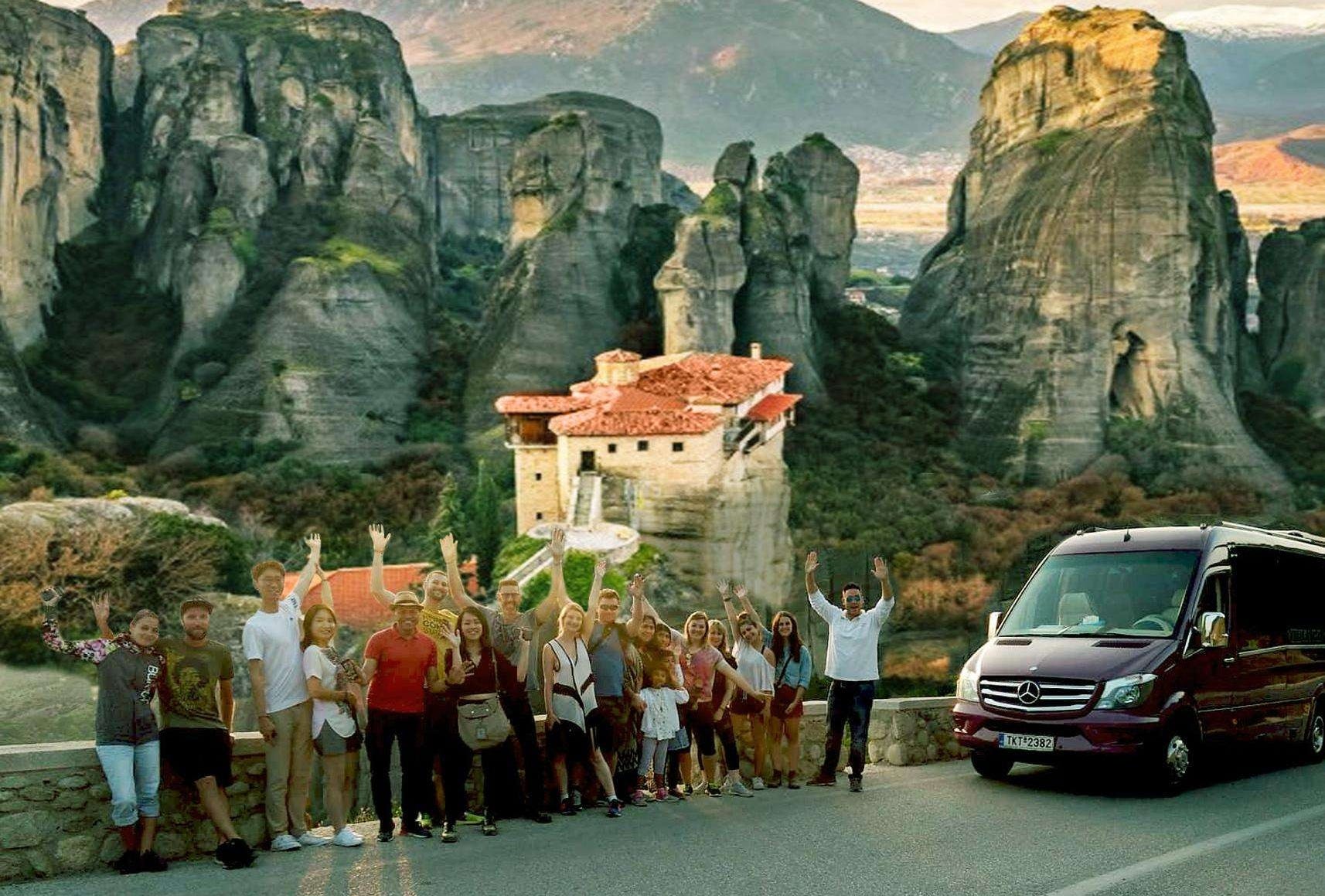
The monasteries of Meteora, built on and into the summits of extraordinary rock pillars in central Greece, are among the most surreal and beautiful sights in Europe. Six monasteries remain active, and the landscape of vertical stone with Byzantine buildings perched on top is unlike anything else on the continent. About four hours from Athens by coach; doable as a long day trip but better as an overnight. UNESCO World Heritage Site.
Corinth and the Peloponnese
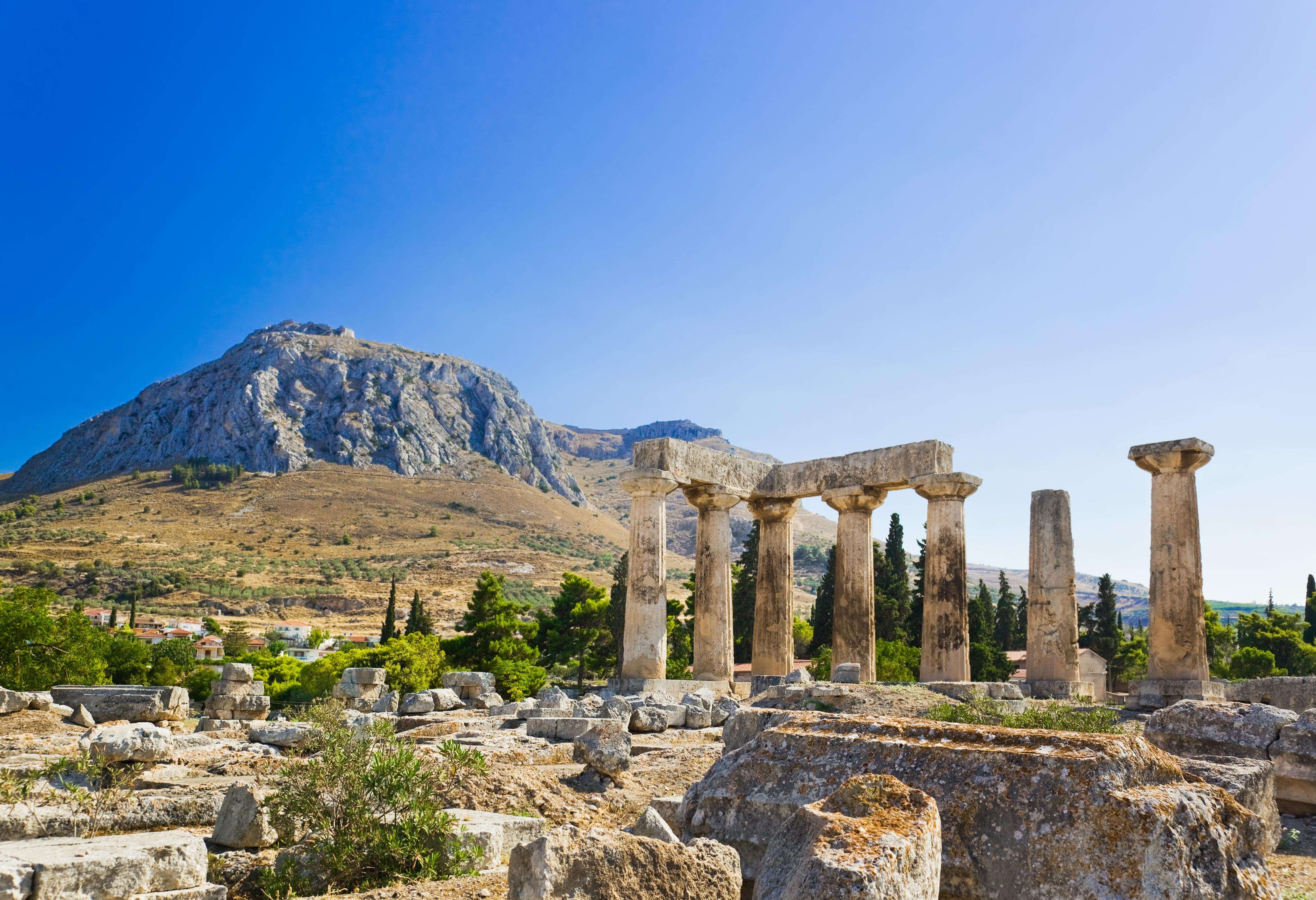
Ancient Corinth, about an hour and a half west of Athens, was one of the most powerful cities of the ancient world and offers excellent ruins and a small but excellent museum. The Corinth Canal, cut through the narrow isthmus in the 19th century, is one of the most dramatic engineering spectacles in Greece. A day trip can combine the canal, ancient Corinth, and the Mycenaean citadel of Mycenae for a comprehensive overview of Greek civilization from Bronze Age to Roman era.
When to visit Athens
Athens is a year-round city, but the Mediterranean summer is genuinely hot and the Acropolis in July and August is one of the more grueling sightseeing experiences in Europe. Planning around the heat is the most important decision you will make.
🌸 Spring
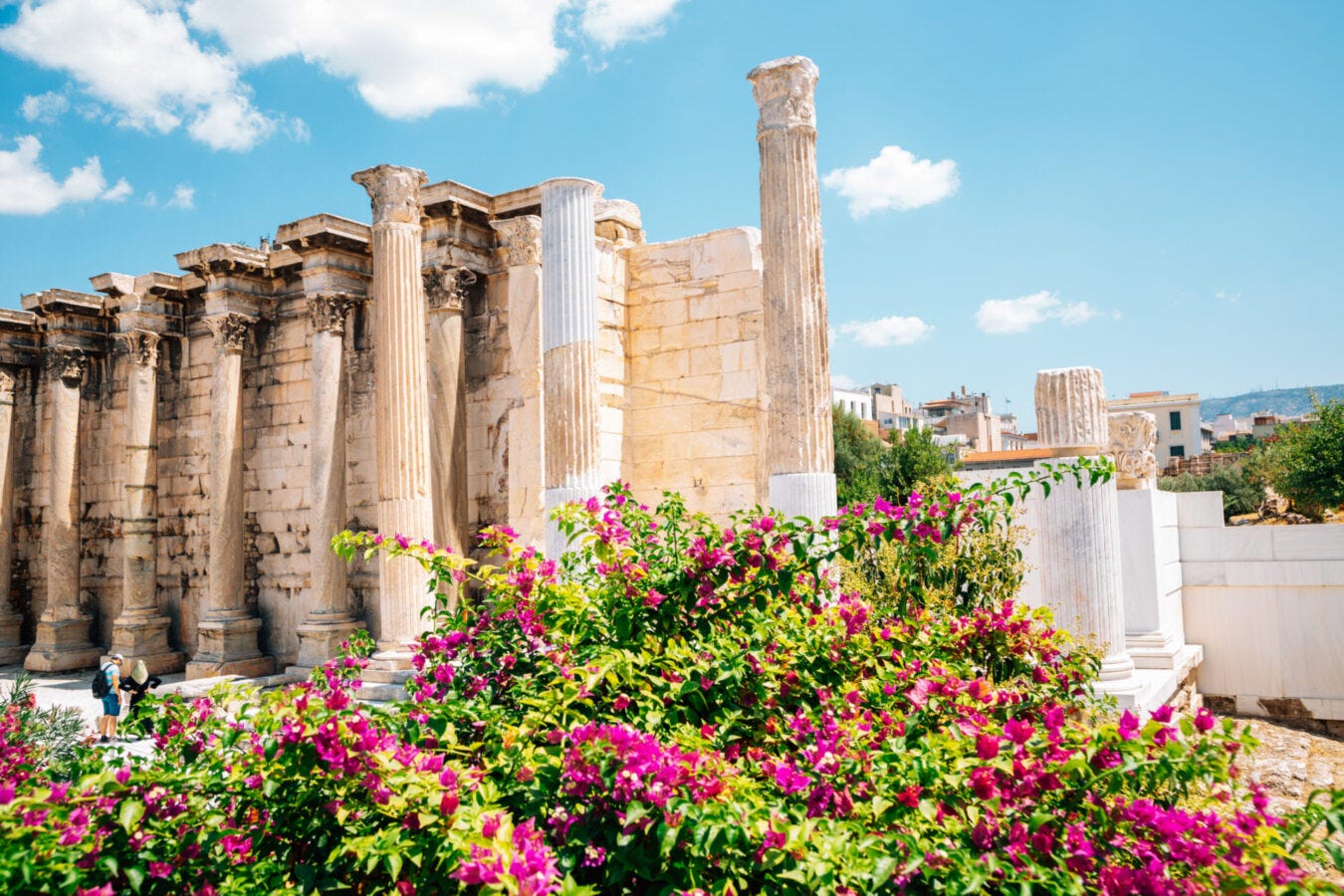
March to May. The finest season. Mild temperatures, wildflowers on the hills, manageable crowds, and long golden afternoons. April and May are close to ideal: warm enough for outdoor dining, cool enough to walk the Acropolis comfortably. Easter in Athens is extraordinary if your dates allow.
☀️ Summer
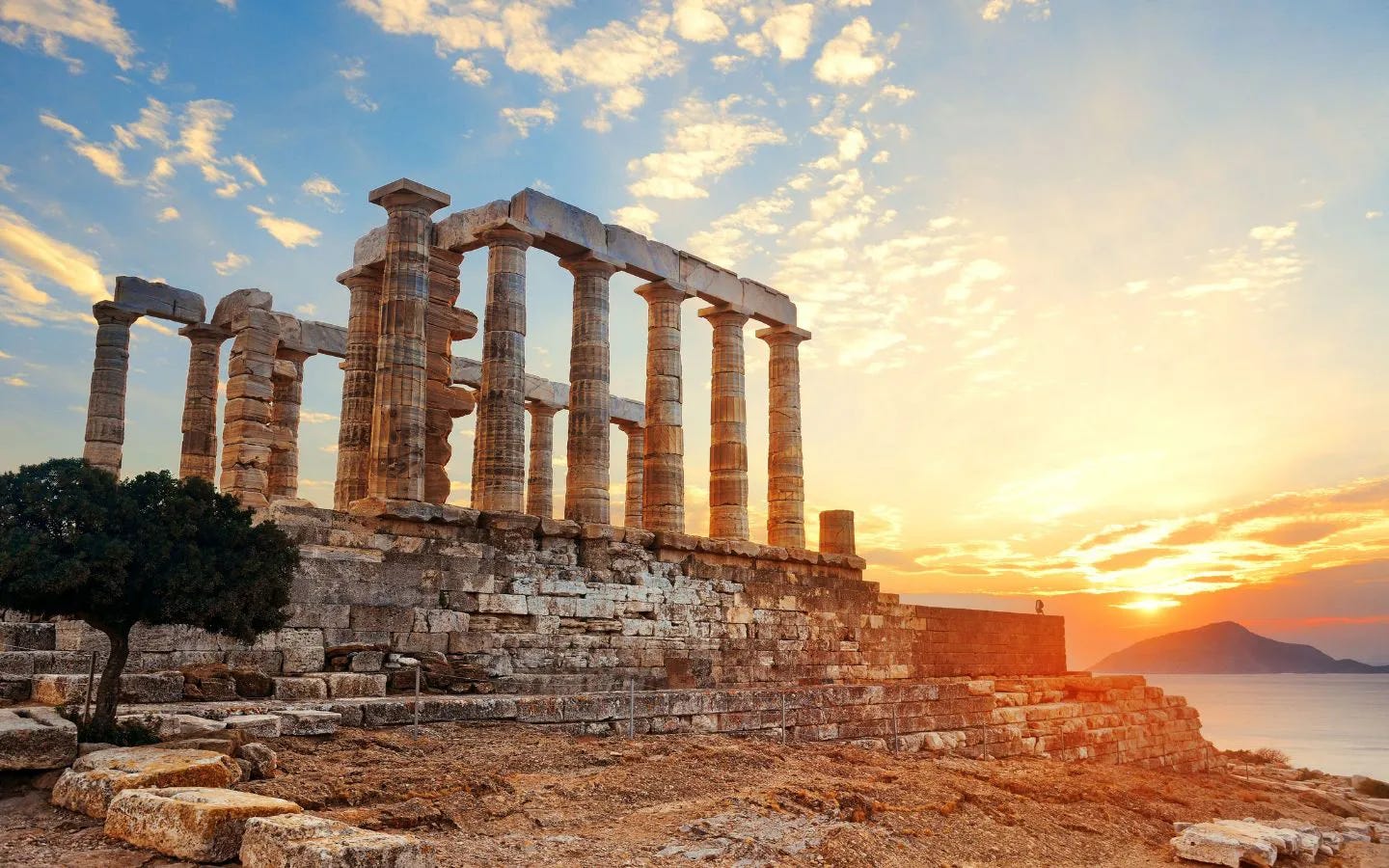
June to August. Temperatures regularly exceed 38C in July and August. The Acropolis is exposed marble with no shade; mornings are essential. Crowds are at their peak. The city empties slightly as Athenians head to the islands, which creates a paradoxical atmosphere: busy tourist sites, quiet neighborhoods.
🍂 Autumn
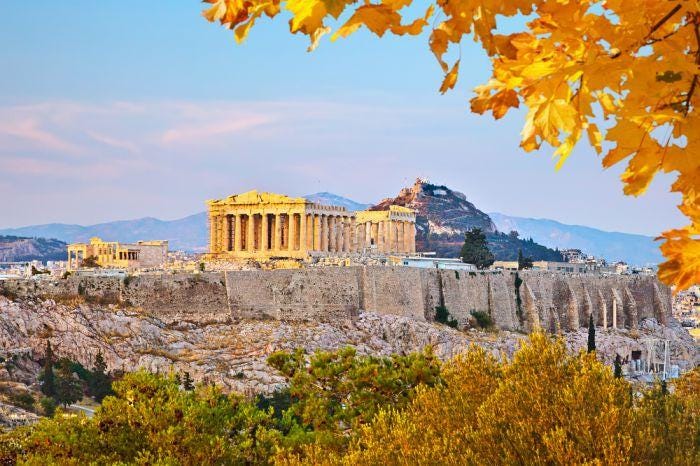
September to November. Excellent. The heat breaks by mid-September, the light is extraordinary in October, and the city returns to its residents. Museums and restaurants are fully operational, crowds are manageable, and the sea is still warm enough for swimming through early October.
❄️ Winter
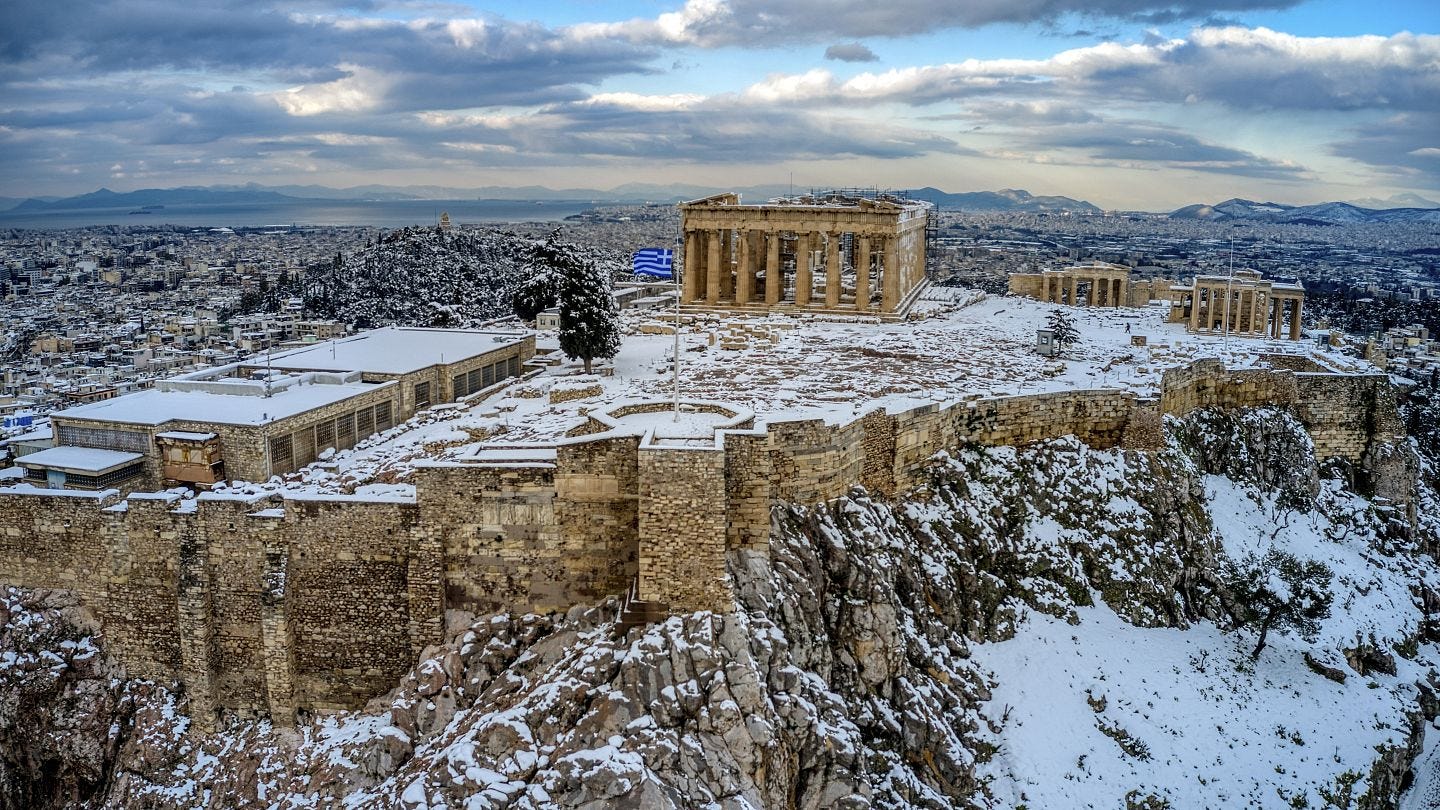
December to February. Mild and often sunny, with temperatures rarely below 8C. Athens in winter is genuinely underrated: the Acropolis nearly empty, the museums unhurried, the tavernas full of locals. Rain is the main risk, concentrated in January and February.
How many days to spend in Athens
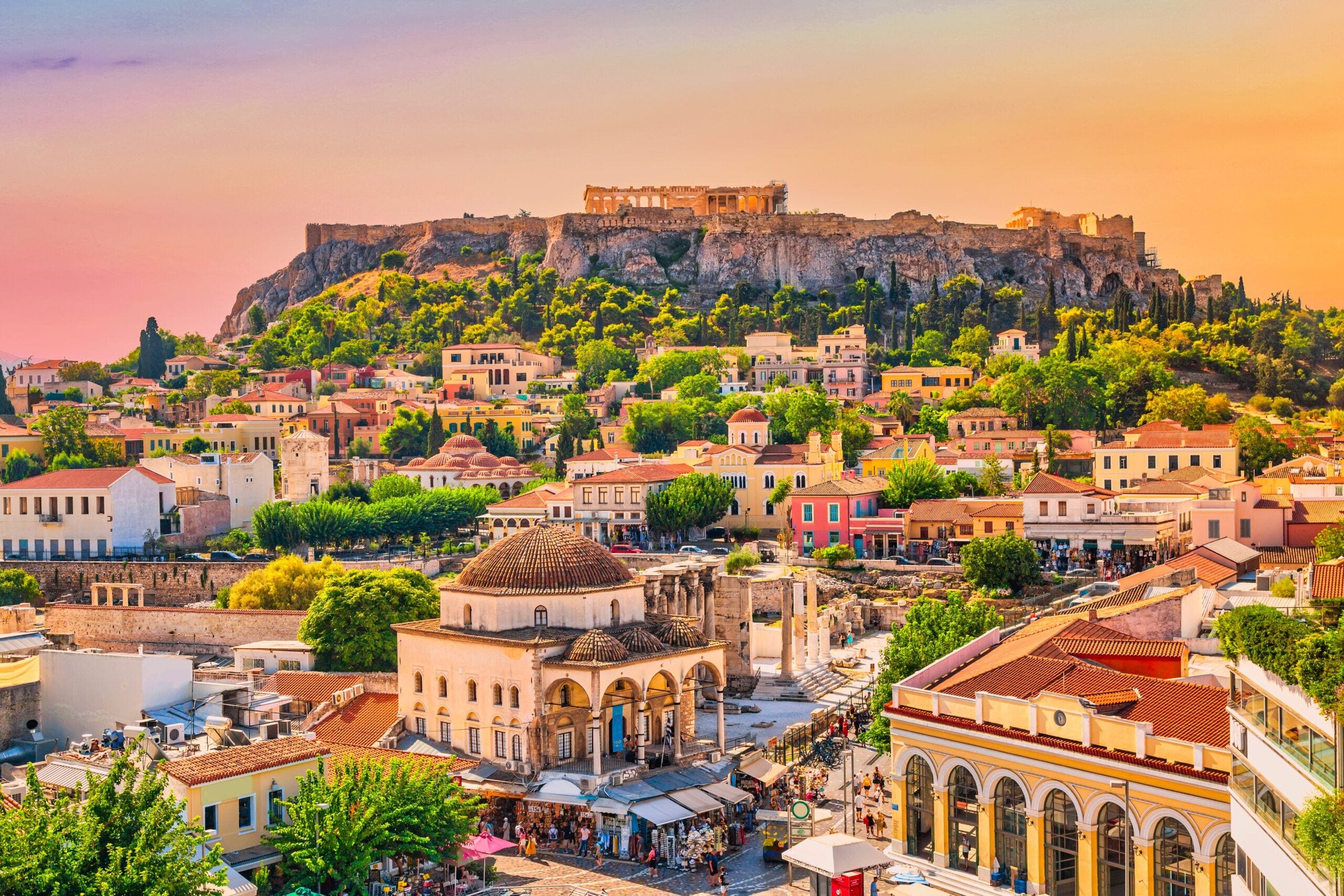
Two days is enough for the Acropolis, the Acropolis Museum, the Ancient Agora, and a meal in Psiri. Three days adds the National Archaeological Museum, a food tour, a sunset from Lycabettus, and the time to walk the neighborhoods without feeling rushed. Four or five days allows for a day trip to Delphi or the Saronic Islands and a more considered experience of the city itself.
Athens rewards those who stay long enough to move beyond the ancient sites. The neighborhoods, the food culture, the cafe life, and the particular energy of a Mediterranean capital that takes its history for granted: these take longer to find than a morning on the Acropolis.
Suggested 3-day itinerary
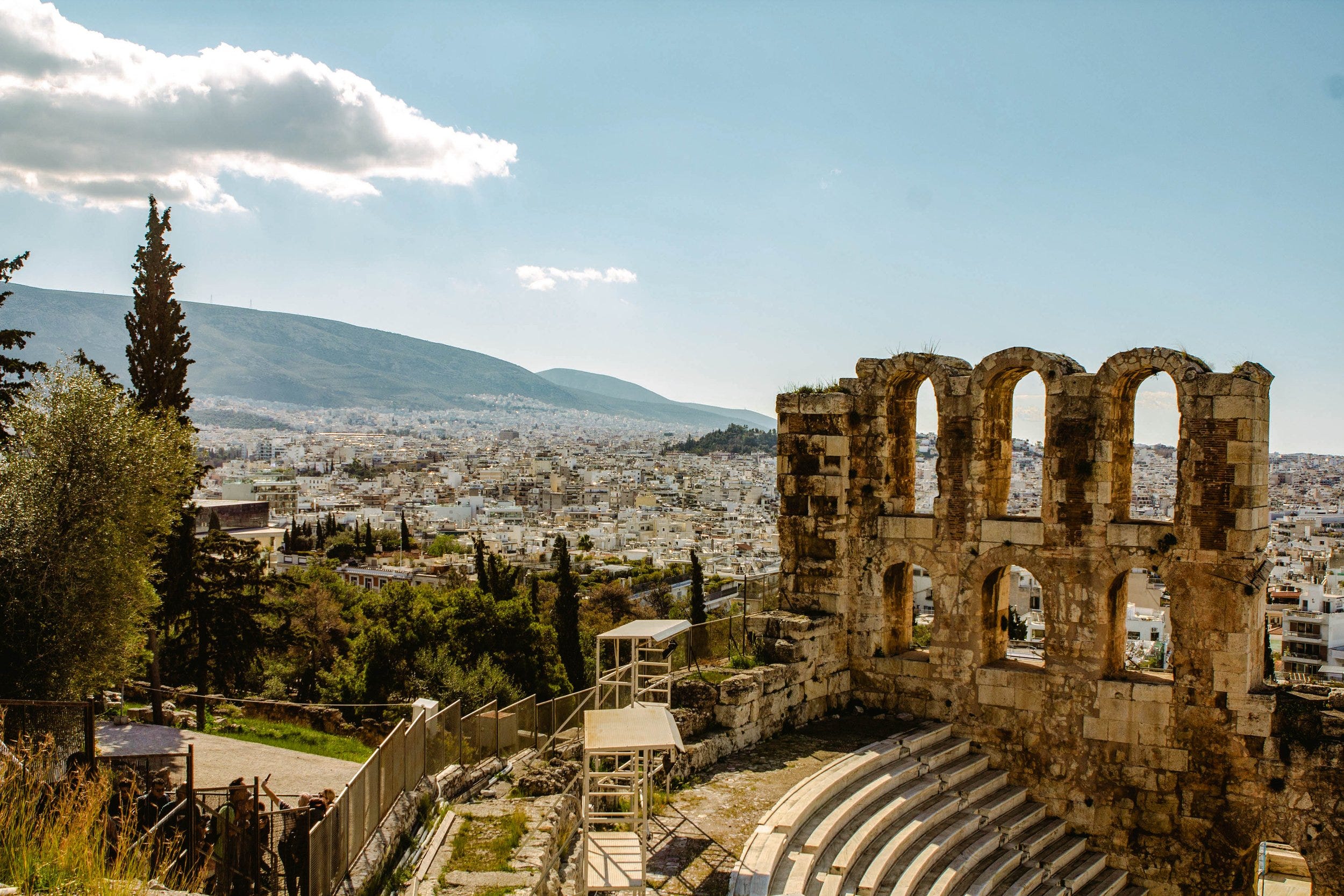
Day 1
Acropolis at 8am opening (first entry, guided tour). Parthenon, Erechtheion, Temple of Nike.
Acropolis Museum. Lunch in Koukaki. Walk through Plaka in the early afternoon.
Dinner in Psiri. Walk Monastiraki Square and the flea market streets at dusk.
Day 2
Ancient Agora and Temple of Hephaestus. Roman Agora. Tower of the Winds.
National Archaeological Museum. Lunch in Exarcheia. Browse the neighborhood bookshops.
Funicular to Lycabettus for sunset. Dinner in Kolonaki.
Day 3
Monastiraki street food and market tour. Varvakios central market.
Cape Sounion half-day trip along the Athenian Riviera (afternoon departure for sunset).
Late dinner back in Athens, Psiri or Koukaki. The city only starts at 10pm.
Where to eat
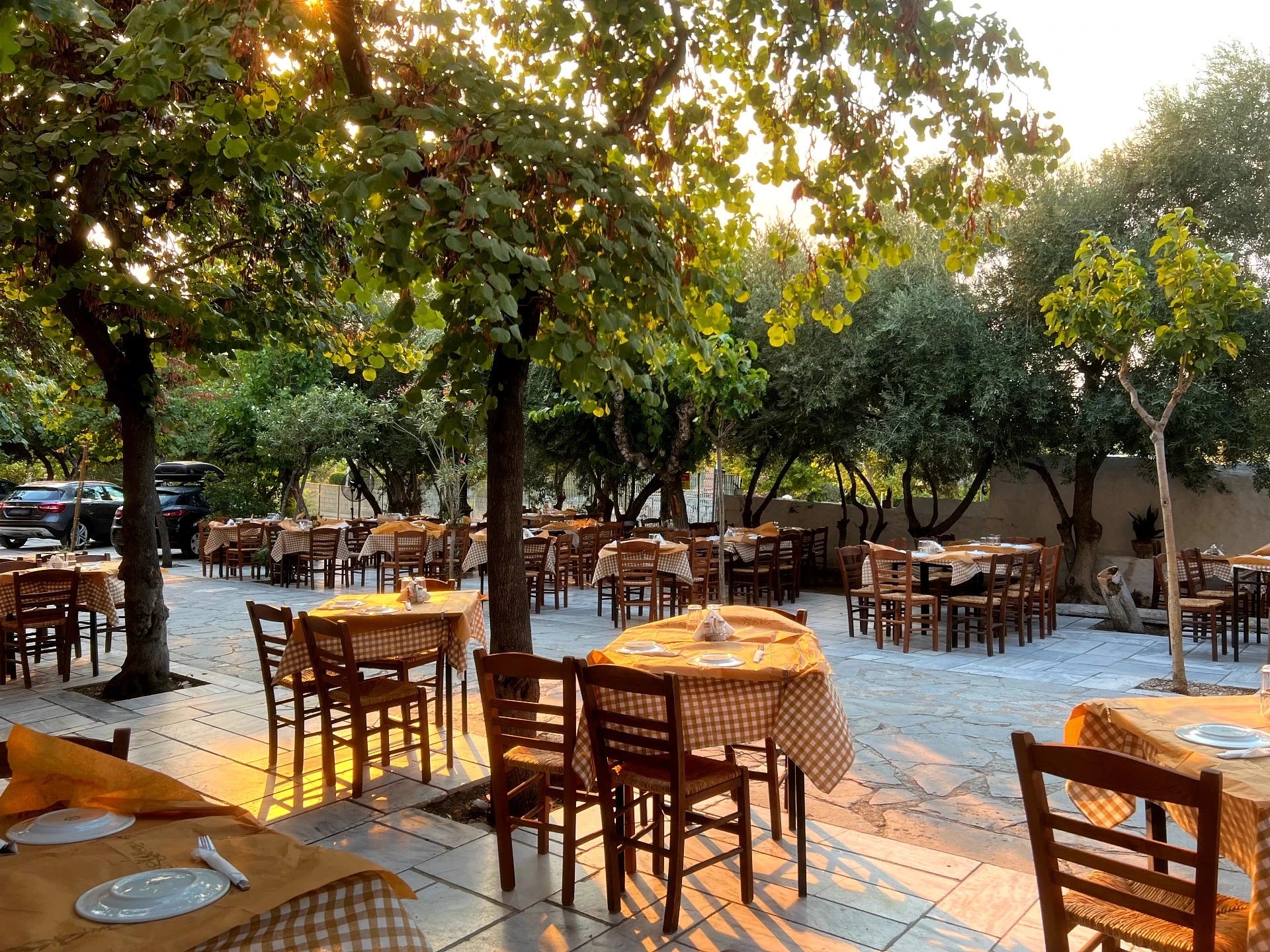
Greek cuisine in Athens has undergone a genuine renaissance over the past decade. These recommendations span the traditional taverna at its best, the new wave of modern Greek cooking, and the street food and mezedes culture that defines daily eating in the city.
Diporto
Classic taverna
A Monastiraki institution that has barely changed in decades. No menu, no sign outside, cash only. The owner brings what is fresh. One of the most authentic lunches in Athens.
Funky Gourmet
Modern Greek
Two Michelin stars and one of the most creative kitchens in Greece. Greek ingredients and traditions reimagined with complete technical precision. Book months in advance.
Karamanlidika tou Fani
Deli and mezedes
A converted old delicatessen in the Psiri neighborhood, now one of the best places in Athens to eat charcuterie, cheeses, and traditional mezedes. Outstanding wine list of Greek varieties.
To Steki tou Ilia
Grilled meats
Famous for lamb chops grilled over charcoal, served with nothing but lemon and oregano. A Thisseio institution that has been doing exactly this for decades. Arrive early or wait.
Avli
Modern Greek
A Koukaki restaurant that takes Greek market ingredients seriously without pretension. Excellent natural wine list, daily-changing menu, neighborhood atmosphere.
Lukumades
Street food
The best loukoumades in Athens: fried dough balls drizzled with honey, cinnamon, and sesame seeds, eaten on the pavement outside. A required stop in Monastiraki.
Zonars
Historic cafe
A 1939 grand cafe on Panepistimiou Street, recently restored to its original elegance. For coffee, pastry, and a sense of the Athens that existed before everything changed.
Where to stay
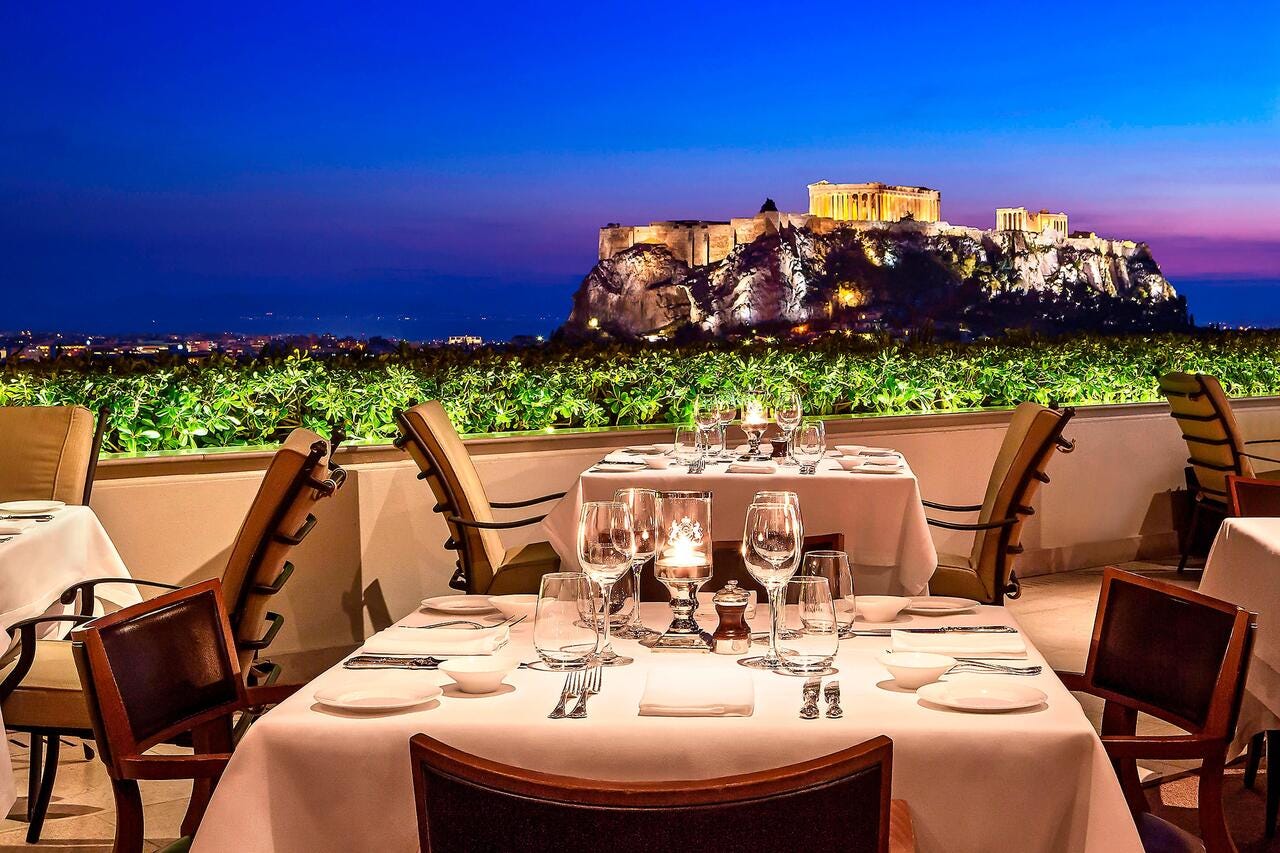
The best area to stay in Athens for first-time visitors is within walking distance of the Acropolis and Monastiraki. Plaka is atmospheric but noisy in the evening. Koukaki is quieter and better for sleeping. Kolonaki is elegant and well-connected. Here are reliable options across different budgets.
Hotel Grande Bretagne
Luxury
The grand dame of Athens, overlooking Syntagma Square since 1874. Roof garden with Acropolis views, exceptional service, and a sense of occasion that the city's newer hotels have not matched.
New Hotel
Mid-range / Design
A converted 1950s office block near Syntagma, redesigned by the Campana Brothers with reclaimed materials and Brazilian craft. One of the most interesting hotel interiors in Athens.
Herodion Hotel
Mid-range
Just below the Acropolis in Koukaki, with a rooftop terrace that looks directly up at the Parthenon. Excellent location, reliable service, competitive rates for the position.
Emporikon Athens
Boutique / Mid-range
A converted 1920s commercial building in the central market area, with high ceilings, original details, and a ground-floor bar that is genuinely good.
Athens Backpackers
Budget
The best hostel option in central Athens, in Makrygianni just south of the Acropolis. Rooftop bar with Acropolis views, knowledgeable staff, and a good social atmosphere.
The Dolli at Acropolis
Boutique / Luxury
A quiet, design-forward property in Koukaki with a rooftop pool overlooking the Acropolis. Intimate, well-run, and one of the most visually coherent hotels in the city.
Practical information
Currency: Euro (EUR). Cards are accepted in most hotels, restaurants, and larger shops. Carry cash for markets, small tavernas, street food vendors, and the smaller archaeological sites.
Language: Greek. English is widely spoken in tourist areas, hotels, and most restaurants in central Athens. Street signs and metro signage are in both Greek and Roman script.
Getting around: The Athens metro is clean, efficient, and covers the key areas: Line 1 (green) runs north-south through the city; Line 2 (red) passes Syntagma and connects to the port at Piraeus; Line 3 (blue) runs to the airport. Taxis are metered and generally reliable. Walking is the best way to cover the archaeological sites and the central neighborhoods.
Heat and sun: In summer, the Acropolis is exposed marble with no shade. Start at opening (8am), carry water, wear a hat, and wear sunscreen. The site is exhausting in midday heat. Plan all outdoor ancient sites for early morning or late afternoon.
Internet: A Greek eSIM or European roaming plan works well throughout the city. Free Wi-Fi is available in most cafes and hotels.
Safety: Athens is generally a safe city. Pickpockets operate in Monastiraki, on the metro, and in crowded tourist areas. Be aware around Omonia Square in the evenings. Exarcheia can feel tense during political demonstrations but is not dangerous for tourists in normal circumstances.
Tipping: Not obligatory but appreciated. Rounding up the bill or leaving five to ten percent for good service is the norm. Street food and coffee at the counter: no tip expected.
Acropolis tickets: Timed entry tickets are required. Book in advance, particularly for summer visits when slots sell out days ahead. The combination ticket that includes the Ancient Agora, Roman Agora, Kerameikos, and Temple of Zeus offers significant savings over individual tickets.
Dress code: Shoulders and knees should be covered for Byzantine churches. The Acropolis and ancient sites have no dress code but require comfortable, closed-toe shoes: the marble is uneven and can be slippery.
How Athens fits into a broader Greece itinerary

Most travelers to Greece combine Athens with at least one other destination. The classic pairing is the Cyclades islands, most easily reached by high-speed ferry from Piraeus: Santorini is three to five hours, Mykonos is four to five hours, Paros and Naxos are three to four hours. A week in Greece that combines three or four days in Athens with three or four days on an island covers the essential range of what the country offers.
For travelers with more time, the Peloponnese, accessible within two hours by road from Athens, adds layers of history that complement the city: Mycenae, Epidaurus, Olympia, Nafplio, and the Byzantine city of Mystras. The northern mainland, with Meteora and eventually Thessaloniki, extends the itinerary into a genuinely comprehensive experience of Greece beyond the islands.
Frequently asked questions
Is Athens worth visiting for first-time travelers to Greece?
Yes, without reservation. Athens provides the context for everything else in Greece. The Acropolis, the National Archaeological Museum, and the ancient Agora together give you the foundation for understanding Greek civilization that makes every other site more meaningful.
How many days do you need in Athens?
Two days covers the Acropolis, the Acropolis Museum, and the Ancient Agora. Three days adds the National Archaeological Museum, a neighborhood walk, and an evening in Psiri. Four or five days allows for a day trip and a more complete experience of the city.
What is the best time of year to visit Athens?
Spring (April to May) and autumn (September to October) are the two best seasons: mild temperatures, manageable crowds, and the Acropolis accessible without heat exhaustion. Spring also offers the chance to experience Easter in Athens, one of the most atmospheric festivals in Greece.
Is Athens safe for tourists?
Athens is generally safe. Pickpockets operate in Monastiraki and on the metro. Omonia Square is better avoided late at night. Exarcheia has a reputation that exceeds its actual risk for tourists. Violent crime directed at visitors is rare.
Do I need to book the Acropolis in advance?
Yes. Timed entry is required, and slots sell out days or weeks ahead during peak season. Book as soon as your travel dates are confirmed. The first available slot of the morning is also the most comfortable: fewer crowds and cooler temperatures.
Can you visit Athens without speaking Greek?
Yes. English is widely spoken in tourist areas, hotels, and most restaurants. The metro is clearly signed in Roman script. A few words of Greek (kalimera for good morning, efharisto for thank you) are warmly received and change the quality of interactions noticeably.
Is Athens a good base for island trips?
Yes. Piraeus, the main port, is directly connected to Athens by metro (Line 1, about 45 minutes from Monastiraki). High-speed ferries reach Santorini in three to five hours, Mykonos in four to five hours, and Paros in three to four hours. Many travelers use Athens as a hub and take day or overnight ferries to the islands.
Plan your Athens trip with AERIA Voyages

Every traveler's ideal Greece itinerary looks different depending on the time available, the history that resonates most, and how you want to balance ancient sites with islands and food. I help clients build trips that go beyond the standard circuit: a private evening at the Acropolis, a curated island-hopping itinerary from Athens, a cruise through the Greek islands, or a combination of Athens and the Peloponnese that covers 4,000 years of civilization in ten days.
If you are planning a trip to Athens and want to talk through the options, I would be glad to help.
Yvan Junior Blanchette
Travel & Cruise Specialist
ÆRIA Voyages📩 yvanblanchette@aeriavoyages.com
📞 1-888-460-3388
🌐 aeriavoyages.com