

The Ultimate ROME Travel Guide: What to know, where to go, and how to make the most of your visit
Updated 2026 | Italy | First-time visitors | In-depth travel
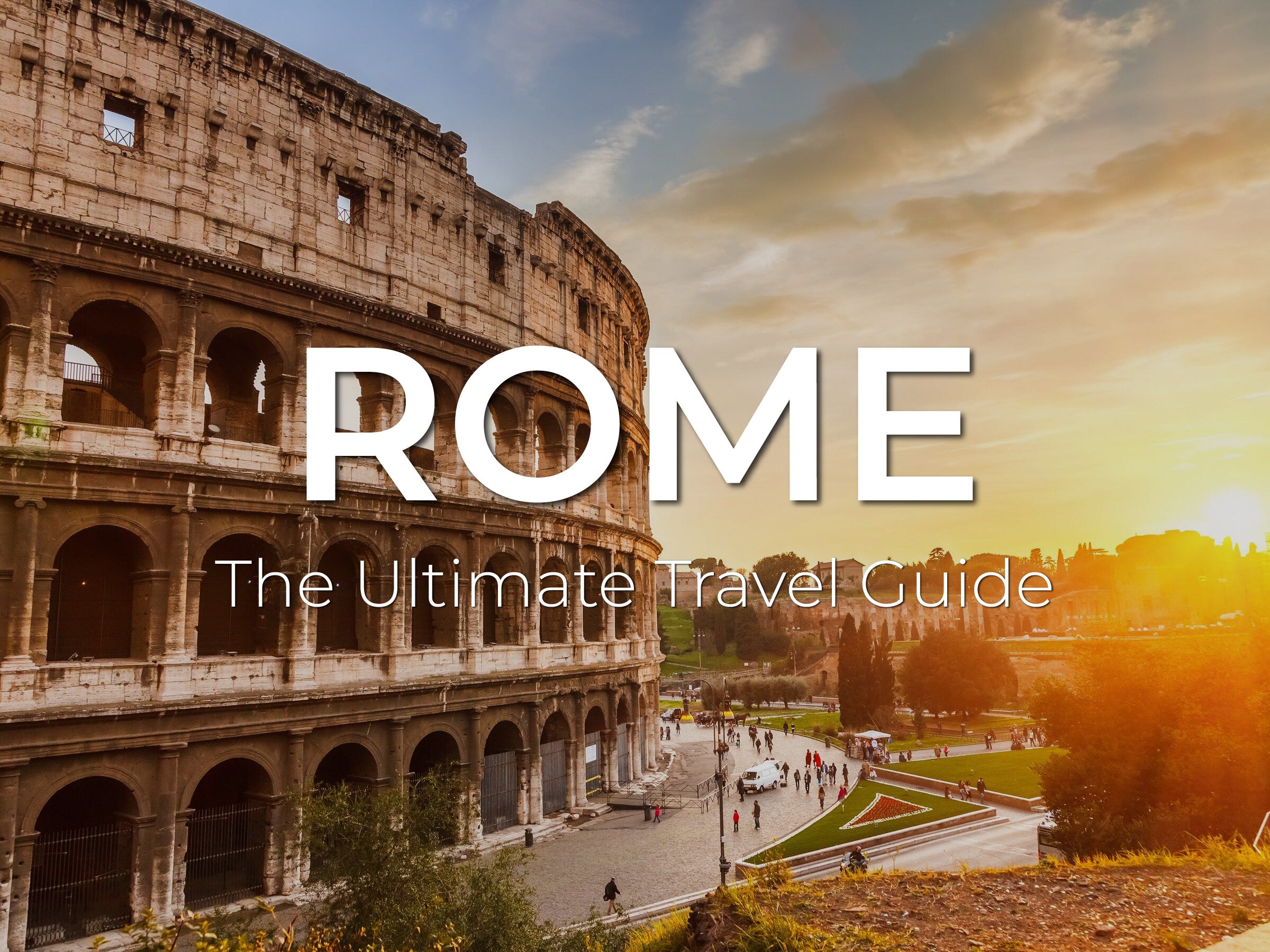
Rome is one of the most layered cities on earth. It does not simply have history: it is built on top of it, literally. The Colosseum, the Forum, the Pantheon, the Vatican, and the Baroque piazzas all coexist within walking distance of each other and of trattorias that have been serving the same dishes for generations. No other city in the world puts quite this much on the table.
This guide covers the neighborhoods worth knowing, the experiences that define the city, the practical details you need before you go, and how to plan the right amount of time for the kind of trip you want.
Table of Content
🎙️BEYOND THE HORIZON: TRAVEL AND CRUISE PODCAST

Why Rome is worth visiting
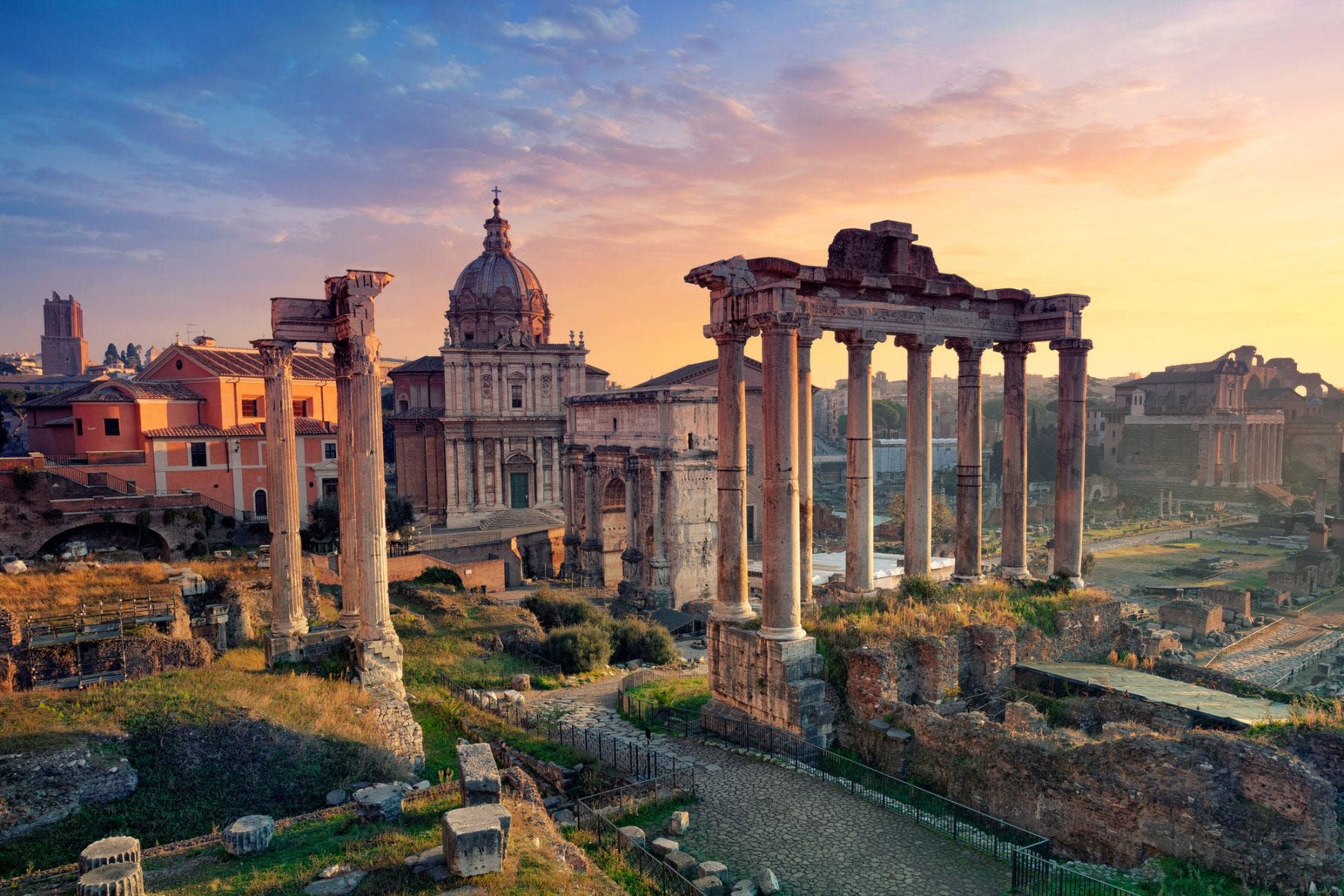
Rome operates on a scale that is difficult to grasp before you arrive. The Colosseum is larger than you expect. The Vatican is its own state, with its own guards, its own post office, and a museum collection that rivals the Louvre. The Pantheon, built nearly two thousand years ago, has a concrete dome that still functions perfectly and has never needed restoration. Walking around Rome is the closest most people will ever come to walking through the physical remains of a civilization that shaped the entire Western world.
But Rome is not only ancient. The city lives with extraordinary energy in its neighborhoods, its markets, its aperitivo culture, and its food. The tension between centuries-old monuments and the very much alive city around them is what makes Rome unlike anywhere else. You are never purely a tourist here; you are moving through a place where people actually live.
For first-time visitors to Italy, Rome is the indispensable starting point. It contains more history per square kilometer than almost anywhere on earth and more than enough to anchor an itinerary of any length.
The neighborhoods you should know
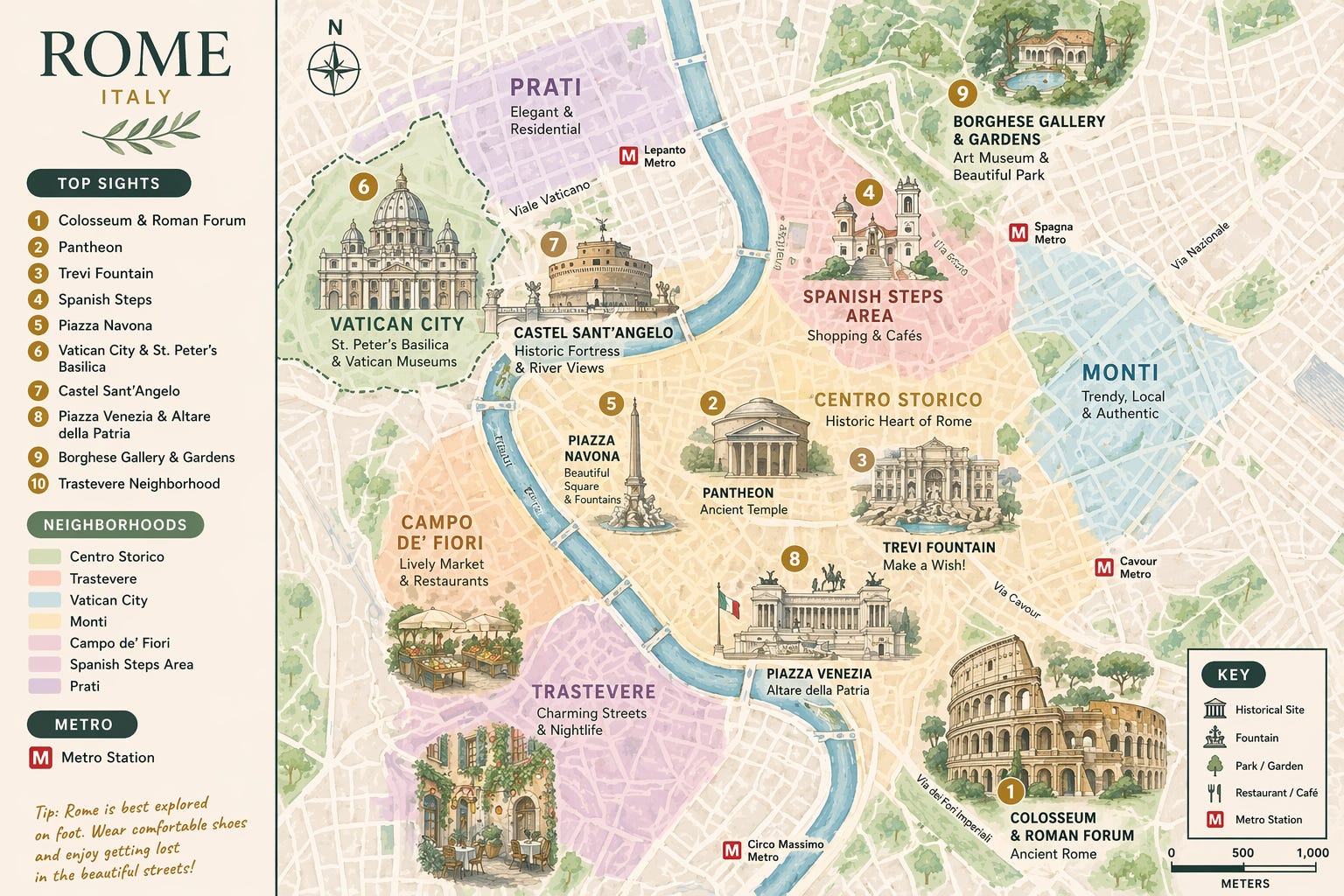
Rome's historic center is compact enough to walk across in an hour, but each neighborhood has a character worth understanding before you arrive.
The Historic Center (Centro Storico)
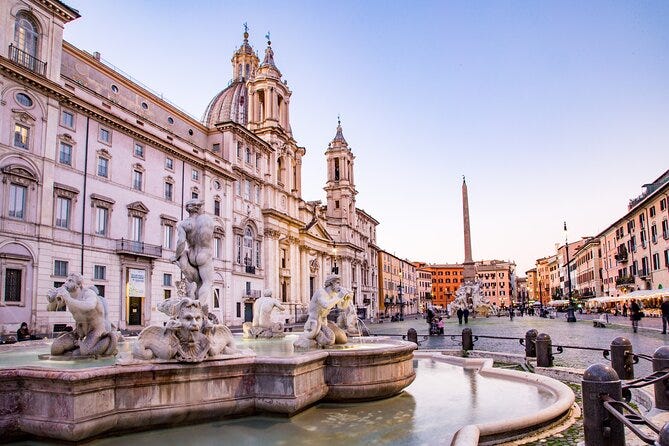
The triangle formed by the Pantheon, Piazza Navona, and Campo de' Fiori is the beating heart of tourist Rome, and for good reason. These are some of the finest public spaces in the world. The streets between them are full of churches, palazzi, and cafes. It is also the most crowded part of the city, particularly in summer. Come early in the morning or after 7pm, when the day-trippers have thinned and the piazzas belong to the people eating gelato rather than the people photographing them.
Trastevere
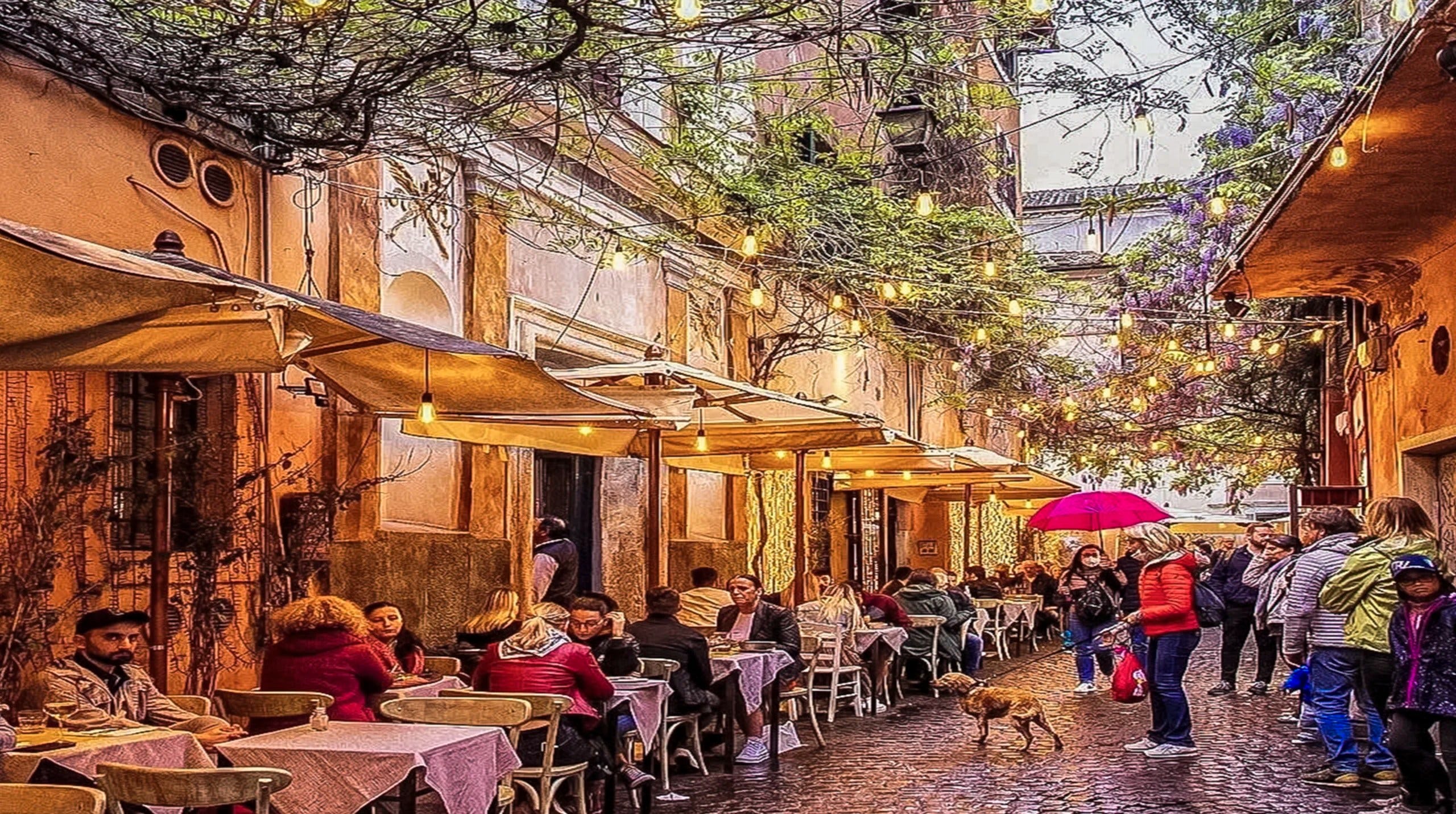
The name means 'across the Tiber,' and the crossing still feels like a transition. Trastevere is Rome's most characterful neighborhood: narrow cobbled lanes, ivy-covered buildings, laundry strung between windows, and a nightlife scene that draws both locals and visitors without feeling artificial. The Basilica di Santa Maria in Trastevere, one of the oldest churches in the city, anchors the main square. Come for dinner and stay for the evening; the neighborhood is at its best after dark.
Prati
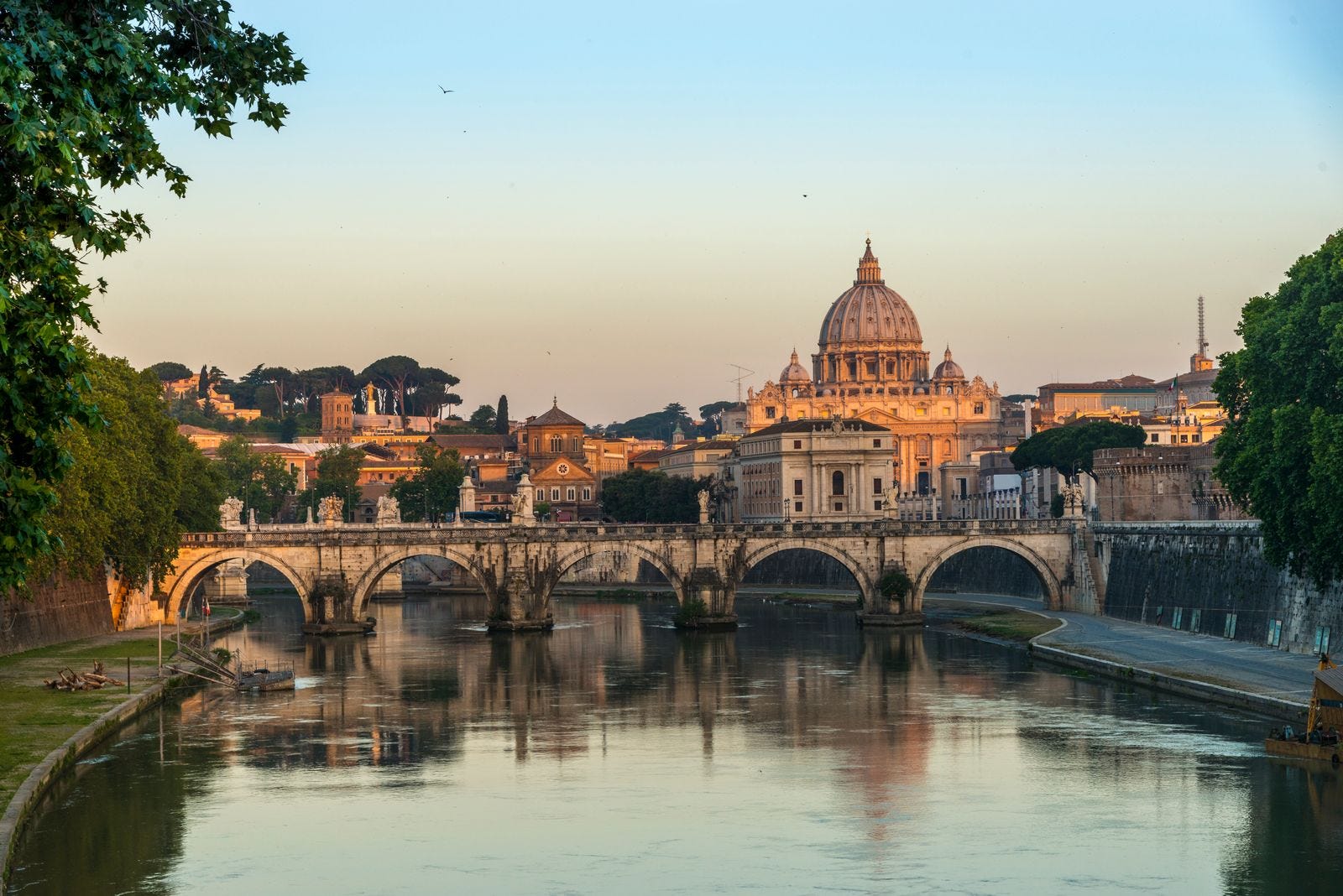
The residential neighborhood just north of the Vatican, and the best base for visitors who want easy access to St. Peter's without sleeping in the tourist scrum around it. Prati has wide, orderly streets, excellent coffee bars, good restaurants at reasonable prices, and a very local feel. It is not dramatic, but it is pleasant, and it functions well as a home base.
Testaccio
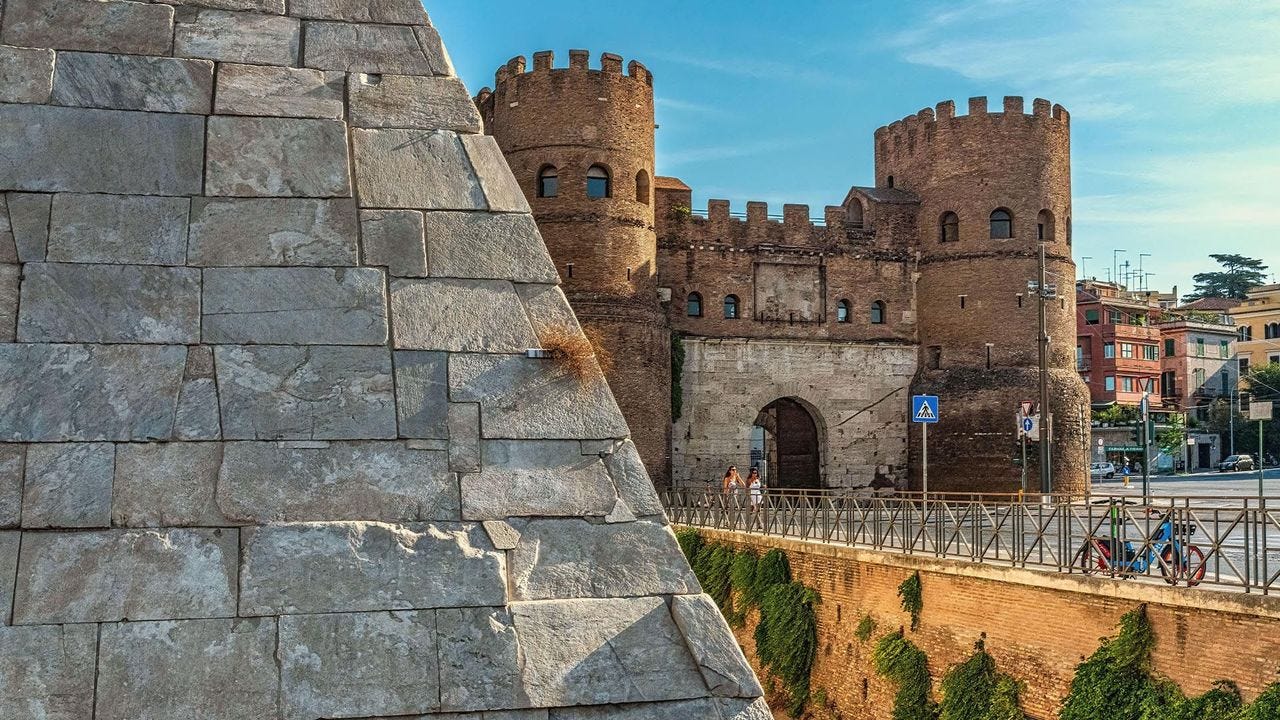
The old working-class neighborhood built around Rome's former slaughterhouse, now home to the city's best food market and a cluster of restaurants that serve the most authentic Roman cooking in the city. Cacio e pepe, coda alla vaccinara, supplì: the dishes that define Roman cuisine were born in Testaccio kitchens. Less visited by tourists, more appreciated by anyone who cares about eating well.
The Aventine and Gianicolo hills
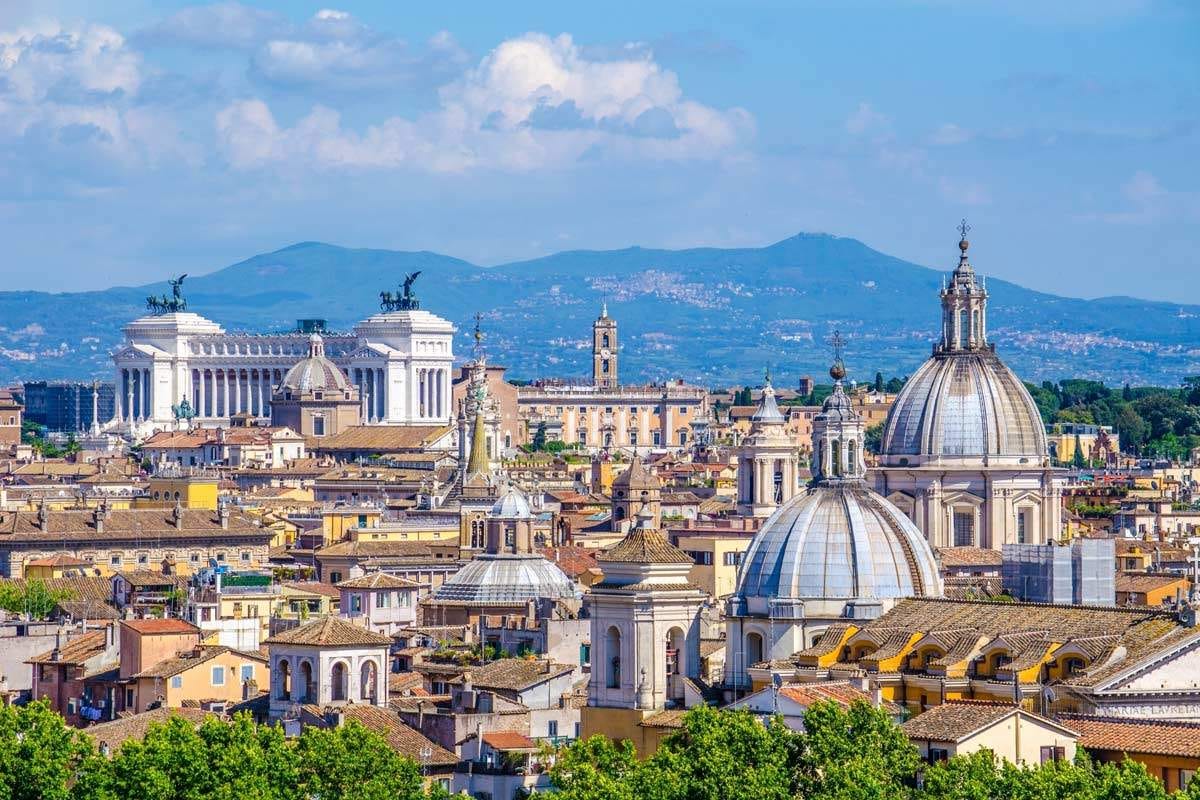
Two of Rome's seven hills, each offering a perspective on the city that the crowded center cannot provide. The Aventine's famous keyhole view through the hedge of the Knights of Malta, framing a perfect circle of St. Peter's dome, is one of the most singular sights in Rome. The Gianicolo terrace, above Trastevere, offers the widest panoramic view of the city available without climbing the dome of anything.
Activities not to miss
Rome has more to see than any reasonable itinerary can cover. These are the experiences that matter most, with the context you need to approach them well.
The Colosseum, Roman Forum, and Palatine Hill
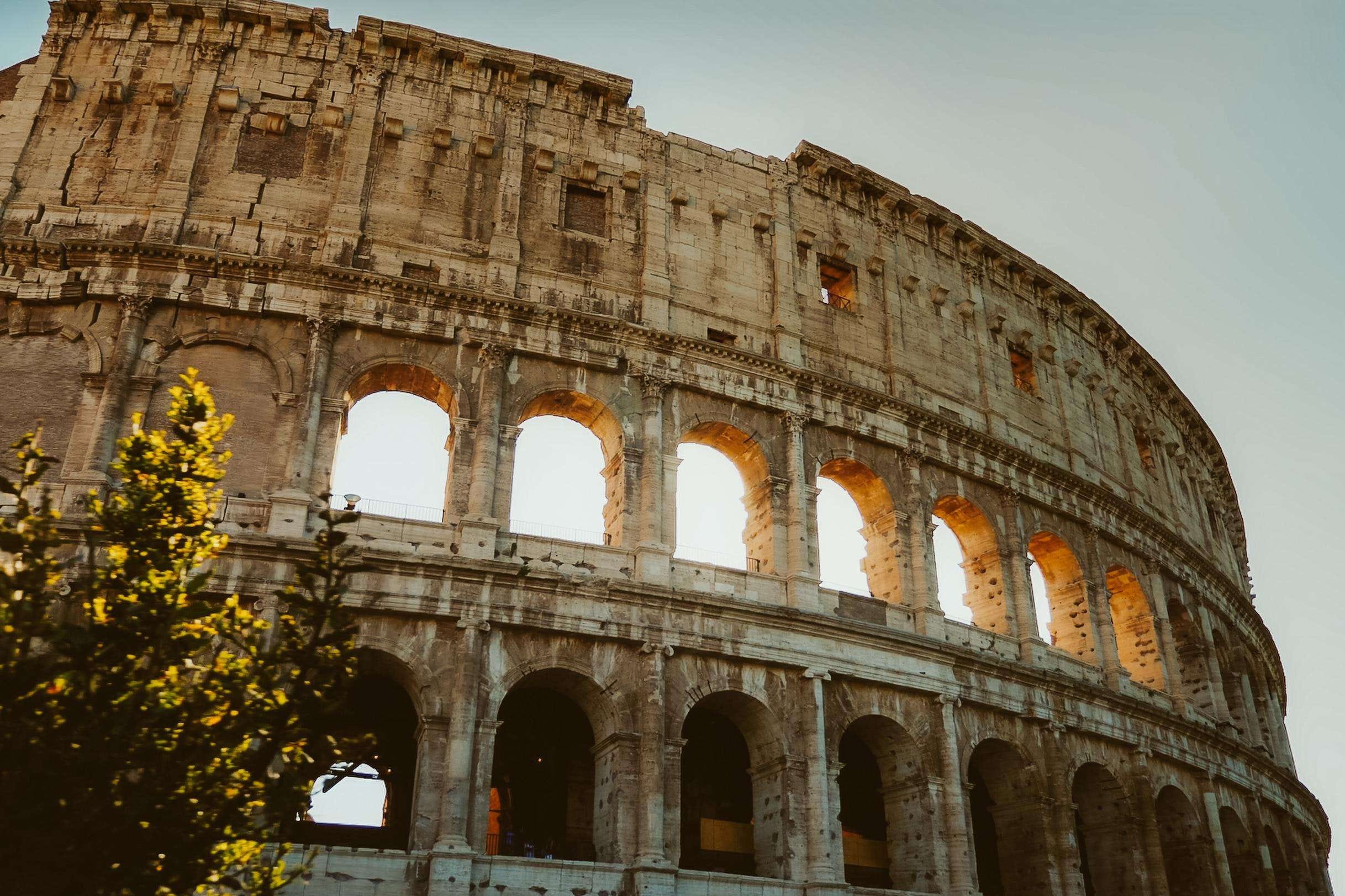
The three sites share a single ticket and should be visited together. The Colosseum is the obvious draw, but the Roman Forum, the political heart of the ancient city, is where most visitors spend their most memorable hour. A guide is strongly recommended for all three sites: without context, the Forum in particular is a confusing field of ruins; with it, the entire history of the Republic and Empire snaps into focus.
The Vatican Museums and Sistine Chapel
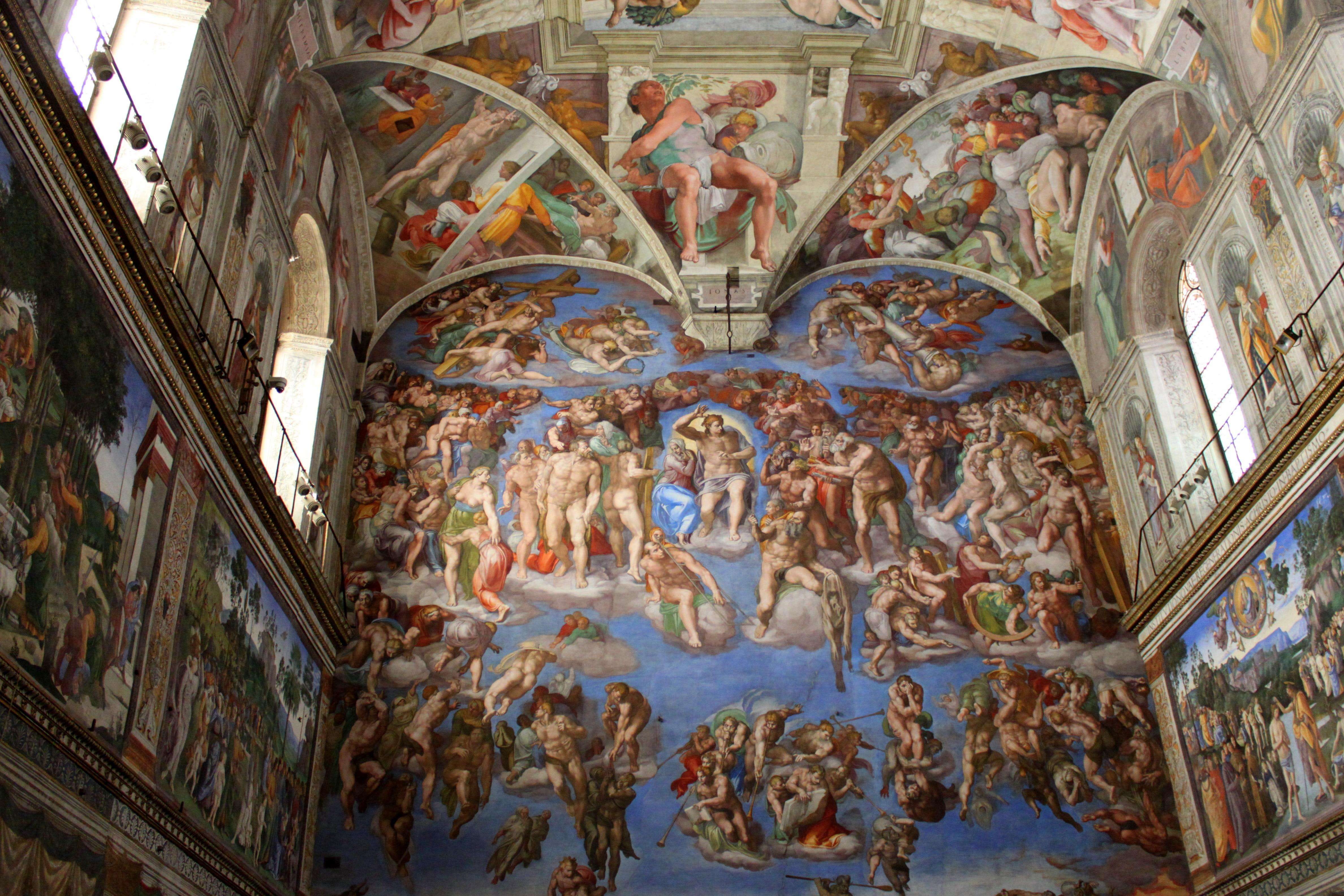
The largest art collection in the world, assembled over five centuries of papal patronage. The Sistine Chapel ceiling is the destination most visitors have in mind, and it delivers. But the galleries leading to it, including the Gallery of Maps and the Raphael Rooms, are extraordinary in their own right. Book in advance: the Vatican is one of the most visited sites on earth, and the queues without a timed ticket can be measured in hours.
The Pantheon
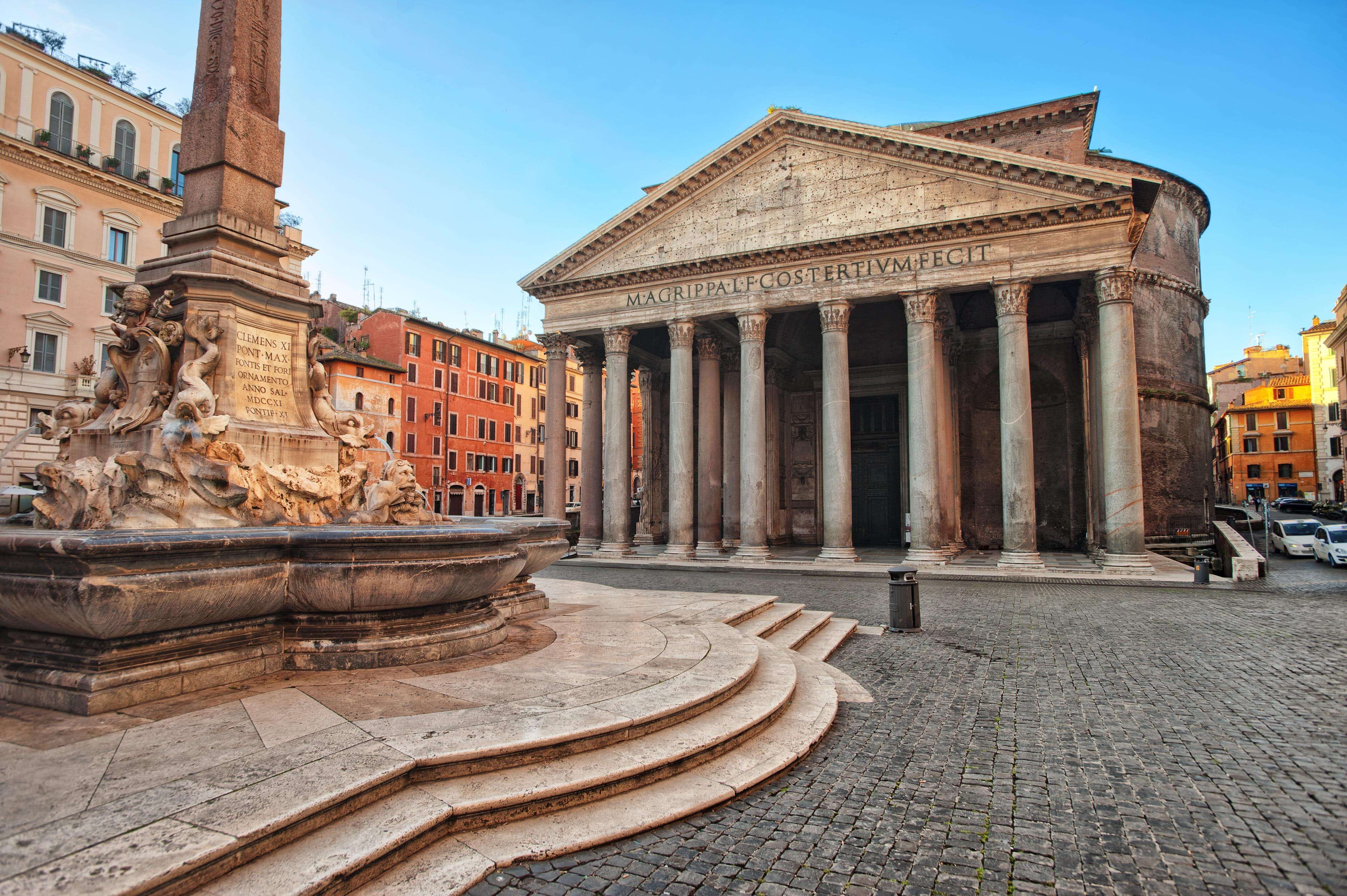
Built in 125 AD and still the best-preserved ancient building in Rome, arguably in the world. The dome, with its open oculus at the center, is an engineering achievement that has never been surpassed for its era. Entry now requires a timed ticket, which keeps crowds manageable. Go at opening time to experience it with the morning light falling through the oculus onto the marble floor.
Borghese Gallery
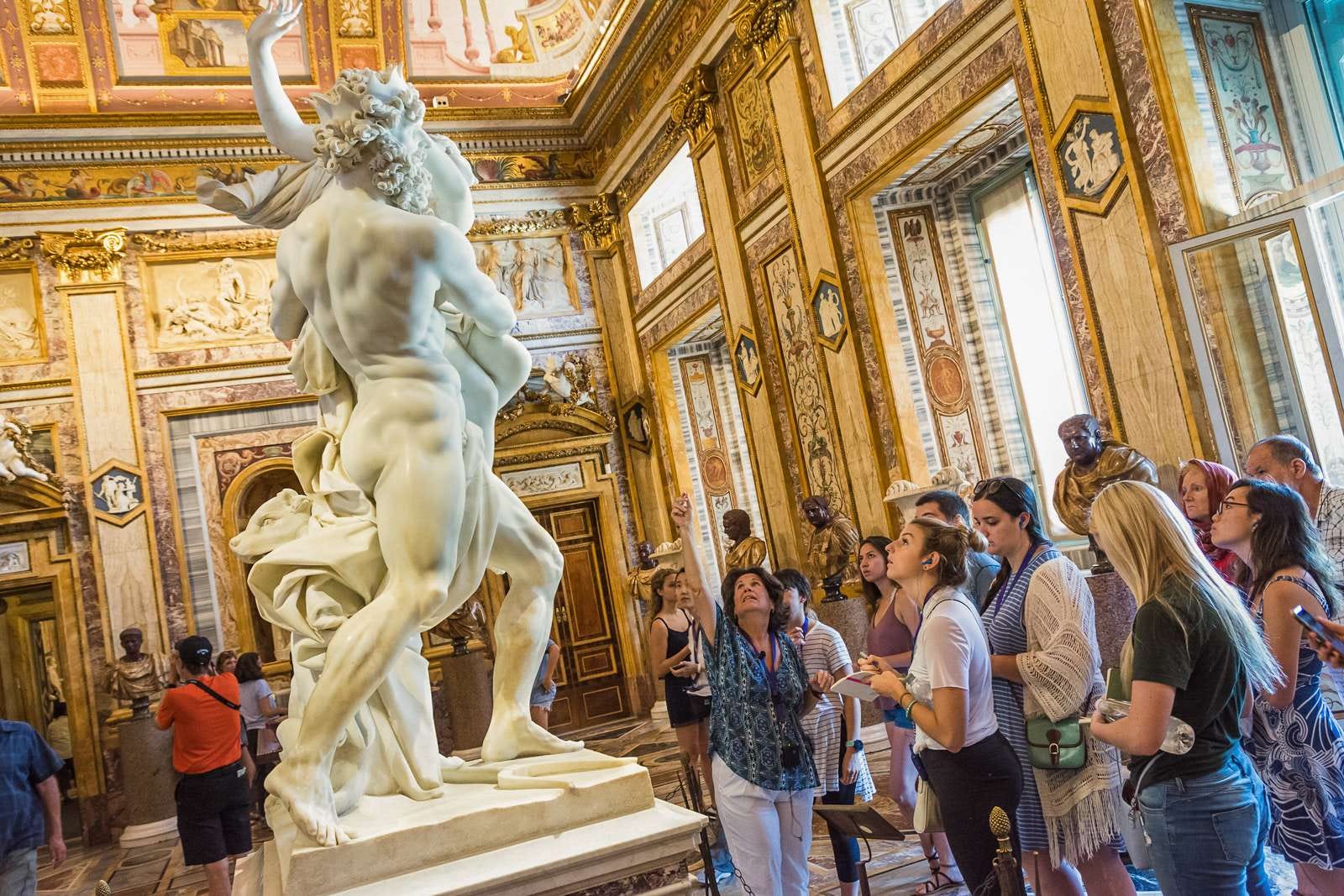
One of the greatest collections of Baroque sculpture in the world, housed in a villa surrounded by one of Rome's finest parks. Bernini's Apollo and Daphne and his Pluto and Proserpina alone justify the visit. Timed entry is mandatory and slots sell out weeks in advance. Do not skip booking.
Rome Food Tour in Trastevere or Testaccio
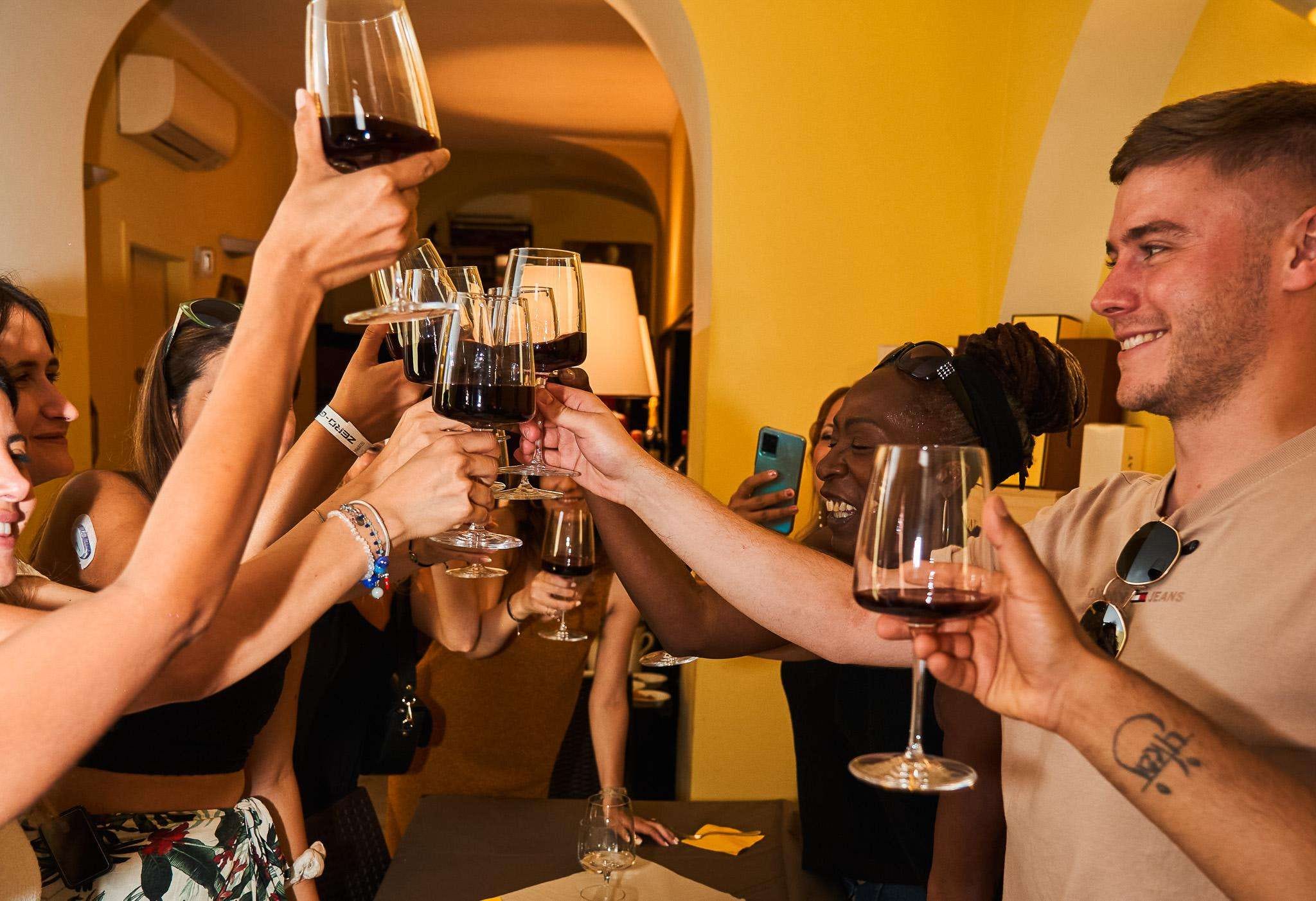
Roman food is a world unto itself, and the best way to understand it is to eat through a neighborhood with someone who knows it. A guided food tour covers supplì, pizza al taglio, porchetta, artichokes, and enough wine to make the walk home comfortable.
An evening walk through the historic center
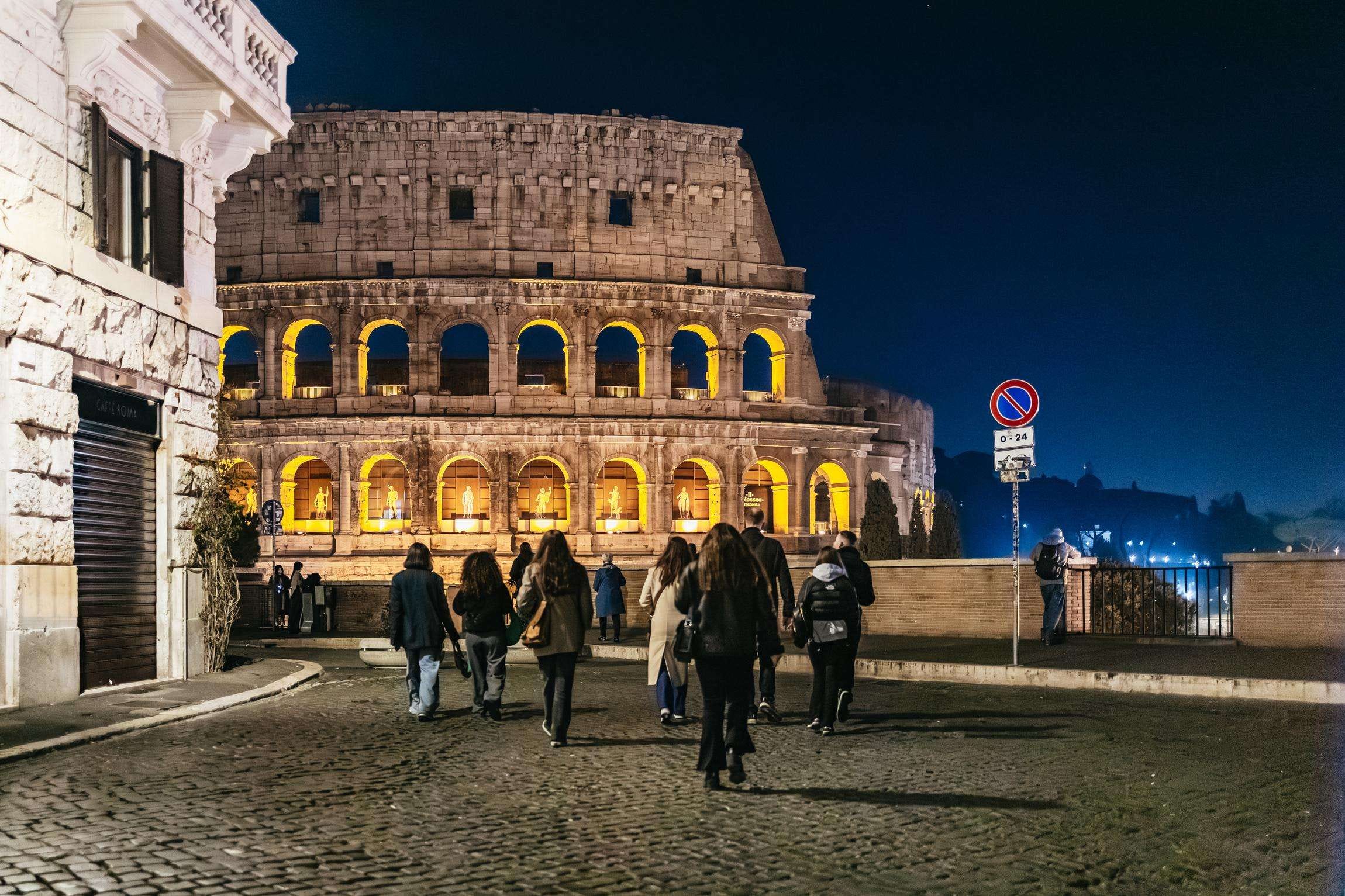
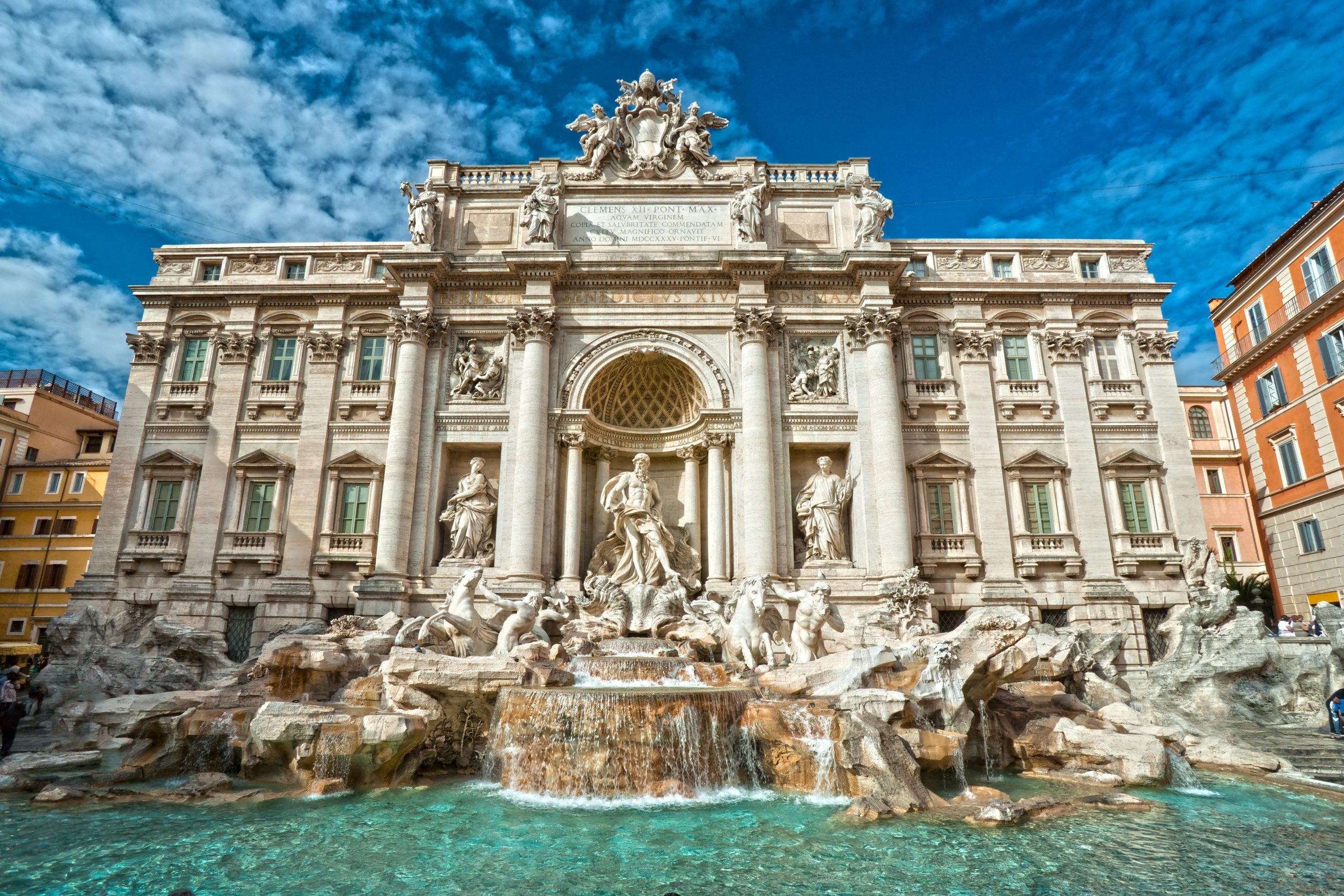
The Trevi Fountain at night, when the crowds are thinner and the lighting is extraordinary. The Pantheon with the piazza to yourself. Campo de' Fiori after the market stalls close. Rome after 9pm is a different city, and one of the most beautiful evening walks available anywhere in Europe.
Day trips from Rome
Rome is a natural base for some of the most historically significant destinations in Europe. Most are reachable within two hours by train or organized transfer.
Pompeii and Mount Vesuvius
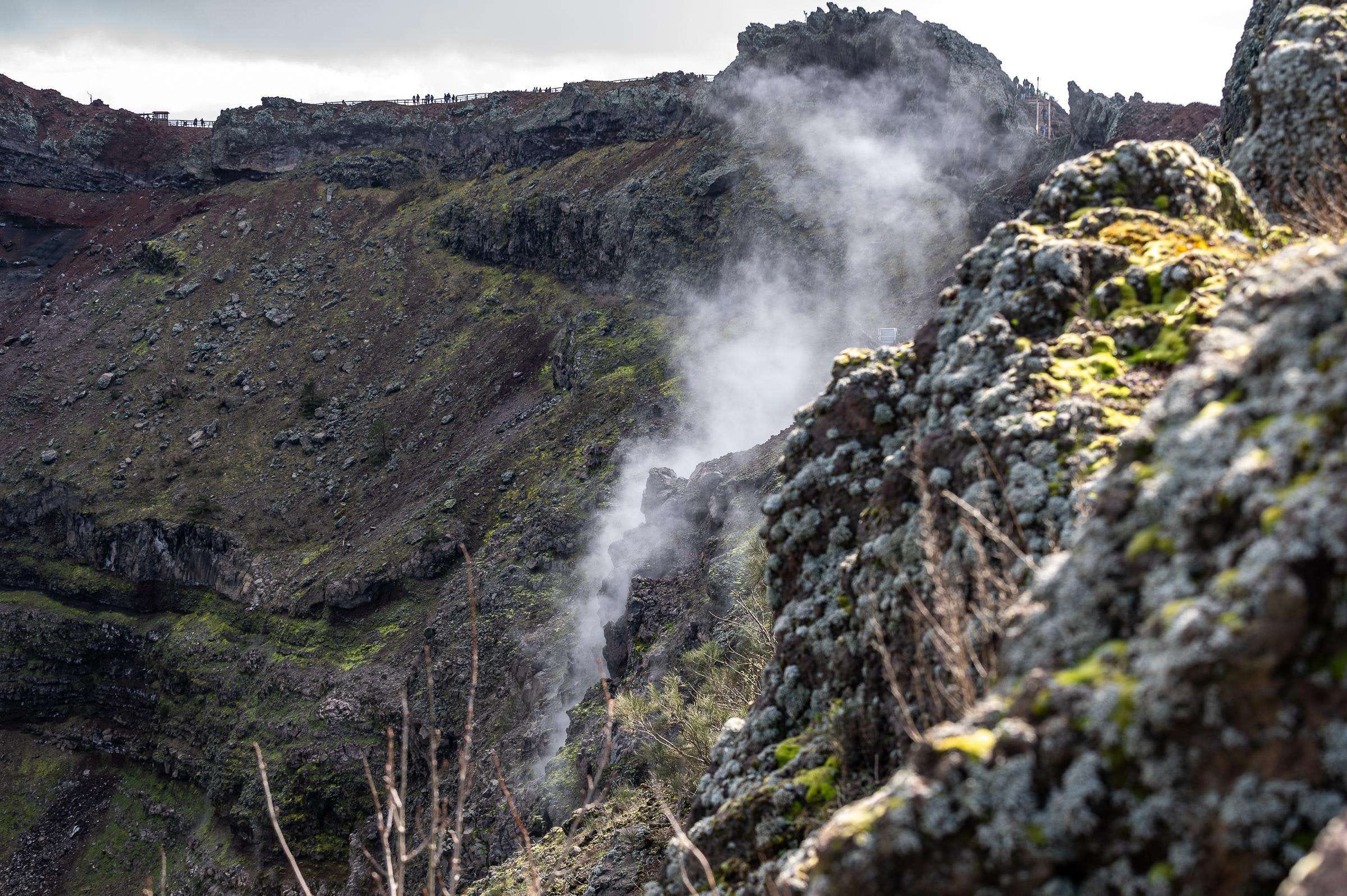
Among the most extraordinary archaeological sites in the world. The city frozen in 79 AD by the eruption of Vesuvius gives an unparalleled window into daily life in the Roman Empire. About two and a half hours from Rome by high-speed train to Naples, then a local connection. A guided tour is strongly recommended; without context, Pompeii can feel like a very large field of ruins.
Florence
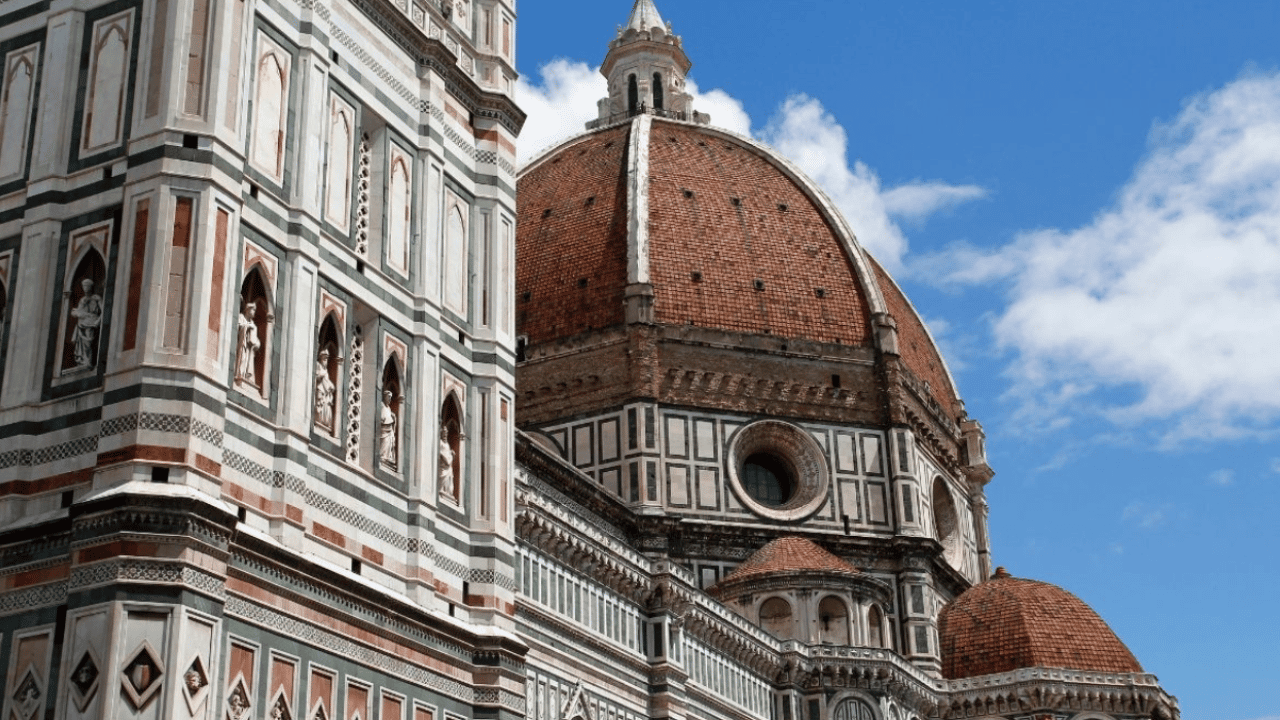
An hour and twenty minutes from Rome on the Frecciarossa high-speed train. Florence is the capital of the Italian Renaissance and home to the Uffizi, Michelangelo's David, the Duomo, and a food culture that rivals anything in the country. Perfectly doable as a day trip; even better as an overnight.
Orvieto and Civita di Bagnoregio
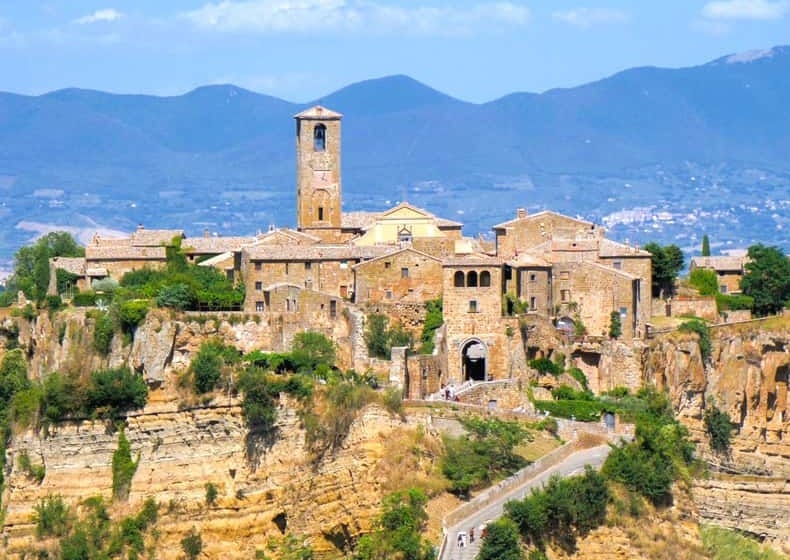
Two of the finest hilltop towns in Umbria, both accessible in under two hours from Rome. Orvieto has one of the most spectacular Gothic cathedrals in Italy and extraordinary white wine. Civita di Bagnoregio, perched on a crumbling tufa cliff and accessible only by footbridge, is one of the most visually stunning villages in the country.
Tivoli: Villa d'Este and Hadrian's Villa
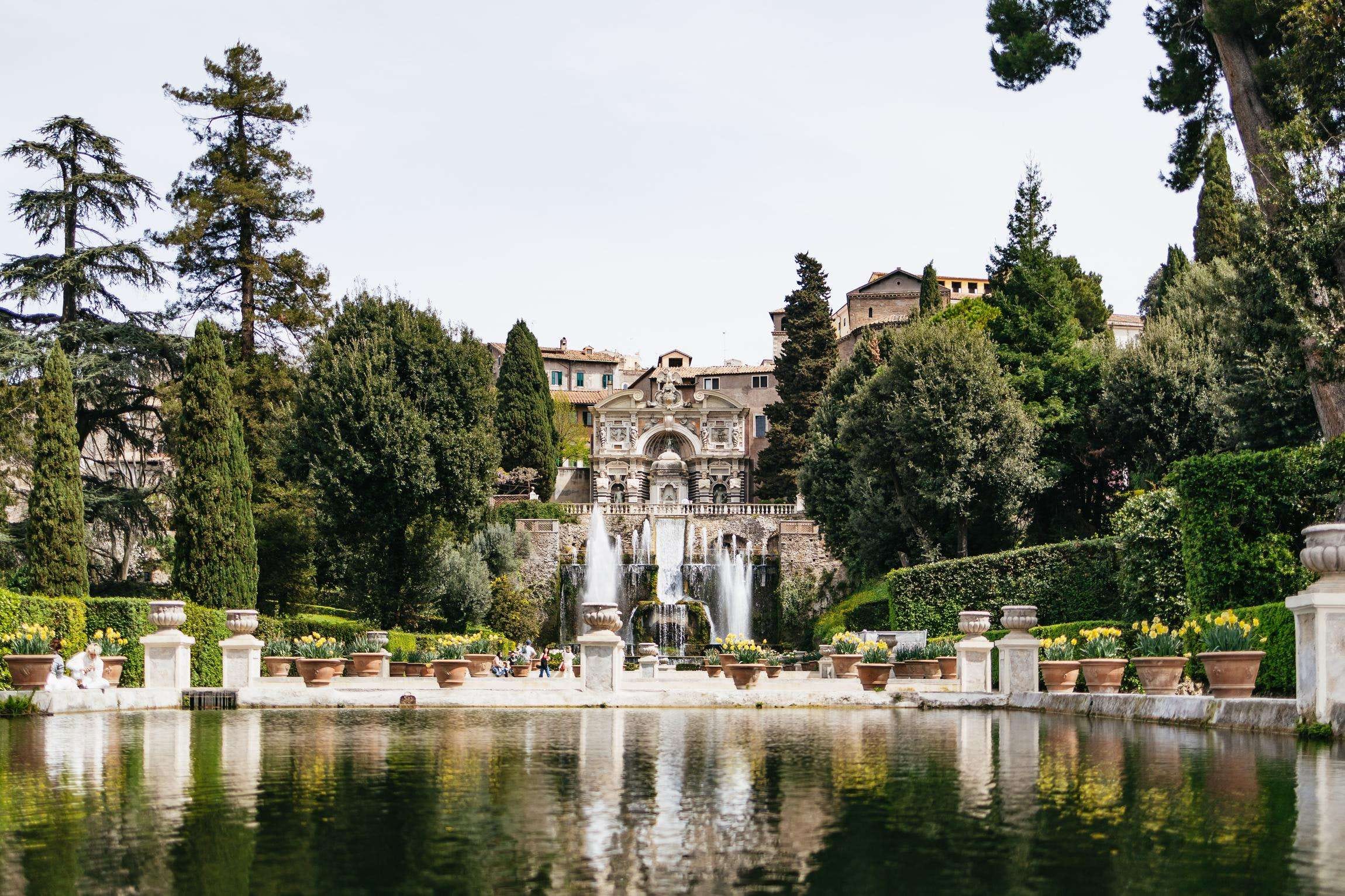
Less than an hour east of Rome, Tivoli offers two UNESCO World Heritage Sites in a single day: the Renaissance gardens and fountains of Villa d'Este, and the sprawling ruins of Hadrian's personal retreat, the largest villa ever built in the Roman Empire. A strong choice for visitors who have already covered the main Rome sites.
When to visit Rome
Rome is a year-round destination, but the experience varies considerably depending on when you go. Summer heat and crowds are the main factors to plan around.
🌸 Spring
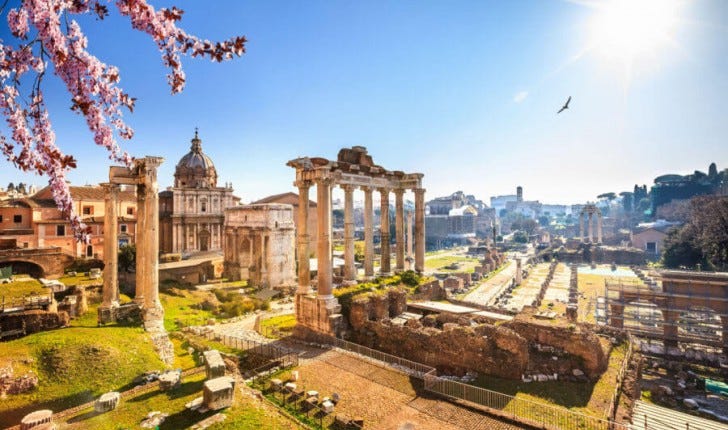
March to May. The finest season. Mild temperatures, manageable crowds until Easter week (which is very busy), and the city in full bloom. April and early May are close to ideal.
☀️ Summer
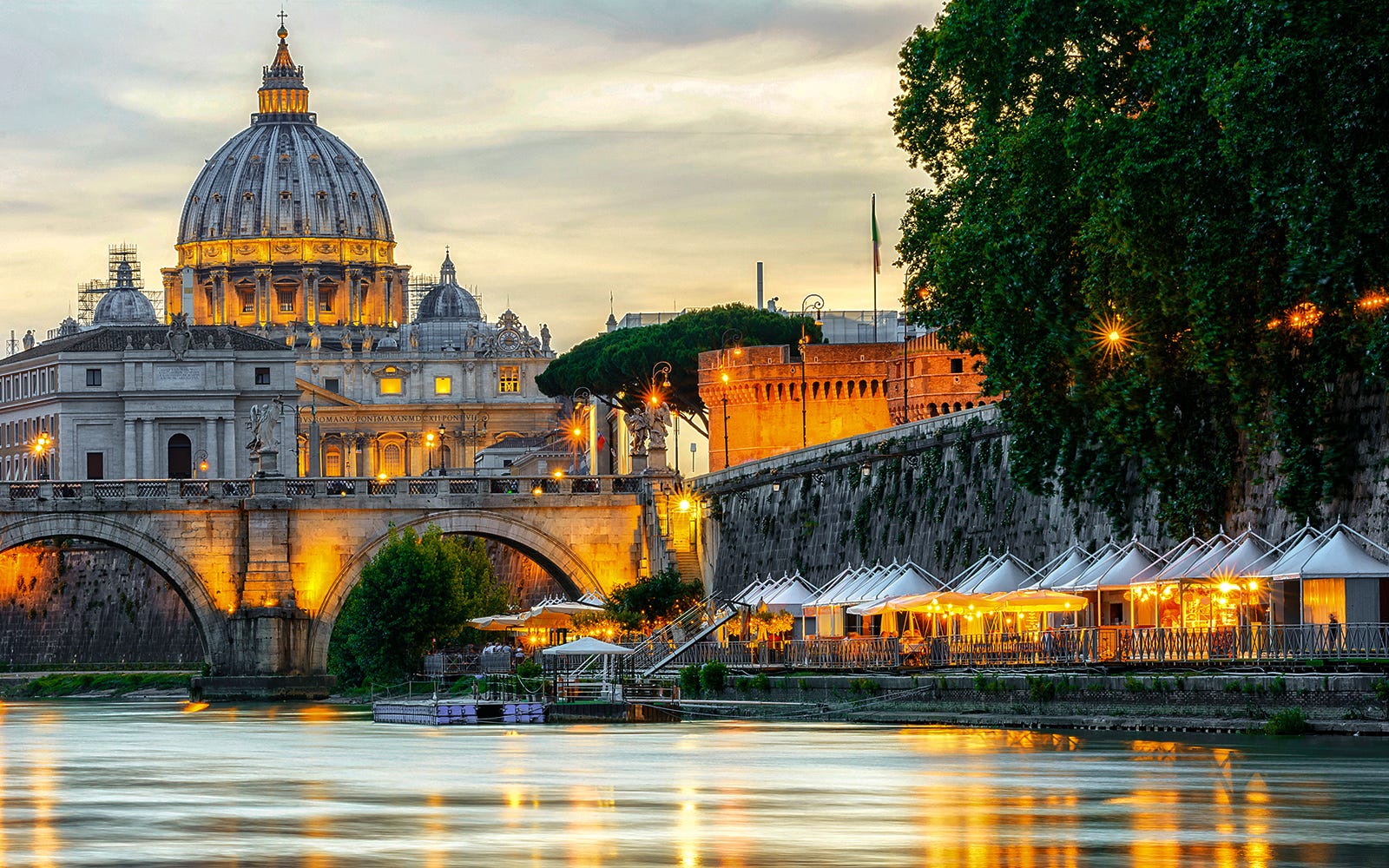
June to August. Extremely hot and extremely crowded. July and August see lines at every major site and temperatures above 35C regularly. Book everything well in advance and start each day before 9am.
🍂 Autumn
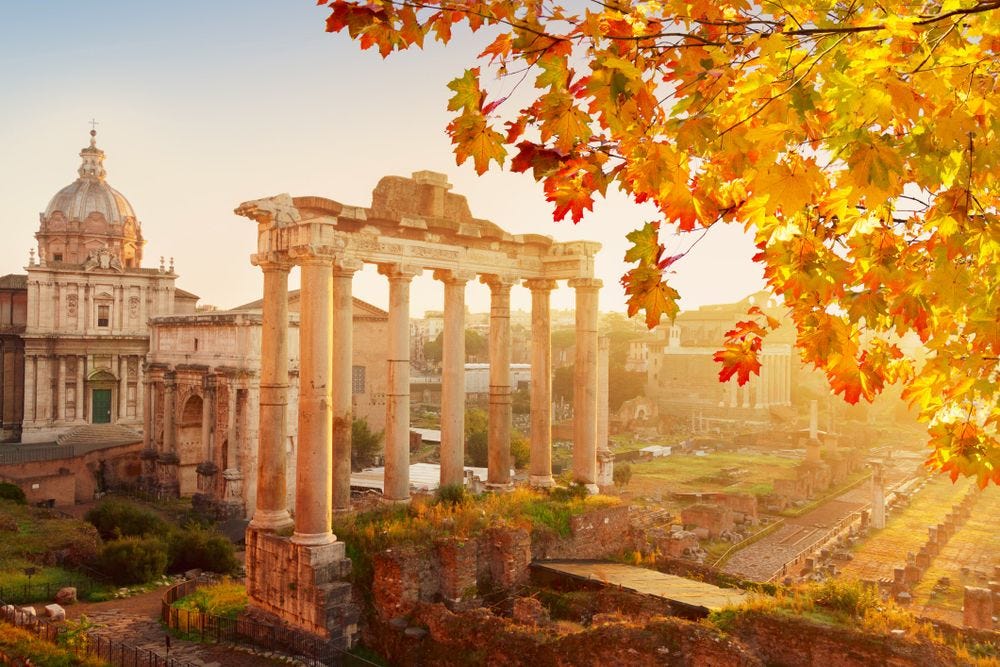
September to November. Excellent. Crowds thin significantly after mid-September. Temperatures are comfortable through October. The light is extraordinary in the late afternoon. A close second to spring.
❄️ Winter
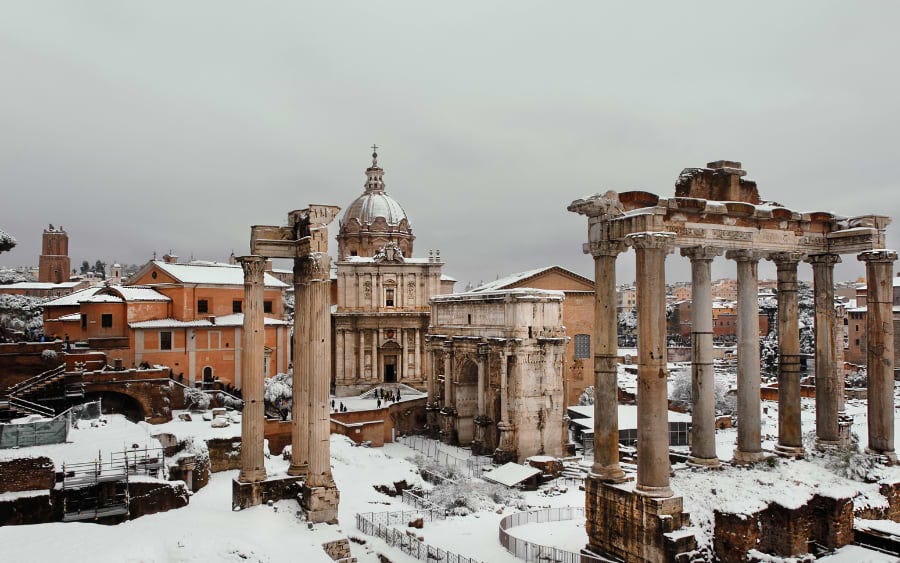
December to February. Mild by northern European standards, rarely below 5C. Christmas in Rome is atmospheric and the Vatican is less crowded. January and February are the quietest and least expensive months.
How many days to spend in Rome
Three days covers the Colosseum complex, the Vatican, the Pantheon, and the main piazzas at a reasonable pace. Four to five days allows for the Borghese Gallery, a food-focused afternoon in Testaccio, a day trip, and the slower walking that makes Rome actually enjoyable rather than merely documented. A week or more starts to feel like you are beginning to understand the city.
Rome is a city that rewards patience. The monuments are obvious from day one. The neighborhoods, the rhythms, the small churches with extraordinary frescoes that nobody is standing in front of: these take longer to find.
Suggested 3-day itinerary
Day 1
Colosseum (first slot, book ahead). Roman Forum and Palatine Hill.
Lunch near the Forum. Walk to the Circus Maximus and Aventine Hill keyhole view.
Dinner in Testaccio. Try cacio e pepe or coda alla vaccinara at a trattoria that doesn't have a photo menu.
Day 2
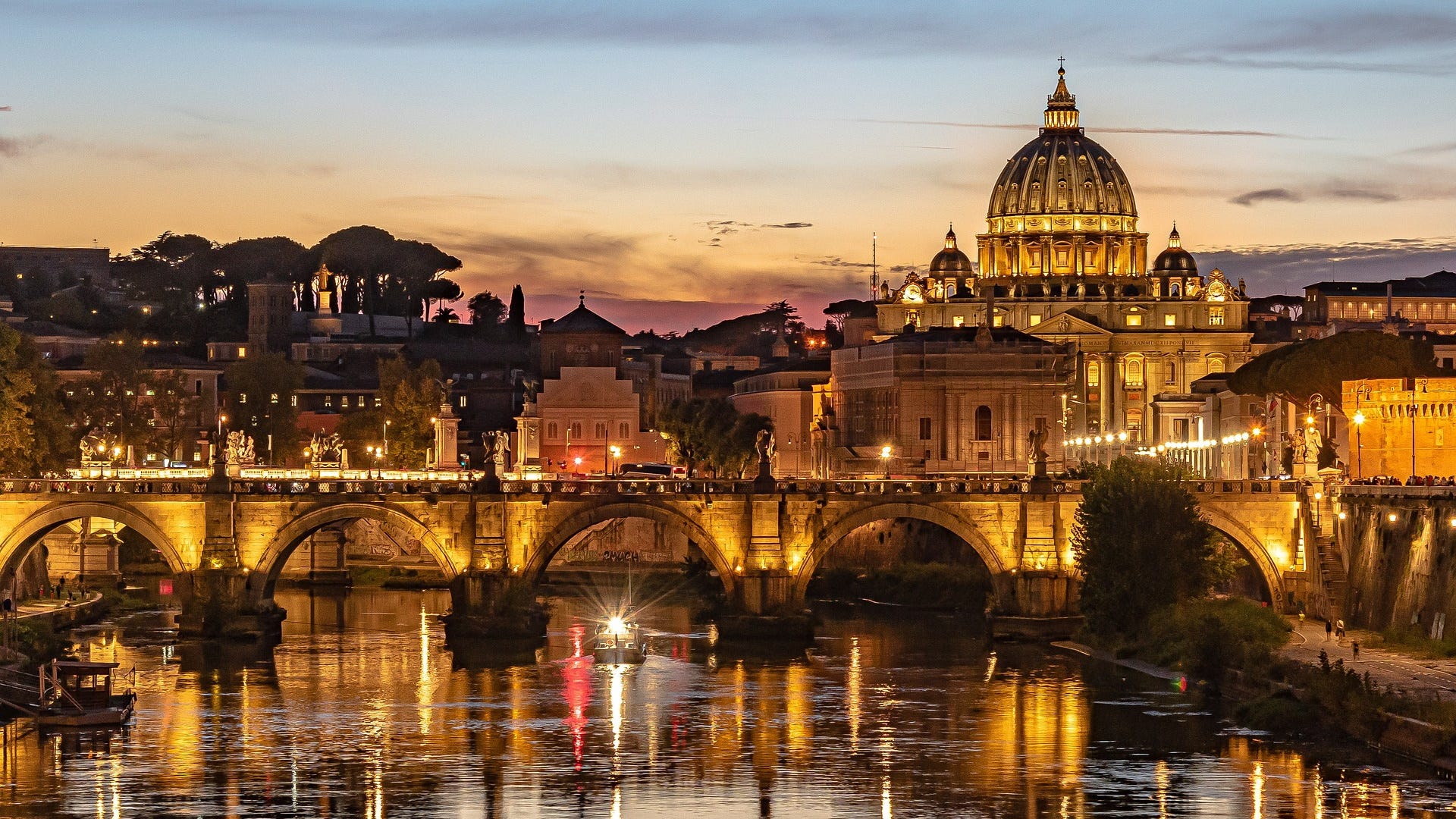
Vatican Museums and Sistine Chapel (book first entry). St. Peter's Basilica and Square.
Lunch in Prati. Afternoon walk across the Tiber. Castel Sant'Angelo exterior.
Dinner in Trastevere. Stay in the neighborhood for aperitivo and the evening atmosphere.
Day 3
Pantheon at opening. Piazza Navona. Coffee at Sant'Eustachio il Caffe.
Campo de' Fiori market (morning only, so visit before lunch). Largo Argentina cat sanctuary. Lunch in the Centro Storico.
Trevi Fountain at dusk. Spanish Steps at sunset. Dinner in the Tridente neighborhood.
Where to eat
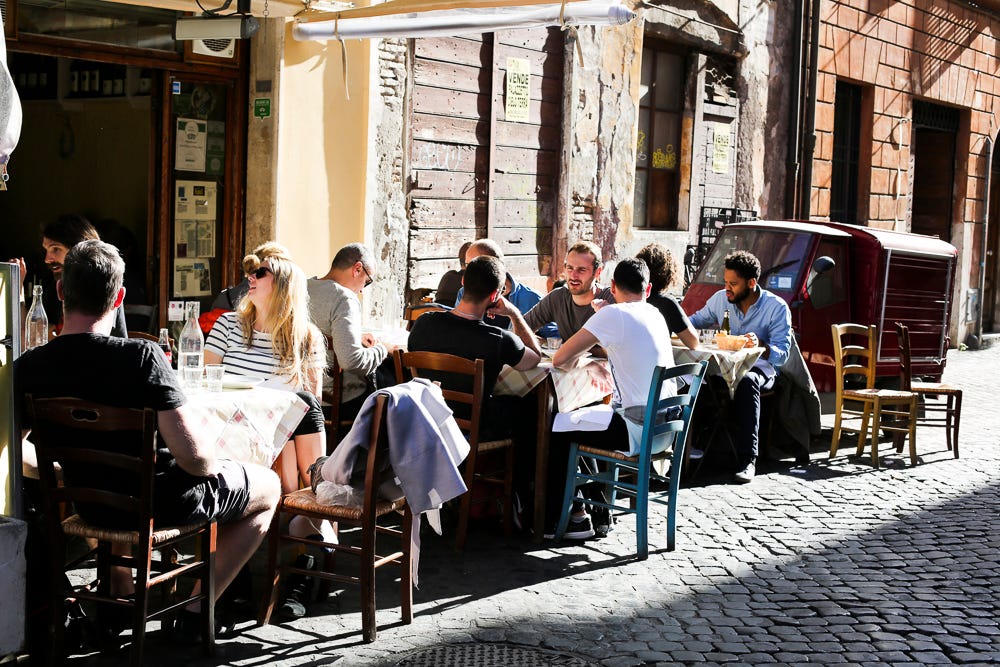
Roman cuisine is one of the most distinctive and satisfying in Italy: rooted in simplicity, quality ingredients, and centuries of tradition. These recommendations span different budgets and neighborhoods, all chosen for consistency.
Da Enzo al 29
Roman trattoria
A Trastevere institution. Cacio e pepe, rigatoni alla gricia, and artichokes alla giudia done exactly as they should be. Book at least a week ahead.
Flavio al Velavevodetto
Classic Roman
Built into the side of Monte Testaccio, a hill made of ancient amphora shards. The offal menu is serious; the pasta dishes are magnificent.
Supplì Roma
Street food
The best supplì (rice croquettes) in Rome, from a counter on the Via di San Francesco a Ripa in Trastevere. No seating required.
Il Sorpasso
Wine bar / All-day
Prati neighborhood standby for aperitivo, lunch, and casual dinner. Excellent natural wine list, good cheese and charcuterie, reliable Roman kitchen.
Pizzarium Bonci
Pizza al taglio
Gabriele Bonci's pizza by the slice operation near the Vatican. Widely considered the finest pizza al taglio in Rome. Arrive at opening or expect to wait.
Roscioli
Deli and restaurant
Part salumeria, part wine bar, part serious restaurant. The carbonara is one of the best in the city. Book well in advance for the restaurant side.
Sant'Eustachio il Caffe
Coffee
The most debated espresso in Rome, and for many visitors the best they have ever had. Near the Pantheon. The recipe is a closely guarded secret.
Where to stay
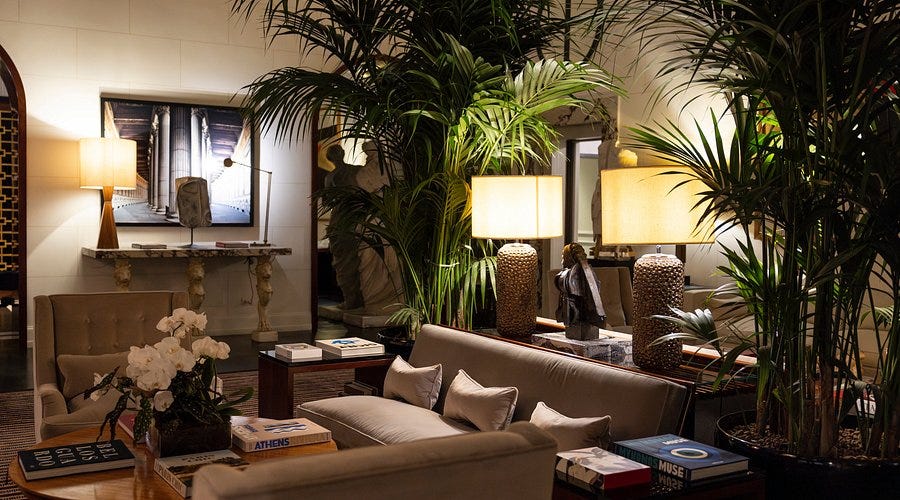
Location matters enormously in Rome. Staying within walking distance of the historic center saves time and adds spontaneity. The areas around the Pantheon, Trastevere, and Prati are the most practical for first-time visitors.
J.K. Place Roma
Luxury
A townhouse hotel near the Spanish Steps with a personal, almost residential quality. One of the finest addresses in the city for guests who want discretion over spectacle.
Hotel Campo de' Fiori
Mid-range
Right on one of Rome's most atmospheric piazzas, with a rooftop terrace that overlooks the historic center. Rooms are simple; the location is exceptional.
Portrait Roma
Luxury
A Lungarno Collection property just off Via Condotti, the designer shopping street. Beautifully designed suites, impeccable service, excellent bar.
Relais Le Clarisse
Mid-range / Boutique
A quiet, garden-facing property tucked into a former convent in Trastevere. Calm, intimate, and a beautiful base for evenings in the neighborhood.
Generator Rome
Budget
A well-run hostel near Termini station, clean and social. The least atmospheric option on this list, but the best value for solo and budget travelers.
Hotel Santa Maria
Mid-range
A converted 16th-century cloister in Trastevere with an orange tree courtyard. Unpretentious, well-located, and genuinely charming.
Practical information
Currency: Euro (EUR). Cards are widely accepted in hotels, restaurants, and larger shops. Carry cash for markets, smaller trattorias, and street food vendors.
Language: Italian. English is spoken in tourist areas and most hotels and restaurants in the center. A few words of Italian, starting with buongiorno and grazie, are appreciated everywhere.
Getting around: Rome's historic center is compact and best explored on foot. The metro has only two main lines and covers the center poorly. Taxis are metered and reliable. Avoid unofficial cab drivers at the airport.
Dress code: Required for entering churches and the Vatican. Shoulders and knees must be covered. Carry a scarf or lightweight layer if you plan to visit multiple religious sites in a day.
Internet: An Italian eSIM or European roaming plan works well throughout the city. Wi-Fi is widely available in hotels and most cafes.
Safety: Rome is generally safe. Pickpockets operate in crowded tourist areas, on the metro, and around the Colosseum and Trevi Fountain. Keep bags in front of you and avoid distraction scams near major monuments.
Tipping: Not expected in Italy. Rounding up the bill or leaving a euro or two for good service is appreciated but never required. Avoid restaurants that include an automatic service charge without disclosing it on the menu.
Reservations: Book the Colosseum, Vatican, Pantheon, and Borghese Gallery well in advance. The Borghese Gallery in particular sells out weeks ahead. Top restaurants require reservations of one to two weeks minimum.
Water: Rome has a network of free public drinking fountains called nasoni throughout the city. The water is clean, cold, and excellent. Carry a refillable bottle.
How Rome fits into a broader Italy trip
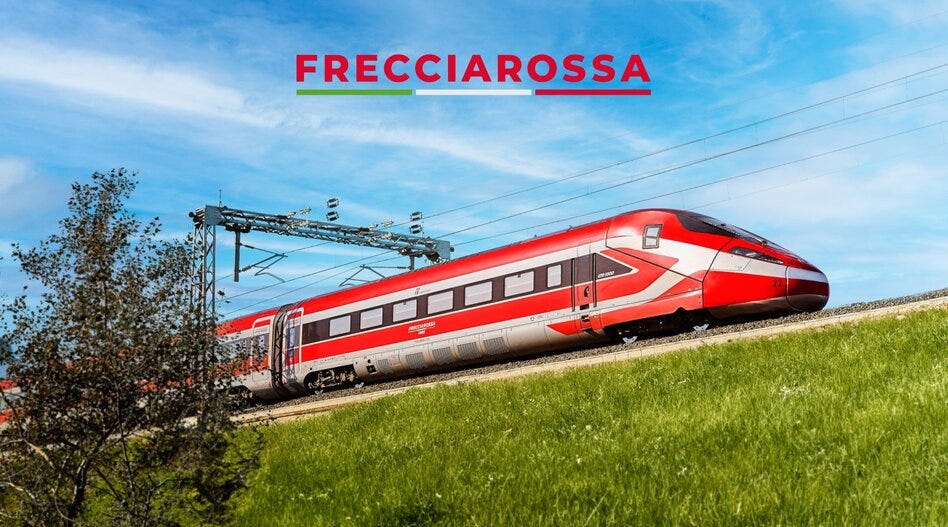
Most travelers to Italy combine Rome with at least one other destination. The classic pairing is Florence, about an hour and twenty minutes north by high-speed train, which provides the ideal counterpoint to Rome: smaller, more intimate, and concentrated entirely on the Renaissance rather than antiquity. Adding Naples to the south, with a day at Pompeii, extends the ancient history thread in a very different direction.
For travelers with two weeks or more, a north-to-south or south-to-north rail itinerary covering Rome, Naples, Florence, and Venice is one of the finest travel experiences available anywhere in Europe. The Frecciarossa high-speed network connects all four cities efficiently and eliminates the need to fly between them.
Frequently asked questions
Is Rome worth visiting for first-time travelers to Italy?
Yes, without reservation. Rome is the indispensable starting point for Italian travel. No other city on earth puts quite so much history, art, and food in such close proximity.
How many days do you need in Rome?
Three days covers the main monuments at a reasonable pace. Four to five days allows for the Borghese Gallery, a food-focused afternoon in Testaccio, a day trip, and the slower walking that makes Rome genuinely enjoyable.
What is the best time of year to visit Rome?
Spring (April to May) and autumn (September to October) are the two best seasons: mild temperatures, manageable crowds, and the city at its most atmospheric. Summer is beautiful but exhausting and extremely crowded. Winter is quiet and underrated.
Is Rome safe for tourists?
Rome is a safe city overall. Pickpockets are the main concern in crowded tourist areas and on the metro. Keep bags secured in front of you near the Colosseum, Trevi Fountain, and Vatican. Violent crime directed at tourists is rare.
Do I need to book attractions in advance?
Yes, for almost everything significant. The Colosseum, Vatican, Pantheon, and Borghese Gallery all require timed entry tickets. The Borghese Gallery sells out weeks in advance. Booking on arrival is possible but risks missing the sites entirely during peak season.
Which neighborhoods should first-time visitors prioritize?
The historic center for the main piazzas and the Pantheon, Trastevere for evening atmosphere and food, Testaccio for the most authentic Roman cooking, and Prati for a convenient base near the Vatican.
Can you visit Rome without speaking Italian?
Yes. English is widely spoken in tourist areas. Italian basics (buongiorno, grazie, per favore) are welcomed everywhere and change the quality of interactions noticeably.
Plan your Rome trip with AERIA Voyages
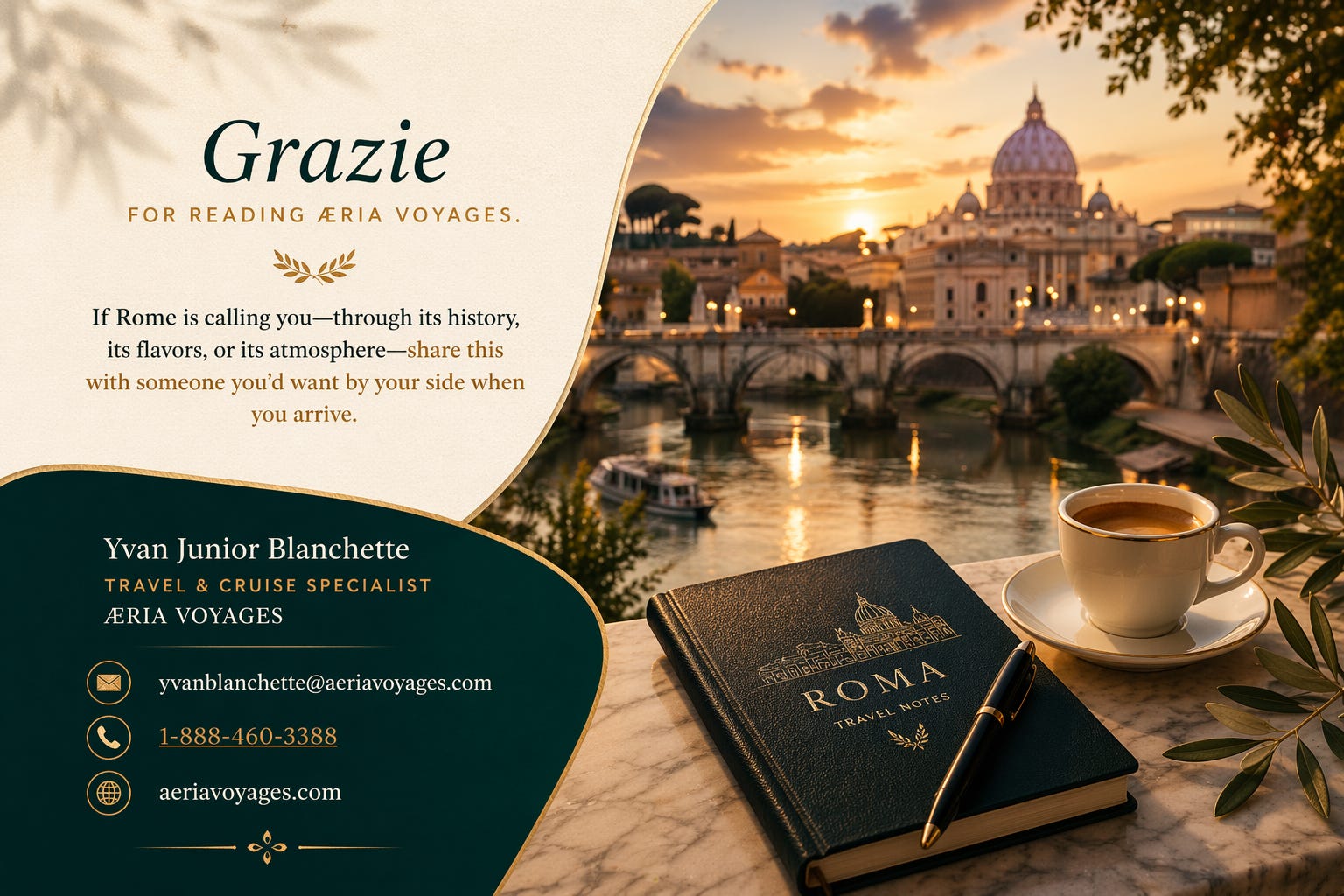
Every traveler's ideal Rome itinerary looks different depending on the time available, the history that resonates most, and the kind of pace you want. I help clients build trips that go beyond the standard circuit: a private evening tour of the Forum after closing time, a cooking class in Testaccio, a curated combination of Rome and the Amalfi Coast, or a rail journey through the whole country.
If you are planning a trip to Rome and want to talk through the options, I would be glad to help.
Yvan Junior Blanchette
Travel & Cruise Specialist
ÆRIA Voyages📩 yvanblanchette@aeriavoyages.com
📞 1-888-460-3388
🌐 aeriavoyages.com