

The Ultimate VENICE Travel guide: What to know, where to go, and how to make the most of your visit
Updated 2026 | Italy | First-time visitors | In-depth travel
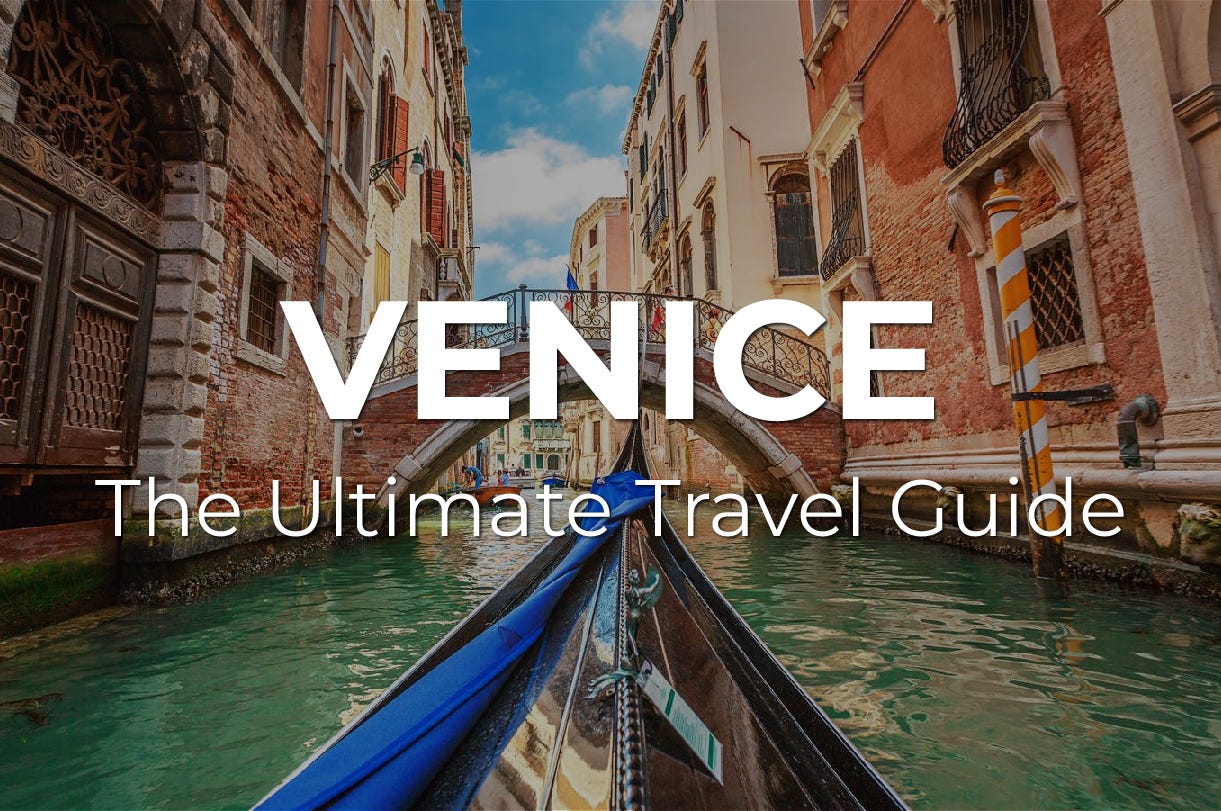
Venice defies all reasonable expectations. You know before you arrive that it is built on water, that there are no cars, that it is sinking slowly and has been flooding for centuries. None of this prepares you for what it actually feels like to step off the train at Santa Lucia and see the Grand Canal for the first time.
The city is disorienting in the best possible way: the logic of streets and intersections has been replaced by the logic of water, bridges, and the sound of boats. There is nowhere else like it in the world, and there never will be.
This guide covers the neighborhoods worth knowing, the experiences that define the city, the practical details you need before you go, and how to plan the right amount of time for the kind of trip you want.
Table of Content
🎙️BEYOND THE HORIZON: TRAVEL AND CRUISE PODCAST

Why Venice is worth visiting
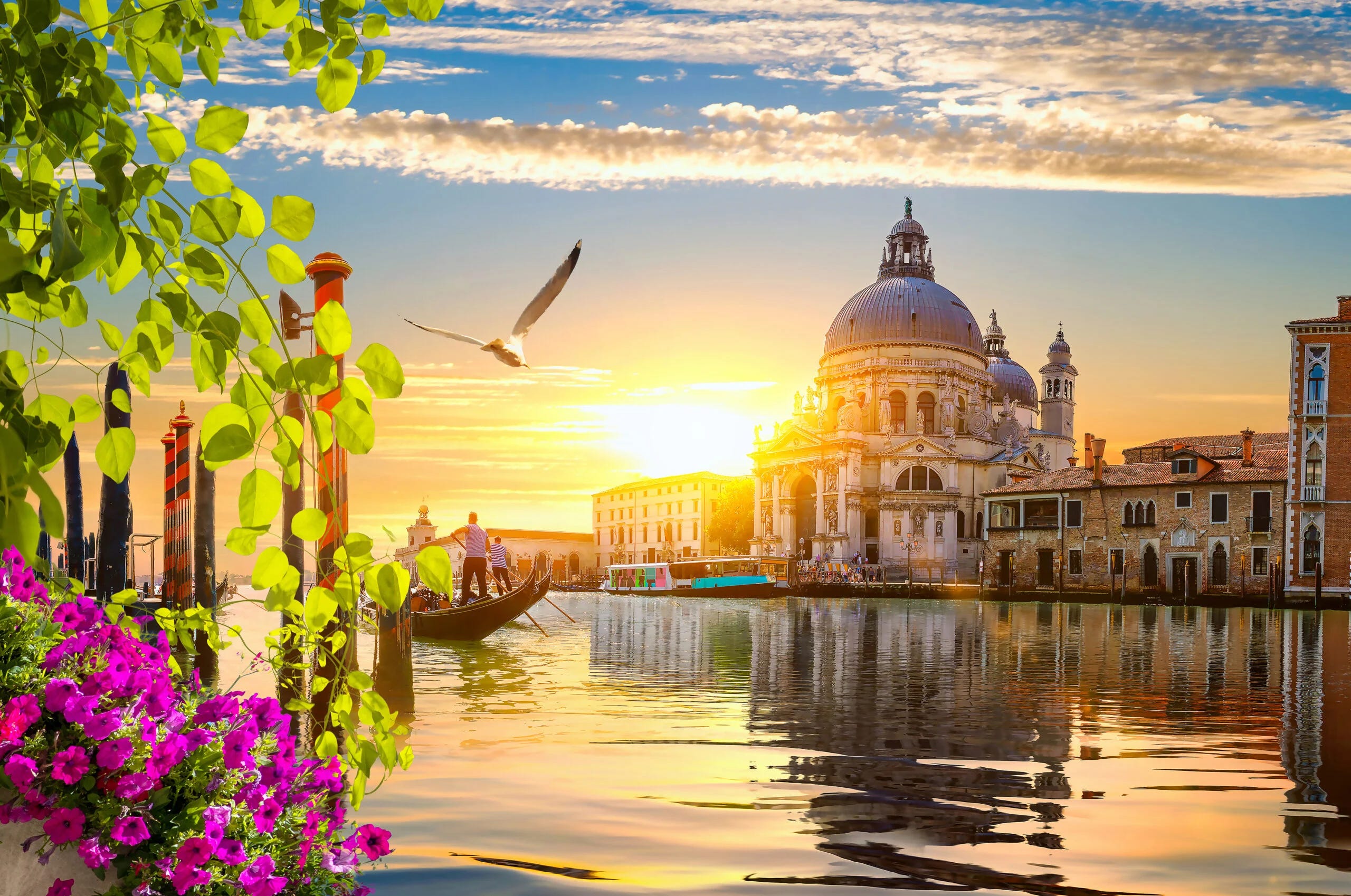
Venice was built by human beings on 118 small islands in a lagoon, connected by more than 400 bridges and navigated by a system of canals that replaced the streets of every other city. It was the wealthiest city in Europe for several centuries, accumulating the art, architecture, and cultural wealth that a maritime empire at the center of Mediterranean trade could generate. The result is a city of extraordinary density: Byzantine mosaics, Gothic palaces, Renaissance paintings, Baroque churches, and the sheer engineering improbability of the place itself.
Visiting Venice requires accepting certain things. It is expensive, often crowded, and genuinely difficult to navigate for the first few hours. The summer heat and the Acqua Alta flooding are real considerations. And it is without question one of the most beautiful places on earth, a city that has inspired more painters, writers, and composers than almost any other in history. The crowds exist for a reason.
For first-time visitors to Italy, Venice is a natural addition to Rome and Florence, providing a dimension that neither of those cities can offer: a living city built entirely on water, with no equivalent anywhere on earth.
The neighborhoods you should know
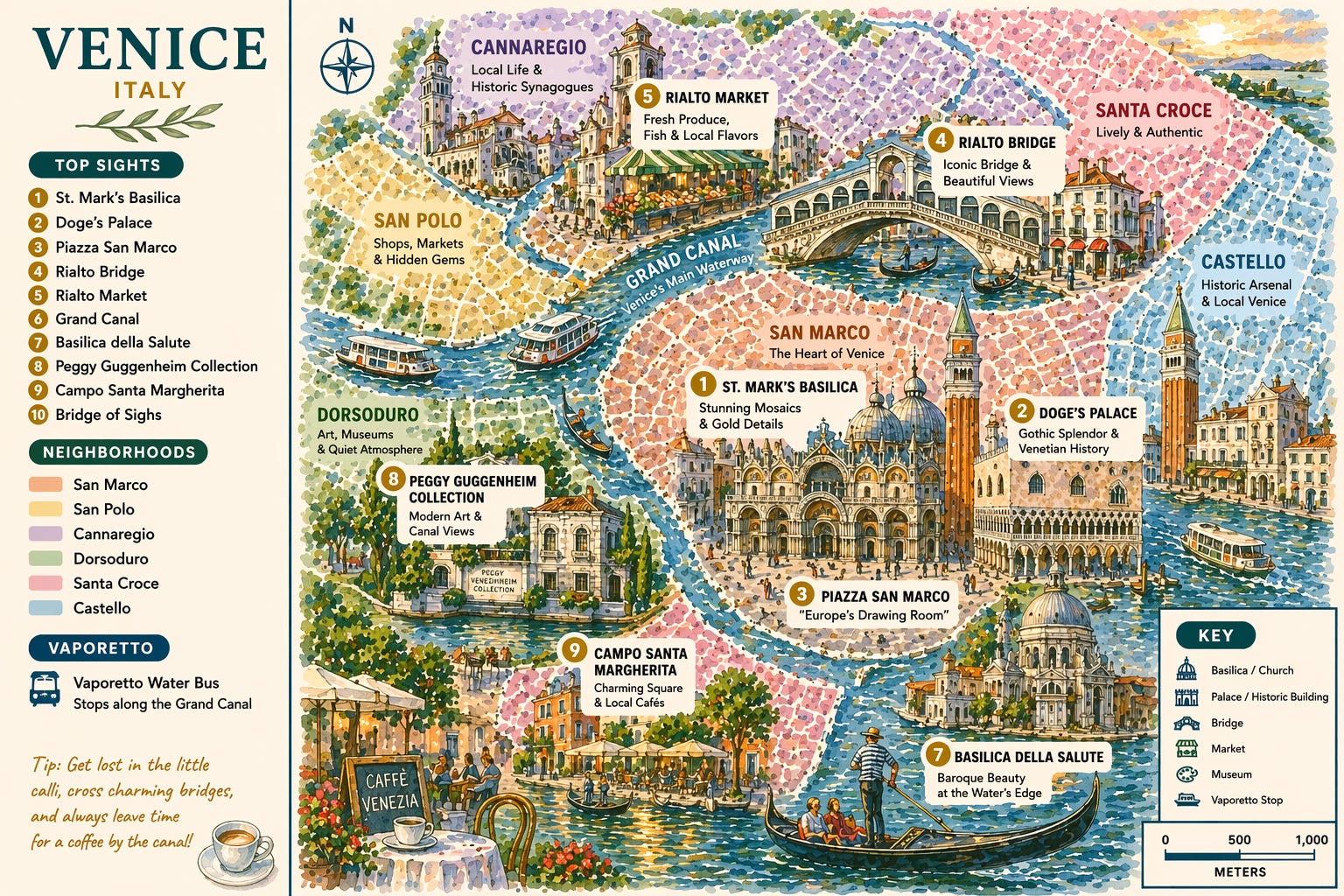
Venice is divided into six sestieri (districts), each with a distinct character. Understanding them helps you navigate a city where the absence of street signs and the repetition of canal crossings can be genuinely disorienting.
San Marco
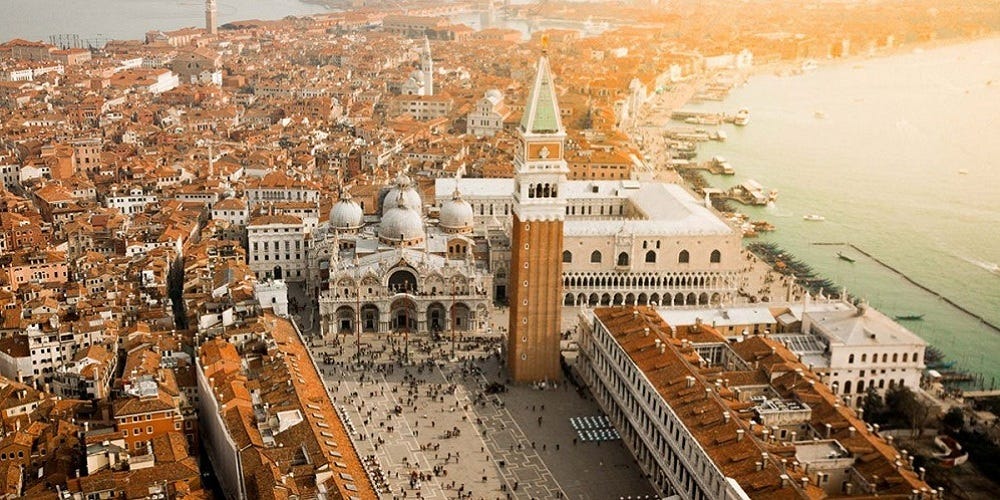
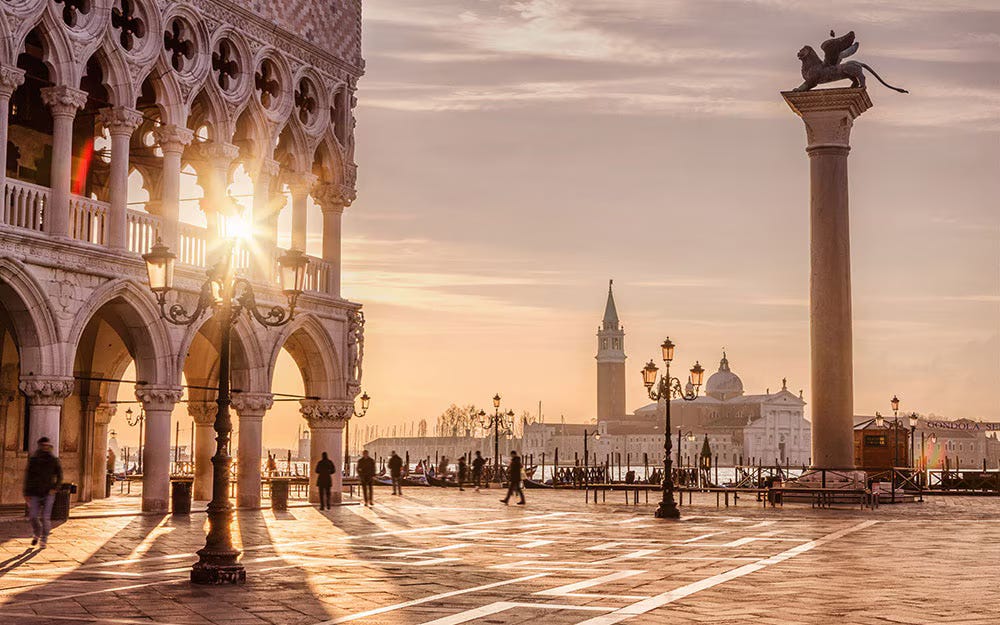
The political and ceremonial heart of the Republic of Venice: the Piazza San Marco, the Basilica, the Doge’s Palace, the Campanile, and the view across the lagoon to San Giorgio Maggiore. San Marco is where the monuments are and where the crowds are densest. Come early in the morning, before 9am, when the piazza is quiet and the light on the golden facade of the Basilica is extraordinary. By 10am it is different. By noon it is a different city entirely.
Dorsoduro
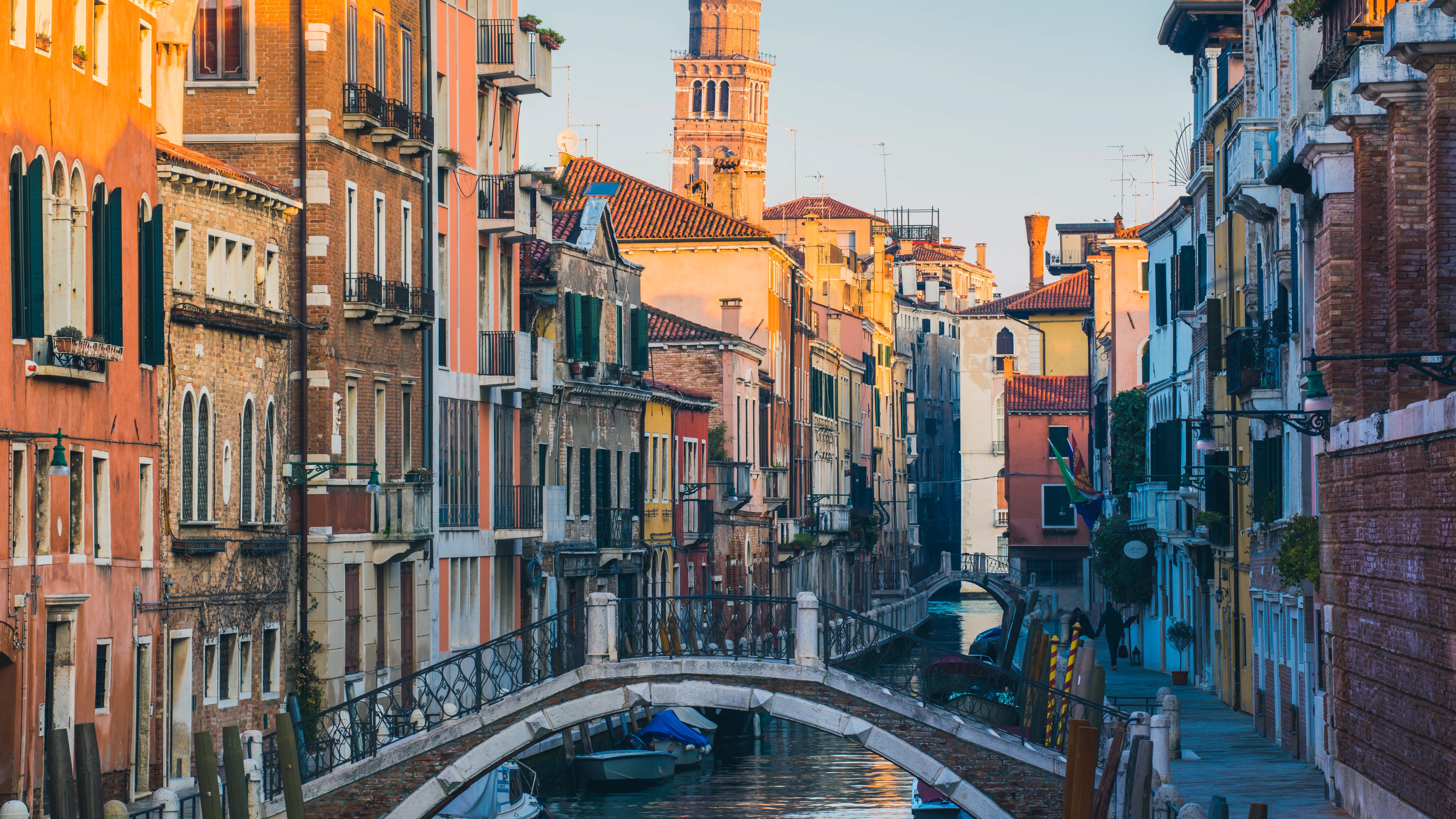
The sestiere south of the Grand Canal, with the finest concentration of contemporary art in Venice: the Peggy Guggenheim Collection in her former palazzo, the Punta della Dogana gallery in a converted customs house, and the Gallerie dell’Accademia with the most complete collection of Venetian painting in existence. The Zattere promenade along the southern waterfront is one of the most pleasant walks in Venice, with views across the Giudecca canal. The Campo Santa Margherita, at the heart of the neighborhood, is the most genuinely local public square in central Venice.
Cannaregio
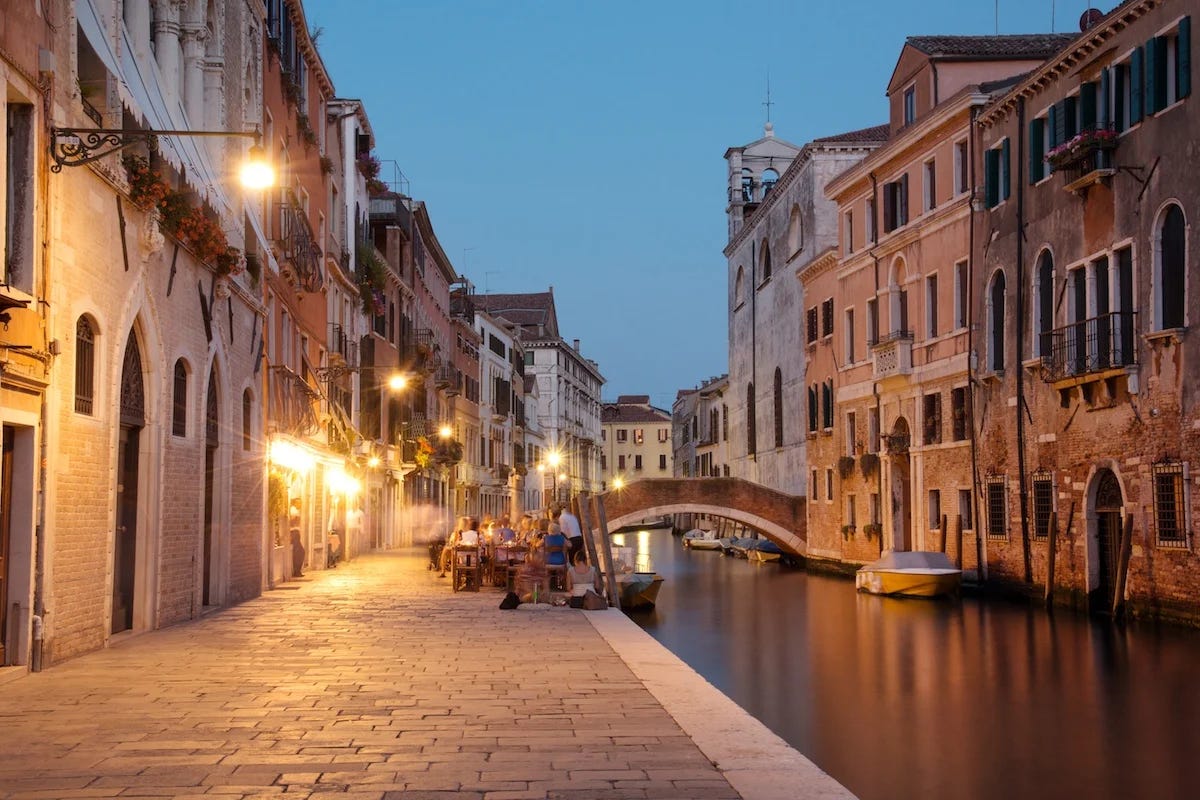
The northernmost sestiere, containing the oldest Jewish ghetto in the world, established in 1516 when the Venetian Republic confined its Jewish population to this island. The narrow calli and the tall, compressed buildings of the ghetto (built upward because the island was fixed in size) tell a history that is distinct from the rest of the city. The neighbourhood also contains some of the best cicchetti bars in Venice, particularly along the Strada Nova and the Fondamenta della Misericordia.
Castello
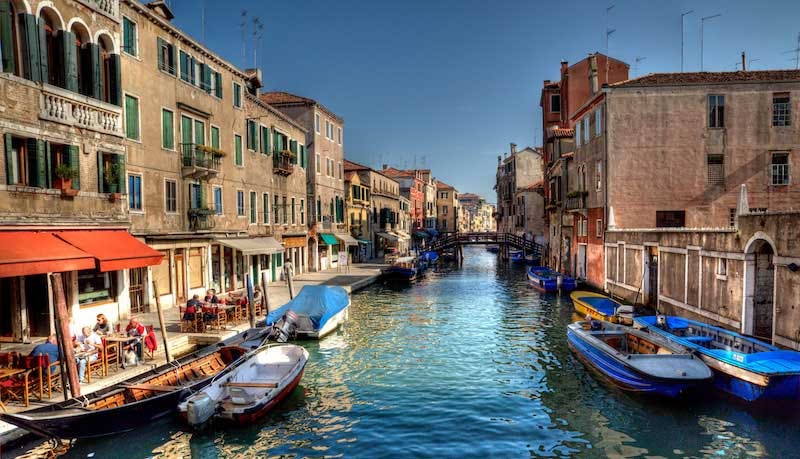
The largest sestiere, stretching east from San Marco to the Arsenale, Venice’s former naval shipyard where the galleys that gave the Republic its maritime power were built. The eastern end of Castello, around the Via Garibaldi and the Giardini, is genuinely residential and sees almost no tourists. The Biennale gardens are here. The neighbourhood rewards visitors who walk past the obvious landmarks and into the quieter streets where children play football in campi that have not changed in centuries.
San Polo and Santa Croce
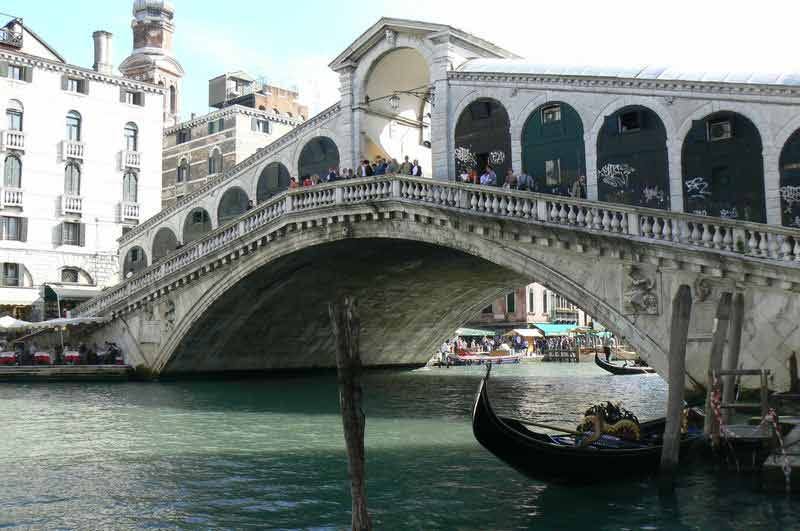
The commercial heart of Venice, centered on the Rialto Bridge and the Rialto Market. San Polo contains some of the finest churches in the city: the Basilica dei Frari, with Titian’s Assumption of the Virgin over the altar, and the Scuola Grande di San Rocco, with its extraordinary cycle of Tintoretto paintings. The market at the Rialto, in operation since the 11th century, is at its best on weekday mornings.
Giudecca
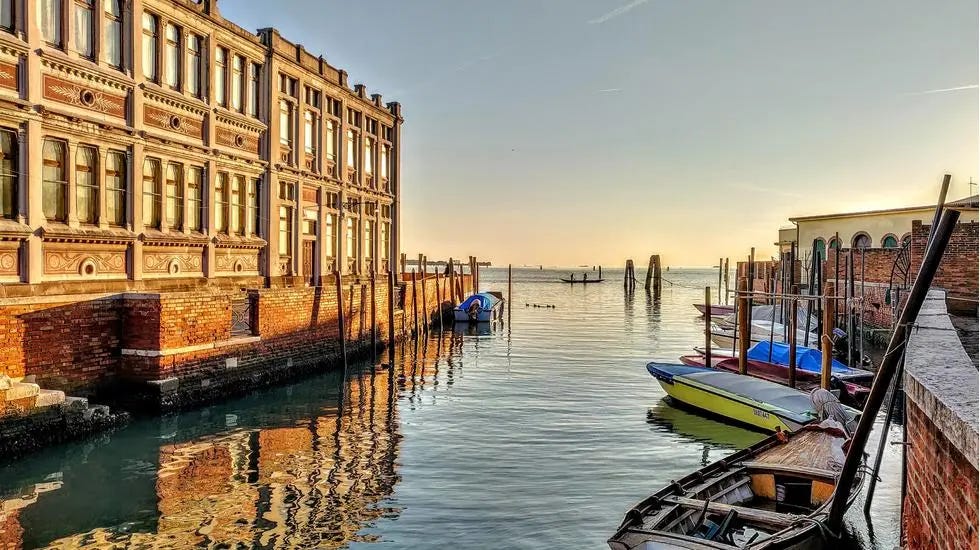
The long island south of Dorsoduro, separated by the wide Giudecca canal and reached by vaporetto. Giudecca is less visited than the main island and more residential, with the finest views of Venice available from the opposite direction. The Cipriani hotel occupies one end; the other end is genuinely working-class and refreshingly free of tourist infrastructure.
Activities not to miss
Venice’s most important experiences fall into two categories: the monuments and museums that any first-time visitor should see, and the slower pleasures of walking, eating, and simply being in a city unlike any other. Both matter.

St. Mark’s Basilica
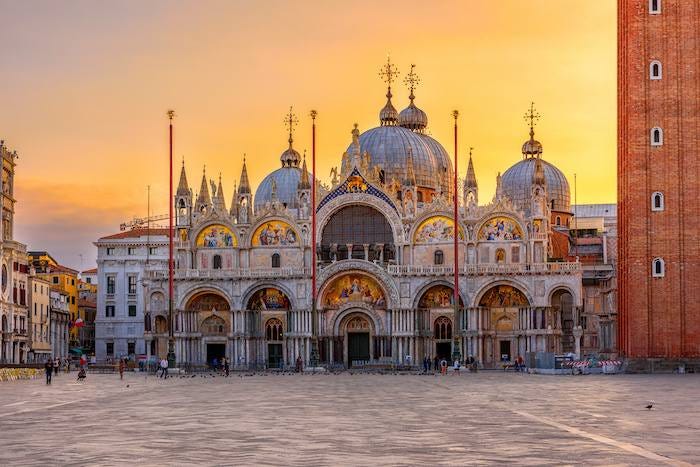
The most Byzantine church in Western Europe, built to house the stolen relics of St. Mark and to project the wealth and power of the Venetian Republic in equal measure. The facade is encrusted with mosaics, marble, and spolia taken from Constantinople and elsewhere across the Mediterranean. The interior, with its golden mosaic ceiling covering more than 8,000 square meters, is one of the most extraordinary spaces in the world. The terrace level, with its views over the piazza and the original bronze horses, is included with the standard ticket. Book in advance: timed entry is required and slots sell out.
Doge’s Palace
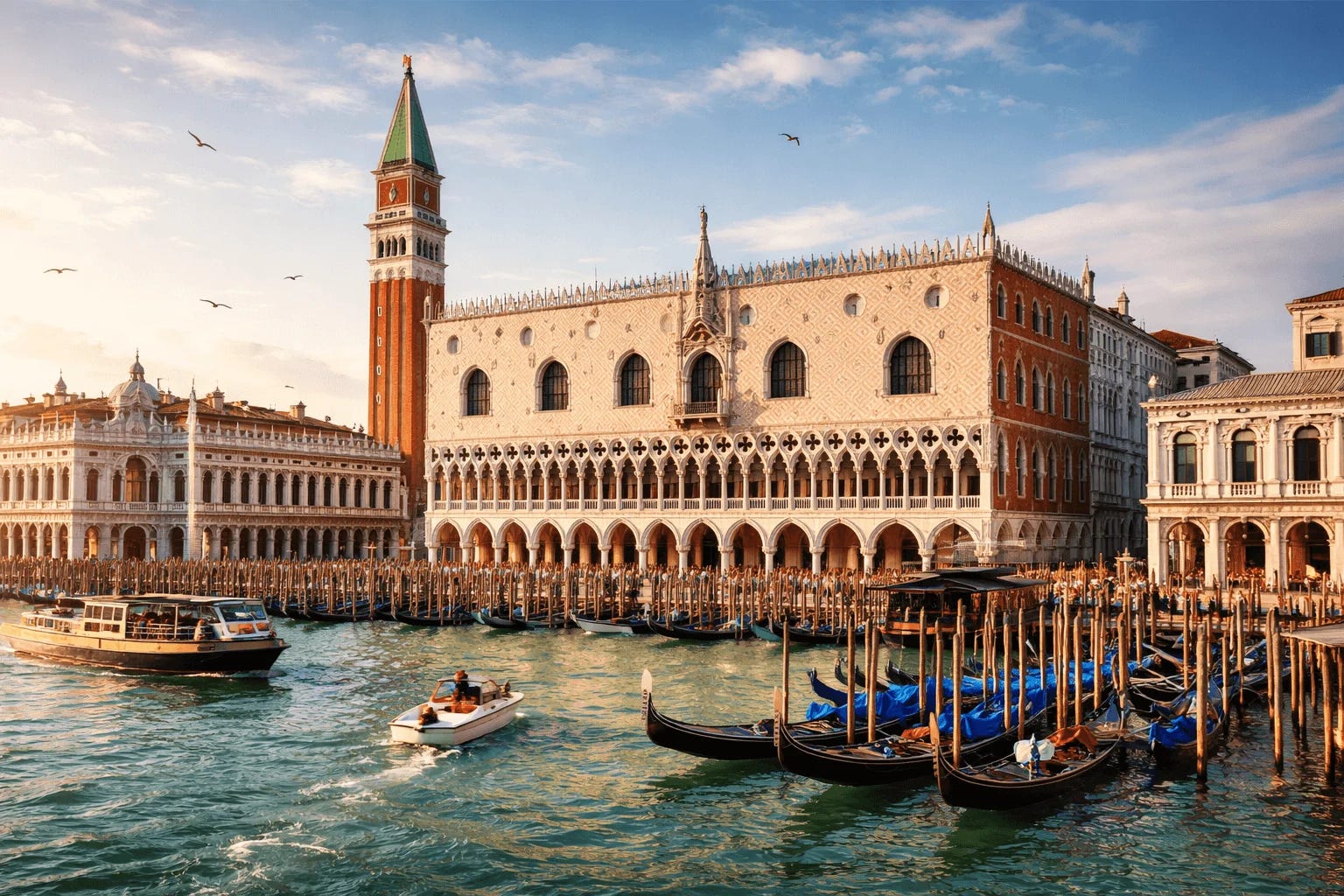
The former seat of government of the Venetian Republic, one of the most significant Gothic buildings in Europe and, together with the Basilica, the definitive expression of Venice at the height of its power. The Great Council Chamber is the largest room in Europe, with Tintoretto’s Paradise, the largest oil painting in the world, covering one wall. The route through the palace includes the Golden Staircase, the state rooms, the Bridge of Sighs, and the old prisons. A guide is strongly recommended: the political history embedded in every room requires explanation.
Gondola ride
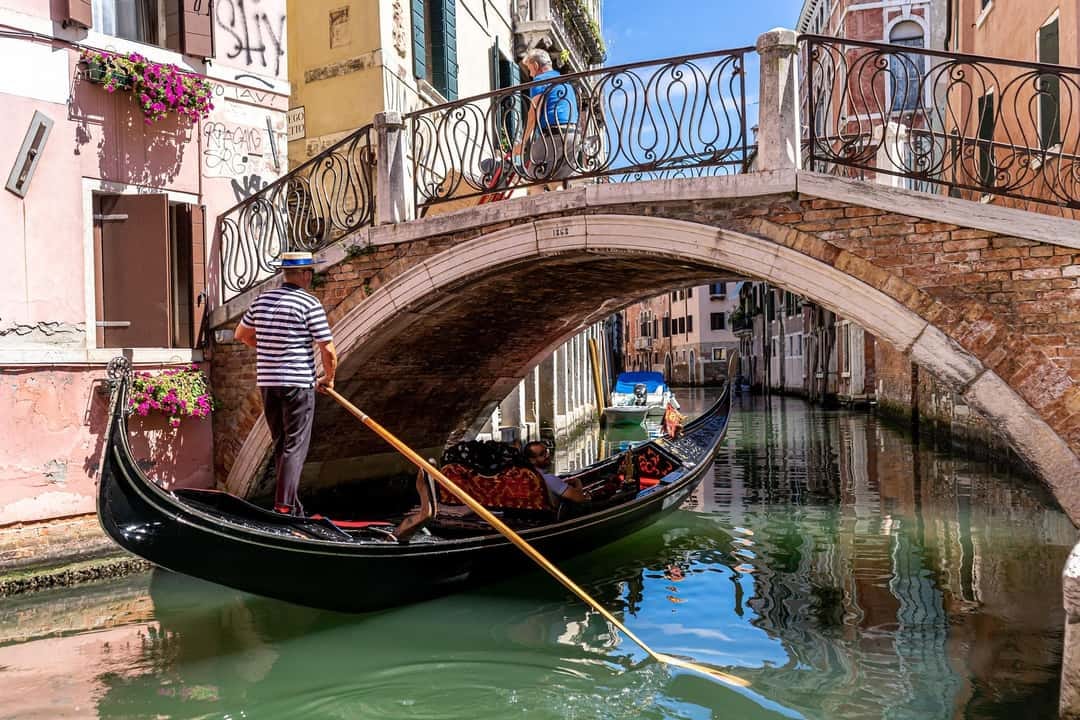
The gondola ride is the most clichéd and most irreplaceable experience in Venice. Thirty minutes on the smaller canals, away from the Grand Canal traffic, through passages so narrow that the buildings seem to lean over you, under bridges with barely enough clearance: this is the Venice that exists at water level, and it cannot be experienced any other way. Go in the late afternoon or early evening for the best light. Negotiate the route in advance to avoid the most touristy circuits.
Gallerie dell’Accademia
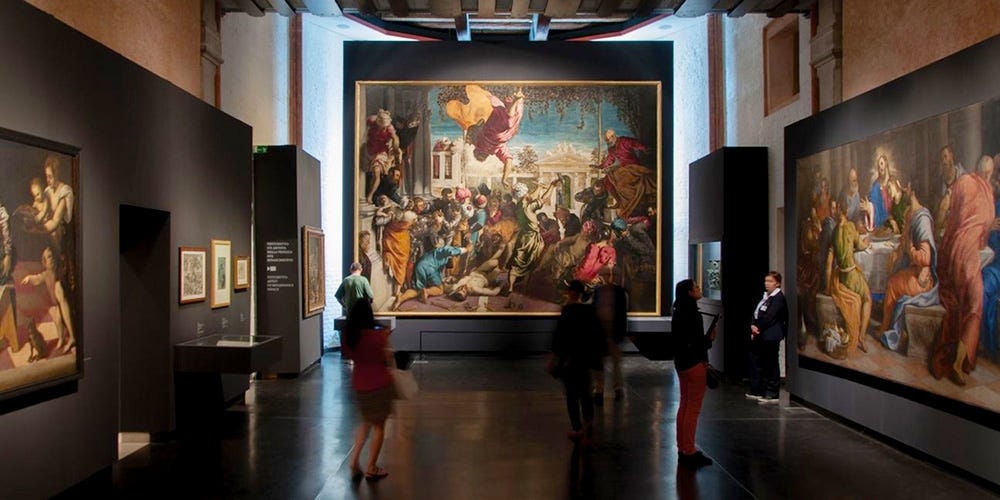
The most complete collection of Venetian painting in existence, spanning six centuries from Byzantine icons to Tintoretto and Tiepolo, in a converted Augustinian monastery in Dorsoduro. Bellini, Mantegna, Giorgione, Titian, Veronese, Tintoretto: the painters who defined the Venetian school are all here, in rooms that contain some of the most beautiful paintings in Italy. Relatively uncrowded compared to the monuments of San Marco. Budget three hours.
The Peggy Guggenheim Collection
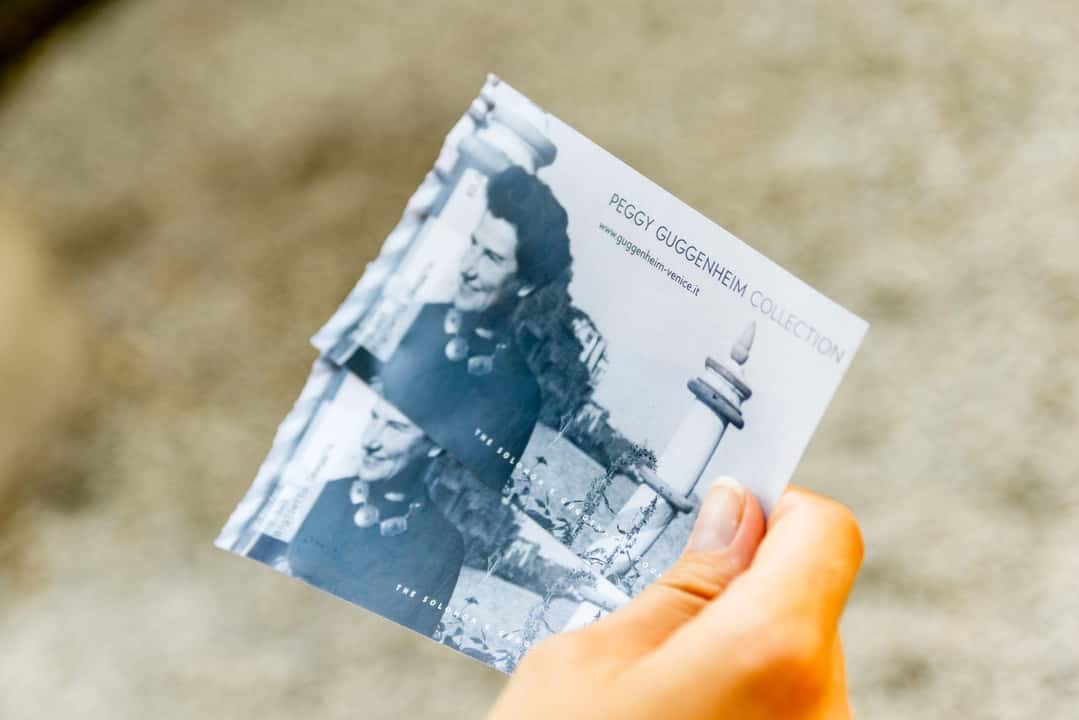
The finest collection of 20th-century art in Italy, housed in Peggy Guggenheim’s unfinished palazzo on the Grand Canal in Dorsoduro. Picasso, Mondrian, Kandinsky, Dali, Ernst, Pollock, Miro: the collection reflects Guggenheim’s remarkable eye and her personal relationships with many of the artists. The terrace garden overlooking the Grand Canal is one of the most beautiful art-viewing spaces anywhere. Book in advance.
Murano and Burano
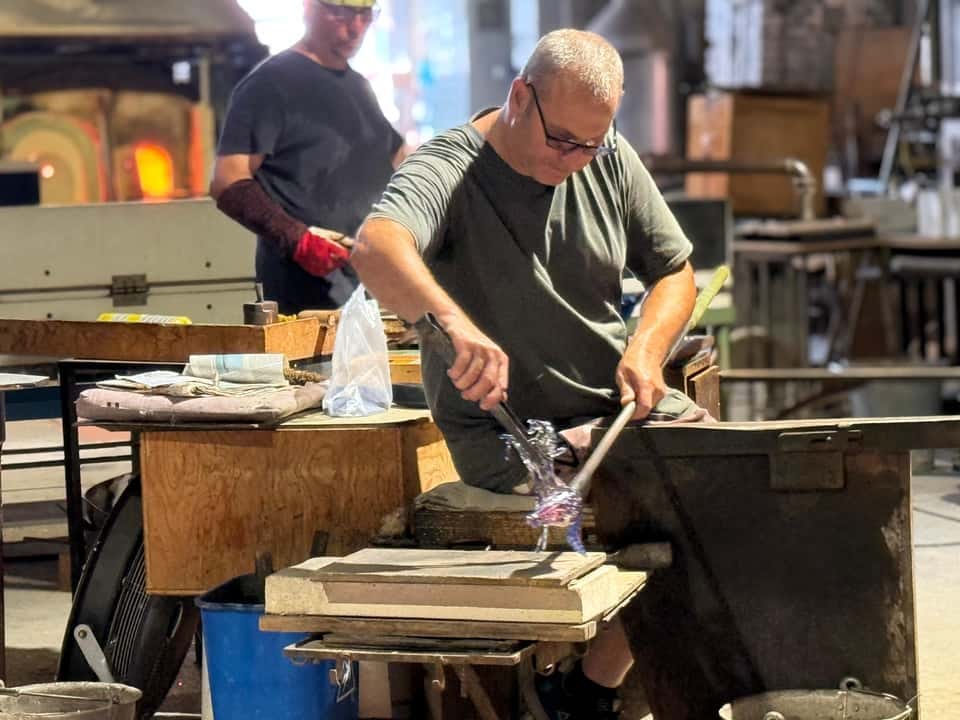
The two most visited islands in the Venetian lagoon, each with a character completely distinct from Venice itself. Murano, where the Republic moved its glassblowing industry in 1291 to protect Venice from fire, still produces the finest glass in the world and offers demonstrations of the craft in its workshops. Burano, further out in the lagoon, is famous for its lace-making tradition and its extraordinary painted houses, each one a different color by local ordinance. Both are accessible by public vaporetto, but a guided boat tour is the most efficient way to cover both in a day.
Cicchetti and Venetian food culture
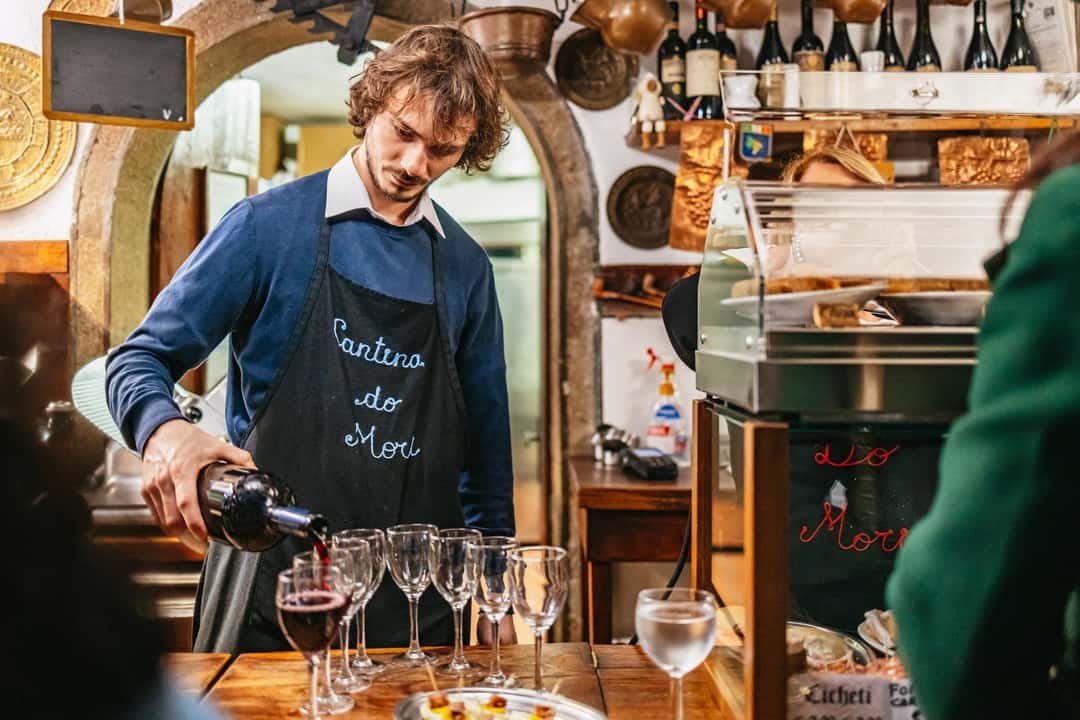
Cicchetti, the small snacks served at Venetian bacari (wine bars), are the most distinctively Venetian food experience and the most enjoyable way to eat in the city. The tradition: stand at the bar, order a small glass of wine (an ombra), point at the cicchetti you want (salt cod on polenta, sardines in saor, meatballs, crostini with various toppings), eat standing, pay a few euros, move to the next bar. A cicchetti crawl through Cannaregio or San Polo in the early evening is the most authentically Venetian meal you can have at any price.
Day trips from Venice
Venice’s position in the northeast of Italy makes it an excellent base for some of the most varied day trips available from any Italian city: medieval cities, wine country, alpine landscapes, and the lagoon islands.
Murano and Burano
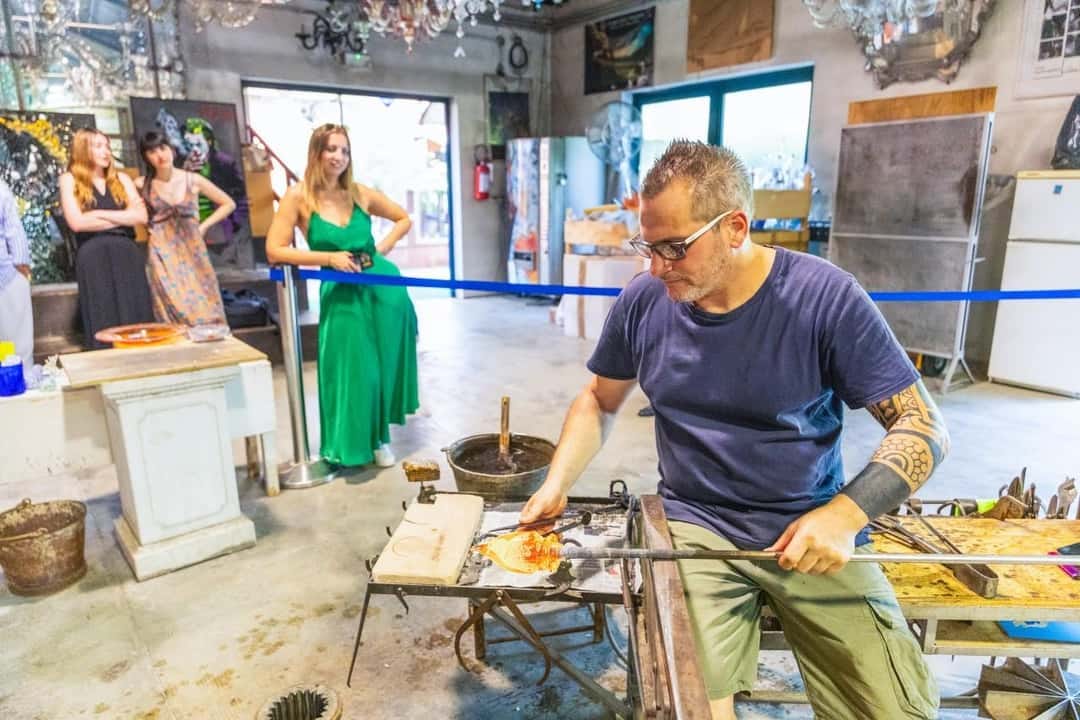
The lagoon islands are the most natural extension of a Venice visit and the most accessible. Murano, 15 minutes from the Fondamente Nove by vaporetto, is more interesting than it appears: the glass museum, the old canal, and the church of Santi Maria e Donato with its mosaic floor are all worth time. Burano, 45 minutes further, is one of the most visually extraordinary places in Italy: a fishing village where the houses are painted in intense colors and the reflection doubles everything in the canals below.
Verona
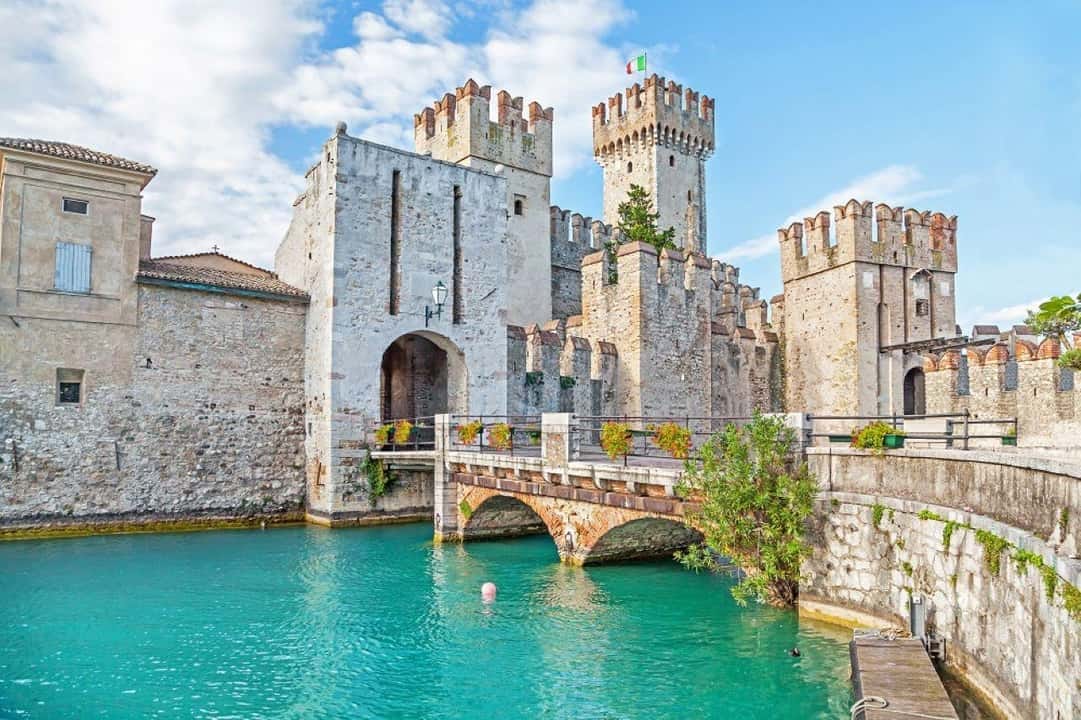
About seventy minutes from Venice by regional train, Verona offers a complete and well-preserved Roman amphitheater (still used for open-air opera in summer), the medieval streets that provided the setting for Shakespeare’s Romeo and Juliet, and one of the finest Romanesque churches in Italy in the Basilica di San Zeno. The city is noticeably less touristy than Venice and retains a genuine local life that is pleasant to move through.
The Dolomites
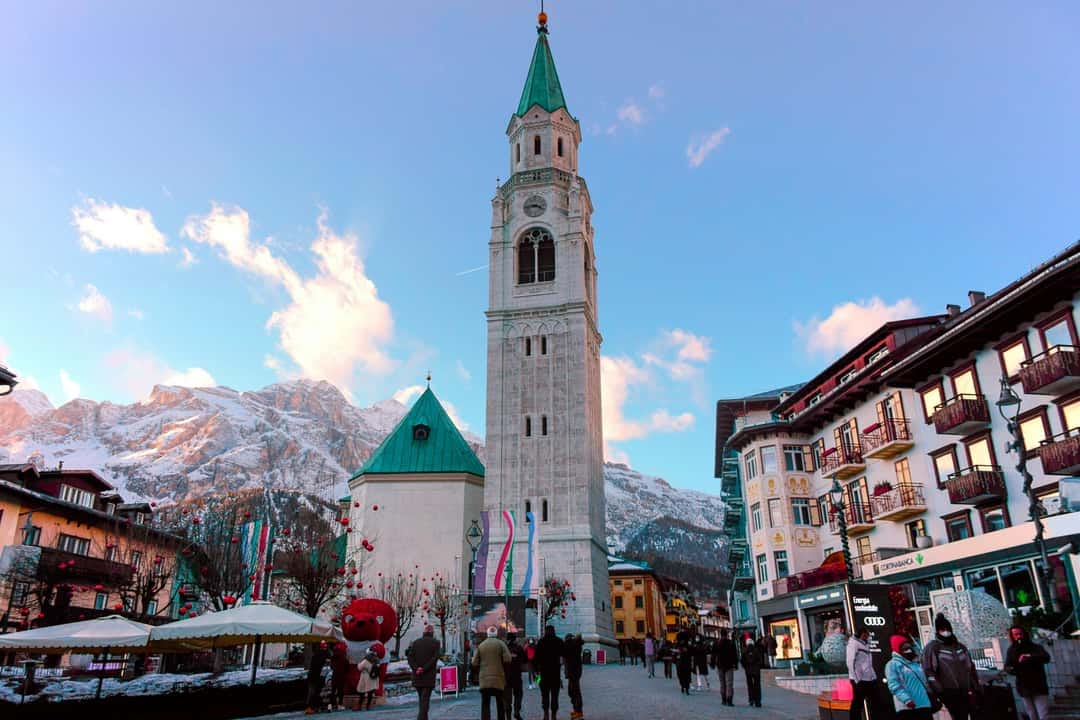
The UNESCO World Heritage mountain range about ninety minutes north of Venice, with some of the most dramatic alpine scenery in Europe: vertical rock faces, glacial lakes, and the village of Cortina d’Ampezzo. Summer offers hiking and boat rides on Lake Misurina; winter turns the area into one of Italy’s premier ski regions. An extraordinary contrast to Venice’s flat lagoon setting.
Padua
Forty-five minutes from Venice by regional train, Padua is one of the most undervisited cities in northern Italy. The Scrovegni Chapel, with Giotto’s fresco cycle painted between 1303 and 1305, contains some of the most important paintings in European art history and is one of the few sites in Italy where you genuinely need to book in advance. The Basilica of Sant’Antonio, the botanical garden (the oldest in the world), and the central market make Padua worth a full day.
Prosecco Hills and wine tasting
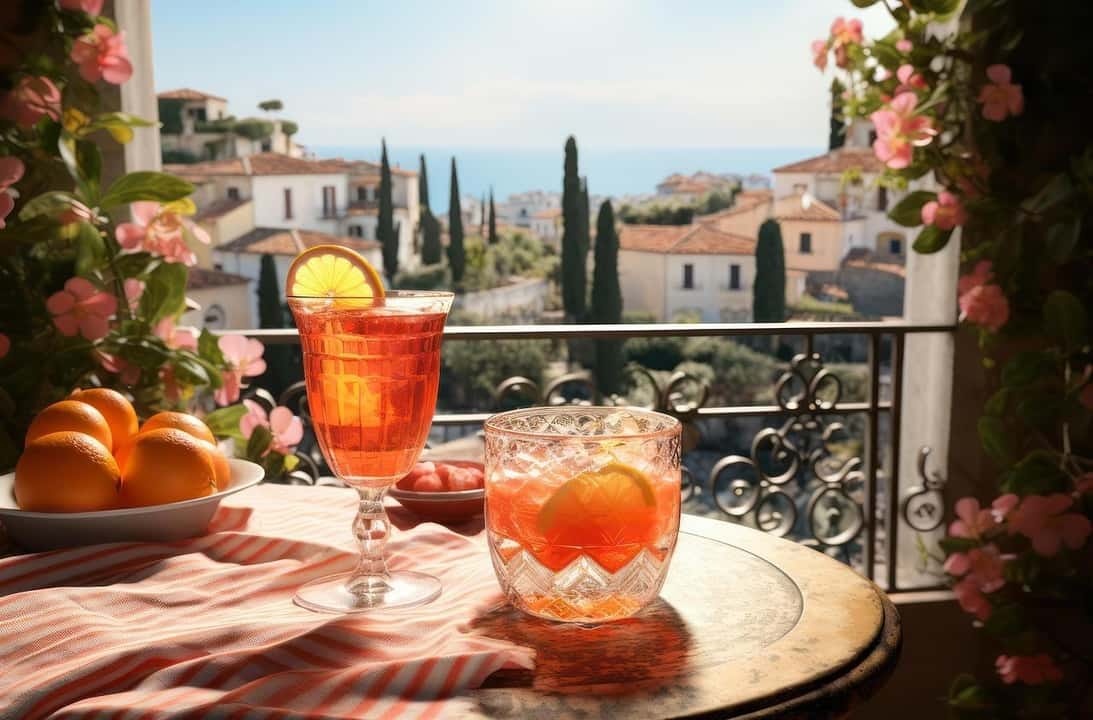
The Prosecco wine region, declared a UNESCO World Heritage Site in 2019, begins about an hour north of Venice in the hills around Conegliano and Valdobbiadene. A guided wine tour through the vine-covered hillside villages, with tastings at estate wineries, is one of the most pleasant days available from Venice and offers a completely different dimension of the Veneto region.
When to visit Venice
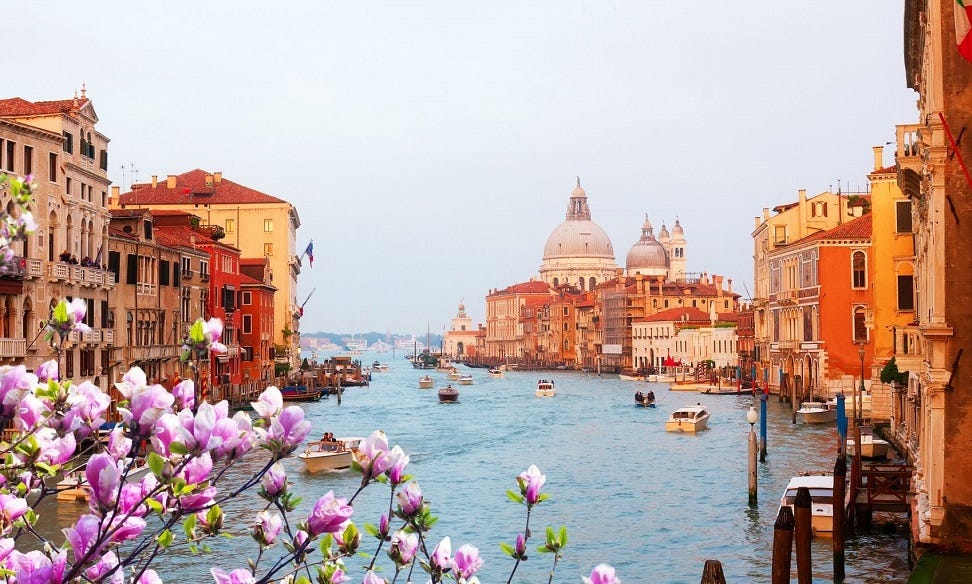
Venice is perhaps the most season-dependent destination in this guide. The difference between a November morning in a quiet sestiere and a July afternoon in Piazza San Marco is the difference between two entirely different cities. The timing of your visit matters more here than almost anywhere else in Europe.
🌸 Spring
March to May. Beautiful light, manageable crowds in early spring, and the city at its most photogenic. Easter week is very busy. The May heat and tourist numbers build toward summer levels by late May. April is the sweet spot: mild, less crowded than summer, and the city at its best.
☀️ Summer
June to August. The most crowded and the most expensive. Temperatures above 30C combined with extreme tourist density make the main tourist areas uncomfortable. The city is genuinely magical at dawn and after 9pm when day-trippers leave; those who are staying overnight experience a completely different Venice.
🍂 Autumn
September to November. The finest season. Crowds thin after mid-September. October and November offer extraordinary light, the Venetian Film Festival in late August and early September, and the annual Acqua Alta flooding season which, while practically inconvenient, is also atmospherically extraordinary.
❄️ Winter
December to February. Cold, occasionally foggy, and among the least crowded periods. Venice in winter mist is one of the most atmospheric experiences in European travel. The Carnevale di Venezia in February is a magnificent exception to the quiet: the city fills with masked revelers and the atmosphere is unlike any other festival in Italy.
How many days to spend in Venice
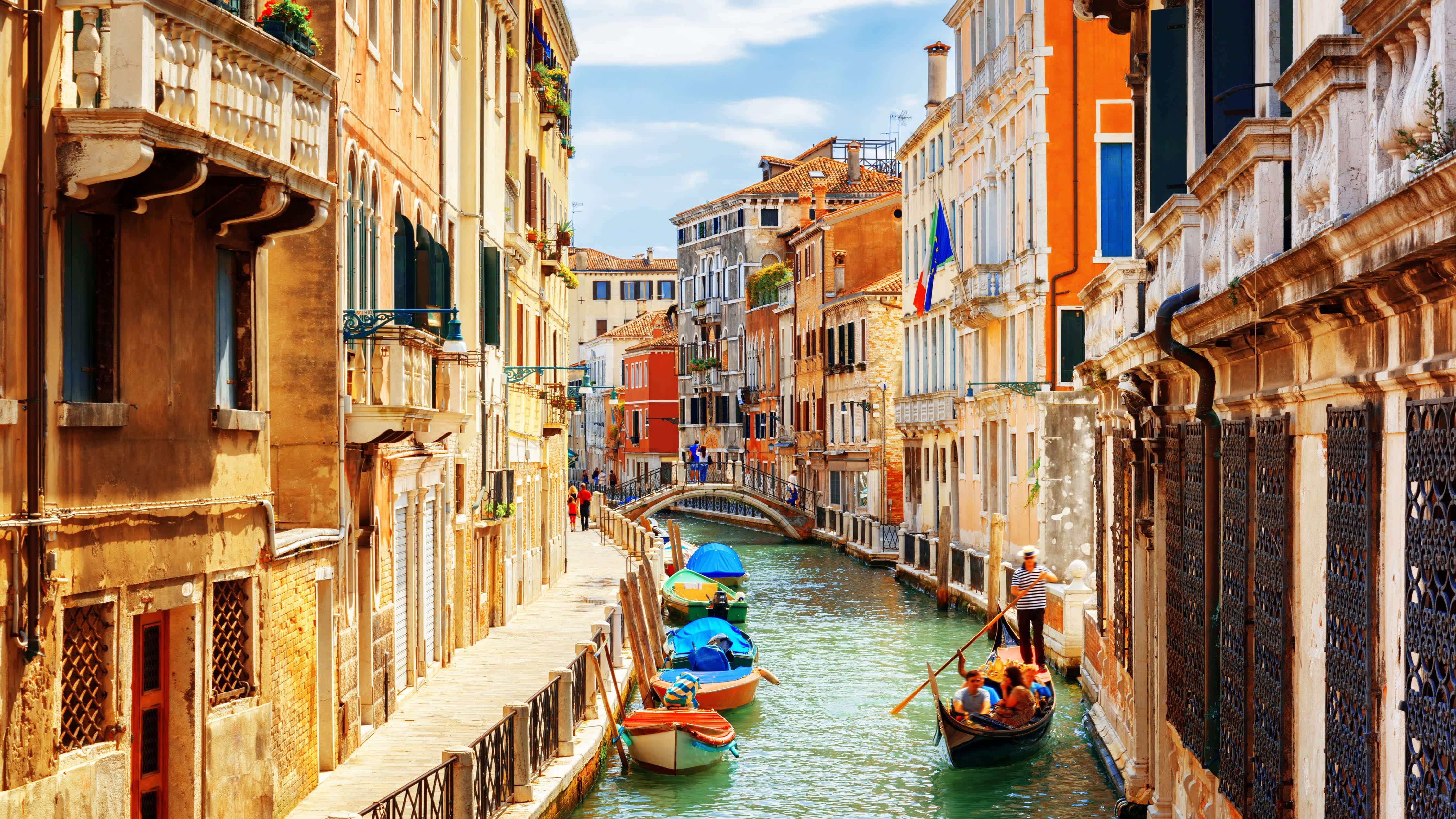
Two days is the minimum to cover the monuments of San Marco, the Accademia, a gondola ride, and the Rialto market. Three days allows for the Guggenheim, Dorsoduro, Cannaregio, and a day trip to Murano and Burano. Four or five days lets you slow down enough to find the quiet calli, the afternoon light on lesser-known canals, and the particular stillness of Venice in the early morning before the day boats arrive.
Venice is unique in that it reveals itself most fully to those who stay long enough to get slightly lost and to stop rushing. The city is best understood not by visiting its monuments efficiently but by moving through it slowly, turning left when you expected to turn right, and finding the view you were not expecting.
Suggested 3-day itinerary
Day 1
St. Mark’s Basilica at opening (book timed entry). Piazza San Marco before the crowds arrive. Campanile for the view.
Doge’s Palace guided tour. Bridge of Sighs. Walk toward the Rialto Bridge via the San Marco waterfront.
Gondola ride at dusk through the back canals. Cicchetti crawl in San Polo or Cannaregio.
Day 2
Gallerie dell’Accademia in Dorsoduro. Venetian painting from Bellini to Tintoretto.
Peggy Guggenheim Collection. Zattere promenade. Basilica dei Frari and Titian’s Assumption.
Campo Santa Margherita for aperitivo. Dinner in Dorsoduro or Cannaregio. Fondamenta bars after dark.
Day 3
Rialto Market at 8am before the crowds. Fish counter, vegetable boats, cicchetti at the first bacaro open.
Vaporetto to Murano and Burano. Glass demonstration on Murano. Colored houses and canal walk on Burano.
Return to Venice by evening boat. Final dinner in Castello, the least touristy sestiere.
Where to eat
Venetian cuisine is rooted in the lagoon: seafood, particularly baccala mantecato (whipped salt cod), sarde in saor (sardines in a sweet and sour sauce), and the extraordinary range of shellfish pulled from the lagoon each morning. These recommendations span from the essential cicchetti experience to the finest restaurants in the city.
Alle Testiere
Seafood
A tiny, legendary Castello restaurant with the finest lagoon seafood in Venice. Eight tables. Book weeks in advance. The crab and the spider crab pasta are extraordinary.
Antiche Carampane
Classic Venetian
A San Polo institution hidden in a calle that requires a map to find. Serious, traditional Venetian cooking without tourist pricing. The sarde in saor is definitive.
Bacaro Jazz
Cicchetti and wine
The best cicchetti bar in San Marco, with a serious wine list and standing room at the counter. Arrive at opening at 11am for the freshest selection.
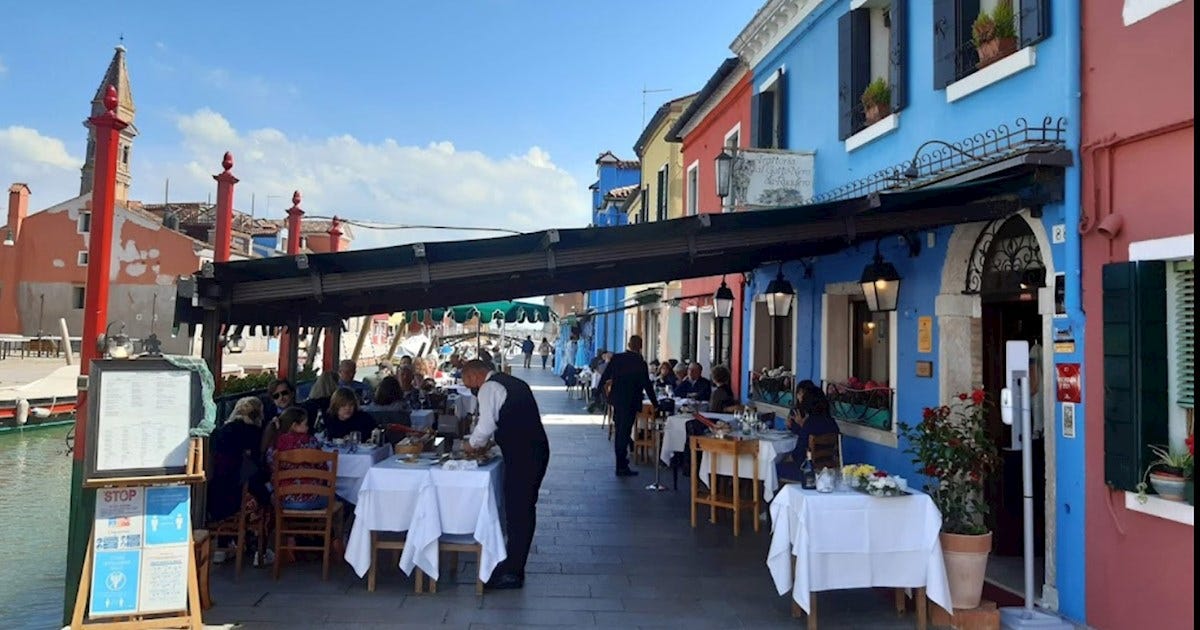
Trattoria al Gatto Nero
Seafood (Burano)
On the island of Burano, overlooking the canal. The risotto de gò (goby fish risotto) became famous after Anthony Bourdain ate it on television. Worth the vaporetto journey.
Osteria Trefanti
Modern Venetian
A Santa Croce restaurant that takes the Venetian tradition seriously and updates it with restraint. One of the best value serious meals in the city.
Do Mori
Historic bacaro
The oldest wine bar in Venice, in operation since 1462. Small, dark, and packed at cicchetti hour. The most atmospheric place in Venice to drink a glass of wine.
Pasticceria Tonolo
Pastry
The finest pasticceria in Venice, near the Frari, with exceptional fritole (Venetian fried pastries) during Carnevale and excellent coffee and pastries year-round.
Where to stay
Location in Venice is everything. Staying in San Marco puts you close to the monuments but in the most crowded and expensive part of the city. Dorsoduro and Cannaregio offer the best combination of access and neighborhood character. The further you are from the tourist circuit, the quieter your mornings and the more genuine your experience of the city.
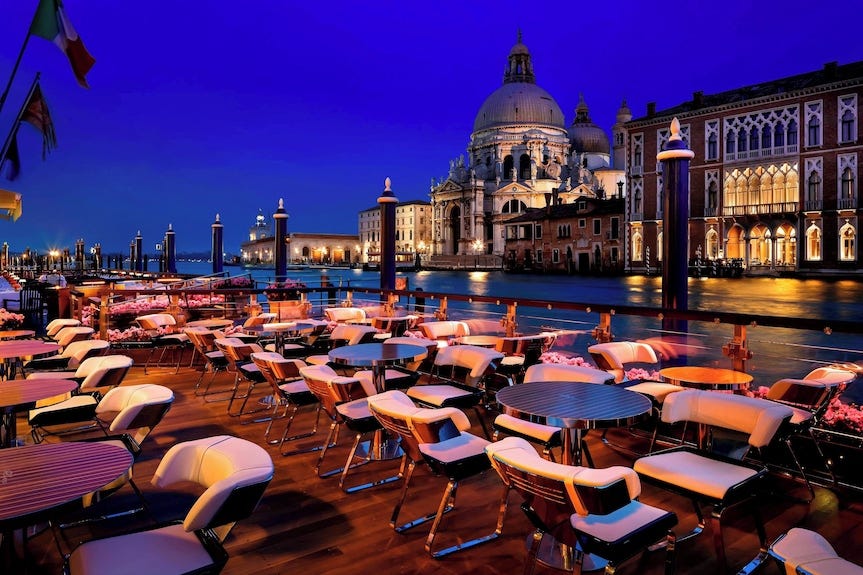
Gritti Palace
Luxury
A 15th-century palazzo on the Grand Canal in San Marco, one of the most storied hotels in Venice. Hemingway drank here. The terrace over the canal is extraordinary.
Hotel Metropole
Luxury
An intimate luxury hotel near the Riva degli Schiavoni with extraordinary antique decor accumulated over decades by the owner. One of the most characterful hotels in Italy.
Ca’ Pisani
Boutique / Mid-range
An Art Deco boutique hotel in Dorsoduro, close to the Accademia. Beautifully designed, well-positioned, and one of the best mid-range options in the city.
Pensione Accademia Villa Maravege
Mid-range
A 17th-century villa in Dorsoduro with a garden, close to the Accademia and the Guggenheim. Romantic, slightly faded, genuinely Venetian in character.
Generator Venice
Budget
A well-run hostel on the Giudecca island, across the canal from Dorsoduro. Free ferry to the main island, extraordinary views of Venice from the terrace, and the best value accommodation in the city.
Al Ponte Mocenigo
Mid-range / Boutique
A small hotel in Santa Croce near the Rialto, with canal-view rooms, personal service, and a genuine sense of Venetian daily life in the surrounding streets.
Practical information
• Currency: Euro (EUR). Cards are accepted in most hotels, restaurants, and shops. Carry some cash for bacari, smaller trattorie, and the Rialto market vendors.
• Language: Italian. English is understood in tourist areas, hotels, and most restaurants. A few words of Italian (buongiorno, grazie, per favore, posso avere) change the warmth of the welcome significantly.
• Getting around: Venice has no cars. Everything is on foot or by water. The public vaporetti (water buses) cover the Grand Canal, the main waterfront routes, and connections to the outer islands. A 72-hour vaporetto pass is the best value for visitors staying three days. Water taxis exist but are expensive.
• Acqua Alta: The seasonal high tides that flood parts of Venice, particularly Piazza San Marco and low-lying streets. Platforms (passarelle) are installed during flooding events and rubber boots can be rented near the main entrances to the city. Acqua Alta is most common from October to March and, while inconvenient, is also one of the most atmospheric things you can experience in Venice.
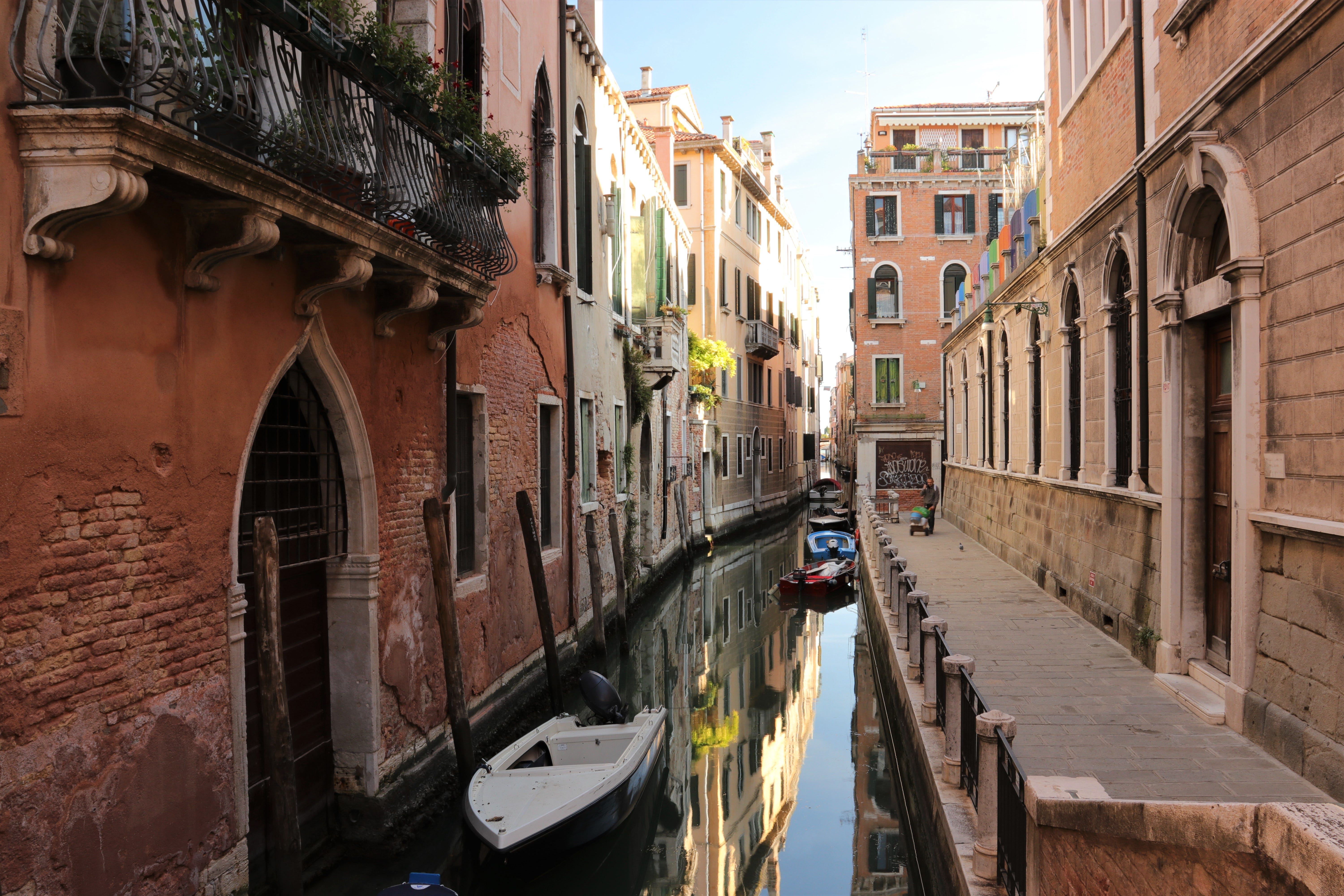
• Getting lost: Getting lost in Venice is not a problem; it is an activity. The streets have no grid logic, the maps do not always correspond to the reality on the ground, and the best way to navigate is to orient yourself by the sun and by the sound of the water rather than by following a phone screen. The major landmarks are well-signed, and the city is small enough that you will always find the Grand Canal or the Riva eventually.
• Dress code: Required for St. Mark’s Basilica and all churches. Shoulders and knees must be covered. Carry a scarf or light layer. The basilica does not admit visitors in shorts or sleeveless tops, and the rule is enforced.
• Internet: A Italian eSIM or European roaming plan works throughout the city. Wi-Fi is available in most hotels and cafes.
• Day tripper traffic: The majority of Venice’s visitors are day-trippers who arrive by 10am and leave by 5pm. The city before 9am and after 7pm is dramatically calmer. If you are staying overnight, these are the hours that make the visit worth it.
• Tourist tax: Venice levies a day visitor fee on tourists not staying overnight (currently 5 euros per person in peak season, applied on certain dates). This is payable online and a QR code may be checked on entry. Overnight guests pay a different accommodation tax.
How Venice fits into a broader Italy trip
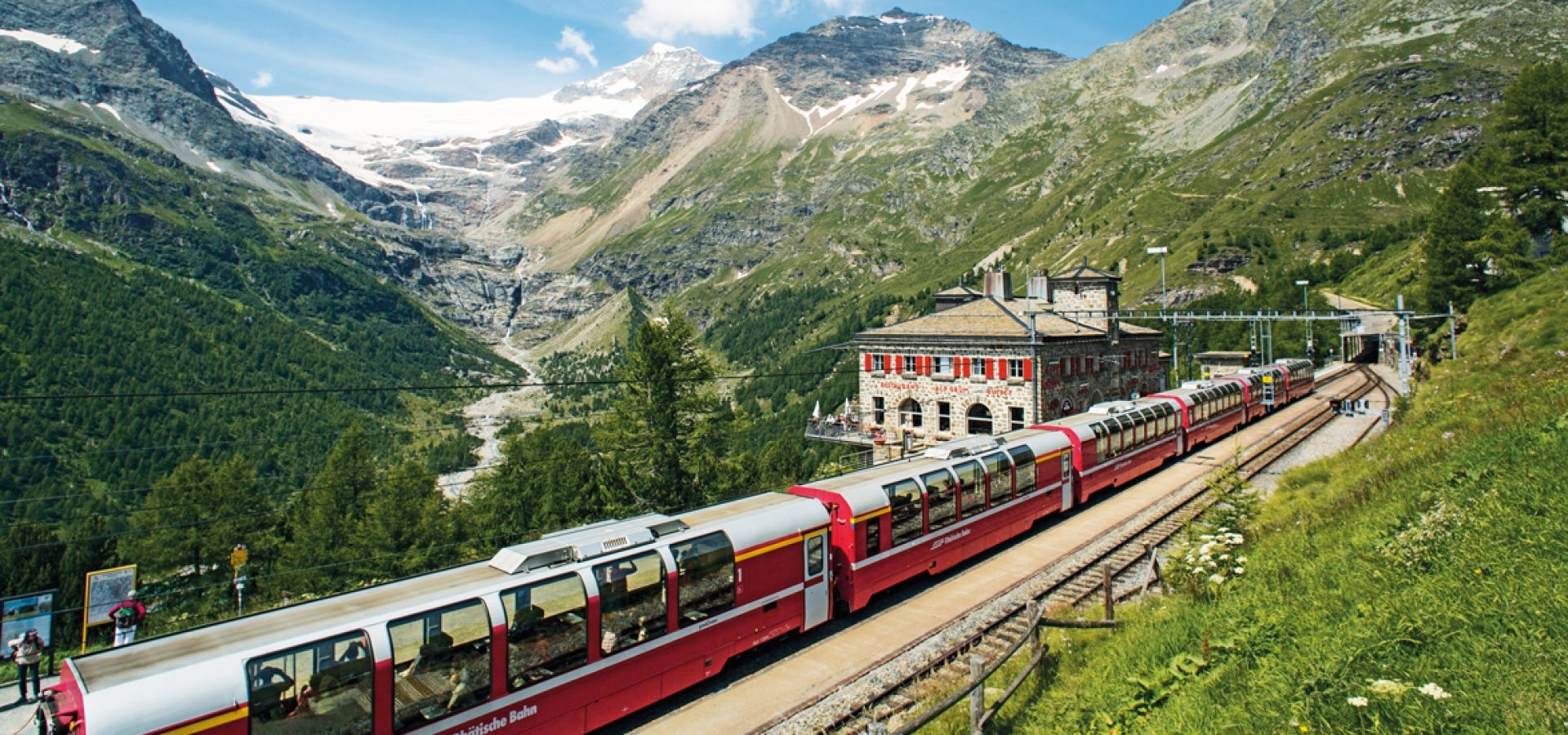
Most travelers combine Venice with Florence and Rome in the classic Italian triangle, each city connected by high-speed Frecciarossa train: Venice to Florence is about two hours, Florence to Rome is about ninety minutes. The three cities together cover the essential range of Italian art, history, and urban character.
Within the Veneto and northeast Italy, Venice connects naturally with Verona (seventy minutes), Padua (forty-five minutes), and the Dolomites (ninety minutes). For travelers interested in cruising, Venice is one of the major embarkation ports for Mediterranean and Adriatic cruises. A trip that begins or ends with two or three days in Venice, before or after a cruise through the Adriatic and beyond, is one of the most rewarding combinations in European travel.
Frequently asked questions
Is Venice worth visiting for first-time travelers to Italy?
Yes. Venice is the single most visually extraordinary city in Italy and one of the most singular places on earth. No other city looks like it, functions like it, or has the particular atmosphere it creates. The crowds and the cost are real, but so is the experience.
How many days do you need in Venice?
Two days is the minimum for the main monuments. Three days allows for the Guggenheim, Dorsoduro, and a day trip to Murano and Burano. Four or five days gives you the slower pace that reveals the city’s real character: the quiet calli, the early morning light on the water, and the Venice that exists when the day-trippers have left.
What is the best time of year to visit Venice?
April to May and September to November are the two best windows: manageable crowds, the finest light, and comfortable temperatures. Winter offers extraordinary atmosphere and near-empty monuments. Summer is beautiful but overwhelming. Avoid the August peak if possible.
Is Venice sinking?
Yes, gradually. The city is subsiding at approximately 1 to 2 millimeters per year and sea levels are rising simultaneously. The MOSE flood barrier system, finally completed in 2020 after decades of delays, protects the lagoon from the most extreme tidal events, but the long-term future of the city remains a genuine concern. This adds a certain urgency to visiting: Venice is not permanent, and its current state is worth experiencing while it lasts.
Are gondola rides worth it?
Yes, if you approach them correctly. Negotiate the route in advance to ensure you cover the small back canals rather than just the Grand Canal. Go in the late afternoon for the best light. The standard rate is fixed (80 euros for 30 minutes for up to 6 passengers) and non-negotiable. The experience of seeing Venice from water level, through passages that are inaccessible on foot, is genuinely unlike anything else the city offers.
What is Acqua Alta?
The periodic flooding of Venice caused by exceptionally high tides, most common between October and March. Platforms are erected in the most-affected areas and the city continues to function normally. It is an inconvenience for visitors wearing the wrong shoes and an extraordinary visual experience for those prepared for it. Rubber boots can be rented near the main island entrances.
Is Venice worth visiting in winter?
Yes, strongly. Venice in November, December, and January is a completely different city from the summer version: quiet, atmospheric, occasionally shrouded in lagoon mist, and full of the locals who make the city function. The Carnevale di Venezia in February is one of the finest festivals in Europe. Accommodation is significantly cheaper and the monuments are almost empty.
Plan your Venice trip with AERIA Voyages
Every traveler’s ideal Venice itinerary looks different depending on the time available, the experiences that matter most, and how Venice fits into a broader Italy trip or a Mediterranean cruise. I help clients build trips that go beyond the standard circuit: a private gondola tour through the back canals at dawn, a curated Venetian food and cicchetti experience with a local guide, a combination of Venice and the Dolomites, or a cruise departure from the Venice port that begins with days in the city.
If you are planning a trip to Venice and want to talk through the options, I would be glad to help.
Yvan Junior Blanchette
Travel & Cruise Specialist
ÆRIA Voyages📩 yvanblanchette@aeriavoyages.com
📞 1-888-460-3388
🌐 aeriavoyages.com